2027 What Can You Do with a Biology Degree? Courses, Best Colleges, Careers & Salary

Co-Founder and Chief Data Scientist
Choosing a biology degree is not just a question of whether you like science. It is a career-planning decision: Do you want to work in a lab, enter healthcare, study ecosystems, teach, move into biotechnology, or use biology as a foundation for graduate study? A biology degree can lead to many paths, but the best route depends on how much education you are willing to complete, whether you want licensure or certification, and how quickly you want to enter the workforce.
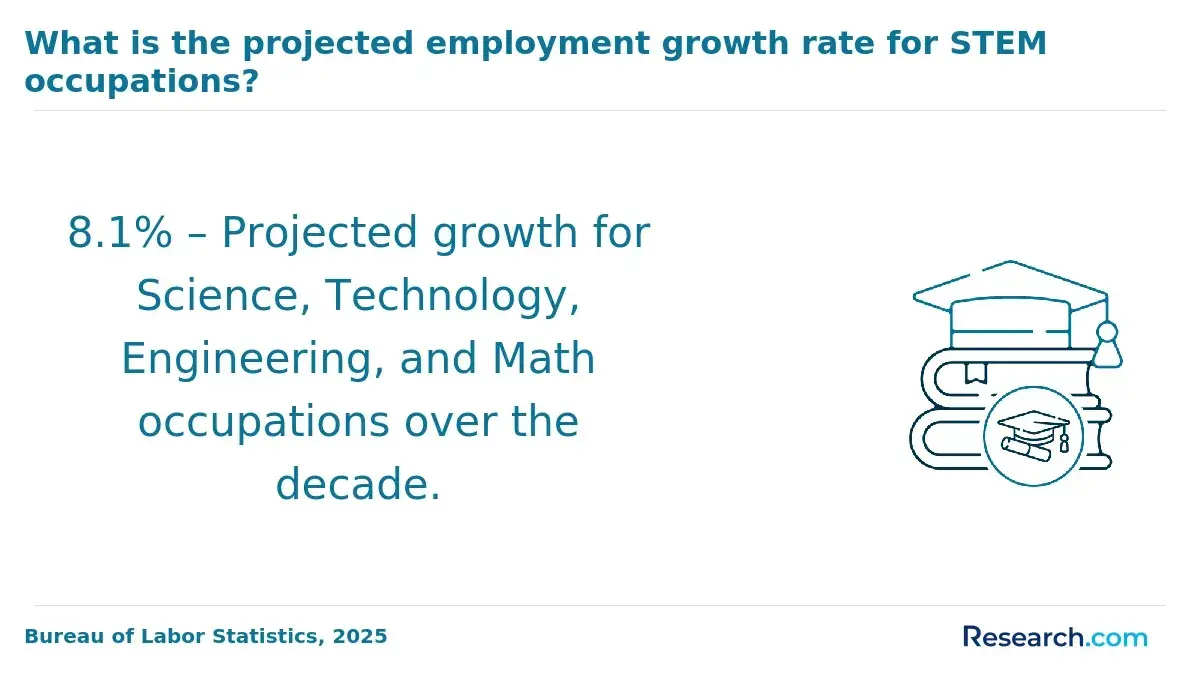
According to the Bureau of Labor Statistics, life, physical, and social science occupations are projected to grow faster than average for all occupations through 2034, creating continued opportunities for people with science training (U.S. Bureau of Labor Statistics, 2026). Biology graduates may also move into adjacent fields such as a career in nursing, biotechnology, environmental science, education, pharmacy, healthcare administration, and research.
This guide explains what you can do with a biology degree at the bachelor’s, master’s, and doctoral levels. It also covers vocational alternatives, emerging trends, useful certifications, skills employers value, common mistakes to avoid, and practical ways to decide whether biology is the right degree for your career goals.
Quick Answer: What Can You Do With a Biology Degree?
With a biology degree, you can pursue entry-level jobs such as biological technician, microbiologist, environmental scientist, food scientist, forensic science technician, marine biologist, molecular biologist, high school biology teacher, zoologist, or general biologist. With additional graduate education, you can qualify for roles such as nurse practitioner, biomedical engineer, genetic counselor, research scientist, senior environmental consultant, medical scientist, professor, or senior biotechnology researcher.
The most important decision is whether you want to work after a bachelor’s degree or use biology as a stepping stone to a licensed healthcare, research, or advanced scientific career. A bachelor’s degree may be enough for many support, technical, education, and field roles. Higher-level research, clinical, academic, and specialized roles often require a master’s degree, doctorate, professional degree, certification, or licensure.
Careers in Biology Table of Contents
- Entry-level biology jobs for 2027
- Careers for biology graduates with a master’s degree for 2027
- Emerging trends shaping biology careers
- Careers for Ph.D. holders for 2027
- Is pharmacy a strong path for biology graduates?
- Skills biology graduates need to build
- Can online healthcare degrees help biology graduates?
- Should biology graduates consider interdisciplinary online master’s programs?
- Certifications that can strengthen a biology degree
- Is healthcare administration a practical option for biology majors?
Biology remains attractive to younger students. In 2025, 22% of Generation Z and Generation Alpha students in the United States expected a career in biology/biotechnology, keeping it among leading career interests alongside healthcare and environmental sciences. That interest is understandable, but students should know early that “biology career” does not mean one single job track.
The American Institute of Biological Sciences noted in 2025 that biological sciences cover a wide family of disciplines, including environmental biology, ecosystems, biochemistry, and molecular biology. The field is now so broad that no single biologist can master all of it, and even general biologists may struggle to keep up with the expanding structure of the discipline.
That breadth is an advantage if you plan carefully. If you want to start working soon after graduation, a bachelor’s degree can support several entry-level roles. Students who need flexibility can compare online biology degrees, especially if they are balancing school with work or family responsibilities. If your goal is independent research, advanced clinical practice, college teaching, or specialized biotechnology work, you may need graduate education and substantial hands-on experience.
Biology is also not limited to traditional laboratory work. Recent industry analysis in 2025 emphasized that a biology degree is not an automatic pathway into a lab job; graduates increasingly enter alternative careers in healthcare operations, regulatory work, environmental consulting, science communication, biotechnology, public policy, and technical sales.
| Education level | Typical biology-related options | When this path makes sense | Important cautions |
| Bachelor’s degree | Laboratory support, environmental science, food science, teaching, field research, forensic science, biotechnology support roles | You want to enter the workforce sooner and build experience before deciding on graduate school | Some roles may be competitive or may require internships, technical skills, licensure, or on-the-job training |
| Vocational or certificate training | Dental hygienist, surgical technologist, licensed practical nurse, paramedic, pharmacy technician | You want a practical healthcare or technical role with a shorter training timeline | Requirements vary by state and occupation; many roles require certification, licensure, or supervised clinical training |
| Master’s degree | Nurse practitioner, biomedical engineer, genetic counselor, research scientist, senior environmental consultant | You want specialization, leadership opportunities, higher-level technical work, or clinical authority | Graduate school costs and prerequisites should be compared carefully against realistic career outcomes |
| Ph.D. or doctoral training | Medical scientist, professor, senior research scientist, biochemist, biophysicist, postdoctoral research associate | You want to lead research, teach at the college level, or work in advanced scientific roles | Doctoral paths are long and often require publications, funding, mentorship, and a clear research focus |
Before choosing a biology program or career path, ask three practical questions: What type of work do I want to do every week? What credential is required for that work? And how much additional training am I prepared to complete after my bachelor’s degree?
Entry-level Jobs for Biology Graduates for 2027
If you are asking, what can you do with a biology degree, the bachelor’s-level answer is broader than many students expect. Biology graduates can work in laboratories, schools, government agencies, environmental organizations, healthcare-adjacent settings, food production, biotechnology companies, and field research teams.
Science-related jobs
A biology degree gives students a foundation in cells, organisms, genetics, ecology, physiology, lab methods, and scientific reasoning. That foundation can support entry-level roles in health management, disease control and prevention, environmental sustainability, biotechnology, food science, and research support. Some roles overlap with masters of medical science jobs, especially when graduates later specialize in clinical, biomedical, or medical research fields.
The following roles are common starting points for biology graduates. Salary figures are based on Payscale’s average annual salary per occupation. Actual pay may vary by employer, location, experience, credentials, and industry.
| Role | Average annual salary | What you would typically do | Good fit if you like |
| Microbiologist | $58,236 | Study bacteria, viruses, fungi, algae, and other microorganisms; prepare samples; run experiments; analyze pathogens or environmental microbes | Lab work, disease research, sample preparation, public health, agricultural or industrial microbiology |
| Environmental Scientist | $55,113 | Collect and analyze environmental data, evaluate pollution and ecosystem risks, and support policy or business decisions | Fieldwork, sustainability, environmental compliance, public health, data collection |
| Biologist | $60,942 | Research human, animal, plant, or microbial systems; collect samples; analyze biological processes; support medical or applied science projects | General biological research, healthcare, biotechnology, pharmaceutical work, biosafety/security |
| Food Scientist | $70,455 | Study food safety, nutrition, additives, shelf life, processing methods, flavor improvement, and quality assurance | Food production, quality control, product development, agriculture, regulatory standards |
| Zoologist and Wildlife Biologist | $68,515 | Study animals, wildlife populations, habitats, and ecosystem interactions in labs, offices, or field settings | Conservation, animal behavior, ecology, environmental consulting, compliance work |
| High School Biology Teacher | $35,304 | Teach biology concepts, lead labs, develop lesson plans, grade assignments, advise students, and support curriculum goals | Teaching, mentoring, explaining science, classroom and lab instruction |
| Molecular Biologist | $65,216 | Investigate cells and molecules, including DNA sequencing, RNA function, cloning, and cellular behavior | Genetics, biotechnology, lab research, scientific reporting, academic or industry labs |
| Forensic Science Technician | $49,328 | Collect, preserve, and analyze evidence from crime scenes or laboratories; support investigations and may testify in court | DNA analysis, biochemistry, law enforcement collaboration, careful documentation |
| Marine Biologist | $53,950 | Study saltwater organisms, ocean ecosystems, marine diseases, pollution effects, and human impacts on habitats | Ocean science, conservation, field studies, marine ecology, environmental protection |
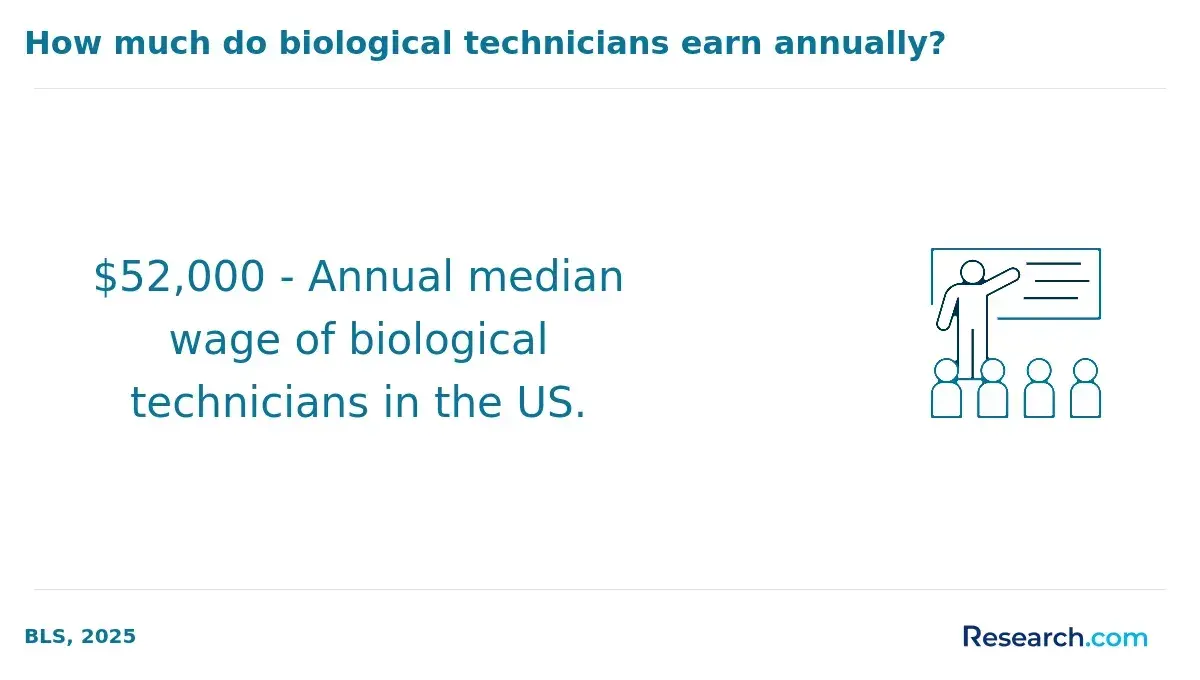
| Biological Technician | $42,009 | Assist scientists with experiments, prepare samples, operate lab tools, record results, and maintain equipment | Hands-on lab work, research support, robotics, sample analysis, technical documentation |
What to expect in entry-level biology work
Entry-level biology roles often involve technical support rather than independent research leadership. For example, microbiologists and biological technicians may spend significant time preparing samples, monitoring experiments, maintaining instruments, and recording results accurately. These jobs reward patience, precision, and a willingness to follow strict protocols.
Many lab-based roles now require comfort with digital tools. Biology graduates may work with data systems, lab information platforms, electronic lab notebook software, and laboratory inventory management system tools. Even if a job is “biology-focused,” employers may expect skills in documentation, quality control, data entry, basic statistics, and compliance.
Field-oriented careers, such as environmental scientist, zoologist, wildlife biologist, or marine biologist, may involve travel, outdoor sampling, irregular schedules, and collaboration with agencies or private organizations. These careers can be rewarding for students who want to apply biology outside a traditional laboratory, but they may also require physical stamina, safety training, and comfort working in changing environmental conditions.
Vocational jobs connected to biology and healthcare
Some students discover that they enjoy biology but want a faster, more structured route into healthcare or technical work. Vocational paths may not require a biology degree, but biology coursework can make the training easier and may strengthen your application or classroom performance.
In the United States, many vocational healthcare jobs require a postsecondary training program, supervised clinical experience, a certification, a license, or on-the-job training. Requirements vary by state and by occupation, so students should verify local rules before enrolling.
| Vocational role | Average annual salary | Training or credential considerations | How biology helps |
| Dental Hygienist | $63,681 | Scope of practice depends on the state; duties may include dental x-rays, local anesthetics, fluoride, fillings/sealants, cleanings, and patient education | Human anatomy, microbiology, disease prevention, patient education |
| Surgical Technologist | $51,988 | Training focuses on operating room preparation, sterile technique, surgical tools, medication support, and post-surgery procedures | Human anatomy, infection control, tissue handling, medical terminology |
| Licensed Practical Nurse (LPN) | $49,641 | Education and training usually take about a year and lead to a certificate; LPN work can support later RN study | Physiology, patient care basics, health conditions, communication with care teams |
| Paramedic | $52,824 | Programs may last six to 12 months depending on the program; training includes cardiology, human anatomy and physiology, procedures, and medications | Emergency physiology, trauma response, medication concepts, rapid decision-making |
| Pharmacy Technician | $39,835 | May work in pharmacies, hospitals, pharmaceutical production, sales, veterinary pharmacy, military settings, prisons, or education and training | Basic pharmacology, chemistry, dosage awareness, healthcare communication |
How to choose between a biology job and a vocational healthcare route
Choose an entry-level biology job if you want to build scientific experience, test whether you enjoy research, or prepare for graduate school. Choose a vocational healthcare route if your priority is patient-facing work, faster employment, a defined credential, or a structured clinical role.
| Choose this path if... | Entry-level biology job | Vocational healthcare job |
| You want to work in research or science | Usually the stronger option | Possible, but less research-focused |
| You want direct patient care | May be limited unless the job is healthcare-adjacent | Usually the stronger option |
| You want to apply to graduate school later | Can provide relevant lab, field, or research experience | Can help if your goal is nursing, medicine, pharmacy, or allied health |
| You want a clearly licensed occupation | Depends on role and state | More common in healthcare vocational careers |
| You want to avoid additional training | Possible for some roles, though internships and lab skills help | Usually not possible; training, exams, or licensure may be required |
Careers for Master’s Degree Holders for 2027
A master’s degree can make sense when it leads to a specific credential, deeper specialization, or a clear step up in responsibility. It is not automatically worth the cost for every biology graduate, but it can be valuable in healthcare, genetic counseling, environmental consulting, biomedical engineering, and advanced research roles.
Salary differences can be meaningful in some STEM occupations. Environmental scientists with a master’s degree receive a median annual salary of $80,000, compared with $62,000 for bachelor’s degree holders, representing a wage premium of 29%. Biological scientists with a master’s degree receive a wage premium of 20%, with a median annual salary of $60,000 compared with $50,000 for those with a bachelor’s degree.
| Career | Average annual salary | Graduate-level preparation | Best for students who want... |
| Nurse Practitioner (NP) | $100,000 | Master’s of Science in Nursing (MSN), advanced specialty training, and applicable nursing credentials | Clinical authority, patient care, diagnosis, prescribing medication, specialty practice |
| Biomedical Engineer | $82,000 | Training in engineering principles, biology, medicine, design, systems, and health technology | Medical devices, prosthetics, imaging, implantable devices, healthcare technology |
| Genetic Counselor | $74,000 | Graduate study in genetics and counseling; many employers may require certification from the American Board of Genetic Counseling | Patient counseling, hereditary risk assessment, prenatal or cancer genetic testing |
| Research Scientist | $75,613 | Advanced research methods, data analysis, publication, grant or proposal development, and field or lab specialization | Applied research, academic research, product development, government or private-sector science |
| Senior Environmental Consultant | $91,866 | Environmental science expertise plus project oversight, compliance knowledge, budgeting, scheduling, and team coordination | Leadership, environmental impact analysis, consulting, regulatory compliance |
When a master’s degree is worth considering
- You need the degree for the occupation. Nurse practitioner and genetic counseling pathways require graduate-level preparation and additional credentials.
- You want to move from support work into leadership. Environmental consulting, research management, and senior technical roles may favor candidates with graduate training and work experience.
- You want to specialize. Biology is broad, so graduate school can help you focus on genetics, biotechnology, ecology, biomedical science, public health, or another defined area.
- You have already tested the field. Graduate school is usually a better investment after internships, lab work, or employment confirm the direction you want.
When a master’s degree may not be the best next step
- You are unsure what career you want. A graduate degree is expensive and time-intensive if you have not clarified your goal.
- The job you want values experience more than credentials. Some lab, regulatory, sales, and technical roles may reward hands-on work more than an additional degree.
- You have not checked prerequisites. Some master’s programs require specific coursework, clinical hours, research experience, or licensure.
- You are assuming higher pay is guaranteed. Wage premiums vary by occupation, employer, region, and experience.
What Are the Emerging Trends in Biology Careers?
Biology careers are being reshaped by digital tools, interdisciplinary science, automation, and sustainability-focused work. Employers increasingly value graduates who can combine biological knowledge with data analysis, bioinformatics, laboratory automation, regulatory awareness, and communication skills. These changes do not eliminate the need for strong biology fundamentals, but they do change what makes a candidate competitive.
| Trend | How it affects biology graduates | How to prepare |
| Bioinformatics and big data | Biology roles increasingly involve sequence data, large datasets, statistical tools, and computational workflows | Take coursework or certificates in data analysis, programming basics, statistics, or bioinformatics |
| Laboratory automation | Research and biotechnology labs use more robotics, digital tracking, and automated workflows | Learn lab information systems, instrument operation, quality control, and documentation practices |
| Personalized medicine | Genetics, molecular biology, and clinical data are becoming more connected in healthcare and research | Build knowledge in genetics, molecular biology, ethics, patient communication, and clinical research |
| Sustainability and environmental monitoring | Environmental roles may involve pollution control, ecosystem assessment, conservation, and compliance | Gain fieldwork experience, GIS exposure, environmental sampling skills, and regulatory familiarity |
| Interdisciplinary hiring | Employers may prefer candidates who can work across biology, healthcare, engineering, business, or policy | Use electives, internships, and certificates to connect biology with a practical career domain |
Students comparing long-term earning potential may also want to understand how biology compares with other fields listed among the highest paying degrees. Biology can be a strong foundation, but the return on investment often depends on specialization, graduate education, work experience, and the industry you enter.
Careers for Ph.D. Holders for 2027
A Ph.D. in biology is most useful for students who want to conduct advanced research, lead scientific projects, teach at the postsecondary level, or specialize deeply in a subfield. Doctoral study can open doors, but it is a long path and should be chosen for a clear purpose.
Research indicates that anywhere from 60 to 80% of doctoral students in biology are interested in careers where teaching is a primary responsibility. However, academic jobs are not the only option. Biology Ph.D. graduates may also work in biotechnology, pharmaceutical research, government labs, nonprofit science, policy, consulting, or industry research and development.
Because biology is so broad, doctoral students usually choose a narrow research area. That specialization affects future job titles, research opportunities, employers, and publication expectations.
| Doctoral-level career | Average annual salary | Primary responsibilities | Important career notes |
| Biochemists and Biophysicists | Not stated | Study the chemical and physical foundations of living systems, including molecular processes, cell structures, proteins, DNA, toxins, nutrients, drugs, enzymes, and gene therapies | Often involves experiment design, molecular analysis, peer review, conference presentations, and research team collaboration |
| Medical Scientists | $93,000 | Design and conduct studies to improve human health, investigate diseases, create data collection systems, write clinical protocols, and prepare clinical study reports | May collaborate with Sales and Marketing, Engineering, Compliance, and external medical or scientific experts |
| Senior Research Scientist in Biotechnology | $113,464 | Lead or support advanced research in pharmaceutical biotech, agricultural biotech, environmental biotech, academic institutions, or industry settings | May work as an investigator, educator, consultant, or product-development scientist with engineers and manufacturing teams |
| Professor (Post-Secondary Education) | $88,656 | Teach courses, lead seminars, supervise labs, advise students, support dissertations/theses, and continue scholarly research | Academic roles may require publishing, grant activity, service work, and collaboration outside the university |
| Postdoctoral Research Associate | $54,833 | Support principal investigators or tenured faculty by conducting experiments, analyzing data, writing reports, mentoring students, and maintaining lab workflows | A postdoctoral role is usually a training position and may not provide full independence in research direction |
How to decide whether a Ph.D. in biology is the right move
- Choose a Ph.D. if you want to create new knowledge. Doctoral programs are research-intensive and require sustained focus on a specific question or field.
- Do not choose a Ph.D. only because you are unsure what to do next. It is usually better to gain research experience, speak with mentors, and clarify your career target first.
- Ask where graduates actually work. Review program outcomes for academia, industry, government, and nonprofit placements.
- Understand the funding model. Ask about assistantships, stipends, tuition coverage, grant expectations, and typical time to completion.
- Evaluate mentorship carefully. The advisor relationship can strongly affect your research productivity, publications, and career opportunities.
How Can Online Certifications Help Biology Graduates?
Online certifications can help biology graduates fill skill gaps that a broad undergraduate curriculum may not cover. A biology degree may teach scientific concepts and lab foundations, but employers may also look for specific tools, technologies, workflows, or applied skills. Certifications can be especially useful in areas such as bioinformatics, environmental science, lab management, data analysis, project management, and healthcare administration.
The main advantage is flexibility. Many online options allow working students and graduates to build skills without leaving a job. However, not every certificate carries the same value. Before enrolling, confirm whether the credential is recognized by employers in your target field, whether it includes practical assignments, and whether it teaches tools you will actually use on the job.
Students comparing flexible credentials can review online certifications that may support career advancement. The best choice is not necessarily the certificate with the most impressive title; it is the one that matches the job postings, software requirements, or technical competencies in your chosen career path.
Advanced specializations in biology: genetic counseling, biotechnology, and molecular genetics
Advanced specialization can make a biology background more marketable. Genetic counseling combines biology, genetics, ethics, patient communication, and healthcare decision support. Professionals in this field help individuals and families understand inherited conditions, genetic testing results, risk levels, and available options. Students considering this pathway can compare genetics masters programs to understand the academic preparation required.
Biotechnology and molecular genetics offer other specialized routes. Biotechnology may involve gene editing, biopharmaceuticals, agricultural innovation, industrial processes, or environmental applications. Molecular genetics focuses on gene structure and function and can connect to personalized medicine, diagnostics, research, and pharmaceutical development.
If you are still asking, what can i do with a biology degree, the better question may be: Which part of biology do I want to apply, and in what setting? Students from outside the United States who plan to study biology domestically should also prepare early for US student visa requirements.
One challenge for biology graduates is the gap between academic coursework and employer expectations. A degree can qualify you for consideration, but it may not provide every practical skill needed for hiring. This is especially true when jobs require specific lab techniques, software, regulatory knowledge, field methods, or industry experience.
The same issue can affect graduate students. Many programs still emphasize academic preparation, even though many biology graduate students ultimately work in government, nonprofits, science journalism, biotechnology, pharmaceuticals, policy, law, and related fields. Students should actively seek internships, applied projects, informational interviews, and career services support rather than assuming the degree alone will define the path.
Is specializing in pharmacy a viable path for biology graduates?
Pharmacy can be a strong option for biology graduates who want to connect biological science with patient care, drug development, medication safety, clinical trials, or pharmaceutical research. Biology coursework can provide a useful foundation in anatomy, physiology, microbiology, biochemistry, and genetics, but pharmacy is a professional path with its own degree, experiential training, and licensure requirements.
This route may fit students who enjoy both science and healthcare decision-making. It can also appeal to graduates interested in how medications are developed, tested, prescribed, monitored, and managed. Flexible study options may help working adults explore the field; for example, accredited online Pharm D programs can provide a structured route toward advanced pharmacy credentials while allowing some students to manage work responsibilities.
Before choosing pharmacy, confirm admission prerequisites, clinical rotation requirements, state licensure rules, program accreditation, total cost, and expected career settings. Pharmacy can be a valuable path, but it should be selected because it matches your preferred work, not simply because it appears to be a high-status healthcare option.
Skills Essential for Success in Biology Careers
Biology careers require more than knowing scientific facts. Employers often look for candidates who can collect reliable data, follow protocols, communicate findings, solve problems, and use the tools common to their field. The strongest applicants combine scientific knowledge with hands-on experience and professional judgment.
| Skill area | Why it matters | How to build it |
| Laboratory techniques | Many biology roles require sample preparation, sterile technique, measurement, observation, and equipment use | Take lab-heavy courses, seek undergraduate research, work as a lab assistant, and document techniques learned |
| Data analysis | Biology work increasingly depends on interpreting datasets, reporting patterns, and supporting evidence-based decisions | Study statistics, spreadsheets, data visualization, programming basics, or bioinformatics |
| Scientific writing | Reports, protocols, grant materials, regulatory documents, and publications require clear written communication | Write lab reports seriously, ask for feedback, and create writing samples from research or coursework |
| Communication | Biologists often explain findings to colleagues, agencies, patients, students, or non-scientific stakeholders | Present research, tutor, teach, volunteer, or join interdisciplinary projects |
| Problem-solving | Experiments fail, field conditions change, and data may be incomplete or messy | Choose projects that require troubleshooting instead of only memorization |
| Adaptability | Biology roles can shift with new technology, funding, regulations, or research priorities | Stay current through professional organizations, certificates, workshops, and practical work experience |
| Regulatory and ethical awareness | Healthcare, environmental, forensic, and research settings often operate under strict legal or ethical standards | Take ethics, compliance, safety, or policy-related coursework and pay attention to workplace protocols |
Students who want a deeper look at high-earning options can compare careers in biology and then work backward to identify the skills, credentials, and experience those jobs require.
Can biology graduates benefit from online healthcare degree programs?
Yes, biology graduates can benefit from online healthcare degree programs when the program connects directly to a specific career goal. A biology background can transfer well into healthcare fields because students already have exposure to anatomy, physiology, microbiology, genetics, and scientific reasoning. Online healthcare programs may help graduates move toward clinical support, healthcare operations, public health, medical research, informatics, or administrative roles.
The key is to verify quality and career fit. Students should confirm whether a program is accredited, whether online coursework satisfies any state licensure or clinical requirements, and whether the curriculum includes the practical training needed for the intended role. To compare options, review guidance on online healthcare degrees accredited programs before enrolling.
Is pursuing an interdisciplinary online master's degree beneficial for biology graduates?
An interdisciplinary online master’s degree can be useful when it expands biology into a defined applied area. For example, combining biology with exercise science can support interests in performance research, rehabilitation technology, sports medicine, physiology, or health-related data analysis. Students can explore options such as an online masters in exercise science if that combination fits their goals.
This type of program is most valuable when it provides practical projects, relevant faculty expertise, networking opportunities, and coursework aligned with job postings. It is less useful if it simply adds another credential without clarifying your target occupation.
What additional certifications can complement a biology degree?
Certifications can help biology graduates move into specialized or hybrid roles. The right credential depends on your target industry. For lab and research roles, useful areas may include bioinformatics, lab management, safety, quality systems, or data analysis. For healthcare-adjacent roles, administrative and operational credentials may help graduates understand records, billing, coding, compliance, and patient information systems.
For example, students interested in healthcare operations can compare medical billing and coding online courses cost to decide whether a short credential could support entry into administrative healthcare work. This type of certification will not replace scientific training, but it can make a biology graduate more versatile in clinical, research, or healthcare business environments.
| Certification area | Best for | Decision tip |
| Bioinformatics or data analysis | Genomics, research labs, biotechnology, computational biology | Prioritize programs with real datasets and software practice |
| Laboratory management or quality systems | Research support, regulated labs, biotech manufacturing, clinical environments | Look for credentials tied to compliance, documentation, and workflow control |
| Environmental science or GIS | Environmental consulting, conservation, field research, sustainability roles | Choose options that teach mapping, sampling, reporting, or regulatory applications |
| Project management | Research coordination, biotech operations, consulting, healthcare projects | Useful after you have some workplace experience and project exposure |
| Medical billing, coding, or healthcare administration | Healthcare operations, clinics, hospitals, insurance-related work, non-clinical roles | Confirm whether the credential is valued by employers in your local market |
Is a career in healthcare administration a strategic move for biology graduates?
Healthcare administration can be a practical alternative for biology graduates who like science and healthcare but do not want a clinical or laboratory career. Biology majors often bring analytical thinking, attention to detail, and familiarity with health-related concepts, all of which can be useful in healthcare operations, compliance, quality improvement, patient services, and program coordination.
To move into this area, graduates may need business, management, finance, policy, or healthcare systems training. Programs such as an accelerated bachelors degree in healthcare administration can help students add operational and leadership skills to a science background.
This path may fit students who want to improve how healthcare organizations run rather than provide direct patient care. It may not fit students who want hands-on clinical practice, independent research, or field biology.
Common Mistakes Biology Students Should Avoid
| Mistake | Why it can hurt your career | Better approach |
| Choosing biology because it is “flexible” without a career plan | Flexibility can become confusion if you do not build targeted experience | Pick two or three likely career paths and choose internships, electives, and skills around them |
| Assuming a bachelor’s degree automatically leads to a high-paying research job | Many advanced research roles require graduate education or specialized experience | Review job postings early and identify required techniques, software, and credentials |
| Ignoring hands-on experience | Employers may prefer candidates who have already worked in labs, field settings, clinics, or data projects | Seek undergraduate research, volunteering, internships, assistantships, or part-time technical roles |
| Focusing only on tuition when comparing programs | Total cost includes fees, transportation, books, lab materials, housing, lost wages, and graduate school debt | Compare net price, financial aid, graduation rates, transfer policies, and career outcomes |
| Not checking accreditation or licensure requirements | Some healthcare, teaching, or clinical pathways require approved programs and state-specific credentials | Confirm accreditation, state rules, exam eligibility, and clinical placement requirements before enrolling |
| Relying only on rankings | A highly ranked school may not be the best fit for your specialization, budget, location, or career goals | Evaluate faculty expertise, lab access, internships, advising, research areas, and employer connections |
| Waiting until senior year to think about jobs | You may graduate without relevant experience, references, or clear direction | Start career exploration in the first year and update your plan each semester |
Questions to Ask Before Choosing a Biology Program or Career Path
- Does this program offer lab, field, clinical, or research experience connected to my career goal?
- What jobs have recent graduates actually obtained?
- Do I need a license, certification, master’s degree, doctorate, or professional degree for my target role?
- Will online coursework satisfy any hands-on or state-specific requirements?
- Can I transfer credits if I change schools or continue into graduate study?
- Which faculty members, labs, or research centers match my interests?
- What software, instruments, or technical methods will I learn?
- How much will the degree cost after scholarships, grants, and fees?
- What internships, employer partnerships, or undergraduate research opportunities are available?
- Does the career path require relocation, fieldwork, night shifts, clinical rotations, or extended graduate training?
Key Insights
- A biology degree can lead to many careers, but specialization matters. Entry-level roles may be available in labs, environmental science, food science, education, forensics, and field research, while advanced roles often require graduate or professional education.
- The job market is broad, not automatic. The Bureau of Labor Statistics projects life, physical, and social science occupations to grow faster than average through 2034. Older career summaries cited 7% employment growth through 2028 and about 97,400 new jobs, but students should use the most current labor-market data when making decisions.
- Bachelor’s-level jobs often require practical skills. Lab technique, data analysis, documentation, software use, field methods, and communication can matter as much as coursework.
- Vocational healthcare paths can be efficient alternatives. Roles such as dental hygienist, surgical technologist, LPN, paramedic, and pharmacy technician may appeal to students who want applied healthcare work with defined training requirements.
- Graduate school should have a clear purpose. Master’s and doctoral degrees can improve access to specialized, higher-responsibility roles, but they are most valuable when tied to a specific occupation, credential, or research goal.
- Emerging biology careers reward interdisciplinary skill sets. Bioinformatics, biotechnology, personalized medicine, sustainability, lab automation, and healthcare operations increasingly favor graduates who can combine biology with data, technology, policy, or business skills.
- Certifications can strengthen employability when they close a real skill gap. Choose certificates based on job postings and employer expectations, not just broad interest.
- Do not rely on the degree alone. Build experience early through internships, undergraduate research, clinical exposure, fieldwork, technical projects, and professional networking.
References:
- American Association for the Advancement of Science. (2025). Careers in science and engineering. https://www.aaas.org/careers
- American Institute of Biological Sciences. (2025). The evolution of biological sub-disciplines and workforce specialization in the mid-2020s. AIBS Reports. https://www.aibs.org/reports/2025/evolution-of-biological-disciplines
- American Society for Biochemistry and Molecular Biology. (2025). Career resources. https://www.asbmb.org/career-resources
- American Institute of Biological Sciences. (2025). Careers in biology. https://www.aibs.org/careers
- National Institutes of Health. (2025). Biomedical research workforce. https://www.nih.gov/about-nih/what-we-do/science-health-public-trust/biomedical-research-workforce
- National Science Foundation. (2025). Science and engineering labor force. https://ncses.nsf.gov
- Smithsonian Institution. (2025). Careers and internships. https://www.si.edu/careers
- Society for Conservation Biology. (2025). Conservation careers. https://conbio.org/professional-development
- U.S. Bureau of Labor Statistics. (2025). Occupational outlook handbook: Life, physical, and social science occupations. https://www.bls.gov/ooh/life-physical-and-social-science/home.htm
- U.S. Department of Agriculture. (2025). Careers in agriculture and life sciences. https://www.usda.gov/our-agency/careers
- U.S. Department of Agriculture. (2025). Careers in agriculture and life sciences. https://www.usda.gov/our-agency/careers
Other Things You Should Know About What You Can Do with a Biology Degree
Students can gain practical experience through internships, research assistant positions, and part-time roles in laboratories or hospitals. Many colleges also offer cooperative education programs, allowing students to alternate between classroom study and relevant work experience. Engaging in volunteer opportunities or environmental projects can further enhance practical skills in 2027.
A biology degree can open doors to careers in fields like finance, consulting, or tech. Skills such as analytical thinking and data analysis can be valuable. To transition, consider obtaining certifications or further education in your field of interest while leveraging your scientific skills.
Ph.D. holders in biology can work as biochemists, biophysicists, medical scientists, senior research scientists in biotechnology, professors, and postdoctoral research associates. These roles often involve conducting independent research, teaching, and contributing to scientific advancements.
Biology graduates often add OSHA Lab Safety training, CPR/First Aid, and Good Laboratory Practice or Good Manufacturing Practice certificates. For clinical or biomedical lab roles, employers may also value ASCP certification after an accredited program and passing the relevant exam.
Essential skills include technical laboratory skills, data analysis, critical thinking, communication, adaptability, and the ability to work both independently and collaboratively. Continuous learning and staying updated with advancements in the field are also important.
With a biology degree, entry-level jobs include lab technician, research assistant, and environmental consultant. These roles provide practical experience and are stepping stones to advanced positions in research, healthcare, or environmental sciences. --- **Question** Is a degree in biology worth it? **Answer** A biology degree is worth it for those passionate about scientific research, healthcare, or environmental conservation. It prepares students for various careers, including lab research, environmental consultancy, and healthcare professions, depending on further specialization and experience. --- **Question** How can I transition from a biology degree to a career in a different field? **Answer** To transition to a different field, leverage transferable skills such as analytical thinking and problem-solving. Consider gaining certifications or additional training in your desired field, and network with professionals to learn and access new opportunities. --- **Question** What skills are essential for success in biology-related careers? **Answer** Critical skills for success in biology-related careers include analytical thinking, proficiency in laboratory techniques, data analysis, attention to detail, and effective communication. Continuous learning and adaptability are also crucial to keep up with scientific advancements.
Graduate-level biology coursework is more specialized and research-focused compared to undergraduate studies. It often includes advanced topics, requires completing significant research, and typically involves writing a thesis or dissertation, increasing the academic rigor and intellectual challenge beyond undergraduate learning.