2027 What Degree Do You Need to Become a Veterinarian?

Co-Founder and Chief Data Scientist
Becoming a veterinarian is a long, science-heavy, and competitive path. Before you commit to years of coursework and a Doctor of Veterinary Medicine program, you need to understand the full sequence: prerequisite education, veterinary school admission, clinical training, licensure, cost, career options, and long-term return on investment. According to a 2024 report, the acceptance rate at U.S. vet schools is around 10% to 15%, so planning early matters.
This guide explains how to become a veterinarian in practical terms. You will learn what veterinarians do, which undergraduate majors are common, how DVM programs work, what the NAVLE requires, how long the process takes, what veterinary school can cost, how much veterinarians earn, and how to choose the right path based on your goals.
Quick Answer: How Do You Become a Veterinarian?
To become a veterinarian, you typically complete a bachelor’s degree with strong science prerequisites, earn a Doctor of Veterinary Medicine degree from an accredited veterinary school, complete required clinical training, pass the North American Veterinary Licensing Examination (NAVLE), and apply for licensure in the state where you plan to practice. It takes at least eight years of full-time study: about four years for a bachelor’s degree and about four years for the DVM.
Key Things You Should Know About Becoming a Veterinarian
- 47% of veterinarians in the United States are veterinary medicine majors, 11% are biology majors, 10% are animal science majors, and 8% are veterinary science majors.
- The pass rate for the North American Veterinary Licensing Examination (NAVLE) in the 2022–2023 academic year is 86%.
- It takes at least eight years of full-time study to become a veterinarian.
- The average cost of a DVM degree for in-state students is around $78,479 to $155,295, while out-of-state students pay a total of $131,200 to $285,367.
- Veterinarians earn a median annual salary of $119,100 and an average annual salary of $136,300.
- What does a veterinarian do?
- What education do you need to become a veterinarian?
- What are the licensing requirements for veterinarians?
- How long does it take to become a veterinarian?
- How should you choose a DVM program?
- How much does a DVM degree cost?
- How much do veterinarians earn?
- What skills do veterinarians need?
- How can non-traditional students balance veterinary preparation with work and family?
- How can veterinarians reduce administrative workload?
- Which advanced degrees can help veterinarians grow their careers?
- How can veterinary practices improve billing and revenue management?
- What financial aid options should veterinary students consider?
- What careers can you pursue with a DVM?
- Can online education support veterinary career growth?
- Should veterinarians consider complementary healthcare certifications?
- Is a master’s in healthcare administration useful for veterinarians?
- What is the job outlook for veterinarians?
- How can veterinarians use technology in practice?
- How can veterinary students gain experience before graduation?
- Can accelerated healthcare administration programs help veterinary managers?
- What are the best self-paced online colleges for aspiring veterinarians?
- How can technology improve practice efficiency?
Veterinarian Perspectives on the DVM Path
“My DVM gave me the clinical training and professional network I needed to build a career centered on animal care. The relationships I formed in veterinary school still support my work today.” - Kylie
“Veterinary school required endurance. The coursework, labs, and long study hours were demanding, but the first time I led a consultation, I understood why the training mattered.” - Debbie
“The strongest part of veterinary school was the community. My classmates and I studied together, handled difficult exams together, and built a professional support system that continues to matter in practice.” - Joey
What does a veterinarian do?
A veterinarian is a medical professional who diagnoses, treats, and helps prevent disease and injury in animals. Veterinarians may care for household pets, farm animals, horses, wildlife, laboratory animals, or animals involved in public health and food safety systems.
In clinical practice, veterinarians perform physical exams, order and interpret diagnostic tests, prescribe medications, administer vaccines, treat wounds, perform surgery, and advise owners or producers on nutrition, behavior, parasite control, reproduction, and preventive care. Their work can involve both routine wellness care and urgent medical decisions.
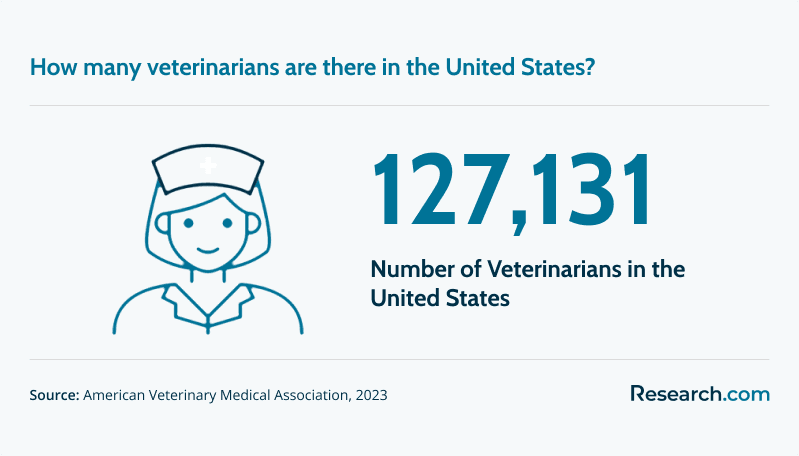
As of December 31, 2023, there are 127,131 veterinarians in the United States, of which 85,337 are female and 41,253 are male.
Common veterinarian responsibilities include:
- Examining animals and evaluating symptoms
- Diagnosing illnesses, injuries, and chronic conditions
- Providing emergency care when animals are in distress
- Creating preventive care plans
- Performing surgeries and monitoring recovery
- Administering vaccines and medications
- Explaining treatment options to animal owners
- Advocating for animal welfare and public health
| Veterinary work setting | Typical focus | Best fit for students who want to |
| Companion animal practice | Dogs, cats, rabbits, and other pets | Work directly with pet owners in clinics or hospitals |
| Food animal medicine | Cattle, pigs, sheep, and other production animals | Support herd health, disease prevention, and agriculture |
| Equine practice | Horses | Specialize in sports medicine, reproduction, dentistry, or surgery for horses |
| Public health or regulatory medicine | Food safety, zoonotic disease, animal welfare, and drug safety | Work with agencies, policy, surveillance, or population-level health |
| Research or academia | Animal health research, teaching, and scientific discovery | Combine veterinary training with research, mentoring, or faculty work |
What education do you need to become a veterinarian?
The standard educational route includes undergraduate preparation followed by a Doctor of Veterinary Medicine degree. Students should plan backward from veterinary school prerequisites because admission is competitive and individual DVM programs may require specific courses, lab work, animal experience, or standardized application materials.
Bachelor’s Degree
Most veterinary schools expect applicants to complete a bachelor’s degree or substantial undergraduate coursework before admission. Your major does not always have to be “pre-vet,” but your transcript should show strong preparation in biology, chemistry, organic chemistry, physics, math, and other science courses required by the DVM programs you are targeting.
Students who need flexible undergraduate options can review accredited bachelor degree programs online, but they should confirm that required lab sciences are accepted by the veterinary schools where they plan to apply.
Common undergraduate paths for future veterinarians include:
- Veterinary Medicine. This major aligns closely with the DVM pathway and usually includes animal anatomy, physiology, and related sciences. It is often considered one of the best degrees to get in college for students focused on veterinary medicine.
- Biology. Biology gives students a broad life-science foundation and often includes the chemistry, physics, and math coursework needed for veterinary school prerequisites.
- General Science. A general science program can work well for students who want exposure to multiple scientific fields while meeting prerequisite requirements.
- Zoology. Zoology emphasizes animal life, behavior, ecology, and anatomy, which can be useful for students interested in wildlife, exotics, or animal populations.
- Animal Science. Animal science focuses on animal biology, nutrition, reproduction, and management, making it especially relevant for students interested in livestock, equine work, or animal production systems.
- Pre-Veterinary Science. Pre-vet programs are structured around veterinary school admission requirements and often help students plan coursework, experience hours, and applications more efficiently.
According to 2024 data from Zippia, the majority (47%) of veterinarians in the United States are veterinary medicine majors. Students comparing undergraduate options may also want to review broader lists of best bachelor's degrees, but veterinary school prerequisites should remain the top priority.
Doctor of Veterinary Medicine (DVM)
After undergraduate preparation, aspiring veterinarians must complete a DVM program from an accredited veterinary school. A DVM typically takes four years and combines medical science coursework, laboratory learning, clinical skills development, and supervised rotations.
- Classroom coursework. Students study subjects such as anatomy, physiology, pharmacology, pathology, infectious disease, surgery, and species-specific medicine.
- Laboratory and skills training. Students practice animal handling, diagnostic techniques, surgical preparation, clinical reasoning, and basic procedures in supervised settings.
- Clinical rotations. In the later part of the program, students rotate through areas such as small animal medicine, large animal medicine, surgery, emergency care, and specialty services.
The chart below shows the most common majors among veterinarians in the U.S.
What are the licensing requirements for veterinarians?
After earning a DVM, graduates must meet state licensing requirements before they can practice independently. The process generally includes graduation from an accredited veterinary school, completion of required clinical training, passing the NAVLE, submitting documentation to the state board, and paying applicable fees.
- Pass the NAVLE. The NAVLE is designed to assess whether candidates have the knowledge and judgment required for entry-level veterinary practice. The pass rate for the NAVLE in the 2022–2023 academic year was 86%, down from 90% the previous year.
- Complete clinical experience. Students in programs accredited by the American Veterinary Medical Association (AVMA) complete clinical work in veterinary settings so they can apply medical knowledge to real cases under supervision.
- Submit a licensure application. State boards commonly require proof of graduation, official transcripts, licensing exam score reports, a completed application, a photo, and verification of any existing licenses held in other states or countries.
- Pay licensing fees. Initial licensing and renewal costs vary by state, so candidates should check the specific veterinary board where they intend to practice.
How do veterinarians renew their licenses?
Veterinary licenses are not permanent. Practicing veterinarians must follow state renewal rules, which usually include continuing education, renewal paperwork, and fees.
- Continuing education requirements. Veterinarians must complete the number of CE hours required by their state veterinary board during the renewal cycle. Approved activities may include workshops, conferences, seminars, and online courses.
- Renewal application. Most states allow license renewal through the state board’s website. Veterinarians may need to document CE completion and update personal or professional information.
- Fee payment. Renewal requires payment of the state’s fee. Missing the deadline can lead to a lapse in licensure.
- Additional state requirements. Some states may require background checks, specific coursework, or verification of other licenses.
- State-specific compliance. Requirements can include targeted topics such as opioid prescribing, animal welfare, or other state-mandated issues.
How long does it take to become a veterinarian?
It takes at least eight years of full-time study to become a veterinarian. The typical path includes four years for a bachelor’s degree and about four years for a DVM program. The licensing process, including applying to the state board and taking the NAVLE, can add several months.
| Stage | Typical length | Main goal |
| Bachelor’s degree or undergraduate preparation | Four years | Complete science prerequisites, build animal experience, and prepare for DVM applications |
| DVM program | Around four years | Complete veterinary medical coursework, labs, and clinical rotations |
| NAVLE and state licensure | A few months | Pass the licensing exam and secure authorization to practice |
| Residency or specialty training | Up to five years | Prepare for advanced specialty practice |
After the DVM, veterinarians may pursue specialty clinical training through internships or residencies. These advanced tracks can take up to five years and may focus on areas such as:
- Dermatology
- Cardiology
- Neurology
- Zoo Medicine
- Equine Medicine
- Orthopedic Surgery
Students trying to reduce the time spent in undergraduate study may compare accelerated online degree programs for working adults or research the quickest online bachelor's degree programs. However, speed should never come at the expense of required labs, prerequisite acceptance, or academic readiness for veterinary school.
How should you choose a DVM program?
The best DVM program is not simply the one with the most recognizable name. You should choose a program that is accredited, affordable enough for your situation, strong in your target practice area, and able to provide the clinical exposure you need for licensure and employment.
- Accreditation. A veterinary program should be accredited by the AVMA Council on Education. Accreditation is important because licensing boards rely on recognized educational standards when evaluating graduates.
- Specialization fit. If you already know you want equine medicine, small animal practice, zoo medicine, research, or public health, review whether the program offers relevant faculty expertise, rotations, externships, and student organizations.
- Clinical exposure. Strong DVM programs give students access to varied clinical settings, including hospitals, specialty services, field experiences, and supervised case work.
- Learning environment. Consider class size, advising, academic support, simulation labs, research opportunities, and whether the curriculum uses lectures, problem-based learning, clinical case discussion, or a combination.
- Total cost and debt risk. Tuition is only one part of the decision. Students should also compare fees, equipment, relocation, housing, transportation, lost income, and likely borrowing.
| Question to ask | Why it matters | What to verify |
| Is the DVM program AVMA-accredited? | Accreditation affects licensure eligibility and educational quality assurance. | Check the program’s status directly with the AVMA Council on Education. |
| Does the program match your intended specialty? | Clinical rotations and faculty expertise can shape your early career options. | Review rotation sites, specialty hospitals, externship rules, and faculty profiles. |
| How much will you borrow? | DVM costs can be substantial, especially for out-of-state students. | Compare total cost of attendance, not only tuition. |
| Are prerequisite credits accepted? | Not all online or transfer courses satisfy science lab requirements. | Ask admissions offices before enrolling in prerequisite courses. |
| What student support exists? | Veterinary school is academically intense. | Look for tutoring, mental health resources, advising, and NAVLE preparation. |
If cost is a major concern during undergraduate preparation, students may also compare accredited non profit online colleges before applying to DVM programs.
How much does a DVM degree cost?
According to 2023 data from Inspira Advantage, the average cost of a DVM for in-state students is around $78,479 to $155,295, which is equivalent to around four years of full-time study. Out-of-state students pay a total of $131,200 to $285,367.
Students researching how much a doctorate degree costs should remember that a DVM is a professional clinical doctorate with in-person lab and clinical requirements. General online doctorate cost comparisons can help with budgeting context, but they do not replace DVM-specific cost research.
| Cost factor | Why it affects your budget | How to control the expense |
| Residency status | Out-of-state students often pay much more than in-state students. | Compare resident and nonresident tuition policies before applying. |
| Program length | A DVM typically requires about four years of full-time study. | Stay on track with prerequisite planning and academic advising. |
| Fees, equipment, and supplies | Clinical programs may require instruments, lab fees, uniforms, exams, and insurance. | Request a full cost-of-attendance breakdown from each school. |
| Living expenses | Housing, transportation, and food can significantly increase borrowing. | Compare cost of living near each veterinary school. |
| Interest and repayment | Borrowing can increase the long-term cost of the degree. | Review repayment options before accepting loans. |
Financial aid may include federal student aid, scholarships, grants, private loans, work-study, and tuition assistance programs. A practical first step is completing the FAFSA so you can see which aid options may be available.
Students looking broadly at lower-cost doctoral education can review affordable online doctorate options, but aspiring veterinarians should verify that any program they consider actually supports veterinary school prerequisites or professional licensure goals.
How much do veterinarians earn?
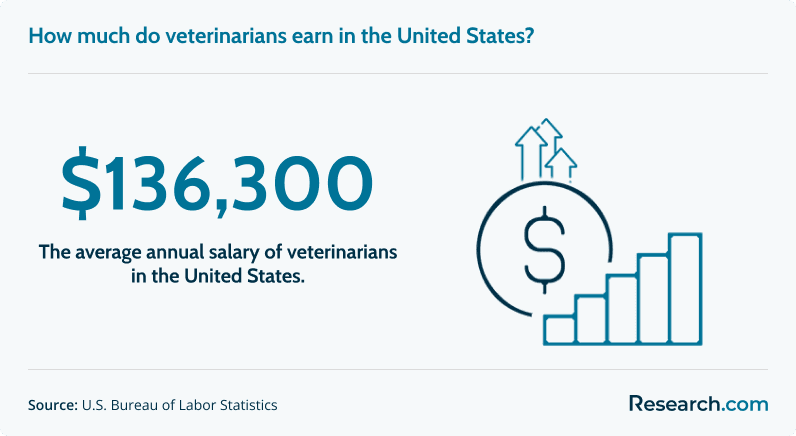
According to 2024 data from the United States Bureau of Labor Statistics (BLS), veterinarians earn a median annual salary of $119,100 and an average annual salary of $136,300. Both figures are more than twice as high as the collective median annual wage of all professions in the United States, which is $48,060.
Veterinary salaries vary by location, employer type, experience, specialty, schedule, and ownership status. Students should avoid assuming that the median salary automatically guarantees a fast payoff, especially if they attend a high-cost out-of-state program or borrow heavily.
For readers comparing healthcare career earnings, veterinarian pay can be considered alongside paths such as nurse practitioner online programs. Another high-earning healthcare path mentioned in BLS-based comparisons is the certified registered nurse anesthetist role, at $239,911 per year based on July 2024 data from the BLS; students interested in that route can review how to get into CRNA school.
The US states that pay veterinarians the most based on their average annual salary are:
- Massachusetts: $162,030
- California: $158,610
- Hawaii: $157,770
- District of Columbia: $156,570
- New Jersey: $153,630
What skills do veterinarians need?
Successful veterinarians combine medical judgment, technical skill, communication, emotional resilience, and business awareness. The role is not only about loving animals; it also requires making difficult clinical decisions, communicating clearly with owners, and working effectively with a healthcare team.
- Medical and surgical competence. Veterinarians must diagnose conditions, interpret lab tests and imaging, prescribe treatment, and perform procedures ranging from routine surgeries to complex interventions.
- Animal handling and patient care. Safe handling reduces stress and injury risk for both animals and staff. Veterinarians need to understand behavior across species and respond appropriately.
- Communication. Veterinarians explain medical findings, costs, risks, treatment choices, and prognosis to owners who may be anxious or emotional.
- Problem-solving and clinical reasoning. Cases are not always straightforward. Strong veterinarians evaluate evidence, consider differential diagnoses, and adjust plans when new information appears.
- Attention to detail. Small errors in dosage, charting, lab interpretation, or surgical technique can have serious consequences.
- Empathy and emotional intelligence. Veterinarians often support owners through illness, end-of-life decisions, and financial limitations.
- Business and leadership skills. Practice owners and managers need to understand staffing, scheduling, pricing, compliance, client service, and financial operations.
- Technology proficiency. Modern practices use digital records, diagnostics, scheduling systems, client communication tools, and practice management software.
How can non-traditional students balance veterinary preparation with work and family?
Non-traditional students may be preparing for veterinary school while working full time, supporting family members, changing careers, or returning to college after a gap. The path is possible, but it requires careful course sequencing and realistic expectations about time, lab requirements, animal experience, and application deadlines.
Flexible programs can help students complete prerequisite or general education coursework. For example, learners who need an efficient early college pathway may compare the quickest associates degree programs. Before enrolling, however, students should confirm whether the credits will transfer and whether science labs meet veterinary school requirements.
- Map prerequisites first. Build a course plan based on the DVM programs you may apply to, not just your current college’s degree checklist.
- Protect lab time. Science labs are often less flexible than lecture courses, so plan work schedules around them early.
- Use summers strategically. Summer terms can help you complete chemistry, biology, physics, or animal experience hours.
- Look for employer support. Some employers may offer tuition assistance, flexible scheduling, or relevant animal care experience.
- Build a support network. Advisors, veterinarians, classmates, and professional organizations can help you stay accountable and avoid preventable mistakes.
How can veterinarians reduce administrative workload?
Clinical work is only part of running a veterinary practice. Scheduling, charting, billing, inventory, reminders, compliance, and client communication can consume significant time if systems are outdated or poorly organized.
Veterinarians can streamline operations by using practice management software, standardizing documentation templates, training staff on billing procedures, auditing claims and invoices, and assigning clear administrative responsibilities. Practices that want deeper expertise in coding, billing, and documentation workflows may explore medical coding accredited programs as a way to strengthen back-office accuracy and consistency.
Which advanced degrees can help veterinarians grow their careers?
A DVM prepares graduates for veterinary practice, but some veterinarians later pursue additional degrees to move into leadership, research, public health, education, or administration. The right advanced degree depends on the intended role.
| Advanced education option | Potential use for veterinarians | When it may make sense |
| Master’s degree | Research, public health, management, or specialized knowledge | You want to expand beyond clinical practice or strengthen a focused area |
| Healthcare administration study | Practice operations, budgeting, compliance, and leadership | You manage a clinic, own a practice, or want a leadership role |
| Residency or specialty training | Advanced clinical specialization | You want board-specialty practice in areas such as surgery, dermatology, or cardiology |
Veterinarians who want flexible graduate study can compare an affordable master's degree online, while keeping in mind that clinical veterinary specializations usually require structured hands-on training.
How can veterinary practices improve billing and revenue management?
Revenue management affects whether a veterinary practice can invest in staff, equipment, training, and patient care. Common problems include inconsistent invoicing, missed charges, claim errors, unclear estimates, and weak follow-up on accounts.
Practices can improve billing by using integrated software, training staff on charge capture, creating standard estimate templates, reviewing denials or disputed bills, and conducting periodic internal audits. If a clinic is considering staff training, comparing the medical coder certification cost can help determine whether additional billing education is financially reasonable.
- Use written protocols for common procedures and billing scenarios.
- Review invoices before clients leave, especially after surgery or emergency visits.
- Separate clinical decision-making from unclear pricing conversations by using trained client service staff when appropriate.
- Monitor trends in missed charges, refunds, disputes, and unpaid balances.
- Keep documentation consistent so medical records support charges and treatment decisions.
What financial aid options should veterinary students consider?
Veterinary school is a major financial commitment, so students should begin aid planning before admission decisions arrive. The best approach usually combines federal aid review, institutional scholarships, external scholarships, budgeting, and careful borrowing.
- Federal student aid. Completing the FAFSA helps students identify federal loan and aid options.
- Institutional scholarships. Veterinary schools may offer scholarships based on merit, need, background, or career interest.
- External scholarships and grants. Professional associations, foundations, state programs, and animal-related organizations may offer awards.
- Work-study or part-time work. Some students can work during portions of their education, although DVM coursework is demanding.
- Repayment planning. Students should compare projected debt with realistic income scenarios before choosing a program.
Students comparing the cost of professional doctoral paths may also review resources such as cheapest pharmacy school, but veterinary school cost decisions should be based on DVM-specific tuition, aid, and licensure requirements.
What careers can you pursue with a DVM?
A DVM opens more doors than private pet practice. Graduates may work in clinical care, research, public health, food safety, regulatory medicine, academia, emergency medicine, or specialty practice.
- Companion Animal Practice. These veterinarians provide primary care, preventive medicine, dentistry, diagnostics, and surgery for pets such as dogs, cats, rabbits, and other small animals. They may work in private clinics, emergency hospitals, or specialty practices.
- Food Animal Medicine. Food animal veterinarians support the health of animals such as cattle, pigs, sheep, and horses. Their work may include herd health, disease prevention, treatment, and production medicine.
- Equine Practice. Equine veterinarians focus on horses and may provide preventive care, dentistry, reproductive services, lameness evaluations, surgery, and sports medicine.
- Research Veterinarian. Research veterinarians study areas such as infectious disease, immunology, animal welfare, pharmaceuticals, or biomedical science in universities, companies, or government institutions.
- Veterinary College Faculty. Faculty veterinarians teach students, supervise clinical training, mentor future professionals, and conduct research.
- Public Health Veterinarian. Public health veterinarians work on food safety, zoonotic disease control, animal welfare, outbreak response, and population health.
- Veterinary Regulatory Medicine. Regulatory veterinarians help evaluate and monitor animal drugs, vaccines, safety standards, and compliance systems.
Can online education support veterinary career growth?
Online education cannot replace the hands-on clinical training required for a DVM, but it can help veterinarians and pre-veterinary students build complementary skills. Useful areas may include practice management, communication, data tools, public health, leadership, or healthcare administration.
Students exploring adjacent healthcare education can review what medical careers you can study online. The key is to separate flexible supplemental education from the in-person clinical requirements needed for veterinary licensure.
Should veterinarians consider complementary healthcare certifications?
Complementary healthcare certifications can sometimes help veterinarians understand team-based workflows, client service, and administrative operations. They are not substitutes for veterinary licensure, but they may be useful for practice owners, managers, or veterinary teams that want broader healthcare operations knowledge.
For example, programs such as a medical assistant degree online in 6 weeks may introduce support-role concepts used in human healthcare. Veterinarians should evaluate whether such training fits their actual practice needs before investing time or money.
Is a master’s in healthcare administration useful for veterinarians?
A master’s in healthcare administration can be useful for veterinarians who manage hospitals, own clinics, supervise teams, or want to move into executive or operational roles. It can strengthen knowledge in budgeting, staffing, compliance, strategic planning, quality improvement, and organizational leadership.
The degree is usually less relevant for veterinarians who want only clinical specialization. Those professionals may benefit more from internships, residencies, or board certification. Veterinarians considering management-focused graduate education can review the MHA career outlook to understand how this credential may support broader leadership goals.
What is the job outlook for veterinarians?
According to the BLS, employment of veterinarians from 2022 to 2032 is projected to grow by 20%. This is substantially higher than the national average of 3% for all occupations.
During that period, aspiring veterinarians can expect about 5,000 job openings per year. The largest employer category is animal hospitals and clinics, which employ 83% of veterinarians. The chart below shows the top employers of veterinarians in the country.
How can veterinarians use technology in practice?
Technology is changing how veterinary practices diagnose conditions, communicate with clients, monitor patients, and run daily operations. The most useful tools are the ones that solve a real workflow or patient-care problem rather than adding complexity.
How can technology improve practice efficiency?
- Telemedicine and virtual consultations. Remote consultations can support follow-up care, triage, chronic condition monitoring, and client education when an in-person visit is not required.
- Electronic health records. Digital records help practices track medical history, vaccinations, allergies, lab results, treatment plans, and client communication in one system.
- Wearable health monitors for pets. Pet health trackers can provide information about activity, behavior, and vital signs that may help veterinarians identify changes earlier.
- 3D printing. Veterinary teams may use 3D printing for custom prosthetics or anatomical models that support surgical planning.
- Imaging and diagnostics. Ultrasound, MRI, CT scans, and portable imaging tools can improve diagnostic accuracy and expand care options in clinics, farms, and remote settings.
- Practice management software. Scheduling, billing, reminders, inventory, records, and client messaging can be managed more efficiently with integrated systems.
- Data analytics and predictive health. Data tools can help veterinarians identify patterns in animal health, monitor populations, and support disease prevention efforts.
How can veterinary students gain experience before graduation?
Experience matters before and during veterinary school. It helps students confirm that the career fits them, build confidence around animals, understand clinic workflows, and strengthen applications in a competitive admissions environment.
- Volunteer at animal shelters or rescue organizations. Shelter work exposes students to different species, temperaments, care routines, and welfare issues.
- Complete internships or externships. Veterinary clinics, hospitals, farms, research settings, and DVM programs may offer supervised opportunities to observe or assist with real cases.
- Shadow licensed veterinarians. Shadowing helps students understand daily responsibilities, client communication, ethical decisions, and the pace of clinical practice.
- Pursue relevant healthcare or animal-care certifications when useful. Some students use support credentials to build experience or earn income while studying. Those comparing options can review quick medical certifications that pay well.
- Join undergraduate research. Research in animal nutrition, disease, welfare, or biomedical science can strengthen analytical skills and expose students to non-clinical veterinary career paths.
Admissions committees may value both the quantity and quality of experience. Students should keep records of hours, duties, supervisors, and lessons learned so they can use that information in applications and interviews.
Can accelerated healthcare administration programs help veterinary managers?
Veterinarians who move into ownership, hospital leadership, or operations management may need skills that are not deeply covered in clinical training. Budgeting, staffing, compliance, workflow design, marketing, client experience, and team leadership all affect practice performance.
An accelerated administration program may help a veterinarian build these skills more efficiently. Those exploring this route can compare the shortest healthcare administration programs online and decide whether the curriculum aligns with veterinary practice management rather than general healthcare administration alone.
What are the best self-paced online colleges for aspiring veterinarians?
Self-paced online colleges can help aspiring veterinarians complete general education or selected prerequisite coursework while balancing work, family, or other responsibilities. They can be especially useful for students who are early in the pathway, changing careers, or strengthening their science foundation before applying to a bachelor’s or DVM program.
However, students should be careful. Veterinary schools may have strict rules about online labs, transfer credits, grades, recency of coursework, and prerequisite content. Before enrolling, ask the DVM programs you may apply to whether the online courses will be accepted.
Students looking for flexible options can review accredited self-paced online colleges. Accreditation, transferability, lab format, advising, and cost should all be part of the decision.
Common Mistakes to Avoid When Planning a Veterinary Career
- Choosing a college without checking prerequisite acceptance. A course may count toward your bachelor’s degree but not meet a veterinary school’s admission requirement.
- Focusing only on tuition. Fees, equipment, transportation, housing, and interest can change the real cost of a DVM.
- Assuming every online science course will qualify. Some veterinary schools may require in-person labs or specific course formats.
- Underestimating the competitiveness of admission. With U.S. vet school acceptance rates around 10% to 15%, students should build strong grades, experience, recommendations, and application materials early.
- Ignoring licensure rules by state. NAVLE passage is central, but each state board may have its own documentation, fees, and renewal expectations.
- Choosing a DVM program based only on reputation. Accreditation, clinical exposure, cost, specialty fit, support services, and debt risk matter more than name recognition alone.
- Assuming salary outcomes are guaranteed. The BLS reports strong median and average pay, but actual earnings vary by state, employer, specialty, experience, and practice model.
Questions to Ask Before Committing to the Veterinary Path
- Am I prepared for at least eight years of full-time study before licensure?
- Have I confirmed prerequisite requirements for several DVM programs?
- Can I handle advanced science coursework, labs, and clinical training?
- Have I gained enough animal and veterinary experience to understand the job realistically?
- Do I know whether I prefer companion animal, large animal, equine, research, public health, or specialty practice?
- How much debt am I likely to take on, and how does that compare with realistic salary expectations?
- Is the DVM program I am considering AVMA-accredited?
- What support does the school provide for clinical placements, NAVLE preparation, and student wellness?
References
- Agbetunsin, O. (2023, July 4). How long is vet school? (plus how to become a veterinarian). Indeed
- American Veterinary Medicine Association (2023, December 31). U.S. veterinarian numbers. American Veterinary Medicine Association
- BLS (2024, April 3). 29-1131 Veterinarians. BLS
- BLS (2024, April 17). Veterinarians. BLS
- Larkin, M. (2024, March 6). Number of NAVLE test takers increase as overall scores decrease. American Veterinary Medicine Association
- Mithers, C. (2021, November 12). Most Americans have pets. Almost one third can’t afford their vet care. Talk Poverty
- Preminger, J. (2023, January 12). How much does vet school cost? What you’ll pay in tuition. Inspira Advantage
- Zippia (2024, April 5). Veterinarian education requirements. Zippia
Key Insights
- Becoming a veterinarian usually requires a bachelor’s degree, a four-year DVM, clinical training, NAVLE passage, and state licensure.
- The pathway takes at least eight years of full-time study, and specialty training can add up to five more years.
- Veterinary school admission is competitive, with a reported U.S. acceptance rate around 10% to 15%, so students should plan prerequisites and experience early.
- DVM costs vary widely: in-state students pay around $78,479 to $155,295, while out-of-state students pay $131,200 to $285,367.
- Veterinarians earn a median annual salary of $119,100 and an average annual salary of $136,300, but actual earnings depend on location, specialty, employer, and experience.
- AVMA accreditation, clinical rotation quality, debt level, specialty fit, and licensure eligibility are the most important factors when comparing DVM programs.
- Online and self-paced education can help with prerequisites or career development, but students must confirm transferability, lab requirements, and veterinary school acceptance before enrolling.
Other Things You Should Know About How to Become a Veterinarian
In 2027, the cost of attending veterinary school can range from $150,000 to over $250,000. Factors contributing to this expense include tuition fees, specialized equipment, medical supplies, facility maintenance, and highly qualified faculty. Financial aid and scholarships can help mitigate costs.
Attending veterinary school in 2027 is expensive due to high tuition fees, which can exceed $200,000 for four years, along with costs for books, supplies, and living expenses. Additionally, the advanced facilities and technology used in training contribute to the overall cost.
In 2027, to become a veterinarian, you will need to earn a Doctor of Veterinary Medicine (DVM) degree. This typically follows a bachelor's degree in a related field. After obtaining a DVM, you must also pass the North American Veterinary Licensing Examination (NAVLE) to practice.