2027 Fastest Online Patient Care Technician Certification Programs

Co-Founder and Chief Data Scientist
As a specialist in career and education planning, I frequently assist individuals aiming for rapid entry into stable, in-demand fields within the healthcare industry. The pursuit of the fastest online patient care technician certification is a popular and practical goal. The digital landscape is filled with programs making bold claims about completion times, making it difficult to discern credible, accredited options from those that are merely well-marketed.
The critical task is to evaluate a program's true value and rigor beyond its advertised speed. My purpose is to provide expert clarity, helping you identify a genuinely accelerated program that upholds academic standards and meets your career objectives.
What are the benefits of getting a qualification from the fastest online Patient Care Technician certification programs?
- Accelerated Career Entry: A professional certificate can quickly qualify you for essential, hands-on roles such as Patient Care Technician (PCT), hospital technician, or dialysis technician in various healthcare settings.
- Strong Foundation for Advancement: The skills and experience gained as a PCT provide a direct pathway for future education and career growth, often serving as a stepping stone to becoming a Licensed Practical Nurse (LPN) or Registered Nurse (RN).
- Flexible Learning: The accelerated online format provides the convenience of earning a credential on a condensed timeline, allowing you to balance education with current personal or work commitments.
What can I expect from the fastest online patient care technician certification programs?
- Focused Advanced Topics: Expect an intensive curriculum centered on key clinical skills like phlebotomy (drawing blood), EKG administration, catheter care, patient mobility, and monitoring vital signs.
- Structured Curriculum: Delivery typically combines recorded lectures, live online seminars, and practical skills assignments. Crucially, these programs require a mandatory in-person clinical practicum or externship to ensure hands-on competence.
- Applied Strategic Knowledge: Emphasis is placed on real-world patient care scenarios, focusing on safety, infection control, effective communication, and compliance with healthcare regulations like HIPAA.
- Condensed Timeline: Programs are designed to be completed quickly, often in 6-12 months, through intensive, focused modules.
Where can I work with an online patient care technician certification?
- Hospitals: Secure entry-level roles on various units, including medical-surgical, intensive care, and emergency departments, assisting nurses with direct patient care.
- Outpatient and Specialty Clinics: Work in settings like dialysis centers, plasma donation centers, or rehabilitation clinics, performing specialized technical tasks.
- Long-Term Care Facilities: Provide daily care for residents in nursing homes and assisted living facilities, helping with mobility, hygiene, and monitoring health status.
- Physician Offices: Assist with patient intake, vital signs, and minor in-office procedures in a private practice setting.
- Home Healthcare Services: Work for agencies that provide in-home care, assisting patients with daily living activities and basic medical monitoring.
How much can I earn with an online patient care technician certification?
- Entry-Level Roles: PCTs with a new certificate and national certification typically earn between $32,000 and $40,000 annually. An entry-level Patient Care Technician with less than one year of experience can expect to earn an average of $32,697.60 annually.
- Experienced and Lead Roles: With several years of experience and potential specializations, professionals in senior or lead technician roles can earn $40,000-$50,000.
- Specialized Roles: Technicians specializing in high-demand fields like dialysis or cardiology command higher salaries from approximately $40,000 to >$65,000 annually.
- Fastest Online Patient Care Technician Certification Programs for 2027 List of Programs
- What is the average cost of an online patient care technician certification? Program Cost
- What are the financial aid options for an online patient care technician certification? Financial Aid
- What are the prerequisites for enrolling in an online patient care technician program? What are the prerequisites for enrolling in an online patient care technician program?
- What courses are typically in an online patient care technician program? What courses are typically in an online patient care technician program?
- Are Online Patient Care Technician Certification Programs Accredited? Are Online Patient Care Technician Certification Programs Accredited?
- Can an online patient care technician certification lead to advanced healthcare opportunities? Can an online patient care technician certification lead to advanced healthcare opportunities?
- What types of specializations are available for patient care technician graduates? Specializations
- How do you choose the best online patient care technician program? How do you choose the best online patient care technician program?
- What career paths are available for graduates of online patient care technician programs? Career Paths
- How much can I earn with an online patient care technician certification? Salaries
- What is the job market for graduates with an online patient care technician certification? Job Market
- What are some current and future trends in patient care? What are some current and future trends in patient care?
- Do Employers Value an Online Patient Care Technician Certification? Do Employers Value an Online Patient Care Technician Certification?
Fastest Online Patient Care Technician Certification Programs for 2027
If you want to enter healthcare quickly without committing to a full degree, an online patient care technician certification can be a practical starting point. Patient care technicians, often called PCTs, support nurses and other clinicians by helping with daily patient needs, taking vital signs, collecting blood specimens, performing EKG-related tasks, and documenting basic care. The right program can help you prepare for national certification and entry-level healthcare work, but the fastest option is not always the best option for every student.
This guide compares accelerated online and hybrid patient care technician programs, including program length, tuition where available, clinical requirements, certification preparation, and student support. It also explains how to evaluate accreditation, externships, costs, financial aid, job outlook, salaries, and advancement options so you can choose a program that fits your schedule, budget, and career goals.
Quick answer: What is the fastest online patient care technician certification?
Among the programs listed here, several advertise completion timelines of 4 to 8 weeks, while others are self-paced and allow several months to finish. The fastest option may work well if you already have healthcare experience, can complete hands-on requirements quickly, and are prepared for an intensive schedule. If you are new to healthcare, a slightly longer program with stronger clinical support, exam preparation, and career coaching may be the safer choice.
| Program | Stated completion time | Format | Best fit |
| Phlebotomy Career Training | 4 weeks, with up to 6 months allowed | 100% online coursework with required clinicals arranged by the student | Experienced CNAs or similar healthcare workers who can secure a local internship |
| Texas Health Professions, LLC | Self-paced over a 4-week period, with 1 year of access | Online | Students seeking a short, low-cost online course aligned with NHA preparation |
| Legacy Career Institute | 5–7 weeks | In-person and self-paced online options with eight in-person hands-on days | Students who want PCT, Phlebotomy, and EKG training with required skills practice |
| Advanced eClinical Training | As little as 8 weeks, with up to 12 months of access | Fully online, self-paced, with externship placement opportunities | Students who want simulation-based training and possible clinical placement support |
| CALRegional Training Institute | 8 weeks | Hybrid: 50% instructor-led online lectures and 50% hands-on lab training | Students who want structured lectures, labs, and immediate externship placement |
| Stepful | 8 weeks | Online live classes, no in-person clinical hours required | Students who want live instruction and job-search coaching |
How we evaluate programs
Because certificate training can affect your eligibility for certification exams, externships, and employment, Research.com uses a transparent review process. Our methodology considers program structure, published costs, completion time, learning format, certification preparation, support services, and publicly available education data from sources such as:
- IPEDS database
- Peterson's database, including its Distance Learning Licensed Data Set
- College Scorecard database
- National Center for Education Statistics
Use this list as a starting point, not as a substitute for asking each provider about certification eligibility, clinical requirements, state rules, refund policies, and employer recognition in your local area.
1. Advanced eClinical Training
The Certified Patient Care Technician program from Advanced eClinical Training is a fully online, self-paced option built for students who want to prepare for national certification and move toward entry-level healthcare work. The curriculum introduces medical terminology, anatomy and physiology, patient communication, and professional conduct.
Students practice core PCT skills such as helping patients with activities of daily living, monitoring vital signs, taking EKG readings, performing phlebotomy procedures, and supporting basic lab testing. Enrollment includes 12 months of access to online materials, including textbooks, downloadable notes, seminars, and discussion boards.
The program also uses simulation-based instruction, including a virtual ECG lab. BLS and cardiovascular life support training are included, and ACT offers clinical externship placement opportunities through a nationwide network of hospitals and clinics.
- Program length: As little as 8 weeks; self-paced with up to 12 months of access
- Tracks or concentrations: None specified
- Tuition cost: $3,300 total cost
- Required credits or lessons: 374 lessons
- Accreditation or certification alignment stated by provider: American Medical Certification Association (AMCA), National Healthcareer Association (NHA), Pharmacy Technician Certification Board
2. CALRegional Training Institute (CRTI)
The CALRegional Training Institute (CRTI) Patient Care Technician Program is a hybrid course that combines 50% instructor-led online lectures with 50% hands-on lab training. It is designed for students who want direct skills practice and a structured path into entry-level patient care roles.
The program can be completed in 8 weeks and includes immediate externship placement upon enrollment. Graduates are prepared to sit for the National Patient Care Technician/Assistant Certification exam through the NHA. The curriculum is offered through partnerships with adult schools and community colleges.
Students learn practical care duties, including bathing, catheter care, emotional support for patients and families, EKGs, vital sign monitoring, phlebotomy, and management of patient care supplies. Day, evening, and weekend class options are available, which may help students balance training with work or caregiving responsibilities.
- Program length: 8 weeks
- Tracks or concentrations: None specified
- Tuition cost: $2,995 or less, in-state and out-of-state
- Required credits: Not specified
- Accreditation or certification alignment stated by provider: Partner schools are accredited
3. Legacy Career Institute
Legacy Career Institute offers a Patient Care Technician program that includes PCT, Phlebotomy, and EKG training. The program can be completed part-time in 5–7 weeks and prepares students for a national certification exam.
Students can choose in-person or self-paced online study. Online learners use a student portal, while students who prefer live instruction may attend live online sessions. All students must complete eight in-person days of hands-on training for PCT, EKG, and Phlebotomy skills.
The curriculum covers basic patient care, bathing, feeding, emotional support, and preparation for certification exams. Legacy Career Institute also provides job placement support through local healthcare partnerships.
- Program length: 5–7 weeks; part-time, with a self-paced online option
- Tracks or concentrations: None specified
- Tuition cost: $1,895 total
- Required credits or training: Classes plus eight in-person days of hands-on training
- Accreditation or certification alignment stated by provider: Not explicitly stated
4. Penn Foster Career School
Penn Foster Career School offers a fully online Hospital Care Assistant certificate for students who need a flexible, self-paced format. The program covers patient care, medical terminology, and basic nursing support, and it prepares students for certification exams such as CPR and First Aid.
This option is designed for students who want to support nursing staff in direct and indirect patient care. Possible roles include nursing aide and patient care assistant, depending on employer requirements and state rules.
Coursework teaches students how to help with daily living activities, including cleaning, bathing, repositioning, and transferring patients between beds and wheelchairs. Students also study OSHA guidelines, safe patient handling, patient confidentiality, and HIPAA compliance. Support is available from faculty, academic coaches, and career advisors.
- Program length: Not explicitly stated; self-paced
- Tracks or concentrations: Hospital Care Assistant
- Tuition cost: Not specified
- Required credits: Not specified
- Accreditation or certification alignment stated by provider: Distance Education Accrediting Commission (DEAC), Commission on Secondary Schools of the Middle States Association of Colleges and Schools ( MSA-CESS)
5. Phlebotomy Career Training
Phlebotomy Career Training offers a 100% online Patient Care Technician Certification program for experienced medical professionals. Applicants must have at least six months of prior work as a CNA or in a similar role.
The course is self-paced, available 24/7, and may be completed in as little as four weeks, although students have up to six months to finish. The curriculum includes oral care, charting, blood draws, medication passing, feeding tube setup, electrocardiograms, patient assessments, HIPAA, and OSHA rules.
Each student is assigned a qualified instructor who can provide support by phone and email during business hours. Students must complete clinical competencies in patient assessment, phlebotomy, and ECG using a provided form, but they must arrange their own local internship. After finishing the course and internship, students must pass a national certification exam to earn the credential.
- Program length: 4 weeks; self-paced, with up to 6 months allowed
- Tracks or concentrations: Phlebotomy
- Tuition cost: $550
- Required credits: Not specified
- Accreditation or certification alignment stated by provider: National Healthcareer Association (NHA), American Medical Certification Association (AMCA), National Center for Competency Testing (NCCT)
6. Stepful
Stepful offers an eight-week online Patient Care Technician program that prepares students for a national certification exam and supports job searches for full-time roles in hospitals, nursing homes, and outpatient facilities.
The program is fully online and does not require in-person clinical hours. Students can choose morning or evening live classes, making it a part-time option for learners who need schedule flexibility.
In the first four weeks, students study medical terminology, healthcare communication, vital signs, infection control, and basic patient care. Weeks five and six cover phlebotomy and EKG fundamentals, followed by certification exam preparation. After graduation, career coaches help with resumes, interview preparation, and job search strategy. The program includes online platform access, live classes, exam preparation, coaching, career support, textbooks, and materials.
- Program length: 8 weeks
- Tracks or concentrations: Patient Care Technician
- Tuition cost: Not specified
- Required credits: Not specified
- Accreditation or certification alignment stated by provider: Affiliated with the National Healthcareer Association (NHA)
7. U.S. Career Institute
U.S. Career Institute offers a 100% online Patient Care Technician Certification Training Course for students preparing for work in hospitals, doctor’s offices, and long-term care facilities. The program can be completed in as little as four months.
The provider reports a projected job growth of 4% by 2033 and a median professional salary of $39,430 per year. Coursework begins with medical terminology, anatomy, physiology, safety precautions, and nutrition, then moves into patient charting, vital signs, feeding, cleanliness, and mobility support.
Students receive a blood pressure cuff and stethoscope for hands-on learning and use virtual labs to practice scenarios online. The mobile-friendly student portal provides 24/7 access to course materials, an online resource library, and a knowledge base. Students can contact instructors for academic help and use the Career Coach Program for one-on-one career advising.
- Program length: As little as four months; self-paced
- Tracks or concentrations: Patient Care Technician
- Tuition cost: Pay in full $979, or $69 monthly payments
- Required credits: Not specified
- Accreditation or certification alignment stated by provider: Distance Education Accrediting Commission (DEAC)
8. MedCerts
MedCerts offers a 23-week Certified Patient Care Technician program delivered 100% online with no travel requirements. The on-demand format gives students 24/7 access and prepares them for national certification.
Students study medical terminology, disease processes, anatomy and physiology, professionalism, and communication. Clinical skill areas include bathing, feeding, catheter care, safety checks, patient room maintenance, EKG readings, vital signs, phlebotomy, specimen handling, and assistance with minor procedures.
The course uses 3D animations, immersive environments, interactive activities, and game-based learning. Students receive support from personal advisors through text, call, and email, as well as career coaching focused on exam preparation and soft skills.
- Program length: 3–6 months; self-paced
- Tracks or concentrations: Patient Care Technician
- Tuition cost: $4,000 average program cost
- Required credits: Not specified
- Accreditation or certification alignment stated by provider: National Healthcareer Association (NHA)
9. CareerStep
CareerStep offers an online Patient Care Technician Certification program for students seeking flexible training for entry-level healthcare work. The self-paced format allows learners to study from anywhere while balancing work, family, or other responsibilities.
The curriculum covers anatomy and physiology, patient care fundamentals, phlebotomy, EKG procedures, and workplace professionalism. Students receive a venipuncture kit for at-home blood draw practice.
The program prepares students for national certifications, including the Certified Patient Care Technician/Assistant (CPCT/A) from the National Healthcareer Association (NHA), Certified Phlebotomy Technician (CPT), and Certified EKG Technician (CET). Clinical hours are required for certification and employment, but CareerStep does not guarantee externship placement, so students must arrange their own clinical experience.
- Program length: Self-paced; up to 12 months of full access to complete the program
- Tracks or concentrations: Patient Care Technician
- Tuition cost: Not specified; various monthly course extensions available
- Required credits or courses: Not specified; program consists of 20 courses covering all required content areas
- Accreditation or certification alignment stated by provider: CareerStep is an approved training provider for the National Healthcareer Association (NHA) and is recognized by the National Center for Competency Testing (NCCT) and the American Medical Certification Association (AMCA) for certification preparation.
10. Texas Health Professions, LLC
Texas Health Professions offers a self-paced online Patient Care Technician program designed around a four-week schedule. Students receive one full year of access to mobile-friendly course materials.
Course content is released weekly after students complete the previous section’s quiz. Instructors guide learners through PCT responsibilities, ethics, medical terminology, common patient conditions, daily living assistance, hygiene, infection prevention, and patient safety.
The program also covers vital signs, including blood pressure and pulse, as well as EKG testing and basic phlebotomy techniques. A final exam checks student knowledge. Career preparation includes communication skills, resume tips, and interview guidance.
- Program length: Self-paced over a 4-week period; access valid for 1 year
- Tracks or concentrations: Patient Care Technician
- Tuition cost: $415
- Required credits: Not specified
- Accreditation or certification alignment stated by provider: National Healthcareer Association (NHA)
If price matters more than speed, compare these options with our guide to the most affordable online patient care technician certification programs.
What is the average cost of an online patient care technician certification?
Online patient care technician certificate costs vary widely because programs differ in length, clinical requirements, institutional type, included materials, and certification exam support. A shorter program may cost less upfront, but it may also require you to pay separately for supplies, background checks, exam fees, or clinical placement expenses.
- Program hours: Many programs require between 100-600 total hours of training, including clinical components.
- Community colleges: Public community college programs are often among the lower-cost options, with total program costs typically ranging from $1,500 to $4,000.
- Private career colleges: Private and for-profit career colleges often charge more, with total program costs often ranging from $2,500 to over $10,000.
- Additional fees: Students should plan for technology fees, application fees, textbooks, scrubs, background checks, drug screenings, immunizations, and the national certification exam, which can be around $160.
| Cost item | Why it matters | Question to ask before enrolling |
| Tuition | This is usually the largest advertised cost, but it may not include everything. | Is the published tuition the total program price? |
| Certification exam | Some programs include exam preparation but not the exam fee. | Is the certification exam fee included or paid separately? |
| Clinical requirements | Externships may require travel, health records, background checks, or site fees. | Will the school place me, or must I find my own clinical site? |
| Supplies and equipment | Programs may require scrubs, kits, a stethoscope, or a blood pressure cuff. | Which supplies are included in tuition? |
| Extensions | Self-paced programs sometimes charge if you need extra time. | What happens if I do not finish before access expires? |
What are the financial aid options for an online patient care technician certification?
Financial aid depends on the school, the program’s eligibility, your state, and your employment situation. Before enrolling, ask the provider to explain which aid options apply to that exact certificate, not just to the institution in general.
- Federal Student Aid: Some certificate programs, especially those offered by accredited community colleges, may qualify for federal financial aid. Students can apply by completing the Free Application for Federal Student Aid (FAFSA).
- Employer tuition assistance: If you already work in healthcare, your employer may offer tuition assistance or reimbursement for training that improves patient care skills.
- Workforce Innovation and Opportunity Act (WIOA): Unemployed or underemployed students may qualify for state WIOA funding for training in in-demand occupations.
- Private loans and payment plans: Many schools offer installment plans. Private loans may also be available, but students should compare interest rates, fees, and repayment terms carefully.
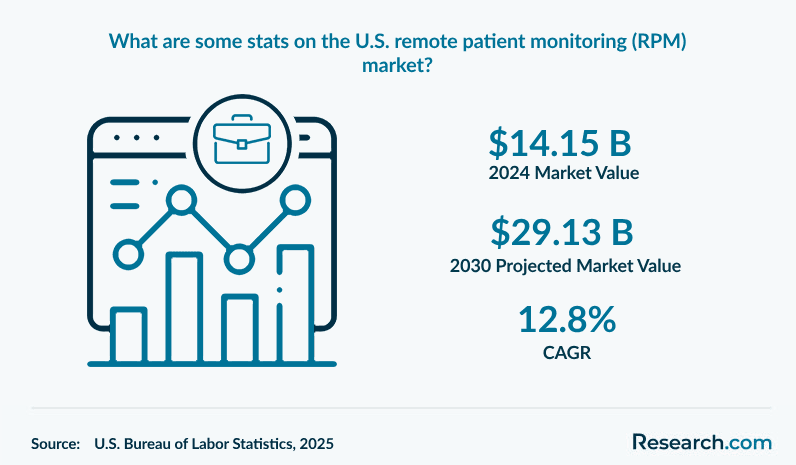
Financial planning matters because healthcare support roles are connected to broader changes in patient monitoring and care delivery. The U.S. remote patient monitoring (RPM) market was valued at $14.15 billion in 2024 and is projected to reach $29.13 billion by 2030, reflecting a compound annual growth rate (CAGR) of 12.8%, as shown in the graphic below. This growth is tied to demand for more efficient and cost-effective healthcare solutions.
Demographic change is one reason patient care support remains important. According to the Population Reference Bureau, the number of Americans aged 65 and older is expected to grow by 47%, from 58 million in 2022 to 82 million by 2050. Seniors’ share of the total population is expected to rise from 17% to 23% during the same period. Technology, including AI-driven analytics, is also influencing how care teams monitor patients and respond to clinical data.
What are the prerequisites for enrolling in an online patient care technician program?
Admission requirements are usually straightforward, but clinical sites may have stricter rules than the online classroom portion of a program. Always confirm both academic admission requirements and externship clearance requirements before paying tuition.
- High school diploma or GED: Most certificate programs require a high school credential or equivalent.
- Minimum age: Many programs require students to be at least 18 years old, especially when clinical externships are involved.
- Background check and drug screening: Because PCTs work with vulnerable patients, students commonly need to pass a criminal background check and drug screening before clinical placement.
- Immunizations: Clinical partners may require proof of immunizations such as hepatitis B, MMR, and a current flu shot.
What courses are typically in an online patient care technician program?
Patient care technician programs combine basic healthcare theory with hands-on clinical skills. Online programs may teach concepts through readings, videos, virtual labs, simulations, and live lectures, while clinical skills may require in-person labs, externships, competency forms, or employer-supervised practice.
| Course or skill area | What students learn | Why it matters in patient care |
| Medical Terminology | Common medical words, abbreviations, and documentation language | PCTs must communicate clearly with nurses, physicians, patients, and families. |
| Anatomy & Physiology | Basic body systems, normal function, and how illness or injury affects patients | This foundation helps technicians understand vital signs, symptoms, and care instructions. |
| Patient Care Fundamentals | Bathing, feeding, dressing, transferring, infection control, and vital signs | These tasks make up much of the daily work in hospitals and long-term care settings. |
| Phlebotomy | Blood draw techniques, specimen handling, and safety procedures | Phlebotomy skills can make a PCT more useful in clinical settings and may support specialization. |
| EKG/Cardiovascular Technology | EKG machine operation, lead placement, and basic rhythm recognition | Cardiac monitoring skills are valuable in hospitals, clinics, and telemetry environments. |
| Medical Law and Ethics/HIPAA | Patient privacy, confidentiality, legal standards, and ethical behavior | PCTs handle sensitive patient information and must follow privacy and safety rules. |
Are online patient care technician certification programs accredited?
Some online patient care technician programs are offered by accredited schools, while others are training programs aligned with national certification organizations. These are not the same thing. Institutional accreditation can affect financial aid, credit transfer, and employer confidence. Certification exam eligibility depends on the exam provider’s rules and the program’s curriculum, clinical requirements, and approval status.
Before enrolling, verify accreditation directly with the school and, when relevant, with recognized agencies such as the Accrediting Bureau of Health Education Schools (ABHES) or comparable recognized bodies. Also confirm whether the program prepares you for a specific exam, such as the NHA Certified Patient Care Technician/Assistant credential, and whether that exam is accepted by employers in your area.
Accreditation can also matter if you plan to continue your education later. For example, students who eventually want broader healthcare or wellness training may compare certificate work with degree pathways such as an online bachelors degree in nutrition science.
Can an online patient care technician certification lead to advanced healthcare opportunities?
A PCT certificate can be a first step into healthcare, but advancement usually requires experience, additional certifications, or a degree. Many graduates use PCT work to confirm that they enjoy patient care before pursuing nursing, dialysis technology, EKG specialization, phlebotomy, healthcare administration, or another clinical pathway.
The main advantage of starting as a PCT is exposure. You learn how hospitals, clinics, and long-term care facilities operate, and you build practical skills under nurse supervision. Over time, that experience may help you decide whether to pursue a more specialized credential or an advanced degree pathway, including options such as PharmD programs online for students interested in pharmaceutical care and clinical leadership.
What types of specializations are available for patient care technician graduates?
Most PCT programs provide general patient care training. After graduation, students may specialize by earning additional credentials, gaining experience in a specific department, or completing employer-based training.
- Dialysis Technician: Operates hemodialysis equipment for patients with kidney failure.
- EKG Technician: Performs electrocardiograms, supports stress testing, and helps monitor cardiac patients.
- Phlebotomy Technician: Focuses on blood collection in hospitals, laboratories, clinics, and blood donation settings.
- Rehabilitation Technician: Assists physical or occupational therapists with exercises, mobility training, and therapy activities.
- Home Health Aide (HHA): Provides basic care and daily living assistance in patients’ homes.
- Geriatric Care Technician: Works with older adults, including patients with dementia, arthritis, or other age-related conditions.
- Telemetry Technician: Monitors heart rhythms with electrocardiogram equipment and alerts clinical staff to concerning changes.
- Patient Transport Technician: Moves patients safely between departments and follows facility transport procedures.
- Certified Nursing Assistant (CNA): Provides basic care such as bathing, feeding, and mobility support under nurse supervision. Students comparing related roles may also review medical assistant jobs.
According to a study by Statifacts as cited in Yahoo Finance, the global hospital services market size reached USD 13,303 billion in 2024 and is projected to grow to USD 24,173 billion by 2034. This represents a compound annual growth rate (CAGR) of 6.15% during the forecast period from 2025 to 2034. The graph below shows the projected increase from USD 14,323 billion in 2025 to USD 18,655 billion by 2029.
This growth is associated with an aging population, chronic disease prevalence, and the use of advanced technologies and data-driven decisions in healthcare. For PCT graduates, the practical takeaway is that hospitals and care facilities continue to need workers who can support nurses, monitor patients, document care, and assist with daily needs.
How do you choose the best online patient care technician program?
The best program is the one that matches your timeline, budget, state requirements, learning style, and career target. A very fast program may be attractive, but it can create problems if it does not include enough hands-on practice or if employers near you prefer a different certification.
| Factor | Why it matters | What to verify |
| Accreditation or school recognition | It can affect financial aid, transfer options, and employer confidence. | Confirm the school’s accreditation and whether the program itself has relevant approval. |
| Certification exam preparation | Many employers prefer or require national certification. | Ask which exam the program prepares you for and whether exam fees are included. |
| Clinical practicum or externship | Hands-on experience is often essential for competence and employability. | Find out whether the school arranges placement or you must find your own site. |
| State and employer requirements | Healthcare hiring standards can vary by state and facility. | Contact local employers and ask which PCT credentials they recognize. |
| Student support | Online students may need help with coursework, technology, clinical paperwork, and job search. | Ask about instructor access, advising, career coaching, and technical support. |
| Total cost | Tuition may not include supplies, exams, or background checks. | Request a written breakdown of all required costs before enrolling. |
Questions to ask before you enroll
- Which national certification exam does this program prepare me to take?
- Are clinical hours, labs, or in-person skills days required?
- If an externship is required, does the school place students or only provide guidance?
- Is the program accepted by employers in my city or state?
- What happens if I fail a module, need more time, or cannot complete a clinical placement?
- Are textbooks, supplies, CPR training, exam fees, and background checks included in tuition?
- Can I speak with an advisor about job placement outcomes and employer partnerships?
What career paths are available for graduates of online patient care technician programs?
A patient care technician certificate can prepare graduates for several entry-level healthcare support roles. Actual job titles and duties depend on the employer, state rules, certification, and whether the worker has phlebotomy, EKG, or CNA-related training.
- Hospital Patient Care Technician: Assists nurses with vital signs, hygiene, blood draws, procedures, mobility, and patient comfort.
- Emergency Room Technician: Works in an ER setting and may help with triage support, wound care, splinting, and preparing patients for exams or admission.
- Dialysis Technician: Operates dialysis equipment for patients with kidney disease in outpatient clinics or hospitals.
- Home Health Aide: Supports elderly, disabled, or chronically ill patients at home with daily activities and basic health monitoring.
- Phlebotomist: Draws blood for testing, transfusions, research, or donations in laboratories, hospitals, and blood donation centers.
- EKG Technician: Uses equipment that records the heart’s electrical activity and supports cardiac diagnostic work.
- Mental Health Technician: Works in psychiatric or behavioral health settings and assists with patient care and therapeutic activities.
With experience, some PCTs move toward coordination, supervisory, or administrative roles. For example, the patient care coordinator career path may appeal to technicians who want more responsibility in scheduling, communication, and care navigation after gaining clinical experience.
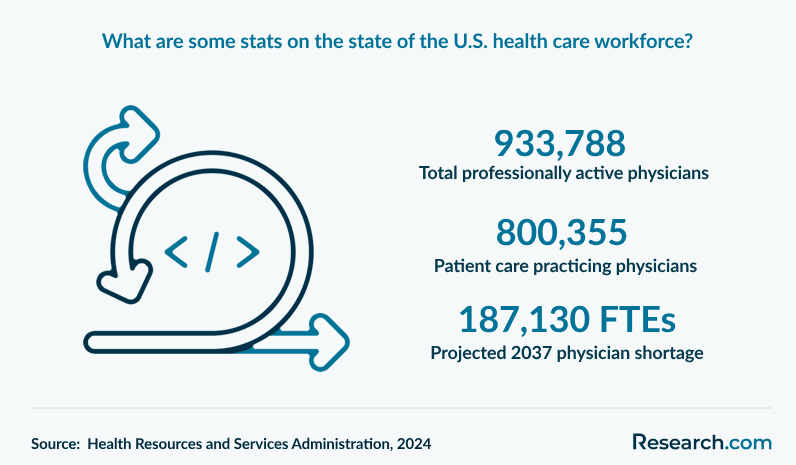
Health Resources and Services Administration data from 2024 provides broader context for the healthcare workforce. The United States has 933,788 professionally active physicians, including 800,355 practicing in patient care. Internists and family medicine physicians account for nearly a quarter of all patient care physicians, and 38.9% of this workforce is female. The nation faces a projected shortage of 187,130 full-time equivalent physicians by 2037.
As of 2023, the nursing workforce included over four million registered nurses (RNs), licensed practical nurses (LPNs), and advanced practice registered nurses (APRNs). From 2019 to 2023, the number of RNs grew by 5.3%, while nurse practitioners (NPs) increased by 35.5%.
During the same period, LPNs declined by 8.4%, and nurse midwives declined by 2.8%. These patterns point to a changing care environment where support staff, nurses, advanced practice clinicians, and physicians must work together efficiently.
How much can I earn with an online patient care technician certification?
Earnings vary by location, employer, shift, certification, prior healthcare experience, and whether you add skills such as phlebotomy, dialysis, or EKG monitoring. A certificate can help you qualify for entry-level roles, but it does not guarantee a specific salary.
- Entry-level roles: New professionals in roles such as hospital PCT can typically expect to earn between $32,000 and $40,000 annually, similar to some CNA salary ranges.
- Experienced and certified roles: With a few years of experience, national certification, and stronger clinical skills, salaries often range from $40,000 to $50,000.
- Specialized and supervisory roles: Technicians who move into dialysis, cardiology, or lead technician responsibilities may earn higher pay, often exceeding $52,000.
According to 2025 PayScale data, healthcare support salaries tend to rise as workers gain specialized skills. Entry-level roles such as patient care assistant (PCA), medical scribe, and state-tested nursing assistant (STNA) show average earnings from $28,080 to $31,500 annually. Core clinical roles such as medical assistant, patient care technician, and certified nurse assistant (CNA) fall in a tighter salary range between $38,000 and $39,000 per year.
Specialized roles show higher averages in the cited data. A certified dialysis technician earns around $46,250, a hemodialysis technician earns $55,434, and a phlebotomist averages $59,800. Administrative and managerial roles can also pay more, with an intake manager earning $50,000 and a billing manager earning $46,500.
The pattern is clear: compensation tends to improve when technicians add in-demand clinical skills or move into roles with more responsibility. The graph below shows this salary progression across selected healthcare support roles.
What is the job market for graduates with an online patient care technician certification?
The U.S. Bureau of Labor Statistics groups patient care technicians within the broader category of nursing assistants and orderlies. This category remains a large, accessible healthcare employment field, although job prospects vary by region and employer.
- Projected growth: The BLS projects employment for nursing assistants and orderlies to grow by 4% from 2023 to 2033.
- Demand drivers: Growth is connected to the aging baby-boom population and the need for care in hospitals, long-term care facilities, and home health settings.
- Annual openings: About 177,500 openings for nursing assistants and orderlies are projected each year over the decade, on average. Many openings are expected because workers transfer to other occupations or leave the labor force.
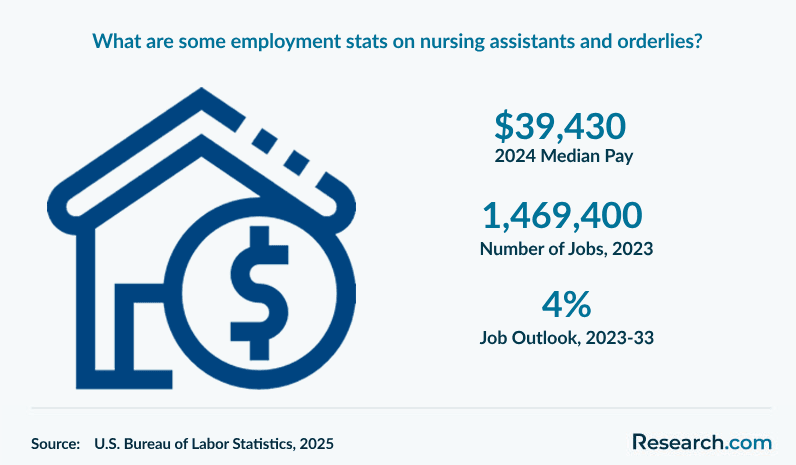
In 2024, the median pay for nursing assistants and orderlies was $39,430 per year, or $18.96 per hour. The occupation accounted for 1,469,400 jobs in 2023 and typically requires no prior work experience in a related occupation. The 2023 to 2033 outlook projects 4% growth, which is considered as fast as the average for all occupations, with an employment change of 64,700 new jobs.
These figures suggest a stable entry point into healthcare, especially for students who want direct patient contact. Some healthcare professionals later pursue nursing pathways, and students comparing routes can review the fastest way to become a nurse if their long-term goal is an RN or advanced nursing role.
What are some current and future trends in patient care?
Patient care technician work is changing as healthcare systems respond to staffing pressure, older patient populations, chronic illness, and digital health tools. Students choosing a program should look for training that goes beyond basic bedside care and includes documentation, technology use, communication, infection control, and professionalism.
- Aging population: More older adults means greater need for support in hospitals, long-term care, rehabilitation, and home-based settings.
- Technology in daily care: PCTs increasingly use electronic health records, portable vital sign monitors, and digital health tools for documentation and communication.
- Team-based care: PCTs work closely with nurses, physicians, therapists, and care coordinators, so communication and reliability are essential.
- Expanded responsibilities in some settings: Experienced PCTs may perform more advanced tasks under nurse supervision, depending on facility policy and state rules.
- Career ladder planning: Some students use PCT work as a stepping stone toward specialized technician roles, nursing, administration, or one of the highest paying medical jobs.
Do employers value an online patient care technician certification?
Employers may value an online PCT certification when the program is reputable, aligned with recognized certification exams, and includes adequate hands-on skill development. The word “online” is usually less important than whether the graduate can perform safely, communicate professionally, document accurately, and meet facility requirements.
However, not all online programs carry the same weight. A program without clinical practice or employer recognition may be less useful than a hybrid or online program with strong externship support. Before enrolling, contact local hospitals, long-term care facilities, dialysis centers, and clinics to ask which PCT credentials they prefer.
If your long-term goal is management or operations rather than bedside care, PCT experience can still be useful. Later, you may compare administrative education options such as a healthcare administration degree online accredited pathway.
Common mistakes to avoid when choosing a PCT program
| Mistake | Why it can hurt you | Better approach |
| Choosing only the fastest program | A short timeline may leave little room for practice, clinical paperwork, or exam preparation. | Balance speed with certification eligibility, clinical support, and employer recognition. |
| Ignoring accreditation and approval status | You may lose access to financial aid or find that employers do not recognize the training. | Verify institutional accreditation and certification exam alignment before paying. |
| Assuming “online” means no in-person requirements | Some programs require labs, externships, or competency checks. | Ask for a written explanation of all in-person and clinical requirements. |
| Overlooking total cost | Supplies, background checks, drug screenings, immunizations, and exams can add expense. | Request a full cost sheet that includes required and optional fees. |
| Not checking local employer preferences | A credential may be nationally known but still not preferred by employers near you. | Review job postings and call local HR departments before enrolling. |
| Assuming salary outcomes are guaranteed | Pay depends on location, experience, employer, shift, and specialization. | Compare local job postings and use salary data as a guideline, not a promise. |
Here's What Graduates Say About Their Online Patient Care Technician Program
- Robin: "Completing an accelerated program helped me move into a new career in just 8 months. The clinical rotation gave me more than technical practice; it helped me build the confidence I needed to step into a healthcare role."
- Shakira: "The online format made training possible while I was raising my children. I could study after they went to sleep and complete my in-person clinical work separately, which allowed me to build a future without giving up family responsibilities."
- Hazel: "The instructors made a major difference for me. Their guidance helped me understand the material, prepare for the certification exam, pass on my first attempt, and feel ready to work in a hospital setting."
References
- Health Resources and Services Administration. (2024, November). State of the U.S. health care workforce, 2024. U.S. Department of Health and Human Services.
- PayScale. (2025). Patient Care Technician Certification (PCT) certification salary in the United States. PayScale.
- U.S. Bureau of Labor Statistics. (2025). Nursing assistants and orderlies. In Occupational Outlook Handbook. U.S. Department of Labor. U.S. Bureau of Labor Statistics.
- Yahoo Finance. (2025, July 8). Hospital services market size to lead USD 24,173 Bn by 2034, expanding at 6.15% CAGR. Yahoo Finance.
- Yahoo Finance. (2025, July 8). US remote patient monitoring market size to reach USD 13.1 billion by 2034, expanding at 13.2% CAGR. Yahoo Finance.
- U.S. Bureau of Labor Statistics. (2025, April 18). Healthcare occupations. Occupational Outlook Handbook. U.S. Bureau of Labor Statistics.
Key Insights
- The fastest online patient care technician programs listed here advertise completion times as short as 4 to 8 weeks, but speed should not outweigh certification eligibility, clinical practice, and employer recognition.
- Students new to healthcare may benefit from programs with stronger instructor access, labs, externship support, and exam preparation, even if the timeline is longer.
- Total cost is more than tuition. Budget for supplies, background checks, drug screenings, immunizations, certification exams, and possible extension fees.
- Accreditation and certification alignment are essential. Verify the school’s accreditation, the program’s approval status, and the specific national exam it prepares you to take.
- Some online PCT programs require students to arrange their own clinical experience. This can delay graduation if you do not already have a healthcare employer or local site.
- PCT certification can support entry-level healthcare work and may lead to specialization in phlebotomy, EKG, dialysis, telemetry, rehabilitation, home health, or nursing pathways.
- Salary growth is most likely when technicians add specialized clinical skills, gain experience, work in higher-demand settings, or move into lead, administrative, or supervisory roles.
Other Things You Should Know About Online Patient Care Technician Certification Programs
The fastest online Patient Care Technician certification programs in 2027 are typically hybrid. While many theoretical modules are available online, practical skills such as drawing blood or performing EKGs often require in-person attendance at a designated facility to ensure hands-on competency and proper technique.
The fastest 2027 online Patient Care Technician Certification Programs can typically be completed in 3 to 6 months, depending on the school's curriculum and the student's pace. These accelerated programs are designed to deliver comprehensive training efficiently, covering essential skills for patient care technicians.
In 2027, online Patient Care Technician certification programs often incorporate hands-on clinical training components, which include performing EKGs and phlebotomy. Students typically complete these practical experiences on-site at affiliated medical facilities, ensuring they gain essential clinical skills in real-world settings despite the online nature of the coursework.