2027 Artificial Intelligence Degree Programs You Can Start Without Meeting All Requirements

Co-Founder and Chief Data Scientist
Not every qualified artificial intelligence applicant fits a standard admissions checklist. You may have strong technical experience but an uneven transcript, completed college credits that do not map cleanly to AI prerequisites, or a GPA below a program’s published threshold. The key question is not simply whether you “qualify,” but whether a school offers a legitimate pathway that lets you prove readiness while closing academic gaps.
Artificial intelligence programs can be demanding because they often build on programming, statistics, calculus, linear algebra, data structures, and applied computing. For that reason, flexible admission does not mean admission without expectations. Conditional admission, provisional enrollment, bridge courses, portfolio review, prior learning assessment, community college pathways, and work-experience evaluations can all help students enter earlier, but each option usually comes with performance benchmarks, deadlines, advising requirements, and financial aid implications.
This guide explains how those pathways work, what to ask admissions offices before applying, and how to compare programs without mistaking easy entry for strong support. It is designed for high school graduates, transfer students, adult learners, and career changers who want to enter AI fields while making a realistic plan for academic success. With AI specialists earning a median annual salary exceeding $120,000, choosing the right access route matters—not only for getting admitted, but for staying enrolled and finishing the degree.
Key Things to Know About Artificial Intelligence Degree Programs You Can Start Without Meeting All Requirements
- Many programs offer conditional admission to students lacking full prerequisites-these students must complete specified courses within their first year to maintain enrollment.
- Bridge courses provide foundational knowledge in programming and math, enabling transfer or returning students to catch up before advancing in ai curricula.
- Some schools accept alternative credentials-such as industry certifications or professional experience-to compensate for incomplete transcripts and support early enrollment.
What is the minimum GPA requirement for an artificial intelligence degree program?
The minimum GPA requirement for an artificial intelligence degree program depends on the school’s selectivity, degree level, and how much flexibility the department gives admissions reviewers. A highly selective university may expect a GPA around 3.5 or above. Moderately competitive schools often set minimums between 2.5 and 3.4. Open-admission or access-focused institutions may consider applicants with GPAs as low as 2.0, especially when the applicant can demonstrate readiness in math, programming, or related technical work.
Published GPA cutoffs are important, but they are rarely the only factor. Admissions teams may also review grade trends, course difficulty, repeated coursework, transfer credits, professional experience, certifications, and evidence that the applicant can handle quantitative and computing-heavy classes. A student with a lower overall GPA but strong recent grades in calculus, statistics, computer science, or data analytics may be more competitive than the number alone suggests.
| Applicant situation | What admissions may consider | Best next step |
| GPA slightly below the published minimum | Recent grades, major-related coursework, personal statement, recommendations | Ask whether holistic review or conditional admission is available |
| Low GPA from several years ago | Work history, newer college credits, certifications, evidence of academic recovery | Provide context and show current readiness through updated coursework |
| Missing AI prerequisites | Bridge courses, co-requisite enrollment, placement testing, transfer options | Request a prerequisite audit before applying or enrolling |
| Strong technical background but incomplete transcript | Portfolio, supervisor letters, professional projects, prior learning assessment | Confirm whether the department accepts nontraditional evidence |
If your GPA is below the stated threshold, do not assume automatic rejection. Contact admissions and the AI program office before submitting an application. Ask direct questions about conditional admission GPA standards for AI degree programs, whether grade replacement or academic forgiveness applies, and whether the department reviews applicants separately from the central admissions office.
- Request a realistic assessment: Ask an admissions counselor how your GPA, prerequisites, and transfer credits would be evaluated.
- Ask about holistic review: Strong recommendations, relevant projects, work experience, and a focused personal statement may help offset weaker grades.
- Clarify conditional terms: Find out the required GPA, course load, review date, and consequences if you miss the benchmark.
- Check affordability early: If cost is a concern, compare institutional aid practices and FAFSA participation; this resource on online colleges that accept FAFSA can help frame financial aid questions.
Which artificial intelligence programs accept applicants on academic probation or with academic deficiencies?
Some artificial intelligence programs admit students with academic deficiencies through conditional, provisional, or probationary pathways. These options are designed for applicants who show potential but do not yet meet all standard admission requirements. Common conditions include maintaining a minimum GPA during the first term, completing missing prerequisites, limiting enrollment to a manageable course load, and meeting regularly with an advisor.
Programs that use probationary admission often require minimum performance during the initial term—often between 2.0 and 2.5 for some undergraduate pathways—while limiting course loads to 12-15 credit hours. Graduate programs usually set higher continuation standards. The purpose is to give students access while making expectations explicit from the start.
- Arizona State University (Undergraduate AI Program, Regionally Accredited): Offers conditional admission for students with GPAs below the standard cutoff who must maintain at least a 2.0 GPA during their first semester and enroll in up to 14 credit hours.
- Mandatory bi-weekly meetings with an academic advisor and access to tutoring resources.
- University of Central Florida (Graduate AI Program, Regionally Accredited): Accepts applicants on academic probation if they demonstrate promise through alternative credentials or professional experience. Students must maintain a 3.0 term GPA while enrolling in up to 9 credit hours.
- Regular check-ins with a faculty mentor and a customized progress plan.
- California State University, Long Beach (Undergraduate AI Pathway, Regionally Accredited): Provides provisional acceptance focusing on foundational coursework, requiring a minimum 2.5 GPA and a 12-credit hour course load during probation.
- Monthly advisory meetings with a success coach and academic planning sessions.
- Northeastern University (Graduate AI Program, Regionally Accredited): Grants conditional admission for students with academic deficiencies requiring a 3.0 GPA in at least 12 credit hours during probation.
- Close monitoring by an academic advisor and progress reports to admissions.
- Georgia State University (Undergraduate AI Track, Regionally Accredited): Enables conditional acceptance for students with incomplete prerequisites or low GPAs, requiring a 2.2 GPA while enrolling in up to 15 credit hours.
- Bi-monthly coaching sessions and academic workshops for skill building.
Before relying on any probationary pathway, verify the current policy with the admissions office and the department offering the AI program. Ask whether probationary students are eligible for the same courses, advising, scholarships, internships, and career services as fully admitted students. Also ask whether the probationary period appears on the transcript and whether failing to meet the benchmark results in dismissal, reapplication, or a second review.
A strong application can still matter when academic deficiencies are present. Use the personal statement to explain what changed, not to excuse past performance. Recommendation letters should come from people who can speak to your technical ability, persistence, and capacity for rigorous study. Students comparing support structures across fields may also find it useful to review how affordable online counseling programs present advising, flexibility, and student support for nontraditional learners.
How do conditional admission and provisional enrollment work for artificial intelligence degree seekers?
Conditional admission and provisional enrollment both allow students to begin before every requirement is fully satisfied, but they are not the same. Conditional admission usually means the program has accepted you, provided you meet specific academic or administrative conditions by a stated deadline. Provisional enrollment is often more temporary and may allow limited registration while the school waits for documents, evaluates credits, or determines whether you can move into full program standing.
| Feature | Conditional admission | Provisional enrollment |
| Student status | Admitted with requirements attached | Temporary, pending, non-degree, or limited status in many cases |
| Common reason | Low GPA, missing prerequisites, required bridge courses, probationary review | Missing transcripts, incomplete paperwork, pending eligibility review |
| Typical requirement | Earn a required GPA, complete specific courses, or submit final documents | Resolve the missing item before full admission is granted |
| Risk | Failure to meet conditions may lead to removal from the program | Enrollment may not convert to full admission |
| What to ask | What exact benchmark must I meet, and when will I be reviewed? | Am I admitted to the degree, or only allowed to take limited courses? |
For artificial intelligence students, conditions commonly involve foundational coursework in programming, statistics, calculus, linear algebra, or data structures. A school may let you begin with introductory AI or computing courses while requiring you to complete the missing preparation within one or two semesters. Graduate programs may require a 3.0 term GPA during the review period, while undergraduate policies vary by institution.
- Get the conditions in writing: Do not rely on a verbal explanation. Request the GPA, course, credit-hour, and deadline requirements in an official email or admission letter.
- Ask who makes the final decision: The decision may rest with central admissions, the graduate school, the AI department, or a faculty committee.
- Confirm course access: Some conditionally admitted students cannot enroll in advanced AI electives until prerequisites are completed.
- Understand the outcome: Meeting the conditions should lead to full standing; missing them may require dismissal, reapplication, or a formal appeal.
- : "Starting with conditional admission felt uncertain because I had missing prerequisite credits and needed to prove myself quickly. Bridge courses showed me how much structured support mattered. The review deadlines were stressful, but meeting them gave me confidence. It was not just about grades; it was about staying on track and getting clear feedback. By the second semester, my status changed, and I felt fully part of the program."
What alternative admission pathways are available for artificial intelligence programs when prerequisites are not met?
When AI prerequisites are missing, applicants may still have several routes into a program. The right pathway depends on what is missing: academic coursework, proof of technical skill, a complete transcript, or evidence of readiness for quantitative study. The strongest applicants do not simply ask for an exception; they provide evidence that replaces or addresses the missing requirement.
Portfolio review
Some programs, especially applied AI, data science, or computing programs, allow applicants to submit a portfolio. A useful portfolio may include machine learning projects, Python notebooks, data analysis reports, software repositories, model evaluation summaries, or technical documentation. The portfolio should show not only that you can build something, but that you understand the methods, limitations, and assumptions behind your work.
Demonstrated professional experience
Adult learners and career changers may be able to use professional experience to support admission. Relevant evidence can include work in software development, analytics, automation, robotics, cloud computing, cybersecurity, data engineering, or AI product implementation. Admissions committees may ask for a resume, supervisor letters, project descriptions, certifications, or an interview with faculty.
Prior learning assessment credit
Prior learning assessment credit may be available through competency tests, challenge exams, or portfolio reviews mapped to course outcomes. This option is most useful when a student already has the knowledge covered by a prerequisite but lacks transcripted credit. Policies vary widely, so ask whether the credit applies only to general electives or can satisfy AI-related prerequisites.
Placement testing
Placement testing can help programs evaluate readiness in programming, mathematics, statistics, or foundational computing. A strong score may allow a student to bypass an introductory course or begin at a higher level. However, placement testing is not the same as a blanket waiver. Some schools use test results only for course placement, while others use them as part of an admission decision.
How to ask about alternatives
Alternative pathways are sometimes handled by the department rather than central admissions. Contact the program director, department chair, or graduate coordinator and ask whether prerequisite substitutions are reviewed formally. Provide a concise summary of your background and ask what evidence the committee prefers.
- If you have projects: Ask whether a portfolio review can replace or reduce prerequisite requirements.
- If you have work experience: Ask whether professional background can support conditional admission or prerequisite waiver requests.
- If you have partial coursework: Request a course-by-course prerequisite audit.
- If you are changing fields: Ask which bridge courses are required before taking graduate-level AI courses.
Students comparing flexible admission models across disciplines can also look at how PsyD programs online describe nontraditional applicant pathways, portfolio-style evidence, and readiness reviews.
Which artificial intelligence programs allow students to begin while completing remaining prerequisites concurrently?
Some artificial intelligence programs allow concurrent or co-requisite enrollment, meaning students begin selected AI coursework while completing remaining prerequisites at the same time. This can shorten the path to degree progress, but it also increases academic risk. AI courses often assume comfort with programming, statistics, data structures, and mathematical reasoning, so taking missing prerequisites alongside core courses requires careful planning.
Concurrent enrollment is different from conditional admission. Conditional admission focuses on your status in the program and the benchmarks you must meet. Concurrent enrollment focuses on course sequencing: whether you may take a core course before or while finishing a prerequisite. A student may be conditionally admitted and concurrently enrolled, but the two policies should be clarified separately.
How to tell whether concurrent enrollment is allowed
- Read the course catalog carefully: Look for “prerequisite,” “co-requisite,” “permission of instructor,” or “department approval” language.
- Request a degree audit: A formal audit identifies which requirements are missing and whether they can be completed alongside core courses.
- Ask about sequencing: Some AI courses must be taken after programming or statistics, while others may be paired with them.
- Confirm workload limits: Students on probation or conditional admission may face credit-hour caps.
When concurrent enrollment makes sense
This option can work for students who are missing one or two prerequisites but already have related experience. For example, a student with professional Python experience may be able to complete statistics while taking an introductory machine learning course. It is less advisable for students missing several foundational areas at once, especially if they are also working full time.
How to manage the workload
- Build a weekly study schedule before classes begin: AI coursework can involve coding, reading, math practice, and project work in the same week.
- Use tutoring early: Do not wait until the first exam or project deadline to ask for help.
- Attend office hours: Instructor guidance is especially valuable when prerequisite gaps affect current assignments.
- Limit outside commitments if possible: Concurrent enrollment can compress what is normally a staged learning sequence.
- : "Navigating the workload was tough at first, but setting clear weekly goals and using campus resources made a significant difference. It is a demanding path, but it prepares you for the fast pace of the AI field."
How do community college partnerships help students enter artificial intelligence programs without full qualifications?
Community college partnerships can give students a structured, lower-risk route into artificial intelligence programs when they are not ready for direct admission. Instead of applying to a four-year AI program with missing prerequisites or a weak GPA, students can complete foundational coursework at a community college, rebuild their academic record, and transfer through an approved pathway.
Common models include 2+2 articulation agreements, transfer pathways, dual-enrollment options, and bridge programs. These arrangements can help students complete calculus, linear algebra, statistics, programming, data structures, and introductory computing before moving into upper-division AI coursework. For students coming from high school, returning after time away, or changing careers, this staged approach can make AI study more manageable.
- Prerequisite completion: Community colleges often offer the math and computer science courses needed before AI major coursework.
- GPA rebuilding: Strong grades in transferable STEM courses can demonstrate current readiness more effectively than older academic records.
- Cost control: Completing lower-division requirements at a community college may reduce the cost of preparation before transfer.
- Advising support: Transfer advisors can help students avoid courses that do not apply to the target degree.
Students should not assume that any community college course will transfer automatically. Course titles may look similar while covering different outcomes. Before enrolling, compare the community college course with the receiving university’s prerequisite list and ask for written confirmation of transferability when possible.
If a formal articulation agreement exists, follow it closely. If no agreement exists, work with advisors at both institutions to confirm equivalencies and learn whether transfer petitions are available. Transfer admission policies may evaluate recent community college coursework more flexibly than freshman admissions, especially when the student meets specific GPA and prerequisite benchmarks.
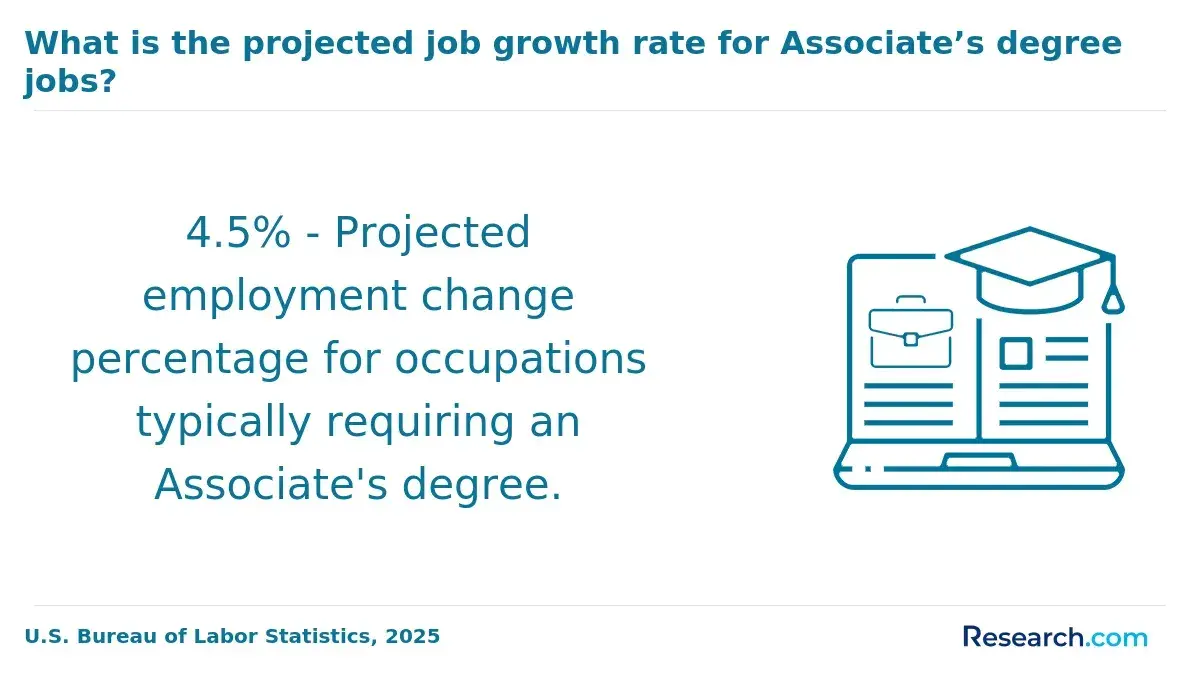
According to a 2023 National Student Clearinghouse report, nearly 45% of bachelor's degree recipients started at community colleges, underscoring their growing role in fields like STEM and artificial intelligence. For many AI students, the community college route is not a detour; it is a practical readiness strategy.
What role do personal statements and letters of recommendation play in gaining artificial intelligence program access without meeting all requirements?
Personal statements and letters of recommendation become especially important when an applicant falls short on GPA, test scores, or prerequisite completion. These documents cannot erase academic requirements, but they can help admissions committees understand whether the applicant has the maturity, preparation, and persistence to succeed under conditional or flexible admission terms.
What a strong personal statement should do
A strong personal statement is specific, honest, and forward-looking. Briefly explain the academic weakness, but spend more space showing what changed and why you are now prepared. Connect your background to the demands of AI coursework, such as programming, mathematical reasoning, data analysis, research, or technical problem-solving.
- Acknowledge the gap: Explain a low GPA, withdrawal pattern, or missing prerequisite without making excuses.
- Show evidence of improvement: Mention stronger recent coursework, certifications, projects, or professional responsibilities.
- Connect to the program: Explain why this AI program fits your goals, curriculum needs, and level of preparation.
- Address the conditions: If you expect conditional admission, state how you plan to meet the required GPA, course, or timeline benchmarks.
What recommendation letters should prove
The best recommendation letters come from people who have directly observed your technical ability, discipline, and learning capacity. A supervisor who managed your analytics project, a professor who taught you programming, or a mentor who reviewed your machine learning work is more useful than a generic character reference.
- Choose evidence-based recommenders: Admissions committees value specific examples more than broad praise.
- Brief your recommenders: Share the program requirements, your resume, and the gaps you are trying to address.
- Ask for readiness examples: Letters should discuss problem-solving, independence, quantitative ability, teamwork, and follow-through.
The applicant controls the personal statement more than any other part of the file. Use it to make the admissions decision easier: explain the deficiency, provide proof of readiness, and show that you understand the academic obligations attached to flexible entry.
Which artificial intelligence programs offer bridge or foundational courses that replace unmet admission requirements?
Many artificial intelligence programs use bridge or foundational coursework to help students meet missing admission requirements. These options are most common for students who lack a formal background in computer science, mathematics, statistics, or programming. The important question is whether the course merely helps you prepare or whether it officially satisfies an admission condition.
| Bridge option | Best for | Transcript value | Key caution |
| Non-credit boot camps | Students who need fast preparation in coding or math | Usually not transcripted as academic credit | Completion may not guarantee admission |
| Post-baccalaureate preparatory sequences | Career changers with a bachelor’s degree in another field | Typically credit-bearing and transcripted | May add one to two semesters before full progress |
| Certificate-level prerequisite bundles | Students who need a structured set of prerequisite courses | Often appears on the academic record | Confirm whether credits apply to the AI degree |
| Self-paced online remediation modules | Learners who need targeted review in coding, statistics, or math | Often non-credit or internally tracked | Flexible pacing can delay admission if not completed quickly |
Non-credit boot camps
Non-credit boot camps can build practical skills quickly in programming, data analysis, or applied machine learning. They may be useful for preparation, but students should be cautious. A boot camp may strengthen an application without replacing a required college-level course. Ask whether the AI department formally recognizes the boot camp for admission purposes.
Post-baccalaureate preparatory sequences
Post-baccalaureate sequences are often a better fit for students who already hold a bachelor’s degree but lack computer science or mathematics prerequisites. These courses may appear on an official transcript and may be easier for graduate admissions committees to evaluate. They can also show recent academic performance in relevant subjects.
Certificate-level prerequisite bundles
Certificate bundles can package programming, statistics, and computing fundamentals into a defined pathway. This can be helpful because the program has already identified the preparation it expects. Before enrolling, confirm whether certificate credits transfer into the AI degree or simply prepare you for admission.
Self-paced remediation modules
Self-paced modules are useful for filling narrow skill gaps, especially before a placement test or bridge course. They are usually less expensive and more flexible than credit-bearing courses, but they may not carry the same admissions weight. They work best when the school explicitly accepts them as part of a conditional plan.
Bridge options are not always obvious on program websites. Ask admissions directly whether foundational courses can replace unmet requirements, whether grades in those courses affect admission, and whether financial aid applies. Students comparing flexible professional pathways across fields may also review how paralegal school online programs structure accelerated preparation and entry requirements.
How does work experience or professional background substitute for academic requirements in artificial intelligence programs?
Work experience can sometimes support admission to an artificial intelligence program when academic credentials are incomplete, but it usually does not replace every requirement automatically. Programs that consider professional background use holistic review to decide whether a candidate’s practical experience demonstrates readiness for AI coursework. This is especially relevant for software developers, data analysts, engineers, IT professionals, automation specialists, and technical managers moving into AI-focused roles.
Admissions committees may give weight to industry certifications, several years of employment in AI-related roles, leadership or management positions, and contributions such as published papers or presentations related to artificial intelligence. The more closely the experience maps to the missing academic requirement, the stronger the case. For example, professional Python and data modeling work may support a programming prerequisite waiver more effectively than general technology management experience.
- Build an academic-style resume: Emphasize technical tools, quantitative work, AI-related projects, model development, data pipelines, research, and measurable outcomes.
- Document project depth: Include brief descriptions of the problem, methods used, your role, and the result.
- Use supervisor letters strategically: Recommenders should verify your technical competence, not simply your reliability or professionalism.
- Include certifications carefully: Certifications can help, but they are strongest when paired with applied project experience.
- Explain equivalency: In your statement, connect work experience to specific prerequisites or course outcomes.
- Verify the policy first: Some programs formally review professional background; others require transcripted coursework regardless of experience.
Applicants using work experience should be prepared for a compromise. A program may admit them conditionally, waive one prerequisite, require a bridge course, or allow placement testing. The goal is not to avoid academic preparation; it is to avoid repeating material the applicant has already mastered while still protecting the student from entering advanced coursework unprepared.
For prospective students comparing education investments and career outcomes in other fields, resources such as master's in child and adolescent psychology salary discussions can provide a useful reminder to weigh cost, completion requirements, and long-term return before enrolling.
What financial aid and scholarship options are available to conditionally admitted artificial intelligence students?
Conditionally admitted artificial intelligence students may qualify for financial aid, but eligibility depends on enrollment status, program status, course applicability, and satisfactory academic progress. The most important step is to confirm whether the school considers you a degree-seeking student during the conditional period. Aid rules can differ for admitted students, non-degree students, provisional students, and students taking prerequisite-only coursework.
Federal aid through FAFSA generally requires eligible enrollment and satisfactory academic progress. Conditionally admitted students must pay close attention to GPA and completion-rate requirements because failing a bridge course or dropping below required enrollment can affect both academic standing and aid eligibility. At least half-time enrollment may also be required for certain forms of aid.
- Institutional scholarships: Some colleges offer funds for adult learners, transfer students, STEM students, or nontraditional applicants, including those admitted conditionally.
- Private scholarships: External foundations may support career changers, returning students, or students entering technology fields, sometimes with less emphasis on perfect GPA histories.
- Federal and state grants: Grants such as Pell may remain available when the student meets eligibility, enrollment, and program-status requirements.
- Employer tuition assistance: Working professionals should ask whether their employer supports AI, analytics, or technology-related coursework.
Before enrolling, ask the financial aid office these questions: Are my conditional courses aid-eligible? Do prerequisite or bridge courses count toward my degree plan? What GPA and completion rate must I maintain? What happens to my aid if I do not move from conditional to full admission? Can scholarships be renewed during the conditional period?
The safest approach is to coordinate academic advising and financial aid advising before registration. A course that helps academically may not always count financially, and a course load that maximizes aid may not be realistic for a student trying to meet probationary benchmarks.
How do online artificial intelligence programs compare to campus-based programs in admission flexibility?
Online artificial intelligence programs often provide more admission flexibility than campus-based programs, especially for adult learners, working professionals, transfer students, and career changers. They may offer multiple start dates, asynchronous bridge courses, prerequisite waivers, portfolio review, or conditional admission pathways. Campus-based programs may be more rigid in scheduling and sequencing, but they can provide stronger in-person support, lab access, faculty interaction, and peer networks.
| Factor | Online AI programs | Campus-based AI programs |
| Admission flexibility | Often more open to conditional admission, work experience, and alternative credentials | Often more tied to standard academic prerequisites and cohort schedules |
| Bridge coursework | May offer self-paced or online foundational modules | May offer structured remedial or prerequisite courses on a fixed calendar |
| Support access | Depends heavily on virtual advising, tutoring, and faculty responsiveness | May provide easier access to in-person advising, labs, study groups, and campus services |
| Best fit | Working adults, remote learners, career changers, and students needing flexible pacing | Students who benefit from face-to-face support and structured academic routines |
| Main risk | Flexibility can become isolation if support is weak | Rigid schedules can slow progress for students balancing work or family |
Greater flexibility should not be confused with lower standards. A quality online AI program should still be transparent about accreditation, prerequisites, course sequencing, faculty qualifications, student support, and outcomes. Prospective students comparing flexible online options can review resources on the best online masters in artificial intelligence as part of a broader search for programs that balance access, affordability, and academic rigor.
For students entering with missing requirements, online programs can be attractive because bridge courses and conditional terms may fit around work schedules. However, online learners must be more proactive. Ask how often advisors meet with conditionally admitted students, whether tutoring is available for math and programming, how disability accommodations work remotely, and whether mental health or academic coaching services are accessible online.
Campus-based programs may offer fewer entry points but stronger structure. Students who struggled academically in the past may benefit from scheduled classes, in-person office hours, physical study spaces, and immediate access to campus support. The better choice depends less on delivery format and more on the match between your risk factors and the program’s support system.
What Graduates Say About Artificial Intelligence Degree Programs You Can Start Without Meeting All Requirements
-
: "Starting the artificial intelligence degree without meeting all prerequisites initially felt daunting, but the program’s clear academic obligations helped me manage the early pressure. The conditional timeline pushed me to pace myself realistically and meet every benchmark on time. That structure made me feel supported as I moved into the core courses.
— Armando"
-
: "The flexibility was a game changer because I did not check every box at the start. The performance benchmarks were demanding but fair, and they kept me engaged without making the process feel impossible. Once I met those expectations, I had the confidence to continue while balancing school with the rest of my life.
— Damien"
-
: "I appreciated that conditional admission came with accountability. The academic obligations were explicit, and the timeline gave me a clear roadmap. The performance standards were not just gatekeepers; they motivated me to stay focused and absorb the material more seriously than I expected.
— Aiden"
Other Things You Should Know About Artificial Intelligence Degrees
In 2027, some artificial intelligence programs allow applicants to bypass specific prerequisite courses like introductory programming or basic machine learning by demonstrating relevant experience or passing a placement test. Exact options vary by institution, so verify with each program's admissions office.
Yes, in some 2027 AI degree programs, students can receive credit hours for prior experience or relevant professional work. Institutions may evaluate experience based on guidelines, such as portfolio submissions or interviews, to assess its applicability toward credit hours.
Transfer students must often have their previous coursework evaluated for equivalency to AI prerequisites. Some credits may fulfill general education but not technical requirements, leading programs to require additional bridge classes. Clear communication with academic advisors ensures a tailored study path that covers any gaps while recognizing transferable knowledge from the student's former discipline.
References
- How to document your degree if you are conditionally admitted https://education.ki.se/conditionally-admitted
- News https://www.ada.edu.az/en/news/728-ada-university-launches-international-certificate-program-in-strategic-and-ai-supported-assessment
- B.Sc. Artificial Intelligence FAQ for international applicants https://www.uni-passau.de/en/bsc-artificial-intelligence/faq
- 'Should I use AI in my personal statement?' Your UCAS application guide and how Innovate can help - Innovate Summer Academy https://innovatesummeracademy.com/blog/should-i-use-ai-in-my-personal-statement-your-ucas-application-guide/
- 15 Online AI Programs for High School Students https://www.immerse.education/knowledge-base/15-online-ai-programs-for-high-school-students/
- Universities Shift Towards New Models of AI Integration https://www.digitaleducationcouncil.com/post/universities-shift-towards-new-models-of-ai-integration
- How to Change Careers Into AI With No Computer Background https://www.eduailast.com/blogs/how-to-change-careers-into-ai-with-no-computer-background.php
- AI in admissions: how to use it responsibly in your application https://www.imperial.ac.uk/business-school/blogs/admissions/ai-admissions-how-use-it-responsibly-your-application/
- Top Artificial Intelligence Programs for Undergraduates https://www.collegekickstart.com/blog/item/top-artificial-intelligence-programs-for-undergraduates
- Georgia college student used Grammarly, now she is on academic probation https://www.fox5atlanta.com/news/grammarly-georgia-college-student-academic-probation-plagiarism-allegations