2027 Artificial Intelligence Degree Completion Programs for Working Adults

Co-Founder and Chief Data Scientist
Finishing an artificial intelligence bachelor's degree as a working adult is not just a scheduling problem. It is a credential decision that affects transfer credits, financial aid, employer recognition, time to graduation, and long-term career options. The right completion program can turn prior college work, military training, certifications, and professional experience into usable academic credit; the wrong one can leave students repeating courses, paying unnecessary tuition, or earning a degree with limited recognition.
This guide explains how artificial intelligence degree completion programs work, how they differ from traditional campus programs, what prior learning may count, what GPA and accreditation standards to check, and how to evaluate cost, delivery format, and career value. It is written for adults with some college credit, veterans, career changers, and technology professionals who want a practical path to finishing a recognized AI degree while continuing to work.
Graduates of accredited artificial intelligence completion programs report a median salary increase of 25% within two years, but outcomes depend heavily on program quality, credit transfer policy, accreditation, and how well the curriculum matches the student's career goal.
Key Things to Know About Artificial Intelligence Degree Completion Programs for Working Adults
- Maximizing credit for prior learning-such as ACE-evaluated military training or professional certifications-can reduce time to degree by up to 40%, enabling faster reentry into AI careers.
- Identify programs recognized by key employers and licensure bodies-these maintain rigorous accreditation standards and align curricula with AI industry demands post-2023.
- Working adults should explore financial aid options beyond federal grants-like employer tuition assistance and income-share agreements-that specifically support AI degree completion pathways.
What Are Artificial Intelligence Degree Completion Programs, and Who Are They Designed For?
Artificial intelligence degree completion programs are bachelor's completion pathways for students who already have college credits, technical training, or significant professional experience. Instead of asking adults to restart a four-year degree from the beginning, these programs focus on helping them finish the remaining requirements for an AI-related bachelor's credential.
The main difference is design. A traditional undergraduate AI program is usually built for first-time, full-time students. A completion program is built for adults who may be employed, supporting families, returning after a break, or changing careers. The curriculum still needs to meet degree standards, but the structure is more flexible and often gives students a formal way to apply prior learning toward graduation requirements.
Key structural features highlighted by the National Student Clearinghouse and the American Association of State Colleges and Universities (AASCU) include:
- Accelerated pacing: Courses may be offered in shorter terms so students can progress faster than in a conventional semester-only format.
- Credit for prior learning: Some programs evaluate previous college credits, military training, professional certifications, and documented workplace learning.
- Flexible scheduling: Evening, weekend, online, asynchronous, and hybrid options are common because most students are balancing school with work.
These programs are best suited for several types of adult learners:
- Adults with some college but no degree: Students who have completed general education or technical coursework may be able to apply those credits toward an AI bachelor's program.
- Military veterans and service members: ACE-reviewed military training may reduce the number of courses required, depending on the institution's policy.
- Working technology professionals: Employees in programming, analytics, IT, cybersecurity, or data roles may use the degree to qualify for advancement or more specialized AI responsibilities.
- Career changers: Adults moving into AI from business, healthcare, education, engineering, or another field may need a structured credential without repeating unrelated coursework.
Lumina Foundation research has emphasized the importance of reducing barriers for underrepresented adult learners. In this context, a strong AI completion program should do more than offer online classes. It should provide transparent transfer evaluations, adult-focused advising, clear cost information, and recognized accreditation.
Students comparing graduate and undergraduate pathways may also review the fast-track doctoral program examples to understand how accelerated formats can affect cost, workload, and credential planning across different fields.
How Do Artificial Intelligence Degree Completion Programs Differ From Traditional On-Campus Degree Programs?
Artificial intelligence degree completion programs usually award the same type of bachelor's credential as a traditional program, such as a Bachelor of Science or Bachelor of Arts in artificial intelligence or a closely related field. The major difference is not necessarily the diploma title; it is the way the program is scheduled, delivered, and designed for students who already have adult responsibilities and prior learning.
- Scheduling: Completion programs often use evening classes, weekend sessions, asynchronous coursework, or hybrid formats. Traditional on-campus programs are more likely to require daytime attendance, fixed class meetings, and a campus-based routine.
- Pacing: Completion pathways may offer accelerated cohorts, rolling starts, multiple start dates each year, or part-time enrollment plans. Traditional programs usually follow a fixed semester calendar with fewer entry points.
- Residency requirements: Many completion programs reduce or eliminate required campus attendance. Traditional programs typically expect more in-person participation and access to campus labs, offices, or student services.
- Credit transfer: Adult-focused programs are often more intentional about maximizing previously earned credits. Traditional programs may have stricter limits on transfer credits, course equivalencies, or upper-division requirements.
- Advising model: Completion programs should provide advisors who understand returning students, employer tuition benefits, transfer evaluations, and interrupted academic histories.
- Enrollment pattern: Data from the National Center for Education Statistics and IPEDS show steady growth in degree completion program enrollment among working adults over the past decade, while traditional undergraduate participation has been stable or declining.
- Credential recognition: If the institution is properly accredited, the degree should not be treated as less legitimate simply because it was completed through an adult-focused format.
The trade-off is that flexibility can come with limits. Some online or accelerated programs offer fewer electives, fewer research opportunities, or less in-person networking than a campus program. Students who want a residential experience, extensive lab access, or a highly selective undergraduate environment may prefer a traditional model. Students who need to keep working full time usually benefit more from the completion format.
Before enrolling, ask whether the transcript or diploma identifies the program as online or completion-based, whether the same faculty teach online and on-campus courses, and whether employers in your target field recognize the institution. If you need a shorter credential before transferring, accelerated associate degree options can also help clarify how short-format programs handle credit, pacing, and transfer planning.
What Prior Credits and Experiences Count Toward a Artificial Intelligence Degree Completion Program?
Prior credit is one of the most important factors in an AI degree completion program because it directly affects cost, timeline, and course load. However, credit acceptance is never automatic. Each institution decides how previous coursework and experience fit its degree requirements, and AI programs may be stricter about core technical courses than general education courses.
Transfer credits: Credits from regionally accredited colleges and universities are the most commonly accepted. General education courses often transfer more easily than advanced AI, machine learning, data science, or programming courses because technical curricula must closely match the receiving program's requirements.
Military training credits: Many institutions review military education and training through American Council on Education (ACE) recommendations. These credits may apply to technical electives, leadership requirements, general education, or free electives, depending on the program.
Professional certifications: Certifications in programming, data analytics, cloud computing, cybersecurity, machine learning, or database management may qualify for credit if the school has an approved equivalency process. Students should expect to submit documentation, exam results, syllabi, training hours, or competency evidence.
Prior learning assessment (PLA): PLA allows students to document college-level learning gained through work, military service, independent study, or professional projects. A portfolio may include project descriptions, supervisor verification, technical artifacts, code samples, training records, or written reflections tied to course outcomes.
Credit-by-examination: Exams such as CLEP and DSST can help students earn credit in foundational subjects. Depending on the institution, these may apply to math, general education, introductory computer science, or elective requirements.
Research from the Council for Adult and Experiential Learning (CAEL) indicates that students leveraging PLA credits may shorten graduation time by six months to a year, which can produce meaningful tuition savings. The benefit is greatest when the program completes a formal transfer review before enrollment rather than after the student has already committed.
Prospective students should request an official or written preliminary credit evaluation and ask three direct questions: Which credits apply to the major? Which credits apply only as electives? Which requirements cannot be waived regardless of prior experience? A large credit total is less useful if most of it does not satisfy the AI degree plan.
Be cautious if a school refuses to review ACE military credits, uses unexplained transfer limits, or will not disclose how credits apply until after enrollment. The American Association of Collegiate Registrars and Admissions Officers (AACRAO) guidelines provide a helpful baseline for fair and transparent credit transfer practices.
- : "Navigating the credit transfer process was daunting. Figuring out which certifications and work experience counted took patience. But having advisors who understood the nuances made all the difference. When my PLA portfolio credits were accepted, it felt like a real validation of my career so far. It cut months off my timeline and boosted my confidence going into advanced AI courses."
What Is the Minimum GPA Requirement for Artificial Intelligence Degree Completion Programs?
Many artificial intelligence degree completion programs require a minimum cumulative GPA between 2.0 and 2.5 on a 4.0 scale from prior undergraduate work. The GPA requirement helps schools judge whether applicants are ready for upper-division coursework, especially in quantitative and technical subjects.
That said, GPA is often only one part of the review. Adult-focused programs may also consider work history, technical experience, military training, certifications, recommendation letters, personal statements, or evidence that the student has built stronger academic habits since leaving school.
- Conditional admission: Applicants below the published GPA threshold may be admitted on probation or conditionally, often with required advising, tutoring, or a minimum grade standard in the first term.
- Holistic review: Some HLC-accredited schools weigh professional experience and recent technical training alongside older transcripts, especially for students whose low grades occurred years earlier.
- Academic forgiveness: Returning students may qualify for "fresh start" or academic renewal policies that reduce the impact of older low grades after a period of non-enrollment.
- Prerequisite review: Even if the overall GPA is acceptable, programs may require proof of readiness in math, statistics, programming, or computer science foundations.
Students with a low GPA should not assume they are ineligible, but they should avoid vague admissions promises. Ask for a pre-admission transcript review, the exact GPA calculation method, and any conditions that would apply after admission. If the program requires remedial or bridge coursework, include those courses in the total cost and timeline.
Adults comparing technical degree pathways can also review how admissions and transfer policies work in an online cybersecurity degree, since cybersecurity and AI programs often serve similar working-adult populations.
How Are Artificial Intelligence Degree Completion Programs Structured Around Full-Time Work Schedules?
Artificial intelligence degree completion programs are commonly structured for students who cannot attend daytime classes five days a week. Typical formats include evening cohorts, weekend intensives, asynchronous online courses, hybrid courses with limited campus meetings, and part-time plans. Many programs suggest taking 6 to 9 credits per term so working adults can make steady progress without creating an unsustainable workload.
The best programs do not simply move lectures online. They build predictable calendars, clear assignment deadlines, responsive advising, and course sequences that let adults plan around work and family obligations. This is especially important in AI coursework, where students may need uninterrupted time for programming assignments, data projects, model training, group work, and capstone preparation.
A cohort model is common. In a cohort, students move through a planned sequence together. This can improve accountability and make course availability more predictable. It can also reduce registration confusion because students know which classes come next. The drawback is that cohorts may be less flexible if a student needs to stop out, reduce course load, or retake a class.
Data from the National Student Clearinghouse Research Center shows that cohort-based completion programs lead to higher persistence and graduation rates among working adult students compared to traditional enrollment methods. That finding is useful, but students should still confirm how the specific program handles real-life interruptions.
Before choosing a program, ask:
- Are courses offered every term or only once per year?
- What happens if a required course is canceled?
- Can students pause for a term without losing cohort standing?
- Are extensions available for documented work conflicts?
- Is technical support available outside standard business hours?
- Does the program provide dedicated success advisors for adult learners?
- : "The program was intense but manageable because the schedule was clear. Unexpected work deadlines still happened, but having a success advisor helped me negotiate extensions and stay on track. The cohort also mattered. Knowing other people were balancing similar responsibilities made the workload feel possible."
Is Online or Hybrid Delivery Available for Artificial Intelligence Degree Completion Programs?
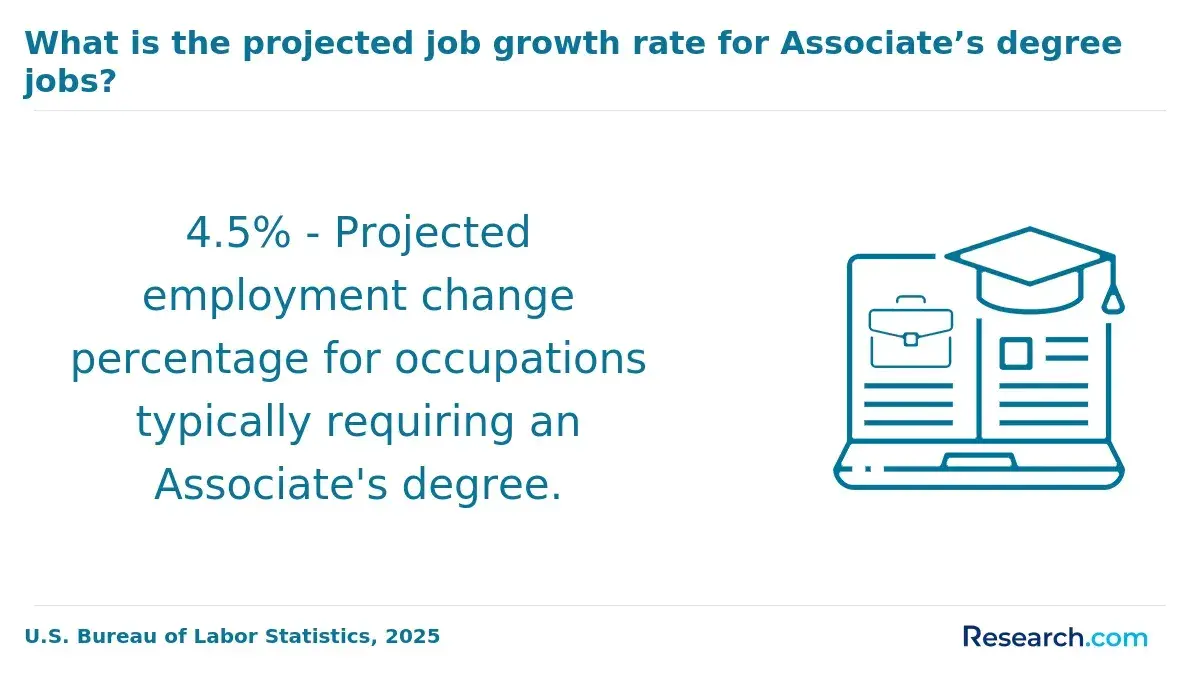
Yes. Online and hybrid delivery are common in artificial intelligence degree completion programs because the typical student is balancing school with employment, family, or military responsibilities. Data from the National Center for Education Statistics and the Online Learning Consortium reveal that as of 2023, nearly 65% of these students opt for fully online delivery, while approximately 25% enroll in hybrid programs combining online instruction with periodic on-campus sessions.
- Synchronous online: Students attend live virtual classes at set times. This format supports real-time discussion and accountability, but it may be difficult for students with rotating shifts, caregiving duties, or different time zones.
- Asynchronous online: Students access lectures, readings, assignments, and discussions on their own schedule. This is usually the most flexible option, but it requires strong time management and comfort learning independently.
- Hybrid or blended: Students complete much of the work online but attend occasional in-person sessions, labs, residencies, or intensives. This can be valuable for networking or hands-on learning, but travel requirements can add cost and scheduling pressure.
The COVID-19 pandemic accelerated institutions' ability to deliver high-quality online education, including artificial intelligence programs, by improving digital infrastructure and faculty training. Still, delivery format alone does not prove quality. A strong online AI program should provide access to virtual labs, coding platforms, data tools, tutoring, library resources, faculty office hours, and technical support.
Students evaluating online options should confirm whether classes are recorded, whether attendance is required for live sessions, whether exams use remote proctoring, and whether group projects require meetings at fixed times. They should also verify that the online program shares the same institutional accreditation as any campus-based version.
For learners comparing AI-specific online pathways before choosing a completion program, Research.com also reviews the best ai degrees online, which can help students compare affordability and delivery formats.
How Long Does It Take to Complete a Artificial Intelligence Degree Completion Program?
The time required to finish an artificial intelligence degree completion program depends mainly on how many credits transfer, how many credits are still required in the major, and whether the student enrolls part time or full time. Published timelines can be misleading because they often assume an ideal transfer profile.
Students entering with approximately 60 prior credits usually follow a two- to three-year path if enrolled part-time, which is common for adults working full time. Students with around 90 credits or more can often finish in one to two years, especially if transfer credits and prior learning assessments apply directly to degree requirements.
- Credit transfer and PLA: The more applicable credit a student receives, the shorter the path can be. The key word is applicable; credits that transfer only as electives may not reduce the number of AI major courses required.
- Enrollment status: Full-time or accelerated schedules can shorten the timeline, but they may be difficult to sustain with full-time employment. Part-time study takes longer but may be more realistic.
- Course sequencing: AI programs often require prerequisites in programming, statistics, math, data structures, or machine learning. Missing one prerequisite can delay later courses.
- Capstone, internship, or project requirements: Some requirements cannot be compressed because they involve fixed project phases, supervised work, or minimum hours.
- Financial planning: Faster completion can reduce tuition and fees, but only if the student can handle the workload without withdrawing or repeating courses.
National Student Clearinghouse data reveal that adult learners often take longer than published minimums, especially when they do not maximize transfer credit or PLA. Before enrolling, ask the school for an estimated time-to-degree based on your actual transcripts, not a generic marketing timeline. Request the answer in writing and compare it with your weekly availability for coursework.
What Accreditation Should a Artificial Intelligence Degree Completion Program Hold?
Accreditation is one of the highest-stakes checks when choosing an artificial intelligence degree completion program. It affects federal financial aid eligibility, transfer credit, graduate school admission, employer recognition, and, in some fields, licensure or professional eligibility.
Regional accreditation is generally the most widely recognized form of institutional accreditation for colleges and universities. Agencies such as the Higher Learning Commission (HLC), the Middle States Commission on Higher Education, and SACSCOC evaluate institutions against academic, administrative, and financial standards. For most working adults, a regionally accredited institution is the safest choice because it is broadly accepted by employers and graduate schools.
National accreditation, including accreditation from organizations such as the Distance Education Accrediting Commission (DEAC), may apply to certain career or technical institutions. These schools can be legitimate, but credits and degrees from nationally accredited institutions may face more limits when students try to transfer, apply to graduate programs, or meet employer requirements. Students should verify acceptance before enrolling.
Programmatic accreditation may also matter depending on the AI program's focus. ABET can be relevant for engineering and technology tracks. ACBSP or AACSB may matter for business-related AI programs. CSWE may be relevant for social work specialties connected to AI ethics, policy, or applied systems in human services. Not every AI bachelor's program will have programmatic accreditation, but students should understand whether their target career expects it.
- Verify independently: Use the U.S. Department of Education's Database of Accredited Postsecondary Institutions and Programs (DAPIP) instead of relying only on a school's website.
- Check employer requirements: If your employer offers tuition reimbursement, confirm that the institution meets its eligibility rules before enrolling.
- Ask about graduate admission: If a master's degree is part of your plan, confirm that the bachelor's credential will be accepted by likely graduate programs.
- Avoid unrecognized accreditors: A low-cost or fast program is not a good value if the degree is not widely recognized.
Students considering business-oriented AI careers may also compare the structure of an accelerated business degree, especially if their goal is AI product management, analytics leadership, or technology operations rather than a purely technical role.
How Much Do Artificial Intelligence Degree Completion Programs Cost, and What Financial Aid Is Available?
The cost of an artificial intelligence degree completion program depends on the institution, tuition model, number of remaining credits, fees, transfer credit, and eligibility for financial aid. Public regional universities typically charge between $300 and $600 per credit hour for in-state students, while private nonprofit schools charge from $700 up to over $1,200 per credit hour. For-profit institutions often fall in between but may include higher mandatory fees.
Students should also budget for costs beyond tuition. Technology fees may be estimated between $100 and $300 per term. Required materials, cloud computing access, data tools, software, proctoring, and specialized platforms can add to the total. Some programs require short residencies or intensives that add $1,000 to $3,000 to the total expense, especially when travel and lodging are included.
Financial aid options for working adults may include:
- Pell Grants for part-time learners: Some adult students qualify based on income and enrollment level.
- Employer tuition reimbursement: Employers may cover part or all of eligible tuition, but students should check grade requirements, repayment clauses, annual caps, and approved institution rules.
- Military and veteran benefits: GI Bill and MyCAA benefits can help eligible service members, veterans, and family members pay for tuition and related expenses.
- Institutional scholarships: Colleges may offer scholarships for adult learners, transfer students, veterans, first-generation students, or students in technology fields.
Tax benefits can also matter. The Lifetime Learning Credit may apply to qualified education expenses. The employer-provided educational assistance exclusion under IRS Section 127 allows up to $5,250 annually of employer-paid tuition to be excluded from taxable income. Students should consult a tax professional for guidance based on their circumstances.
To compare programs accurately, calculate the net cost rather than relying on published tuition. Include:
- Remaining required credits: A higher per-credit price may still cost less overall if the program accepts more applicable transfer credit.
- Fees and materials: Ask for a full cost-of-attendance estimate, not tuition alone.
- Employer reimbursement timing: Some employers reimburse after grades are posted, which means students may need to pay upfront.
- Aid after enrollment changes: Dropping below required credit levels may affect aid eligibility.
- Residency and travel costs: Hybrid programs can become expensive if in-person requirements are frequent.
Adults evaluating flexible graduate and undergraduate options may also compare structures in fields such as an online clinical psychology master's program, where scheduling, accreditation, and financial aid questions are similarly important.
What Career Outcomes Can Working Adults Expect After Completing a Artificial Intelligence Degree?
Completing a bachelor's degree in artificial intelligence can improve career mobility for working adults, especially when the student already has technical, analytical, operational, or industry experience. The degree may help remove credential barriers, support promotion eligibility, and make a candidate more competitive for AI-adjacent roles.
Graduates commonly report a salary bump typically between 15% and 30% compared to peers with some college but no degree. Individual outcomes vary by location, employer, prior experience, portfolio strength, technical skills, and the reputation and accreditation of the institution.
- Promotion eligibility: Some employers require a bachelor's degree for management tracks, senior technical roles, analyst positions, or internal mobility programs.
- Career advancement: Adults who already work in technology, analytics, business operations, healthcare, manufacturing, finance, or government may combine industry knowledge with AI training to move into more specialized roles.
- Credential recognition: A recognized bachelor's degree can support eligibility for advanced certifications, internal pay bands, or formal talent development programs.
- Graduate education access: A completed bachelor's degree is typically required for admission to master's or doctoral programs in AI, data science, computer science, analytics, or related fields.
- Portfolio development: Strong programs should help students graduate with applied projects that demonstrate machine learning, data preparation, model evaluation, ethics, and deployment awareness.
The degree alone does not guarantee an AI job. Employers often want evidence that candidates can solve practical problems, communicate technical findings, work with data responsibly, and understand model limitations. Students should prioritize programs with applied projects, career services, industry-aligned coursework, and faculty who understand current AI tools and workplace expectations.
How Do Employers View a Artificial Intelligence Degree Completed Through a Completion Program?
Employers usually focus on the institution, accreditation, degree title, skills, and work experience rather than whether the student used a completion pathway. Surveys from organizations like the Society for Human Resource Management (SHRM) and the National Association of Colleges and Employers (NACE) confirm that a diploma from an accredited school generally does not distinguish between traditional and completion program graduates.
- Accreditation matters most: A degree from a properly accredited institution is more likely to be treated as legitimate by employers, graduate schools, and tuition reimbursement programs.
- Program reputation matters: Employers may recognize some universities, departments, or technical programs more readily than others.
- Skills still need proof: AI hiring often depends on projects, coding ability, data fluency, communication, and domain knowledge. A degree helps, but it should be supported by a strong portfolio.
- Resume presentation should be straightforward: List the institution, degree, major, graduation date, and relevant projects. There is usually no need to label the degree as a completion program unless asked.
- Prior learning is not a weakness: Credit for work, military training, or certifications can show professional maturity when explained clearly.
- Regulated roles require extra checking: Federal jobs under Office of Personnel Management (OPM) standards or roles overseen by state boards may review degree source, accreditation, or coursework more carefully.
In interviews, candidates should frame the completion pathway as evidence of discipline and applied learning. A strong answer might emphasize that the student worked full time while completing an accredited AI curriculum and applied coursework directly to workplace problems.
What Graduates Say About Artificial Intelligence Degree Completion Programs for Working Adults
- : "Completing the artificial intelligence degree while juggling a full-time job was challenging but manageable because the scheduling was flexible. Accreditation was also important to me because I wanted the credential to be recognized by employers. The transfer policy saved me time and money because I did not have to repeat courses I had already completed. — Armando"
- : "The program worked because it was designed for adults, not just adapted from a daytime campus schedule. I could plan around family and work, and the cost information was clear enough for me to budget before enrolling. The credential helped me qualify for roles that would have been harder to access with only partial college credit. — Damien"
- : "Looking back, accreditation and transfer credit were the two biggest factors. I needed to know the degree would be trusted, and I needed my previous education to count where it made sense. The projects, network, and career support also helped me turn the degree into a real career step rather than just a completed requirement. — Aiden"
Other Things You Should Know About Artificial Intelligence Degrees
Artificial Intelligence degree completion programs often provide a range of support services tailored for working adults, including academic advising, career counseling, and technical assistance with online learning platforms. Many programs also offer flexible tutoring hours and access to virtual libraries to accommodate diverse schedules. These services aim to help students balance their studies with professional and personal commitments efficiently.
Yes, credits earned through accredited Artificial Intelligence degree completion programs are typically transferable toward graduate studies, provided the graduate institution recognizes the undergraduate coursework. Many programs are designed with articulation agreements or credit transfer policies to facilitate seamless progression to master's degrees. It is important for students to verify credit transferability with prospective graduate schools before enrollment.
Networking is a crucial component of Artificial Intelligence degree completion programs, as it connects students with peers, faculty, and industry professionals. These interactions can lead to mentorship opportunities, job referrals, and collaborative projects that enhance practical knowledge. Programs often incorporate virtual networking events and discussion forums to accommodate working adults' schedules while fostering professional relationships.
References
- How Long Does It Take to Complete Artificial Intelligence Online Training? https://www.h2kinfosys.com/blog/how-long-does-it-take-to-complete-artificial-intelligence-online-training/
- Cost to Study Artificial Intelligence in 2026 https://checkmateittech.com/cost-to-study-artificial-intelligence-usa/
- Who Accredits Artificial Intelligence (AI) Degree Programs? - AI Degrees Online https://aidegreesonline.com/accreditation/who-accredits-ai-degree-programs/
- How AI Is Changing Careers & Why Students Should Study It Abroad https://www.snycosmos.com/how-a-masters-in-artificial-intelligence-can-future-proof-your-career-in-the-next-decade/
- Reasons to pursue an artificial intelligence degree - upGrad GSP https://cpanel.upgradgsp.com/reasons-to-pursue-an-artificial-intelligence-degree/
- Online vs On-Campus Artificial Intelligence Degrees: Which Is Better? https://hakia.com/degrees/artificial-intelligence/online-vs-campus/
- Criteria for Accrediting Computing Programs, 2025 - 2026 - ABET https://www.abet.org/accreditation/accreditation-criteria/criteria-for-accrediting-computing-programs-2025-2026/
- American Institute of Artificial Intelligence https://americanai.org/accreditation
- Artificial Intelligence in Accreditation Policy - Principles and Restrictions - WSCUC https://www.wscuc.org/documents/artificial-intelligence-in-accreditation-policy-principles-and-restrictions/
- How Long Does It Take to Learn AI Completely? https://blog.nobledesktop.com/learn/ai/how-long-do-ai-courses-take