
2027 Best Surgical Tech Programs

Co-Founder and Chief Data Scientist
Choosing a surgical technology program is a practical career decision, not just an academic one. You need a program that teaches sterile technique, surgical procedures, anatomy, instrumentation, and operating room teamwork well enough to prepare you for clinical work and certification. You also need to know whether the cost, schedule, accreditation status, and required clinical rotations fit your life.
This guide is for students comparing surgical tech degrees, certificates, diplomas, online options, hybrid formats, and campus programs. It explains what surgical technologists do, how long training takes, what programs cost, how certification works, where graduates work, and which questions to ask before enrolling.
The main decision is straightforward: choose an accredited program with strong clinical training, clear certification preparation, transparent costs, and verified graduate outcomes. A cheaper or more flexible program is not a good deal if it does not qualify you for the credential or job you want.
Quick answer: Is a surgical tech degree worth it?
A surgical tech degree or accredited surgical technology program can be worth it for students who want a healthcare career with direct patient-care impact, a shorter training timeline than nursing or medical school, and a clear path into operating room work. The median annual salary for surgical technologists is $60,610, and employment is expected to grow by 6% over the next decade.
The best programs usually take 16 to 24 months, include supervised clinical rotations, and prepare graduates for the National Board of Surgical Technology and Surgical Assisting (NBSTSA) certification exam. Students should be cautious with programs that are inexpensive but not accredited, fully online without verified clinical placement, or unclear about certification eligibility.
What are the benefits of getting a surgical tech degree?
A surgical tech degree can help you qualify for roles such as surgical technologist, operating room technician, and scrub tech. These positions are commonly found in hospitals, outpatient surgery centers, specialty clinics, and other surgical care environments.
| Benefit | Why it matters | What to verify before enrolling |
| Direct entry into surgical healthcare roles | Graduates can pursue work assisting surgical teams with instruments, sterile fields, equipment, and procedure preparation. | Ask whether the program includes enough supervised operating room experience. |
| Solid earning potential | The median annual salary for surgical technologists is $60,610, with higher earnings possible in some specialties and work settings. | Review local wage data and employer requirements in your state or region. |
| Shorter timeline than many healthcare degrees | Many programs can be completed in about 16 to 24 months, depending on prerequisites and enrollment status. | Confirm whether prerequisites are included in the published program length. |
| Flexible learning formats | Some schools offer affordable online degrees or hybrid surgical technology options that combine remote coursework with in-person labs and clinical training. | Make sure the online or hybrid format still includes approved hands-on clinical experience. |
What can I expect from a surgical tech degree?
A surgical technology degree or diploma combines classroom learning, skills labs, and clinical rotations. Students study the human body, sterile technique, surgical instrumentation, infection control, patient safety, pharmacology, and common surgical procedures. The training is detailed because surgical technologists work in high-stakes environments where small mistakes can affect patient outcomes.
Many associate degree programs take 16 to 24 months. Coursework commonly includes Anatomy and Physiology, Microbiology, Surgical Pharmacology, and Surgical Procedures. Clinical rotations are usually completed in hospitals or surgical centers, where students practice under supervision and learn how operating rooms function in real time.
Graduates from accredited programs are eligible to sit for the National Board of Surgical Technology and Surgical Assisting (NBSTSA) certification exam. Salary ranges can differ by credential status: non-certified surgical technologists in the United States earn between $50,302 and $62,441, while certified surgical technologists typically make around $58,590 to $76,390.
Job growth projections vary by source year. The Bureau of Labor Statistics (BLS) projects a 5% job growth for surgical technologists from 2022 to 2032, while another BLS outlook cited in this guide projects 6% growth from 2023 to 2033.
| Program component | What students learn | Why it matters in the operating room |
| Classroom instruction | Anatomy, microbiology, pharmacology, medical terminology, and surgical theory. | Builds the scientific foundation needed to understand procedures and patient safety. |
| Skills laboratory | Instrument handling, sterile field setup, gowning, gloving, and surgical counts. | Allows students to practice before entering live clinical environments. |
| Clinical rotations | Supervised participation in real surgical settings. | Develops speed, accuracy, teamwork, and professional judgment. |
| Certification preparation | Review of knowledge and skills tested on professional credentialing exams. | Helps graduates meet employer expectations and improve job competitiveness. |
Where can I work with a surgical tech degree?
Surgical technologists work wherever surgical procedures are performed. Hospitals employ the largest share of surgical technologists, but graduates may also find opportunities in outpatient care centers, physician offices, specialty practices, labor and delivery units, and travel assignments.
| Work setting | Typical responsibilities | Best fit for |
| Hospitals | Preparing operating rooms, sterilizing equipment, passing instruments, tracking supplies, and supporting surgical teams. | Students who want broad exposure to many procedure types and a structured clinical environment. |
| Outpatient surgery centers | Supporting same-day procedures such as cataract removal, laparoscopic surgeries, and other scheduled operations. | Technologists who prefer planned procedure schedules and ambulatory care settings. |
| Specialty clinics and private practices | Assisting with procedures in areas such as plastic surgery, orthopedics, dermatology, and other focused specialties. | Graduates interested in a narrower surgical area or physician-led practice environment. |
| Labor and delivery units | Preparing for C-sections, organizing instruments, maintaining sterile fields, and supporting obstetric teams. | Technologists interested in maternal and newborn care settings. |
| Travel surgical tech roles | Filling temporary staffing needs in hospitals or surgical centers through short-term contracts. | Experienced surgical technologists who want mobility, variety, and potentially higher pay. |
How much can I make with a surgical tech associate degree?
According to the US Bureau of Labor Statistics (BLS), the median annual wage for surgical technologists is $60,610. Actual earnings depend on experience, location, employer type, certification, specialty area, and local labor demand.
Work setting can make a measurable difference. Surgical technologists in outpatient care centers report a median annual wage of $65,410. Those working in hospitals earn $59,870, while those in physicians' offices make $57,790. Urban areas and regions with a higher cost of living may offer higher wages to compete for qualified healthcare workers.
| Employment setting | Median annual wage | Decision point |
| Outpatient care centers | $65,410 | May offer higher median wages, but students should compare schedules, procedure volume, and benefits. |
| Hospitals | $59,870 | Often provide broad procedure exposure and may be useful for early-career experience. |
| Physicians' offices | $57,790 | Can appeal to technologists who prefer smaller teams or specialty practice settings. |
- Best Surgical Technology Programs for 2027
- How long does a surgical tech program take?
- Online vs. on-campus surgical tech programs
- Average surgical tech program cost
- Financial aid options for surgical tech students
- Common admission prerequisites
- Typical surgical technology courses
- Surgical tech specializations
- Certifications that can support advancement
- Related allied health fields to consider
- How to choose the right surgical tech program
- Additional academic credentials for advancement
- Moving from surgical technology into administration
- Career paths after surgical tech training
- Skills developed in surgical tech programs
- Healthcare administration pathways for surgical technologists
- Job market for surgical tech associate degree graduates
- Trends affecting surgical technology careers
- Using online biology degrees to deepen surgical tech expertise
List of the Best Surgical Technology Programs for 2027
How do we rank schools?
Research.com evaluates surgical technology programs with the goal of helping students compare quality, cost, format, and career preparation. A strong ranking should help you narrow your options, but it should not replace your own verification of accreditation, clinical placement, certification eligibility, and total cost.
To build this list, our team reviewed data from trusted education sources, including the IPEDS database, Peterson's database with attention to its Distance Learning Licensed Data Set, the College Scorecard database, and the National Center for Education Statistics (NCES).
Programs were assessed using factors such as affordability, accreditation, student outcomes, and program quality. For more information about how Research.com evaluates schools and programs, review our methodology section.
Roane State Community College Associate Degree in Surgical Technology
Roane State Community College offers an associate degree in surgical technology that emphasizes anatomy, surgical microbiology, and asepsis. Students complete supervised clinical practicums in local hospitals. Admission is limited and competitive, which can help the program maintain academic and clinical standards.
- Location: Harriman, TN
- Program Length: 2 years
- Program Type: Online
- Accreditation: Commission on Accreditation of Allied Health Education Programs (CAAHEP)
- Cost per Semester: $4,326 (In-state); $17,230 (Out-of-State)
Mt. Hood Community College Surgical Technology Degree
Mt. Hood Community College prepares students for surgical technology work through coursework in human anatomy, medical terminology, computer concepts, and operating room practice. Students gain clinical experience through practicums in surgical environments.
The program combines online and campus-based learning, which may help students who need some scheduling flexibility while still completing hands-on requirements. Admission requirements include a criminal background check and drug testing.
- Location: Gresham, OR
- Program Length: 2 years
- Program Type: Campus + Online
- Accreditation: Commission on Accreditation of Allied Health Education Programs (CAAHEP)
- Cost per Semester: $4,248 (In-state); $8,604 (Out-of-State)
Madisonville Community College Associate Degree in Surgical Technology
Madisonville offers an associate degree in surgical technology with training in aseptic technique, patient care, and surgical procedures. Students complete clinical experiences at local hospitals, giving them exposure to actual operating room workflows. The program uses selective admission and requires CPR certification.
- Location: Madisonville, KY
- Program Length: 2 years
- Program Type: Campus + Online
- Accreditation: Commission on Accreditation of Allied Health Education Programs (CAAHEP)
- Cost per Semester: $4,296 (In-state); $15,048 (Out-of-State)
Oklahoma City Community College Surgical Techono
Oklahoma City Community College offers surgical technology training built around human anatomy, medical terminology, computer concepts, and clinical practice. Students complete practicums in operating room environments to develop the practical judgment and technical accuracy required in surgery.
The program offers both online and campus-based learning. Applicants should expect requirements such as a background check and drug testing.
- Location: Oklahoma City, OK
- Program Length: 2 years
- Program Type: Campus + Online
- Accreditation: Commission on Accreditation of Allied Health Education Programs (CAAHEP)
- Cost per Semester: $3,025 (In-state); $8,776 (Out-of-State)
Indiana University Health Surgical Technologist Program
Indiana University Health provides a full-time surgical technologist program designed to prepare students for the Certified Surgical Technologist (CST) exam. The curriculum covers surgical instrumentation, techniques, procedures, and clinical experience beginning in the first semester. The program reports a 100% pass rate for the August 2021–July 2022 CST exam.
- Location: North Little Rock, AR
- Program Length: 2 semesters (spring and fall)
- Program Type: Campus-based
- Accreditation: Commission on Accreditation of Allied Health Education Programs (CAAHEP)
- Cost per Credit: $138
University of Cincinnati – Clermont College Surgical Technology Program
The University of Cincinnati Clermont program is built around partnerships with local hospitals. Students are placed in hospitals throughout Cincinnati, where they develop clinical skills in supervised surgical settings.
- Location: Batavia, OH
- Program Length: 3 years (including prerequisite coursework)
- Program Type: Campus-based
- Accreditation: Commission on Accreditation of Allied Health Education Programs (CAAHEP)
- Cost per Semester: $3182
Gateway Community College Associate in Science in Surgical Technology
Gateway Community College offers an Associate in Science in Surgical Technology that combines classroom instruction with extensive clinical training. Students also train in a laboratory designed to reflect real operating room conditions.
The program works with several medical institutions, including Yale-New Haven Hospital, St. Francis Hospital in Hartford, Waterbury Hospital, and Bristol Hospital. These clinical relationships give students exposure to different healthcare settings and surgical teams.
- Location: New Haven, CT
- Program Length: 2 years
- Program Type: Campus-based
- Accreditation: Commission on Accreditation of Allied Health Education Programs (CAAHEP)
- Cost per Year: $10,413
Rochester Community and Technical College Surgical Technology Program
Rochester Community and Technical College combines general education with specialized surgical technology coursework. Students complete simulated training in a lab setting and clinical rotations at institutions such as Mayo Clinic Hospitals. The program admits a maximum of 20 students annually, which can support closer faculty interaction and a more focused learning environment.
- Location: Rochester, MN
- Program Length: 2 years
- Program Type: Campus-based
- Accreditation: Commission on Accreditation of Allied Health Education Programs (CAAHEP)
- Cost per Credit: $210.55
NYU Langone Surgical Technology Program
NYU Langone Health offers an intensive one-year surgical technology program for students preparing to enter surgical settings quickly. The first six months focus on classroom learning and hands-on training in core surgical skills. The second six months consist of clinical rotations across NYU Langone Health facilities.
- Location: New York, NY
- Program Length: 1 year (Two six-month semesters)
- Program Type: Campus-based
- Accreditation: Commission on Accreditation of Allied Health Education Programs (CAAHEP)
- Cost: $16,500
How long does it take to complete a surgical tech program?
Surgical technology program length depends on the credential, school structure, clinical rotation schedule, and whether prerequisites are included. Students should always ask whether the advertised timeline begins before or after prerequisite courses.
| Credential type | Typical completion time | Best for |
| Certificate or diploma program | 12-24 months | Students who want focused career training and may already know they want to enter surgical technology quickly. |
| Associate degree program | 18 months to 2 years | Students who want surgical tech training plus general education courses that may support future academic progression. |
| Part-time pathway | May take three years | Working adults or students balancing family responsibilities, employment, and clinical requirements. |
A full-time program can take two years to complete, while a part-time format may take three years. Some programs, including accelerated degree programs online, require students to complete prerequisite courses in subjects such as anatomy and medical terminology before entering the core sequence.
How does an online surgical tech compare to an on-campus program?
Online surgical technology programs are usually not fully online in the same way as many non-clinical degrees. Because surgical technologists must develop hands-on sterile technique, instrumentation, and operating room skills, reputable online options typically use a hybrid model: online theory courses plus in-person labs and clinical rotations.
A study indicated that about 41% of medical schools favored hybrid instruction over traditional face-to-face methods. This shows that blended learning has gained acceptance in healthcare education, but it does not eliminate the need for supervised practical training.
| Format | Advantages | Limitations | Best choice for |
| Online coursework with in-person clinicals | More flexible for lectures, reading, and assignments. | Students still need to travel for labs, simulations, and clinical placements. | Self-directed learners who need schedule flexibility but can attend required in-person training. |
| Hybrid program | Balances online learning with structured hands-on sessions. | Clinical schedules may still be fixed and difficult to rearrange. | Students who want flexibility without losing direct skills practice. |
| On-campus program | More direct instructor access, scheduled labs, peer interaction, and structured practice. | Less flexible for working students or students who live far from campus. | Students who learn best through face-to-face instruction and immediate feedback. |
The right format depends on your schedule, learning style, transportation, and access to approved clinical sites. Before choosing an online program, ask exactly where you will complete labs and clinical rotations, who arranges placement, and whether local employers recognize the program.
What is the average cost of a surgical tech program?
The cost of a surgical technology program varies by credential level, school type, residency status, required fees, textbooks, uniforms, background checks, immunizations, exam fees, and clinical travel. Tuition alone does not show the full price.
| Program or school type | Typical cost range | What to ask |
| Medical certificate programs or diploma programs | $5,000 to $15,000 | Does the credential qualify graduates for certification and local employment? |
| Associate degree programs | $10,000 to $30,000 | Are general education courses, clinical fees, and certification exam costs included? |
| Community colleges | $7,000 to $15,000 | Is the lower tuition limited to in-district or in-state students? |
| Private schools and universities | $15,000 to over $30,000 | What are the graduation, certification, and job placement outcomes? |
| Online and hybrid programs | $3,000 to $14,000 | Where are the required in-person labs and clinical rotations completed? |
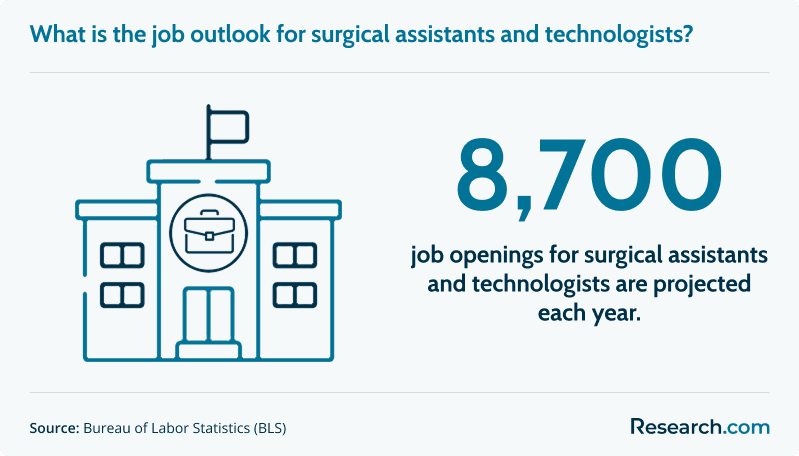
Cost should be compared with certification eligibility, clinical training quality, and job outcomes. The field is projected to have 8,700 openings annually, but no program can guarantee employment or a specific salary.
What are the financial aid options for students enrolling in a surgical tech program?
Financial aid may be available if the school and program meet eligibility requirements. Students should complete the FAFSA when applicable and ask the financial aid office whether the surgical technology credential qualifies for federal aid.
| Aid type | Details | Important caution |
| Federal Pell Grant | Designed for undergraduate students with significant financial need, with awards up to $7,395. | Eligibility depends on financial need, enrollment status, and institutional participation. |
| Federal Supplemental Educational Opportunity Grant (FSEOG) | Offers additional aid for students with exceptional financial need. Awards can range from $100–$4,000. | Funds are limited and may not be available at every school. |
| Stafford Loans | Federal student loans with amounts ranging from $5,500 to $10,500, depending on eligibility. | Loans must be repaid, so compare borrowing against expected local wages. |
| State, institutional, and scholarship aid | Some states and schools offer grants, healthcare scholarships, or institutional aid packages. | Ask whether aid applies to certificates, diplomas, or only degree programs. |
Students should also ask about employer tuition reimbursement, payment plans, required out-of-pocket costs, and whether aid covers supplies such as scrubs, shoes, background checks, drug screening, immunizations, and certification exams.
What are the prerequisites for enrolling in a surgical tech program?
Admission requirements vary, but surgical technology programs often expect applicants to show readiness for science coursework, clinical practice, and professional conduct in healthcare settings.
- Science coursework: Biology, anatomy and physiology, and microbiology may be required to build the foundation needed for surgical procedures and infection control.
- English composition: Writing courses help students document information clearly and communicate within healthcare teams.
- Medical terminology: Students learn the language used in surgery, patient care, instruments, and medical documentation.
- CPR certification: Many programs require current Cardiopulmonary Resuscitation (CPR) certification before admission or clinical placement.
- Clinical clearance requirements: Applicants may need immunization records, background checks, drug testing, and health screenings before entering clinical sites.
What courses are typically in a surgical tech program?
Surgical technology courses combine science, procedural knowledge, and hands-on practice. Online and hybrid programs usually cover the same core content as campus programs, but skills labs and clinical rotations must be completed in person.
| Course area | Common courses | Purpose |
| Foundational sciences | Anatomy and Physiology, Microbiology, Pharmacology | Helps students understand body systems, infection control, and medications used during surgery. |
| Professional foundations | Introduction to Surgical Technology, Medical Terminology, Patient Care | Introduces the profession, healthcare communication, and patient safety responsibilities. |
| Surgical practice | Aseptic Techniques, Surgical Procedures I & II, Instrumentation | Teaches sterile field maintenance, procedure steps, instruments, and specialty-specific techniques. |
| Clinical practicum | Supervised operating room experience | Allows students to apply classroom and lab learning in real surgical environments. |
What types of specializations are available in online surgical tech programs?
Specialization can help surgical technologists build expertise in a focused area, but many specialties require clinical experience beyond the basic program. Online programs may introduce specialty content through modules or electives, while advanced competence is usually developed through supervised experience and employer training.
Common specialty areas include gynecology, cardiovascular surgery, neurosurgery, and orthopedic surgery. Cardiovascular and pediatric surgical work may require additional practical training because these procedures can be complex and high risk.
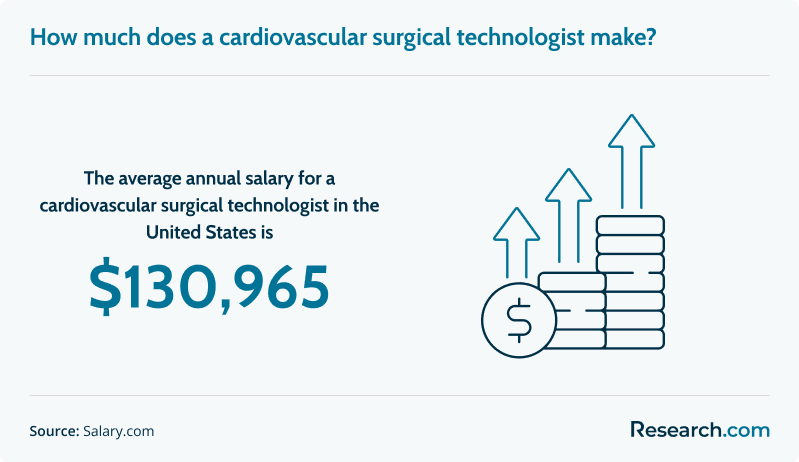
Specialization may affect earning potential. For example, surgical technologists specializing in cardiovascular surgeries can earn $109,779 to $148,587 annually. These roles often pay more because they require specialized knowledge and the ability to support complex procedures.
Can supplementary certifications boost your surgical tech career?
Additional credentials can strengthen a surgical technologist’s resume when they align with a clear career goal. The most relevant credentials are those connected to surgical practice, patient safety, sterile processing, advanced assisting, or healthcare operations. Employers may value certification because it signals ongoing professional development and a stronger commitment to industry standards.
Not every certificate is equally useful. Before paying for an additional credential, ask whether local employers request it, whether it supports a promotion, and whether it qualifies you for a specific role. Some surgical technologists also explore administrative or revenue-cycle knowledge, such as understanding medical billing coding certification cost, if they want to move toward non-clinical healthcare operations later.
Is expanding into related allied health fields beneficial?
Related allied health training can be useful when it expands your clinical understanding or creates a realistic second pathway. For example, learning about diagnostic imaging, sonography, sterile processing, or healthcare administration may help surgical technologists understand how patients move through the broader care system.
Students interested in diagnostic roles can compare surgical technology with online diagnostic medical sonography programs. The best choice depends on whether you prefer operating room support, imaging and diagnostics, patient interaction style, and long-term career goals.
How to choose the best surgical tech program
The best surgical tech program is not automatically the cheapest, fastest, or most convenient. It is the program that prepares you for certification, provides supervised clinical practice, fits your budget, and is recognized by employers in the area where you want to work.
| Selection factor | What to look for | Red flag |
| Accreditation | Check whether the program is accredited by the Commission on Accreditation of Allied Health Education Programs (CAAHEP) or the Accrediting Bureau of Health Education Schools (ABHES). Students comparing accredited online degrees should verify program-level recognition, not just school-level approval. | The school says it is “approved” but cannot explain certification eligibility. |
| Clinical training | Look for documented clinical rotations in hospitals, outpatient surgery centers, or surgical facilities. | The program is mostly online and vague about hands-on placement. |
| Certification preparation | Ask whether graduates are eligible for the CST exam and what the program’s pass rates are. | The school avoids giving exam eligibility details in writing. |
| Total cost | Compare tuition, fees, supplies, transportation, clinical costs, and exam fees. | The advertised price excludes required expenses. |
| Student outcomes | Review graduation rates, certification pass rates, clinical placement quality, and job placement support. | The school makes broad job promises without evidence. |
| Schedule fit | Confirm class times, lab dates, clinical shift expectations, and attendance policies. | Clinical schedules conflict with work or caregiving obligations. |
Questions to ask before enrolling
- Is the surgical technology program accredited by CAAHEP or ABHES?
- Will I be eligible to sit for the NBSTSA certification exam after graduation?
- Where will I complete labs and clinical rotations?
- Does the school arrange clinical placements, or must I find my own?
- What are the graduation, job placement, and certification pass rates?
- What is the full cost, including uniforms, supplies, background checks, drug tests, immunizations, and exam fees?
- Can credits transfer into another healthcare program later?
- Do local hospitals and surgical centers hire graduates from this program?
Common mistakes to avoid
| Mistake | Why it can hurt you | Better approach |
| Choosing a program only because it is cheap | Low tuition may not matter if the program lacks accreditation, clinical placement, or employer recognition. | Compare cost alongside accreditation, certification eligibility, and outcomes. |
| Assuming online means no in-person requirements | Surgical technology requires hands-on skills that cannot be mastered through lectures alone. | Confirm lab and clinical requirements before applying. |
| Ignoring accreditation | Graduates from non-recognized programs may face barriers to certification or employment. | Verify accreditation directly with the school and accrediting body. |
| Looking only at program length | A faster program may not include prerequisites or may compress clinical training. | Ask for a full semester-by-semester plan. |
| Assuming salary outcomes are guaranteed | Wages vary by location, setting, certification, and experience. | Research local employers and entry-level pay before borrowing. |
What additional academic credentials can further advance your career?
Surgical technologists who want long-term advancement may consider additional education after gaining operating room experience. A bachelor’s-level program in public health, healthcare administration, biology, or another related field can support movement into leadership, education, policy, research support, or interdisciplinary healthcare roles.
For students interested in broader population health topics such as epidemiology, healthcare systems, and policy, a cheap online public health bachelor's degree may be worth comparing. The best choice depends on whether your goal is clinical specialization, management, teaching, or a transition into another healthcare field.
Can surgical technologists transition into healthcare administration roles?
Yes, surgical technologists can move into healthcare administration, but clinical experience alone is usually not enough for higher-level management roles. Advancement often requires training in budgeting, supervision, scheduling, compliance, quality improvement, and healthcare operations.
Possible pathways include operating room supervisor, department coordinator, operations manager, or clinical administrator. Students considering this route should compare degree requirements and career outcomes for roles listed among the highest paying jobs with a healthcare administration degree.
What career paths are available for graduates of surgical tech programs?
A surgical technology credential can lead to entry-level operating room work and, with experience or additional credentials, more advanced clinical, educational, or administrative roles.
| Career path | Typical role | Additional preparation that may help |
| Certified Surgical Technologist (CST) | Prepares instruments, maintains sterile fields, supports surgeons, and helps manage surgical equipment. | Completion of an accredited program and CST exam preparation. |
| Surgical First Assistant | Assists surgeons more directly during procedures, including tasks such as suturing and tissue handling. | Additional training or certification, such as Certified Surgical First Assistant (CSFA). |
| Sterile Processing Technician | Cleans, sterilizes, tracks, and maintains surgical instruments and equipment. | Sterile processing training or related certification may be useful. |
| Operating Room Manager or Supervisor | Oversees operating room staff, workflows, supplies, schedules, and compliance. | Experience, leadership training, and healthcare management education. |
| Surgical Technology Instructor | Teaches future surgical technology students in community colleges, vocational schools, or training programs. | Professional experience, teaching ability, and related healthcare certifications. |
What essential skills are developed in surgical tech programs?
Surgical technology programs teach a combination of technical precision, sterile discipline, communication, and fast decision-making. Students must learn to stay organized and calm while supporting procedures where timing and accuracy matter.
- Aseptic technique: Maintaining sterile fields and preventing contamination.
- Instrument knowledge: Identifying, preparing, and passing surgical instruments correctly.
- Attention to detail: Tracking supplies, counts, equipment, and procedural steps.
- Team communication: Working efficiently with surgeons, nurses, anesthesia providers, and other operating room staff.
- Stress management: Staying focused during urgent or complex procedures.
- Scientific reasoning: Understanding anatomy, physiology, microbiology, and patient safety principles. Students who want a deeper science foundation may compare options such as the best online degree in biology.
Can a surgical tech degree propel you into healthcare administration roles?
A surgical tech degree can be a starting point for healthcare administration, especially for professionals who understand operating room workflows firsthand. However, administrative advancement usually requires additional education or training in management, finance, compliance, staffing, and strategic planning.
A healthcare administration degree online may be useful for surgical technologists who want to move from direct clinical support into department leadership, operations, or healthcare management. The strongest candidates combine clinical credibility with business and leadership skills.
What is the job market for graduates with a surgical tech associate degree?
Graduates of accredited online degree programs in surgical technology may find a favorable labor market, especially if they complete strong clinical training and earn certification. The US Bureau of Labor Statistics projects a 6% growth in employment for surgical technologists from 2023 to 2033, with approximately 8,700 job openings annually.
Employment is concentrated in a few healthcare settings:
| Industry | Employment level | Share of field |
| General Medical and Surgical Hospitals | Approximately 106,290 surgical technologists | Around 58% of all employment in the field |
| Outpatient Care Centers | Around 9,100 surgical technologists | About 5% of the workforce in this occupation |
| Physician Offices | Approximately 7,430 surgical technologists | Around 4% of total employment in the field |
Hospitals remain the largest employer, but outpatient care centers and physician offices continue to be important options as more procedures are performed outside traditional inpatient settings.
What student experiences often reveal about surgical tech training
Students commonly report that flexibility matters, but hands-on preparation matters more. Online coursework can make it easier to balance school with work, yet clinical rotations and lab practice are where students build confidence for the operating room.
Successful students usually plan early for transportation, clinical schedules, certification exam preparation, and study time. Surgical technology programs can be demanding because students must learn detailed procedures, sterile technique, instruments, and team communication while adapting to real surgical environments.
Are there emerging trends impacting surgical technology careers?
Surgical technology careers are being shaped by robotics-assisted procedures, simulation-based training, AI-supported diagnostics, and the continued movement of some procedures into outpatient settings. These changes do not replace the need for surgical technologists; they change the skills employers may value.
Students should look for programs that expose them to modern operating room technology, realistic simulation labs, electronic documentation practices, and interdisciplinary teamwork. Professionals who want a backup or complementary pathway may also consider administrative skills through options such as the best schools for medical billing and coding.
Can supplementary online degrees in biology enhance your surgical tech expertise?
An online biology degree can deepen a surgical technologist’s understanding of human physiology, cellular processes, disease mechanisms, and biomedical science. This can be useful for professionals interested in education, research support, advanced healthcare study, or a future transition into another clinical or scientific field.
A biology degree is not required for entry-level surgical technology work, so students should pursue it only if it supports a defined long-term plan. Those who want a faster academic pathway can compare an accelerated online bachelors in biology degree with other healthcare-related degrees.
Key Insights
- A surgical tech degree is most valuable when it is accredited, includes supervised clinical training, and prepares graduates for certification.
- Program timelines commonly range from 12-24 months for certificate or diploma programs and 18 months to 2 years for associate degree programs; part-time study may take three years.
- The median annual salary for surgical technologists is $60,610. The highest-paid 25% make up to $72,520, while the lowest-paid 25% earn around $49,940.
- Work setting affects earnings. Outpatient care centers report a median annual wage of $65,410, hospitals report $59,870, and physicians' offices report $57,790.
- The average tuition for surgical technology programs varies significantly. For vocational programs, the average tuition is approximately $28,401, while undergraduate programs average around $28,995.
- Financial aid may include Pell Grants, FSEOG, Stafford Loans, scholarships, state aid, institutional aid, and school-based support, but eligibility depends on the school and program.
- Certification can improve competitiveness. Obtaining professional credentials such as the Certified Surgical Technologist (CST) certification can lead to higher salaries compared to non-certified counterparts.
- The demand for surgical technologists is expected to grow by 5% from 2022 to 2032, and BLS data also projects 6% growth from 2023 to 2033 with approximately 8,700 openings annually.
- Do not choose based on tuition or convenience alone. Verify accreditation, clinical placement, certification eligibility, full cost, and local employer recognition before enrolling.
References:
All Allied Health Schools. (n.d.). Surgical technologist. https://www.allalliedhealthschools.com/surgical-technologist/
Bureau of Labor Statistics. (2023, May 25). Surgical technologists. U.S. Department of Labor. https://www.bls.gov/ooh/healthcare/surgical-technologists.htm
Harper College. (n.d.). Surgical technology program data and outcomes. https://www.harpercollege.edu/academics/health/surgical-technology/program-data-and-outcomes.php
Stepful. (2023, July 5). How long it takes to become a surgical tech. https://www.stepful.com/post/how-long-it-takes-to-become-a-surgical-tech
Vivian Health. (2023, May 4). High paying surgical technologist specialties. https://www.vivian.com/community/allied-health/high-paying-surgical-technologist-specialties/
Vivian Health. (2023, May 4). Where do certified surgical technologists make the most money? https://www.vivian.com/community/allied-health/where-do-certified-surgical-technologists-make-the-most-money/
College of Central Florida. (n.d.). Surgical technology program. https://www.cf.edu/academics/areas-of-study/health-sciences/surgical-technology/
Other Things You Should Know About Surgical Technology
In 2027, surgical tech students can choose specialties like orthopedics, cardiovascular, or neurosurgery, depending on the program. Specializing often involves additional modules or internships focused on the chosen area, allowing students to gain expertise for specific surgical environments.
In 2027, top surgical tech programs should be accredited by reputable organizations like the Commission on Accreditation of Allied Health Education Programs (CAAHEP) or the Accrediting Bureau of Health Education Schools (ABHES). Accreditation ensures that the program meets high standards of education and prepares students for successful careers in the field.
Most accredited surgical tech programs require about 120 to 600 clinical hours, plus classroom instruction. Programs aligned with CAAHEP standards usually include supervised operating room experience before graduation, and many states and employers expect that hands-on training before entry-level work.


