
2027 Most Affordable Online Surgical Tech Certificate Programs

Co-Founder and Chief Data Scientist
Choosing an online surgical tech certificate is a budget decision, a scheduling decision, and a patient-safety decision. The right program can help you move into operating room support work without committing to a longer degree, but not every “online” option provides the clinical training, accreditation, or certification preparation employers expect. This guide explains what affordable online surgical tech certificate programs include, how much they cost, how long they take, which programs are listed as low-cost options for 2027, and what to verify before enrolling.
According to the U.S. Bureau of Labor Statistics, surgical technologists earned a median annual wage of $60,290 as of 2024. For students who want a healthcare career with hands-on work, a defined training path, and entry-level opportunities in hospitals and surgical centers, a surgical tech certificate can be a practical route. The key is choosing a program that is affordable without cutting corners on clinical placement, certification eligibility, and employer recognition.
Quick answer: Is an affordable online surgical tech certificate worth it?
An affordable online surgical tech certificate can be worth it if the program is properly accredited or otherwise recognized for certification preparation, includes supervised in-person clinical training, and fits your local employer requirements. Most students should expect online coursework paired with labs, simulations, or clinical rotations at approved healthcare sites. The lowest-priced option is not always the best value if it does not help you qualify for certification exams or local surgical tech jobs.
| Best fit | When an online surgical tech certificate makes sense |
| Working adults | You need online theory courses while completing clinical hours in person. |
| Cost-conscious students | You want a shorter, lower-cost path than many associate degree routes. |
| Hands-on learners | You are comfortable learning medical concepts online but can attend required clinical training. |
| Career changers | You want to enter healthcare without spending several years in school first. |
| Students needing full flexibility | You should be cautious: clinical schedules may still require daytime, weekday, or location-specific availability. |
What are the benefits of getting an affordable online surgical tech certificate program?
- Direct preparation for surgical support roles: A certificate can prepare graduates for jobs such as surgical technologist, sterile processing technician, or operating room assistant, depending on the program, certification pathway, and employer requirements.
- Access to a healthcare field with solid earnings: Surgical technologists are often described as earning around $62,000 per year, with top earners making over $90,000. BLS wage data also shows that pay varies widely by state, setting, certification, and experience.
- Lower education costs: Online coursework can reduce commuting, parking, relocation, and campus-related costs. However, students should still budget for clinical requirements, uniforms, books, supplies, background checks, immunizations, and exam fees.
- More scheduling flexibility: Many online programs let students complete lectures and assignments remotely, which can help those balancing work, caregiving, or other responsibilities. Clinical hours, however, must be completed in person.
- A faster route than many degree programs: Certificate programs are usually designed for job entry rather than broad academic study, so they may help students begin healthcare work sooner.
What can I expect from an affordable online surgical tech certificate program?
An online surgical tech certificate teaches the knowledge and skills needed to support surgeons, nurses, anesthesiology teams, and other operating room professionals before, during, and after procedures. Students learn how to maintain sterile technique, identify and pass surgical instruments, prepare operating rooms, understand surgical anatomy, support patient safety, and follow perioperative protocols.
Most programs use a hybrid structure. The classroom portion may be online, while skills labs, simulations, and clinical rotations happen in person. That distinction matters. Surgical technology is not a fully remote field, and employers typically expect graduates to have supervised hands-on experience in real surgical or clinical environments.
Students can often complete these programs in 12 to 24 months, although timelines vary by prerequisites, clinical availability, course load, and whether the program is self-paced or cohort-based. Many programs cover anatomy, microbiology, medical terminology, pharmacology, surgical procedures, infection control, and clinical practice. Graduates may then pursue certification such as the Certified Surgical Technologist (CST) exam, depending on program eligibility and accreditation status.
| Program component | What it usually includes | Why it matters |
| Online coursework | Medical terminology, anatomy, surgical procedures, ethics, pharmacology, and infection control | Builds the knowledge base needed for safe operating room work and certification preparation |
| Skills training | Instrument handling, sterile field setup, gowning and gloving, counts, and case preparation | Develops technical confidence before clinical rotations |
| Clinical practicum | Supervised experience in hospitals, outpatient centers, or approved surgical sites | Provides required hands-on exposure and helps students understand real operating room workflow |
| Certification preparation | Review materials, practice exams, and exam eligibility guidance | Can improve readiness for nationally recognized credentials |
| Career support | Resume help, interview preparation, externship coordination, and job search guidance | Helps students transition from training to employment |
Where can I work with an affordable online surgical tech certificate program?
Graduates commonly seek employment in healthcare settings where procedures require sterile technique, surgical instruments, and coordinated operating room support. Hiring requirements vary by state and employer, so students should check local job postings before choosing a program.
- Hospitals: General, surgical, and specialty hospitals employ many surgical technologists because they perform a high volume of procedures across multiple departments.
- Outpatient surgery centers: Ambulatory surgical centers handle scheduled procedures that usually do not require overnight stays. These settings may offer more predictable schedules than hospital operating rooms.
- Physicians’ offices: Some surgical practices hire techs to assist with office-based procedures, instrument preparation, and patient flow.
- Specialty clinics: Orthopedic, cardiology, plastic surgery, and other specialty practices may need surgical techs with procedure-specific knowledge.
- Labor and delivery units: Surgical techs may assist OB/GYN teams during cesarean sections and related obstetric procedures.
- Travel assignments: Experienced surgical technologists may take short-term contracts in facilities with temporary staffing needs.
How much can I make with an affordable surgical tech certificate program?
Pay depends on experience, certification, state, city, shift, employer type, and specialty area. As of 2025, the national average salary for surgical technologists is approximately $62,250 per year. Entry-level professionals typically earn between $40,000 and $45,000 annually, while those with 5 or more years of experience can see salaries ranging from $60,000 to $65,000. Specialized surgical technologists or those in leadership roles may earn upwards of $70,000.
Location can make a major difference. Surgical techs in California average $76,170 per year, whereas those in Alabama average $42,960. Facility type also affects compensation: hospitals often offer different pay structures, shift differentials, and benefits than outpatient centers or physicians’ offices.
BLS wage data for May 2024 shows a median annual wage of $60,290 for surgical technologists. The lowest 10 percent earned less than $39,540, and the highest 10 percent earned more than $102,390. These figures should be used as benchmarks, not guarantees. A certificate can help open the door, but earnings depend on where you work and how your skills develop after graduation.
- Most Affordable Online Surgical Tech Certificate Programs for 2027
- How long does an affordable online surgical tech certificate take?
- Online vs. on-campus surgical tech certificates: which is better?
- How much does an affordable online surgical tech certificate cost?
- What financial aid can surgical tech certificate students use?
- What are the admission requirements?
- What courses will I take?
- Can I specialize after a surgical tech certificate?
- How does surgical tech compare with other affordable healthcare programs?
- What career advancement support should programs provide?
- Why does accreditation matter?
- What education can I pursue after the certificate?
- What challenges should applicants expect?
- How do I choose the best affordable online surgical tech certificate?
- What jobs can I pursue after graduation?
- What is the job market like for surgical tech certificate graduates?Key insights and references
List of the Most Affordable Online Surgical Tech Certificate Programs for 2027
How do we rank schools?
Research.com evaluates online surgical tech certificate options with affordability, program structure, available data, and student decision-making in mind. Because a surgical tech program must connect online learning with clinical preparation, students should use rankings as a starting point rather than the only deciding factor.
This ranking is based on a transparent Research.com methodology that draws from sources such as the Integrated Postsecondary Education Data System (IPEDS), Peterson's databases including their Distance Learning Licensed Data Set, and the College Scorecard database from the National Center for Education Statistics. When comparing schools, verify the most current tuition, accreditation status, clinical requirements, and certification eligibility directly with the institution.
1. Madisonville Community College
Madisonville Community College’s surgical technology program blends online coursework with required in-person clinical experience. The curriculum is built for students preparing for entry-level surgical technologist work and emphasizes perioperative care, surgical procedures, sterile technique, and professional operating room responsibilities. Its format may appeal to students who want some online flexibility while still completing hands-on training at approved healthcare facilities.
- Program Length: 2 semesters following the completion of prerequisite courses.
- Tracks/Concentrations: Surgical Technology
- Cost per Credit: $189 for online-only courses; mandatory fee of $8 per credit hour
- Required Credits to Graduate: 60 credits
- Accreditation: Commission on Accreditation of Allied Health Education Programs (CAAHEP)
2. Mt. Hood Community College
Mt. Hood Community College’s surgical technology program provides classroom-based instruction and clinical experience for students seeking comprehensive operating room training. While some general education coursework may be available online, the core surgical technology training is delivered in person so students can develop practical competence in aseptic technique, surgical procedures, and patient care.
- Program Length: 2 years
- Tracks/Concentrations: Surgical Technology
- Cost per Credit: $128 per credit for in-district and out-of-district students (1-18 credits); $64 per credit for credits beyond 18.
- Required Credits to Graduate: 92 credits
- Accreditation: Accreditation Review Council on Education in Surgical Technology and Surgical Assisting (ARC/STSA)
3. Anderson University
Anderson University’s online Surgical Technologist Certificate Program is designed for learners who want a flexible route into operating room support training. The program is delivered entirely online and may be especially relevant for students who need a self-paced format. Applicants should confirm clinical expectations, exam eligibility, and how employers in their area view the credential before enrolling.
- Program Length: Self-paced; duration varies based on individual progress.
- Tracks/Concentrations: Surgical Technology
- Cost per Credit: $399
- Required Credits to Graduate: 60
- Accreditation: National Center for Competency Testing (NCCT) and American Allied Health (AAH)
4. Adelphi University
Adelphi University’s online Surgical Technologist Certificate course introduces students to surgical technology concepts, including medical terminology, anatomy, and surgical instruments. The course is structured for students exploring entry into the surgical technology field through an online format. Before enrolling, students should ask how clinical practice is handled and whether the course aligns with the certification expectations of local employers.
- Program Length: 2 years, longer if self-paced
- Tracks/Concentrations: Surgical Technology
- Total Program Cost: $1,899
- Required Credits to Graduate: 60 credits
- Accreditation: National Center for Competency Testing (NCCT) and American Allied Health (AAH)
5. Santa Fe College
Santa Fe College’s Surgical Technology Certificate program runs across four semesters and uses multiple delivery formats, including on-campus, online, and virtual classes. The program prepares students for surgical technologist employment by focusing on perioperative care, surgical procedures, and clinical readiness.
- Program Length: 2 years
- Tracks/Concentrations: Surgical Technology
- Total Program Cost: $6,695
- Required Credits to Graduate: 44 credit hours
- Accreditation: Commission on Accreditation of Allied Health Education Programs (CAAHEP)
How long does it take to complete an affordable online surgical tech certificate program?
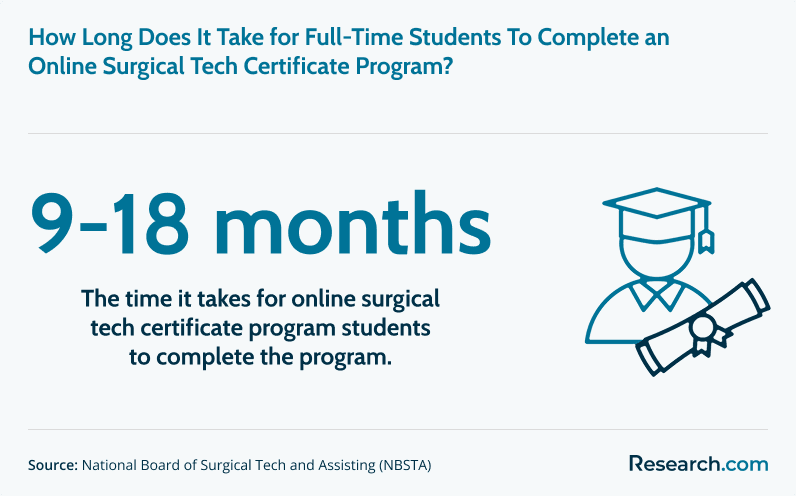
An affordable online surgical tech certificate program typically takes 9 to 18 months to complete, depending on the school, prerequisite requirements, clinical schedule, and whether the student attends full time or part time. Some accelerated options may be completed in as little as 6 to 8 months, especially when general education or prerequisite courses have already been satisfied.
The online portion usually covers anatomy, surgical procedures, sterilization methods, medical terminology, and patient safety. The in-person portion is normally completed through a hospital, outpatient surgical center, or another approved clinical site. Students comparing healthcare pathways may also review the most affordable online women’s health nurse practitioner graduate certificate programs to understand how certificate timelines differ across healthcare fields.
Online programs are attractive because they can reduce campus time and commuting costs, but they are not “study-only” programs. Clinical hours are essential for graduation, skill development, and certification readiness. Graduates are often preparing for the Certified Surgical Technologist (CST) exam or another certification route, while hospitals continue to report surgical workforce needs in the context of high demand among hospitals.
| Timeline | Who it may fit | Important caution |
| 6 to 8 months | Students with completed prerequisites or those in accelerated formats | Clinical placement may be intensive and less flexible |
| 9 to 18 months | Many certificate students balancing school with work or family responsibilities | Students still need reliable availability for labs and clinical rotations |
| 12 to 24 months | Students in programs with broader coursework, sequenced prerequisites, or longer clinical components | A longer program may cost more but can provide more structured preparation |
How does an affordable online surgical tech certificate compare to an on-campus program?
An affordable online surgical tech certificate usually offers more flexibility for lectures, readings, quizzes, and assignments. This can help working adults, parents, and students who live far from campus. Similar to a fast-track medical assistant program, the academic portion may be remote, but clinical practice still requires in-person attendance.
On-campus programs may be better for students who want direct instructor access, scheduled lab time, peer interaction, and immediate feedback during hands-on practice. They may also have established relationships with nearby clinical sites. The trade-off is that campus programs can be less convenient and may involve commuting, parking, and less control over weekly scheduling.
| Factor | Online or hybrid certificate | On-campus certificate |
| Flexibility | Higher for lecture-based coursework | Lower because classes and labs meet on campus |
| Clinical training | Still required in person, often at an approved local site | Usually coordinated through campus-affiliated clinical partners |
| Best for | Students who need remote coursework and can manage independent study | Students who learn best through structured schedules and face-to-face instruction |
| Potential cost savings | May reduce commuting and relocation expenses | May include more built-in access to labs and equipment |
| Main risk | Weak clinical placement support can delay completion | Less scheduling flexibility can make attendance harder |
What is the average cost of an affordable online surgical tech certificate program?
The average cost of an affordable online surgical tech certificate program ranges from $4,000 to $10,000. Community colleges and public technical schools often provide the lowest tuition rates, but students should compare total program cost rather than tuition alone. Books, lab supplies, uniforms, health records, liability insurance, background checks, drug screenings, technology fees, and certification exam costs can change the real price.
Cost comparisons should also account for the structure of the program. A very inexpensive course may not include clinical placement support, while a higher-priced program may include more advising, exam preparation, or employer connections. Students researching allied health training costs can compare this pathway with the most affordable online medical assistant programs to see how program length, certification, and clinical expectations differ.
The chart below shows median annual wages for surgical technologists in the U.S. across industries and can help students compare potential earnings by workplace setting.
What are the financial aid options for students enrolling in an affordable online surgical tech certificate program?
Financial aid depends on the school, program length, accreditation, and whether the institution participates in federal student aid programs. Students may qualify for federal aid such as Pell Grants and Direct Subsidized Loans if the certificate is offered by an eligible accredited institution that participates in Title IV funding. The first step is completing the FAFSA, the Free Application for Federal Student Aid.
Other possible options include state grants, academic scholarships, institutional aid, payment plans, work-study opportunities, military education benefits, and employer tuition reimbursement. Veterans and active-duty service members may be able to use GI Bill® benefits if the program qualifies. Some healthcare employers may sponsor training for students who agree to work for them after completion.
| Funding option | Best use | Question to ask |
| Federal student aid | Reducing tuition at eligible institutions | Does this specific certificate program qualify for Title IV aid? |
| State grants | Lowering costs for residents | Are certificate or workforce programs covered? |
| Institutional scholarships | Reducing out-of-pocket expenses | Are allied health certificate students eligible? |
| Payment plans | Spreading tuition over multiple installments | Are there fees or interest charges? |
| Employer reimbursement | Working students already employed in healthcare | Does reimbursement require a work commitment? |
| Military benefits | Eligible veterans, service members, and dependents | Is the program approved for GI Bill® use? |
What are the prerequisites for enrolling in an affordable online surgical tech certificate program?
Admission requirements vary, but surgical tech programs often screen for academic readiness, clinical eligibility, and patient-safety compliance. Common prerequisites include:
- High school diploma or GED: Programs typically require proof that applicants have completed secondary education.
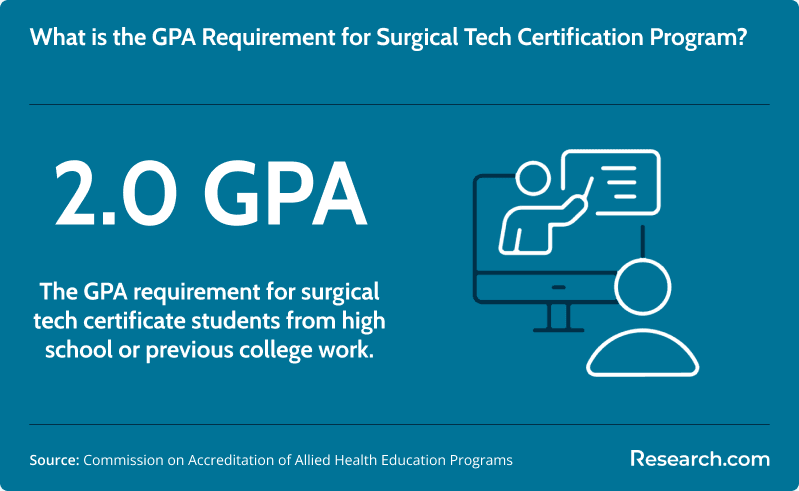
- Minimum GPA: Some schools require a GPA of 2.0 or higher from high school or prior college coursework.
- Background check and drug screening: Clinical sites often require both before allowing students to work near patients or sterile environments.
- Immunization records: Students may need current vaccines such as Hepatitis B and MMR to meet healthcare facility requirements.
- CPR or BLS certification: Basic life support training from an approved provider is often required before clinical placement.
- Placement testing or prerequisite courses: Some programs require anatomy, medical terminology, math, reading, or science readiness before entry.
Students considering a longer-term nursing pathway can compare these admissions requirements with the most affordable online paramedic-to-RN bridge programs, which may have different clinical, licensure, and prerequisite expectations.
What courses are typically in an affordable online surgical tech certificate program?
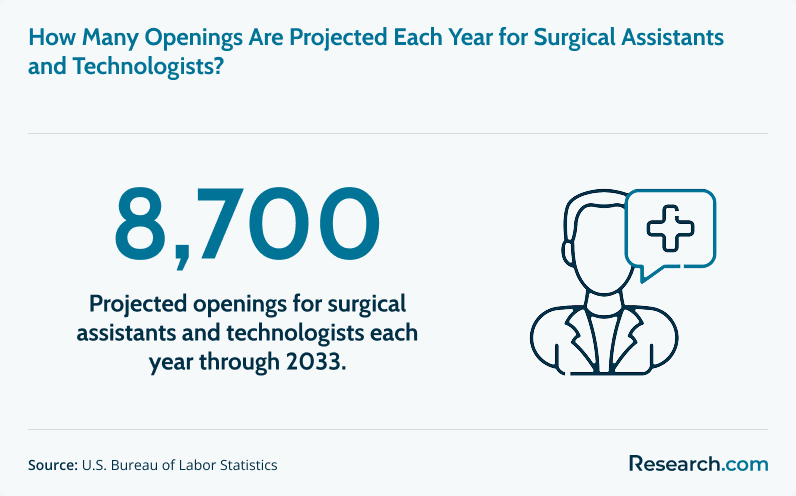
Students preparing for the projected 8,700 surgical tech workforce through 2033 usually complete a curriculum focused on surgical safety, anatomy, procedure support, and clinical practice. Course titles differ by school, but most affordable online or hybrid surgical tech certificate programs include the following subjects:
- Introduction to Surgical Technology: Explains the surgical technologist’s role, professional expectations, ethics, and responsibilities within the operating room team.
- Medical Terminology: Builds the vocabulary needed to understand surgical documentation, physician instructions, and healthcare communication.
- Anatomy and Physiology: Covers body systems and structures with emphasis on surgical relevance. Students who want deeper science preparation may also compare coursework in the best biological science degree programs.
- Sterile Processing and Infection Control: Teaches sterilization, contamination prevention, aseptic technique, and instrument handling.
- Surgical Procedures: Reviews common operations, surgical steps, equipment, instrumentation, and team workflow.
- Pharmacology for Surgical Technologists: Introduces medications used around surgery, including anesthetics, antiseptics, and related drug safety concepts.
- Clinical Practicum or Externship: Provides supervised hands-on experience in a hospital, surgical center, or other approved clinical site.
What types of specializations are available in affordable online surgical tech certificate programs?
Most certificate programs teach general surgical technology rather than formal specializations. Specialization usually develops after graduation through clinical experience, employer training, continuing education, or additional credentials. Students who want another short allied health credential may compare training requirements with the most affordable online phlebotomy technician certification programs.
- Cardiovascular surgery: Supports heart-related procedures that require careful handling of specialized instruments and close coordination with the surgical team.
- Neurosurgery: Involves procedures on the brain and spinal cord, where precision and strict sterile protocols are especially important.
- Orthopedic surgery: Focuses on bone, joint, and musculoskeletal procedures that may use large instruments, implants, and power tools.
- Obstetrics and gynecology: Supports cesarean sections, reproductive health surgeries, and other OB/GYN procedures.
- Plastic and reconstructive surgery: Assists with cosmetic, reconstructive, and corrective procedures where technique and attention to detail are critical.
Some graduates later move into adjacent fields, including sterile processing leadership, operating room coordination, surgical assisting, medical device work, or data-focused roles such as health informatics careers.
How do online surgical tech certificate programs compare with other affordable healthcare education options?
Surgical technology is a strong option for students who want hands-on procedural work and a shorter education path. It is not the only affordable healthcare route, however. Medical assisting, phlebotomy, sterile processing, public health, nursing bridges, and health administration can lead to different work environments and advancement paths. Students who prefer population health, policy, or community health work may find a low-cost online public health bachelor’s degree more aligned with their goals.
| Path | Best for | Main trade-off |
| Surgical tech certificate | Students who want operating room work and direct procedural support | Requires in-person clinical training and comfort in surgical environments |
| Medical assistant program | Students who want clinic-based patient care and administrative tasks | Usually less specialized in surgery |
| Phlebotomy certification | Students seeking a focused entry-level lab or specimen collection role | Narrower scope of practice and fewer operating room responsibilities |
| Public health degree | Students interested in prevention, community programs, data, or policy | Longer academic pathway and less direct surgical exposure |
| Healthcare administration degree | Students who prefer management, operations, or leadership roles | Less clinical and more business-focused |
What additional career advancement support do online surgical tech certificate programs offer?
Strong programs do more than post online lessons. They help students prepare for clinical placement, certification exams, and the first job search. Look for advising, skills checklists, simulation support, externship coordination, resume feedback, interview coaching, employer partnerships, and guidance on continuing education.
Career support is especially important for online students because they may have fewer informal networking opportunities than campus students. Students who hope to move into management later can also research higher-paying healthcare administration careers to understand how clinical experience can connect with operations, supervision, or leadership roles.
Is accreditation essential for quality online surgical tech programs?
Accreditation is one of the most important quality checks for a surgical tech program. Students should verify whether the program is accredited by a recognized body such as CAAHEP or ABHES when certification eligibility, clinical quality, and employer recognition are priorities. Accreditation can indicate that the curriculum, faculty qualifications, clinical training, and student outcomes have been reviewed against external standards.
Applicants should be careful with programs that describe themselves as “certification prep” but do not clearly explain whether graduates qualify for the CST exam or another credential. Ask the school which exams graduates can take, what documentation is required, and whether local hospitals accept the credential. Students considering broader science training or a future bachelor’s degree may also compare pathways such as a fast-track online biology degree.
How can one advance education after earning an affordable online surgical tech certificate?
After earning a surgical tech certificate, graduates may advance through experience, additional certification, or further education. Common next steps include becoming a surgical first assistant, moving into sterile processing leadership, pursuing operating room coordination, entering surgical equipment sales, or completing a degree in a related healthcare field.
Students who want broader scientific preparation can consider an online bachelor’s degree in biology, especially if they are planning for future roles in research, healthcare education, pre-professional study, or clinical support fields. Before enrolling in a degree program, confirm transfer credit policies, prerequisite alignment, tuition, and whether prior certificate credits apply.
What potential challenges should applicants consider in an affordable online surgical tech certificate program?
Affordable online surgical tech programs can be convenient, but students should understand the obstacles before committing. The biggest risks are weak clinical placement support, unclear certification eligibility, limited hands-on practice, and underestimating the time required for labs or rotations. Online flexibility does not remove the need for in-person training.
- Clinical placement delays: If the school does not arrange sites or if local sites are limited, graduation may take longer than expected.
- Certification confusion: Not every online program leads to the same exam eligibility. Ask about CST, NCCT, AAH, or other credential pathways before paying tuition.
- Self-paced learning challenges: Flexible programs require discipline, reliable internet access, and strong time management.
- Hidden costs: Supplies, uniforms, background checks, immunizations, insurance, travel, and exam fees can increase the total price.
- State or employer differences: Hospitals may prefer or require certain credentials, experience, or accredited training.
- Long-term career planning: Students interested in leadership may eventually need additional education, such as a healthcare administration degree online from an accredited program.
How does one choose the best affordable online surgical tech certificate program?
Start by confirming that the program can actually help you reach your employment goal. Price matters, but accreditation, clinical placement, exam eligibility, and local employer recognition matter more. Some accredited online colleges with no application fee may offer affordable options, but students should still verify program-level requirements before enrolling.
- Check accreditation: Look for CAAHEP or ABHES accreditation when certification eligibility and employer recognition are priorities.
- Verify clinical placement: Ask whether the school assigns clinical sites, helps locate sites, or requires students to find their own.
- Compare total cost: Review tuition, fees, supplies, background checks, insurance, uniforms, books, and certification exam expenses.
- Confirm certification preparation: Ask which exam the program prepares students for and whether graduates meet eligibility requirements.
- Review program length: Choose a schedule that fits your work, family, transportation, and clinical availability.
- Ask about outcomes: Request exam pass rates, graduation rates, job placement data, and employer partnerships when available.
- Evaluate student support: Look for tutoring, advising, technical help, faculty access, career services, and clinical coordination.
| Question to ask before enrolling | Why it matters |
| Is the program accredited by CAAHEP, ABHES, or another recognized body? | Accreditation can affect certification eligibility and employer confidence. |
| Who finds my clinical site? | Clinical placement problems can delay graduation and certification. |
| Which certification exam can graduates take? | Different employers may prefer different credentials. |
| What is the full program cost? | Tuition alone may not include supplies, checks, uniforms, or exam fees. |
| Are courses synchronous or self-paced? | The schedule affects whether the program works with your job or caregiving duties. |
| What are the pass rates and placement outcomes? | Outcomes can help you judge program quality beyond marketing claims. |
The chart below highlights pass rates for the Surgical Technologist Certification Exam across recent years and can help students evaluate broad performance trends and program effectiveness.
What career paths are available for graduates of affordable online surgical tech certificate programs?
Graduates may qualify for several entry-level or early-career healthcare roles, depending on training quality, certification, location, and employer requirements.
- Surgical Technologist: Prepares instruments, maintains sterile fields, assists with room setup, and supports the surgical team during procedures.
- Labor and Delivery Surgical Tech: Works with maternity and OB/GYN teams during cesarean sections and related procedures.
- Sterile Processing Technician: Cleans, sterilizes, assembles, and prepares surgical instruments and equipment.
- Private Practice Surgical Assistant: Supports surgeons in outpatient or office-based procedures, depending on scope and employer needs.
- Travel Surgical Tech: Takes temporary assignments in facilities with staffing needs, often after gaining experience.
With experience, surgical technologists may pursue surgical first assistant roles, operating room leadership, equipment sales, or additional imaging-related training such as online ultrasound tech school.
What is the job market like for graduates with an affordable online surgical tech certificate?
The labor market for surgical technologists is supported by ongoing surgical demand, an aging population, and medical technology that makes more procedures possible. The U.S. Bureau of Labor Statistics projects a 6% employment growth for surgical technologists from 2023 to 2033, which is faster than the average for all occupations.
In May 2024, the median annual wage for surgical technologists was $60,290. The lowest 10 percent earned less than $39,540, and the highest 10 percent earned more than $102,390. Most surgical technologists work full time in hospitals, outpatient care centers, or physicians' offices. Students comparing other fields with different work settings and education requirements may also review the most affordable online school psychology degree programs.
Common mistakes to avoid when choosing an online surgical tech certificate
- Choosing only by sticker price: A cheaper program may cost more in the long run if it lacks clinical placement support or certification eligibility.
- Assuming “online” means fully remote: Surgical technology requires hands-on clinical training. Plan for transportation, scheduling, and site requirements.
- Not checking accreditation: Accreditation can affect exam eligibility, transfer options, and employer acceptance.
- Ignoring local job postings: Before enrolling, check what hospitals and surgical centers in your area require for entry-level surgical tech roles.
- Forgetting about extra fees: Books, uniforms, immunizations, screenings, insurance, and certification exams can add to total cost.
- Overlooking support services: Online students need responsive faculty, technical help, clinical coordination, and career services.
- Assuming salary outcomes are guaranteed: Wages depend on location, facility type, certification, experience, shifts, and specialty area.
References
- Bureau of Labor Statistics. (n.d.). Surgical technologists. U.S. Department of Labor.
- Commission on Accreditation of Allied Health Education Programs. (2024). Annual report.
- Medtronic. (2024). State of surgery in the U.S. 2024.
- National Board of Surgical Technology and Surgical Assisting. (n.d.). Certification statistics.
- National Board of Surgical Technology and Surgical Assisting. (n.d.).
Key Insights
- An affordable online surgical tech certificate is usually best understood as a hybrid pathway: coursework may be online, but clinical training must happen in person.
- Typical completion time is 9 to 18 months, though some accelerated formats may take 6 to 8 months and some broader programs may take 12 to 24 months.
- The average cost of an affordable online surgical tech certificate program ranges from $4,000 to $10,000, but students should calculate total cost, not tuition alone.
- Accreditation, clinical placement, and certification eligibility are more important than price when judging program value.
- In May 2024, surgical technologists earned a median annual wage of $60,290; the lowest 10 percent earned less than $39,540, and the highest 10 percent earned more than $102,390.
- The U.S. Bureau of Labor Statistics projects 6% employment growth for surgical technologists from 2023 to 2033.
- Before enrolling, ask the school which certification exam graduates can take, who arranges clinical rotations, what the pass rates are, and whether local employers accept the credential.
Other Things You Should Know About the Most Affordable Online Surgical Tech Certificate Programs
Students can apply for federal financial aid such as the Pell Grant or Stafford Loan, dependent on their eligibility. Additionally, many programs offer scholarships and grants specifically for healthcare students. Check with individual schools for institution-specific financial aid options.
To enroll in an affordable online surgical tech certificate program in 2027, prerequisites typically include a high school diploma or GED, completion of basic science courses like biology and anatomy, proficiency in English, and sometimes CPR certification. Requirements may vary slightly between programs, so it's important to check individual school criteria.
Yes. The most affordable online surgical tech certificate programs should be institutionally accredited, and the surgical technology curriculum should align with CAAHEP or ABHES standards. Accreditation matters because it affects eligibility for the CST exam, transfer credit, and access to federal financial aid.


