2027 Self-Paced Online Artificial Intelligence Bachelor's Degree Programs

Co-Founder and Chief Data Scientist
Choosing a self-paced online artificial intelligence bachelor’s degree is really a question of fit: can you build serious technical skills without a fixed weekly class schedule, and will the credential support your next career move? For working adults, parents, career changers, military learners, and students with prior college credit, the answer can be yes—but only if the program is properly accredited, financially realistic, and structured with enough academic support.
Self-paced AI bachelor’s programs are designed for students who need flexibility but still want a degree pathway into machine learning, data science, automation, natural language processing, computer vision, and related fields. Recent data shows that enrollment in self-paced AI programs grew by 35% between 2020 and 2023, reflecting stronger demand for education models that do not require students to pause work or follow a traditional semester rhythm.
This guide explains how self-paced online artificial intelligence bachelor’s degrees work, how they differ from traditional online programs, what accreditation to check, how transfer credit and prior learning may shorten the path, what costs to expect, and how to evaluate career-focused concentrations before enrolling.
Key Benefits of Self-Paced Online Artificial Intelligence Bachelor's Degree Programs
- Self-paced online artificial intelligence degrees offer flexibility to working professionals, allowing study schedules to adapt around full-time jobs and personal commitments.
- Accelerated skill acquisition is supported through competency-based models, enabling experienced learners to progress faster by demonstrating mastery.
- These programs provide cost-effective paths to accredited credentials by reducing expenses related to commuting, housing, and often allowing prior learning assessments for credit.
What Are Self-Paced Online Artificial Intelligence Bachelor's Degree Programs, and How Do They Differ From Traditional Online Formats?
A self-paced online artificial intelligence bachelor’s degree lets students move through coursework according to demonstrated progress rather than a fixed weekly calendar. Instead of waiting for each new unit to open with a class cohort, students typically complete lessons, projects, exams, or competency assessments when they are ready. This format can be especially useful for learners who already have programming experience, previous college credit, or unpredictable work schedules.
The main difference from a traditional online program is control over time. A traditional online AI or computer science degree may still follow a semester schedule, weekly deadlines, discussion-board requirements, exam windows, and a cohort that advances together. A self-paced program usually gives students more autonomy, but it also shifts more responsibility onto the learner.
How self-paced programs usually work
- Open or frequent start dates: Students may be able to begin without waiting for a standard fall or spring semester.
- Milestone-based progress: Advancement depends on completing assessments or demonstrating mastery, not simply spending a set number of weeks in a course.
- Flexible study rhythm: Learners can accelerate during lighter work periods and slow down during demanding personal or professional seasons.
- Competency-based design: Many programs emphasize proof of skill in areas such as programming, data analysis, machine learning, and applied AI projects.
Self-paced vs. traditional online AI degrees
- Self-paced programs: Best for disciplined students who can plan their own study schedule, work independently, and stay motivated without frequent deadlines.
- Traditional online programs: Better for students who want more predictable structure, regular instructor contact, peer interaction, and scheduled accountability.
- Hybrid flexibility: Some programs combine asynchronous coursework with term-based deadlines, which can be a middle ground for students who need flexibility but not total independence.
The trade-off is clear: self-paced learning can shorten the degree timeline for motivated students, but it can also lead to stalled progress if the program lacks advising, tutoring, faculty access, or clear academic milestones. Before enrolling, ask how often instructors respond, whether projects receive meaningful feedback, how assessments are scheduled, and what happens if you fall behind.
Students planning beyond the bachelor’s level may also compare flexible graduate pathways, including the most affordable online PhD programs, to understand how online formats differ at advanced levels.
Which Accredited Institutions Offer Self-Paced Online Artificial Intelligence Bachelor's Degree Programs?
Accredited institutions offering self-paced or highly flexible online artificial intelligence bachelor’s pathways typically use competency-based education, transfer-friendly degree plans, or online computer science curricula with AI-focused coursework. The right choice depends on accreditation, tuition structure, transfer policy, academic support, and whether the curriculum is explicitly focused on artificial intelligence or built around a broader computer science major with AI electives.
- Western Governors University: Accredited by the Northwest Commission on Colleges and Universities (NWCCU), WGU offers a BS in artificial intelligence with a subscription tuition model charging a flat fee per six-month term. This model rewards students who can complete courses quickly. Average graduation times are between 2 to 3 years, and transfer credits or prior learning assessments may help students reduce remaining requirements.
- Capella University: Accredited by the Higher Learning Commission (HLC), Capella offers a Bachelor of Science in Artificial Intelligence and Machine Learning using the FlexPath format. This competency-based model charges tuition per term rather than per credit, allowing learners to complete multiple courses within a term. Students typically finish in 3 to 4 years, and Capella supports transfer credits and credit for documented work experience.
- Southern New Hampshire University: Regionally accredited by the New England Commission of Higher Education (NECHE), SNHU offers a flexible BS program that integrates artificial intelligence electives into its computer science curriculum. Tuition is charged per credit hour, and many students complete the program in about 4 years. Transfer credit and prior learning assessment policies can be important for students with previous coursework.
- Northern Arizona University: Accredited by the Higher Learning Commission, NAU provides a Bachelor of Science in Applied Artificial Intelligence through online, self-paced learning. Tuition is per credit with discounts for online learners. The program emphasizes practical AI skills, supports accelerated completion around 3 to 4 years, and recognizes transfer credits and prior learning paths.
- Colorado State University Global: CSU Global, accredited by the Higher Learning Commission, offers a Bachelor of Science in Computer Science with an artificial intelligence concentration through a competency-based, self-paced model charging a flat monthly rate. Completion averages 2 to 4 years depending on pace, and transfer and prior learning assessment policies may help students finish sooner.
When comparing schools, do not rely on flexibility alone. Confirm institutional accreditation, review the exact degree title, ask whether AI courses are required or elective, and check whether the program includes portfolio-ready projects. Students who want strong employment value should also look at how AI-related fields compare with other options on lists of highest earning degrees.
How Long Does It Take to Complete a Self-Paced Online Artificial Intelligence Bachelor's Degree?
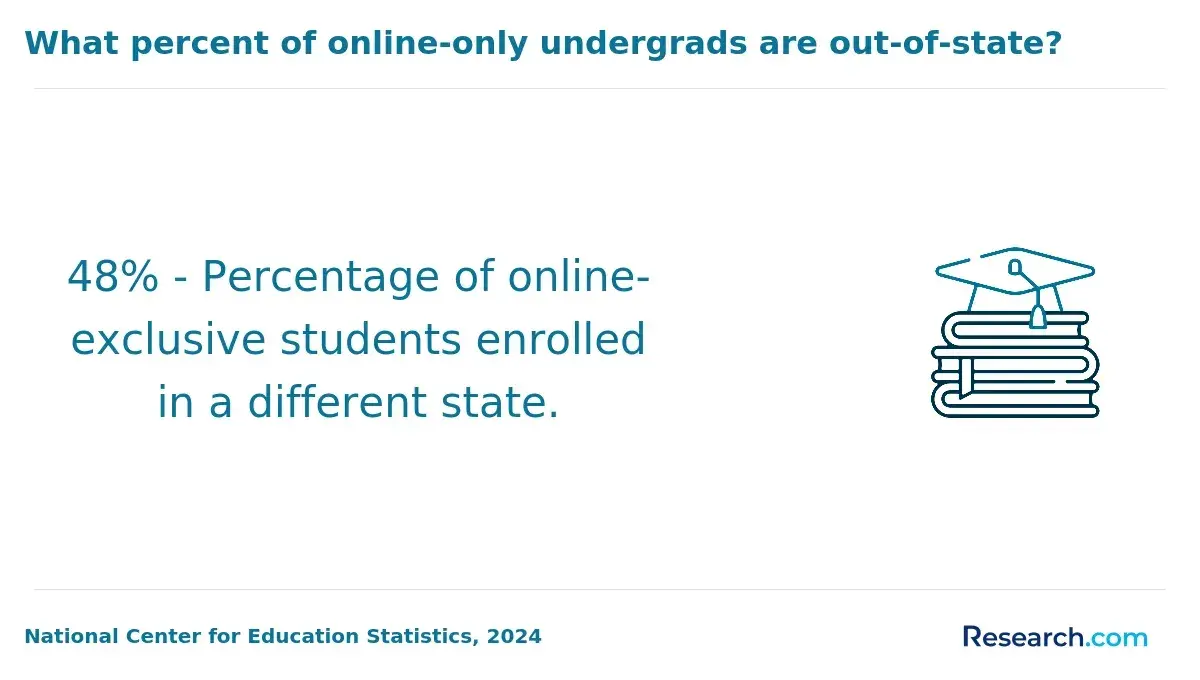
A self-paced online artificial intelligence bachelor’s degree can take as little as 18 months or more than four years, depending on transfer credits, weekly study time, program design, and the student’s ability to complete assessments consistently. Data from the National Center for Education Statistics shows the average time to finish a traditional bachelor’s is around six years, but self-paced programs can shorten that timeline for students who bring prior credit or can study intensively.
The degree is not automatically fast. A flexible program only becomes accelerated when the student has the time, preparation, and support to keep moving.
- Prior credits: Transferable general education, math, programming, or computer science credits can reduce the number of required courses.
- Weekly time commitment: Students who can study 20+ hours per week usually progress faster than those limited to 5 to 10 hours weekly.
- Prior learning assessments (PLAs): Exams, portfolios, CLEP, DSST, or institution-approved assessments may replace some requirements when allowed.
- Program calendar: Rolling admissions and continuous enrollment can help students avoid waiting for the next term, while semester-based formats may slow acceleration.
- Academic support: Advising, tutoring, mentoring, and pacing plans matter because self-directed students can lose momentum without regular checkpoints.
A practical way to estimate your timeline is to ask the school for a degree audit before enrolling. That audit should show accepted transfer credits, remaining courses, projected completion options, and whether any courses must be taken in sequence. AI programs often include math, programming, data structures, statistics, and machine learning foundations, so prerequisites can affect pacing.
One professional who enrolled in a self-paced online artificial intelligence bachelor’s program said the flexibility was useful but not effortless: “Adjusting to a self-driven timeline required building disciplined habits and learning to set smaller milestones.” He also noted that tutoring and advising helped him avoid stalling: “Without that support, I might have stalled. Staying connected with mentors helped me navigate challenges and move forward steadily.”
What Are the Admission Requirements for Self-Paced Online Artificial Intelligence Bachelor's Degree Programs?
Admission requirements for self-paced online artificial intelligence bachelor’s programs vary by institution, but most schools look for proof that applicants are ready for college-level technical coursework. Even open-enrollment programs may expect students to handle algebra, programming fundamentals, and independent online study.
- High school diploma or GED: Most programs require a high school diploma or GED as the baseline credential for admission.
- Minimum GPA: Competitive programs often set minimum GPA standards around 2.5 to 3.0 on a 4.0 scale, though open-access programs may be more flexible.
- Math prerequisites: Algebra, calculus, or college-level quantitative coursework may be required or strongly recommended because AI depends heavily on mathematics and statistics.
- Programming preparation: Introductory programming may be required before students enter advanced AI, machine learning, or data science courses.
- Application materials: Some schools may request transcripts, standardized test scores, resumes, essays, or documentation of work experience.
- Rolling or open admissions: Many self-paced programs allow students to apply and begin at multiple points during the year.
How to strengthen an application
If your GPA is below the preferred range or you lack technical prerequisites, consider completing community college courses in algebra, calculus, statistics, or programming before applying. Industry certifications, professional projects, coding portfolios, or relevant work experience can also help show readiness, especially for adult learners changing careers.
Selective programs may offer more structured academic support and advising, while open-access programs may admit a broader range of students but expect stronger self-direction. Applicants comparing flexible degree models can also review resources on online PsychD programs to see how admissions and online learning structures differ across fields.
How Much Does a Self-Paced Online Artificial Intelligence Bachelor's Degree Cost, and What Affects Tuition?
The cost of a self-paced online artificial intelligence bachelor’s degree depends on tuition model, transfer credit, study pace, fees, and whether the student qualifies for financial aid. A low advertised tuition rate does not always mean the lowest total cost. In self-paced programs, speed can be as important as price.
- Per-credit tuition: Many institutions charge between $300 and $800 per credit, with roughly 120 credits needed to complete a bachelor’s degree. This model is easier to estimate but may become expensive if few credits transfer.
- Flat-rate subscription: Some programs charge a fixed monthly, quarterly, or term-based fee for course access. Students who move quickly can reduce total cost, while slower students may pay more over time.
- Bundled fees: Some pricing structures include multiple terms or large portions of the degree upfront, which can improve predictability.
- Technology fees: Online platform access may add $50 to $200 per term.
- Proctoring charges: Remote exam monitoring often costs $30 to $50 per test, which can add up in assessment-heavy programs.
- Course materials: AI programs may require textbooks, software licenses, cloud tools, or specialized platforms, adding several hundred dollars to the overall budget.
Students should calculate total cost using three scenarios: fastest realistic completion, moderate completion, and delayed completion. This is especially important for subscription models, where taking longer can increase the total price even if the monthly or term rate looks affordable.
A graduate of a self-paced online Artificial Intelligence bachelor’s program described cost planning as a key part of staying enrolled: “Estimating monthly costs was tricky since technology fees and exam proctoring added fees I hadn’t anticipated.” She used a subscription model and tried to finish courses quickly, but work demands sometimes slowed her progress. Her main advice was direct: “Understanding how pacing affects tuition was key—I realized that speed could be as important as price per credit.”
What Financial Aid Options Are Available for Self-Paced Online Artificial Intelligence Bachelor's Programs?
Financial aid for self-paced online artificial intelligence bachelor’s programs may include federal aid, state grants, institutional scholarships, employer tuition assistance, payment plans, and discipline-specific awards. The most important first step is confirming that the program is accredited and eligible for aid under its specific academic calendar and instructional model.
Many competency-based education (CBE) programs must meet federal credit-hour equivalency standards to qualify for FAFSA-supported loans and grants. That means students should not assume every self-paced program is eligible for the same aid as a traditional semester-based degree. Ask the financial aid office how enrollment status, satisfactory academic progress, course completion, and disbursement timing work in the program.
- Federal aid: FAFSA may support many self-paced programs, but eligibility depends on accreditation, program structure, and credit-hour rules.
- State aid: Some states offer grants or scholarships for residents, part-time students, and adult learners enrolled in accredited online programs.
- Institutional scholarships: Colleges may offer merit aid, need-based support, transfer scholarships, or payment plans for online students.
- AI-related awards: Professional organizations such as the Association for the Advancement of Artificial Intelligence periodically fund awards tied to diversity, research, or AI-related study.
- Employer support: Working students should ask whether tuition reimbursement applies to self-paced or competency-based enrollment.
- Disbursement timing: Aid may be released differently in self-paced programs because progress does not always follow a standard semester calendar.
According to the College Board’s Trends in Student Aid report, undergraduate students enrolled in online programs received aid that covered approximately 70% of their total educational costs during the 2022-2023 academic year. That figure shows that aid can make online study more manageable, but students still need a clear plan for fees, books, software, and any unpaid balance.
If you are comparing long-term AI education costs, review aid rules separately for undergraduate and graduate study, including whether a future online masters degree in ai would be funded differently from a bachelor’s program.
How Do Competency-Based Education (CBE) Models Work in Self-Paced Online Artificial Intelligence Programs?
Competency-based education, or CBE, measures progress by what students can prove they know and can do. In a self-paced online artificial intelligence program, that usually means completing assessments such as coding projects, exams, data analysis tasks, machine learning assignments, written explanations, or portfolio work. Students move forward after demonstrating mastery rather than after sitting through a set number of lectures.
This model can work well in AI because the field rewards applied skill. A student may need to show that they can clean data, train a model, evaluate results, explain algorithmic limitations, or apply ethical reasoning to an AI use case. The stronger the assessment design, the more useful the program is likely to be for career preparation.
- Mastery-based advancement: Students progress when they meet defined learning outcomes, not simply when a term ends.
- Direct assessment: Some programs award progress based mainly on demonstrated mastery, without tying each competency to traditional seat time.
- Credit-hour-equivalent models: Other programs connect competencies to credit-hour structures so the degree fits financial aid and transcript requirements.
- Faculty and mentor support: Schools such as Western Governors University emphasize direct assessment paired with personalized faculty mentoring, while Southern New Hampshire University’s College for America has offered employer-aligned projects and coaching support.
- Self-management: Students need a weekly schedule, assignment targets, and a plan for getting help before they fall behind.
Both direct assessment and credit-hour-equivalent models can qualify for federal financial aid, though their pacing, billing, and transcript structures may differ. Recent data indicates that CBE enrollments have surged by more than 20% over the past five years, showing rising interest in flexible, mastery-based education.
The biggest advantage of CBE is acceleration for students who already know some of the material or can learn quickly. The biggest risk is isolation. Before choosing a CBE program, ask how competencies are assessed, how often students can submit work, how feedback is delivered, and whether failed attempts affect pace, cost, or aid eligibility.
What Accreditation Should a Self-Paced Online Artificial Intelligence Bachelor's Program Hold?
A self-paced online artificial intelligence bachelor’s program should come from an institution with recognized accreditation. In the United States, regional accreditation is generally the preferred standard for bachelor’s degrees because it is widely accepted by employers, graduate schools, and other colleges evaluating transfer credits.
The six regional accrediting bodies recognized by the U.S. Department of Education include the Middle States Commission on Higher Education, New England Commission of Higher Education, Higher Learning Commission, Northwest Commission on Colleges and Universities, Southern Association of Colleges and Schools Commission on Colleges, and WASC Senior College and University Commission.
- Regional accreditation: Usually provides the strongest recognition for academic degrees and is often important for transfer credit and graduate admission.
- National accreditation: May be legitimate but can create limitations if students later transfer or apply to regionally accredited graduate programs.
- Programmatic accreditation: Some computer science-related programs may also hold specialized accreditation from agencies like ABET, which can strengthen confidence in technical curriculum quality.
- Unaccredited programs: These carry serious risks, including limited employer recognition, reduced transfer options, and potential ineligibility for federal aid.
Accreditation matters even more in self-paced programs because flexibility can make weak programs look attractive. Before enrolling, verify the school’s status through the U.S. Department of Education’s accreditation database and the Council for Higher Education Accreditation (CHEA) directory. Also confirm whether the exact online program is included under the institution’s accredited offerings.
Students comparing emerging technology credentials can see similar quality-control issues in programs related to a degree in cryptocurrency, where accreditation and institutional credibility are also central to the value of the credential.
How Many Transfer Credits Can Be Applied Toward a Self-Paced Online Artificial Intelligence Bachelor's Degree?
Transfer credit policies vary by school, but many self-paced online artificial intelligence bachelor’s programs accept a substantial amount of prior college credit. The most generous programs accept up to 90 transfer credits, which can significantly reduce both time to degree and total tuition.
Schools usually evaluate credits from regionally accredited institutions first. General education courses may transfer more easily than upper-level AI or computer science courses, which often require close matching to the program’s learning outcomes. Technical courses may also be reviewed for currency because programming languages, AI methods, and computing tools change quickly.
- Maximum transfer credit: Many programs allow up to 90 transfer credits toward a bachelor’s degree.
- General education transfer: Courses in writing, math, science, humanities, and social science may satisfy broad degree requirements.
- Major-course transfer: Programming, statistics, data structures, or computer science courses may transfer if they match the curriculum.
- Military credit: Training recommended by the American Council on Education (ACE) may apply for veterans and active service members.
- Community college pathways: Articulation agreements can help associate degree credits transfer smoothly into bachelor’s programs.
- Pre-enrollment evaluation: A formal transfer review before enrollment helps students avoid surprises about cost and remaining requirements.
Prospective students should request a written evaluation showing accepted credits, remaining courses, and any limits on upper-division or major requirements. Schools such as University of Wisconsin Flex or Western Governors University often provide articulation guides or online tools that help estimate transferability, but the official evaluation is what matters for degree planning.
Students who expect to continue after the bachelor’s degree may also compare accelerated graduate options, including shortest masters degree programs online, when planning a longer education pathway.
Can Students Earn Credit Through Prior Learning Assessment in Self-Paced Online Artificial Intelligence Programs?
Yes. Many self-paced online artificial intelligence programs allow students to earn credit through prior learning assessment, often called PLA. This process gives academic credit for college-level knowledge gained through work experience, military training, certifications, independent study, or professional projects.
PLA can reduce cost and completion time, but it is not automatic. Students must prove that their prior learning matches specific course outcomes. Schools may use portfolio review, challenge exams, standardized tests such as CLEP and DSST, ACE credit recommendations, or evaluations of documented training.
- Portfolio review: Students submit evidence such as work samples, project documentation, job descriptions, certificates, and reflective essays.
- Challenge exams: Some schools allow students to test out of specific courses by demonstrating mastery.
- CLEP and DSST: These standardized exams may satisfy certain general education or elective requirements.
- ACE credit recommendations: The American Council on Education helps institutions evaluate military and professional training for possible academic credit.
- Credit limits: Affordable programs with flexible PLA policies include Western Governors University, Southern New Hampshire University, and Purdue Global, each typically allowing between 30 and 60 credits through PLA.
Recent data indicates that nearly 70% of institutions offering self-paced degrees have increased PLA usage, suggesting wider acceptance of flexible credit options for adult learners. Still, policies differ. Some programs accept PLA mostly for general education or electives, while others may allow credit for technical requirements if documentation is strong enough.
To improve approval chances, build a portfolio that clearly connects your experience to course outcomes. For AI-related credit, useful evidence may include code repositories, analytics projects, automation work, machine learning certificates, technical documentation, or employer-verified responsibilities. Ask about PLA fees before applying because evaluation costs can affect the savings.
What Concentrations or Specializations Are Available in Self-Paced Online Artificial Intelligence Bachelor's Programs?
Self-paced online artificial intelligence bachelor’s programs may offer concentrations that help students align coursework with career goals. The best specialization depends on the kind of work you want: building models, analyzing data, automating systems, interpreting language, working with visual data, or shaping responsible AI use.
Specializations can also affect pace. Tracks with major projects, labs, internships, or portfolio requirements may take longer than policy-oriented or elective-based concentrations. Students should review the course list, project expectations, and software requirements before choosing a track.
- Machine Learning and Data Science: Focuses on algorithms, data analysis, predictive modeling, and applied statistics. Graduates often pursue roles such as data scientist or machine learning engineer, with median salaries from $100,000 to $120,000. Many programs require practical coding projects.
- Robotics and Automation: Emphasizes intelligent systems, automation tools, and robotic applications. Career options include robotics engineer and automation specialist roles, with salaries ranging between $85,000 and $110,000. This track may involve internships or lab hours beyond standard coursework.
- Natural Language Processing: Covers how machines process and generate human language, including applications such as virtual assistants and translation. NLP engineers typically earn $90,000 to $115,000. Licensing is not usually needed, but strong programming skills are essential.
- AI Ethics and Policy: Examines legal, social, and organizational issues in AI development and deployment. Roles may include policy analyst or compliance officer, with salaries from $70,000 to $95,000. This concentration may require less extra technical lab time than engineering-heavy tracks.
- Computer Vision: Focuses on systems that interpret images and video, with applications in healthcare, manufacturing, security, and autonomous vehicles. Salaries generally range from $95,000 to $120,000. Portfolio work or hands-on labs may influence completion time.
Students who are unsure should choose a concentration that preserves flexibility. Machine learning and data science often provide broad preparation, while robotics, NLP, and computer vision may be better for students with specific technical interests. AI ethics and policy can fit students who want to connect technology with governance, compliance, risk, or organizational strategy.
What Graduates Say About Self-Paced Online Artificial Intelligence Bachelor's Degree Programs
- Jason: "Choosing a self-paced online artificial intelligence bachelor’s degree was a game-changer for me because I needed to keep my full-time job while studying. The program was more affordable than the traditional routes I considered, and the curriculum stayed connected to industry trends. Since graduating, I’ve had stronger career opportunities and moved into roles that challenge my AI skill set."
- Camille: "The flexibility was the reason I could finish. I was balancing family responsibilities, and the self-paced format let me spend more time on difficult concepts instead of rushing through them. The cost savings mattered, but the biggest value was the focus on real-world application. Professionally, the degree expanded my network and opened doors to roles I had not considered before."
- Alexander: "For someone trying to advance in tech, the self-paced online artificial intelligence bachelor’s degree gave me convenience and a solid foundation without the high costs of an on-campus option. Being able to control my pacing helped me work carefully through complex topics, and that changed how I approached AI projects at work. It strengthened my resume, but it also improved my problem-solving confidence."
Other Things You Should Know About Artificial Intelligence Degrees
In 2027, students should seek programs accredited by recognized bodies like the Accreditation Board for Engineering and Technology (ABET) or similar national and regional accrediting agencies. This ensures quality education and better acceptance by employers and other educational institutions.
Before enrolling, students should have a basic understanding of programming languages like Python, familiarity with algorithms, and data analysis skills. Some programs may recommend prior experience in statistics or computer science to better grasp the coursework.
Yes. Many self-paced online AI bachelor’s programs require proctored exams for core courses, using online proctoring software or approved testing centers. Programs may also require webcam monitoring, timed assessments, and identity verification before exams can be counted toward the 120-credit bachelor’s degree.
References
- Can I transfer credits from other courses towards the 6 months Level 4 + Level 5 Diploma in Artificial Intelligence part time? https://www.lsib.co.uk/2022/answers.aspx
- Artificial Intelligence Concentration https://www.fullsail.edu/degrees/artificial-intelligence-bachelor-degree-program
- Are online AI courses valid for traditional degree programs? https://m.umu.com/ask/q11122301573854260198
- What do you learn in a bachelor's in artificial intelligence? | edX https://www.edx.org/resources/what-do-you-learn-in-a-bachelors-in-artificial-intelligence
- Impact of Artificial Intelligence on Online Degree Programs https://blog.hikeeducation.com/online-program/artificial-intelligence-on-online-degree-programs/
- How Long Does It Take to Complete an AI Course https://www.epw.com/blog/courses/how-long-is-ai-course
- Top AI Certifications for 2026: A Guide to Advancing Your Tech Career | DataCamp https://www.datacamp.com/blog/top-ai-certifications
- Bachelor in Management and Artificial Intelligence https://www.kozminski.edu.pl/en/programs/undergraduate-programs-bachelor/bachelor-management-and-artificial-intelligence
- What is the typical fee for a B.Tech in AI and ML course? https://www.umu.com/ask/a11122301573853959733
- PLA: Earn Credit Through Prior Learning Assessment | UAGC https://www.uagc.edu/admissions/non-traditional/pla