2027 What Requirements Do You Need for an Online Artificial Intelligence Bachelor's Degree? Admission Rules, Credits & Eligibility

Co-Founder and Chief Data Scientist
Choosing an online artificial intelligence bachelor's degree usually comes down to one practical question: can you qualify, transfer credits, and finish without wasting time or money? The answer depends on more than interest in AI. Schools may review your high school record, prior college credits, math preparation, English proficiency, residency status, standardized test policy, and the accreditation of previous coursework.
This guide explains the common admission and eligibility requirements for online artificial intelligence bachelor's programs. It is written for first-time college students, transfer students, adult learners, and career changers who want to understand what documents to prepare, how GPA and test policies work, how many credits are usually required, and which questions to ask before applying.
Online artificial intelligence programs have become more visible as demand grows for accessible technical education. Studies show that enrollment in online artificial intelligence programs has increased by over 40% in the past five years. Still, requirements vary by institution, so applicants should treat program pages, admissions offices, and official credit evaluations as the final source for school-specific decisions.
Key Benefits of Preparing for Online Artificial Intelligence Bachelor's Degree Requirements
- Choosing the right program ensures alignment with career goals through specialized curricula and reputable accreditation, boosting job market readiness upon graduation.
- Maximizing transfer credits lowers total costs and time to degree completion; many programs accept up to 90 credits from prior college work.
- Completing an online artificial intelligence bachelor's opens doors to an industry with 15% annual job growth, enhancing long-term earning potential and career advancement.
What Are the Basic Eligibility Requirements to Apply for an Online Artificial Intelligence Bachelor's Degree?
Most online artificial intelligence bachelor's programs require applicants to show that they are ready for undergraduate study. Eligibility means you meet the minimum conditions to apply; it does not guarantee admission, financial aid eligibility, or final enrollment. Acceptance depends on the school's review process, and enrollment usually requires additional steps such as submitting final documents, paying a deposit, registering for courses, and completing orientation.
According to data from the U.S. Department of Education and individual school admissions pages, typical baseline requirements include a high school diploma or GED equivalent, a minimum age of 18, and verified citizenship or legal residency. Many schools also admit international students, but those applicants may need additional documentation, transcript evaluations, and proof of English proficiency.
- High school diploma or GED equivalent: This is the standard proof that an applicant has completed secondary education and can begin college-level coursework.
- Minimum age requirement: Most institutions require students to be at least 18 years old, although some schools have early college or dual enrollment exceptions.
- Citizenship, residency, or international status: Schools may request proof of identity and legal status for tuition classification, financial aid, and compliance purposes.
- Academic readiness: Programs may review GPA, math preparation, prior college work, placement results, or related experience to determine whether a student can begin technical coursework immediately.
- English language proficiency: Non-native English speakers may need TOEFL, IELTS, Duolingo English Test, or an approved waiver to show they can complete courses taught in English.
Before applying, students should confirm whether the program is open to residents of their state, whether it accepts transfer credits, and whether financial aid is available for online learners. If you are comparing graduate-level access later in your education plan, the easiest masters programs to get into can offer a broader view of how admission standards differ across degree levels.
What Is the Minimum GPA Required for Admission to an Online Artificial Intelligence Bachelor's Degree Program?
The minimum GPA for an online artificial intelligence bachelor's degree depends on the school. Many programs use a cumulative high school GPA of 2.0 as a basic admission threshold, while more selective programs may require a minimum GPA of 2.5 or higher. Transfer students may be evaluated on college GPA instead of, or in addition to, high school performance.
GPA is important, but it is rarely the only factor. Schools may also review class rank, standardized test scores if required, letters of recommendation, personal essays, work experience, military training, industry certifications, and evidence of readiness for math-heavy coursework. Applicants with lower GPAs may still qualify for conditional admission, academic probation, or a pathway program if the institution offers those options.
Applicants should also understand how the school treats weighted and unweighted GPAs. A weighted GPA may include additional points for honors, Advanced Placement, or other advanced courses, while an unweighted GPA uses the standard grading scale. Reporting the wrong GPA type can delay review or create problems when official transcripts arrive.
- Common minimum range: Many schools use a 2.0 GPA baseline, while more competitive programs may expect 2.5 or higher.
- Holistic review: Essays, recommendations, prior coursework, test scores, and relevant experience may help explain academic performance.
- Weighted vs. unweighted GPA: Applicants should follow the program's instructions and avoid estimating if the application specifies one format.
- Conditional admission: Some schools allow students near the cutoff to enroll with academic conditions, such as earning minimum grades in early courses.
- Transfer student review: Students with prior college credits may be judged more heavily on college transcripts than high school records.
If your GPA is close to the minimum, contact admissions before applying. Ask whether the program allows conditional admission, whether recent college coursework can offset older grades, and whether taking prerequisite courses at a community college could strengthen your application. Students comparing different online fields can also review online masters counseling programs to see how admission expectations vary by discipline and degree level.
Do Online Artificial Intelligence Bachelor's Degree Programs Require SAT or ACT Test Scores?
Many online artificial intelligence bachelor's programs, especially those designed for adult learners, transfer students, and career changers, are test-optional or test-free. That means applicants may not need to submit SAT or ACT scores for standard admission. This shift accelerated during the COVID-19 pandemic and has remained common across many online undergraduate programs.
Some schools still request or recommend scores. SAT or ACT results may matter for selective admission, merit scholarships, honors programs, first-year placement, or applicants who want to strengthen a borderline academic record. When scores are required, typical ranges for admission include SAT scores between 1100 and 1250 on the 1600 scale or ACT composite scores roughly from 22 to 28.
- Test-optional programs: These schools let applicants decide whether SAT or ACT scores improve their file.
- Test-free programs: These schools do not consider standardized test scores, even if submitted.
- Selective AI tracks: More competitive programs may still use test scores to assess readiness for quantitative coursework.
- Scholarship review: Some merit awards may require SAT or ACT scores even when general admission does not.
- Policy changes: Testing rules have changed quickly since 2020, so applicants should verify current requirements on the official admissions page.
By 2023, over 1,800 colleges and universities had embraced test-optional admissions. For online AI applicants, this means a strong transcript, clear essay, relevant experience, and completed prerequisites can be more valuable than old test scores in many admissions reviews.
One professional who entered an online AI bachelor's program after time in the workforce said the absence of a standardized test requirement reduced the stress of applying years after high school. The applicant focused instead on gathering transcripts, requesting recommendations, and writing a clear statement about career goals. The key lesson was simple: when test policies are unclear, ask admissions directly before assuming scores are unnecessary.
How Many Total Credit Hours Are Needed to Complete an Online Artificial Intelligence Bachelor's Degree?
Most accredited online artificial intelligence bachelor's degrees require around 120 credit hours. Some programs may require 128 or 130 credit hours, especially if they include added technical labs, specialization courses, internships, or a larger capstone requirement. The total number matters because it affects tuition, time to graduation, transfer planning, and course load decisions.
Credit hours are usually divided into general education courses, major requirements, electives, and an applied project or capstone. In a semester credit hour system, one course is often worth three credits, but the exact workload varies. Some institutions use quarter credit hours, which usually correspond to two-thirds of semester credit hours, so students should confirm how credits convert before comparing programs.
- General education requirements: Typically 30-40 credit hours in areas such as mathematics, science, communication, humanities, and social sciences.
- Major-specific core courses: Usually 40-50 credit hours in programming, data structures, machine learning, statistics, AI concepts, and related computer science foundations.
- Electives: These may allow students to explore robotics, natural language processing, cybersecurity, cloud computing, ethics, or data science.
- Capstone or practicum: Around 3-6 credit hours may be devoted to an applied project that demonstrates technical and analytical skills.
- Transfer and prior learning credits: AP, CLEP, prior college courses, and approved certifications may reduce the credits a student must complete at the degree-granting institution.
Students should request a degree plan before enrolling, not after. A degree plan shows which credits apply, which requirements remain, and whether transferred courses count as major requirements or only electives. For a comparison of how accelerated pathways can use credit transfer and prior learning, see this guide to an accelerated online business degree.
What High School Courses or Prerequisites Are Required Before Enrolling in an Online Artificial Intelligence Bachelor's Degree?
Online artificial intelligence bachelor's programs usually expect applicants to have a solid foundation in math, science, and written communication. Specific prerequisites vary, but courses such as Algebra II, Geometry, physics, chemistry, and English composition are commonly useful because AI coursework builds on logic, quantitative reasoning, programming, and clear technical communication.
Not every school lists formal high school prerequisites for online admission. Some admit students first and then place them into required college-level math, programming, or writing courses. Others require prerequisite completion before students can enter upper-division AI courses. This distinction matters because missing prerequisites may not block admission, but it can delay progress in the major.
- Mathematics: Algebra II and Geometry help prepare students for statistics, discrete math, calculus, algorithms, and machine learning concepts.
- Science: Physics and chemistry strengthen analytical reasoning and problem-solving habits used in technical programs.
- English composition: Strong writing skills support research papers, project documentation, team communication, and technical reports.
- Computer science exposure: Prior programming is not always required, but experience with coding can make introductory courses easier.
- Dual enrollment: College courses completed in high school may satisfy prerequisites or general education requirements if accepted for transfer.
- Bridge or remedial coursework: Students who lack required preparation may need additional math, writing, or computing courses before advancing.
A graduate who had to complete a bridge math course described it as inconvenient but valuable. Although it added months to the education timeline, it made later AI coursework more manageable. The practical takeaway is to send transcripts early, ask which prerequisites are missing, and find out whether remedial courses count toward degree credits or simply prepare you for required courses.
Can Transfer Credits Count Toward an Online Artificial Intelligence Bachelor's Degree, and How Many Are Accepted?
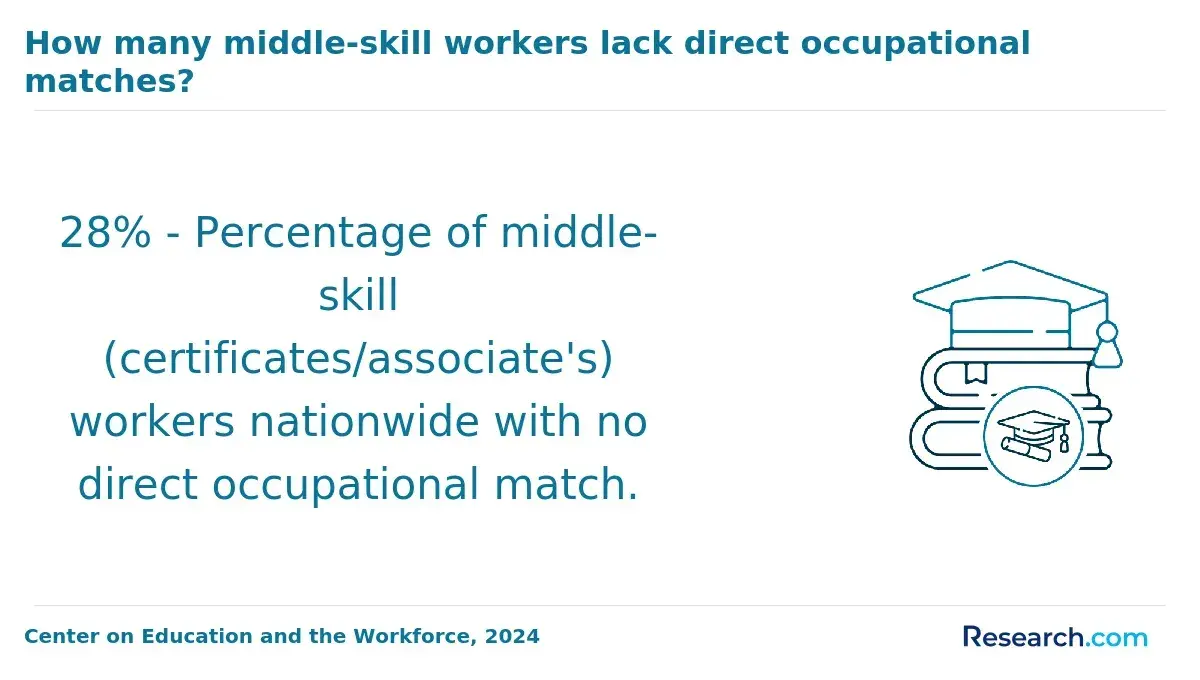
Yes. Most accredited colleges allow transfer credits to count toward an online artificial intelligence bachelor's degree, but the number accepted depends on the school, the age and relevance of the courses, the grade earned, and whether the previous institution was accredited. Many colleges allow students to transfer between 60 and 90 credits toward a bachelor's degree. Students typically still need to complete at least 30 to 60 credits directly at the awarding school.
Transfer credit is especially important for students who attended community college, started another bachelor's program, completed military training, or earned technical credits before choosing AI. However, not all accepted credits reduce time in the major. A course may transfer as a general elective but fail to satisfy a required programming, math, or machine learning course.
- Transfer limits: Schools commonly cap accepted transfer credits at 60 to 90 credits to ensure students complete a substantial portion of the degree through the awarding institution.
- Residency requirements: Even online students may need to complete 30 to 60 credits at the institution granting the degree.
- Articulation agreements: Community college 2+2 pathways can make transfer smoother when courses are pre-approved for the bachelor's curriculum.
- Transcript evaluation: Registrar or admissions teams review course descriptions, credit hours, grades, and accreditation status to determine equivalency.
- Major-course limitations: AI, computer science, and advanced math courses may face stricter review than general education courses.
- Formal evaluation: Applicants should request an official transfer credit review before committing to a program.
Data shows that over 70% of transfer students successfully apply previous credits toward their bachelor's degrees. For AI programs, the strongest transfer candidates usually have credits in math, computer science, statistics, programming, data analysis, and general education courses that clearly match the target school's curriculum.
Does Accreditation Status Affect Admission Requirements for an Online Artificial Intelligence Bachelor's Degree?
Accreditation affects both admission review and the long-term value of an online artificial intelligence bachelor's degree. Accredited institutions meet quality standards recognized by official bodies such as CHEA or the U.S. Department of Education. For students, accreditation can influence transfer credit acceptance, financial aid eligibility, graduate school options, and employer confidence.
Applicants should look first for institutional accreditation. Programmatic accreditation may also be relevant in computing or engineering-related fields, depending on the program design, but not every AI bachelor's degree has separate program-level accreditation. A program can still be legitimate if the institution is properly accredited and the curriculum aligns with recognized academic standards.
- Institutional accreditation: Regional or national accreditation signals that the school has passed an external quality review.
- Transfer credit review: Credits from accredited institutions are more likely to be considered, while credits from unaccredited schools may be rejected.
- Financial aid access: Federal financial aid is generally tied to attendance at eligible accredited institutions.
- Employer recognition: Employers often prefer degrees from accredited schools because accreditation helps verify academic legitimacy.
- Graduate school preparation: Master's programs may require applicants to hold a bachelor's degree from an accredited institution.
- Unaccredited risks: Degrees from unaccredited schools may have limited value for employment, graduate admission, or transfer.
Over 90% of employers verify accreditation during hiring. Before applying, students should confirm accreditation through the school's official disclosures and recognized accreditation databases rather than relying only on marketing language.
What Documents Do You Need to Apply for an Online Artificial Intelligence Bachelor's Degree Program?
Application documents for an online artificial intelligence bachelor's degree usually prove identity, academic history, readiness for college work, and eligibility for enrollment. Requirements vary by school, but students should prepare early because transcripts, recommendations, and international records can take time to process.
- Official high school transcript or GED record: This confirms completion of secondary education. Final official documents are usually required before enrollment.
- Official college transcripts: Transfer students must submit records from every college attended, even if they do not expect all credits to transfer.
- Government-issued identification: A passport, driver's license, or other approved ID may be required for identity verification.
- Application essay or personal statement: Some programs ask applicants to explain their academic goals, interest in AI, career plans, or readiness for online learning.
- Letters of recommendation: Selective programs may request academic or professional references who can speak to persistence, problem-solving ability, and technical potential.
- Résumé: Adult learners and career changers may be asked to summarize work history, technical experience, certifications, military training, or projects.
- Portfolio or project samples: Some programs welcome evidence of programming, data analysis, robotics, or other relevant work, though this is not always required.
- English translations and evaluations: International applicants may need certified English translations and credential evaluations for non-U.S. academic records.
Official documents are certified by the issuing institution and often sent directly to the university. Unofficial copies may be acceptable for preliminary review, but they usually are not enough for final admission or enrollment. Students should begin collecting materials at least three to six months before the application deadline, especially if they need transcripts from multiple schools or international document review.
Applicants comparing technical study with business-focused options can review mba programs in operations management to understand how documentation requirements may differ across online degree types.
Are There English Language Proficiency Requirements for Non-Native Speakers Applying to an Online Artificial Intelligence Bachelor's Degree?
Most accredited U.S. online artificial intelligence bachelor's programs require non-native English speakers to demonstrate English language proficiency. This requirement helps schools confirm that students can follow lectures, read technical materials, participate in online discussions, complete writing assignments, and collaborate on projects.
Commonly accepted exams include the TOEFL iBT, IELTS Academic, and Duolingo English Test. For undergraduate admission, TOEFL iBT scores generally range from 61 to 80. IELTS Academic band scores typically fall between 6.0 and 6.5, while Duolingo English Test minimum scores are often near 90.
- Accepted tests: TOEFL iBT, IELTS Academic, and Duolingo English Test are common, but each school sets its own approved list.
- Minimum score expectations: Typical undergraduate ranges include TOEFL iBT 61 to 80, IELTS Academic 6.0 to 6.5, and Duolingo English Test near 90.
- Waivers: Applicants from English-speaking countries or those who completed several years of education in English-medium institutions may qualify for an exemption.
- Conditional admission: Some programs admit students conditionally and require ESL bridge coursework before full degree progression.
- Score validity: English test scores may expire, so applicants should check how recent results must be.
Non-native English speakers should verify language requirements early, not at the end of the application process. A missing score, expired score, or unapproved test can delay admission even when all academic documents are complete.
Students should also review GPA rules, transfer credit policies, accreditation status, and tuition requirements at the same time. For broader context on career outcomes in another science field, see this guide on what can you get with an environmental science degree.
Do Online Artificial Intelligence Bachelor's Degree Programs Accept CLEP Exams or Prior Learning Credits?
Some online artificial intelligence bachelor's programs accept CLEP exams or other prior learning credits, but policies differ widely. The College-Level Examination Program allows students to earn undergraduate credit by passing exams in approved subjects. A score of 50 or higher, as recommended by the American Council on Education (ACE), is accepted by more than 2,900 colleges and universities. However, AI programs may restrict these credits to general education requirements instead of major courses.
Prior learning credit can be valuable for working adults, military students, and students who already have technical experience. The main risk is assuming credits will apply before receiving an official evaluation. A school may accept a credit on the transcript but apply it only as an elective, which may not shorten the path to graduation.
- CLEP exams: Often used for general education subjects such as composition, history, social sciences, mathematics, or introductory topics.
- DANTES/DSST exams: Some institutions accept these exams, especially for adult learners and military-affiliated students.
- Portfolio assessment: A school may evaluate documented work, projects, training, or professional learning for possible credit.
- Professional certifications: Certain technology certifications may be eligible for credit if the school has an approved equivalency policy.
- Military training: Institutions may evaluate military transcripts based on recognized credit recommendations.
- Major-course restrictions: Core AI, machine learning, programming, and advanced math requirements may be less likely to be replaced by exam credit.
Before paying for an exam or portfolio review, ask the registrar which credits are accepted, how many can apply to the degree, whether they satisfy specific requirements, and whether there are fees. Students thinking beyond the bachelor's degree can also compare affordable graduate pathways such as the cheapest online masters in artificial intelligence as part of a longer-term education plan.
Are There Residency or In-State Tuition Requirements That Affect Enrollment in an Online Artificial Intelligence Bachelor's Degree?
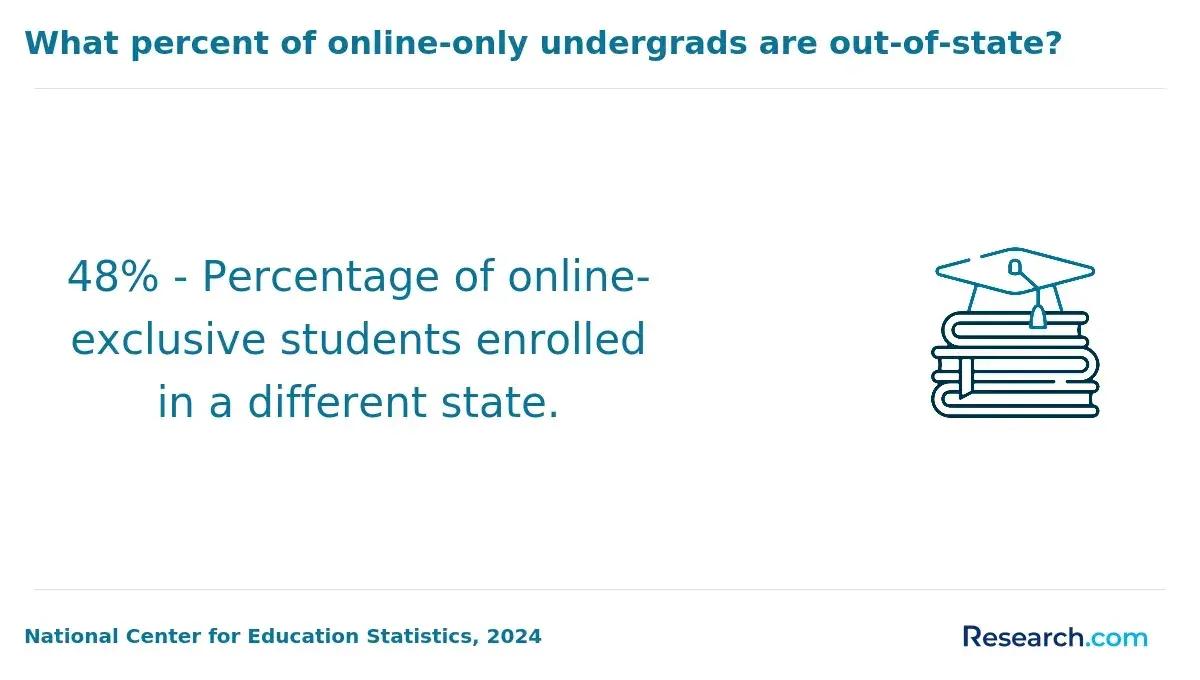
Residency can affect whether an online artificial intelligence bachelor's student pays in-state tuition, out-of-state tuition, or a separate online rate. Many public universities offer online tuition rates that apply regardless of location, but others still distinguish between in-state and out-of-state students. Private institutions may use a single tuition rate, but students should still confirm fees, technology charges, and state authorization rules.
State authorization is separate from tuition. A school must be authorized to enroll students in certain states. One widely used framework is the State Authorization Reciprocity Agreement (SARA), which allows participating institutions to offer online courses to students in other participating states without obtaining separate approvals in each state.
- SARA overview: SARA simplifies state authorization for online education across participating states.
- Tuition variability: Some public universities charge online students the same rate regardless of residence, while others charge higher out-of-state tuition.
- Residency documentation: Students seeking in-state tuition may need proof such as a driver's license, voter registration, utility bills, or other state residency records.
- State restrictions: A school may be unable to enroll students from certain states if authorization requirements are not met.
- Budget planning: Applicants should confirm tuition, fees, residency rules, and financial aid eligibility before applying.
The safest approach is to ask the admissions or bursar's office for the total online cost based on your state of residence. Do not rely only on the posted per-credit tuition rate; mandatory fees can change the final cost.
What Graduates Say About Preparing for the Online Artificial Intelligence Bachelor's Degree Requirements
- : "Getting ahead in the tech world meant I had to fully understand the admission requirements for the online artificial intelligence bachelor's program. Knowing the credit policies and eligibility criteria upfront helped me plan my transfer credits wisely, which saved both time and money. This program truly opened doors in my professional career, enabling me to land roles I once thought were out of reach. — Nick"
- : "Reflecting on my journey, the clarity around admission requirements and credit policies was invaluable for selecting the right online artificial intelligence bachelor's degree. It gave me confidence that my previous coursework would count and set a clear path to graduation. Graduating from this program has positively impacted my career trajectory by equipping me with cutting-edge skills that employers crave. — Ashton"
- : "From a professional standpoint, understanding the exact eligibility criteria for the online artificial intelligence bachelor's program was crucial to ensuring a smooth admission. Navigating credit policies early on allowed me to focus entirely on my studies rather than worrying about transferring credits. Completing this degree online has significantly advanced my career, providing new opportunities and higher earning potential. — Alexander"
Other Things You Should Know About Artificial Intelligence Degrees
In 2027, many institutions offer flexible admission processes for adult learners and working professionals. These may include recognition of prior work experience, part-time study options, or even credit transfers for previous education, to accommodate their distinct needs.
In 2027, most online AI bachelor's degree programs require a high school diploma or equivalent, basic proficiency in mathematics, and sometimes introductory courses in programming. Each institution may have specific grade requirements or assessments to evaluate readiness for the program.
Prospective students must have reliable internet access and a computer capable of running programming software and data analysis tools commonly used in artificial intelligence. This generally includes a modern operating system, at least 8GB of RAM, and updated web browsers. Some programs may also recommend or require specific development environments or access to cloud computing platforms.
References
- Academic Catalog https://academic-catalog.uscupstate.edu/academic-regulations/credit-prior-learning/
- SAT/ACT Scores for College Admissions: Requirements & Tips https://www.kyros.ai/blog/satact-scores-what-you-need-to-know-for-college-admissions-1843
- Online Bachelor’s Degree: Artificial Intelligence https://www.umgc.edu/online-degrees/bachelors/artificial-intelligence-ai
- What skills should I acquire while pursuing a bachelor's degree in AI and machine learning? https://m.umu.com/ask/a11122301573854013757
- Decoding Artificial Intelligence Eligibility Criteria: A Comprehensive Guide https://techbullion.com/decoding-artificial-intelligence-eligibility-criteria-a-comprehensive-guide/
- In-State Tuition Residency Requirements https://www.accesslex.org/in-state-tuition-residency-requirements
- How to earn a tuition-free Bachelor of Science degree in Artificial Intelligence in Germany https://www.germaneducare.edu.my/how-to-earn-a-tuition-free-bachelor-of-science-degree-in-artificial-intelligence-in-germany/
- What are the prerequisites for joining an AI course? https://forums.h2kinfosys.com/community/main-category-artificial-intelligence/what-are-the-prerequisites-for-joining-an-ai-course/
- What are the eligibility requirements for data science and AI courses? https://www.umu.com/ask/a11122301573853854908
- Artificial Intelligence Education Requirements - What You Need to Know to Launch a Successful Career in AI https://aiforsocialgood.ca/blog/artificial-intelligence-education-requirements-what-you-need-to-know-to-launch-a-successful-career-in-ai