2027 Online Artificial Intelligence Bachelor's Degree Programs With No SAT or ACT Requirements

Co-Founder and Chief Data Scientist
Choosing an online artificial intelligence bachelor’s degree without SAT or ACT requirements is not just about avoiding a test. It is about finding a program that can evaluate your readiness through coursework, experience, motivation, and technical potential instead of a single standardized score. This matters for working adults, transfer students, career changers, first-generation applicants, and anyone whose test history does not reflect their current ability to succeed in a technology-focused degree.
Artificial intelligence programs can be demanding because they often draw on math, programming, statistics, data analysis, ethics, and computer science fundamentals. A no-SAT or no-ACT policy may make the admissions process more accessible, but it does not remove the need to show academic preparation. Recent data shows that over 60% of online STEM programs now adopt test-optional policies, reflecting a broader shift toward reviewing applicants through multiple measures.
This guide explains who should consider these programs, how test-optional and test-free admissions differ, what application materials matter most, how GPA may be reviewed, and what mistakes to avoid when applying to an online artificial intelligence bachelor’s degree without SAT or ACT scores.
Key Benefits of Online Artificial Intelligence Bachelor's Degree Programs With No SAT or ACT
- Programs without SAT or ACT requirements increase access for diverse applicants, including those from underrepresented and nontraditional backgrounds, expanding opportunities in growing tech fields.
- Flexible online formats accommodate working students by allowing asynchronous coursework, helping balance education with professional and personal responsibilities.
- Streamlined admissions reduce barriers, focusing on holistic evaluation over test scores, which aligns with industry trends valuing practical skills and experiential learning.
Who Should Consider an Online Artificial Intelligence Bachelor's Degree With No SAT or ACT?
An online artificial intelligence bachelor’s degree with no SAT or ACT requirement is best suited for applicants who can demonstrate readiness through transcripts, prior learning, work experience, projects, or a clear academic plan. With nearly 70% of U.S. colleges and universities adopting test-optional policies, more schools are giving applicants a way to show potential beyond standardized exams.
These programs may be a strong fit for the following groups:
- Working adults: Online AI programs can help employed students build technical skills without leaving their jobs. A test-optional policy is especially helpful for applicants who have been out of high school for years and no longer have current SAT or ACT scores.
- Career changers: Applicants moving from business, healthcare, manufacturing, education, analytics, or another field may have practical experience that matters more than old test results. Admissions teams may look closely at professional accomplishments, technical certificates, and transferable skills.
- Transfer students: Students with prior college credits can often use college transcripts to show readiness. For them, high school test scores may be less relevant than performance in math, programming, statistics, or general education courses.
- First-generation and underrepresented students: Test-optional admissions can reduce barriers for students who had limited access to test preparation or testing opportunities. A strong essay, recommendations, and academic record can help show capability.
- Self-taught technology learners: Applicants who have completed coding projects, online courses, data analysis work, or AI-related personal projects may benefit from admissions processes that value portfolios and experience.
The main question is not whether the program is easier to enter, but whether it gives you a fair way to prove readiness. If you are comparing admissions flexibility across fields, an online speech pathology masters can also show how online programs may serve students with varied academic and professional backgrounds.
What Is the Difference Between Test-Optional and Test-Free Online Artificial Intelligence Bachelor's Degrees?
Test-optional and test-free policies both reduce reliance on SAT and ACT scores, but they are not the same. The difference affects whether sending a score can help you, whether a weak score can be ignored, and how the admissions team reviews your file. Test-free policies, which exclude standardized tests entirely, have led to enrollment increases exceeding 15% at institutions adopting them.
| Admissions Policy | How SAT/ACT Scores Are Treated | Best For | Application Strategy |
| Test-optional | Scores are not required, but applicants may submit them if they believe the scores strengthen the application. | Students with solid scores who want an additional data point, or students with weaker scores who prefer not to submit them. | Submit scores only if they support your academic profile. If not, strengthen your transcript, essay, recommendations, and project evidence. |
| Test-free | Scores are not reviewed at all, even if submitted. | Students who want an admissions process based entirely on non-test factors. | Focus on grades, prior coursework, technical preparation, career goals, and evidence of persistence. |
Test-optional online program
- SAT or ACT scores are not required, but they may be accepted.
- The school may use a holistic review that considers GPA, course rigor, essays, recommendations, resumes, transfer credits, or technical experience.
- Applicants decide whether scores help or distract from the rest of the application.
- Some programs may still request scores for placement, scholarships, or applicants who do not meet other criteria, so students should read the policy carefully.
Test-free online program
- SAT or ACT scores are not considered in the admissions decision.
- The review depends on other measures of readiness, such as transcripts, prerequisites, work history, and written materials.
- The policy can be clearer for applicants who do not want test scores to influence their chances.
- Students should not assume test-free means open admission; selective programs can still require strong academic preparation.
When comparing programs, confirm whether the school is test-optional, test-free, or temporarily waiving scores. Students also comparing affordability across online options may find context in guides to the cheapest online college pathways.
What Are the Admission Requirements for an Online Artificial Intelligence Bachelor's Degree Without SAT or ACT?
Online artificial intelligence bachelor’s programs that do not require SAT or ACT scores usually replace test scores with a broader review of academic readiness and student fit. Nearly 70% of U.S. four-year colleges now employ test-optional or test-free policies, but each institution sets its own requirements. Always check the official admissions page before applying.
Common requirements include the following:
- High school or college transcripts: Schools use transcripts to evaluate graduation status, GPA, course rigor, transfer credits, and preparation in math, science, and technology-related subjects.
- Application form: The online application usually asks for personal information, education history, intended start date, residency status, and prior colleges attended.
- Personal statement or essay: Many programs ask why you want to study artificial intelligence, how your background prepared you, and what you plan to do with the degree. A specific essay is stronger than a generic statement about liking technology.
- Letters of recommendation: Recommendations from teachers, supervisors, mentors, or managers can support your academic ability, work ethic, problem-solving skills, and persistence.
- Readiness verification: Some schools may require placement testing, prerequisite coursework, or evidence of college-level math and writing ability even if SAT and ACT scores are waived.
- Resume or supplemental materials: Applicants with work experience, coding projects, certificates, internships, military training, or volunteer technology work may be able to submit a resume or portfolio.
What admissions teams may look for
Because AI coursework can be technical, admissions teams may pay particular attention to algebra, precalculus, statistics, computer science, programming, or data-related coursework. If your transcript is weak in these areas, you may improve your file by completing relevant prerequisites or explaining how you are preparing for the quantitative demands of the degree.
- Graduate of an online AI bachelor's program: "It was encouraging to share my real-world experiences with projects and jobs rather than stressing over one test."
That perspective highlights an important point: a no-SAT or no-ACT application still requires preparation. Essays, recommendations, and supporting materials often carry more weight when test scores are absent.
Do Online Artificial Intelligence Bachelor's Degrees Require a Minimum GPA?
Some online artificial intelligence bachelor’s degree programs require a minimum GPA, while others review GPA as one part of a broader application. Requirements vary by school, degree completion pathway, transfer status, and whether the program is housed in a computer science, engineering, data science, or general technology department. Research indicates that about 65% of online degree programs evaluate candidates using multiple factors rather than relying solely on GPA, which is especially common in test-optional admissions.
Admissions committees may consider the following when reviewing GPA:
- Overall GPA: This gives the school a general view of academic performance, but it may not tell the full story.
- Grades in relevant courses: Strong performance in math, statistics, programming, science, or information technology can matter more than unrelated coursework.
- Grade trends: An applicant whose grades improved over time may be viewed differently from one whose performance declined.
- Transfer coursework: Students with prior college credit may be evaluated more heavily on college grades than high school performance.
- Conditional admission options: Some programs may allow students with lower GPAs to begin with provisional acceptance, preparatory coursework, or a limited course load.
- Professional and project experience: Work experience, technical projects, and certificates may help explain readiness, although they do not always replace academic requirements.
How to handle a lower GPA
If your GPA is below the preferred range, contact admissions before applying. Ask whether the program offers conditional admission, whether recent college courses can strengthen your file, and whether specific prerequisites are recommended. A clear plan is better than hoping the committee overlooks weak academic evidence.
Students who are comparing flexible admissions models in other disciplines can also review accelerated paralegal programs online to see how different online degrees handle readiness, transfer credit, and nontraditional applicants.
Is It Easier to Get Into an Online Artificial Intelligence Bachelor's Degree Without SAT or ACT?
It may be easier to apply to an online artificial intelligence bachelor’s degree without SAT or ACT scores, but it is not automatically easier to get admitted. Removing a testing requirement reduces one barrier. It does not remove academic standards, prerequisite expectations, GPA review, transcript evaluation, or competition for selective programs.
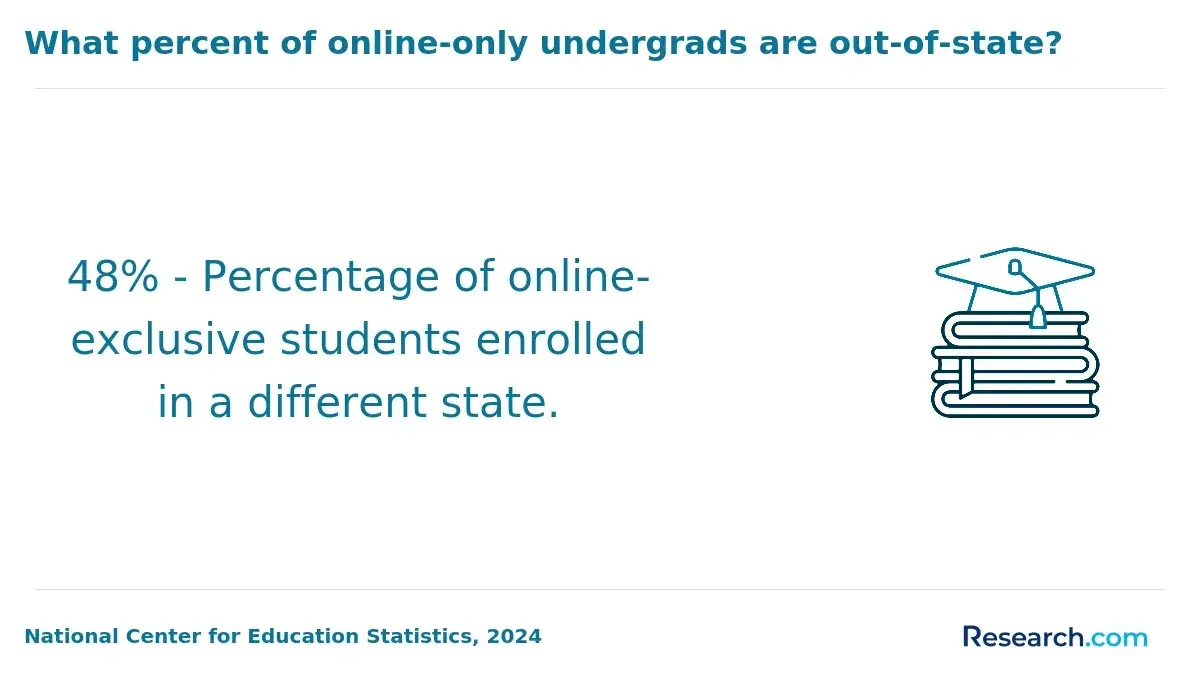
Data from the National Center for Education Statistics shows about 37% of fully online undergraduate students attend schools with test-optional or test-blind policies. These schools can still be selective, especially if the AI program is tied to computer science, data science, software development, or engineering coursework.
Why admission may feel more accessible
- You do not need to schedule, pay for, or retake the SAT or ACT.
- Older applicants do not need to rely on outdated test scores.
- Transfer students can often emphasize college coursework.
- Applicants can explain their goals and experience through essays, resumes, and recommendations.
Why admission can still be competitive
- AI programs may expect comfort with math, logic, and programming.
- Popular online programs may receive more applications than available seats.
- Weak transcripts may still require explanation or additional coursework.
- Poorly written essays or incomplete applications can hurt an otherwise qualified applicant.
- Current online artificial intelligence bachelor's student: "It wasn't about skipping steps but highlighting what I bring beyond test scores."
That is the right mindset. A no-test policy gives you more control over how you present your strengths, but it also makes the rest of the application more important.
Which Online Artificial Intelligence Bachelor's Degree Programs Do Not Require SAT or ACT?
Many online artificial intelligence bachelor’s programs now use test-optional or test-free admissions as part of a wider move toward flexible online learning. Enrollment in online undergraduate courses continues to rise, with over 6 million students nationwide, which helps explain why more institutions are designing admissions processes for working adults, transfer students, and remote learners.
Because policies change, applicants should verify the SAT and ACT requirement directly with each school before applying. Look for language such as “test-optional,” “test-blind,” “test-free,” “SAT/ACT not required,” or “standardized test scores waived.” Also check whether scores are optional for admission but still required for scholarships, placement, or certain applicants.
Common AI-related bachelor’s pathways
- Machine learning and data analytics: These programs emphasize algorithms, data interpretation, model building, and applied analytics. Admissions may focus on math readiness and prior technical coursework.
- Robotics and automation systems: Students may study autonomous systems, sensors, control systems, and automation. Applicants with engineering, programming, or hands-on technical experience may be able to show readiness without test scores.
- Natural language processing: This area focuses on how computers process human language. Relevant preparation may include computer science, linguistics, statistics, or programming.
- Computer vision and pattern recognition: Coursework may cover image analysis, visual data, and model training. Strong math and coding preparation can be especially helpful.
- AI ethics and policy development: These programs or concentrations examine responsible AI use, fairness, privacy, governance, and social impact. They may welcome applicants from technical and nontechnical backgrounds.
How to compare programs that waive SAT or ACT scores
- Confirm institutional accreditation and, when relevant, program-level expectations.
- Review the curriculum to see how much math, programming, and statistics it includes.
- Ask whether the program offers tutoring, career services, project-based learning, or portfolio development.
- Check transfer credit policies if you have prior college coursework.
- Compare total cost, technology fees, course format, and time to completion.
If you may continue into graduate study after earning a bachelor’s degree, comparing a future ms in ai online can help you understand how undergraduate choices may support later specialization.
How Do I Apply to an Online Artificial Intelligence Bachelor's Degree Without SAT or ACT?
Applying without SAT or ACT scores usually follows the same basic process as a traditional online bachelor’s application, but you need to be more intentional about the materials that replace test scores. A complete, well-organized application is especially important when admissions committees rely on holistic review.
- Confirm the testing policy: Before starting, verify whether the program is test-optional, test-free, or only waiving scores for certain applicants. Save or note the policy language in case questions come up later.
- Create an application account: Use the school’s official admissions portal. This lets you save progress, upload documents, track missing items, and receive status updates.
- Enter personal and academic information: Provide accurate details about your education history, prior colleges, intended major, residency, and any relevant work experience.
- Request transcripts early: Order official high school and college transcripts as soon as possible. Transcript delays are a common reason applications remain incomplete.
- Prepare your essay or personal statement: Explain why artificial intelligence fits your goals, what preparation you already have, and how you plan to succeed in an online technical program.
- Upload supporting documents: Add a resume, recommendation letters, certificates, or portfolio materials if the program allows or requires them.
- Review every field before submitting: Check names, dates, contact information, uploaded files, word counts, and deadlines. Small errors can create delays.
- Monitor your portal after submission: Schools may request additional documents, placement information, financial aid forms, or clarification about prior coursework.
Application checklist
- Completed online application
- Official transcripts
- Personal statement or essay
- Recommendation letters, if required
- Resume or project portfolio, if accepted
- Application fee or fee waiver, if applicable
- Financial aid documents, if you plan to apply for aid
Do not wait until the deadline to request documents. Online programs may offer multiple start dates, but admissions review can still take time, especially when transfer credits need evaluation.
How Can I Improve My Online Artificial Intelligence Bachelor's Degree Application Without SAT Scores?
Without SAT or ACT scores, your application should make a clear case that you are ready for college-level AI coursework. Research indicates that holistic admissions, which consider diverse aspects of a candidate beyond test scores, can boost acceptance rates by up to 30%. The strongest applications give admissions reviewers evidence, not just enthusiasm.
Strengthen the academic evidence
- Highlight relevant courses: Point to strong grades in math, statistics, computer science, science, information technology, or data-related classes.
- Address gaps honestly: If your transcript is weak in quantitative subjects, explain what you have done to prepare, such as recent coursework or self-study.
- Use transfer credits strategically: If you have completed college courses, show how they connect to the program’s curriculum and degree requirements.
Show technical motivation through projects
- Include coding or data projects: Even small projects can help if they show problem-solving, persistence, and curiosity.
- List relevant certificates or courses: Short courses in programming, data analysis, statistics, or machine learning can support your application when presented clearly.
- Describe your role: Do not just name a project. Explain what you built, what tools you used, what problem you solved, and what you learned.
Make your written materials specific
- Write a focused personal statement: Connect your background to AI, explain why the online format fits your life, and identify realistic academic or career goals.
- Choose recommenders carefully: A strong letter from someone who knows your work is better than a generic letter from someone with an impressive title.
- Match the program: Reference features that genuinely matter, such as curriculum structure, project-based learning, transfer policies, or support for online learners.
If you are still weighing technology-adjacent online options, a social media marketing online degree can offer a different path that may combine analytics, platforms, strategy, and digital communication.
What Mistakes Should I Avoid When Applying Without SAT or ACT?
Test-optional and test-free policies can help applicants, but they do not protect weak or incomplete applications. Research shows that nearly 25% of undergraduate applications reviewed holistically suffer due to incomplete or poorly prepared materials. When test scores are absent, every other part of the file has to work harder.
- Assuming “no SAT or ACT” means “easy admission”: Programs may still review GPA, prerequisites, course rigor, essays, and technical readiness.
- Submitting incomplete materials: Missing transcripts, unsigned forms, absent recommendations, or unpaid fees can delay review or lead to denial.
- Writing a generic essay: Statements that could apply to any major do not help. Explain why artificial intelligence, why this program, and why you are prepared now.
- Ignoring math and programming preparation: AI coursework often depends on quantitative and computational skills. If you lack preparation, address it directly.
- Failing to document experience: Work history, projects, certificates, military training, and volunteer technology work can matter, but only if you present them clearly.
- Using weak recommendations: Choose recommenders who can discuss your reliability, learning ability, technical interest, or performance under pressure.
- Missing deadlines: Online programs may have rolling admissions or multiple start dates, but financial aid, transfer evaluation, and course registration can still have firm timelines.
- Not checking accreditation: Accreditation affects credit transfer, financial aid eligibility, employer recognition, and future graduate study options.
Applicants comparing institutional quality and admissions flexibility may also want to review non profit colleges when identifying accredited online pathways.
Will Not Taking the SAT or ACT Affect My Career After an Online Artificial Intelligence Bachelor's Degree?
Not taking the SAT or ACT is unlikely to affect your career after earning an online artificial intelligence bachelor’s degree. Employers generally do not ask for SAT or ACT scores when hiring for AI, data, software, analytics, or technology roles. They are more likely to care about your degree, technical skills, portfolio, internships, work experience, and ability to solve real problems.
A survey by the National Association of Colleges and Employers found that nearly 70% of employers emphasize skills and practical experience over GPA or standardized exam scores during hiring. For AI-related roles, that means your projects, tools, programming ability, communication skills, and applied experience can matter far more than whether you submitted a standardized test score during college admissions.
What can matter more than SAT or ACT scores
- Technical skills: Programming, data handling, statistics, machine learning concepts, and model evaluation.
- Project portfolio: Examples of applied work can show employers what you can actually do.
- Internships or work experience: Practical exposure helps connect coursework to business, research, or operational needs.
- Communication: AI professionals often need to explain models, risks, and results to nontechnical audiences.
- Ethical judgment: Responsible AI use, privacy, bias awareness, and governance are increasingly important in the field.
- Continued learning: AI tools and methods change quickly, so employers may value adaptability and ongoing skill development.
The better career question is not whether you took the SAT or ACT. It is whether your program helps you graduate with credible skills, evidence of applied learning, and the confidence to explain your work.
What Graduates Say About Online Artificial Intelligence Bachelor's Degree Programs With No SAT or ACT
- Jason: "Choosing an online artificial intelligence bachelor's degree with no SAT or ACT requirement was a game-changer for me because I wanted to focus on building skills rather than test scores. The application process was straightforward yet selective, which made me feel confident that my potential was recognized beyond standardized tests. Earning this degree has opened numerous doors in the tech industry, allowing me to contribute to innovative projects much sooner than I expected."
- Camille: "Reflecting on my journey, the biggest challenge was balancing work and study, but knowing that I didn't have to worry about SAT or ACT scores was a huge relief. The accessibility of the program allowed me to pursue my passion for artificial intelligence despite my unconventional academic background. Now, as a professional, I find that my degree validates my expertise and continuously impresses employers in this rapidly evolving field."
- Alexander: "The flexibility of an online artificial intelligence bachelor's degree with no SAT or ACT requirement was exactly what suited my busy schedule. I appreciated that the program emphasized real-world problem solving over test performance, which aligned perfectly with my learning style. Since graduating, my career has accelerated, and I feel fully equipped to tackle complex AI challenges with confidence and innovative thinking."
Other Things You Should Know About Artificial Intelligence Degrees
Most online AI bachelor's programs in 2027 can be completed in about four years of full-time study. However, accelerated programs or part-time options may vary, allowing students flexibility in tailoring their education to fit personal schedules.
Yes, online artificial intelligence bachelor's degrees that do not require SAT or ACT scores are generally recognized by employers, especially if the institution is accredited. Employers increasingly value skills and experience over standardized test scores, focusing on graduates' technical competencies and project work. Accreditation and the reputation of the college remain important factors.
Students in online artificial intelligence bachelor's degree programs without SAT or ACT requirements often have access to academic advising, tutoring, career services, and technical support. Many programs also offer virtual labs and collaborative project opportunities to enhance learning. Support services vary by institution but aim to provide a comprehensive online learning experience.
References
- Bachelor's Degree (BS) in Artificial Intelligence https://academics.uky.edu/programs/bachelors/artificial-intelligence
- Smart AI for College Prep: Dos and Don’ts https://www.ivywise.com/ivywise-knowledgebase/smart-ai-for-college-prep/
- Admission criteria in technology bachelor's programmes in rolling admission https://www.lut.fi/en/studies/apply-lut/applying-bachelors-programmes/rolling-admission-bachelors-studies/admission-criteria-technology-bachelors-programmes-rolling-admission
- Online AI Degree Concentration | SNHU https://www.snhu.edu/online-degrees/bachelors/cyber-security/generative-ai
- Should I Get a Bachelor’s Degree in AI? | Tiffin University https://www.tiffin.edu/news/should-i-get-a-bachelors-degree-in-ai/
- How Adult Learners Can Apply to College Without SAT or ACT Scores https://www.aiuniv.edu/blog/2015/september/how-to-get-into-college
- Find Test-Optional Colleges — No SAT/ACT Requirement https://www.accreditedschoolsonline.org/online-colleges/no-sat-or-act/
- Plan Smarter, Not Harder: Best AI Tools for College Admissions Success https://advancedcollegeplanning.net/plan-smarter-not-harder-ai-tools-for-college-success/
- A bachelor's isn't obsolete in the AI age–It just needs an upgrade https://www.luminafoundation.org/news-and-views/a-bachelors-isnt-obsolete-in-the-ai-age-it-just-needs-an-upgrade/
- Best AI for College Admissions: Your 24/7 Expert Guide to Getting Into Top Universities https://www.jenova.ai/en/resources/best-ai-for-college-admissions