2027 Online Artificial Intelligence Bachelor's Degree Program Costs: Tuition & Fees

Co-Founder and Chief Data Scientist
Choosing an online artificial intelligence bachelor's degree is partly an academic decision and partly a cost decision. The program may prepare you for work in software development, data analytics, machine learning support roles, or graduate study, but the price can vary widely depending on the school, credit requirements, residency rules, and required technology.
For many students, the hardest part is not finding an online program; it is estimating the full cost before enrolling. According to recent data, the average annual tuition for online bachelor's degrees in computer science-related fields ranges from $15,000 to $30,000. That range can affect whether you study full time or part time, whether you transfer credits, and how much financial aid you need.
This guide explains what students should expect to pay for an online artificial intelligence bachelor's degree, which fees are easy to overlook, how online costs compare with campus-based study, and what practical steps can reduce the total price without weakening the value of the degree.
Key Things to Know About Online Artificial Intelligence Bachelor's Degree Program Costs
- Tuition for online artificial intelligence bachelor's programs often follows a per-credit or fixed-rate semester model, with significant variation based on public versus private institution status.
- Additional costs include technology fees, course materials, proctoring services, and potential hardware upgrades specific to demanding AI coursework.
- Students should consider financial aid options, employer tuition assistance, and budgeting for longer program durations due to part-time study to manage total expenses effectively.
What Is the Average Cost of an Online Artificial Intelligence Bachelor's Degree?
The average cost of an online artificial intelligence bachelor's degree depends mainly on the number of credits required and the school's tuition model. Most programs require between 120 and 130 credit hours, and many colleges charge online students by the credit. With common tuition rates ranging from $300 to $600 per credit, total tuition can fall roughly between $36,000 and $78,000 before fees, books, software, and other expenses are added.
A useful planning estimate is approximately $400 per credit hour. At that benchmark, students can build a realistic first-pass budget, then adjust it after reviewing the exact program curriculum, transfer-credit policy, and required fees. The final cost may be lower if you bring in approved transfer credits, qualify for grants or scholarships, or attend a public institution with favorable online tuition rules.
When comparing programs, look beyond the advertised per-credit price. Ask whether tuition includes online learning fees, virtual lab access, required software, academic support, and graduation charges. A program with a slightly higher tuition rate may be less expensive overall if it includes services that another school bills separately.
The same budgeting approach applies across many online degrees. Students comparing AI programs with business or technology management pathways can use similar cost-review habits when evaluating online MBA program costs, especially when tuition is charged per credit rather than as a complete program package.
What Factors Affect the Cost of an Online Artificial Intelligence Bachelor's Degree?
The cost of an online artificial intelligence bachelor's degree is shaped by more than the tuition rate shown on a school website. Two programs with similar names can have very different total prices once credit requirements, residency rules, fees, course pace, and transfer policies are included.
The most important cost drivers include:
- Credit requirements: Many bachelor's programs require 120 and 150 hours to graduate. Since online tuition is often priced per credit, every additional required course increases the total bill unless you can apply transfer credits or prior learning credit.
- Program length: A standard four-year schedule spreads costs over more terms. Accelerated options may help students finish sooner, but they can require heavier course loads and may use different pricing. Students comparing faster pathways should review accelerated online degrees with attention to tuition, fees, and workload.
- Tuition model: Per-credit tuition is easier for part-time students to manage because they pay for the courses they take. Flat-rate tuition can benefit full-time students who can handle a heavier schedule without risking poor grades or course withdrawals.
- Residency status: Some public universities still charge different rates for in-state and out-of-state online students. Others use one online rate for all distance learners. This single policy can change the affordability of a program significantly.
- Transfer-credit policy: A generous transfer policy can reduce the number of credits you need to complete at the institution. A restrictive policy may require you to retake courses, even if you already completed similar work elsewhere.
- AI-specific learning tools: Artificial intelligence coursework may require programming environments, cloud computing access, data tools, or virtual labs. These costs may be built into tuition or charged separately.
- Student fees: Technology, registration, assessment, graduation, proctoring, and online course fees can add up across multiple semesters. Always ask for a full cost-of-attendance estimate, not only tuition.
A good cost comparison should answer one question: how much will you pay to earn the actual credential, from first enrolled course to graduation? The lowest tuition rate is not always the lowest total cost.
Is an Online Artificial Intelligence Bachelor's Degree Cheaper Than a Traditional Degree?
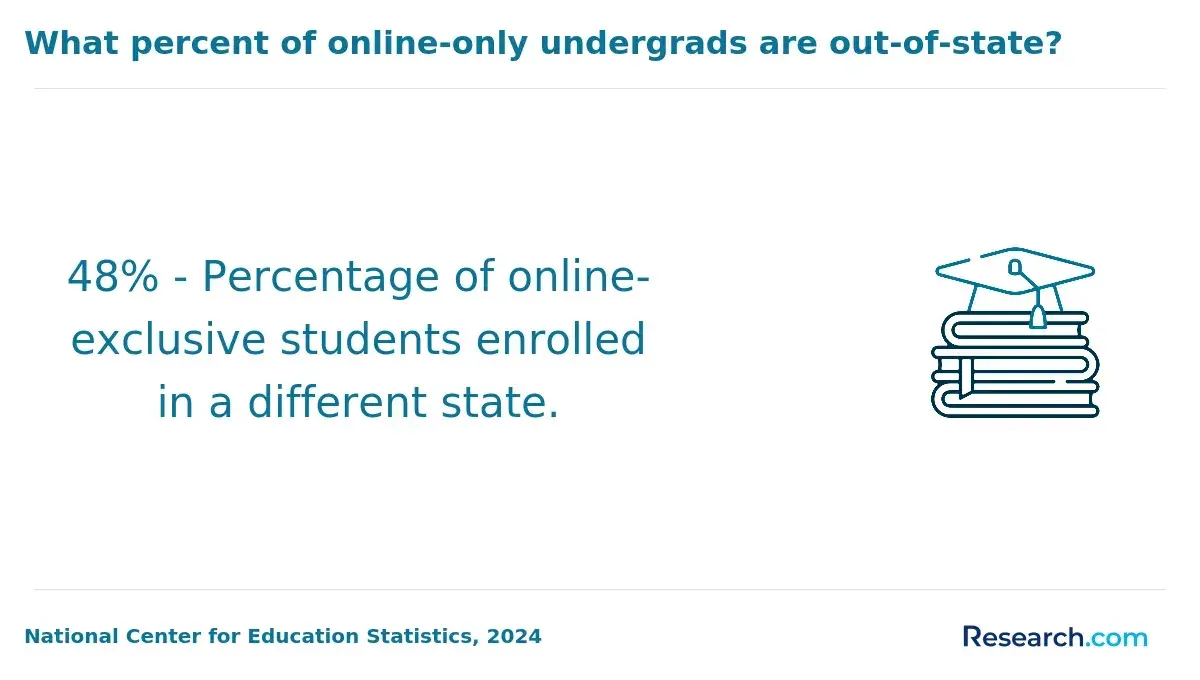
An online artificial intelligence bachelor's degree can be cheaper than a traditional campus-based degree, but it is not automatically cheaper in every case. The difference depends on tuition, fees, residency status, housing, transportation, and whether you can keep working while enrolled. Data from the National Center for Education Statistics shows that the average tuition for public four-year, in-state students is around $9,400 per year, while online programs may use lower, similar, or sometimes higher per-credit pricing.
Online study often reduces indirect costs. Students usually do not need to relocate, commute, pay for campus parking, or live near the university. For working adults, the ability to keep a job can be one of the largest financial advantages, even when tuition itself is comparable to an on-campus program.
- Campus-related savings: Online learners may avoid some facility, activity, transportation, and housing costs that affect residential students.
- Work flexibility: Asynchronous or evening courses can help students maintain employment, which may reduce borrowing and opportunity cost.
- Course-load control: Online programs often make it easier to study part time, though part-time enrollment can extend the time to completion and may affect aid eligibility.
- Different fee structures: Online students may avoid some campus fees but pay technology, virtual lab, proctoring, or online platform fees instead.
- Residency policies: A local public university may be cheaper for an in-state campus student than a private online program. Conversely, a flat-rate online tuition model may be cheaper for an out-of-state student.
One graduate of an online artificial intelligence bachelor's program described the trade-off this way: “At times, it felt overwhelming adjusting my workload to keep costs down while progressing steadily.” He said the ability to avoid relocation and commuting costs made a noticeable difference, but taking fewer classes per term required discipline and careful planning.
The best comparison is not “online versus campus” in general. It is the total cost of a specific online program compared with the total cost of the campus option you would realistically attend.
Are Tuition Rates Fixed for an Online Artificial Intelligence Bachelor's Degree?
Tuition rates for online artificial intelligence bachelor's degrees are not always fixed. Some schools charge a set full-time rate per term, while others bill by the credit hour. Approximately 30% of these programs use flat-rate tuition, which can make budgeting easier for students who enroll full time and complete a steady number of credits each term.
Students should read the tuition policy carefully before assuming that the advertised rate will stay the same through graduation. A program can have a fixed rate for one academic year but still increase tuition in later years.
- Per-credit billing: You pay based on the number of credits you take. This helps part-time students control short-term costs, but the total price depends on how many credits remain after transfer evaluation.
- Flat-rate term pricing: Full-time students pay a set amount for a term, sometimes within a credit range. This can reduce the cost per credit if you take a heavier course load and pass all courses successfully.
- Residency-based pricing: Some public universities charge different rates for residents and nonresidents, even in online programs. Others use a single online tuition rate.
- Annual rate changes: Tuition can rise from one academic year to the next. Ask whether the school offers tuition guarantees, locked rates, or published increase schedules.
- Program-specific pricing: AI programs may have separate fees for cloud access, virtual labs, software, or specialized course platforms. These charges can make the true cost different from the base tuition rate.
Before enrolling, ask the admissions or financial aid office for a written estimate based on your transfer credits, expected pace, and residency classification. Also avoid assuming that tuition policies are the same across unrelated majors; pricing for a technology-heavy AI degree may differ from policies used in fields such as a construction management accelerated degree.
What Hidden Fees Come With an Online Artificial Intelligence Bachelor's Degree?
Tuition is usually the largest expense in an online artificial intelligence bachelor's degree, but it is not the only one. A 2023 survey from EduCost Insights revealed that about 70% of online learners encounter unexpected charges beyond tuition. These costs can be especially important in AI programs because coursework may rely on software, data tools, virtual labs, and remote testing services.
Common hidden or underestimated costs include:
- Technology fees: These may support the learning management system, help desk services, online platforms, and required digital infrastructure. They can be charged per course, per semester, or as a general online student fee.
- Virtual lab and cloud access fees: AI coursework may require remote computing environments, simulations, GPU-enabled platforms, or cloud-based data tools. Some schools include these costs; others bill them separately.
- Software and subscription costs: Students may need access to programming tools, analytics platforms, integrated development environments, or specialized AI resources. Free tools may be used in some courses, but not all required resources are free.
- Course materials: Textbooks, e-books, access codes, data sets, and online homework systems can create recurring expenses each term.
- Proctoring and exam fees: Some online courses require identity verification, remote exam monitoring, or approved testing services.
- Administrative fees: Application, registration, transcript, graduation, and late-payment fees can add to the final cost, even when each individual charge seems small.
A current online AI student summed up the issue clearly: “I knew tuition was one thing, but the tech fees and frequent course material purchases really added up.” She said the tools improved the learning experience, but tracking renewals, access codes, and software requirements became part of her semester budget.
To avoid surprises, request a complete fee schedule and ask whether the school can provide a sample cost breakdown for a typical full-time and part-time student.
What Are the Technology Fees Included in Online Artificial Intelligence Bachelor's Degree Programs?
Technology fees in online artificial intelligence bachelor's programs help pay for the digital systems that make remote learning possible. On average, these fees range between $100 and $300 per semester across U.S. institutions offering online degrees. In AI programs, the fee may support more than basic course access because students often need hands-on coding, data analysis, and virtual lab resources.
Technology fees may cover:
- Learning management systems: These platforms host lectures, assignments, quizzes, discussion boards, grades, announcements, and course resources.
- Virtual labs: Students may use browser-based or remote environments to practice programming, machine learning workflows, model evaluation, and data preparation.
- Software licenses: Fees may support access to programming tools, analytics platforms, database tools, or AI-related software required for coursework.
- Cloud computing resources: Some programs use remote servers or cloud environments for projects that require more computing power than a typical laptop can provide.
- Video conferencing tools: Live class meetings, office hours, tutoring, group projects, and advising sessions may rely on institution-supported platforms.
- Digital libraries and databases: Online students often use e-books, academic journals, technical documentation, and research databases through the university library.
- Technical support: Help desk access, account support, troubleshooting, and platform maintenance may be funded through required fees.
Before paying a technology fee, ask what it includes. A fee that covers required software and lab access may be valuable. A fee that only supports general online infrastructure may still be necessary, but you should know whether additional course-level charges will appear later.
Breakdown of Private Fully Online For-profit Schools

How Much Do Textbooks Cost for an Online Artificial Intelligence Bachelor's Degree?
Textbooks and course materials can be a meaningful part of the total cost of an online artificial intelligence bachelor's degree. According to the College Board, undergraduates typically spend around $1,240 each year on textbooks and supplies. AI students may also need digital platforms, access codes, software tools, or specialized technical references in addition to standard books.
Several factors affect what you will pay:
- Required technical texts: Courses in programming, statistics, data structures, machine learning, and neural networks may assign specialized books that cost more than general education materials.
- Digital versus print options: E-books can reduce costs, but some courses require specific editions, print formats, or bundled digital access.
- Access codes and homework platforms: A lower-cost used textbook may not help if the course requires a new access code for assignments or assessments.
- Software-linked materials: Some AI courses use interactive coding platforms, simulation tools, or data environments that are billed as course materials.
- Frequent updates: AI changes quickly, so instructors may choose current editions or digital resources that reflect newer tools and methods.
To manage textbook costs, check whether the program uses open educational resources, library-licensed e-books, rental options, or free technical documentation. Before buying materials early, confirm the syllabus and edition requirements, because technical courses sometimes change resources shortly before a term begins.
Can I Get Financial Aid for an Online Artificial Intelligence Bachelor's Degree?
Yes. Students in eligible online artificial intelligence bachelor's degree programs may qualify for federal, state, institutional, and private financial aid. Data from the National Center for Education Statistics show that about 72% of undergraduate students fully enrolled in online programs receive some form of financial assistance. The key requirement is that the school and program meet aid-eligibility standards, so students should verify accreditation and financial aid participation before enrolling.
- Federal aid: The Free Application for Federal Student Aid (FAFSA) is the starting point for federal grants, loans, and work-study. Pell Grants may be available to qualifying students and do not have to be repaid, while loans must be repaid with interest.
- State aid: Some states provide grants, scholarships, or tuition assistance for residents attending approved online programs. Rules vary, so check your state higher education agency and the school's financial aid office.
- Institutional aid: Colleges may offer scholarships, need-based grants, merit awards, tuition discounts, or payment plans for online students. Availability can differ by program and enrollment status.
- Employer tuition assistance: Students already working in technology, business, healthcare, finance, or data-related roles may be able to use employer reimbursement benefits if the degree aligns with job responsibilities.
- Scholarships: AI students can look for awards tied to STEM, computer science, data science, women in technology, first-generation students, veterans, and adult learners.
- Ongoing requirements: Financial aid usually requires satisfactory academic progress, enrollment in an eligible number of credits, and completion of required documents by deadlines.
Do not assume that every online program qualifies for the same aid. Ask the school whether the specific AI bachelor's degree is eligible for federal financial aid, whether online students receive the same institutional aid consideration as campus students, and how dropping or withdrawing from courses could affect your aid package.
Students comparing education costs across fields can also review how aid works in other online programs, such as an online master's in communications, but bachelor's-level eligibility, loan limits, and grant access may differ.
How Can I Reduce the Cost of an Online Artificial Intelligence Bachelor's Degree?
You can reduce the cost of an online artificial intelligence bachelor's degree by lowering the number of credits you must pay for, choosing a favorable tuition model, using financial aid strategically, and avoiding unnecessary fees. According to the National Center for Education Statistics, nearly 35% of undergraduates transfer credits to shorten their degree path and lower tuition costs.
Practical cost-cutting strategies include:
- Maximize transfer credits: Ask for a transfer-credit evaluation before committing. Prior college coursework, community college credits, Advanced Placement (AP) credits, and approved prior learning may reduce your remaining requirements. This can be especially helpful for students who started with an online associate degree.
- Complete general education courses affordably: If the school allows transfer credits, taking approved lower-division courses at a lower-cost institution may reduce the total bill.
- Compare tuition models: Per-credit pricing may suit part-time students. Flat-rate tuition may save money for students who can take a full-time or heavier course load without sacrificing performance.
- Choose in-state or regional options: Public institutions may offer lower tuition for residents or regional online learners, although policies vary.
- Use digital and open materials: Look for programs that use open educational resources, library access, or low-cost digital textbooks.
- Avoid course withdrawals: Repeating a course adds cost and can affect financial aid progress requirements. Choose a pace you can sustain.
- Ask about employer benefits: Tuition reimbursement, professional development funds, or workforce grants may lower out-of-pocket costs.
- Apply for aid early: FAFSA deadlines, institutional scholarship deadlines, and state grant deadlines may not align. Missing one can reduce your options.
If you expect to continue into graduate study after the bachelor's degree, plan costs across both credentials; comparing options such as the cheapest online master's in artificial intelligence can help you avoid overspending at the next stage.
The strongest savings plan is built before enrollment. Request a degree plan showing accepted credits, remaining courses, estimated fees, and the expected graduation timeline.
Is an Online Artificial Intelligence Bachelor's Degree Worth the Cost?
An online artificial intelligence bachelor's degree can be worth the cost for students who want a structured path into AI-related technical work and need the flexibility to study without relocating. The value is strongest when the program is accredited, includes rigorous computing and mathematics foundations, offers applied AI projects, and provides career support that helps students turn coursework into employable skills.
The degree may be especially useful for students targeting roles connected to software development, data analytics, machine learning, automation, business intelligence, or technical project support. Graduates with related degrees often see strong earnings potential, with median salaries surpassing $100,000 within a few years post-graduation, reflecting high demand and growth in AI-related fields. However, salary outcomes are not guaranteed and depend on location, experience, portfolio quality, internships, industry, and the specific role.
Consider the degree worth the investment if it offers:
- Accreditation and credibility: Employers and graduate schools are more likely to recognize a degree from a properly accredited institution.
- Relevant curriculum: Look for programming, statistics, data structures, algorithms, databases, machine learning, ethics, and applied AI projects.
- Hands-on work: Projects, portfolios, capstones, internships, and industry-aligned assignments can matter as much as course titles.
- Career fit: The degree should match your target roles. Some AI positions require graduate education, while others emphasize software engineering or analytics experience.
- Manageable debt: A valuable program can become financially risky if borrowing is too high relative to realistic entry-level opportunities.
Students who are highly self-directed may be able to learn some AI tools through certificates, bootcamps, or independent projects. A bachelor's degree, however, provides broader academic preparation and a credential that can support long-term mobility, graduate admission, and roles where a degree is expected.
What Graduates Say About Online Artificial Intelligence Bachelor's Degree Program Costs
- : "Choosing to invest in an online artificial intelligence bachelor's degree was a big decision, especially considering the tuition expenses and additional materials required. However, the flexibility of learning at my own pace without relocating made the cost worthwhile. This degree has opened new doors in my tech career, allowing me to work on cutting-edge projects and negotiate better salary packages. — Jason"
- : "At first, I was skeptical about the value of pursuing an online artificial intelligence degree due to concerns about program costs and the legitimacy of online education. After weighing the lower living expenses against the tuition fees, I realized this path offered a practical alternative. The program's blend of theoretical foundations and real-world applications significantly boosted my confidence and marketability in the AI job market. — Camilo"
- : "Pursuing an online artificial intelligence bachelor's degree was a careful financial calculation for me, balancing tuition costs with potential career advancement. Despite some challenges in adapting to remote learning, the affordable access to specialized courses and expert faculty justified my commitment. Now, as a professional, the degree has not only increased my technical expertise but also enhanced my credibility in AI-driven industries. — Alexander"
References
- Should I Get a Bachelor’s Degree in AI? | Tiffin University https://www.tiffin.edu/news/should-i-get-a-bachelors-degree-in-ai/
- The Cost Implications of AI in Postsecondary Education | HESA https://higheredstrategy.com/the-cost-implications-of-ai-in-postsecondary-education/
- Artificial Intelligence Literacy Textbook For Higher Education Students | Buy Now from Mujo https://www.mujo.com/shop/higher-ed-textbooks/student-editions/artificial-intelligence-literacy-textbook-for-higher-education-students/
- Cost of Online Education vs. Traditional Education [2025]: Comparison https://educationdata.org/cost-of-online-education-vs-traditional-education
- How to Avoid AI Cost Savings on AI Projects: A Cost-Saving Guide https://indatalabs.com/blog/ai-cost-savings
- How to Decrease the Cost of AI https://krista.ai/how-to-decrease-the-cost-of-ai/
- The Best AI Books & Courses for Getting a Job | Towards Data Science https://towardsdatascience.com/best-ai-books-courses-to-get-a-job/
- Is Online College More Affordable? | UT San Antonio Online https://online.utsa.edu/blog-content/cost-of-an-online-degree-vs-traditional-education/
- Best Online AI Degrees: 2025 Rankings & Program Directory - MastersInAI.org https://www.mastersinai.org/degrees/online-artificial-intelligence-degrees/
- Bachelor in Management and Artificial Intelligence https://www.kozminski.edu.pl/en/programs/undergraduate-programs-bachelor/bachelor-management-and-artificial-intelligence