2027 Online Artificial Intelligence Bachelor's Degree Programs That Accept Transfer Credits

Co-Founder and Chief Data Scientist
Choosing an online artificial intelligence bachelor’s degree is harder when you already have college credits. A transfer-friendly program can help you avoid repeating general education, math, programming, or computer science courses you have already completed. A poor transfer fit can do the opposite: add semesters, increase tuition, and delay your move into AI-related coursework.
This guide is for students who have attended community college, left a previous bachelor’s program, earned credits through AP or IB exams, completed military or professional training, or want to return to school without starting from zero. It explains how transfer credits usually work in online artificial intelligence bachelor’s programs, what kinds of credits may count, which policies to review before applying, and how to compare programs before you commit.
According to recent studies, over 60% of students seeking online STEM degrees prefer programs recognizing their prior credits. That demand matters in artificial intelligence education because many AI bachelor’s programs build on sequential coursework in calculus, statistics, programming, data structures, and computer science. The earlier you confirm how your credits apply, the easier it is to estimate your real timeline, cost, and academic path.
Key Benefits of Online Artificial Intelligence Bachelor's Degree Programs That Accept Transfer Credits
- Accepting transfer credits shortens degree completion time by up to 50%, enabling students to enter the growing AI job market sooner, where demand is projected to grow 31% by 2030.
- Transferring approved credits reduces tuition costs significantly, allowing students to leverage previous academic investments and avoid repeating equivalent coursework.
- Flexibility in credit transfer accommodates diverse educational backgrounds, providing tailored degree pathways that fit schedules of working professionals and non-traditional students.
Who Should Consider an Online Artificial Intelligence Bachelor's Degree With Transfer Credits?
An online artificial intelligence bachelor’s degree with transfer credits is best for learners who already have usable college-level work and want a faster, more affordable path to a bachelor’s credential. According to the National Student Clearinghouse Research Center, nearly 38% of undergraduates transfer at least once, so many schools have formal processes for evaluating previous coursework.
This option is especially relevant if your past credits include general education, mathematics, statistics, computer science, information technology, or introductory programming. These subjects often connect directly to AI degree requirements, although each institution decides what it will accept.
- Students with prior college credits: If you completed courses at a community college, four-year university, or another accredited institution, transfer credit may help you avoid retaking lower-division requirements.
- Working professionals: Online programs can make it easier to study while maintaining a job. Transfer credits can reduce the number of terms you need to balance school, work, and family responsibilities.
- Adult learners returning to college: If you paused your education, transfer-friendly policies can help preserve the value of earlier coursework and make degree completion feel more realistic.
- Students changing majors into AI: Learners who began in computer science, engineering, data analytics, mathematics, or information systems may already have credits that fit an AI curriculum.
- Learners comparing flexible technology degrees: If you are weighing AI against adjacent fields, reviewing an online degree in ai can help you compare cost, transfer policies, and curriculum structure.
The main advantage is efficiency. Transfer credits can reduce duplication and let you move into AI-specific courses sooner. The main risk is assuming credits will transfer automatically. Before enrolling, ask for a written transfer evaluation showing which credits count, which requirements they satisfy, and how many credits you still need to graduate.
Students comparing flexible online education models may also review msw online programs, which can provide a useful contrast in how transfer policies differ across professional and technical fields.
How Many Credits Can I Transfer Into an Online Artificial Intelligence Bachelor's Degree?
Many online artificial intelligence bachelor’s programs accept a large amount of previous college credit, but the exact number depends on the school, the source of the credits, and how closely your courses match the degree plan. Most programs allow transfer of between 60 to 90 semester credits toward the degree, which usually requires around 120 credits in total. One common guideline is that about 75% of the total credits needed for a bachelor’s degree may be transferred.
Those figures are useful for planning, but they are not guarantees. A student with 75 previous credits may not receive 75 credits toward the AI major if some courses are too old, too low-level, unrelated to the curriculum, or from an institution the receiving school does not recognize.
What determines the final transfer amount?
- Course match: Credits are more likely to apply when the prior course closely matches a required course in subject, level, outcomes, and credit hours.
- Accreditation: Credits from regionally accredited institutions usually have a stronger chance of acceptance.
- Major requirements: General education credits may transfer more easily than advanced AI, machine learning, or data science requirements.
- Residency rules: Many colleges require students to complete a minimum number of credits at the degree-granting institution.
- Recency of technical courses: Because AI and computing change quickly, some schools may scrutinize older programming, systems, or data-related courses more closely.
A practical approach is to ask each school for two numbers: the maximum number of credits it will accept and the number of your credits that will actually apply to the AI bachelor’s degree. The second number is the one that determines your timeline and cost.
Students comparing technology and applied STEM pathways may also review engineering online programs to see how transfer policies can vary across closely related online degree fields.
What Types of Credits Transfer to an Online Artificial Intelligence Bachelor's Degree?
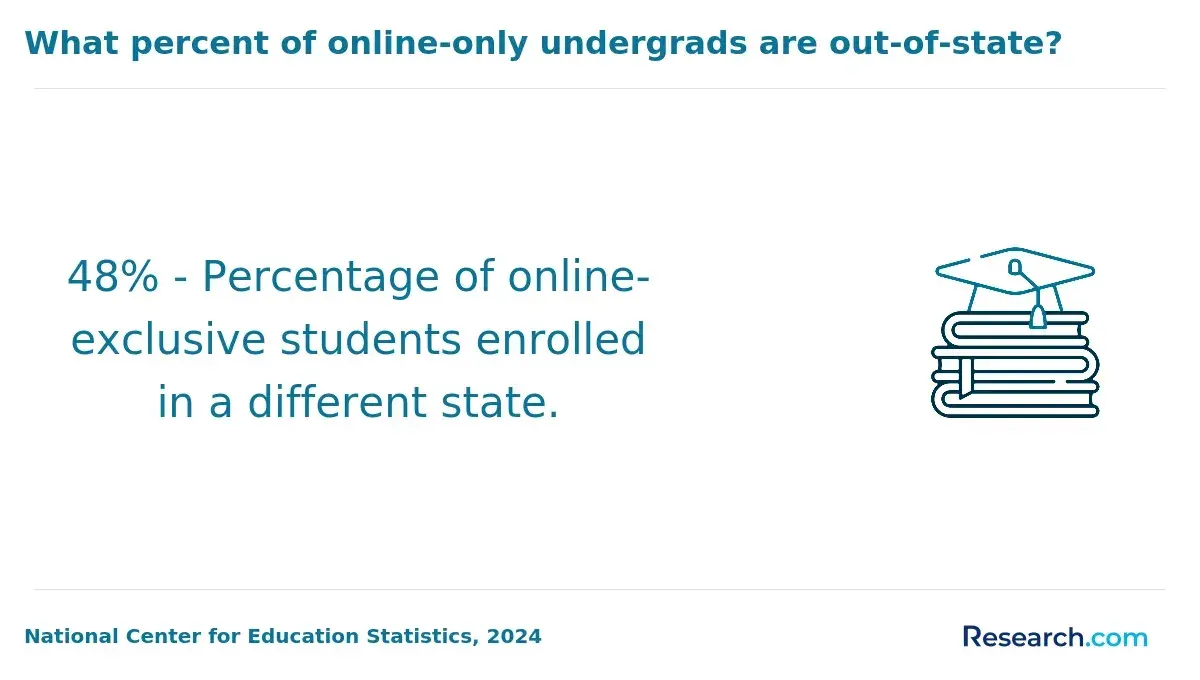
Online artificial intelligence bachelor’s programs may accept several categories of prior learning, but college coursework is usually the most straightforward. Recent data shows that nearly 60% of online undergraduates transfer credits from other schools, making transfer evaluation a common part of online enrollment.
The strongest transferable credits are usually courses that support the AI curriculum: calculus, statistics, discrete mathematics, programming, databases, computer organization, data structures, and general education requirements. More specialized AI credits may transfer, but schools often review them carefully to confirm academic level and content.
- Community college courses: Accredited community college credits often transfer well, especially lower-division general education, math, science, and introductory programming courses.
- AP and IB credits: Strong Advanced Placement or International Baccalaureate exam scores may be awarded college credit in subjects such as calculus, statistics, or computer science, depending on the institution’s policy.
- Military training: Military education and technical training may be evaluated for credit when it aligns with college-level learning in computing, engineering, data analysis, or related areas.
- Professional certifications: Some schools review industry certifications in programming, cloud computing, data analytics, or machine learning for possible credit, though approval is not automatic.
- Previous university work: Courses from accredited four-year institutions may transfer as general education, electives, prerequisites, or major requirements if they match the AI degree plan.
Documentation matters. For standard college courses, official transcripts may be enough. For certifications, military training, or older technical coursework, schools may request syllabi, course descriptions, exam records, portfolios, or proof of learning outcomes.
One graduate described the process as “both exciting and a bit daunting.” His community college and prior university credits applied smoothly, but “some professional certifications took longer to assess, requiring additional documentation and review.” His advice was simple: stay in close contact with admissions and academic advising, and gather documents early so the evaluation does not delay enrollment.
What Are the Rules for Transferring Credits to an Online Artificial Intelligence Bachelor's Degree?
Transfer rules exist to protect degree quality and ensure students have the preparation needed for advanced AI coursework. Studies show that about 75% of schools assess transfer credits individually to determine whether they align with program requirements. That means two students with the same number of previous credits can receive very different transfer results.
Most online artificial intelligence bachelor’s programs review transfer credits using several common criteria:
- Accreditation requirements: Schools often require credits to come from regionally accredited institutions. Credits from other providers may receive additional review or may not be accepted.
- Course equivalency: A prior course must usually match the receiving school’s course in subject area, academic level, credit value, and learning outcomes.
- Minimum grade standards: Institutions commonly require a minimum grade for transfer. Courses below that threshold may appear on your transcript but may not count toward the degree.
- Credit limits: Even if many courses are eligible, the school may cap how many credits can be transferred into the bachelor’s program.
- Residency requirements: Students may need to complete a required portion of upper-division or major coursework through the institution granting the degree.
- Time restrictions: Some programs apply recency rules, especially for technical courses in computing, programming, data science, and AI.
The most common mistake is asking only whether credits are “accepted.” A better question is: “Which degree requirements will these credits satisfy?” Credits that transfer only as free electives may not reduce your timeline as much as credits that satisfy general education, prerequisites, or major requirements.
Students researching closely related technology pathways, including cybersecurity masters online options, will see similar themes: accreditation, course equivalency, grade minimums, and program-specific requirements strongly influence how prior learning is applied.
Which Colleges Are Transfer-Friendly for an Online Artificial Intelligence Bachelor's Degree?
Transfer-friendly colleges make their policies clear before enrollment, provide timely credit evaluations, and explain how accepted credits apply to the degree. This is especially important in artificial intelligence, where students need a clear sequence of math, programming, computing, and AI courses. Data from the National Student Clearinghouse shows that nearly 38% of undergraduates transfer at least once during their studies, so strong transfer support can make a major difference.
Several types of institutions are often better positioned to support transfer students:
- Public universities: Public institutions may have established articulation agreements, especially with in-state community colleges. These agreements can make course equivalencies easier to predict.
- Online-focused schools: Schools with mature online divisions often design advising, transcript review, and course scheduling around adult and transfer students.
- Adult-centered programs: Programs built for working adults may offer broader transfer pathways, prior learning assessment, or flexible scheduling.
- Regional colleges: Regionally connected colleges may maintain transfer partnerships with nearby community colleges or state systems.
Signs of a transfer-friendly AI program
- The admissions office publishes maximum transfer credit limits and minimum grade requirements.
- The school offers a preliminary or official transfer credit review before you commit.
- Advisors explain whether credits count toward general education, electives, prerequisites, or AI major courses.
- The program has clear policies for AP, IB, military credit, professional certifications, and prior learning assessment.
- The curriculum map shows how transfer students can enter the program without disrupting course sequencing.
A graduate of an online artificial intelligence bachelor’s program said the most stressful part was not knowing which credits would count. Working with academic advisors helped her understand the transfer report and avoid repeating courses. “The support I received made a huge difference,” she said. “It felt like my past efforts were really valued, and I could focus on new learning instead of retaking classes.”
Which Online Artificial Intelligence Bachelor's Degree Programs Accept the Most Transfer Credits?
The programs that accept the most transfer credits are usually designed for students who are not starting college for the first time. Some online artificial intelligence bachelor’s programs may allow students to transfer more than 75% of the required credits, but the real value depends on how those credits apply to the degree plan.
Look beyond the advertised maximum. A program that accepts many elective credits may still require several terms of prerequisites before you can begin upper-division AI coursework. A stronger option is one that applies your credits directly to general education, mathematics, computing foundations, and major prerequisites.
- Flexible curriculum design: Transfer-friendly programs often have room for general education, electives, and related technical coursework, making it easier to apply prior credits.
- Competency-based learning: Some programs assess what students know and can do, which may create additional ways to receive credit for prior learning.
- Focus on adult learners: Programs serving working adults often provide clearer advising, part-time paths, and policies for students returning with mixed academic histories.
- Formal transfer agreements: Partnerships with community colleges and other institutions can simplify the transfer process and reduce uncertainty.
- Prior learning assessments: Portfolio reviews, standardized exams, or competency demonstrations may allow qualified students to earn credit for relevant skills or experience.
When comparing programs, ask for a degree audit or transfer evaluation before making a final enrollment decision. The best transfer result is not simply the highest credit total; it is the combination of accepted credits, remaining requirements, course availability, tuition, and time to graduation.
How Do I Transfer Credits to an Online Artificial Intelligence Bachelor's Degree?
Transferring credits into an online artificial intelligence bachelor’s degree usually follows a formal review process. Nearly 40% of undergraduate students in the U.S. transfer credits between institutions, so colleges generally have established procedures. Still, students who prepare early tend to receive clearer and faster answers.
The process typically includes these steps:
- Choose target programs: Identify online AI bachelor’s programs that match your goals, budget, schedule, and transfer needs.
- Request official transcripts: Submit official transcripts from every college or university you previously attended, even if you completed only a few courses.
- Provide supporting documents: Be ready to submit syllabi, catalog descriptions, AP or IB score reports, military records, certification documentation, or portfolios if requested.
- Complete the course evaluation: The receiving institution compares your prior coursework with its curriculum to determine equivalency.
- Review the transfer report: The school should show which credits were accepted and where they fit in the degree plan.
- Ask about appeals: If a course is denied or applied only as an elective, ask whether you can appeal with additional documentation.
- Confirm your remaining requirements: Before enrolling, make sure you understand the courses, credits, prerequisites, and residency requirements still needed for graduation.
For AI programs, pay close attention to prerequisite chains. A transferred programming course may help you move forward quickly, but only if it satisfies the exact prerequisite for data structures, algorithms, machine learning, or other advanced courses. If the school accepts the credit only as an elective, it may not shorten your path as much as expected.
How Do Transfer Credits Speed Up an Online Artificial Intelligence Bachelor's Degree?
Transfer credits speed up an online artificial intelligence bachelor’s degree by reducing the number of courses you still need to complete. By transferring 30 to 60 previously earned credits, students may save one to two years of study, depending on program rules, course sequencing, and enrollment pace.
The fastest path usually comes from credits that satisfy required courses rather than general electives. For example, completed coursework in college algebra, calculus, statistics, programming, computer science, or general education can open the door to upper-level AI courses sooner.
- Reducing total coursework: Accepted credits lower the number of classes required for graduation.
- Skipping repeated general education courses: Transfer credits may satisfy writing, humanities, social science, math, and natural science requirements.
- Clearing prerequisites: Prior coursework can help students qualify earlier for advanced computing, data science, and AI courses.
- Shortening the calendar timeline: Fewer required courses can reduce enrollment time, especially for students who study part time.
- Creating more flexible pacing: Students with substantial transfer credit may be able to take a lighter term load or concentrate on major-specific courses.
Transfer credits do not always produce a simple one-for-one time reduction. If required AI courses are offered only in certain terms or must be taken in sequence, your timeline may still depend on course availability. Ask the school to map your expected schedule through graduation, not just your remaining credit count.
Students who plan to build on AI knowledge later may also compare adjacent graduate or technical pathways, including masters in blockchain online options, after completing a bachelor’s degree.
Can Transfer Credits Reduce the Cost of an Online Artificial Intelligence Bachelor's Degree?
Yes. Transfer credits can reduce the cost of an online artificial intelligence bachelor’s degree because they can lower the number of courses you must pay for at the new institution. Data from the National Student Clearinghouse Research Center shows transfer students save an average of 10-20% on total degree costs by shortening their time to graduation.
The savings are not limited to tuition. Fewer required courses can also reduce fees, books, software subscriptions, and the number of terms you remain enrolled. However, the financial benefit depends on how many credits apply to required parts of the degree and whether the school charges transcript evaluation, technology, or prior learning assessment fees.
- Lower tuition fees: If accepted credits reduce the number of courses you must take, your total tuition can decrease.
- Reduced textbook and material costs: Fewer classes usually means fewer required books, platforms, lab tools, or software expenses.
- Lower term-based costs: Shorter enrollment may reduce recurring fees and indirect costs, including transportation in hybrid formats.
- Earlier workforce entry: Completing the degree faster may allow students to pursue AI-related roles or graduate study sooner.
- Debt reduction: Reducing the number of credits you need to complete may lower borrowing needs and long-term repayment pressure.
To estimate savings accurately, compare the total cost after transfer evaluation, not just the advertised tuition rate. A lower-cost school that accepts fewer credits may end up costing more than a higher-cost school that applies more of your prior coursework to the degree.
Students planning beyond the bachelor’s level may also review the best masters degree to get when considering long-term education and career goals.
How Can I Maximize Transfer Credits for an Online Artificial Intelligence Bachelor's Degree?
To maximize transfer credits, start the process before you apply and treat credit evaluation as a major factor in choosing a school. Studies show that around 60% of transfer students receive credit for most or all eligible courses, but eligibility depends on documentation, course fit, grades, accreditation, and institutional policy.
Use these strategies to protect as many credits as possible:
- Review transfer policies early: Check maximum transfer limits, minimum grade requirements, residency rules, and policies for older technical courses.
- Target curriculum alignment: Prioritize programs where your completed courses match required subjects such as calculus, statistics, programming, databases, computer science, and general education.
- Request a formal evaluation: Ask for an official or preliminary transfer review that shows how each accepted course applies to the AI degree.
- Collect syllabi and course descriptions: Detailed documentation can help evaluators approve courses that are not automatically matched in a transfer database.
- Use articulation agreements: If you attended a community college, ask whether the school has a transfer pathway or course equivalency agreement with your target university.
- Document prior learning: Keep records of certifications, military training, professional coursework, technical projects, or portfolios that may support prior learning assessment.
- Appeal when appropriate: If a relevant course is denied, ask whether additional evidence can be reviewed by the academic department.
The best time to maximize transfer credit is before enrolling. Once you begin a program, switching schools or correcting transfer mistakes can be difficult and expensive. Ask direct questions, get answers in writing, and compare your remaining degree requirements across multiple programs.
What Graduates Say About Online Artificial Intelligence Bachelor's Degree Programs That Accept Transfer Credits
- : "Transferring to an online artificial intelligence bachelor's program allowed me to continue my education without disrupting my full-time job. I was pleasantly surprised by the affordable cost of transferring credits, which made the transition smooth and budget-friendly. This program truly opened doors for my career, helping me land a role in AI development sooner than I expected. — Jason"
- : "Choosing an online artificial intelligence degree after transferring from a traditional college was a reflective decision based on flexibility and recognition of my previous coursework. The cost associated with credit transfer was reasonable and justified the convenience of studying at my own pace. Ultimately, the seamless credit acceptance boosted my confidence and accelerated my growth as a data scientist in the tech industry. — Camilo"
- : "As a professional seeking specialized knowledge, transferring to an online artificial intelligence bachelor's program was strategic. The clear and straightforward credit transfer policy saved me both time and money, which was essential given my career commitments. This pathway significantly enhanced my expertise, leading to promotions and expanded responsibilities in my AI consulting role. — Alexander"
Other Things You Should Know About Artificial Intelligence Degrees
Yes, many accredited online artificial intelligence bachelor's degree programs are equally respected as traditional on-campus degrees. Accreditation ensures that the curriculum meets academic standards, which employers and graduate schools recognize. Prospective students should verify the program's accreditation status and reputation within the tech industry.
In 2027, online artificial intelligence bachelor's degree programs offer a variety of support services, including academic advising, virtual tutoring, career counseling, and technical help desks. These services ensure students receive adequate assistance throughout their studies, enabling them to manage coursework effectively and prepare for their future careers in AI.
Online artificial intelligence programs generally follow the same curriculum as their on-campus counterparts, covering foundational topics like machine learning, data science, and robotics. They also emphasize programming and math skills essential for the field. Accreditation helps ensure consistency in course content regardless of delivery mode.
References
- B.Sc Degrees Online 2025 - Best Course After 12th | Compare Top Programs https://b.sc/guides/transfer-credits
- Online Bachelor's in AI — List by ABD https://allbachelordegrees.com/degrees/computers-it/artificial-intelligence/online-bachelors-in-ai/
- What are the main benefits of taking AI bachelor courses? https://www.umu.com/ask/a11122301573854213723
- Bachelor in Management and Artificial Intelligence https://www.kozminski.edu.pl/en/programs/undergraduate-programs-bachelor/bachelor-management-and-artificial-intelligence
- Online Bachelor of Science (BSc) in Artificial Intelligence - Swiss School of Business and Management Geneva https://www.ssbm.ch/online-bachelor-of-science-bsc-in-artificial-intelligence/
- Degree Requirements https://www.digipen.edu/academics/computer-science-degrees/bs-in-computer-science-in-artificial-intelligence/degree-requirements
- How Credit Transfer Works in Fast Track Bachelor Programs https://aimscollegeuae.org/how-credit-transfer-works-in-fast-track-bachelor-programs/
- Artificial Intelligence - Vistula University https://vistula.edu.pl/en/major/artificial-intelligence
- What Are the Top AI Degree Programs for Undergraduate Students? https://tetr.com/blog/what-are-the-top-ai-degree-programs-for-undergraduate-students
- How can I get ECTS credits? https://www.elementsofai.com/ie/faq/how-can-i-get-ects-credits