2027 Online Artificial Intelligence Bachelor's Degree Programs With No Prerequisites

Co-Founder and Chief Data Scientist
Choosing an online artificial intelligence bachelor’s program with no prerequisites is mainly a readiness and risk decision: you want access to a fast-growing technical field without spending extra time on standalone math, programming, or computer science courses before you are allowed to begin. For career changers, working adults, returning students, and first-generation learners, that access can matter. Artificial intelligence roles are projected to increase by 38% in the next decade nationwide, but many adults are screened out early by prerequisite chains designed for traditional STEM students.
No-prerequisite programs can remove that first barrier, but they are not automatically easier or lower quality. The strongest options still require college-level persistence, quantitative reasoning, programming practice, and careful evaluation of accreditation, cost, student support, transfer credit, and career alignment. This guide explains what “no prerequisites” really means, how open admission differs from selective admission, which requirements usually remain, how students catch up academically, and what to compare before enrolling.
Key Benefits of Online Artificial Intelligence Bachelor's Degree Programs With No Prerequisites
- Online artificial intelligence bachelor's programs offer significant flexibility, allowing working professionals to balance studies with jobs and personal commitments through asynchronous classes and extended enrollment periods.
- These programs enable accelerated skill acquisition with streamlined curricula designed for immediate applicability in emerging AI fields, supporting quicker career transitions.
- Students build valuable AI credentials on customizable timelines and budgets, often benefiting from open admissions, financial aid, and credit transfer options without prior coursework requirements.
What Does 'No Prerequisites' Mean for Online Artificial Intelligence Bachelor's Degree Programs, and Who Benefits Most?
In an online artificial intelligence bachelor’s program, “no prerequisites” usually means applicants do not need to complete specific college courses in calculus, statistics, programming, computer science, or related STEM subjects before admission. It does not mean the degree has no standards. Students still must meet the school’s basic admission rules, complete the required curriculum, and prove they can handle technical coursework once enrolled.
This distinction matters because schools use similar-sounding admission terms in different ways. A program may be open admission but still recommend math placement, or it may advertise low-barrier enrollment while requiring placement tests, foundation courses, or conditional admission. Before applying, students should ask whether missing STEM preparation delays entry into major courses, adds credits, or increases total cost.
- No prerequisites: No required prior college courses in specific subjects before starting the program.
- Open admission: The school generally admits applicants who meet baseline eligibility, such as a high school diploma or equivalent, but may still require placement or foundation work.
- Low-barrier admission: The application process may minimize test scores, essays, or prior credit requirements, though the school can still evaluate readiness.
The students who benefit most are often adults who have the motivation to enter AI but not the traditional academic path. Career changers can begin building technical skills without first enrolling in a separate computer science sequence. Working adults avoid extra semesters of preparatory courses before degree admission. Returning learners are not penalized for having completed school years earlier under different requirements. First-generation students also benefit from a simpler pathway that is easier to understand and compare.
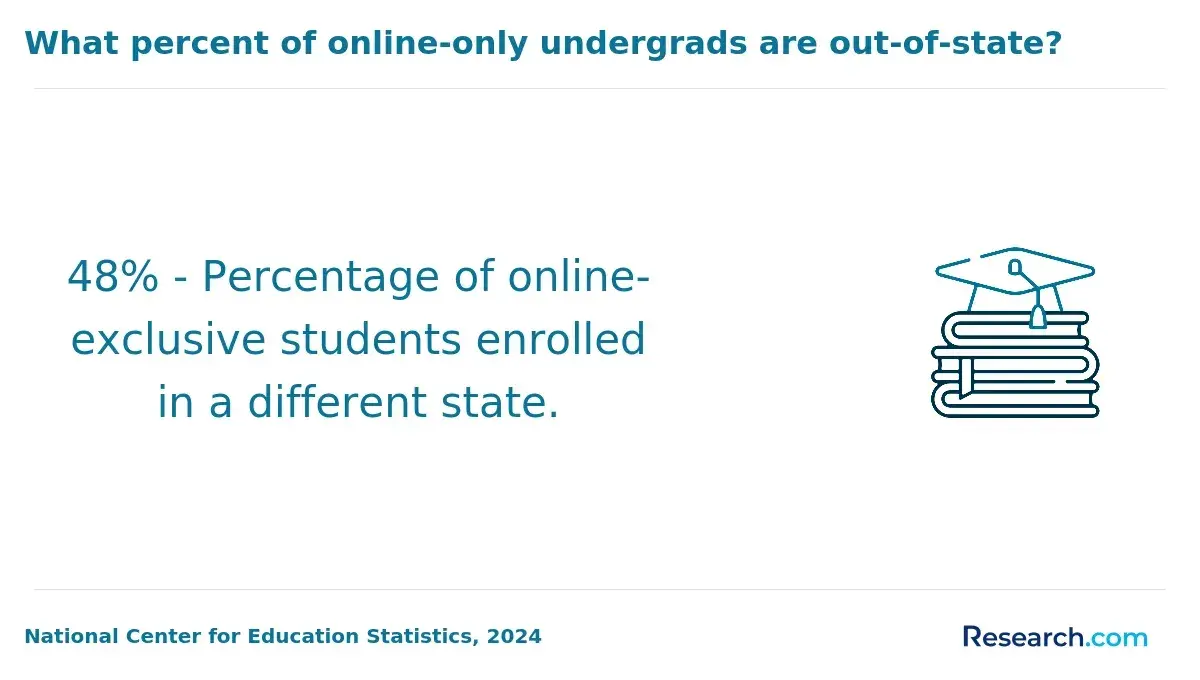
The National Center for Education Statistics (NCES) reports that nearly three-quarters of undergraduates now are non-traditional students, including part-time learners, older adults, and those working full-time. That population closely matches the audience for no-prerequisite online AI programs: students who need flexibility, direct entry, and strong academic support rather than a rigid path built for recent high school graduates.
When comparing programs, focus on four practical questions:
- Access: Can you enter the degree without prior STEM coursework, and can you begin major-relevant classes early?
- Support: Are tutoring, math refreshers, programming labs, advising, and technical help built into the online experience?
- Cost: Will foundation courses count toward the degree, or will they add time and tuition?
- Outcomes: Does the curriculum prepare you for realistic entry-level AI-adjacent roles, graduate study, or advancement in your current field?
Students comparing accessible career-focused degrees may also find useful context in Research.com’s guide to fast online degrees with strong earning potential.
Which Accredited Online Artificial Intelligence Bachelor's Programs Accept Students With No Prior College Coursework?
Accredited online AI-related bachelor’s programs that accept students with no prior college coursework are most often housed in computer science, information technology, data science, or applied technology departments. Some award a dedicated AI degree, while others offer an AI concentration or AI-focused coursework within a broader computing major. That difference is important: a broader computer science or IT degree may provide more employment flexibility, while a specialized AI degree may offer a more direct curriculum in machine learning, data modeling, and intelligent systems.
- Southern New Hampshire University: SNHU offers an online Bachelor of Science in Computer Science with an artificial intelligence specialization. The university is accredited by the New England Commission of Higher Education (NECHE) and admits students without prior college experience. Foundational programming and math are built into the curriculum, which helps students who are new to technical study. With over 135,000 online enrollees, SNHU is built around large-scale online access.
- University of the People: University of the People is a fully online, tuition-free university accredited by the Distance Education Accrediting Commission (DEAC). Its computer science bachelor’s program includes artificial intelligence topics and uses open admissions with no previous coursework required. The model is especially relevant for students who need a low-cost and flexible entry point, though applicants should review how the school’s accreditation and degree recognition align with their transfer or employer goals.
- Pennsylvania State University World Campus: Penn State World Campus offers a Bachelor of Science in Artificial Intelligence and Data Science and is accredited by the Middle States Commission on Higher Education (MSCHE). The program has limited prerequisite barriers and provides bridge coursework for students who need preparation in computer science foundations. It serves more than 15,000 fully online students and offers a more traditional university infrastructure for online learners.
- Western Governors University: WGU is a competency-based university accredited by the Northwest Commission on Colleges and Universities (NWCCU). Its Bachelor of Science in Computer Science includes AI-related components and allows students to progress by demonstrating mastery. This model can work well for disciplined learners who prefer flexibility and already have informal technical experience, even if they lack formal college credit.
- Capella University: Capella University is accredited by the Higher Learning Commission (HLC) and offers an online bachelor’s in information technology with an AI focus. It serves adult learners through open enrollment pathways, foundation courses, and mentoring support, making it a practical option for students beginning without a formal college background.
Before choosing among these options, verify the exact award name, accreditation status, curriculum sequence, tuition model, and support services. A program that says “AI” in the concentration title may differ substantially from a full artificial intelligence and data science curriculum. Students who are comparing cost and format across AI programs can also review an ai engineering degree online to understand how affordability, structure, and technical focus vary across online options.
Career fit should also guide the decision. Students who want software development roles may prefer a computer science degree with AI coursework. Students interested in analytics, automation, or business intelligence may benefit from AI and data science. Those still weighing earnings across majors can compare broader labor-market patterns through Research.com’s guide to high-paying college majors.
How Do Open-Admission Policies in Online Artificial Intelligence Programs Differ From Traditional Selective Admissions?
Open-admission policies are designed to admit applicants who meet a basic eligibility threshold, commonly a high school diploma or equivalent, rather than filtering students through GPA cutoffs, standardized test scores, competitive essays, or prior college coursework. In online AI bachelor’s programs, this can make entry possible for adults who did not follow a traditional STEM pathway.
Selective admissions work differently. Selective programs compare applicants and may prioritize academic records, prior math and science performance, recommendations, essays, or demonstrated technical preparation. These programs may admit students who are more academically prepared on day one, but they can also exclude capable learners whose past transcripts do not reflect their current goals or work experience.
- Open admission: Admits all applicants who meet the school’s minimum eligibility requirements, such as a high school diploma or equivalent.
- Rolling admission: Reviews applications as they arrive, but may still apply selective criteria.
- Selective admission: Compares applicants and admits only those who meet competitive academic or program-specific standards.
Institutions such as Fort Hays State University and Western Governors University publicly confirm open-admission policies on their admissions pages or through IPEDS data, accepting all applicants with a high school diploma or equivalent. For AI students, the practical question is not only whether admission is open, but whether the school has enough academic structure to help new technical learners persist.
- Academic readiness varies: Open-admission cohorts often include students with very different math, writing, and computing backgrounds.
- Support becomes more important: Developmental courses, tutoring, orientation, and advising can determine whether access leads to completion.
- Self-direction is essential: Flexible admission does not reduce the amount of programming practice, quantitative reasoning, or project work required.
- Enrollment is rising: Recent data from 2023 show an 18% increase in enrollment for online STEM programs with open admissions.
One professional who enrolled in an online artificial intelligence bachelor’s program without prerequisites described the trade-off clearly. He valued the flexibility and access, but initially questioned whether he could handle technical coursework while working full time and supporting family responsibilities. “I didn’t have a traditional academic background, so some subjects were tough initially,” he said. The difference was not that the program was easy; it was that the support resources helped him stay enrolled long enough to build confidence and skill.
What Are the Typical Enrollment Requirements for No-Prerequisite Online Artificial Intelligence Bachelor's Programs?
No-prerequisite does not mean no documentation. Most online artificial intelligence bachelor’s programs still require applicants to prove they meet basic undergraduate admission standards. The difference is that they do not require prior college-level coursework in AI, programming, calculus, or computer science before entry.
- Proof of high school completion: Applicants usually submit a high school diploma, GED, or equivalent credential. This confirms baseline eligibility for undergraduate study.
- Minimum age: Many programs expect students to be at least 18 years old. Some schools offer dual-enrollment or early-college options for younger learners, but those pathways have separate rules.
- English proficiency: Applicants whose first language is not English may need to demonstrate proficiency through exams such as TOEFL or IELTS so they can complete reading-heavy and writing-intensive online coursework.
- Application materials: Schools may request transcripts, government identification, an application form, and sometimes a short essay or statement of goals. Even when admission is not selective, complete documentation prevents delays.
- Placement or readiness checks: Some programs use math, writing, or technology assessments to place students correctly. These assessments may not block admission, but they can affect the first courses a student takes.
- Alternative pathways: Students without traditional credentials may need to complete a GED or approved equivalency process before enrolling in a bachelor’s program.
- Institutional variation: Public open-admission institutions may keep the process simple, while private nonprofit or adult-serving institutions may add interviews, advising calls, or conditional enrollment steps.
Applicants should ask one direct question before enrolling: “Will any required foundation or placement course count toward my degree credits?” If the answer is no, the program may still be accessible, but it could cost more and take longer than advertised.
Students comparing technical online degrees should also examine accreditation, student support, and curriculum rigor. Similar quality checks apply in adjacent computing fields, including an affordable accredited online cybersecurity degree.
Are No-Prerequisite Online Artificial Intelligence Bachelor's Programs Available at Regionally Accredited Universities?
Yes, no-prerequisite or low-prerequisite online AI-related bachelor’s pathways are available at regionally accredited universities. Students should prioritize regional accreditation because it affects academic credibility, federal financial aid eligibility, transfer options, and employer confidence. A school can be accessible and still meet recognized institutional quality standards.
Regional accreditation is recognized by the U.S. Department of Education and CHEA and is commonly viewed as the standard for broad academic transfer and graduate-school eligibility. National accreditation can be legitimate, especially for career-focused institutions, but credits from nationally accredited schools may not transfer as easily to regionally accredited universities. That distinction can matter if you later change schools, pursue a master’s degree, or need employer tuition reimbursement.
- Verify accreditation directly: Check the U.S. Department of Education or CHEA directories rather than relying only on marketing language.
- Confirm the accreditor and institution: Make sure the entire university is accredited, not just a training provider or nondegree unit.
- Ask about federal aid: Regional accreditation is closely tied to eligibility for federal financial aid, which can affect affordability.
- Review transfer policies: If you may move to another school, ask whether credits are likely to transfer and whether AI major courses have special limits.
- Check admission claims: “No prerequisites” should be reflected in the catalog, admissions page, or written advisor guidance.
A graduate of a no-prerequisite online artificial intelligence bachelor’s program at a regionally accredited university described accreditation as a source of confidence: “I was initially overwhelmed by balancing work and study, but the program’s flexible structure and recognized accreditation really helped. Knowing the degree was regionally accredited gave me confidence that my efforts would be valued by employers. Even without prior coursework, the curriculum challenged me just enough to build strong foundations without feeling out of reach.”
How Do Students Without Academic Prerequisites Catch Up in Online Artificial Intelligence Bachelor's Courses?
Students without prior STEM coursework catch up by using structured foundation courses, tutoring, practice-heavy assignments, and careful course sequencing. The goal is not to skip math or programming; it is to learn those skills inside the degree plan rather than before admission.
- Developmental and foundation courses: Many programs include introductory work in mathematics, statistics, programming logic, and computer science fundamentals. These courses help students build the base needed for machine learning, data structures, algorithms, and AI applications.
- Tutoring and faculty access: One-on-one tutoring, faculty office hours, writing centers, and coding help desks are especially important for students who have not studied technical subjects recently.
- Bridge pathways: Some universities, including Arizona State University, provide formal bridge pathways with foundation courses for students without previous STEM coursework.
- Self-assessment tools: Readiness quizzes, placement reviews, and introductory tutorials help students identify weak areas before a difficult course begins.
- Peer learning: Discussion boards, group projects, coding labs, and study groups can reduce isolation in online programs and expose students to different problem-solving methods.
- Consistent weekly practice: AI coursework rewards repetition. Students who practice coding, math, and data analysis several times per week usually adapt faster than those who try to study only before deadlines.
The National Survey of Student Engagement has found that programs emphasizing comprehensive academic support experience higher student retention and graduation rates. Recent statistics show around 65% of online undergraduates access tutoring or mentoring services at least once each semester. For no-prerequisite AI students, using these services early is not a sign of weakness; it is a practical strategy for surviving the transition into technical study.
What Support Services Help No-Prerequisite Students Succeed in Online Artificial Intelligence Bachelor's Programs?
The best no-prerequisite online AI programs do more than admit students. They provide the advising, academic help, technology support, and career guidance needed to keep students moving through a demanding technical curriculum. This is especially important for learners balancing school with full-time work, caregiving, military service, or a career change.
- Academic advising: Advisors help students choose the right course load, sequence math and programming courses sensibly, and avoid taking advanced technical classes before they are ready.
- Online tutoring: Strong programs offer tutoring in math, statistics, programming, writing, and research. For AI students, coding and quantitative tutoring are especially valuable.
- Technology support: Students need reliable help with learning platforms, coding environments, data tools, software installation, and remote testing systems.
- Disability accommodations: Online students may need extended test time, accessible course materials, assistive software, captioning, or alternative assignment formats.
- Mental health resources: Virtual counseling, stress-management workshops, and crisis support can help students manage the pressure of technical coursework and adult responsibilities.
- Career services: Resume reviews, portfolio guidance, internship support, mock interviews, and virtual networking events help students translate coursework into job-ready evidence.
- Asynchronous access: Because many students study outside normal business hours, support services should be available through recordings, chat, email, virtual appointments, or extended hours.
Institutions recognized in U.S. News Best Online Bachelor’s Programs frequently offer more comprehensive online support infrastructures, which are associated with stronger persistence. Recent data show universities with strong online advising and counseling have achieved a 20% reduction in dropout rates among no-prerequisite students over three years. When comparing programs, students should treat support services as part of the value of tuition, not as an optional extra.
Can Transfer Credits or Prior Learning Assessments Replace Prerequisites in Online Artificial Intelligence Programs?
Yes. Transfer credits and Prior Learning Assessments (PLA) can sometimes replace introductory or foundation requirements in online artificial intelligence bachelor’s programs. This is particularly useful for adults who have prior college credit, military training, employer training, technical certifications, or professional experience that overlaps with general education, computing, or quantitative coursework.
Many universities accept transfer credits from regionally accredited institutions. Some also award credit through CLEP, DSST, portfolio review, or ACE-reviewed workplace and military learning. The American Council on Education (ACE) provides recommendations that many schools use when evaluating training, certifications, and professional learning for possible credit.
Institutions such as Thomas Edison State University and Excelsior College are known for flexible credit transfer policies, permitting up to 90 credits from transfer or PLA-nearly half of a bachelor’s degree. Policies vary widely, so students should confirm how credits apply: general elective credit may reduce total credits, while major credit may replace specific technical requirements.
- Transfer credit: Prior college courses may satisfy general education, electives, or introductory computing requirements.
- PLA exams: CLEP and DSST can document knowledge in areas such as mathematics, computer science, and critical thinking.
- ACE-reviewed learning: Workplace training, military service, and professional certifications may be evaluated for credit.
- Portfolio review: Some schools allow students to submit documented professional learning for faculty evaluation.
- Credit limits: Even flexible schools cap the number of transfer or PLA credits, and major requirements may have stricter limits.
- Documentation: Students should gather official transcripts, exam scores, certificates, syllabi, course descriptions, and proof of training before applying.
More than 60% of adult learners in recent studies have used PLA or transfer credits to shorten degree timelines, and in 2023, more than 60% of adult learners utilized PLA or transfer credits to shorten degree timelines. The key is to request evaluation early. Waiting until after enrollment can limit course planning and may cause students to repeat content they already know.
Adults changing careers often face similar questions about whether previous education or certification can count toward a new credential. For example, a transition from teaching to speech-language pathology also requires careful review of prior coursework, licensing expectations, and program requirements.
What Is the Average Time to Completion for No-Prerequisite Online Artificial Intelligence Bachelor's Degree Programs?
Most online artificial intelligence bachelor’s programs follow the standard 120-credit-hour structure used by many undergraduate degrees. A full-time student taking 15 credits per semester can typically finish in about four years. However, no-prerequisite students often vary more widely in completion time because many are working adults, part-time learners, or students who need foundation courses before advanced AI coursework.
- Full-time enrollment: Students who maintain a traditional full-time pace can often complete the degree in about four years, assuming they pass courses in sequence and do not stop out.
- Part-time enrollment: Working adults who take 6-9 credits per term may need five or more years, especially if they pause for work or family responsibilities.
- Accelerated terms: Eight-week terms, year-round calendars, and multiple start dates can shorten the calendar time if students can handle the workload.
- Competency-based formats: Programs that allow students to progress after demonstrating mastery may benefit learners with prior informal experience or strong self-discipline.
- Transfer and PLA credit: General education credits, prior college coursework, CLEP, DSST, and portfolio credit can reduce the number of credits remaining.
- Foundation coursework: If remedial or bridge courses do not count toward degree credits, they can add time even when the program has no admission prerequisites.
Accredited online artificial intelligence programs at schools such as Western Governors University and Southern New Hampshire University offer competency-based or accelerated terms. According to their published data, students can finish in as little as 2-3 years. IPEDS data show that open-admission, no-prerequisite programs often have longer average graduation timelines than selective-admission programs, largely because students enter with more varied academic preparation and life obligations.
Time to completion affects total cost, debt, and opportunity cost. A lower tuition rate may not save money if the program takes longer or requires noncredit preparation. For a broader comparison of online engineering-related pricing and format, students can review Research.com’s guide to the most affordable online mechanical engineering degree programs.
How Does Tuition Compare Between No-Prerequisite and Standard Online Artificial Intelligence Bachelor's Programs?
Tuition for no-prerequisite online artificial intelligence bachelor’s programs is not automatically lower or higher than tuition for standard-admission programs. The better comparison is total cost to completion: tuition per credit, required credits, fees, foundation courses, transfer credit, books, software, technology charges, and the time it takes to graduate.
- Per-credit tuition: Open-admission and adult-serving programs may offer competitive per-credit rates, especially public or access-oriented institutions.
- Foundation courses: Some no-prerequisite programs include math, programming, or academic preparation inside the degree. Others may add remedial or preparatory coursework that increases cost.
- Institution type: Private universities with selective admissions may charge more because of brand recognition, research resources, or smaller class structures. Public institutions may cost less but can vary in advising and course availability.
- Delivery format: Fully asynchronous programs may be less expensive to deliver than hybrid or highly synchronous programs, but students should make sure the format matches their learning style.
- Fees: Technology fees, assessment fees, graduation fees, proctoring fees, and course material costs can narrow or erase tuition differences.
- Transfer credit: A program with a higher sticker price may cost less overall if it accepts more prior credit or PLA.
- Student support: Strong tutoring, advising, and career services can be worth paying for if they improve completion odds.
Students should request an estimated degree plan before enrolling. That plan should show how many credits remain, whether any foundation courses are required, how transfer credits apply, and what the expected total cost will be. Comparing only the advertised tuition rate can lead to a misleading decision.
Which Online Artificial Intelligence Bachelor's Programs Allow Students To Start Without A High School Diploma Or GED?
Most accredited online artificial intelligence bachelor’s programs require a high school diploma, GED, or recognized equivalent. Programs may be no-prerequisite in the sense that they do not require prior college STEM coursework, but they usually still require proof of secondary education completion for undergraduate admission and federal financial aid eligibility.
Students without a traditional high school diploma generally need to complete a GED or approved equivalency credential before entering a bachelor’s degree program. A GED is commonly treated as equivalent to a high school diploma, although individual schools may add placement tests, advising reviews, or conditional enrollment steps to confirm readiness.
Some institutions may offer nondegree courses, certificate pathways, dual-enrollment options, or preparatory programs for students who are not yet eligible for bachelor’s admission. These can help students build skills, but they are not the same as being admitted to an accredited bachelor’s program. Students should be careful not to confuse bootcamps or short courses with degree admission.
- GED acceptance: Many accredited programs accept a GED as equivalent to a high school diploma.
- Conditional enrollment: Some schools may admit students provisionally while they complete placement, advising, or foundation requirements.
- International credentials: Applicants educated outside the United States may need an official credential evaluation to prove secondary-school equivalency.
- Alternative preparation: Students who do not yet qualify for bachelor’s admission can use GED preparation, community college coursework, or nondegree technical training as stepping stones.
- Accreditation and aid: Eligibility for federal financial aid usually depends on enrollment at an accredited institution and meeting admission requirements.
The safest path is to contact admissions and ask for the requirement in writing: “Can I be admitted to the bachelor’s degree without a high school diploma or GED?” If the answer is no, ask which equivalency routes the school accepts and whether completing them will qualify you for full admission.
What Graduates Say About Their Online Artificial Intelligence Bachelor's Degree Program With No Prerequisites
- : "I chose the online artificial intelligence bachelor’s degree program with no prerequisites because it allowed me to start fresh without any prior background. The affordability of the program was a huge factor since it fit perfectly within my budget while still offering quality education. Completing the degree opened doors to new career opportunities and gave me the confidence to transition into tech seamlessly. — Jason"
- : "Reflecting on my decision to enroll, the no-prerequisite structure made the program accessible and stress-free. The cost was surprisingly reasonable compared to traditional degrees, which let me focus more on learning than finances. Professionally, this degree has significantly boosted my skill set and credibility, helping me advance in a competitive industry. — Camilo"
- : "What attracted me most to the artificial intelligence bachelor’s program was its flexibility and the chance to build my foundation without needing prior experience. The cost efficiency was unbeatable, especially considering the quality of instruction and resources provided. After graduating, I noticed a distinct impact on my career-greater job prospects and the ability to contribute meaningfully to innovative projects. — Alexander"
Other Things You Should Know About Artificial Intelligence Degrees
Many accredited online artificial intelligence bachelor’s programs accept up to 90 transfer credits toward a 120-credit degree. Credits usually need a grade of C or higher, and science or math courses may require recent completion. The final 30 credits are typically completed at the degree-granting institution.
Quality online AI programs typically hold regional accreditation or specialized accreditation from organizations like ABET. These accreditations ensure the curriculum meets academic and industry standards, covering essential AI principles, ethics, and technical skills. Accreditation also confirms that the institution maintains adequate faculty expertise, student support services, and continuous program assessment.
References
- Are online AI courses valid for traditional degree programs? https://m.umu.com/ask/q11122301573854260198
- What are the benefits of pursuing an AI course as part of a bachelor degree? https://www.umu.com/ask/a11122301573854555309
- How AI Is Changing Careers & Why Students Should Study It Abroad https://www.snycosmos.com/how-a-masters-in-artificial-intelligence-can-future-proof-your-career-in-the-next-decade/
- How long does it typically take to complete AI and Machine L... https://forums.h2kinfosys.com/community/main-category-artificial-intelligence/how-long-does-it-typically-take-to-complete-ai-and-machine-learning-courses/
- 2025 Artificial Intelligence Tuition https://www.collegetuitioncompare.com/majors/11.0102/artificial-intelligence/
- AI Courses: Online Courses vs In-Person Learning in 2024 https://www.analyticsinsight.net/artificial-intelligence/ai-courses-online-courses-vs-in-person-learning-in-2024
- Can You Become an AI Engineer Without a Degree? - Code Institute Global https://codeinstitute.net/global/blog/ai-engineer-without-a-degree/
- Online AI Degree Concentration | SNHU https://www.snhu.edu/online-degrees/bachelors/cyber-security/generative-ai
- Cost of Online College vs. Traditional | Champlain College Online https://online.champlain.edu/blog/cost-of-online-education-vs-traditional-education
- Courses in AI in Omnichannel Support and Customer Success in Oviedo, Spain https://ia.university/academic-programs/ai-omnichannel-support-customer-success-oviedo-spain-ia-ai/