
2027 Artificial Intelligence vs. Machine Learning Degree: Explaining the Difference

Co-Founder and Chief Data Scientist
Choosing between an Artificial Intelligence degree and a Machine Learning degree is really a choice between breadth and depth. AI programs usually train students to design intelligent systems across several domains, including robotics, natural language processing, computer vision, planning, and human-centered computing. Machine Learning programs focus more narrowly on the data-driven methods that allow systems to detect patterns, make predictions, and improve model performance over time.
The two paths overlap heavily. Both require programming, statistics, algorithms, data handling, and ethical judgment. The difference is how those skills are applied. An AI student may study how to build a conversational agent, autonomous robot, or decision-support system. An ML student may spend more time refining models, evaluating data quality, tuning neural networks, and deploying predictive systems.
This guide explains how Artificial Intelligence and Machine Learning degree programs compare in curriculum, skills, difficulty, cost, and career outcomes. It is designed for prospective students deciding which program better fits their academic strengths, career goals, and preferred type of technical work.
Key Points About Pursuing an Artificial Intelligence vs. Machine Learning Degree
- Artificial Intelligence degrees cover broad topics like robotics, reasoning, and natural language, while Machine Learning degrees focus specifically on algorithms and data-driven models.
- Machine Learning programs often have higher tuition, averaging $20,000-$35,000 annually, with AI programs slightly variable depending on school prestige.
- Both degrees typically require 2-4 years; AI may lead to diverse roles, whereas ML graduates often enter specialized data science and engineering careers with 9% job growth.
What are Artificial Intelligence Degree Programs?
Artificial Intelligence degree programs prepare students to design, build, evaluate, and manage systems that perform tasks associated with human intelligence. These tasks may include recognizing speech, interpreting images, planning actions, understanding language, controlling robots, generating recommendations, or supporting complex decisions.
In the United States, AI programs typically sit within computer science, engineering, data science, or interdisciplinary technology departments. They combine theoretical computing with applied development, so students learn not only how AI systems work but also how to test, improve, and responsibly deploy them.
Common areas of study include machine learning, computer vision, robotics, natural language processing, cognitive computing, knowledge representation, search methods, optimization, and AI ethics. Many programs also require substantial coursework in programming, algorithms, statistics, linear algebra, calculus, and software engineering.
Undergraduate AI degrees typically take four years to complete. Master's programs usually require one to two years of study, depending on enrollment status, prerequisites, and whether the program includes a thesis, capstone, internship, or research requirement.
Admission expectations vary by institution. Competitive programs generally look for a strong foundation in mathematics and computer science, prior programming experience, and, in some cases, standardized test scores or evidence of research potential. Students coming from non-computing backgrounds may need bridge courses before taking advanced AI classes.
As of 2025, the U.S. hosts 193 bachelor's and 310 master's AI degree programs. That growth reflects rising demand for professionals who can understand both the technical construction of AI systems and the broader risks involved in using them in real-world settings.
What are Machine Learning Degree Programs?
Machine Learning degree programs train students to create algorithms and models that learn from data. Instead of focusing on all forms of intelligent behavior, ML programs concentrate on the statistical, mathematical, and computational methods used to make predictions, classify information, detect patterns, and improve model performance.
These programs are often offered as master's degrees, graduate certificates, concentrations within computer science or data science, or specialized tracks inside broader Artificial Intelligence programs. Their curriculum is usually more mathematically intensive than a general AI curriculum because students must understand how models behave, why they fail, and how to evaluate them rigorously.
Core subjects often include supervised learning, unsupervised learning, reinforcement learning, deep learning, optimization, probability, statistical inference, data mining, model evaluation, feature engineering, and data preprocessing. Students also build practical programming skills for working with large datasets and implementing models in production-oriented environments.
The applied side of ML education is important. Students may work on projects related to healthcare analytics, fraud detection, finance, robotics, recommendation systems, search, natural language processing, and computer vision. Strong programs usually require hands-on work with real or realistic datasets rather than only theoretical assignments.
Typically, master's degrees in this field require about 30 credit hours and can be completed within two years. Applicants are usually expected to have prior coursework or experience in mathematics, computer science, engineering, statistics, or a closely related field. Admission can be competitive because ML programs require readiness for advanced quantitative and programming work.
What are the similarities between Artificial Intelligence Degree Programs and Machine Learning Degree Programs?
Artificial Intelligence and Machine Learning degree programs share a substantial technical foundation. In many universities, ML is taught as a major component of AI, and students in both paths may take several of the same courses before specializing. The overlap is one reason graduates from either program can qualify for related roles in data-driven software, analytics, automation, and intelligent systems.
- Programming foundation: Both programs require students to write, test, and debug code. Python is especially common, and some programs also use R, Java, C++, or other languages depending on the application area.
- Mathematics and statistics: Students in both fields study probability, statistics, linear algebra, calculus, optimization, and algorithmic reasoning. These subjects are essential for understanding model behavior and system performance.
- Data analysis and preprocessing: Both degree types teach students how to collect, clean, transform, and interpret data. Poor data quality can weaken both AI systems and ML models, so data preparation is a core skill.
- Algorithmic thinking: Students learn how to break complex problems into computational steps, compare methods, and evaluate outputs using appropriate metrics.
- Framework mastery: Many programs introduce tools such as TensorFlow and PyTorch because they are widely used to build, train, and test machine learning and AI applications.
- Project-based learning: Lectures are typically paired with labs, team projects, capstones, or research assignments. These experiences help students work with real-world constraints such as messy datasets, limited computing resources, unclear requirements, and model bias.
- Ethical and responsible use: Both fields require attention to fairness, privacy, transparency, accountability, safety, and human oversight. Technical accuracy alone is not enough when systems affect people’s opportunities, health, finances, or safety.
- Similar time commitments: Most bachelor's degrees span four years, while master's degrees typically require two years. Some students compare traditional programs with fast track degree options when they want a shorter route.
The practical takeaway is that neither path avoids programming, math, or data. Students who dislike quantitative problem-solving may struggle in both. Students who enjoy building systems, testing models, and solving technical problems will find strong overlap between the two degrees, even if their long-term career focus differs.
What are the differences between Artificial Intelligence Degree Programs and Machine Learning Degree Programs?
The main difference is scope. Artificial Intelligence is the broader field. Machine Learning is a specialized area within it. AI programs ask how machines can perform intelligent tasks; ML programs ask how systems can learn useful patterns from data.
| Comparison point | Artificial Intelligence degree programs | Machine Learning degree programs |
| Primary focus | Designing intelligent systems that reason, plan, perceive, communicate, or act | Building algorithms and models that learn from data |
| Curriculum scope | Broader, often covering robotics, NLP, computer vision, cognitive computing, knowledge representation, and ethics | More specialized, with deeper emphasis on statistics, optimization, predictive modeling, and model evaluation |
| Typical technical emphasis | System design, intelligent behavior, reasoning, automation, and human-machine interaction | Data pipelines, neural networks, pattern recognition, feature engineering, training, testing, and deployment |
| Common applications | Robotics, intelligent assistants, autonomous systems, decision-support tools, and AI-enabled products | Recommendation engines, fraud detection, search tools, healthcare analytics, forecasting, and personalization |
| Best fit for students who want to | Work across multiple AI domains or build complex intelligent systems | Specialize in mathematical modeling, data-driven prediction, and algorithm performance |
AI programs often include ML, but they do not stop there. Students may study symbolic reasoning, planning systems, robotics control, natural language interfaces, or the design of agents that operate in dynamic environments. The work can be more interdisciplinary because it may draw from computer science, engineering, linguistics, cognitive science, philosophy, and human-computer interaction.
ML programs usually go deeper into the mechanics of learning from data. Students spend more time on training models, validating results, reducing overfitting, improving accuracy, comparing algorithms, and understanding the limits of data-driven predictions. The work is often closer to data science, statistical computing, and applied mathematics.
Tooling can also differ. ML education commonly includes hands-on use of platforms and frameworks for model development and deployment, including Amazon Lex, IBM Watson Studio, and Microsoft Azure ML Studio. AI programs may use some of the same tools but can also involve software for robotics, simulation, knowledge systems, planning, or broader machine intelligence development.
A simple way to decide: choose AI if you want a wider view of intelligent systems; choose ML if you want deeper training in models, data, and prediction.
What skills do you gain from Artificial Intelligence Degree Programs vs Machine Learning Degree Programs?
Both degree paths build strong technical skills, but they emphasize different outcomes. AI programs usually produce graduates who can think across intelligent-system design, while ML programs produce graduates with deeper model-building and data-analysis expertise.
Skill Outcomes for Artificial Intelligence Degree Programs
- Programming and software engineering: Students learn to build reliable software using languages such as Python and Java, along with version control, testing, debugging, and system design practices.
- AI system design: Graduates learn how to combine models, rules, interfaces, sensors, or decision logic into systems that perform complex tasks.
- Robotics and autonomous systems: Some programs teach perception, planning, control, and interaction for machines that operate in physical or simulated environments.
- Natural language processing: Students may learn how systems process, generate, classify, and respond to human language.
- Computer vision: AI programs often include methods for analyzing images, video, objects, scenes, and visual patterns.
- Reasoning and problem-solving: Students may study planning, search, knowledge representation, and decision-making methods beyond purely data-driven learning.
- Ethics and human-centered design: Graduates learn to consider fairness, transparency, privacy, accountability, and the social impact of AI systems.
Skill Outcomes for Machine Learning Degree Programs
- Advanced statistical modeling: Students learn supervised, unsupervised, and reinforcement learning methods used to build predictive and adaptive systems.
- Mathematical foundations: Coursework in linear algebra, calculus, probability, statistics, and optimization supports rigorous model development and evaluation.
- Data preparation and feature engineering: Students learn how to clean, transform, structure, and select data inputs that improve model quality.
- Model training and validation: ML programs emphasize splitting data, selecting metrics, tuning hyperparameters, identifying overfitting, and comparing model performance.
- Deep learning: Students often study neural networks and architectures used in image, text, speech, and sequence modeling.
- Frameworks and tools expertise: Proficiency in platforms such as TensorFlow and PyTorch prepares graduates to implement and test ML solutions.
- Deployment awareness: Strong programs introduce practical issues such as scalability, monitoring, reproducibility, and model drift.
The skills learned in artificial intelligence degree programs prepare students for a wider range of intelligent-system roles. Machine learning degree skills for graduates are more concentrated in data-driven modeling, prediction, and algorithm improvement. Students comparing flexible study options may also review top degree programs for seniors online to understand how online pathways are structured for different learner needs.
Which is more difficult, Artificial Intelligence Degree Programs or Machine Learning Degree Programs?
Neither path is easy. Both require programming, mathematics, persistence, and comfort with abstract concepts. The harder option depends on a student’s background and the way a specific program is designed.
Artificial Intelligence degree programs are often considered more demanding in breadth because they cover more subfields. A student may need to move between machine learning, robotics, natural language processing, computer vision, cognitive science, software engineering, and AI ethics within the same program. That range can create a heavier workload, especially when courses include projects, lab work, and theory-heavy assignments.
Machine Learning degree programs can be more difficult in depth. Students who are not comfortable with linear algebra, calculus, probability, statistics, optimization, and programming may find ML especially challenging. The work often requires understanding not just how to run a model, but why it performs well or poorly, how to validate results, and how to make decisions under uncertainty.
| Difficulty factor | AI degree programs | ML degree programs |
| Scope | Broader and more interdisciplinary | Narrower but more technically concentrated |
| Mathematics | Advanced mathematics such as linear algebra, calculus, statistics, and probability | Heavy emphasis on linear algebra, calculus, probability, statistics, and optimization |
| Projects | May involve intelligent systems, robotics, NLP, vision, or decision tools | Often involve data pipelines, model training, tuning, testing, and performance evaluation |
| Common challenge | Managing many AI domains at once | Mastering rigorous data-driven modeling methods |
Due to AI's intensity, completion rates tend to be lower compared to other tech fields, with only about 21% of AI graduates entering related careers. That figure should be interpreted carefully: career outcomes can depend on program quality, local labor markets, internships, prior experience, and how broadly “related careers” are defined.
Students with a computer science background may find AI’s breadth manageable but struggle with robotics or cognitive science. Students with a statistics or mathematics background may adapt well to ML theory but need more practice in software engineering. The best choice is not the one that sounds easier; it is the one that matches your strengths and the type of difficult work you are willing to do consistently.
Some students considering advanced study also compare traditional doctorates with non dissertation doctoral programs, especially when their career goals emphasize applied expertise rather than a conventional research dissertation.
What are the career outcomes for Artificial Intelligence Degree Programs vs Machine Learning Degree Programs?
Career outcomes for AI and ML graduates overlap because employers often use the terms together. However, AI degree holders are more likely to pursue broader intelligent-systems, product, automation, or strategy roles, while ML degree holders often pursue specialized modeling, infrastructure, or data-focused engineering roles.
Career Outcomes for Artificial Intelligence Degree Programs
Artificial Intelligence graduates may work on systems that automate reasoning, interpret language, process images, support decisions, or interact with users. Some roles are highly technical, while others combine technical fluency with product strategy, governance, or cross-functional leadership.
AI engineers, for example, average salaries of $171,715 annually, with top earners exceeding $200,000. Salary outcomes vary by employer, location, experience, education level, portfolio quality, and industry.
- AI Engineer: Designs and implements intelligent systems that automate, optimize, or support complex processes.
- AI Developer: Builds AI-enabled applications and integrates models, APIs, and intelligent features into products.
- AI Product Manager: Guides AI-driven projects, defines product requirements, works with technical teams, and evaluates business impact.
- Robotics or autonomous systems specialist: Works on machines or software agents that sense, plan, and act in changing environments.
- AI ethics or governance analyst: Helps organizations assess risk, bias, transparency, compliance, and responsible AI practices.
Career Outcomes for Machine Learning Degree Programs
Machine Learning graduates often move into specialized technical roles focused on model development, predictive analytics, and scalable learning systems. These roles can require strong coding ability, mathematical maturity, and experience with cloud or production environments.
The market for machine learning engineers is projected to grow from $113.10 billion in 2025 to $503.40 billion by 2030, reflecting massive industry demand. Salaries typically range from $160,000 to $200,000 for mid-career professionals, highlighting lucrative prospects in this domain. As with AI salaries, actual compensation depends on role, seniority, location, employer, and demonstrated skill.
- Machine Learning Engineer: Develops algorithms and systems for prediction, automation, personalization, and analytics.
- NLP Engineer: Builds applications that process and generate language, including chatbots, search tools, summarizers, and virtual assistants.
- Computer Vision Engineer: Creates systems that analyze images, video, objects, and visual patterns.
- Data scientist with ML focus: Uses statistical modeling and machine learning to answer business, scientific, or operational questions.
- ML infrastructure or MLOps specialist: Supports deployment, monitoring, reproducibility, and scaling of machine learning systems.
When comparing artificial intelligence vs machine learning careers, consider whether you want to work across intelligent-system design or specialize in data-driven model performance. Students also comparing short, practical, or high-ROI education paths may find it useful to review options related to the quickest degree to make the most money.
How much does it cost to pursue Artificial Intelligence Degree Programs vs Machine Learning Degree Programs?
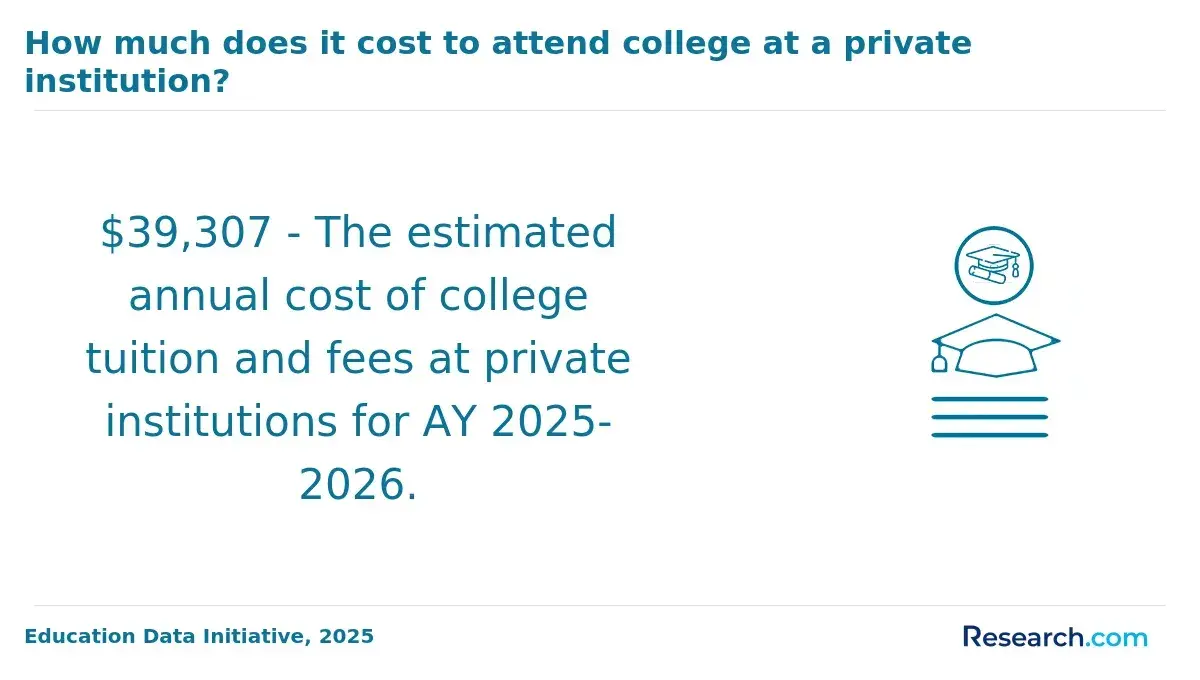
The cost of an Artificial Intelligence or Machine Learning degree depends heavily on institution type, residency status, delivery format, program length, and whether the degree is offered by a public university, private university, or online provider. Students should compare total cost of attendance, not just tuition.
Tuition costs for pursuing a Master's degree in Artificial Intelligence and Machine Learning in the US vary widely, with AI programs generally priced between $30,000 and $60,000 annually. Machine Learning degrees, often offered as specializations within AI or computer science, share similar tuition ranges but may be more affordable at public universities.
Master's programs in Artificial Intelligence at top US universities typically charge tuition fees from $30,000 up to $60,000 per year. When combined with living expenses, insurance, and other fees, total yearly costs can range between approximately $51,000 and $92,000. For students choosing online AI master's degrees at accredited schools, tuition can be considerably lower, sometimes falling below a total of $30,000 for the entire program.
Machine Learning degrees are frequently integrated as concentrations within broader AI or computer science master's programs. Tuition rates often mirror those of AI degrees at the same institutions, with private universities charging between $30,000 and $65,000 annually. Public universities tend to be less expensive, especially for in-state residents.
| Cost factor | What to check before enrolling |
| Tuition | Confirm whether tuition is charged per credit, per term, or per year, and whether rates differ for online, out-of-state, or international students. |
| Fees | Review technology fees, graduation fees, lab fees, online learning fees, and student service fees. |
| Living expenses | For campus programs, include housing, food, transportation, health insurance, and local cost of living. |
| Program format | Online programs may reduce relocation and commuting costs, but students should still verify accreditation and employer recognition. |
| Financial aid | Check eligibility for scholarships, assistantships, employer tuition benefits, federal aid, and institutional grants. |
| Opportunity cost | Consider lost income if you study full time instead of working while enrolled. |
For those seeking less costly alternatives, certification programs and short online courses in AI or Machine Learning can be completed for between $2,300 and $3,000. Some individual certificates may cost even less. Certificates can help with skill development, but they are not the same as accredited degrees and may carry different weight with employers or graduate admissions committees.
Financial aid, scholarships, and assistantships are commonly available for accredited master's and doctoral programs. Students should compare net price after aid, not the advertised tuition alone.
How to choose between Artificial Intelligence Degree Programs and Machine Learning Degree Programs?
Choose an Artificial Intelligence degree if you want broad training in intelligent systems. Choose a Machine Learning degree if you want deeper preparation in data-driven algorithms, statistical modeling, and predictive systems. The right choice depends less on which field sounds more popular and more on the work you want to do every day.
Choose Artificial Intelligence if you want to:
- Study several AI domains, such as robotics, natural language processing, computer vision, planning, and decision systems.
- Build systems that mimic or support human-like reasoning, perception, interaction, or action.
- Work in roles that combine software engineering, product thinking, automation, research, and responsible AI design.
- Keep more career flexibility across AI applications rather than specializing early in model development.
- Explore the social, ethical, and human-centered implications of intelligent technologies.
Choose Machine Learning if you want to:
- Focus deeply on algorithms, statistics, probability, data modeling, and model evaluation.
- Spend significant time coding, training models, tuning performance, and interpreting data.
- Work on recommendation systems, fraud detection, forecasting, search, personalization, healthcare analytics, or automated decision tools.
- Develop strong expertise in Python, R, TensorFlow, PyTorch, cloud tools, and data workflows.
- Pursue technical roles where mathematical modeling and production-ready ML skills matter most.
Questions to ask before applying
- What is the degree actually called, and where is it housed? A program in computer science may differ from one in engineering, business analytics, or data science.
- How much math is required? Review prerequisites and required courses in linear algebra, calculus, probability, statistics, and optimization.
- Does the curriculum match your goal? Do not assume an “AI” program is broad or an “ML” program is advanced. Read course descriptions carefully.
- Are there hands-on projects? Look for capstones, research labs, internships, applied datasets, and portfolio-building assignments.
- Who teaches the courses? Faculty research areas and industry experience can shape the program’s strengths.
- What support is available? Career services, tutoring, cloud computing resources, research opportunities, and alumni networks can affect outcomes.
- Is the program accredited or offered by a recognized institution? This matters for financial aid, transferability, employer confidence, and future graduate study.
If you are exploring how to choose a machine learning degree program, pay close attention to the depth of math, the quality of model-building projects, and whether the program teaches practical deployment. If you are searching for the best artificial intelligence degree programs for career goals, look for breadth across AI subfields and evidence that students build complete intelligent systems, not just isolated models.
Students who need flexibility or lower tuition may also compare low cost online colleges for working students. For working adults, the best program is often the one that balances academic rigor with a schedule that can realistically be completed.
What Graduates Say About Their Degrees in Artificial Intelligence Degree Programs and Machine Learning Degree Programs
- : "Completing the Artificial Intelligence Degree Program was a challenging but rewarding journey. The curriculum pushed me to think critically about complex algorithms and their real-world applications. Thanks to the hands-on projects and industry partnerships, I landed a role in a top tech firm within months of graduating. Edward"
- : "The Machine Learning Degree Program offered a unique blend of theory and practice that truly enhanced my understanding. I appreciated the opportunity to work on cutting-edge research projects, which deepened my passion for the field and prepared me for an academic career. This program was instrumental in shaping my perspective and skills. Tom"
- : "Enrolling in the Artificial Intelligence Degree Program was a strategic move that significantly boosted my career prospects. The program's focus on current industry trends and practical training equipped me with the skills employers demand, leading to a substantial increase in my income and job satisfaction. I approach my work with greater confidence now. Owen"
Other Things You Should Know About Artificial Intelligence Degree Programs & Machine Learning Degree Programs
In 2027, AI and Machine Learning degree programs incorporate new topics like ethical AI, quantum computing, and advanced robotics. Curriculums emphasize hands-on projects and interdisciplinary learning to meet evolving industry demands, ensuring graduates are equipped for the latest technological challenges.
In 2027, AI degrees typically emphasize neural networks and natural language processing, while Machine Learning focuses on algorithms and statistical models. Both degrees often require foundational courses in mathematics and computer science, but each tailors advanced coursework to their specific technology applications.
Certifications like the Certified Artificial Intelligence Practitioner (CAIP) and TensorFlow Developer Certificate can enhance an AI or Machine Learning degree. These certifications validate specialized skills and knowledge, making graduates stand out to employers in 2027's competitive job market.
References
- Accessibility Features https://mituniversity.ac.in/blog/scope-and-career-opportunities-after-artificial-intelligence-and-machine-learning-engineering-degree
- AI & Machine Learning Course: Your Next Career Opportunity https://www.lpu.in/blog/will-an-ai-and-machine-learning-course-land-you-your-next-job-heres-what-to-expect/
- From Software Engineering to Machine Learning – DataTalks.Club https://datatalks.club/podcast/s04e01-from-swe-to-ml.html
- Machine Learning vs. AI – What Sets Them Apart? https://ischool.syracuse.edu/machine-learning-vs-ai/
- AI vs. Machine Learning: How Do They Differ? | Google Cloud https://cloud.google.com/learn/artificial-intelligence-vs-machine-learning
- Machine Learning vs Artificial Intelligence: What’s the Difference? https://www.netcomlearning.com/blog/machine-learning-vs-ai
- Machine Learning Scientist Salary and Job Description | Maryville Online https://online.maryville.edu/online-bachelors-degrees/data-science/careers/machine-learning-scientist/
- Insights from the Job Demands–Resources Model: AI's dual impact on employees’ work and life well-being - ScienceDirect https://www.sciencedirect.com/science/article/pii/S0268401225000192
- AI, Machine Learning, Data Science: Which is the Better Career https://www.youtube.com/watch
- Is an AI Degree a Good Career Choice in 2025? | UeCampus https://uecampus.com/blog/is-an-ai-degree-a-good-career-choice-in-2025


