2027 Best MRI Technician Programs

Co-Founder and Chief Data Scientist
Choosing an MRI technician program is not just a school search. It is a career decision that affects your certification eligibility, clinical training, debt, schedule, and first job options. MRI technologists work with advanced imaging equipment, follow strict safety procedures, and help physicians obtain diagnostic images used in patient care. Because the field combines healthcare, technology, and direct patient interaction, the program you choose must prepare you for both technical accuracy and real clinical environments.
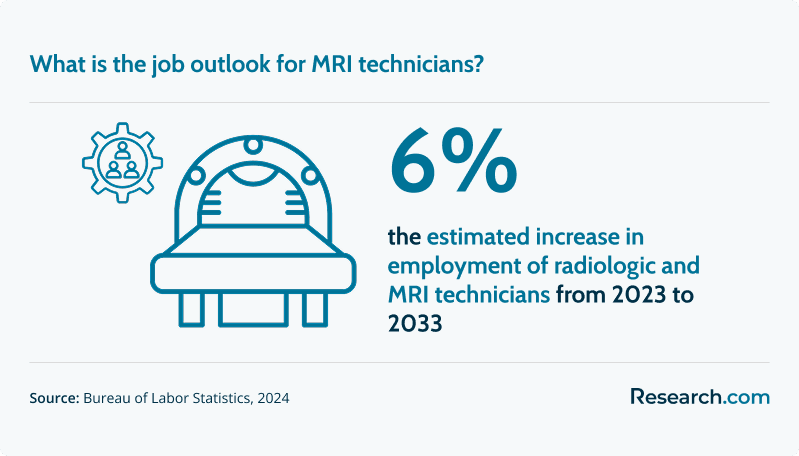
According to the US Bureau of Labor Statistics, MRI technician jobs are projected to grow by 6% from 2023 to 2033, faster than the average for all occupations. That demand makes MRI training attractive, but it also makes program quality important. A low-cost or convenient program may not be the best choice if it lacks proper accreditation, strong clinical placements, or preparation for certification exams.
This guide explains what MRI technician programs include, how online and campus formats compare, what they cost, which programs stand out, and how to evaluate your options before enrolling. It is designed for students entering medical imaging for the first time, radiologic technologists who want to specialize in MRI, and working adults comparing flexible healthcare training options.
Quick Answer: What Is the Best MRI Technician Program?
The best MRI technician program is one that is accredited or institutionally recognized, includes supervised clinical training, prepares students for ARRT or related certification pathways, fits the student’s prior healthcare background, and offers realistic support for job placement. Certificate programs can be a strong option for current radiologic technologists, while associate or bachelor’s programs may be better for students who need broader imaging education before specializing in MRI.
Before choosing a program, confirm five things: accreditation status, certification eligibility, clinical placement support, total cost beyond tuition, and whether the program is intended for beginners or already credentialed imaging professionals.
Why Enroll in an MRI Technician Program?
- Access to medical imaging careers. Completing MRI technician training can help prepare students for roles such as MRI technologist, radiologic technologist, or diagnostic imaging specialist in hospitals, outpatient centers, and diagnostic laboratories.
- Competitive healthcare earnings. According to the U.S. Bureau of Labor Statistics, the median annual salary for MRI technologists was approximately $81,530 in 2023, making MRI one of the better-paying technical careers in allied health.
- Flexible study options. Many programs now deliver didactic coursework online while still requiring in-person clinical training, which can help working adults and students with family responsibilities manage school more realistically.
- A shorter path than many healthcare careers. Depending on your background, MRI training may take months through a certificate program or several years through a degree pathway.
What Can You Expect From MRI Technician Programs?
MRI technician programs teach students how magnetic resonance imaging works, how to position patients, how to follow safety protocols, and how to produce usable diagnostic images. Students typically study anatomy, sectional imaging, MRI physics, patient care, imaging procedures, pathology, and contrast media practices. Programs also emphasize screening for MRI safety risks because the magnetic field can create serious hazards when metal implants, devices, or objects are not properly identified.
Clinical education is a central part of MRI training. Depending on the program, clinical rotations may range from 1,000 to 2,000 hours and take place in hospitals, outpatient imaging centers, or affiliated clinical facilities. These supervised experiences help students practice patient communication, scanner operation, image quality assessment, and workflow management in real clinical settings.
| Program Component | What Students Learn | Why It Matters |
| Anatomy and physiology | Body systems, structures, and terminology used in imaging | Helps technologists position patients and understand physician orders |
| MRI physics and instrumentation | How MRI scanners create images using magnetic fields and radiofrequency signals | Supports image quality, troubleshooting, and safe equipment use |
| Patient care | Communication, positioning, screening, comfort, and emergency awareness | Prepares students to work with anxious, injured, or medically complex patients |
| Clinical rotations | Hands-on imaging practice under supervision | Builds job-ready skills and may support certification eligibility |
| Safety procedures | MRI zone control, contraindications, implant screening, and contrast considerations | Reduces patient, staff, and equipment risks |
Where Can MRI Technician Graduates Work?
MRI technician graduates commonly work in hospitals, diagnostic imaging centers, outpatient care facilities, physician-owned imaging practices, and mobile imaging services. Hospitals often provide exposure to emergency, inpatient, and complex diagnostic cases, while outpatient imaging centers may offer more predictable scheduling and a narrower range of exam types.
Work settings can affect schedule, pace, patient volume, and advancement opportunities. A hospital role may involve evenings, weekends, or urgent cases, while an outpatient center may be better for someone seeking a more consistent routine. Mobile imaging positions may require travel between facilities and strong adaptability.
How Much Can You Make With an MRI Technician Degree?
MRI technologists can earn strong wages compared with many healthcare technician roles, but salaries vary by employer, location, experience, modality expertise, and shift requirements. According to 2024 data from the U.S. Bureau of Labor Statistics, the median annual salary for MRI technologists is approximately $88,180, with the top 25% earning over $99,000. In major metropolitan areas such as New York City, average salaries can be higher, with figures reaching around $139,000 per year.
Salary should not be treated as guaranteed. Graduates who complete accredited training, earn relevant credentials, gain strong clinical references, and become comfortable with advanced protocols may be better positioned for competitive openings. Students comparing allied health options may also want to review related earnings, such as how much ultrasound techs make, before committing to one imaging specialty.
- Best MRI Technician Programs for 2027
- How long does it take to complete an MRI technician program?
- Online vs. on-campus MRI technician programs
- Average cost of MRI technician programs
- Financial aid options for MRI technician students
- Prerequisites for MRI technician programs
- Common MRI technician program courses
- MRI technician specializations
- How to choose the right MRI technician program
- Career paths after MRI technician training
- Job market for MRI technician graduates
- Benefits of interdisciplinary study with MRI technician training
- How healthcare administration can support MRI career growth
- How MRI programs can build clinical and administrative skills
- How MRI technician programs use emerging imaging technologies
Best MRI Technician Programs for 2027
The programs below represent different pathways into MRI and radiologic imaging. Some are designed for students who already have imaging credentials, while others provide broader radiologic technology education that may support later MRI specialization. Use the list as a starting point, then confirm admission requirements, certification eligibility, clinical placement policies, and current tuition directly with each school.
| Program | Best Fit | Program Length | Credits or Hours | Accreditation Listed |
| Washburn University - MR Certificate | Students seeking a flexible online didactic format with local clinical options | 4 to 12 months | 22 credit hours | North Central Association (NCA) |
| GateWay Community College - Certificate of Completion in MRI | Students seeking a short certificate through a community college | 4 to 6 months | 19 credits | Higher Learning Commission (HLC) |
| Mayo Clinic School of Health Sciences - MRI Program | Students wanting intensive clinical exposure in a major healthcare setting | 1 to 2 years | 35 credits | Higher Learning Commission (HLC) |
| Bellevue College - MRI Certificate of Accomplishment | Certified imaging technologists adding MRI specialization | 1 to 2 years | 32 credits | Northwest Commission on Colleges and Universities (NWCCU) |
| Broward College - ARRT Credentialing in Magnetic Resonance | Students seeking a short ARRT-focused MRI credentialing pathway | 3 months | 240 hours | Southern Association of Colleges and Schools Commission on Colleges (SACSCOC) |
1. Washburn University - MR Certificate
Washburn University’s MR Certificate is a 22-credit-hour Magnetic Resonance program built to develop entry-level knowledge and clinical skills for MR imaging. The curriculum includes sectional anatomy, clinical practice, patient management, physics, imaging procedures, and pathology. The program reports a 100% placement rate in MR or related imaging fields and a 90% one-year completion rate.
The format is a major advantage for students who need flexibility. Didactic courses are delivered online, and students may complete clinical requirements at an approved facility near them. Graduates are prepared for American Registry of Radiologic Technologists (ARRT) certification, which is commonly important for employment and advancement.
- Program Length: 4 to 12 months
- Tracks/Concentrations: N/A
- Cost per Credit: $474.00
- Required Credits to Graduate: 22 credit hours
- Accreditation: North Central Association (NCA)
2. GateWay Community College - Certificate of Completion (CCL) in Magnetic Resonance Imaging
GateWay Community College’s Certificate of Completion in Magnetic Resonance Imaging prepares students for work in diagnostic imaging environments such as hospitals and mobile imaging services. The program is career-oriented and intended to help students build the technical foundation needed for MRI technologist roles.
Students considering GateWay should verify clinical placement details, current course delivery format, and certification exam requirements before applying. As with any short certificate, the key question is whether the program matches the applicant’s prior education and credentialing status.
- Program Length: 4 to 6 months
- Tracks/Concentrations: N/A
- Cost per Credit: $97.00 for Maricopa County Residents
- Required Credits to Graduate: 19 credits
- Accreditation: Higher Learning Commission (HLC)
3. Mayo Clinic School of Health Sciences - Magnetic Resonance Imaging (MRI) Program
The Mayo Clinic School of Health Sciences MRI Program offers structured training in MRI safety, physics, patient care, and imaging procedures. Coursework is sequenced so students develop knowledge progressively while connecting classroom concepts to clinical practice.
Hands-on training is a defining feature. Students use MRI equipment and lab simulations, then move into clinical rotations starting as early as week six. With 900 clinical hours, graduates build practical competence for entry-level MRI technologist work.
- Program Length: 1 to 2 years
- Tracks/Concentrations: N/A
- Cost per Credit: $430.00
- Required Credits to Graduate: 35 credits
- Accreditation: Higher Learning Commission (HLC)
4. Bellevue College - Magnetic Resonance Imaging, Certificate of Accomplishment
Bellevue College’s Certificate of Accomplishment in Magnetic Resonance Imaging is designed for imaging technologists who already hold certification in Radiologic Technology, Nuclear Medicine, or Radiation Therapy. The program helps these professionals add MRI-specific knowledge and prepare for the ARRT Magnetic Resonance Imaging exam.
The certificate includes a clinical practicum, giving students a supervised setting to develop required competencies. Because admissions are selective and clinical site matching is part of the process, applicants should confirm eligibility and location requirements early.
- Program Length: 1 to 2 years
- Tracks/Concentrations: N/A
- Cost per Credit: $127.59 for in-state students; $328.13 for out-of-state students
- Required Credits to Graduate: 32 credits
- Accreditation: Northwest Commission on Colleges and Universities (NWCCU)
5. Broward College - ARRT Credentialing in Magnetic Resonance
Broward College’s ARRT Credentialing in Magnetic Resonance program trains students in magnetic resonance imaging principles, scanner operation, patient care, and image production. The program combines technical instruction with clinical experience to support entry-level preparation.
This short program may appeal to qualified students who want focused MRI training. Before enrolling, applicants should ask how clinical hours are arranged, what credentialing requirements apply, and whether their background satisfies admission standards.
- Program Length: 3 months
- Tracks/Concentrations: N/A
- Cost per Credit: $400.00 Theory/ $1,514.25 Clinical
- Required Credits to Graduate: 240 hours
- Accreditation: Southern Association of Colleges and Schools Commission on Colleges (SACSCOC)
6. North Central State College - Radiological Sciences, AAS
North Central State College’s Radiological Sciences AAS program prepares students to perform diagnostic imaging using ionizing radiation. The program emphasizes patient communication, adaptability, technical accuracy, and professional conduct in imaging environments.
The hybrid structure combines online lectures, on-campus radiology lab work, and clinical education at affiliated hospitals. Students also complete short rotations in CT, MRI, Nuclear Medicine, Ultrasound, and Radiation Oncology, with some evening hours included for additional trauma exposure.
- Program Length: 2 to 3 years
- Tracks/Concentrations: N/A
- Cost per Credit: $196.60 for in-state students; $393.20 for out-of-state students
- Required Credits to Graduate: 65 credit hours
- Accreditation: Joint Review Committee on Education in Radiologic Technology (JRCERT)
7. Gwynedd Mercy University - BS in Radiologic Technology
Gwynedd Mercy University’s 2+2 Radiologic Technology program leads to a Bachelor of Science in Radiologic Technology. Students spend the first two years completing general education coursework, then apply during the second year to affiliated radiologic technologist programs.
The third and fourth years are completed on-site through the affiliate radiologic technology program and clinical education sites. The professional phase is full-time at 40 hours per week and includes at least one summer, making it a more intensive pathway than a short certificate.
- Program Length: 4 years
- Tracks/Concentrations: N/A
- Cost per Credit: $756.00
- Required Credits to Graduate: 122 credits
- Accreditation: Middle States Commission on Higher Education (MSCHE)
8. Austin Community College - Magnetic Resonance Imaging Advanced Technical Certificate
The Austin Community College Magnetic Resonance Imaging Advanced Technical Certificate gives experienced radiologic technologists specialized MRI training. Students study the principles of MRI, including how atoms respond within a strong magnetic field to create detailed images of soft tissues.
The program uses a combination of in-person and online coursework and begins in the Fall semester. It is best suited for applicants who already understand radiologic technology and want to expand into an advanced imaging modality.
- Program Length: 1 year
- Tracks/Concentrations: N/A
- Cost per Credit: $2,669.00 in-district; $5,885 out-of-district; $6,957 out-of-state and international (full tuition cost)
- Required Credits to Graduate: 16 credit hours
- Accreditation: Southern Association of Colleges and Schools Commission on Colleges (SACSCOC)
9. Pitt Community College - MRI Certificate
Pitt Community College’s Computed Tomography and Magnetic Resonance Imaging Technology curriculum is built for radiographers seeking advanced cross-sectional imaging skills. Students learn patient care, equipment operation, professional communication, and quality assurance.
The program combines academic study with clinical preparation for scheduled and emergency imaging procedures. Graduates may sit for the American Registry of Radiologic Technologists Advanced-Level testing in Computed Tomography and/or Magnetic Resonance Imaging examinations.
- Program Length: 4 to 5 months
- Tracks/Concentrations: N/A
- Cost per Credit: $76.00 for in-state students; $268.00 for out-of-state students
- Required Credits to Graduate: 16 credits
- Accreditation: Joint Review Committee on Education in Radiologic Technology (JRCERT)
10. Orange Coast College - Radiologic Technology Program
Orange Coast College’s Radiologic Technology Program prepares students to become competent, ethical medical imaging practitioners. The curriculum focuses on radiologic technology fundamentals, patient care, technical performance, and professional development.
This program is broader than MRI-only training and may fit students who want a radiologic technology foundation before pursuing additional imaging credentials. Graduates are expected to continue learning as imaging technology and clinical standards evolve.
- Program Length: 2 years
- Tracks/Concentrations: N/A
- Cost per Credit: $5,600.00 (full program cost)
- Required Credits to Graduate: 1850 hours
- Accreditation: California Radiologic Health Branch and the Joint Review Committee on Education (JRCERT) in Radiologic Technology
How Long Does It Take to Complete an MRI Technician Program?
Program length depends heavily on your starting point. Students with no imaging background often need an associate degree pathway, which usually takes about two years and includes general education, imaging coursework, and clinical training. Students who already work in radiologic technology may qualify for MRI certificate programs that can be completed more quickly.
Certificate programs commonly take about one year, although some listed programs are shorter. Bachelor’s programs can take about four years and may be more useful for students seeking broader radiologic sciences preparation, leadership potential, or future academic progression. Many pathways require substantial clinical experience, and most programs require at least 1,000 hours of clinical experience to meet certification expectations.
| Pathway | Typical Student | Time Frame Mentioned | Best For |
| Certificate | Current radiologic technologists or students with eligible imaging backgrounds | As little as 3 months to about one year | Fast MRI specialization |
| Associate degree | Students beginning a radiologic imaging career | About two years | Building an entry-level foundation |
| Bachelor’s degree | Students seeking broader radiologic sciences education | About four years | Leadership, advanced study, or broader career flexibility |
Online vs. On-Campus MRI Technician Programs
Online MRI technician programs can make the classroom portion more flexible, but MRI training cannot be fully remote. Every credible MRI program must address hands-on scanning, patient positioning, safety screening, and clinical competencies in person. The main difference is where students complete lectures and how the school supports clinical placement.
| Factor | Online or Hybrid Program | On-Campus Program |
| Schedule | Often better for students balancing work, family, or long commutes | Usually more structured with set class and lab times |
| Clinical training | Still completed in person at an approved site | Completed in person through school-affiliated facilities |
| Faculty access | May rely on video meetings, learning platforms, and digital discussions | Provides more immediate face-to-face interaction |
| Learning style | Works best for self-directed students | Works well for students who prefer live instruction and campus support |
| Cost considerations | May reduce commuting or campus-related expenses, but tuition varies | May include campus fees, lab access, and local clinical support |
Students considering an online format should ask whether the school finds clinical sites or expects students to secure their own placements. This is especially important because a program with convenient online lectures may become difficult to complete if clinical access is limited in your area. Students comparing other allied health online options may find similar flexibility issues in an online pharmacy technician course, although MRI requires more complex in-person imaging competencies.
What Is the Average Cost of an MRI Technician Program?
MRI technician program costs vary by credential level, school type, location, and residency status. An associate degree in MRI technology may cost between $6,000 and $30,000 at a community college, while private institutions may charge up to $40,000. Certificate programs are often shorter and may range from $2,000 to $15,000. Bachelor’s programs in radiologic sciences can exceed $50,000. These ranges should be evaluated against broader college pricing trends, including the average college tuition by institution type.
Tuition is only part of the total cost. Students should budget for textbooks, uniforms, lab fees, immunizations, background checks, transportation to clinical sites, certification exam costs, and possible lost income if they reduce work hours. A cheaper program is not automatically a better investment if it does not support certification or clinical completion.
What Financial Aid Options Are Available for MRI Technician Students?
MRI technician students may be able to reduce out-of-pocket costs through federal aid, scholarships, employer support, and repayment programs. Eligibility depends on the school, credential type, enrollment status, and student finances. Always confirm whether the specific program qualifies for federal financial aid before applying.
- Federal student aid. Students can submit the Free Application for Federal Student Aid (FAFSA) to be considered for grants, work-study, and federal loans. Pell Grants may be available to students with demonstrated financial need and do not require repayment.
- State and school scholarships. Colleges and state agencies may provide awards for healthcare students based on need, academic achievement, or workforce demand.
- Private scholarships. Professional organizations, including the American Society of Radiologic Technologists (ASRT), offer scholarships for students pursuing medical imaging careers.
- Employer tuition reimbursement. Hospitals and imaging centers may help current employees pay for MRI specialization, especially if the organization needs cross-trained technologists.
- Loan forgiveness or repayment options. Some healthcare workers may qualify for repayment support when they work in underserved areas or meet program-specific service requirements.
Students weighing long-term healthcare education plans may also compare MRI training with advanced pathways such as the best RN to MSN programs. The right choice depends on whether you want a technical imaging role, a nursing leadership pathway, or another clinical career.
What Are the Prerequisites for Enrolling in an MRI Technician Program?
MRI program prerequisites vary widely because some programs are designed for beginners and others are meant only for certified imaging professionals. Before applying, read the admissions page carefully and contact the program advisor if your background does not exactly match the stated requirements.
- High school completion. Most programs require a high school diploma or GED. Science and math preparation in biology, physics, and algebra can help with the technical coursework.
- Prior imaging education. Many MRI certificate programs require applicants to have completed radiologic technology training or to hold a related imaging credential.
- ARRT or similar credentialing. Some programs admit only students who are already certified by the American Registry of Radiologic Technologists (ARRT) or an equivalent organization.
- Clinical readiness. Applicants may need communication skills, physical stamina, manual dexterity, and the ability to work safely around high-field MRI equipment.
- Health and background requirements. Clinical sites commonly require immunization records, drug screening, background checks, and CPR certification before rotations begin.
State rules may also affect eligibility, licensing, or employment. Students should check both program requirements and state-specific expectations before paying deposits or relocating for clinical training.
What Courses Are Typically Included in an MRI Technician Program?
MRI technician programs combine science, imaging technology, safety, patient care, and supervised practice. Certificate programs focus mostly on MRI-specific competencies, while associate and bachelor’s programs usually include broader radiologic sciences coursework.
- Anatomy and physiology. Students learn the structures and systems they will image in clinical practice.
- Sectional anatomy. This course helps students understand cross-sectional views used in MRI scans.
- MRI physics. Students study magnetic fields, radiofrequency pulses, image formation, and scanner operation.
- MRI safety. Coursework covers screening, implants, contrast considerations, emergency procedures, and safe workflow.
- Patient care and medical terminology. Students learn how to communicate with patients and healthcare teams while following clinical instructions.
- Pathology and image evaluation. Training helps students recognize whether images meet diagnostic quality standards.
- Clinical practicum. Students perform MRI procedures under supervision and build competency documentation.
Some technical concepts in imaging also overlap with fields that use visualization, mapping, and spatial data. Students curious about broader technology applications may find useful comparisons in best GIS undergraduate programs, though GIS and MRI lead to very different careers.
What Specializations Are Available in MRI Technician Programs?
MRI specialization usually develops through clinical experience, continuing education, employer training, and advanced protocols rather than through separate undergraduate majors. Still, students can look for programs and clinical sites that expose them to the imaging areas they hope to pursue.
| Specialization | Primary Focus | Good Fit For |
| Neuro MRI | Brain and spinal cord imaging for conditions such as strokes, tumors, and multiple sclerosis | Technologists interested in neurology and neurosurgery cases |
| Musculoskeletal MRI | Bones, joints, ligaments, tendons, and soft tissue injuries | Technologists who want to work closely with orthopedic imaging |
| Cardiac MRI | Heart and blood vessel imaging for conditions such as congenital heart defects, cardiomyopathies, and blocked arteries | Technologists interested in advanced cardiovascular imaging |
| Breast MRI | Breast cancer detection and evaluation of breast abnormalities | Technologists interested in women’s health and oncology imaging |
| Pediatric MRI | Imaging infants, children, and adolescents using child-centered communication and safety practices | Technologists comfortable working with young patients and families |
Pediatric imaging requires patience, communication, and an understanding of child development. Students interested in child-focused healthcare can also review the pediatrician job outlook to understand how pediatric care careers differ in education length and scope.
Technology-supported healthcare programs are also changing how students learn clinical concepts. For example, online accredited speech pathology programs often use digital tools and anatomy-focused instruction, though speech-language pathology and MRI technology have separate training and licensure expectations.
How to Choose the Best MRI Technician Program
The best MRI technician program is the one that matches your starting point, certification goal, budget, location, and preferred learning format. Do not choose based only on speed or tuition. A program that looks convenient can become expensive if clinical placements are weak or graduates are not eligible for the credential employers expect.
Questions to Ask Before Enrolling
- Is the program accredited or offered by an accredited institution? Look for recognized oversight such as JRCERT, ARMRIT, institutional accreditation, or another pathway accepted by the certification body you plan to use.
- Will I be eligible for ARRT or another certification exam? Ask the program to explain the exact credentialing pathway, not just general career preparation.
- Who arranges clinical placements? A school that leaves clinical placement entirely to students may create completion risks.
- What are the total costs? Include tuition, fees, books, supplies, travel, exams, and lost income.
- What are the admission requirements? Determine whether the program accepts beginners or only certified radiologic technologists.
- What outcomes does the program report? Ask about completion rates, certification pass rates, placement support, and employer relationships.
| Common Mistake | Why It Can Hurt You | Better Approach |
| Choosing the shortest program without checking eligibility | You may not qualify for certification or employment if prerequisites are missing | Confirm admissions requirements and exam eligibility in writing |
| Comparing tuition only | Fees, travel, exams, and unpaid clinical time can change the real cost | Build a full cost estimate before applying |
| Assuming online means fully remote | MRI clinical training must be completed in person | Ask how local clinical placements are approved and supervised |
| Ignoring accreditation | Some employers and credentialing bodies may not accept weak training | Verify accreditation through the accreditor or certification organization |
| Relying only on rankings | A highly visible program may not fit your background, schedule, or state | Use rankings as a shortlist, then evaluate practical fit |
What Career Paths Are Available After MRI Technician Training?
MRI technician graduates can work directly in MRI or use imaging experience to move into related roles. The best path depends on credentials, employer needs, additional certifications, and career goals.
- MRI technologist. MRI technologists operate scanners, position patients, apply safety protocols, and produce images used by physicians.
- Lead MRI technologist or supervisor. Experienced technologists may coordinate staff, monitor protocols, help train team members, and support quality assurance.
- Multi-modality technologist. Some professionals add CT, ultrasound, or other imaging skills to increase flexibility and employment options.
- MRI application specialist. Technologists with strong equipment knowledge may work with manufacturers to train clinical teams and support scanner use.
- Healthcare educator or trainer. Experienced imaging professionals may teach in colleges, hospitals, or continuing education settings.
- Related healthcare roles. Some technologists move into other patient care fields. For example, those interested in renal care can explore how to become a dialysis technician.
Some professionals later combine technical, administrative, and clinical knowledge. Students interested in broader multidisciplinary paths can compare MRI training with dual master's degree programs online, which may support different long-term leadership or specialized career goals.
What Is the Job Market for Graduates With an MRI Technician Degree?
The job market for MRI technologists remains favorable because diagnostic imaging continues to play a major role in healthcare. According to the Bureau of Labor Statistics (BLS), employment for MRI technologists is projected to grow by 6% from 2023 to 2033. Demand is supported by healthcare needs among an aging population and the continued use of imaging technology in diagnosis and treatment planning.
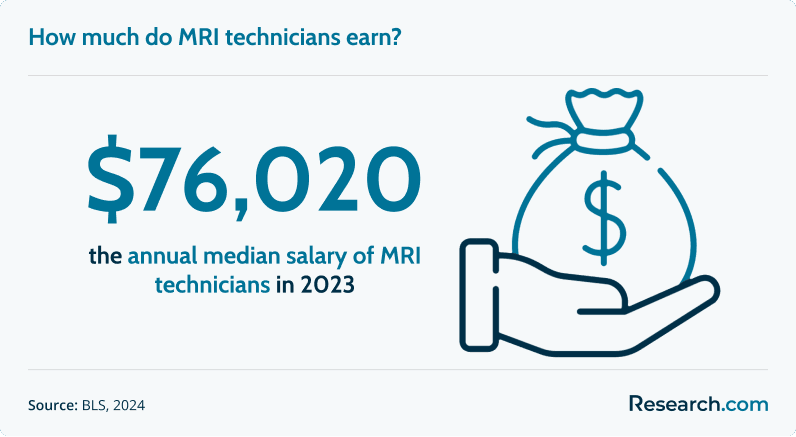
The BLS reports that the median annual wage for MRI technologists was $76,020 as of 2023. This is higher than many healthcare technician roles. For comparison, professionals in related areas such as EKG technology may earn less, with the EKG technician salary averaging around $60,000 per year.
Education can also affect long-term earnings. Data from the National Center for Education Statistics on annual earnings by educational attainment shows the financial advantages associated with completing postsecondary education. Associate and bachelor’s degree holders generally earn more over their careers than workers with only a high school diploma.
Graduates can strengthen their employment prospects by earning relevant certifications, completing strong clinical rotations, gaining experience in high-demand exam types, and cross-training in additional imaging modalities. For comparison, students who pursue top online military studies degree programs may enter a very different field, but both paths reward discipline, precision, and mission-focused work.
What Are the Benefits of Integrating Interdisciplinary Studies With MRI Technician Training?
Interdisciplinary study can help MRI students understand patients and healthcare systems more broadly. For example, coursework related to movement science, anatomy, or rehabilitation can make it easier to understand musculoskeletal injuries and patient positioning. Students interested in that kind of foundation may compare MRI training with a bachelor's in kinesiology online, although kinesiology and MRI lead to different professional outcomes.
How Can Supplementary Healthcare Administration Studies Benefit an MRI Technician’s Career?
Healthcare administration knowledge can help MRI technologists who want to move into supervisory, operations, scheduling, compliance, or department leadership roles. MRI departments depend on efficient workflow, patient throughput, safety documentation, equipment use, and coordination with referring providers. A technologist who understands both imaging and operations may be better prepared for management responsibilities.
Professionals who want formal business and operations training can explore options such as an accelerated healthcare administration degree online. This type of study is not required for entry-level MRI work, but it may support long-term leadership goals.
How Can MRI Technician Programs Build Both Clinical and Administrative Skills?
MRI programs are primarily clinical and technical, but students also encounter administrative realities such as patient scheduling, documentation, safety screening records, image transfer, billing workflows, and quality assurance. Understanding these processes helps graduates work more effectively within imaging departments.
Technologists who want to expand into revenue cycle, coding, or back-office healthcare operations may consider supplemental training such as affordable medical billing and coding programs online. These skills can complement MRI expertise, especially for professionals interested in hybrid clinical-administrative roles.
What Graduates Say About MRI Technician Programs
-
: "
I chose the one-year MRI technician certification because I wanted a faster route into healthcare. The coursework covered anatomy, imaging basics, and patient care, while the online modules helped me manage my schedule. Clinical training was demanding, but it gave me the confidence I needed. A few months after finishing, I was working full time in a diagnostic imaging center.
"
– Noelle
-
: "
I wanted a healthcare job but did not want to spend many years in school. The MRI technician program fit what I needed. I completed much of the classroom work online, and my clinical internship helped me make employer connections. I now work in an outpatient imaging center and enjoy the mix of technology and patient care.
"
– Amanda
-
: "
Coming from a pharmacy background, I was nervous about changing careers. The MRI technician associate degree program made the transition more manageable. The classes were thorough, the instructors were supportive, and online learning let me keep a part-time job. The work was challenging, but the career change was worth it.
"
– Rachel
How Do MRI Technician Programs Integrate Emerging Imaging Technologies?
Modern MRI programs increasingly expose students to digital imaging workflows, simulation-based learning, and updated scanner protocols. These tools help students practice decision-making before and during clinical rotations. Programs may also introduce image processing, quality control, and workflow technologies that reflect how imaging departments operate today.
Artificial intelligence and automation are also influencing medical imaging, particularly in image reconstruction, workflow support, and quality checks. This does not remove the need for trained technologists. MRI professionals still need to screen patients, position them safely, communicate clearly, monitor comfort, and recognize when an image may not meet diagnostic standards. Students exploring shorter healthcare entry points can also compare MRI with the cheapest online medical assistant program, which leads to different duties and training expectations.
Can an MRI Technician Program Lead to Advanced Healthcare Degrees?
An MRI technician program can become a foundation for further healthcare education, especially for students who later want leadership, education, advanced imaging, administration, or a different clinical role. Some graduates remain in imaging and add modalities or supervisory experience, while others use their patient care background to explore broader healthcare pathways.
Advanced academic options vary widely and may require additional prerequisites beyond MRI training. For example, students interested in pharmacy careers can research accelerated PharmD programs, but they should expect different admissions requirements, science coursework, and professional responsibilities.
Key Insights
- MRI technician programs are not interchangeable. The right choice depends on whether you are a beginner, a certified radiologic technologist, or a working healthcare professional adding MRI skills.
- Clinical training is essential. Online coursework can add flexibility, but MRI scanning, safety screening, patient positioning, and competency development must happen in person.
- Accreditation and certification eligibility should be verified before enrollment. A program that does not support your intended credential can limit job options.
- Costs vary widely. Certificate programs may range from $2,000 to $15,000, associate degree programs may cost between $6,000 and $30,000 at a community college, and bachelor’s programs can exceed $50,000.
- The Bureau of Labor Statistics projects 6% employment growth for MRI technologists from 2023 to 2033, but individual outcomes depend on location, credentials, experience, and employer demand.
- Do not choose based only on speed. A slightly longer program with stronger clinical placement support, exam preparation, and employer connections may be the better investment.
References
- Bellevue College. (n.d.). Magnetic resonance imaging (MRI) certificate program. bellevuecollege.edu
- Bureau of Labor Statistics. (2024). Occupational employment and wages, May 2023: Magnetic resonance imaging technologists. bls.gov
- Bureau of Labor Statistics. (2024). Radiologic and MRI technologists. bls.gov
- National Institute of Biomedical Imaging and Bioengineering. (n.d.). Magnetic resonance imaging (MRI). nih.gov
- University of Utah. (n.d.). Magnetic resonance imaging (MRI) technologist program. medicine.utah.edu
Other Things You Should Know About the Best MRI Technician Programs
Yes. Most MRI Technician programs require a supervised clinical externship, usually in a hospital or imaging center. Students often complete about 500 to 1,000 clinical hours before graduation. These rotations help meet employer expectations and prepare students for certification through ARRT or ARMRIT.
Financial aid for MRI Technician programs in 2027 includes federal grants, loans, and scholarships. Many schools offer program-specific scholarships, and some states provide grants. Check individual program websites for application deadlines and specific eligibility criteria.
Most top MRI Technician programs in 2027 require a high school diploma or GED, including coursework in math and science. Some also require prerequisite courses in anatomy and physiology. Check specific programs for unique requirements or additional conditions.