2027 Best Online MSW Programs for Nonprofit Leadership Careers

Co-Founder and Chief Data Scientist
Choosing an online MSW for nonprofit leadership is different from choosing a general social work degree. You are not only preparing for social work practice; you are also preparing to manage programs, supervise teams, evaluate outcomes, work with funders, and make ethical decisions under budget pressure. For professionals coming from business, education, healthcare, public administration, or another field, the right program can provide a structured path into mission-driven leadership without requiring a full pause from work.
This guide explains how to evaluate online MSW programs for nonprofit leadership, including accreditation, curriculum, admissions, field education, cost, career paths, salary expectations, licensure, and optional credentials. It is designed for working adults, career changers, and current nonprofit employees who want an MSW that supports both social impact and long-term career mobility.
Key Things You Should Know
- Online MSW programs for nonprofit leadership blend advanced social work theory with management skills, preparing graduates for roles in fundraising, program development, and advocacy.
- In 2025, over 60% of accredited online MSW students chose concentrations in leadership or administration, reflecting growing demand for nonprofit sector expertise.
- Graduates with online MSWs focusing on nonprofit leadership report a median salary increase of 15-25%, with career growth in organizations emphasizing social impact and community services.
What Are the Best Online MSW Programs for Nonprofit Leadership?
The best online MSW programs for nonprofit leadership combine accredited social work training with practical preparation in management, policy, advocacy, and community-based program delivery. A strong program should help students understand client systems and community needs while also teaching them how to lead staff, manage funding, evaluate services, and communicate with boards, partners, and public agencies.
Programs suited to nonprofit leadership typically offer a CSWE-accredited curriculum, field placements in human services or nonprofit settings, and electives or concentrations related to administration, policy, community practice, or organizational leadership. Well-known institutions in this area include the University of Southern California, the University of Denver, and Washington University in St. Louis, which are often considered by students seeking advanced coursework connected to leadership, advocacy, fundraising, grant writing, and strategic planning.
The need for trained nonprofit leaders is substantial. Nonprofits employed 12.3 million workers in 2025, representing 10% of the U.S. private workforce. Social assistance roles grew 8% faster than average occupations, reinforcing the need for managers who understand both service delivery and organizational sustainability.
What to look for in a nonprofit leadership-focused online MSW
- CSWE accreditation: This is essential for licensure eligibility in many states and signals that the program meets recognized social work education standards.
- Relevant field placements: Look for placements in community agencies, advocacy organizations, healthcare nonprofits, shelters, youth services, behavioral health organizations, or social service departments.
- Leadership-oriented coursework: Useful topics include governance, financial management, program evaluation, policy practice, community outreach, supervision, and grant development.
- Flexible delivery: Working professionals should compare asynchronous classes, live evening sessions, part-time tracks, and local practicum support.
- Career network: Alumni connections, nonprofit partnerships, and faculty experience in social service leadership can matter as much as course titles.
Students who eventually want to move into advanced scholarship, executive policy work, or academic leadership may also compare doctoral options such as a PhD in social work, but most nonprofit management roles begin with a well-chosen MSW and relevant leadership experience.
Why Pursue an MSW for Nonprofit Leadership Careers?
An MSW can be valuable for nonprofit leadership because it connects administrative decision-making with a deep understanding of people, systems, trauma, poverty, inequity, and community resources. Nonprofit leaders often make choices that affect vulnerable populations. An MSW helps leaders evaluate those choices through social work ethics, evidence-based practice, and a systems perspective.
Unlike a general management degree, an MSW emphasizes human behavior, social policy, cultural responsiveness, community intervention, and ethical service delivery. That training can be especially useful in organizations serving children and families, people experiencing homelessness, older adults, individuals with disabilities, immigrants, survivors of violence, or people with behavioral health needs.
MSW graduates in nonprofit leadership roles typically earn a median salary of $82,000, marking a 25% increase over general social workers due to augmented management responsibilities (National Association of Social Workers, 2025 Compensation Report). Actual pay can vary by location, funding source, organization size, licensure status, and level of responsibility.
Leadership skills an MSW can build
- Strategic planning: Setting priorities, aligning services with mission, and allocating limited resources.
- Program development: Designing services that respond to community needs and measurable outcomes.
- Grant writing and fundraising: Translating community impact into fundable proposals and reports.
- Ethical supervision: Supporting staff while maintaining professional boundaries, client dignity, and service quality.
- Policy and advocacy: Understanding how laws, funding rules, and public systems shape nonprofit work.
- Data-informed decision-making: Using outcomes, client feedback, and evaluation results to improve programs.
The MSW is not the only route into nonprofit leadership, but it is a strong fit for professionals who want to lead organizations where direct service knowledge, social policy, and ethical practice are central. Students who need a flexible route can compare online MSW programs that allow them to keep working while building leadership credentials.
What Curriculum Covers Nonprofit Leadership in MSW Programs?
An online MSW nonprofit leadership curriculum usually includes foundation social work courses, advanced practice courses, electives in administration or policy, and supervised field education. The strongest programs do not treat leadership as a separate business skill; they connect leadership decisions to social work ethics, community needs, equity, and client outcomes.
Core MSW coursework often covers human behavior, social welfare policy, research methods, diversity and oppression, ethics, assessment, and intervention. Students interested in nonprofit leadership should then look for advanced courses in areas such as nonprofit governance, program evaluation, financial management, grant writing, advocacy, strategic planning, supervision, and community organizing.
Nonprofit management roles are projected to grow 12% from 2025 to 2030-outpacing the average growth for all occupations. That growth makes curriculum selection important: students should choose programs that prepare them to manage people, money, programs, compliance requirements, and partnerships, not only provide direct services.
Common curriculum areas for nonprofit leadership
- Organizational management rooted in social work ethics: Leadership, supervision, governance, accountability, and mission alignment.
- Financial and resource development skills: Budgeting, fundraising, grant writing, and responsible use of restricted funds.
- Community assessment and program development: Identifying service gaps, designing interventions, and evaluating impact.
- Policy practice and advocacy: Understanding regulations, public funding systems, and legislative influence.
- Diversity, equity, and inclusion: Leading organizations that serve diverse communities and address structural inequities.
- Field education: Applying classroom learning in nonprofit, public agency, advocacy, or community-based settings.
Field placement is especially important for career changers. A student with prior experience in another field can use the practicum to build nonprofit contacts, gain supervised social work experience, and test which leadership environment fits best. Students comparing long-term compensation by role and location can also review the lcsw salary by state.
Accreditation is one of the most important checks before enrolling in an online MSW program. For social work, the key accreditor is the Council on Social Work Education (CSWE). A CSWE-accredited MSW program has been reviewed for curriculum quality, field education standards, ethics training, diversity content, and professional preparation.
For students interested in nonprofit leadership, CSWE accreditation matters even if the immediate goal is administration rather than clinical practice. Many employers, licensing boards, and advanced credentials rely on graduation from a CSWE-accredited program. Choosing a non-CSWE accredited program can limit licensure eligibility and reduce future career flexibility.
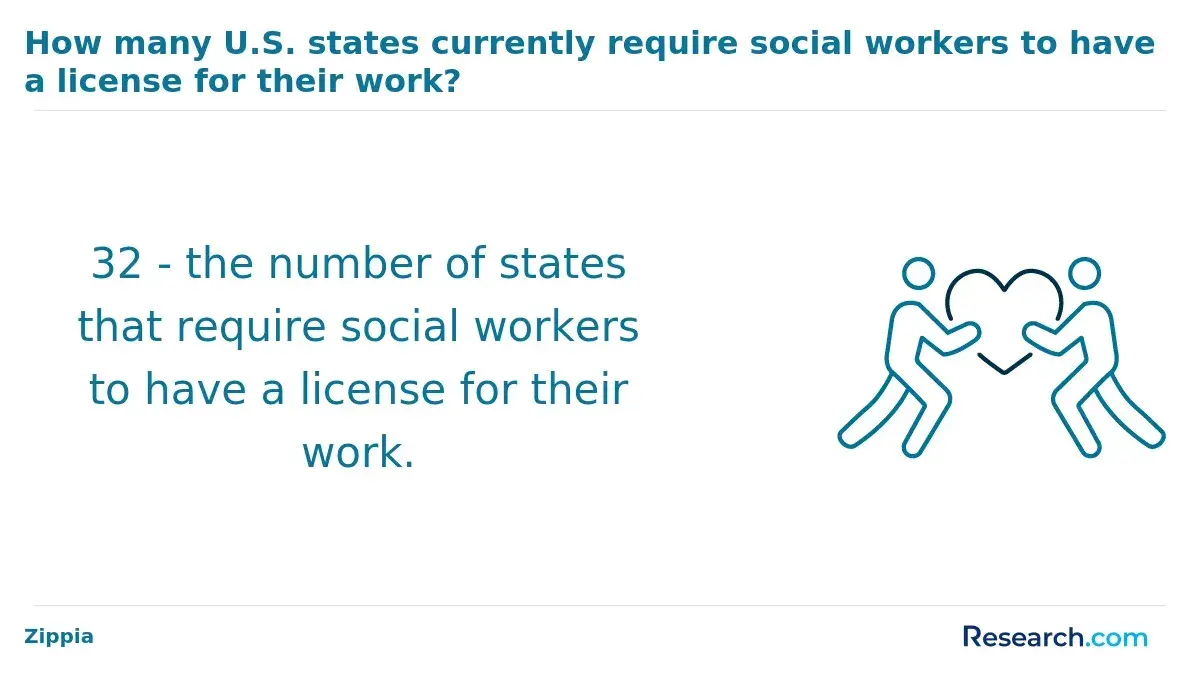
Licensing requirements vary by state, but the pathway often begins with an MSW from a CSWE-accredited program. Most states require passing an Association of Social Work Boards (ASWB) exam. The Licensed Master Social Worker (LMSW) is generally the minimum credential for many master’s-level social work roles, while advanced clinical or supervisory positions may require the Licensed Clinical Social Worker (LCSW) license. Some states also require supervised experience, continuing education, background checks, jurisprudence exams, or specific coursework.
Accreditation and licensure checklist
- Confirm that the MSW program is CSWE-accredited before applying or enrolling.
- Check whether online students complete field education locally, through employer-based placements, or through school-arranged partnerships.
- Review your state licensing board’s rules before choosing electives or a field placement.
- Ask whether the program prepares students for LMSW, LCSW, or other state-specific credentials.
- Verify whether nonprofit leadership roles in your target area prefer or require licensure.
Students seeking accessible programs should still treat accreditation as nonnegotiable. When comparing MSW online programs, admissions flexibility should not come at the expense of recognized professional standards.
Investing in an accredited online MSW can also support long-term earnings. According to the Georgetown University Center on Education and the Workforce's 2025 ROI Report, nonprofit leaders with an online MSW gain a 15-year return on investment of $450,000, reflecting average starting salaries of $75,000 versus $55,000 for bachelor's degree holders.
Admission requirements for online MSW programs usually focus on academic readiness, professional maturity, communication skills, and commitment to social work values. A bachelor’s degree from an accredited institution is typically required, and many programs expect a minimum GPA around 3.0 on a 4.0 scale. Applicants do not always need a bachelor’s degree in social work, but they should be able to explain why social work is the right next step.
Career changers can be competitive if they show relevant experience in human services, community work, education, healthcare, public service, advocacy, management, or volunteer leadership. Applicants with a BSW may qualify for advanced standing in some programs, while those from unrelated majors usually enter a traditional MSW track.
Common application materials
- Official transcripts: Schools review overall academic performance and prerequisite preparation.
- Resume or CV: Nonprofit work, volunteer service, leadership roles, and client-facing experience can strengthen the application.
- Personal statement: This should connect your background, social work values, nonprofit leadership goals, and reasons for choosing the program.
- Letters of recommendation: Programs often ask for two to three letters from supervisors, professors, or professionals who can speak to judgment, ethics, communication, and leadership potential.
- Interview: Some programs use video interviews to assess readiness for graduate study and professional social work practice.
- Standardized tests: The GRE is increasingly optional, though some programs may still request it, especially for applicants with lower GPAs.
A strong personal statement for nonprofit leadership should be specific. Instead of saying you want to “help people,” explain the communities or issues you care about, the leadership problems you want to solve, and how an MSW will help you move from intention to measurable impact.
According to U.S. News & World Report's 2026 Best Online MSW Rankings, top online MSW programs have a 92% average graduate placement rate in nonprofit roles within six months, highlighting the value of a selective admissions process and strong career preparation.
Online MSW programs focused on nonprofit leadership typically take 18 to 36 months to complete, depending on the student’s enrollment status, transfer credits, advanced standing eligibility, and field placement schedule. Full-time students often finish in about two years, while part-time students may take up to three years or more. Accelerated options can shorten the timeline but usually require a heavier course load and careful planning around practicum hours.
Cost varies significantly by institution. Total tuition generally ranges from $15,000 to over $50,000. Public universities often charge around $20,000, while private institutions may exceed $45,000. Students should also review additional expenses such as textbooks, technology fees, travel to field placements, background checks, liability insurance, and any required campus visits.
How to compare program cost realistically
- Calculate total tuition, not just per-credit cost: A lower per-credit rate may still cost more if the program requires more credits.
- Ask about fees: Online, practicum, graduation, and technology fees can change the real price.
- Review field placement impact: Some placements may require schedule changes, commuting, or reduced work hours.
- Compare aid options: Look for scholarships, employer tuition assistance, federal aid eligibility, and public service-related repayment options.
- Consider opportunity cost: A faster program may reduce time to advancement, but it may also be harder to manage while working full time.
Career advancement in nonprofit leadership is strongly linked to advanced education. According to the Nonprofit Finance Fund's 2025 Leadership Impact Study, 92% of nonprofit executives hold advanced degrees, which correlate with 30% higher organizational funding success. For students, this means the value of an MSW should be judged not only by tuition but also by program quality, field placement relevance, leadership preparation, and fit with career goals.
Working professionals should choose a timeline they can complete without sacrificing performance in their job or field placement. A part-time format may be the better option if it allows stronger networking, better practicum performance, and less financial strain.
An MSW in nonprofit leadership can lead to roles that combine social work knowledge with organizational responsibility. Graduates may manage programs, supervise staff, oversee grants, coordinate partnerships, influence policy, or direct services for specific populations. The degree is especially useful in organizations where leaders must understand both frontline practice and systems-level change.
Common career paths include social and community service manager, program director, nonprofit administrator, clinical program manager, advocacy director, community outreach director, grant manager, policy analyst, and executive director. The right path depends on the student’s prior experience, licensure status, field placement, and chosen MSW concentration.
The Chronus Mentoring Report 2025 highlights an 18% promotion rate for social and community service managers with MSWs advancing to executive director positions-double the rate of peers without an MSW. This suggests that the MSW can be a meaningful leadership credential when paired with experience, mentorship, and strong organizational results.
Examples of nonprofit leadership roles
- Program director: Oversees service delivery, staff performance, compliance, and outcomes for a specific program.
- Social and community service manager: Coordinates programs that serve communities, families, or specific client populations.
- Nonprofit administrator: Manages operations, reporting, budgets, human resources, and internal systems.
- Advocacy or policy director: Leads campaigns, coalition work, legislative strategy, and public education.
- Grant or development leader: Connects program impact to funder priorities, proposals, and reporting requirements.
- Executive director: Provides organization-wide leadership, board communication, fundraising oversight, strategy, and public representation.
Practical settings include homeless shelters, youth programs, family service agencies, behavioral health organizations, domestic violence programs, immigrant support organizations, disability services, older adult services, and social justice nonprofits. Students who want senior leadership should seek field placements and projects that show measurable responsibility, such as supervising volunteers, evaluating a program, supporting a grant proposal, or helping implement a new service model.
Nonprofit MSW graduates typically earn between $50,000 and $75,000 annually, though compensation depends on location, licensure, specialization, organization size, funding sources, and leadership level. Senior roles such as program directors in large nonprofits may exceed $90,000, while entry-level management positions often start near $45,000.
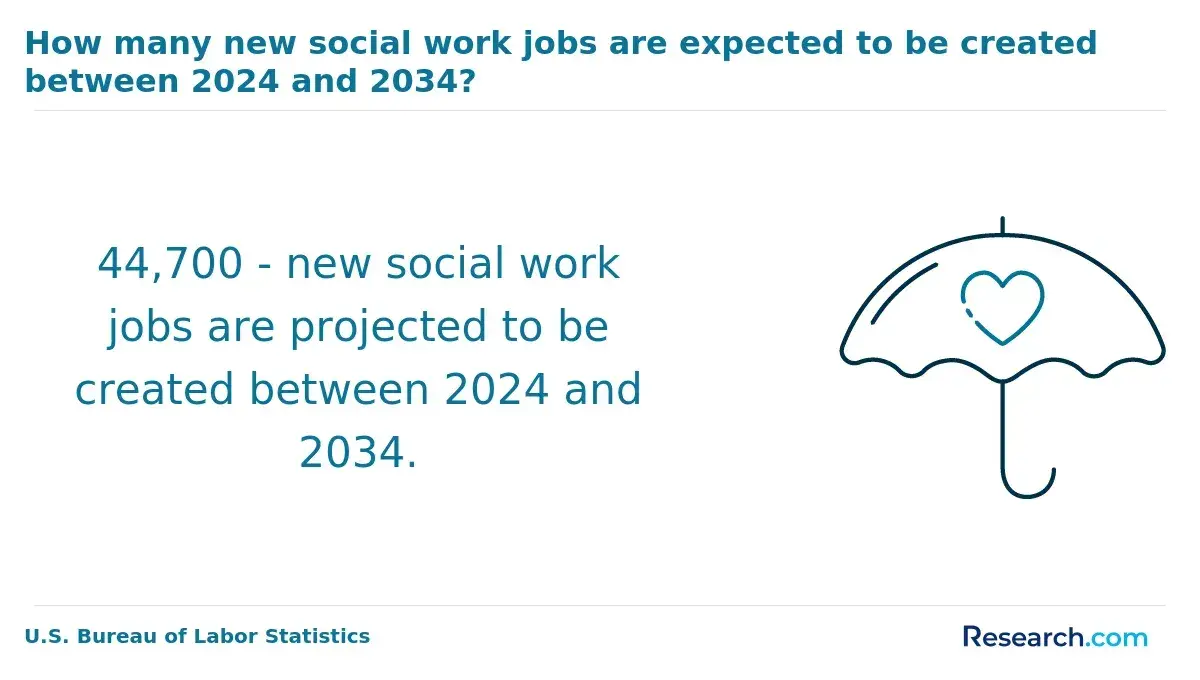
Employment for social and community service managers-common career paths for nonprofit MSW holders-is projected to grow 12% from 2024 to 2034, outpacing average job growth. Demand is supported by the continuing need for organizations that can manage programs addressing behavioral health, housing instability, aging, family services, community development, and other social issues.
Online MSW programs are especially common among working professionals. Online MSW programs are popular among working professionals, with 68% of enrollees balancing nonprofit roles, contributing to an 85% retention rate via flexible, asynchronous learning (Council on Social Work Education, 2025 Annual Statistics). For many students, this structure makes it possible to apply new coursework immediately in the workplace.
Factors that influence salary
- Role level: Executive, director, and senior management roles generally pay more than coordinator or entry-level management roles.
- Organization size: Larger nonprofits may have larger budgets and more formal leadership ladders.
- Location: Urban markets often offer higher salaries, though cost of living and competition may also be higher.
- Licensure: LMSW or LCSW credentials can expand options, especially in behavioral health, clinical supervision, or integrated service settings.
- Funding expertise: Skills in grant writing, fundraising, compliance, and outcome reporting can increase leadership value.
- Field placement and experience: Nonprofit management-focused internships can help graduates move more quickly into leadership roles.
Students should avoid judging programs only by average salary claims. A better approach is to compare licensure outcomes, field placement quality, alumni roles, employer partnerships, and the types of nonprofit positions graduates actually obtain.
Choosing a reputable online MSW program starts with accreditation, but it should not stop there. The best fit is a program that matches your state licensure needs, nonprofit leadership goals, schedule, budget, and preferred learning format. A program can be well regarded and still be a poor fit if it cannot support your practicum location, career interests, or work schedule.
Program selection checklist
- Verify CSWE accreditation: This is the first requirement to confirm before comparing cost, curriculum, or admissions flexibility.
- Review nonprofit leadership content: Look for courses or electives in administration, policy, program evaluation, advocacy, fundraising, supervision, and community practice.
- Examine field placement support: Ask whether the school helps secure local placements and whether nonprofit leadership placements are available.
- Check faculty expertise: Faculty with experience in nonprofit management, policy, community practice, or social service administration can strengthen applied learning.
- Compare student support: Online learners should have access to advising, career services, library resources, technical help, and licensure guidance.
- Assess outcomes: Review alumni employment, licensure pass rates, placement settings, and leadership career examples when available.
- Understand total cost: Compare tuition, fees, financial aid, scholarships, employer support, and potential borrowing.
Affordability has improved recently, with average online MSW tuition dropping 12% due to expanded nonprofit scholarships, reducing borrower debt from $52,000 to $45,000 according to the Institute for College Access & Success 2025 Student Debt Report. Even so, students should borrow carefully and compare net cost after aid rather than relying on advertised tuition alone.
A reputable program should be transparent about accreditation, licensure alignment, field education expectations, tuition, fees, faculty qualifications, and student outcomes. If a school gives vague answers about practicum support or licensure eligibility, treat that as a warning sign.
What Certifications Boost Nonprofit Leadership Credentials?
Certifications can strengthen a nonprofit leadership profile when they complement, rather than replace, MSW training. The most useful credentials depend on the role you want: clinical supervision, fundraising, executive management, program operations, trauma-informed services, or equity-focused leadership.
The Certified Nonprofit Professional (CNP) credential from the Nonprofit Leadership Alliance is widely relevant because it focuses on nonprofit operations, governance, leadership, and fundraising. The Licensed Clinical Social Worker (LCSW) credential can be especially valuable for leaders in mental health, trauma services, behavioral health, family services, or clinical program administration.
By 2030, an estimated 40% of nonprofit leadership vacancies will require trauma-informed skills at the master's level, according to the Urban Institute's 2025 Nonprofit Workforce Trends report. This makes trauma-informed practice, crisis response, and equity-centered leadership important areas for professional development.
Certifications to consider by career goal
- Nonprofit management: Certified Nonprofit Professional (CNP) for broad preparation in nonprofit operations and leadership.
- Fundraising and development: Certified Fund Raising Executive (CFRE) for professionals responsible for donor strategy, campaigns, and revenue development.
- Clinical or trauma-informed leadership: Licensed Clinical Social Worker (LCSW) for qualified professionals leading clinical teams or trauma-affected service populations.
- Diversity, equity, and inclusion: DEI credentials from organizations like the Society for Human Resource Management (SHRM) for leaders responsible for inclusive workplaces and equitable service delivery.
- Program and budget management: Project Management Professional (PMP) for leaders overseeing complex programs, timelines, teams, and resources.
Early-career professionals often benefit most from credentials that show readiness for trauma-informed, ethical, and equity-centered practice. Mid-career and senior professionals may gain more from fundraising, executive leadership, project management, or governance-related credentials. The strongest profile combines an accredited MSW, relevant field experience, measurable leadership results, and targeted certifications that match the nonprofit role you want next.
Other Things You Should Know About Social Work
Effective communication, critical thinking, and organizational skills are essential for nonprofit leadership careers in social work. Leaders must also demonstrate cultural competence, ethical decision-making, and the ability to manage budgets and fundraising efforts. These skills help professionals advocate for communities and drive social change effectively.
Yes, many MSW programs offer concentrations or electives in areas like nonprofit management, policy advocacy, and community organization. These tracks prepare graduates for leadership positions that focus on systemic change rather than individual therapy. This broader approach is vital for those pursuing careers in nonprofit leadership settings.
Online MSW students usually must finish prerequisite coursework and complete practicum hours under an approved field supervisor before advanced nonprofit placements. CSWE-accredited programs commonly require at least 900 hours of field education, with supervision documented and tied to specific learning objectives.
Field placements offer practical exposure to nonprofit environments, allowing students to apply theoretical knowledge in real-world contexts. This hands-on experience helps build leadership, networking, and problem-solving skills critical for nonprofit roles. Employers often value graduates who have demonstrated the ability to navigate complex social systems during their internships.
- Careers in Non-Profits: Jobs with Purpose & Social Impact https://wmsfranklinfoundation.org/exploring-careers-in-non-profit-organizations/
- Online MSW Admissions Requirements | Tulane School of Social Work https://socialwork.tulane.edu/msw-programs/admissions/
- Nonprofit Management in Florida Social Work - Specialized MSW https://floridasocialworkedu.org/msw-specialties/nonprofit-management/
- A Guide to Nonprofit Certifications https://postalgia.ink/a-guide-to-nonprofit-certifications/
- Nonprofit Management Degree & Certificate Guide (2026) | GCG https://giddingsconsulting.com/blog/nonprofit-management-degree-guide/
- Homepage https://socialworklicensemap.com/
- Badge Type Landing Pages - Nonprofit Leadership Center of Tampa Bay https://nlctb.org/certificate-programs/
- MSW Career Outlook https://www.kysu.edu/academics/college-as/school-of-social-work/careers/msw-career-outlook.php
- Nonprofit Management for Social Workers: Navigating Funding and Organizational Leadership https://www.indwes.edu/articles/2025/05/nonprofit-management-for-social-workers
- Compare CSWE Accredited Online MSW Programs https://www.onlinemswprograms.com/online-social-work-degrees/online-schools/