2027 Comparing Online MSW Programs by Specializations Offered

Co-Founder and Chief Data Scientist
An online MSW can prepare you for clinical practice, school social work, healthcare, child and family services, administration, advocacy, or community change—but the right program depends on more than convenience. Your specialization can affect field placement options, licensure eligibility, job settings, and long-term salary potential.
This guide is for prospective MSW students comparing online programs by focus area, flexibility, cost, accreditation, admissions requirements, completion time, and career outcomes. It is especially useful if you are changing careers, deciding between clinical and non-clinical tracks, or trying to choose a program that fits your state’s licensing rules.
Below, you will find a practical breakdown of common online MSW specializations, how they differ, what to verify before applying, and how to connect your academic choice with realistic career goals.
Key Things You Should Know
- Online MSW programs in 2026 commonly offer specializations such as clinical social work, policy and administration, and school social work, enabling tailored expertise aligned with career goals.
- Data from 2024 shows programs with specialized tracks see a 20% higher graduate employment rate within six months of completion compared to generalist MSW degrees.
- Increasingly, online MSW curricula incorporate telehealth and trauma-informed care specialties, reflecting evolving professional demands in the social work field.
What Are Online MSW Programs?
Online MSW programs are graduate-level social work degrees delivered primarily through digital learning platforms. They are designed for students who need flexibility because of work schedules, family responsibilities, relocation limits, or limited access to nearby campus-based programs.
Coursework typically covers human behavior, social welfare policy, research methods, social work ethics, assessment, intervention, and practice with individuals, families, groups, organizations, and communities. Although classes may be online, MSW programs still include field education, which places students in supervised social work settings in or near their communities when available.
Many of the best online MSW degrees by field of study allow students to choose a specialization such as clinical social work, community practice, policy advocacy, child and family welfare, gerontology, or healthcare social work. This matters because the specialization helps shape your practicum experience, elective courses, professional network, and post-graduation job options.
Currently, 36% of CSWE-accredited MSW programs provide fully online options, reflecting both improved online learning technology and stronger demand from working adults. Some programs are fully asynchronous, while others require live online classes at set times. Hybrid programs may combine online coursework with limited campus visits or in-person intensives.
What to check before choosing an online MSW
- Accreditation: Confirm that the program is CSWE-accredited if you plan to pursue licensure or want maximum career mobility.
- Field placement support: Ask whether the school helps secure placements in your state or expects you to find your own site.
- Specialization fit: Make sure the curriculum supports your intended client population, such as children, older adults, people with mental health needs, or healthcare patients.
- Schedule format: Compare synchronous, asynchronous, part-time, full-time, and accelerated options.
- Licensure alignment: If your goal is clinical licensure, confirm that required courses and practicum hours meet your state’s rules.
In most cases, employers and licensing boards evaluate the accreditation, curriculum, practicum, and degree level rather than whether classes were delivered online or on campus. Students planning further education can also explore fully funded DSW programs after completing an MSW and gaining relevant professional experience.
Which Specializations Are Offered in Online MSW Programs?
Online MSW programs commonly offer specializations that prepare students for different populations, practice settings, and career paths. The most popular option is clinical/direct practice, chosen by 42% of 78,234 total MSW students. This track typically prepares students for assessment, counseling, therapy-related roles, case management, and eventual clinical licensure where permitted by state rules.
Other common specializations include:
- Clinical or direct practice: Focuses on assessment, intervention, mental health, family systems, crisis response, and supervised practice with clients.
- Community organization and advocacy: Emphasizes community needs assessment, organizing, policy change, social justice initiatives, and nonprofit or public-sector work.
- Administration and leadership: Prepares students for supervisory, program management, budgeting, grant administration, and organizational leadership roles.
- School social work: Focuses on student well-being, family engagement, educational systems, behavioral supports, and coordination with teachers and administrators.
- Child and family welfare: Prepares students for roles involving child protection, family services, foster care, adoption, prevention programs, and family-centered intervention.
- Gerontology: Specializes in services for older adults, caregivers, aging policy, long-term care, end-of-life issues, and community-based supports.
- Healthcare social work: Trains students to support patients and families in hospitals, clinics, hospice, rehabilitation, and integrated care settings.
Some programs do not use the word “specialization” but instead offer concentrations, pathways, certificates, or elective clusters. Examples may include trauma-informed care, substance abuse counseling, military social work, forensic social work, integrated behavioral health, or policy practice.
How to choose a specialization
The best specialization is the one that connects your preferred clients, work environment, and licensing goals. A student who wants to provide therapy should evaluate clinical/direct practice options carefully. A student drawn to systems-level change may be better served by community practice, policy, or administration. A student who wants to work in hospitals should prioritize healthcare social work and strong medical field placement relationships.
Before enrolling, request the full curriculum, field education handbook, and licensure disclosure information. A specialization that sounds appealing on a website may not provide enough relevant practicum opportunities in your area. Cost is also part of the decision, so students comparing tuition may want to review affordable online MSW programs while still prioritizing accreditation and placement quality.
How Do Online MSW Programs Compare by Specializations?
Online MSW specializations differ in their course emphasis, field placement settings, licensure relevance, and typical career outcomes. The right comparison is not simply “which track is best,” but which track prepares you for the work you actually want to do after graduation.
Children and Families is a prominent specialization, making up 18% of choices. It prepares students for work in child welfare, family services, school-linked programs, prevention services, and family-centered case management. Clinical Social Work, Community Organization, and Mental Health tracks tend to emphasize different skills and career environments.
Specialization comparison
| Specialization | Best fit for students who want to... | Common field settings | Key consideration |
| Clinical Social Work | Provide assessment, counseling, therapy-related support, and direct client services | Community mental health agencies, hospitals, private practices, outpatient programs | Licensure requirements vary by state, so clinical coursework and supervised hours must be reviewed carefully. |
| Children and Families | Support children, caregivers, and families facing social, emotional, legal, or economic challenges | Child welfare agencies, family service organizations, schools, foster care and adoption programs | Work can involve high caseloads, crisis response, documentation, and coordination with courts or schools. |
| Community Organization | Address social problems through advocacy, program development, organizing, and policy work | Nonprofits, public agencies, advocacy groups, neighborhood organizations | This path may be less clinical and more focused on systems, leadership, and social change. |
| Mental Health | Work with clients experiencing behavioral health, trauma, substance use, or psychiatric concerns | Behavioral health clinics, hospitals, crisis services, integrated care settings | Students should look for strong supervision options and placements aligned with state licensure pathways. |
| Healthcare Social Work | Help patients and families navigate illness, treatment, discharge planning, and care coordination | Hospitals, clinics, hospice, rehabilitation centers, long-term care settings | Medical environments often require comfort with interdisciplinary teams, documentation, and fast-paced decision-making. |
Programs also differ in how they combine online learning with field education. Clinical and mental health tracks often require intensive supervised practice in treatment settings. Community organization may include advocacy projects, group facilitation, program evaluation, or policy work. Healthcare specializations may depend heavily on whether the school can help place students in hospitals or medical agencies near their location.
Elective flexibility is another important difference. Some programs allow students to build a tailored focus in areas such as substance abuse, aging, trauma-informed care, or school services. Others have a tightly sequenced curriculum with fewer electives but clearer preparation for a specific role.
Licensure alignment is especially important for students pursuing clinical practice. Before choosing a specialization, compare state requirements, field hour expectations, and required content areas. Students considering mental health careers should ask whether the program has relationships with healthcare or behavioral health organizations and whether licensed supervisors are available for placements.
For students comparing long-term outcomes, salary by state can help frame the decision. Reviewing an LCSW salary guide can help you understand how location, licensure, and specialization may affect earning potential.
For an online MSW, CSWE accreditation is the key program-level standard to verify. The Council on Social Work Education evaluates whether MSW programs meet accepted professional standards for curriculum, field education, faculty qualifications, assessment, and social work competencies.
This is not a minor detail. Many state licensing boards require an MSW from a CSWE-accredited institution for clinical social work licensure (LCSW). Even if you plan to work in policy, administration, advocacy, or community practice, choosing a CSWE-accredited program helps protect future options if your goals change.
Why CSWE accreditation matters
- Licensure eligibility: Clinical licensure pathways commonly depend on graduating from a CSWE-accredited MSW program.
- Field education quality: Accredited programs must meet standards for supervised field learning, not just classroom instruction.
- Employer confidence: Public agencies, healthcare employers, schools, and nonprofits often look for accredited social work preparation.
- Career mobility: Accreditation can make it easier to pursue licensure, certifications, or employment across states.
Accredited online programs may offer tracks in clinical practice, community organizing, healthcare, child and family services, or administration. However, accreditation alone does not guarantee that every specialization meets every state’s licensure requirements. Students should still review state board rules and ask the program how it supports students in their state.
For example, mental health specializations should include practicum experiences that satisfy both CSWE expectations and relevant state board criteria when the student intends to pursue licensure. Mental health specializations attract about 15% of MSW students, with related counselor positions projected to grow 22%, which makes recognized credentials especially important for students entering behavioral health roles.
Some applicants may be drawn to programs with more accessible admissions standards, including options described as the easiest online MSW programs to get into. Accessibility can matter, but it should never outweigh CSWE accreditation, field placement quality, and licensure alignment.
Online MSW programs usually require a bachelor’s degree from an accredited institution. Some applicants enter with a Bachelor of Social Work, while others come from psychology, sociology, education, criminal justice, public health, human services, or unrelated fields. A minimum GPA of around 3.0 is commonly expected, though some schools consider applicants with lower GPAs if they show strong experience, academic improvement, or compelling recommendations.
Most applications include official transcripts, a resume or CV, a personal statement, and letters of recommendation. The personal statement is especially important because it explains why you want to enter social work, which populations you hope to serve, and how the program’s specialization fits your goals.
Common application materials
- Official transcripts: Used to verify degree completion, GPA, prerequisites, and academic readiness.
- Resume or CV: Highlights employment, volunteer work, internships, leadership, and human service experience.
- Personal statement: Connects your background and career goals to the MSW program and specialization.
- Letters of recommendation: Usually two or three, often from professors, supervisors, or professionals who can assess your readiness for graduate social work.
- Interview: Some programs use virtual or in-person interviews to evaluate communication skills, judgment, maturity, and commitment to social work values.
Some programs require background checks, immunization records, or additional clearances, especially when students will complete fieldwork in healthcare, schools, child welfare, or clinical environments. The healthcare specialization represents 12% of MSW specialization choices, and healthcare-related placements may require documentation before a student can begin practicum work.
GRE scores are required less frequently today, but requirements vary by institution. Relevant work or volunteer experience in social services can strengthen an application and may be especially important for applicants without a BSW. Advanced standing applicants typically need a qualifying social work background and may face additional academic or field education requirements.
International applicants may need to provide English proficiency scores such as TOEFL or IELTS, along with credential evaluations. Because admissions standards and specialization requirements differ, applicants should review each program’s official admissions page and ask whether their background qualifies them for regular standing, advanced standing, or conditional admission.
Online MSW programs generally take 2 to 3 years for full-time students. Part-time students may take 4 or more years, especially if they are working full time, managing family responsibilities, or completing field hours at a slower pace. The timeline depends on prior education, course load, specialization, field placement structure, and whether the program offers accelerated or advanced standing options.
Students with a BSW or similar degree may qualify for accelerated pathways that last around 1 year. These programs usually focus on advanced coursework and specialized practice rather than repeating foundation-level content. Students without prior social work preparation often complete foundation courses before moving into advanced practice and electives.
Factors that affect completion time
- Regular standing vs. advanced standing: Advanced standing can shorten the program for eligible students with prior social work education.
- Full-time vs. part-time enrollment: Part-time formats offer flexibility but extend the calendar time to graduation.
- Specialization requirements: Clinical tracks generally require more intensive supervised practice than some macro-focused pathways.
- Field placement availability: Delays in securing an approved placement can affect progression.
- Course delivery format: Asynchronous classes may be easier to fit around work, while synchronous classes require scheduled attendance.
An administration or management specialization, which accounts for about 8% of MSW specialization choices, may involve different field placement demands than clinical pathways. Clinical specializations generally require over 900 supervised hours, which can be challenging for part-time students or students with limited daytime availability.
Before enrolling, ask for a sample degree plan for your intended specialization. A realistic plan should show the number of credits per term, expected fieldwork schedule, whether summer enrollment is required, and how long students in your chosen format typically take to graduate.
The cost of online MSW programs varies widely by institution, residency status, credit requirements, fees, and program length. Total tuition commonly ranges from $10,000 to over $40,000 for the entire degree. Public universities usually offer lower tuition for in-state residents, around $15,000 to $25,000, while private institutions often charge between $30,000 and $45,000.
Students should look beyond advertised tuition. Technology fees, textbooks, application costs, background checks, liability insurance, travel to field sites, and other expenses can add $1,000 to $3,000. Field education may also reduce the number of hours a student can work for pay, which is an indirect cost that many applicants underestimate.
Cost factors to compare
- Per-credit tuition: Check whether the rate differs for in-state, out-of-state, and online students.
- Total required credits: A lower per-credit price may not mean a lower total cost if the program requires more credits.
- Fees: Ask about technology, practicum, graduation, student service, and online course fees.
- Field placement costs: Consider transportation, required clearances, immunizations, and unpaid practicum time.
- Program pace: Accelerated and part-time options can affect both tuition timing and employment flexibility.
Financial aid options may include federal loans, grants, scholarships, and employer tuition assistance. Students already working in human services, healthcare, schools, or public agencies should ask whether their employer provides tuition support or schedule flexibility for field education.
Specialization can affect availability and cost. For example, the Community Practice specialization accounts for about 5% of MSW specialization choices, which may mean fewer programs offer a dedicated pathway or targeted aid in that area. Clinical, healthcare, and school social work tracks may involve additional placement requirements that affect scheduling and indirect expenses.
Key questions to ask before committing include:
- Are tuition rates fixed or subject to annual increases?
- Is tuition charged per credit hour or as a flat semester rate?
- What additional fees, such as technology or practicum supervision, apply?
- Are scholarships available for my chosen specialization?
- Does the program help students find local placements, or will I need to secure my own?
- Can I complete fieldwork while employed, or will I need to reduce work hours?
A strong cost comparison should estimate the full degree cost, not just first-semester tuition. It should also weigh cost against accreditation, licensure fit, field placement support, and expected career direction.
An MSW can lead to careers in clinical practice, schools, healthcare, child welfare, community programs, public policy, nonprofit leadership, and social service administration. Your specialization, field placements, state licensure, and post-graduate supervision determine which roles are most accessible after graduation.
Clinical social work is one common path. It involves assessment, treatment planning, therapy-related services, case management, crisis intervention, and support for individuals, families, or groups. Students pursuing this route should understand that independent clinical practice usually requires additional supervised experience and state licensure after the MSW.
Child, family, and school social work is another major pathway. These professionals support vulnerable youth, strengthen family systems, advocate for educational needs, coordinate services, and connect clients with community resources. Career outcomes vary, but child, family, and school social workers earn an average salary of $56,680 annually, with an 8% job growth projected by the U.S. Bureau of Labor Statistics.
Healthcare social workers help patients and families manage the psychosocial effects of illness, disability, treatment, discharge planning, and end-of-life decisions. They often work in hospitals, clinics, hospice, rehabilitation centers, or long-term care settings. Forensic social workers may work with courts, correctional systems, victim services, rehabilitation programs, or policy initiatives related to the legal system.
Common MSW career paths
- Clinical social worker: Provides mental health and psychosocial services, often requiring clinical licensure for independent practice.
- School social worker: Supports students, families, and school teams with behavioral, social, and emotional needs.
- Healthcare social worker: Helps patients navigate illness, treatment, discharge planning, and care coordination.
- Child welfare social worker: Works with children and families involved in protection, prevention, foster care, or permanency services.
- Community organizer or advocate: Develops programs, mobilizes communities, supports policy change, and addresses systemic barriers.
- Program manager or administrator: Oversees social service programs, staff, budgets, grants, quality improvement, and compliance.
Employers include public agencies, nonprofits, healthcare facilities, schools, community mental health organizations, correctional systems, advocacy groups, and private practices. Field placements are often the bridge between coursework and employment, so students should treat practicum selection as a career strategy rather than a graduation requirement only.
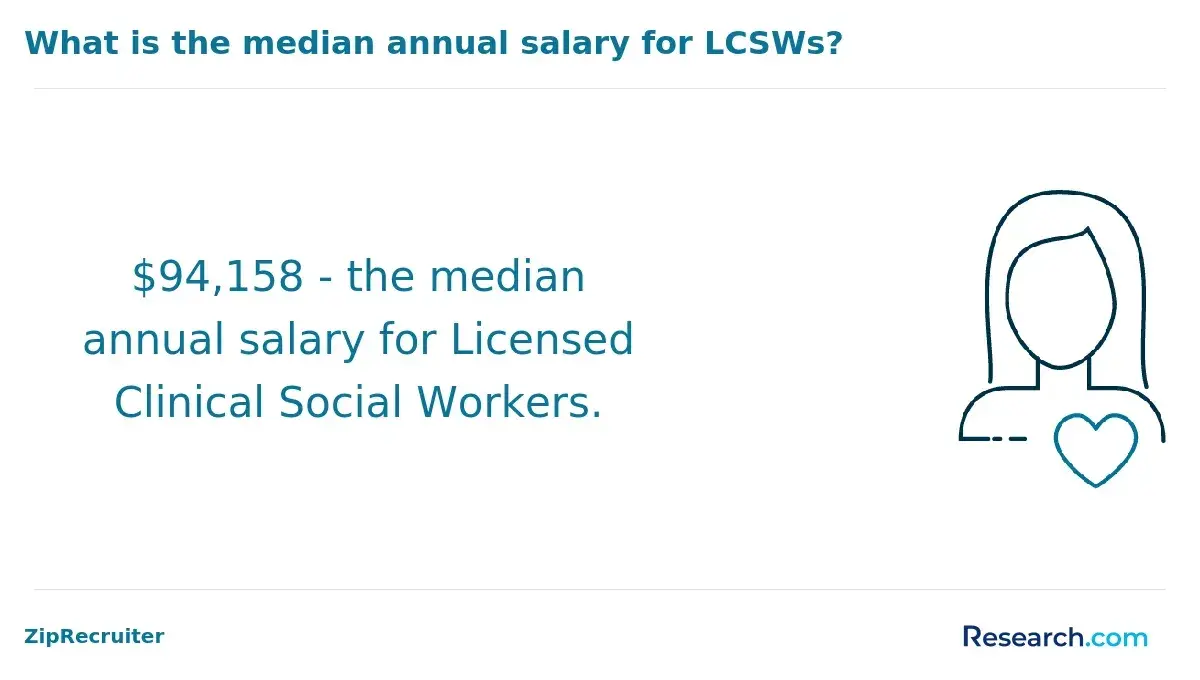
Salaries for MSW graduates vary by specialization, location, employer type, licensure, experience, and whether the role is clinical, administrative, school-based, healthcare-based, or community-focused. Entry-level salaries typically start around $50,000 annually, with median wages rising to $60,000-$70,000 after five years of experience. Clinical social workers, healthcare, and school social work professionals often earn above $80,000, especially in urban regions with high demand.
Administrative and policy-focused roles can have wider salary variation because compensation may depend on government budgets, nonprofit funding, grant cycles, and organizational size. Private practice can offer higher long-term earning potential for some licensed clinicians, but income may be delayed while building a referral base, securing insurance panel access, and covering business expenses.
Online MSW tuition ranges from under $300 to more than $1,800 per credit hour, leading to an average graduate debt near $48,000. Because social work salaries vary, applicants should compare likely earnings with total borrowing before choosing a program.
How to evaluate return on investment
- Choose an accredited program: Accreditation supports licensure eligibility and employer recognition.
- Compare total degree cost: Include tuition, fees, books, field placement expenses, and lost work hours.
- Look at local salaries: Salary outcomes can differ substantially by state, city, and employer type.
- Consider licensure strategy: Clinical licensure can expand career options but requires post-graduate supervised experience and additional steps.
- Investigate loan forgiveness: Public sector and nonprofit social workers may have access to loan forgiveness options if they meet program rules.
Students should avoid choosing a specialization based only on perceived salary. Fit matters because burnout, caseload intensity, documentation demands, and emotional labor differ across roles. A sustainable MSW career usually balances mission, working conditions, licensure plans, debt, and realistic compensation.
What Is the Job Outlook for Social Work Specializations?
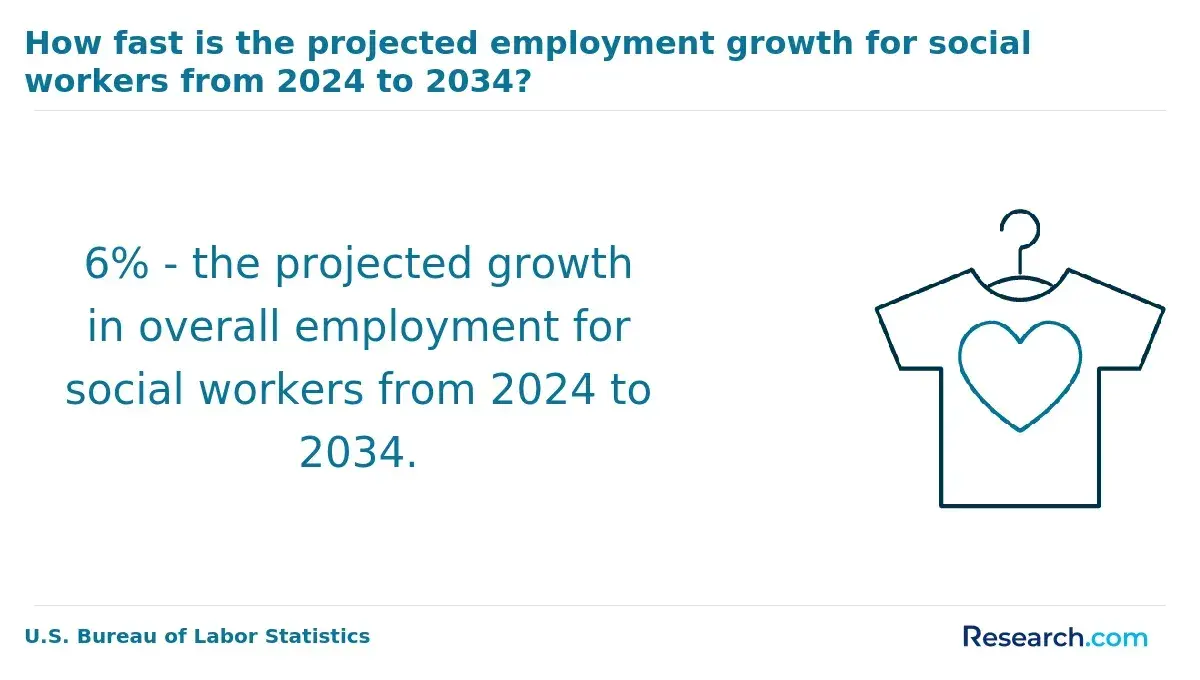
Employment for social workers is expected to grow 12% from 2024 to 2034, outpacing many other fields. Demand is tied to needs in healthcare, schools, child welfare, mental health services, substance abuse treatment, aging services, and community-based support systems.
Graduates with specialized MSW degrees may have strong prospects when their training aligns with local workforce needs. Clinical social work, school social work, and healthcare social work are common pathways, but each has different licensure rules, employer expectations, and field placement requirements.
Clinical social workers provide mental health services in hospitals, community agencies, outpatient settings, and private practice environments. Growth in this area is connected to increased demand for mental health care and integrated behavioral health. School social workers address students’ social, emotional, behavioral, and family-related needs as schools place greater emphasis on well-being and student support. Healthcare social workers assist patients dealing with chronic conditions, recovery, discharge planning, aging-related needs, and complex care systems.
MSW programs boast an 89% graduation rate and an 81% licensure exam pass rate, indicating that many students complete programs and move toward professional credentials. However, job outcomes still depend on state licensing rules, field placement quality, supervision access, location, and specialization.
Specialization outlook considerations
- Clinical and mental health: Strong demand, but students must plan for licensure, supervision, and state-specific requirements.
- School social work: Opportunities depend on district budgets, state credential rules, and local student support needs.
- Healthcare social work: Demand is linked to aging populations, chronic illness, care coordination, and hospital or clinic staffing needs.
- Substance abuse and behavioral health: May offer growing opportunities but can require additional certification or specialized training.
- Community organizing and policy: Roles can be meaningful and impactful, but funding sources and job titles may vary widely.
Challenges include varying state licensure rules and fee-for-service reimbursement affecting salaries and caseloads. Students can improve job readiness by choosing targeted internships, building relationships with supervisors, learning local licensing requirements early, and pursuing continuing education in niche areas. Specialization can improve career focus, but the strongest outcomes usually come from combining the right specialization with strong field experience and a clear licensing or employment plan.
Other Things You Should Know About Social Work
Most MSW programs require students to complete supervised field practicum hours in approved settings such as healthcare facilities, schools, or community agencies. These practical experiences help students apply classroom knowledge to real-world social work situations and are essential for developing professional skills and fulfilling licensure requirements.
Yes, online MSW programs typically arrange local internships or field placements for students near their place of residence. This ensures that remote learners gain hands-on experience comparable to on-campus students while adhering to program standards and state licensure guidelines.
In 2027, online MSW programs typically offer specializations in clinical social work, healthcare social work, school social work, mental health, and community practice. Students can choose a focus based on their career goals, allowing them to gain in-depth knowledge and skills in a specific area of social work.
Most CSWE-accredited online MSW programs require 900 to 1,200 field practicum hours, including a foundation placement and a specialized advanced placement. Clinical tracks usually place students in agencies that provide direct client services, supervision, and documented learning evaluations.
- Full-time online MSW programs https://www.onlinemswprograms.com/online-social-work-degrees/full-time-online-msw-programs/
- Social Work Careers https://socialworklicensemap.com/social-work-careers/
- 8 Career Paths You Can Pursue with a Social Work Degree https://www.sacredheart.edu/news-room/news-listing/8-career-paths-you-can-pursue-with-a-social-work-degree/
- Online Master’s in Social Work Programs https://onlinecounselingprograms.com/online-counseling-degrees/cswe-accredited-online-msw-programs/
- Social Worker Salary and Jobs in Social Work https://teach.com/online-ed/social-work-degrees/online-masters-social-work/salary-and-career-outlook/
- Online MSW Programs No GRE Required - MasterofSocialWork.com https://www.masterofsocialwork.com/faqs/gre-requirements-online-msw-programs
- Social Work Salaries https://www.socialworkers.org/careers/career-center/kickstart-your-job-hunt/social-work-salaries
- Social Work (MSW) https://www.wlu.ca/programs/social-work/graduate/social-work-msw/index.html
- Social Work Master's Degree Prerequisites https://www.psychology.org/social-work/masters/