2027 MSW Programs With Strong Alumni Networks and Mentorship

Co-Founder and Chief Data Scientist
Choosing an MSW program is not only about curriculum, tuition, or whether classes are online. For many students, the real question is whether the program can help them enter the profession with credible contacts, practical guidance, field-placement support, and a path toward licensure. Alumni networks and mentorship can make that difference, especially for career changers, first-generation graduate students, working adults, and students pursuing clinical or specialized social work roles.
This guide explains how to evaluate MSW programs with strong alumni engagement and mentorship support. It covers what these networks look like, why they matter for internships and employment, how accreditation affects licensure, what admissions and coursework typically involve, and how program format, cost, salary potential, and licensing requirements should shape your decision.
Key Things You Should Know
- Over 70% of MSW programs with strong alumni networks offer formal mentorship, enhancing graduate employment rates by up to 25% within the first year post-graduation.
- Programs integrating active alumni engagement show a 40% increase in internships and field placements, critical for hands-on social work skill development.
- Data from 2024-2025 indicates that sustained mentorship correlates with higher student retention and satisfaction, improving overall program outcomes significantly.
What Are the Best MSW Programs with Strong Alumni Networks and Mentorship?
The best MSW programs with strong alumni networks and mentorship are typically the ones that make professional connection-building part of the student experience rather than an optional extra. A useful alumni network should help students understand field placements, licensure steps, specialty options, job-search strategy, and the realities of social work practice after graduation.
Strong programs often combine formal mentorship with active alumni communities. For example, the University at Buffalo School of Social Work Alumni Mentor Program reports that 90% of mentors and 84% of mentees feel the program significantly strengthens ties between the school and social work professionals. That kind of outcome matters because mentorship is most valuable when it creates ongoing, practical contact between students and people already working in the field.
What strong alumni and mentorship support usually includes
- Formal mentor matching based on career goals, practice interests, location, or specialization.
- Alumni events where students can meet practitioners in clinical, school, healthcare, community, nonprofit, and policy settings.
- Online communities or portals that keep alumni, students, and faculty connected across locations.
- Career panels, licensure workshops, and job-search sessions led by experienced graduates.
- Field-placement guidance from alumni who understand local agencies and hiring expectations.
When comparing programs, look beyond whether a school says it has an alumni network. Ask how students are matched with mentors, how often mentors and mentees meet, whether online students have equal access, and whether the school tracks outcomes such as internship placement, licensure preparation, employment, or graduate satisfaction.
Mentorship can be especially useful for students planning specialized careers in clinical practice, community organizing, child welfare, healthcare, school social work, or policy. Students considering longer-term academic or leadership pathways may also want to compare MSW options with future study routes such as doctor of social work programs.
Why Do Alumni Networks and Mentorship Matter in MSW Programs?
Alumni networks and mentorship matter because social work careers are shaped by more than classroom performance. Students must secure field placements, understand licensure rules, build professional judgment, identify suitable roles, and learn how different practice settings operate. A strong alumni network can shorten that learning curve.
According to data from MSW Degree Austin Alumni Success and Networking Opportunities, 65% of social work graduates report that alumni connections were crucial in landing their first job. This does not mean an alumni network guarantees employment, but it shows why structured professional connections can be valuable in a field where referrals, field supervisors, agency partnerships, and local reputation often influence opportunity.
How mentorship supports MSW students and graduates
- Career clarity: Mentors can help students compare clinical, macro, school, healthcare, child welfare, nonprofit, and policy roles.
- Licensure guidance: Alumni can explain supervised practice expectations, exam preparation, documentation, and common delays.
- Field-placement insight: Graduates often know which agencies provide strong supervision and which settings align with specific goals.
- Job-search support: Alumni may share hiring timelines, interview expectations, resume feedback, and unadvertised openings.
- Professional resilience: Mentors can offer advice on workload, boundaries, burnout, ethics, and workplace challenges.
For working professionals returning to graduate school, mentorship can also support career reentry, advancement, or a shift into clinical or specialized practice. Students comparing affordability should not look at tuition alone. A lower-cost program can be a strong choice if it is accredited, provides solid field education, and maintains active alumni engagement. Those researching budget-conscious options can begin with resources on the cheapest online MSW program.
How to Choose an MSW Program with Robust Alumni and Mentorship Support?
To choose an MSW program with robust alumni and mentorship support, evaluate how the school connects students to graduates before, during, and after field education. A strong program should have a clear mentorship structure, accessible alumni contacts, and support tied to real milestones such as practicum selection, graduation, licensure, and employment.
Wayne State University's Social Work Licensure Mentorship Initiative pairs graduates with seasoned alums, resulting in a 25% higher first-time pass rate on licensure exams compared to non-participants, according to Wayne State University School of Social Work. This type of program is useful because it connects mentorship directly to a measurable professional requirement.
Questions to ask before applying
- Is mentorship formal, informal, or both?
- Are mentors matched by specialty, geography, licensure goal, or student preference?
- Can online, hybrid, part-time, and evening students participate fully?
- How often do mentors and mentees typically meet?
- Does the school offer licensure mentoring, career mentoring, field-placement mentoring, or peer mentoring?
- What outcomes does the program track, such as exam performance, employment, retention, or alumni participation?
- Are alumni involved in panels, mock interviews, field education, guest lectures, or job referrals?
What to compare across programs
| Factor | Why it matters | What to look for |
| Mentor matching | Generic matching may be less useful for specialized goals. | Pairing by clinical interest, population, setting, licensure path, or location. |
| Accessibility | Support should not depend only on living near campus. | Virtual meetings, online alumni communities, and events for remote students. |
| Licensure support | Requirements vary by state and can be confusing. | Exam prep, supervision guidance, documentation support, and alumni advice. |
| Career services integration | Mentorship works best when connected to field education and job placement. | Resume help, interview coaching, employer connections, and alumni panels. |
Prospective students should also compare career outcomes with realistic salary expectations. Reviewing resources on how much do clinical social workers make can help applicants understand how specialization, location, licensure, and experience may affect long-term earnings.
The strongest choice is usually a CSWE-accredited program that combines rigorous field education with structured, accessible, and outcome-oriented mentorship.
For MSW students in the United States, CSWE accreditation is one of the most important program features to verify. The Council on Social Work Education sets the educational standards that many state licensing boards and employers rely on when evaluating MSW degrees. A program that is not CSWE-accredited may limit a graduate’s eligibility for licensure, supervised clinical practice, and certain social work roles.
CSWE accreditation standards for MSW programs address curriculum quality, field education, faculty qualifications, student outcomes, ethical practice, competency-based learning, and preparation for culturally responsive social work. Accredited programs undergo a thorough self-study and peer review every eight years to maintain quality.
Why accreditation should come before convenience or price
- Licensure eligibility often depends on graduating from a CSWE-accredited program.
- Employers may prefer or require degrees from accredited MSW programs.
- Field education standards help ensure students complete supervised practice preparation.
- Accreditation provides an external review of program quality and outcomes.
Students should verify accreditation directly through the official CSWE directory rather than relying only on marketing language. This is especially important for online, accelerated, newly launched, or out-of-state programs. An affordable or fast program can become costly if it does not meet licensure requirements in the state where the graduate plans to practice.
Accreditation does not automatically guarantee strong mentorship, but many accredited programs also invest in alumni and student support. For instance, Ohio State University's accredited program features a Student-Alumni Mentorship Experience (SAME), where 70% of students expanded professional networks and gained job leads within a year.
Students who need a faster route should still prioritize accreditation. Some accelerated options may be suitable for working adults or career changers, but they should be evaluated carefully. Applicants can compare flexible options such as 1 year MSW programs online no bsw while confirming that the program maintains CSWE standards.
Typical MSW admission requirements include a bachelor’s degree from an accredited institution, official transcripts, recommendation letters, and a personal statement explaining the applicant’s interest in social work. Many programs expect a minimum GPA around 3.0 on a 4.0 scale, although admissions policies vary by school.
Applicants do not always need a bachelor’s degree in social work. Many MSW programs accept students from psychology, sociology, human services, education, public health, criminal justice, and unrelated fields. However, students without a social work background may need to show readiness through work experience, volunteer service, prerequisite coursework, or a strong statement of purpose.
Common MSW application materials
- Official undergraduate transcripts.
- Letters of recommendation from academic, professional, or service-related supervisors.
- A personal statement focused on social work values, professional goals, and readiness for graduate study.
- Resume or CV showing employment, volunteer work, internships, advocacy, or community service.
- Relevant experience in social services, mental health, schools, healthcare, community organizations, or related settings.
- Standardized test scores such as the GRE, although many programs have recently waived this requirement.
- Interview participation, either in person or virtually, when required by the program.
Some applicants may be asked to complete prerequisite courses such as statistics, human behavior, or introductory social work subjects. Students who already hold a BSW may qualify for advanced standing, which can shorten their study time when the degree and prior coursework meet program standards.
Mentorship can also matter during and after admission. Colorado State University’s mentoring program, where mentors have 3+ years of experience, supports faster career transitions; mentees reportedly achieve a 40% quicker move into full-time social work roles post-graduation. For applicants comparing schools, this is a reminder to evaluate support systems alongside selectivity, cost, and format.
MSW curricula combine social work theory, research, ethics, field education, and applied practice skills. Most programs begin with foundational coursework and then move into advanced practice, specialization, and supervised fieldwork. The goal is to prepare students to assess needs, intervene ethically, work across systems, and serve individuals, families, groups, organizations, and communities.
MSW programs in 2026 commonly include core courses in human behavior in the social environment, social welfare policy, research methods, ethics, diversity, assessment, and practice methods. Students may also study trauma-informed care, culturally competent interventions, advocacy, program evaluation, and evidence-informed practice.
Common MSW curriculum areas
- Human behavior and social environment: How individuals, families, communities, institutions, and social conditions interact.
- Social welfare policy: How laws, benefits, systems, and public programs affect vulnerable populations.
- Research and evaluation: How to assess evidence, evaluate programs, and use data responsibly.
- Practice methods: Skills for working with individuals, families, groups, organizations, and communities.
- Ethics and professional identity: Decision-making, boundaries, confidentiality, mandated reporting, and professional standards.
- Field education: Supervised practice in agencies, schools, hospitals, clinics, nonprofits, or community organizations.
Many programs offer specialized tracks such as mental health, child welfare, gerontology, and healthcare social work. These concentrations help students align coursework and field placements with career goals. Fieldwork placements, often requiring 900 to 1,200 hours of supervised experience, are essential for applying classroom learning and building professional networks.
Mentorship can strengthen the curriculum by helping students connect coursework to practice. Alumni mentors may advise students on choosing electives, preparing for field placements, understanding agency culture, and planning for licensure. NYU Silver School of Social Work reports its alumni network contributes to a median starting salary of $65,000-15% above the national average for new MSW graduates.
When reviewing curriculum, students should compare not only course titles but also field-placement quality, supervision, specialization depth, licensure preparation, and access to mentors in the student’s intended practice area.
MSW program length, format, and cost vary widely, so students should choose based on academic background, work schedule, field-placement availability, budget, and licensure goals. The right format is the one that allows a student to complete coursework and supervised field education without sacrificing accreditation or required professional preparation.
Common MSW formats
| Format | Typical length | Best fit | Trade-offs |
| Full-time | About two years | Students who can prioritize graduate study and fieldwork. | Faster completion but less flexibility for full-time employment. |
| Part-time | Three to four years | Working adults and students balancing family or employment obligations. | More manageable pace but longer time to graduation. |
| Accelerated | One year | Students with relevant prior preparation or coursework who can study intensively. | Demanding schedule with limited room for outside obligations. |
| Online or hybrid | Varies by program | Students who need geographic flexibility and local field placements. | Requires careful planning for practicum requirements and state licensure alignment. |
Program costs also differ by institution type and residency status. Public universities often charge $15,000 to $30,000 per year for in-state students, with higher rates for out-of-state attendees. Private schools tend to range from $30,000 to $50,000 annually. Students should also account for technology fees, books, transportation, background checks, field-placement expenses, lost work hours, and licensure-related costs after graduation.
Financial aid, scholarships, grants, assistantships, employer tuition reimbursement, and payment plans can affect the true cost of attendance. For online and part-time students, it is also important to ask whether tuition differs by residency and whether the school helps locate approved field placements near the student’s home.
Alumni networks and mentorship can improve the value of a program when they support employment outcomes. For instance, the Columbia School of Social Work Alumni-Student Mentoring Program helped 78% of participating students secure employment in their preferred field within six months post-graduation. Students should weigh this kind of career support alongside tuition, format, and accreditation.
An MSW degree can lead to clinical, direct-service, administrative, policy, and community-based roles. The exact path depends on specialization, field placements, licensure, state requirements, and the populations a graduate wants to serve. Some roles require clinical licensure, while others emphasize case management, advocacy, program leadership, or systems change.
Common careers for MSW graduates
- Clinical social worker: Provides therapy, counseling, assessment, and behavioral health interventions, often after completing required licensure steps.
- School social worker: Supports students and families with emotional, academic, behavioral, and resource-related needs.
- Healthcare social worker: Helps patients and families with discharge planning, chronic illness support, care coordination, and healthcare navigation.
- Child welfare social worker: Works with children and families involved in abuse prevention, foster care, adoption, reunification, and safety planning.
- Geriatric social worker: Supports older adults and families with aging-related services, long-term care, benefits, and quality-of-life planning.
- Policy or advocacy professional: Develops programs, analyzes policy, works with nonprofits or government agencies, and advocates for systemic change.
- Forensic social worker: Works at the intersection of social services and legal systems, including victim support, rehabilitation, and court-related services.
- Community or nonprofit leader: Manages programs, supervises teams, secures resources, and evaluates services.
Field education often influences first jobs because students develop references, practice experience, and agency familiarity during placements. Alumni mentorship can also help graduates understand which roles fit their temperament, strengths, and long-term licensing plans.
Volunteer mentoring among MSW alumni has grown notably, with a 32% increase in 2025 linked to a 22% boost in mentee retention after two years, based on the Association of Social Work Boards Professional Development Report. For new graduates, mentoring can support job placement, licensure navigation, specialization decisions, and professional resilience in a demanding field.
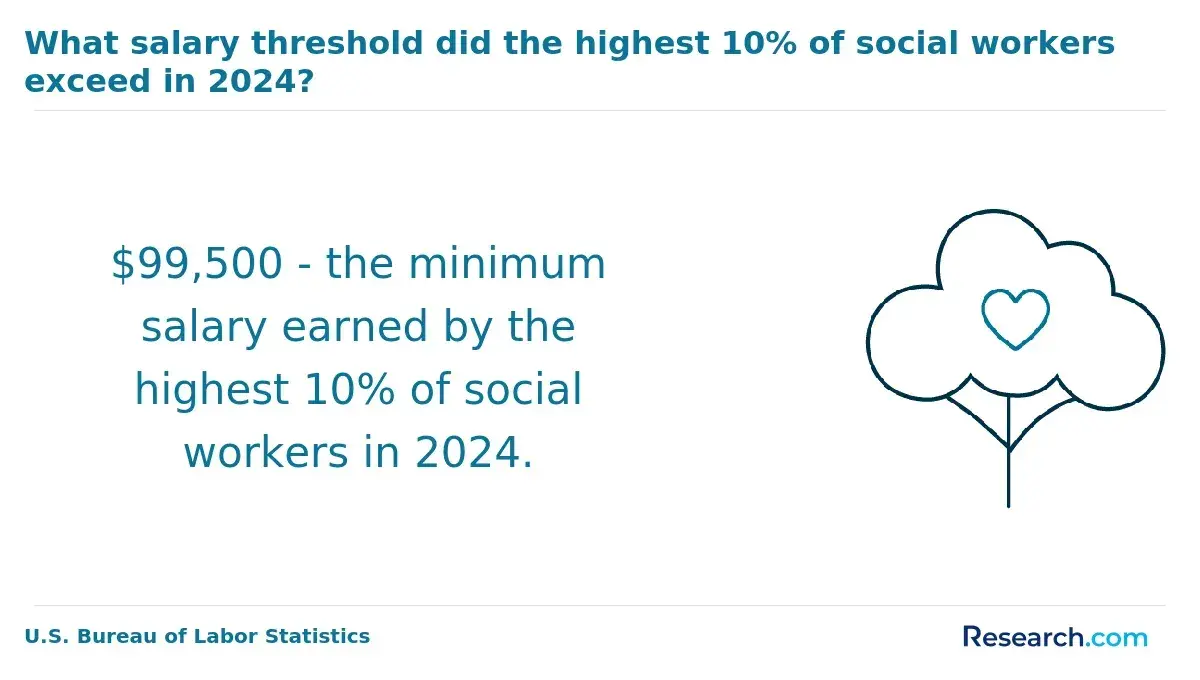
Salary potential for MSW graduates depends on specialization, licensure, location, employer type, experience, and whether the role involves clinical practice, leadership, or specialized services. Entry-level social workers generally earn from $50,000 to $65,000 annually, while clinical social workers often make between $65,000 and over $85,000, especially in healthcare, mental health, or private practice settings.
The job outlook for social work is strong, with a projected 12% growth rate through 2031-significantly faster than the average for all occupations. Demand remains high across sectors such as healthcare, child welfare, and community development. Specializations like gerontology, substance abuse, or healthcare tend to offer particularly robust employment opportunities.
Factors that can affect earnings
- Licensure: Independent clinical credentials can expand access to therapy, supervisory, and private practice roles.
- Practice setting: Hospitals, mental health organizations, schools, government agencies, nonprofits, and private practice may pay differently.
- Specialization: Healthcare, substance abuse, gerontology, and clinical mental health can offer different salary trajectories.
- Experience and supervision: Post-graduate supervised hours and advanced clinical skills can strengthen earning potential.
- Leadership responsibilities: Program management, supervision, and administrative roles may increase compensation.
Networking and mentorship can also influence career mobility. Data from Columbia School of Social Work alumni events show that 55% of participants reported career advancements, including promotions or salary increases averaging 12%. While individual outcomes vary, active alumni engagement can help graduates learn about openings, negotiate career moves, and identify pathways into higher-responsibility roles.
To improve long-term prospects, MSW students should plan early for licensure, choose field placements strategically, build relationships with supervisors and alumni, and pursue continuing education aligned with their intended practice area.
What Licensing and Certification Do MSW Graduates Need?
MSW graduates who want to practice as licensed social workers must follow the requirements of the state where they plan to work. Common credentials include Licensed Master Social Worker (LMSW) and Licensed Clinical Social Worker (LCSW). The LMSW typically allows supervised practice, while the LCSW authorizes independent clinical work, including diagnosing and treating mental health issues.
Most states require passing the Association of Social Work Boards (ASWB) exam and completing 3,000 to 4,000 supervised clinical hours, often spanning about two years post-graduation. Requirements vary widely, so students should confirm details with the appropriate state licensing board before enrolling, before selecting field placements, and again before applying for licensure.
Licensure steps students should verify
- Whether the MSW program must be CSWE-accredited for licensure eligibility.
- Which license level applies immediately after graduation.
- Which ASWB exam is required.
- How many supervised clinical hours are required and what type of supervisor qualifies.
- Whether the state requires specific coursework, background checks, jurisprudence exams, or documentation.
- How online or out-of-state MSW programs are treated by the licensing board.
Advanced certifications, such as Certified Clinical Social Worker (CCSW) or specialties in gerontology or school social work, can strengthen career prospects. These credentials do not replace state licensure, but they may help demonstrate expertise in a practice area.
Mentorship is especially useful during the licensing period because new graduates must manage supervision, employment, exam preparation, and paperwork. For instance, the University of Pittsburgh's Regional MSW Program cites a 92% job placement rate within four months post-graduation, supported by robust mentorship networks that guide alumni through licensing and credentialing processes.
The safest approach is to choose a CSWE-accredited MSW program, confirm state-specific requirements early, keep careful records of supervised hours, and use alumni or faculty mentors to avoid preventable delays.
Other Things You Should Know About Social Work
Successful MSW students typically possess strong communication, empathy, and critical thinking skills. They must be able to engage effectively with diverse populations and demonstrate resilience when facing emotionally challenging situations. Organizational and research skills also contribute to managing coursework and field placements effectively.
Field education placements provide MSW students with practical experience by working directly with clients and agencies. These placements help develop professional competencies and often influence career direction by exposing students to different social work practice settings. They also offer valuable networking opportunities with practicing professionals.
Yes, many MSW students pursue mentorship through professional organizations, community agencies, and online social work networks. External mentorship can complement academic guidance by offering broader perspectives, career advice, and support during job searches. It enriches learning by connecting students to experienced practitioners beyond their university's alumni.
Most MSW programs require a bachelor’s degree from an accredited college, but not a BSW. Some ask for introductory coursework in statistics, psychology, or sociology before enrollment, while advanced standing tracks usually require a CSWE-accredited BSW and can reduce the program to about 30–39 credits.
- MSW Career Outlook https://www.kysu.edu/academics/college-as/school-of-social-work/careers/msw-career-outlook.php
- Social Work Masters Prerequisites: Discover 7 Critical Pieces - Prereqcourses https://www.prereqcourses.com/social-work-masters-prerequisites/
- Accreditation and/or licensing requirements | SWTP https://socialworktestprep.com/blog/2024/october/25/accreditation-and-or-licensing-requirements/
- What Can I Do With An MSW Degree? https://www.psychology.org/social-work/alternative-jobs-with-a-social-work-degree/
- Most Affordable MSW Programs in California - CaliforniaSocialWorkEDU https://www.californiasocialworkedu.org/most-affordable-msw-programs-in-california/
- How to Become a Licensed Social Worker https://onlinecounselingprograms.com/mental-health-careers/how-to-become-licensed-social-worker/
- Homepage https://socialworklicensemap.com/
- 5 High-Paying Jobs You Can Get with an MSW https://onlinedegrees.keuka.edu/blog/highest-paying-msw-jobs
- What is the Career Outlook and Salary for Social Work? - Social Work Degree Center https://www.socialworkdegreecenter.com/what-is-the-career-outlook-and-salary-range-for-social-workers/
- Exploring the MSW Master of Social Work | Guide to Success https://socialworkexams.com/msw-master-of-social-work-how-to-launch-a-successful-social-work-career/