2027 Highest-Paying Social Work Jobs

Co-Founder and Chief Data Scientist
Choosing social work does not mean ignoring salary. The strongest financial outcomes in this field usually come from combining mission-driven practice with the right credentials, work setting, specialization, and career timing. For students, career changers, and practicing social workers, the key question is not simply whether social work pays well, but which path within social work offers the best balance of income, stability, impact, and licensure requirements.
This guide explains where the highest-paying social work jobs are, what clinical and healthcare social workers can expect to earn, how school and supervisory roles compare, and which education choices are most likely to improve long-term compensation. It also covers job outlook, doctoral funding options, and practical ways to increase earning potential without losing sight of the profession’s core purpose: helping people navigate difficult systems and improve their lives.
Key Things You Should Know About the Highest-Paying Social Work Jobs
- Your income is directly tied to your chosen field. Focusing on in-demand areas like healthcare, clinical practice, or administration positions you for the most competitive salaries.
- A Master of Social Work (MSW) is the baseline for top-tier roles. For those aiming for executive leadership or academic positions, a Doctor of Social Work (DSW) opens the door to elite opportunities.
- Earning your license as a Clinical Social Worker (LCSW) is one of the most effective ways to increase your salary, qualify for more advanced positions, and gain the ability to practice independently.
What are the highest-paying social work jobs available?
The highest-paying social work jobs are usually found in clinical, healthcare, government, and management roles. These positions pay more because they require advanced training, independent judgment, specialized knowledge, and, in many cases, state licensure. A Bachelor of Social Work can open the door to entry-level roles, but the strongest salary opportunities typically require an MSW and, for clinical work, an LCSW or equivalent license depending on the state.
The most financially competitive paths include the following:
| Role | Why it can pay more | Best fit for |
| Healthcare Social Worker | Medical settings often have stronger funding and need social workers who understand care coordination, discharge planning, crisis response, and patient advocacy. The median salary is $62,940, with the top 10% earning over $90,000. | Social workers interested in hospitals, outpatient clinics, nursing homes, hospice, or integrated care teams. |
| Licensed Clinical Social Worker (LCSW) | Clinical licensure allows social workers to provide therapy, diagnose within their scope of practice, and pursue higher-paying roles in mental health settings or private practice. | Professionals who want to specialize in psychotherapy, trauma, substance abuse, family systems, or other clinical areas. |
| Social and Community Service Manager | Management roles involve supervising staff, overseeing programs, managing budgets, and meeting compliance standards, which places them in a higher salary range than many direct-service jobs. | Experienced social workers who want leadership, program design, and organizational responsibility. |
| Veterans Affairs Social Worker | Federal roles can offer competitive salaries, structured advancement, strong benefits, and specialized work with veterans and their families. | Social workers interested in military-connected populations, trauma, healthcare, housing, benefits navigation, and behavioral health. |
Why these roles pay more
Higher pay in social work is usually tied to three factors: credential level, risk and complexity, and funding source. Clinical and medical roles often involve crisis intervention, treatment planning, documentation, interdisciplinary collaboration, and ethical decision-making under pressure. Supervisory roles add responsibility for staff performance, program outcomes, compliance, and budgets.
Work setting also matters. Hospitals, federal agencies, large healthcare systems, and private practices often have more stable or diverse funding than smaller community-based nonprofits. That does not make one setting more valuable than another, but it does affect compensation.
If you are comparing degree options or career paths, it helps to start with a clear view of what can you do with a degree in social work and then work backward from the roles that best match your salary goals, licensure plans, and preferred population.
How much can a clinical social worker expect to earn?
A Licensed Clinical Social Worker can earn more than the general median for the profession, especially with experience, specialization, and the ability to practice independently. While the median pay for social workers is around $58,380 per year, clinical social workers in higher-paying settings and top markets can exceed that amount, with top earners surpassing $90,000 annually.
Clinical social work income depends less on the job title alone and more on how the role is structured. A salaried therapist in a community agency, a hospital-based behavioral health clinician, and an LCSW in private practice may all provide clinical services, but their earning models can look very different.
- Private practice: This setting can offer the highest income ceiling because licensed clinicians may set rates, select payer arrangements, manage caseload size, and retain income after business expenses. It also requires business skills, referral development, documentation systems, liability coverage, and financial discipline.
- Hospitals and healthcare systems: These roles often combine clinical assessment, crisis support, discharge planning, and collaboration with medical teams. Salaries may be stronger than in smaller nonprofits, and benefits can be a major part of total compensation.
- Federal agencies and specialized clinics: Government and specialty mental health settings may offer structured pay scales, job stability, and advancement opportunities for experienced LCSWs.
- Geographic location: Major metropolitan areas and states with higher demand for mental health services often pay more, though cost of living can reduce the practical value of a higher salary.
How to build a higher-paying clinical career
The most important step is completing the requirements for clinical licensure in your state. Licensure is what separates many higher-paying clinical roles from general case management or entry-level direct-service positions. Because requirements vary by state, applicants should verify supervised experience, examination, continuing education, and renewal rules before choosing a program or job.
After licensure, specialization can improve earning potential. Employers and clients often value clinicians with focused expertise in areas such as trauma, substance abuse, couples counseling, child and adolescent mental health, or integrated behavioral healthcare. Specialization should be chosen carefully: the best niche is one with strong demand, appropriate supervision or training pathways, and work you can sustain over time.
For social workers who do not want to run a business, higher-paying salaried roles in hospitals, government agencies, and large behavioral health organizations can offer a strong alternative to private practice. These roles may provide benefits, predictable income, supervision opportunities, and a clearer path into leadership.
What role does a healthcare social worker play and what is their salary?
A healthcare social worker helps patients and families manage the social, emotional, financial, and practical challenges that come with illness, disability, injury, aging, or major medical decisions. The role sits at the intersection of patient advocacy, care coordination, counseling, and resource navigation. Healthcare social workers earn a median annual salary of $62,940, and the Bureau of Labor Statistics projects a 10% job growth for this specialty.
Healthcare social workers are commonly employed in hospitals, outpatient clinics, nursing homes, rehabilitation facilities, hospice programs, and other medical settings. Their work often affects whether a patient can safely leave the hospital, access follow-up care, afford medications, understand treatment options, or connect with long-term support.
- Patient advocacy: Helping patients understand their rights, communicate concerns, and participate in care decisions.
- Discharge planning: Coordinating transportation, home health, medical equipment, rehabilitation, long-term care, or family support before a patient leaves a facility.
- Crisis intervention: Supporting patients and families during medical emergencies, new diagnoses, end-of-life decisions, or sudden changes in functioning.
- Resource connection: Linking patients to financial assistance, insurance guidance, housing support, mental health care, caregiver resources, and community programs.
- Interdisciplinary collaboration: Working with physicians, nurses, therapists, case managers, and administrators to reduce barriers to care.
Why demand and salaries are high
Healthcare social work pays relatively well because the work is complex and time-sensitive. These professionals must understand medical systems, insurance barriers, ethical issues, family dynamics, and the social factors that affect health outcomes. In many cases, their decisions influence patient safety, length of stay, continuity of care, and readmission risk.
Demand is also supported by an aging population and greater recognition that mental health, housing, family support, and financial stability directly affect physical health. Social workers who can operate confidently inside healthcare systems are therefore valuable to employers and patients alike.
Location can make a meaningful difference. Social workers comparing offers should look beyond base pay and consider benefits, shift expectations, caseload size, supervision, union status where applicable, and advancement potential. Reviewing the highest paying states for social workers can help identify where compensation may be strongest for this specialty.
What are the responsibilities and salary of a school social worker?
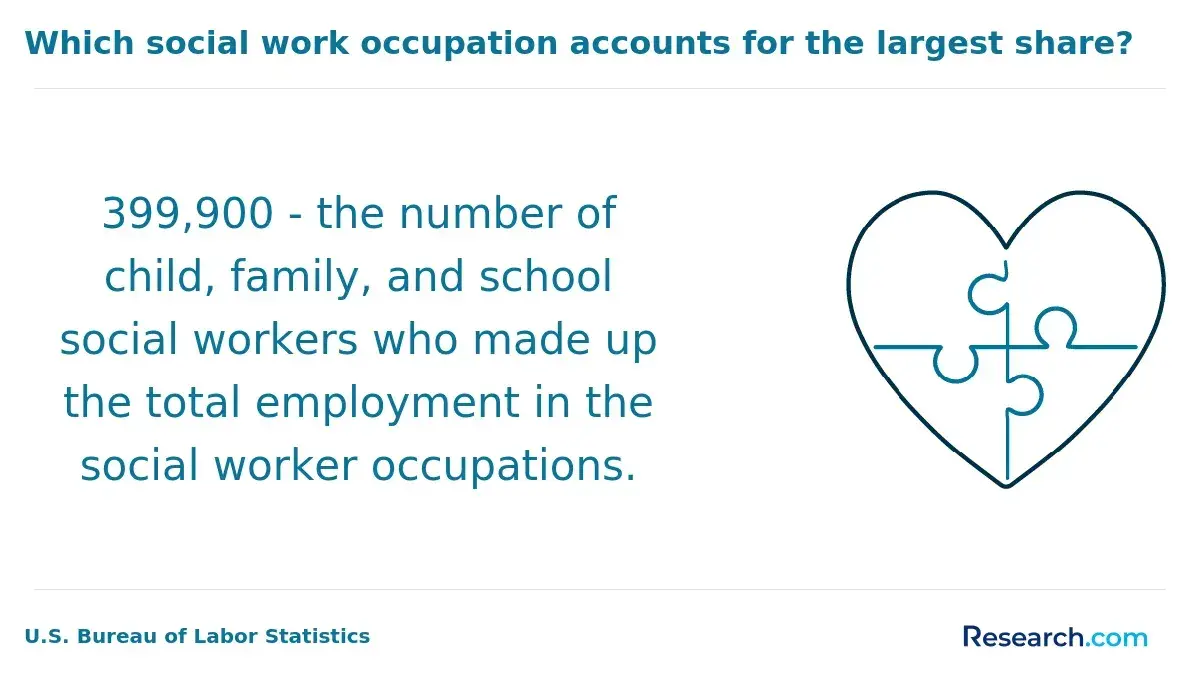
A school social worker supports students whose social, emotional, behavioral, family, or community challenges interfere with learning. The role is not limited to counseling students after problems occur. School social workers also help identify barriers early, coordinate services, support families, and advise educators on student needs. The median pay for this specialty is approximately $54,880 per year, though salaries vary by state, district, contract structure, and required credentials.
School social workers serve as a bridge among students, families, teachers, administrators, and community agencies. Their work often focuses on prevention, crisis response, attendance, behavior, safety, and access to services.
- Individual and group counseling: Supporting students dealing with anxiety, grief, bullying, family conflict, peer problems, trauma, or behavioral concerns.
- Crisis intervention: Responding to urgent situations involving self-harm concerns, violence, abuse, neglect, or other safety risks.
- Family outreach: Working with parents and guardians to address home or community issues that may affect attendance, behavior, or academic performance.
- Resource coordination: Connecting families with food, housing, healthcare, mental health, transportation, and other community supports.
- School team collaboration: Participating in student support meetings, behavioral planning, attendance interventions, and special education-related processes where appropriate.
The unique impact of school social work
School social work may not always offer the highest salary ceiling in the profession, but it can provide a meaningful combination of stability, community impact, and long-term influence on student outcomes. The work is especially suited to social workers who care about child advocacy, prevention, family systems, and equity in education.
Compensation is often tied to district salary schedules, education level, years of experience, and state or district credential requirements. An MSW is typically required for these positions. In some locations, school-specific certification or licensure may also be required, so students should confirm local requirements before selecting field placements or graduate programs.
Before choosing this path, consider the trade-offs. School social workers may benefit from predictable school-year calendars and strong community relationships, but they may also face high caseloads, limited resources, and urgent safety concerns. The best fit is someone who can collaborate across systems while staying focused on student well-being.
How does a social work supervisor's salary compare to other roles?
A social work supervisor generally earns more than frontline practitioners because the role adds responsibility for people, programs, compliance, and outcomes. Supervisory and management positions are often grouped with Social and Community Service Managers, who earn a median salary of $77,030 per year.
The salary difference reflects a major career shift. Instead of focusing only on direct service, supervisors are accountable for the quality, consistency, and sustainability of services delivered by a team or program.
| Responsibility | What it involves | Why it affects pay |
| Staff management and development | Hiring, training, supervising, evaluating, and supporting social workers or case managers. | Supervisors influence staff retention, service quality, and team performance. |
| Program oversight | Monitoring program goals, documentation standards, client outcomes, and service delivery. | Employers pay more for professionals who can keep programs effective and compliant. |
| Budgetary responsibility | Managing resources, helping with grants, tracking spending, and supporting financial planning. | Financial accountability is a core management function. |
| Quality assurance | Reviewing complex cases, guiding ethical decisions, and ensuring practice standards are met. | Supervisors reduce risk and help maintain professional standards. |
The path to leadership and higher earnings
Supervisory roles are typically not entry-level positions. Employers usually look for a combination of advanced education, licensure, strong practice experience, and evidence that the candidate can lead others. A social work supervisor often needs a Master of Social Work, an LCSW, and at least five years of post-licensure experience.
This path is a strong option for social workers who want to broaden their impact without leaving the field. Instead of helping one client or family at a time, supervisors shape how an entire team delivers services. They also mentor newer professionals, improve systems, and help organizations use limited resources responsibly.
The trade-off is that leadership can move you farther from daily client contact. Before pursuing supervision, consider whether you enjoy coaching staff, handling conflict, documenting performance, managing risk, and making decisions that affect both clients and employees.
What educational path is required for high-paying social work jobs?
A Master of Social Work is the central credential for most high-paying social work jobs. It is commonly required for clinical, healthcare, supervisory, and advanced practice roles, and it is the educational foundation for clinical licensure in many states. A BSW can be valuable for entry-level work and may shorten the path to an MSW through advanced standing options, but the MSW is typically the degree that opens the strongest salary opportunities.
The right education path depends on the role you want:
| Goal | Typical education needed | Why it matters |
| Entry-level social work or case management | BSW or related bachelor’s degree, depending on employer requirements. | Provides a foundation for direct service, community work, and graduate study. |
| Clinical social work | MSW plus state licensure requirements. | Required for many therapy, diagnosis, and independent practice roles. |
| Healthcare or specialized practice | MSW, relevant field experience, and often licensure. | Prepares social workers for complex systems, interdisciplinary teams, and specialized populations. |
| Supervision or administration | MSW, licensure in many roles, and significant experience. | Supports advancement into program leadership, compliance, and staff management. |
| Executive leadership, university teaching, or advanced research | DSW or Ph.D. depending on career goal. | Can support senior leadership, scholarship, policy, or academic careers. |
How the MSW maximizes earning potential
The MSW matters because it provides the advanced practice preparation employers expect for higher-responsibility roles. Coursework and field education can build skills in assessment, intervention, ethics, policy, research, program evaluation, and specialized practice areas such as healthcare or mental health.
For clinical careers, the MSW is also a key step toward licensure. However, students should not assume that every MSW automatically leads to every license. Licensure rules vary by state, so applicants should confirm that a program meets the educational requirements for the state where they plan to practice. Accreditation, supervised experience rules, and exam requirements should all be reviewed before enrolling.
Flexible MSW online programs can make graduate education more accessible for working adults, caregivers, and career changers. When comparing online options, students should look closely at accreditation, field placement support, total cost, licensure alignment, student services, and graduation timelines.
Are there opportunities for fully funded doctoral programs in social work?
Yes. Fully funded doctoral programs in social work are available, though they are highly competitive. These programs may lead to a Doctor of Social Work or a Ph.D. and typically include a full tuition waiver and a living stipend in exchange for teaching or research assistantships.
A funded doctorate can be financially important because it reduces the risk of taking on substantial additional debt for a credential that is most useful for specific career goals. Doctoral study is not necessary for most direct practice roles, and it is not the standard route to becoming a higher-paid clinical social worker. It is most relevant for people who want to conduct research, teach at the university level, influence policy, lead major organizations, or develop advanced practice expertise.
The strategic value of a funded doctorate
A doctoral degree can support access to elite roles in academia, advanced research, policy, and executive leadership. Funding also signals that a university is investing in the student’s potential as a scholar, teacher, or leader. In return, funded students are often expected to contribute meaningfully to research projects, teaching, publications, or departmental work.
Strong applicants usually have a clear research or leadership agenda, strong academic preparation, relevant professional experience, and a persuasive explanation of how doctoral training fits their long-term goals. Because funding is limited, applicants should evaluate faculty fit, assistantship expectations, stipend adequacy, research opportunities, and placement outcomes before applying.
For social workers who want to shape the profession beyond direct service, researching fully funded DSW programs can be a useful starting point. The decision should be based on career direction, not prestige alone.
Which work settings offer the highest salaries for social workers?
The highest social work salaries are most often found in settings with stronger funding, higher reimbursement potential, greater organizational complexity, or specialized demand. Private clinical practice, federal government agencies such as the Department of Veterans Affairs, large hospital networks, and corporate social responsibility or employee support roles can offer stronger compensation than many grant-dependent community organizations.
For professionals who need a faster route into graduate-level preparation, accelerated MSW programs without BSW may help shorten the path toward licensure and specialization, provided the program aligns with state requirements and the student can manage the pace.
- Private practice: Licensed clinical social workers may set rates, choose client populations, and control business strategy. The income ceiling can be high, but so are the responsibilities, including marketing, billing, taxes, scheduling, compliance, and unpaid administrative time.
- Federal government: Federal agencies can offer competitive salaries, structured advancement, strong benefits, and job security. These roles may also require specialized experience with veterans, healthcare, trauma, housing, or disability systems.
- Hospitals and healthcare systems: Large medical organizations often need social workers who can manage complex cases, coordinate care, support discharge planning, and work across disciplines. These institutions may offer stronger pay and benefits than smaller agencies.
- Corporate sector: Some companies hire social workers for employee assistance programs, workplace well-being, crisis response, organizational support, and corporate social responsibility initiatives. These jobs can provide corporate-level pay but may involve different expectations than traditional social service roles.
Why these sectors pay more
Pay is closely tied to funding. Federal budgets, healthcare revenue, private-pay clinical services, and corporate compensation structures often support higher salaries than organizations that depend heavily on grants, donations, or public contracts. The work may still be mission-driven, but the economics of the employer matter.
When comparing settings, look at total compensation rather than salary alone. Benefits, retirement contributions, health insurance, paid time off, supervision, continuing education support, caseload expectations, schedule flexibility, and promotion pathways can make one offer substantially better than another.
The best setting is not always the one with the highest advertised pay. A sustainable long-term career should also account for burnout risk, ethical fit, workload, support, and whether the role builds experience that leads to the next opportunity.
What is the job outlook for social workers in the coming years?
The job outlook for social workers is strong. The U.S. Bureau of Labor Statistics forecasts a 6% increase in employment for social workers between 2024 and 2034, creating approximately 44,700 new jobs. Demand is especially important in healthcare, mental health, and substance abuse-related services, which are also among the areas with stronger compensation potential.
Students who want an accessible path into the profession may compare MSW programs with high acceptance rate options, but admissions accessibility should not be the only factor. Accreditation, field placement quality, licensure alignment, faculty support, and graduation outcomes are critical when the goal is long-term career stability.
Growth will not be equal across every role or region. Social workers with an MSW, relevant field experience, and licensure may be better positioned than candidates seeking generalist roles with fewer credentials. Specialization can also matter because employers often need professionals who can step into complex settings with less training time.
The forces driving job security
Several long-term trends support demand for social workers. An aging population increases the need for professionals who understand healthcare navigation, caregiving, long-term services, and end-of-life planning. At the same time, public awareness of mental health and substance abuse issues continues to expand the need for trained clinical providers.
Social workers also play an important role in schools, courts, hospitals, community agencies, housing programs, and government systems. Their ability to connect people with services, address barriers, and coordinate care makes the profession relevant across many parts of the economy.
For students deciding whether to pursue the field, the outlook is encouraging but not automatic. Strong outcomes are more likely for those who choose accredited education, complete licensure requirements where applicable, build specialized experience, and remain flexible about setting and location.
How can a social worker increase their earning potential over their career?
A social worker can increase earning potential by making deliberate career moves: earning advanced credentials, obtaining licensure, choosing high-demand specialties, negotiating strategically, and moving into roles with more autonomy or responsibility. The first job after graduation does not have to define the rest of a career.
The strongest strategy is to build a progression plan rather than rely on annual raises alone. Social work compensation often grows when professionals become harder to replace because they bring licensure, specialized expertise, leadership capacity, or revenue-generating clinical skills.
- Complete clinical licensure when it fits your goals: For those interested in therapy or independent practice, LCSW status can unlock roles that are unavailable to non-licensed practitioners.
- Choose a high-demand specialization: Areas such as healthcare, clinical psychotherapy, substance abuse, trauma-informed care, gerontology, and veterans services can improve competitiveness for better-paying positions.
- Pursue relevant certifications carefully: Certifications can strengthen a resume, but they should be recognized by employers, aligned with your practice area, and worth the cost and time required.
- Target better-funded settings: Hospitals, federal agencies, large healthcare systems, and private practice may offer higher pay than smaller agencies with limited budgets.
- Develop leadership skills: Supervision, program management, grant writing, compliance, budgeting, and quality improvement can support advancement into higher-paying administrative roles.
- Track outcomes and document value: Keep records of caseload achievements, program improvements, crisis response experience, training completed, and leadership contributions. These details can support promotions and salary negotiations.
- Consider private practice only when prepared: Private practice can increase income, but it requires business planning, referral networks, risk management, and comfort with variable revenue.
Common mistakes can slow salary growth. These include accepting roles without understanding licensure supervision, choosing programs that do not align with state requirements, staying too long in positions with no advancement path, overlooking benefits when comparing offers, and assuming that passion alone will lead to higher pay.
The most financially resilient social workers combine purpose with planning. They choose roles that build credentials, protect against burnout, and move them toward settings where their skills are both needed and properly compensated.
Other Things You Should Know About the Highest-Paying Social Work Jobs
The Licensed Clinical Social Worker credential usually opens the highest-paying roles because it allows independent clinical practice. In most states, licensure requires a CSWE-accredited MSW, 3,000 supervised clinical hours over two to three years, and passage of the ASWB Clinical exam.
In 2027, clinical social workers and healthcare social workers often command higher salaries due to specialized skills in mental health and healthcare systems. Roles in administration or policy development also tend to offer higher compensation due to advanced responsibilities and expertise.
References
- Keuka College. (2025). 5 high-paying jobs you can get with an MSW. https://onlinedegrees.keuka.edu/blog/highest-paying-msw-jobs
- Nexford University. (2025). Top 10 highest paying social work jobs 2025 (including salaries). https://www.nexford.edu/insights/highest-paying-social-work-jobs
- University of Southern California. (2025). The 10 best careers in social work. https://dworakpeck.usc.edu/blog/the-10-best-careers-social-work
- U.S. Bureau of Labor Statistics. (2025). Social workers: Occupational outlook handbook. https://www.bls.gov/ooh/community-and-social-service/social-workers.htm
- U.S. Department of Labor. (2025). Summary report for: 21-1022.00 – Healthcare social workers. O*NET OnLine. https://www.onetonline.org/link/summary/21-1022.00