2027 Telehealth Skills Every Future Social Worker Should Build

Co-Founder and Chief Data Scientist
Future social workers are preparing for a practice environment where many assessments, therapy sessions, care coordination meetings, and crisis contacts may happen through video, phone, secure messaging, or hybrid service models. Telehealth can make social work more accessible for clients who face transportation barriers, rural isolation, disability, caregiving demands, or limited local providers. It can also weaken rapport, privacy, assessment quality, and safety planning when practitioners are not trained for remote care.
Telehealth skill is not simply knowing how to start a video call. Social workers need to communicate empathy through screens, protect client information, document remote services correctly, respond to emergencies from a distance, and adapt interventions for clients with uneven access to devices, broadband, or private space. They also need to understand how state rules, agency policies, licensure requirements, and ethical standards shape virtual practice.
This guide explains the telehealth competencies future social workers should build, how those skills appear in social work education, what to look for in accredited programs, and which careers use remote service delivery. It is designed for students comparing BSW, MSW, and advanced social work pathways, as well as professionals deciding whether telehealth-focused training is worth adding to their credentials.
Key Things You Should Know
- Telehealth in social work grew 60% from 2023 to 2025, making digital client engagement, confidentiality, and technology proficiency essential skills for future practitioners.
- Effective telehealth requires mastery of virtual communication techniques; studies show 72% of clients prefer video sessions for convenience and comfort.
- Familiarity with legal and ethical standards in telehealth is crucial, as 85% of states updated regulations by 2025 to protect client privacy and data security.
What are telehealth skills for social workers?
Telehealth skills for social workers are the clinical, technical, ethical, and communication abilities needed to deliver effective services when the client and practitioner are not in the same physical space. These skills help social workers preserve trust, confidentiality, assessment quality, and client safety across video, phone, and other approved digital formats.
The core skill set includes technical proficiency with secure videoconferencing tools, careful documentation, informed consent for virtual services, and the ability to protect client information under HIPAA regulations when applicable. Social workers must also know how to verify client identity and location, plan for emergencies, and use agency-approved platforms rather than informal or unsecured tools.
Remote communication requires more intentional practice than in-person work. Because physical cues are limited, social workers need to speak clearly, check understanding more often, listen for tone changes, and name observations without making assumptions. For example, a practitioner may say, “I noticed your voice became quieter when we discussed housing. Is that connected to what you are feeling right now?” This kind of direct but respectful clarification can reduce misunderstanding during virtual sessions.
Telehealth skills also include practical troubleshooting. A social worker may need to help a client test audio, switch to a phone session when bandwidth is low, pause when a client loses privacy at home, or explain how to use a secure portal. These moments are not minor technical inconveniences; they can affect whether a client remains engaged and whether the session can proceed ethically.
Strong telehealth practice combines several competencies:
- Using secure platforms and following privacy policies for remote communication
- Building rapport through video, phone, or chat without relying heavily on full-body cues
- Assessing a client’s technology access, digital literacy, and privacy limitations
- Creating crisis and safety plans when the provider is not physically present
- Documenting virtual services accurately in electronic records
- Understanding jurisdiction, licensure, consent, and emergency-response requirements
The rapid expansion of telehealth roles, shown by a 300% increase in job postings from 2020 to 2025, underscores why these skills now matter for career readiness. Students who want advanced preparation for leadership, clinical innovation, or teaching in this area may also compare options such as an online doctorate of social work.
Why do social workers need telehealth skills?
Social workers need telehealth skills because remote service delivery changes how clients are engaged, assessed, protected, and supported. Telehealth can reduce barriers related to transportation, distance, mobility, work schedules, stigma, and provider shortages. At the same time, it can introduce new risks: weaker nonverbal assessment, privacy problems at home, technology failures, and uncertainty about how to respond during a crisis.
According to the Coalition for Technology in Behavioral Science CTiBS Competency Framework Survey, 85% of telehealth social workers find that difficulties reading nonverbal cues reduce session effectiveness without specialized training. This finding points to a practical problem: a social worker who is excellent in person may still need targeted preparation to be effective in remote care.
Telehealth skills are especially important in the United States because clients may connect from varied settings, including homes, schools, shelters, hospitals, correctional reentry programs, and rural communities. A client may be using a shared device, a weak internet connection, or a public location with limited privacy. Social workers must adapt without lowering ethical standards.
Key competencies include the following:
- Interpreting facial expressions, posture, silence, tone, and limited body language within a screen view
- Managing technical disruptions calmly so the session does not become client-blaming or chaotic
- Adapting counseling, case management, and assessment techniques for video, phone, or secure messaging
- Ensuring client privacy and confidentiality in virtual settings, including conversations about who else may be nearby
- Using digital tools to assess needs, document progress, and coordinate care accurately
- Recognizing when telehealth is not appropriate and when in-person, emergency, or higher-level care is needed
Telehealth training also helps social workers serve clients with sensory impairments, language-access needs, trauma histories, limited digital literacy, or no reliable broadband. Clear verbal structure becomes more important: explaining the session plan, asking permission before sensitive topics, summarizing frequently, and checking whether the client feels safe continuing.
Legal and ethical knowledge is equally important. Informed consent for online services, crisis protocols, mandated reporting, platform security, and state practice rules should be understood before a practitioner begins delivering remote care. Students who want foundational social work preparation with flexible study options may explore an affordable online MSW program while comparing how each curriculum addresses telehealth practice.
Which telehealth skills should future social workers build?
Future social workers should build telehealth skills that cover five areas: secure technology use, remote communication, ethical decision-making, crisis response, and digital equity. Employers increasingly expect new social workers to be comfortable delivering services in hybrid or fully virtual environments, not only in traditional offices.
Proficiency with HIPAA-compliant platforms is one of the most visible skills. Social workers should know how to schedule and launch secure sessions, confirm client identity, use waiting rooms or access controls, avoid unapproved recording, and protect information shared through portals or electronic health records. According to the National Association of Social Workers NASW Telehealth Practice Report (2025), the daily use of secure platforms among licensed clinical social workers has surged to 92%, reflecting this growing demand.
Digital communication is just as important as technical setup. Social workers need to express empathy through facial expression, tone, pacing, reflection, and verbal validation. They also need to handle moments that are common online: a client turning off the camera, responding slowly in chat, being interrupted by family, or losing connection during a sensitive disclosure.
Future practitioners should prioritize these skills:
- Remote rapport-building: opening sessions warmly, explaining the virtual process, and checking comfort with the format.
- Teleassessment: gathering accurate information despite limited visual cues and knowing when additional screening or in-person assessment is needed.
- Technical troubleshooting: helping clients navigate basic access issues while keeping the session focused and respectful.
- Secure documentation: recording virtual contacts, consent, location, interruptions, risk concerns, and follow-up plans clearly.
- Remote crisis planning: confirming client location, emergency contacts, local resources, and steps to take if the connection fails.
- Cultural and digital humility: adapting services for clients whose technology access, privacy, language, disability status, or comfort level differs from the provider’s assumptions.
Data management is another essential competency. Telehealth often connects client communication, electronic health records, digital assessment tools, and care coordination platforms. Social workers must document accurately and understand how agency systems store, transmit, and restrict access to client information.
Cultural competency in telehealth includes asking practical questions: Does the client have a private place to talk? Can they read portal messages? Do they prefer phone because video is unsafe or unreliable? Would shorter sessions, audio-only options, or low-bandwidth tools improve engagement? Students seeking a faster graduate route can compare an accelerated masters in social work online while checking whether the program includes supervised practice with these telehealth competencies.
Telehealth-focused social work education should be built on a properly accredited social work degree. In the United States, the key programmatic accreditor for BSW and MSW programs is the Council on Social Work Education (CSWE). CSWE accreditation signals that a program meets national standards for social work education, including professional competencies that can be applied to in-person, hybrid, and remote practice.
CSWE accreditation matters because state licensure boards typically require completion of a CSWE-accredited degree. A program may advertise telehealth courses, digital practice labs, or virtual field opportunities, but students should first confirm the underlying BSW or MSW program is accredited if licensure is part of their career plan.
Telehealth content within an accredited program should cover ethical telepractice, client privacy under HIPAA, secure technology use, documentation, boundaries, accessibility, and crisis response. Prospective students should ask whether telehealth training is required, elective, embedded in clinical courses, or offered through a certificate.
Many programs also encourage obtaining the National Association of Social Workers (NASW) telebehavioral health certification. This type of specialized credential can add focused training in legal issues, clinical adaptations, technology standards, and ethical decision-making for remote practice. It should be viewed as a supplement to, not a substitute for, an accredited social work degree and state licensure requirements.
State rules can affect telehealth practice in major ways. Depending on jurisdiction and role, social workers may need specific training, supervision, documentation procedures, or authorization to serve clients located in another state. Crisis management is particularly important because a provider may need to coordinate emergency support from a distance. Evidence-based virtual crisis intervention training has proven effective, contributing to a 40% reduction in emergency room visits for mental health crises in rural areas.
Before enrolling, prospective students should verify:
- The BSW or MSW program has CSWE accreditation
- Telehealth training includes ethics, privacy, consent, documentation, and platform security
- Students practice remote assessment and crisis-response scenarios
- Field education or simulations include supervised telepractice exposure
- The program explains how state licensure rules affect telehealth work
How to choose a telehealth-focused social work program?
Choosing a telehealth-focused social work program starts with accreditation and ends with fit. A program should prepare you for licensure, supervised practice, ethical decision-making, and real client work—not just introduce digital tools. Verify accreditation by the Council on Social Work Education (CSWE) before weighing telehealth electives, certificates, or online delivery format.
The curriculum should cover telehealth competencies such as digital communication, remote client assessment, informed consent, HIPAA-compliant practice, emergency planning, and the unique ethical issues in virtual care. Look for programs that let students practice these skills through simulations, role-play, case analysis, and supervised field experiences rather than only reading about them.
Effective programs integrate training on secure platforms, data protection, documentation, and technology troubleshooting. Supervised clinical hours in virtual or hybrid environments can be especially valuable because students learn how to handle real disruptions, privacy concerns, and engagement problems under guidance.
Flexibility also matters. Hybrid or fully online programs may be useful for working professionals, but convenience should not replace quality. Review faculty expertise, field placement support, licensure preparation, student services, and whether the program has experience coordinating placements in your state or region.
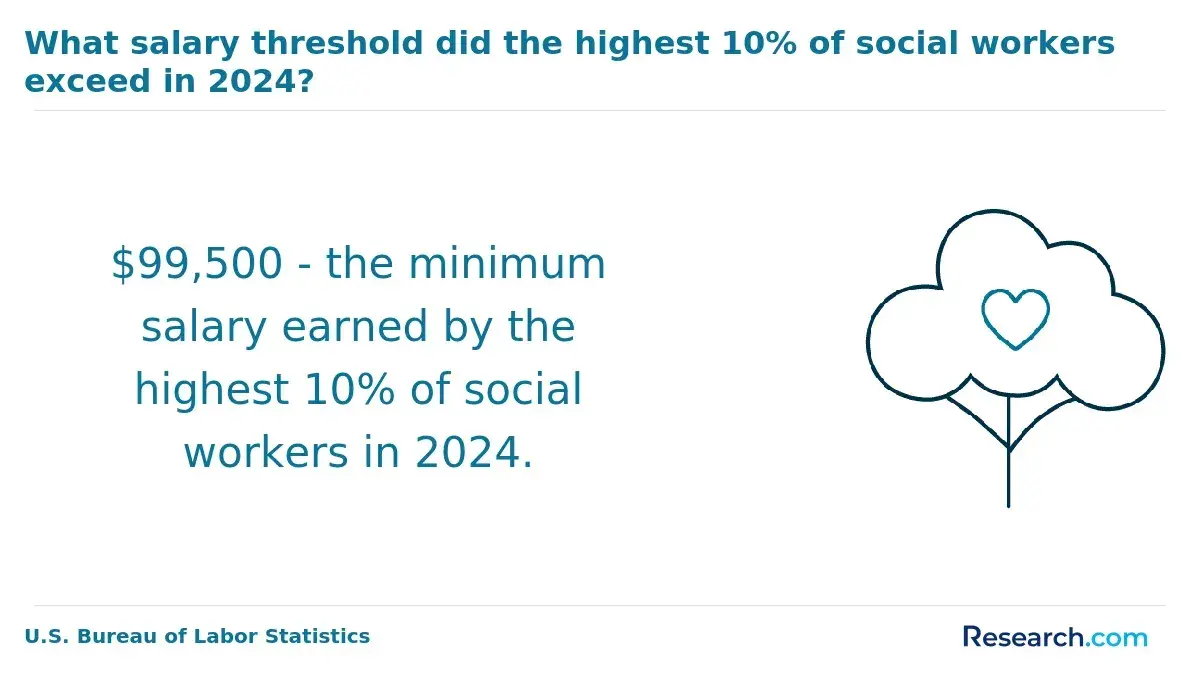
Employment outcomes deserve close attention. Ask whether graduates move into clinical roles, telebehavioral health settings, healthcare systems, schools, or community agencies. Graduates with telehealth certification often achieve LCSW licensure and report higher salaries. For example, LCSWs with telehealth certification earn a median salary about 22% higher (approximately $98,500) than those without, according to BLS wage data and NASW surveys.
Key considerations include:
- CSWE accreditation
- Telehealth-specific curriculum and practical training
- Training in HIPAA-compliant platforms, documentation, and data security
- Remote assessment, crisis planning, and informed consent practice
- Flexible program delivery that still supports field education quality
- Faculty expertise in telehealth research, ethics, and clinical practice
- Clear licensure guidance for your state
- Strong employment outcomes with wage benefits
Before enrolling, contact admissions and ask for specifics: which courses include telehealth, whether students complete simulations, how field placements are approved, and how the program tracks graduate outcomes. The best choice is the program that aligns accreditation, practical training, licensure preparation, and your intended social work career path.
Other Things You Should Know About Social Work
Telehealth social workers must navigate confidentiality challenges related to digital communication platforms. They also need to ensure informed consent explicitly covers telehealth modalities and be vigilant about verifying client identity. Maintaining professional boundaries through virtual interactions is critical to uphold ethical standards in telehealth practice.
Future social workers should use encrypted platforms, verify client identity, use private rooms, and avoid recording without written consent. The U.S. Department of Health and Human Services requires covered entities to protect electronic protected health information under HIPAA, and many agencies also require two-factor authentication.
Social workers should be proficient in secure video conferencing tools, electronic health records, and data privacy measures. Understanding troubleshooting basics and maintaining compliance with HIPAA regulations are also vital. These skills enable smooth delivery of services and protect client information during telehealth sessions.
- Social Work Salaries https://www.socialworkers.org/careers/career-center/kickstart-your-job-hunt/social-work-salaries
- Social Worker Salary and Job Outlook - TrueCare24 https://www.truecare24.com/behavioral-health/social-worker-salary-and-job-outlook/
- Top 5 Skills Social Workers Need in 2025 https://agentsofchangeprep.com/blog/top-5-skills-social-workers-need-in-2025/
- Telebehavioral Health: Now a Social Work Imperative https://www.socialworktoday.com/archive/Fall20p18.shtml
- Telehealth Transforms Training: How Social Workers Adapt and Thrive https://www.chiprodevelopment.com/post/telehealth-transforms-social-workers
- The use of telehealth in social work practice: A scoping review protocol https://ssbfnet.com/ojs/index.php/ijrbs/article/view/4064
- Telehealth - Online Bachelor in Social Work | Indiana Wesleyan University https://www.indwes.edu/program/bs-social-work/telehealth/
- Future-Ready Social Work: Preparing the Workforce for Tomorrow’s Challenges - Behavioral Health News https://behavioralhealthnews.org/future-ready-social-work-preparing-the-workforce-for-tomorrows-challenges/
- Future Skills Centre • Centre des Compétences futures https://fsc-ccf.ca/projects/telehealth-collaboration/
- Social Worker Salary and Jobs in Social Work https://teach.com/online-ed/social-work-degrees/online-masters-social-work/salary-and-career-outlook/