2027 One-Year Online Leadership Master's Degree Programs: Accelerated Options, Costs & Outcomes

Co-Founder and Chief Data Scientist
A one-year online leadership master's degree can be attractive if you already have a bachelor's degree, want to move into management, and cannot spend several years away from full-time work. The real question is not simply whether the program is fast. It is whether the degree is accredited, academically credible, financially realistic, and aligned with the kind of leadership role you want next.
Accelerated online programs compress graduate study into 12 months, which can shorten the time between enrollment and potential career benefit. Notably, 65% of graduates from accelerated online leadership programs report career advancement within 12 months. That outcome is promising, but return on investment still depends on tuition, employer recognition, prior work experience, specialization, and how well the program fits your schedule.
This guide explains how one-year online leadership master's programs work, what accredited options look like, how much they typically cost, what admissions committees review, and what students should expect from the workload, curriculum, technology requirements, and career value.
Key Things to Know About One-Year Online Leadership Master's Degree Programs
- Online leadership master's programs offer flexible scheduling, ideal for recent graduates balancing work or internships while accelerating skill development within one year.
- Career changers benefit from focused curricula that condense essential leadership theories and practices, enabling faster workforce entry and salary growth.
- International applicants gain access to diverse peer networks and global industry connections, enhancing cross-cultural competence and professional opportunities worldwide.
What Exactly Is a One-Year Online Leadership Master's Degree Program, and How Does It Differ from a Standard Graduate Format?
A one-year online leadership master's degree is an accelerated graduate program designed to be completed within 12 months. Instead of spreading courses across a traditional two-year or part-time schedule, these programs use condensed terms, fewer breaks, and a heavier course sequence. The goal is to help students build leadership, management, communication, and decision-making skills quickly without requiring regular campus attendance.
The main difference is pace. A standard graduate format often gives students more time between major assignments, more room for electives, and greater flexibility to reduce the course load. A one-year format asks students to move continuously through intensive semesters, trimesters, or modules. That can be efficient, but it is not automatically easier.
- Course-load intensity: Students usually take more credits per term than they would in a part-time program. The workload is manageable for organized students, but difficult for those who cannot protect weekly study time.
- Condensed semester structure: Terms are scheduled closely together, often with little downtime. This structure is what makes completion within one year possible.
- Practical focus: Many accelerated leadership degrees emphasize applied projects, case analysis, team leadership, communication, and organizational strategy rather than long research timelines.
- Target audience: These programs are best suited for working professionals, recent graduates with clear career goals, and career changers who want a leadership credential quickly.
- Trade-off: Students gain speed but may have fewer elective choices, less time for internships, and less room to recover if work or family demands increase mid-program.
Universities such as the University of Southern California, Northeastern University, and George Washington University offer online leadership master's programs with accelerated terms that illustrate how institutions structure fast-track graduate study. Before applying, compare admissions criteria, GPA expectations, prerequisite coursework, required professional experience, accreditation status, and total cost. Students comparing adjacent online graduate pathways may also review resources such as BCBA degree online programs to understand how online professional degrees differ by field, cost, and credentialing purpose.
Which Accredited Universities Currently Offer Legitimate One-Year Online Leadership Master's Programs?
Legitimate one-year online leadership master's programs should be offered by regionally accredited universities. Regional accreditation matters because it signals that the institution meets recognized academic standards and is more likely to be accepted by employers, licensing bodies, doctoral programs, and transfer-credit evaluators. National accreditation may be valid in some contexts, but it is not always viewed the same way and can limit future academic options.
Some leadership degrees also carry programmatic accreditation. For business-oriented leadership programs, AACSB accreditation can be a useful quality marker. For healthcare leadership programs, CAHME accreditation may be relevant. Programmatic accreditation is not required for every leadership master's, but it can help students judge whether the curriculum is aligned with professional standards in a specific field.
Prospective students should verify accreditation directly through institutional websites and independent sources such as Peterson's or the U.S. Department of Education's College Navigator. Students who are comparing graduate options more broadly can also review easy masters programs, but “easy” should not be confused with low quality. In leadership education, the better question is whether the program is appropriately rigorous, accredited, and useful for your goals.
- University of Southern California (West Coast): USC Rossier School of Education offers a one-year online Master of Arts in Educational Leadership for working professionals, accredited by WASC Senior College and University Commission. Tuition is roughly $60,000.
- University of Florida (Southeast): The College of Education provides an accelerated online Master of Arts in Educational Leadership, regionally accredited by SACSCOC, with tuition near $25,000.
- University of Minnesota (Midwest): Humphrey School of Public Affairs offers a one-year online Master of Public Policy including leadership tracks, accredited by the Higher Learning Commission. Tuition costs about $45,000.
- George Mason University (Mid-Atlantic): The School of Business delivers an accelerated online Master of Science in Organization Development with leadership emphasis, accredited by SACSCOC and AACSB. Tuition is approximately $30,000.
- University of Texas at Dallas (Southwest): Naveen Jindal School of Management features a one-year online Master of Science in Management with leadership focus, regionally accredited by SACSCOC and AACSB. Tuition totals around $35,000.
When comparing these and similar programs, do not rely only on completion speed. Review the official degree name, accreditation, faculty credentials, online course format, student support, graduation requirements, alumni outcomes, and whether the curriculum matches your target field. A one-year program can be valuable, but only if the credential is recognized and the learning experience is strong enough to support your next career move.
How Much Does a One-Year Online Leadership Master's Program Typically Cost in Tuition and Fees?
The total cost of a one-year online leadership master's program depends heavily on whether the university is public or private, whether tuition differs by residency, and whether the program charges flat-rate or per-credit tuition. Public universities generally charge between $15,000 and $30,000 for the full program. Private universities often range from $30,000 to $60,000.
Tuition is only part of the price. Accelerated programs can concentrate costs into a short period, which means students need a clear budget before enrolling. Ask each school for a full cost-of-attendance estimate, not just a per-credit rate.
- Technology fees: Online programs may charge mandatory technology fees to support learning platforms, virtual classrooms, and student systems, typically costing from $200 to $600 annually.
- Course materials: Textbooks, case packets, software, and digital resources usually add $500 to $1,200 per year, depending on the curriculum.
- Proctoring and exam fees: Some courses require monitored exams, with charges of $50 to $150 each.
- Residency requirements: A short on-campus session or intensive can add travel and lodging expenses that may range from a few hundred to over a thousand dollars.
- Administrative costs: Application, graduation, transcript, and student-service fees can collectively range from $300 to $800.
Data from the National Center for Education Statistics shows graduate tuition inflation at approximately 3% per year. That makes timing important: delaying enrollment can increase cost, but rushing into the wrong program can be far more expensive.
One graduate described the financial planning process as “a balancing act.” Tuition was the largest expense, but technology fees and occasional travel for residencies also affected the budget. He said it was important to ask the school for a comprehensive cost breakdown upfront. That is the right approach: compare net cost after scholarships, employer support, and loan interest, not just advertised tuition.
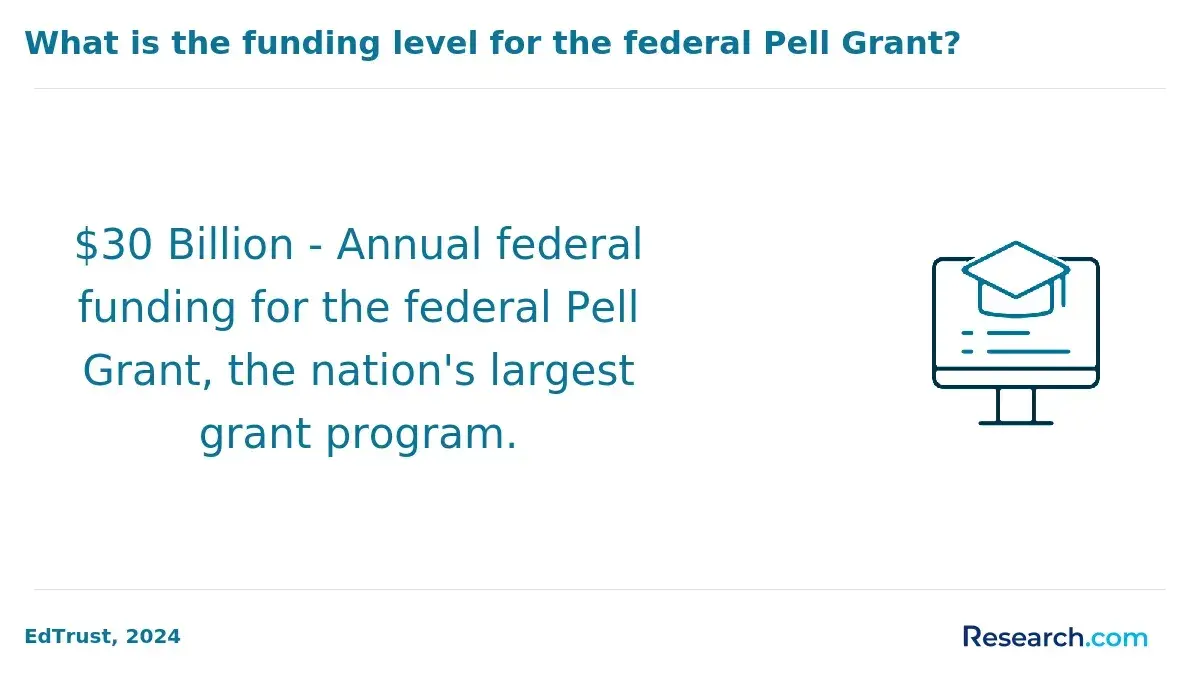
Students in one-year online leadership master's programs may qualify for federal financial aid by submitting the FAFSA. Eligible graduate students can use Direct Unsubsidized Loans and Grad PLUS Loans. Some institutions may also offer work-study opportunities, though availability varies and may be limited for online graduate students.
Because accelerated programs may use rolling admissions or nontraditional start dates, timing matters. Submit the FAFSA early, confirm the school's aid deadlines, and ask whether funds are disbursed by semester, term, or module. A delayed aid package can create cash-flow problems in a 12-month program.
- Federal aid eligibility: The FAFSA is the gateway to federal graduate loan options and any work-study opportunities the institution supports.
- Merit-based scholarships: Some universities offer awards based on academic record, leadership potential, public service, or professional achievement.
- Departmental fellowships: Leadership, education, business, public affairs, and healthcare departments may have separate funding pools with separate applications.
- Employer tuition reimbursement: Working professionals should ask whether their employer covers graduate tuition, reimburses after grades are posted, or requires continued employment after completion.
- External scholarships: Tools such as the College Board's Scholarship Search can help identify awards that apply to graduate study.
Recent studies indicate that about 58% of graduate students in accelerated programs relied on a combination of federal loans and scholarships in 2022. Students should also compare the opportunity cost of study time, potential salary growth, and debt repayment before enrolling. For readers exploring other online degree fields and affordability considerations, this guide to can you get an engineering degree online offers another example of how online program costs can vary by discipline.
Most one-year online leadership master's programs look for evidence that applicants can handle graduate-level work at an accelerated pace. A minimum GPA near 3.0 on a 4.0 scale is common, but admissions committees often review the full profile: transcript trends, writing ability, leadership experience, recommendations, and fit with the program.
Prerequisites vary by degree type. Programs in organizational leadership, management, public administration, education leadership, or healthcare leadership may expect some background in organizational behavior, management principles, statistics, communication, or related coursework. Applicants who are missing prerequisites may be allowed to complete them before enrollment or during early program modules.
- Minimum GPA expectations: A 3.0 GPA is common, but some programs may consider applicants with lower GPAs if they show strong professional achievement or recent academic success.
- Prerequisite coursework: Common preparation areas include management, communication, statistics, organizational behavior, and basic research or analytical methods.
- Professional experience: Many accelerated programs value supervisory, project management, team leadership, military, nonprofit, education, healthcare, or business experience.
- Standardized test flexibility: Relevant experience may strengthen an application and can sometimes support GRE or GMAT waiver requests.
- Program variation: Requirements differ significantly, so applicants should review each school's admissions page rather than assume one standard applies everywhere.
Over 60% of accelerated online leadership master's programs removed standardized test obligations as of 2023, emphasizing career experience. One graduate said she worried that her undergraduate GPA would limit her options, but her program considered her managerial background and allowed her to complete prerequisite courses early. That kind of holistic review is common in professional graduate programs, but it is not guaranteed. Applicants with weaker academic records should apply with a clear resume, strong recommendations, and a focused statement of purpose.
Many accelerated online leadership master's programs are now test-optional or test-free. Since the pandemic, more universities have shifted admissions emphasis toward undergraduate performance, professional experience, writing samples, interviews, and recommendations. According to a 2023 survey, around 65% of online leadership master's programs no longer require standardized test scores.
- Test-optional policies are common: Applicants may be allowed to decide whether GRE or GMAT scores strengthen their file. Strong candidates with relevant work experience often skip test submission.
- Some programs still require scores: More competitive programs, business-focused tracks, or applicants with lower GPAs may still face GRE or GMAT requirements unless a waiver is granted.
- Waivers often depend on evidence: Schools may waive testing for applicants with a strong GPA, graduate coursework, professional certifications, or documented leadership experience.
- Policies change frequently: Applicants should confirm requirements on each program's official admissions page before paying test fees or submitting an application.
- A strong portfolio matters more when tests are optional: Resume quality, leadership examples, recommendations, and a clear personal statement can carry significant weight.
If you have strong scores, submitting them may help. If your scores do not reflect your ability, a test-optional policy lets you focus on evidence that better demonstrates readiness for accelerated graduate study.
Courses in a one-year online leadership master's program are structured for speed and consistency. Students should expect compressed academic calendars, frequent deadlines, applied assignments, and limited downtime between terms. A typical workload is 15 to 25 hours of study weekly, though the exact commitment depends on credit load, assignment type, prior knowledge, and writing speed.
- Compressed course terms: Academic years may be organized into two or three terms lasting 10 to 12 weeks each. Students may complete 9 to 12 credit hours per term.
- Synchronous delivery: Live online sessions may include discussions, presentations, coaching labs, leadership workshops, or group project meetings. These sessions support interaction but reduce schedule flexibility.
- Asynchronous delivery: Recorded lectures, readings, discussion boards, quizzes, and written assignments allow students to work around employment and family obligations.
- Assignment cadence: Students often complete case studies, reflective essays, leadership assessments, research briefs, presentations, and group projects every week or every module.
- Capstone or practicum: Many programs end with a capstone, practicum, thesis, or applied leadership project. In a one-year format, planning usually begins early because the final project may overlap with regular coursework.
Over 70% of students in accelerated Leadership master's programs maintain full-time jobs while studying. That does not mean the workload is light. It means successful students usually create a study calendar before the first term, communicate with supervisors and family members, and avoid falling behind during the first few weeks.
A one-year online leadership master's degree usually covers the same broad leadership foundations as a longer program, but in a more concentrated format. The core curriculum typically emphasizes management, organizational behavior, strategic thinking, ethical leadership, decision-making, change management, communication, and financial acumen.
Specialization tracks help students connect leadership theory to a specific career path. Common options include Healthcare Leadership, Technology Management, Nonprofit Leadership, and Global Business Leadership. The right track depends on where you plan to use the degree. A healthcare manager, school administrator, nonprofit director, and technology team lead may all need leadership training, but they face different regulations, stakeholders, budgets, and workforce challenges.
- Core leadership foundations: Students study organizational behavior, strategic management, ethical decision-making, communication, and change leadership.
- Applied management skills: Courses may include team dynamics, conflict resolution, performance improvement, project leadership, and data-informed decision-making.
- Specialization tracks: Healthcare Leadership, Technology Management, Nonprofit Leadership, and Global Business Leadership can make the degree more relevant to a specific industry.
- Accelerated vs. traditional depth: Accelerated programs may cover rigorous material but offer fewer electives, fewer research opportunities, and less time for exploratory study than two-year formats.
- Career alignment: A specialization is most valuable when it matches your current field or a clearly defined target role.
Students interested in leadership roles that require deeper understanding of human behavior may also compare related fields, including an online psychology degree. The best choice depends on whether your goal is organizational leadership, clinical or counseling preparation, research, human services, or another pathway.
A one-year format does not automatically mean a program is less rigorous. The stronger question is how the program protects academic quality while moving quickly. Well-designed accelerated leadership programs use structured cohorts, focused modules, applied projects, qualified faculty, and proactive advising to help students meet graduate-level expectations in a shorter timeline.
Rigor comes from curriculum design, assessment quality, faculty involvement, and student support. A weak program may rely on generic discussion posts and superficial assignments. A stronger program asks students to analyze real leadership problems, apply frameworks to workplace cases, work in teams, present recommendations, and complete a capstone or practicum that demonstrates integrated learning.
- Cohort-based learning: Students move through the program with a defined group, which can build accountability, peer support, and professional networking.
- Focused scheduling: Block and modular formats let students concentrate on fewer subjects at a time while still progressing quickly.
- Qualified faculty: Instructors should have relevant academic credentials, professional leadership experience, or both.
- Student support: Advising, tutoring, library access, writing support, career coaching, and faculty availability are especially important in a compressed schedule.
- Transparent outcomes: Programs that publish alumni networks, job placement data, or career support information make it easier to evaluate likely value.
Students comparing accelerated formats in other fields can also review examples such as a construction management degree. Across disciplines, the same principle applies: speed is useful only when the academic structure, accreditation, and career outcomes justify the intensity.
Online leadership master's programs expect students to use digital tools confidently. The goal is not just to complete coursework online, but to practice the technology habits modern leaders need for remote teams, hybrid work, data-informed decisions, and project coordination.
- Collaboration and communication tools: Students may use Microsoft Teams, Slack, and Zoom to lead discussions, manage group work, and practice virtual communication.
- Data analytics applications: Programs may introduce Tableau, Power BI, and advanced Excel functions to help students interpret data and support strategic recommendations.
- Project management software: Tools such as Asana, Trello, and Microsoft Project help students plan tasks, assign responsibilities, monitor deadlines, and communicate progress.
- Technical prerequisites: Applicants may need computers with at least 8GB RAM and stable, high-speed internet of 25 Mbps or higher.
- Software access and support: Some programs include cloud-based tools or discounted licenses, while others expect students to secure access independently.
According to the 2023 Project Management Institute survey, 87% of employers prioritize candidates proficient in digital collaboration and project management tools. Students who are not comfortable with these systems should build basic skills before the first term, because accelerated programs leave little time to learn technology from scratch.
Yes, many students pursue a one-year online leadership master's degree while working full-time, but success depends on schedule control, employer support, family responsibilities, and the program's delivery format. Students should plan for 15 to 20 hours per week. Programs requiring 30 or 36 credit hours can feel especially demanding because credits are concentrated into a short timeline.
Asynchronous coursework is often the best fit for full-time employees because lectures and assignments can be completed around work obligations. Synchronous sessions can be valuable for networking and live discussion, but they require predictable availability. Surveys of online graduate leadership students suggest that 60% to 70% maintain full-time jobs while pursuing their degrees.
Before enrolling, ask admissions counselors and current students direct workload questions:
- Expected weekly time commitment: Ask how many hours students typically spend on reading, writing, group work, and live sessions.
- Schedule flexibility: Confirm whether courses are asynchronous, synchronous, or a mix of both.
- Course-load options: Ask whether you can reduce credits per term if work demands increase, and whether doing so affects one-year completion.
- Employer support: Check whether the school provides documentation for tuition reimbursement, professional development approval, or schedule accommodation requests.
- Academic support: Confirm access to advising, faculty office hours, tutoring, library services, and writing support for online students.
A practical test is to block 15 to 20 hours on your calendar before applying. If you cannot protect that time during a normal workweek, the one-year format may create unnecessary stress. A longer online program may be a better financial and academic decision.
What Graduates Say About Their One-Year Online Leadership Master's Degree Program
- : "Choosing an online leadership master's degree helped me transition from marketing to project management without leaving my job. The flexibility made it possible to keep working while studying, and the program's affordability helped me avoid overwhelming debt. After graduating, I felt more prepared to pursue leadership roles and approach workplace problems with a stronger strategic perspective. — Lisbeth"
- : "The online format made graduate study realistic while I was balancing family responsibilities and a tight budget. I valued that the program was cost-effective and still pushed me to engage seriously with the curriculum. The degree helped accelerate my career progression, support promotions, and strengthen the way I lead teams. — Rachael"
- : "For me, the online leadership master's was a calculated investment. I wanted stronger credentials without pausing my career, and the program emphasized practical skills I could use immediately. The return on investment has been meaningful through higher salary prospects, stronger confidence, and a professional network that continues to help me. — Joel"
Other Things You Should Know About Leadership Degrees
It should hold regional accreditation from a U.S. institutional accreditor recognized by the Council for Higher Education Accreditation or the U.S. Department of Education. For leadership degrees, the business school may also carry AACSB, ACBSP, or IACBE accreditation; these are quality markers but not mandatory for graduation.
To enroll in a one-year online Leadership master's program in 2027, candidates typically need a bachelor's degree, relevant work experience, and admission test scores like the GMAT or GRE, depending on the university. Specific requirements may vary by institution.
Graduates of a one-year online Leadership master's in 2027 can expect enhanced skills in decision-making, strategic thinking, and team management. These competencies often lead to higher-paying roles and increased leadership opportunities in fields like business, healthcare, and nonprofit management.
- Swiss Leadership Education | Swiss International University in Zurich - Bishkek - Dubai - Luzern - London - Riga and online https://www.swissuniversity.com/leadership
- What NOT to Look For in an Online Master's in Leadership https://blog.udallas.edu/tower-thoughts/what-not-to-look-for-in-an-online-masters-in-leadership
- Learning & development for tech leadership: Key skills to build https://www.pluralsight.com/resources/blog/upskilling/learning-development-tech-leadership
- Affordable Online Master in Educational Leadership Program https://online.fitchburgstate.edu/degrees/education/educational-leadership-management/affordable-master-educational-leadership/
- MSc Leadership for Sustainability https://online.essex.ac.uk/courses/msc-leadership/
- 120 Scholarships for Graduate Students with February 2026 Deadlines https://bold.org/scholarships/by-year/graduate-students-scholarships/
- 68 Key Scholarships for Master’s Degree Students https://www.onlinemastersdegrees.org/financial-aid/scholarships/