2027 Choosing an Online Ed.D. in Leadership and Learning in Organizations for Leadership in State Public Service Agencies
Audited and Verified:
Our Editorial and Data Verification Process
Research.com uses government datasets, official education statistics and primary institutional information to support its career and degree guides. Our review process checks factual accuracy, occupational definitions, source dates and the requirements associated with the credentials discussed.
How This Article Was Fact-Checked
Our editorial team verifies salary estimates, employment projections, education requirements and program information against original data providers and official organizations. Salary figures are checked against the relevant occupational definitions and reporting periods. Information about licensure, accreditation and required in-person training is reviewed separately.
Fact-checked and verified on:

Co-Founder and Chief Data Scientist
Leading a state public service agency means improving programs while working within budgets, statutes, hiring rules, and public accountability requirements. An online Ed.D. in Leadership and Learning in Organizations may help an experienced professional lead workforce development or evaluate organizational change, but it is not a shortcut to an agency appointment. This guide explains what to look for in the degree, how its applied work could fit an agency setting, and when an MPA, targeted training, or more leadership experience would be the better investment.
Key Things You Should Know
- An Ed.D. is most useful when you already have agency leadership responsibilities and need stronger skills in organizational learning, change, and applied evaluation - not simply a doctoral credential.
- Public hiring rules, agency experience, and access to an approved project matter as much as the curriculum; an online degree does not itself confer a promotion or professional license.
- The U.S. Bureau of Labor Statistics reports a $133,000 median annual salary for training and development managers across industries in May 2025. That figure is not a state-agency salary or an expected Ed.D. graduate salary.
What is an online Ed.D. in Leadership and Learning in Organizations?
An Ed.D. in Leadership and Learning in Organizations is a practice-oriented doctorate focused on how people learn, how organizations change, and how leaders use evidence to improve performance. Online describes where much of the instruction occurs; it does not establish that classes are self-paced or that all campus visits are optional. The exact degree name, courses, and final research requirement depend on the university.
For a state agency professional, the distinction from other degrees is practical. An Ed.D. emphasizes leadership and applied inquiry; an MPA may offer more direct preparation in public budgeting, policy, and administration. A research-focused PhD is generally a better fit if producing academic scholarship is the primary goal. Compare the actual curriculum rather than relying on the word "leadership" in a program title. An Ed.D. concentration selection guide can help distinguish an organizational learning pathway from one designed chiefly for school administration.
How can this Ed.D. prepare you for leadership in state public service agencies?
The strongest fit is an agency leader who can apply doctoral learning to a problem within their authority, such as inconsistent staff onboarding or a workforce program that needs better evaluation. The degree can strengthen diagnosis, stakeholder engagement, adult learning design, and interpretation of evidence. It cannot remove statutory constraints, create funding, or substitute for experience managing public programs.
The following comparison shows where doctoral study may contribute and where agency-specific judgment remains essential.
| Agency responsibility | Potential Ed.D. contribution | Public-sector constraint |
| Develop supervisors across regional offices | Assess learning needs and whether new practices transfer to work | Staffing, collective bargaining agreements, and uneven local capacity |
| Improve service delivery | Study implementation and evaluate a change initiative | Statutory duties, procurement rules, and limits on available data |
| Coordinate change across divisions | Map stakeholder perspectives and organizational processes | Separate decision authorities and public accountability |
A useful program should let you examine whether training is actually the solution. If a service delay stems from an outdated system or a legal approval process, a training course alone will not fix it. Before choosing a program, ask who would authorize a workplace project, what data could be used, and whether the university permits another project site if your role changes.
What careers can you pursue with an organizational leadership Ed.D.?
Relevant paths include agency workforce-development leadership, organizational improvement, program evaluation, and senior management. The Ed.D. can add depth to an established career, but state job classifications determine whether a doctorate is required, preferred, or irrelevant. Review actual postings and classification specifications in the state where you want to work.
These roles call for different evidence of readiness; the degree is only one part of a credible application.
| Target role | Work typically emphasized | Experience to demonstrate |
| Agency training or workforce-development manager | Staff development, learning systems, and evaluation | Running programs, managing staff or vendors, and showing workplace results |
| Organizational improvement or evaluation lead | Diagnosing processes and assessing public programs | Methods, data stewardship, and recommendations leaders have used |
| Division or agency executive | Strategy, operations, budgets, and public accountability | Substantial management responsibility and sector-specific judgment |
If you have not yet managed people, budgets, or cross-division initiatives, seek those assignments alongside or before doctoral study. For a policy or operations leadership target, an MPA or employer leadership program may address the immediate gap more directly.
Relevant coursework may include leadership theory, adult learning, organizational development, change implementation, qualitative and quantitative methods, and program evaluation. A course title alone does not show how deeply a program teaches public budgeting, administrative law, or government operations; these are particularly important gaps to check if your prior experience is outside government.
Examine the required sequence and final project, not just the elective catalog. A strong fit would give you faculty guidance on defining a feasible agency problem, choosing measures that reflect public-service goals, and reporting limitations honestly. Confirm whether the final requirement is a dissertation, dissertation in practice, capstone, or another deliverable. Agency permission to use data and university approval of the project are separate matters; employee records and identifiable service-user information require particular care.
Online study may let you keep your agency job and apply coursework locally. Campus study may make in-person faculty and peer interaction easier. Neither format guarantees access to an agency project or a schedule that fits legislative sessions, emergency response, or other workload peaks.
Compare published requirements for live class attendance, time zones, group meetings, campus convenings, project supervision, and leave policies. Ask for a sample course schedule and the attendance rules for the term you plan to enter. If travel is required, add it to the cost comparison rather than treating "online" as travel-free. For a broader cost comparison across delivery formats, see comparing affordable education doctorate pathways.
Requirements vary by institution. Programs may ask for a completed graduate degree, transcripts, evidence of professional experience, recommendations, a statement of purpose, or an interview. Do not assume that an education master's, a senior title, or a particular number of years in government is universally required.
Make your application specific to the work you have actually led: describe your decision authority, stakeholders, a learning or service-delivery problem, and what evidence you would need to investigate it. An unfinished previous doctorate raises a separate policy question. Schools decide whether prior study supports admission and, independently, whether any credits satisfy degree requirements; continuing an education doctorate after unfinished research is a pathway to investigate, not a promise of transferred credit or a shorter program.
Time and total cost depend on required credits, enrollment pace, tuition structure, fees, and the time needed to complete the final project. Published tuition alone can understate the expense if the program requires travel, additional terms of enrollment, or time away from work. Compare written estimates based on each school's actual degree requirements rather than a single advertised price.
Ask your agency whether education assistance covers doctoral study, whether reimbursement requires a minimum grade, and whether leaving the job triggers repayment. A program that costs less upfront may be harder to complete if its fixed schedule conflicts with your duties. Use Doctor of Education programs by affordability as a starting point, then confirm the current charges and your own employer benefits with the responsible offices.
First, confirm the exact degree-awarding institution and its current institutional accreditation through the accreditor or the U.S. Department of Education's recognized accreditation information. Then confirm on the university's site that the Ed.D. you intend to enter is offered by that institution, in the advertised format, for your entry term.
Institutional accreditation is not proof that a particular degree has specialized accreditation or meets a licensing board's requirements. Ask the program which claims, if any, apply specifically to its leadership and learning doctorate, and retain the written response if credential eligibility matters to your job plans.
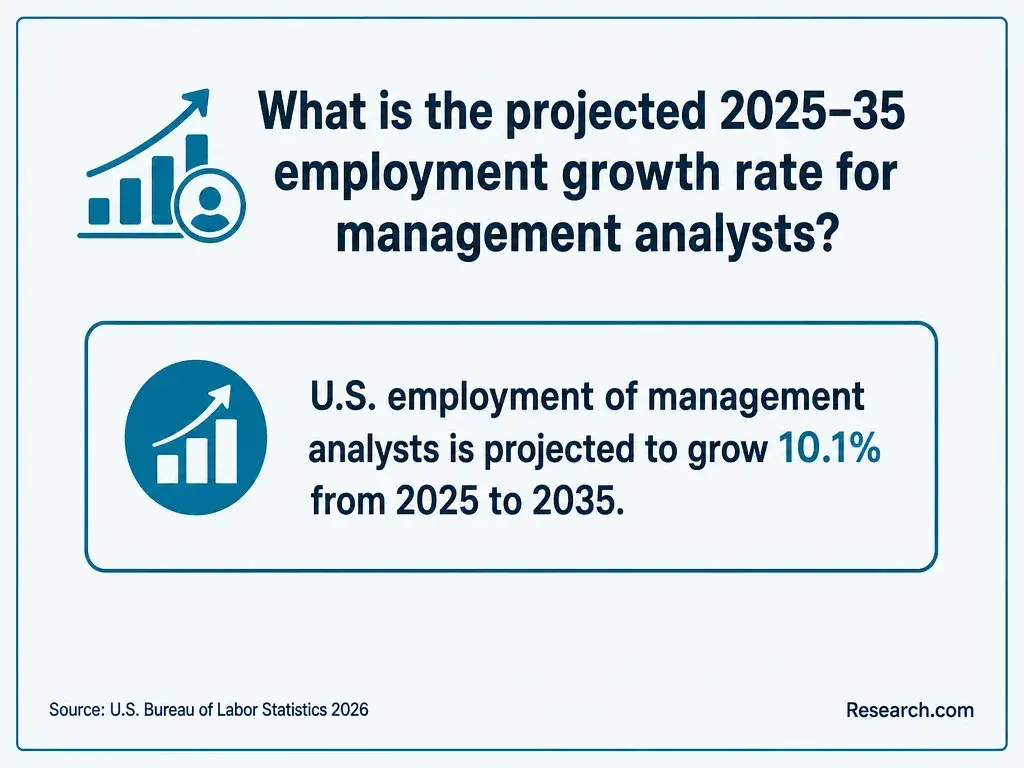
There is no single "Ed.D. in public service" salary. State pay bands, supervisory scope, location, and years of experience usually give a more relevant estimate than an all-industry occupational median. For context, the U.S. Bureau of Labor Statistics reports a May 2025 median annual salary of $101,860 for management analysts, an occupation that includes organizational consultants. That figure describes an occupation across employers - not state-agency Ed.D. graduates or a likely raise after graduation.
For a realistic outlook, compare your state's classification pay range, current vacancies, and the qualifications of the next role you seek. If you are weighing agency work against a public-college administration path, treat them as separate labor markets and compare program expenses accordingly; higher education leadership doctoral costs after financial aid provides a more relevant cost lens for that alternative.
Does this Ed.D. require a professional license or certification?
Leadership roles in state agencies generally do not have a single professional license attached to an organizational leadership Ed.D. Individual positions can have separate statutory, occupational, or civil-service requirements, however. The doctorate itself should not be treated as a management certification or as preparation for teacher, principal, or superintendent licensure.
Before enrolling for credential purposes, obtain the target position's official qualification requirements and ask the university whether its specific program satisfies them. If the role is regulated, confirm eligibility with the relevant state authority rather than relying on a general program description.
Other Things You Should Know About EdD Leadership
Possibly, but each participating agency may have different approval and data-sharing rules. Confirm the project scope with your faculty advisor before seeking organizational commitments.
Ask whether an approved project can use less sensitive measures, aggregated information, or another setting. Do not copy restricted records into a university system without authorization.
Yes, if your proposed work depends on agency time, people, or information. Discuss the idea without assuming a supervisor's support grants formal research or data-use permission.
Yes. It may suit a specialist who leads complex learning or improvement initiatives, provided the doctoral workload and cost are justified by the responsibilities they want.
- Training Options | U.S. Office of Personnel Management https://www.opm.gov/policy-data-oversight/training-and-development/training-program-management/training-options/
- Cost of Attendance (Budget) | 2025-2026 Federal Student Aid Handbook https://fsapartners.ed.gov/knowledge-center/fsa-handbook/2025-2026/vol3/ch2-cost-attendance-budget
- Accreditation in the U.S. | ed.gov http://www.ed.gov/laws-and-policy/higher-education-laws-and-policy/college-accreditation/accreditation-in-the-us
- Doctor of Ed. in Org. Leadership, Dev. and Change | Lehman College https://www.lehman.edu/online/programs/online-doctor-org-leadership-dev-and-change/
- Advance Your Leadership Career with an Online Ed.D. | UMass Global https://www.umassglobal.edu/blog-news/advance-your-leadership-career-online-edd
- Ed.D. in Executive Leadership - Degrees & Requirements | Columbia University https://www.tc.columbia.edu/organization-and-leadership/edd-in-executive-leadership/degrees--requirements/executive-leadership-edd/
- What Is a Problem of Practice? | spalding.edu https://online.spalding.edu/blog/what-is-problem-practice
- EdD vs. PhD in Education: Choosing the Right Program | Goodwin College of Professional Studies https://drexel.edu/soe/resources/career-path/edd-vs-phd/
- Walden University's Guide to Doctoral Capstone Projects https://www.waldenu.edu/online-doctoral-programs/resource/guide-to-doctoral-capstone-projects