2027 Online Ed.D. in Leadership and Learning in Organizations Admissions: Discussing Ethical Leadership in a Statement of Purpose
Audited and Verified:
Our Editorial and Data Verification Process
Research.com uses government datasets, official education statistics and primary institutional information to support its career and degree guides. Our review process checks factual accuracy, occupational definitions, source dates and the requirements associated with the credentials discussed.
How This Article Was Fact-Checked
Our editorial team verifies salary estimates, employment projections, education requirements and program information against original data providers and official organizations. Salary figures are checked against the relevant occupational definitions and reporting periods. Information about licensure, accreditation and required in-person training is reviewed separately.
Fact-checked and verified on:

Co-Founder and Chief Data Scientist
An ethical leadership statement of purpose needs more than a declaration that you value fairness. Admissions readers need to see how you make decisions when organizational goals, evidence, and people's interests conflict. This guide is for working leaders and learning professionals considering an online Ed.D. in leadership and learning in organizations.
It explains how to select a credible example, discuss your responsibility without overstating results, and connect the experience to doctoral study. You can use it to decide whether your application shows both ethical judgment and readiness for applied inquiry.
Key Things You Should Know
- Use one specific leadership decision to show who was affected, what constraints you faced, whose input you sought, and what you would examine differently now.
- Connect that experience to an organizational learning problem and the program's actual curriculum; ethical intent alone is not evidence of doctoral readiness.
- Verify each school's prompt and requirements before drafting. Neither a senior title nor an education-specific master's degree is a universal admission requirement.
What Is an Online Ed.D. in Leadership and Learning in Organizations?
An Ed.D. in leadership and learning in organizations is a practice-oriented doctorate concerned with how people learn, how organizations change, and how leaders use evidence to improve practice.
Depending on the program, students may study adult learning, organizational culture, evaluation, research methods, and ethical decision-making. "Online" describes where much instruction occurs; it does not necessarily mean self-paced study or no campus visits.
For an applicant, the distinction matters because an effective statement of purpose identifies a problem the degree could help them investigate, not simply a desire to become a better leader.
A training manager might want to understand why a development initiative is not transferring into everyday work; a nonprofit director might examine whose perspectives are missing from program decisions. Compare the actual curriculum and awarded degree with other Doctor of Education study areas to compare before claiming a program fits your goals.
How Do You Write an Ethical Leadership Statement of Purpose?
Show ethical leadership as a decision process, not a personal label. Select an incident you can describe accurately: a disputed training priority, an inequitable access issue, a proposed use of employee data, or a change affecting people with limited influence over it.
Explain your authority, what you knew at the time, the competing obligations, and whose views you considered. If the outcome is uncertain or mixed, say so.
A strong essay moves from experience to an inquiry you are prepared to pursue. Use the following sequence as a drafting framework, while following the school's prompt and word limit.
- Establish context: Name your role, the organizational problem, and the people affected without disclosing confidential details.
- Explain the tension: Identify the legitimate goals in conflict, such as speed versus participation or useful measurement versus privacy.
- Describe your judgment: State what you did, what authority or evidence you had, and how you invited challenge or addressed unequal power.
- Assess the limits: Separate observed results from assumptions, acknowledge unresolved concerns, and say what you would change.
- Make the doctoral connection: Identify a focused question, relevant program features you have verified, and how the learning serves your intended work.
For example, an applicant could explain that a proposed learning dashboard raised concerns about employee monitoring. The useful story is not "I protected everyone's privacy."
It is how the applicant clarified the dashboard's purpose, consulted affected groups and appropriate decision-makers, considered less intrusive measures, and recognized what remained untested. Do not claim consent, approvals, measurable improvement, or access to restricted records unless those facts are true.
Finish with a concrete reason for this particular program. Refer to verified coursework, faculty interests, or project requirements only when they genuinely support your question. An essay that spends more space praising a university than examining your own reasoning gives reviewers less evidence of readiness.
What Are the Admission Requirements for an Online Ed.D. Program?
Requirements vary by institution and entry term. Programs may request prior graduate study, transcripts, professional experience, recommendations, a résumé, a statement of purpose, an interview, or evidence of research preparation.
A stated minimum establishes eligibility, not admission; strong applicants also demonstrate leadership responsibility, reflective judgment, and the ability to frame a feasible problem of practice.
Read the current application instructions before choosing an example. Check the prompt, length limit, deadline, whether it asks for faculty or program fit, and whether recommenders should speak to your leadership or academic ability.
Applicants with an Ed.S. or other graduate coursework should distinguish credits considered for admission from credits a school would actually apply to the doctorate. Those weighing that pathway can review comparing colleges for Ed.S.-to-Ed.D. progression, then request a written evaluation from each institution.
Ask admissions staff which office decides unusual eligibility questions, including an academic gap, a non-education degree, or experience gained outside a conventional management role. Do not imply in the essay that your title alone establishes leadership experience: describe decisions you made and the limits of your authority.
A career goal is more persuasive when it names the responsibilities you seek and the people accountable for the results. Rather than promising to "transform organizational culture," an emerging learning leader could aim to design development programs with employee input and evaluate whether people can use what they learn.
An experienced public-sector manager could focus on making workforce decisions more transparent within budget and governance constraints.
Connect the goal to a skill gap the doctorate might address, such as organizational diagnosis, adult learning, or responsible evaluation, and to experience you already have. An Ed.D. can deepen practice, but it does not confer decision-making authority, a promotion, or educator licensure.
If your immediate goal is to improve a single training process, supervised experience or targeted coursework may be a more direct investment than a doctorate.
Curricula differ, but leadership and learning programs commonly combine organizational theory, adult learning, change, and applied research or evaluation.
Ethics may be taught in a dedicated course or integrated into decisions about stakeholder participation, measurement, data access, and interpretation. In your statement, identify the specific capabilities you need rather than assuming that a course title will solve the problem you described.
Programs also differ in their final work: a dissertation, dissertation in practice, capstone, or team project is not the same assignment. If your proposed inquiry depends on workplace interviews or employee records, admission does not establish permission to use them.
Employer authorization, academic approval, confidentiality protections, and any required research review must be addressed later under the program's rules. Review online Ed.D. final project format comparisons, then confirm the exact deliverable with the school.
Time and cost depend on required credits, course sequence, enrollment pace, tuition structure, and the final project. Online study can still involve live classes, group work, campus convenings, and travel.
Rather than relying on an advertised completion time, request the curriculum sequence and ask what happens if a required course is missed or an applied project takes longer than planned.
Build a budget using the school's published tuition and fees, then add any required travel, materials, and time away from paid work. Check employer reimbursement rules before treating that support as available funding.
Comparing low-cost education doctoral degree options is a starting point, but the relevant figure is your likely full cost under the pace and attendance rules you can meet. No tuition figure alone establishes a positive return on the degree.
Confirm the institution's recognized accreditation and the exact degree it awards. Then examine the program itself: required courses, faculty guidance, research-methods preparation, online attendance rules, and the form of its final project.
Institution-level accreditation does not establish that a general leadership Ed.D. prepares graduates for principal or superintendent licensure.
For an applicant writing about ethics, quality also means an opportunity to test ideas responsibly. Ask who supervises organizational projects, how students obtain project-site approval, and what support exists if an employer cannot provide data access.
These answers help you decide whether your proposed interests fit the program; they should not be presented in the essay as confirmed opportunities until the institution verifies them.
The academic question is not whether online or campus study is inherently more rigorous. Compare the actual opportunities to discuss difficult leadership decisions, receive faculty feedback, collaborate with peers, and carry out supervised inquiry.
Online cohorts may make study possible while employed elsewhere, but scheduled meetings can constrain shifts or caregiving. Campus study may offer easier in-person access while requiring a commute or relocation.
Compare the total cost of workable options, not tuition alone. For applicants considering education-sector roles, higher education leadership doctoral costs after financial aid can inform the questions to ask; verify aid eligibility, travel, and employer support for the specific program and format.
Choose the setting in which you can participate consistently and complete the required project responsibly.
Depending on prior experience, graduates may pursue learning and development management, organizational development, consulting, higher-education administration, or leadership roles in nonprofits and public agencies.
These jobs differ: a training manager oversees development strategy and staff, while a management analyst may diagnose organizational problems and advise clients. Your statement should name a plausible next responsibility, not treat these roles as interchangeable.
For advancement, connect existing work to a specific gap you want doctoral study to address. For a substantial career change, investigate employers' required sector knowledge and build relevant project experience alongside any degree. School administration and other regulated roles may have separate state requirements that a general organizational leadership Ed.D. does not satisfy.
What Are the Salary and Job Outlook for Education Leadership Careers?
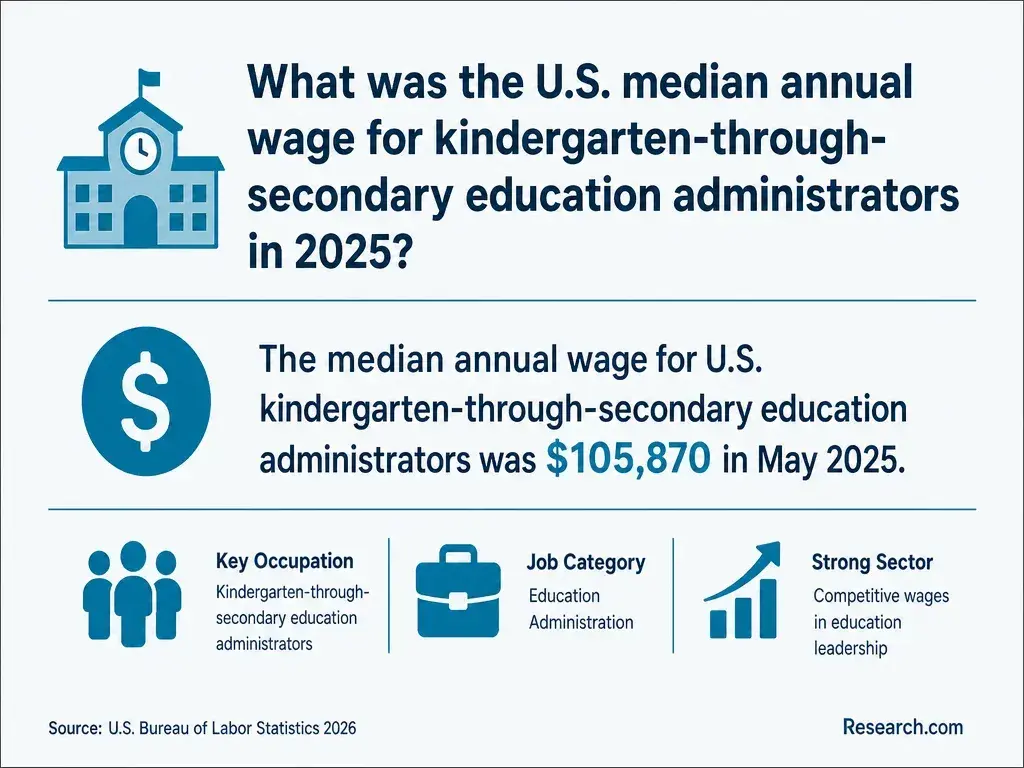
US Bureau of Labor Statistics figures place the May 2025 median annual pay for training and development managers at $133,000, with employment projected to grow 6.4% from 2025 to 2035. That occupation may be relevant to an established learning professional, but its median is not an expected salary for a new Ed.D. graduate or evidence that the degree is required.
Use occupational figures to test whether a target field interests you, then examine local job postings, role requirements, and your current compensation. In an application essay, an ethical career goal is better expressed through the responsibilities and improvements you hope to undertake than through an unsupported earnings or promotion prediction.
Other Things You Should Know About EdD Leadership Programs
You can reuse your core experience, but revise the program-fit discussion and follow each school's prompt and length limit. Remove claims about features you have not verified.
Usually, no. Describe roles and circumstances without unnecessary identifying details, and follow your organization's confidentiality rules.
Yes, if you can explain your responsibility, what you learned, and what remains uncertain. Avoid shifting blame or inventing a successful resolution.
Check the program's application policy. Any permitted editing support should preserve your own account, voice, and judgment; verify every factual claim before submitting.
- Ethical leadership: Exploring bottom-line mentality and trust perceptions of employees on middle-level managers - PMC https://pmc.ncbi.nlm.nih.gov/articles/PMC8882060/
- Online (Ed.D.) in Leadership for Organizations | UD-EDU https://educationonline.udayton.edu/edd/
- UNC EdD Online: Organizational Learning and Leadership https://online.unc.edu/online-doctoral-programs/online-edd-organizational-learning-and-leadership/
- Writing the Statement of Purpose: General Advice | University of Washington https://english.washington.edu/writing-statement-purpose-general-advice
- Statement of Purpose, Personal Statement, and Writing Sample | harvard.edu https://gsas.harvard.edu/apply/applying-degree-programs/statement-purpose-personal-statement-and-writing-sample
- Ethical Challenges of Leadership | illinois.edu https://lcpathways.web.illinois.edu/leadership-challenges/ethical-challenges-of-leadership/
- Writing Your Academic Statement of Purpose - Graduate School https://gradschool.cornell.edu/inclusion/recruitment/prospective-students/writing-your-statement-of-purpose/
- Executive Leadership, Ed.D. | Saint Mary's University of Minnesota https://www.smumn.edu/degree/doctorate/education-programs/executive-leadership/
- Ed.D. in Executive Leadership - Degrees & Requirements | Columbia University https://www.tc.columbia.edu/organization-and-leadership/edd-in-executive-leadership/degrees--requirements/executive-leadership-edd/
- Personal Statements and Statements of Purpose | Illinois https://writersworkshop.illinois.edu/resources-2/writer-resources/job-search-application-writing/personal-statements-and-statements-of-purpose/