2027 Are There Any One-Year Online Data Science Degree Programs Worth Considering?

Co-Founder and Chief Data Scientist
A one-year online data science degree is a fast, intensive option for learners who want graduate-level analytics training without stepping away from work for several years. The decision is not simply whether the program is “quick.” It is whether you already have enough quantitative, programming, and time-management preparation to succeed in a compressed format.
These programs are most often designed for career changers with technical experience, working professionals moving into analytics roles, and recent graduates who want to strengthen their credentials quickly. A strong program should teach more than tools. It should help you build judgment in statistics, machine learning, data management, visualization, and applied problem-solving with real datasets.
This guide explains whether finishing a data science degree in one year is realistic, which accelerated online options are available, what trade-offs to expect, how admissions and costs typically work, and how to evaluate whether a program fits your career goals.
Key Points About One-Year Online Data Science Degree Programs
- One-year online Data Science degrees focus on core skills like machine learning, statistics, and programming, condensing typical 2-4 year curricula into intensive, accelerated study.
- These programs often lack extensive research projects common in traditional degrees but emphasize practical, job-ready tools aligned with current industry needs and trends.
- Students should expect selective offerings, as only a few accredited programs provide full degrees online within one year, often targeting professionals with prior experience.
Is It Feasible to Finish a Data Science Degree in One Year?
Yes, finishing an online data science degree in one year is feasible, but it is most realistic at the master’s level. Accelerated graduate programs can focus tightly on advanced analytics, programming, statistics, machine learning, and applied projects because students are expected to arrive with prior college preparation.
For example, Texas Tech University offers a 36-credit MS in Data Science, and Eastern University offers a 30-credit MS in Data Science. Programs like these may be completed in 10 to 12 months when students follow an intensive schedule and meet all prerequisites before starting.
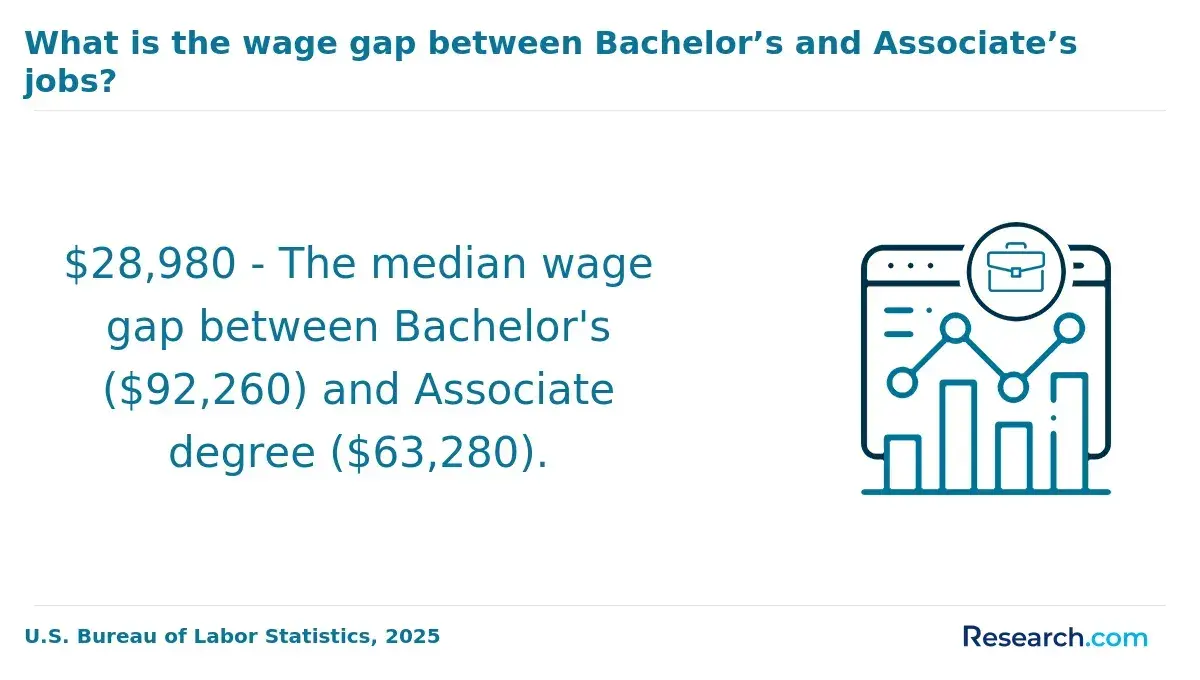
A one-year timeline is less common for associate or bachelor’s degrees because those programs include general education requirements and broader foundational coursework. Graduate programs can move faster because they are more specialized and usually assume that students already hold a bachelor’s degree.
What affects whether you can finish in one year?
- Program design: Some programs are intentionally structured for accelerated completion, while others only allow faster progress if you take heavier course loads.
- Prerequisite readiness: Students who already know programming, calculus, statistics, and basic database concepts are better positioned to keep pace.
- Transfer credits: Applicable prior credits may reduce the number of courses needed, depending on the school’s policy.
- Course format: Short terms, self-paced modules, and year-round enrollment can speed completion, but they also reduce recovery time between courses.
- Capstone, practicum, or research requirements: Applied projects can strengthen your portfolio, but they may add scheduling complexity.
- Weekly availability: A one-year plan usually requires consistent study time, not occasional weekend work.
Data science roles generally do not require professional licensure, so program length is usually an academic and career-planning issue rather than a licensing issue. Still, students should check whether a program’s curriculum, accreditation, and career support match the roles they want after graduation.
Are There Available One-year Online Data Science Degree Programs?
Yes, one-year online data science degree programs are available, though they are not as common as standard two-year master’s programs. Many accelerated options are offered at the graduate level and are built for students who can handle a demanding pace. Some are fully online, while others use a hybrid structure with online and on-campus components.
When comparing programs, look closely at whether “one year” means a guaranteed plan, a fastest-possible timeline, or an option available only to students who take a full course load without breaks. The label can vary by school.
- Texas Tech University: Offers a Master of Science in Data Science that can be completed in one year. This STEM-designated program includes statistics, database concepts, machine learning, and big data strategy, with options for both on-campus and online classes.
- Northwestern University: Provides an accelerated Master's in Data Science finished within one year through a hybrid of online and on-campus learning. The curriculum emphasizes relational, document, and graph database systems, along with analytics tools like Python, R, and Go.
- University of the Cumberlands: Offers an online Master of Science in Data Science that can be completed in as little as one year. The program combines core data science skills with communication and business insights to align technical work with workplace needs.
Before applying, confirm the exact delivery format, residency or campus requirements, course sequence, start dates, and whether the one-year path is compatible with full-time work. Students exploring broader academic options can also review this guide to good college majors when comparing data science with other career-aligned fields.
Why Consider Taking Up One-year Online Data Science Programs?
A one-year online data science program can make sense if you need a faster path to advanced analytics skills and already have the background to absorb graduate-level material quickly. The strongest reason to choose this format is efficiency: you can build a focused credential, complete applied projects, and return to the job market sooner than you would in a longer program.
These programs are especially useful for learners who are not starting from zero. If you have experience in programming, mathematics, engineering, business analytics, economics, computer science, or another quantitative field, an accelerated curriculum may help you formalize and expand your skills.
- Focused curriculum: Programs often concentrate on Python, R, data management, statistical modeling, machine learning, and data visualization rather than broad undergraduate requirements.
- Applied learning: Capstone projects, case studies, and industry-style assignments can help you practice turning raw data into decisions, models, and explanations.
- Faster credential completion: Earning a degree in as little as one year may help students move more quickly toward roles such as data scientist, analyst, or machine learning engineer.
- Lower opportunity cost: A shorter program may reduce the time you spend out of the workforce or juggling school with a full-time job.
- Online flexibility: Many programs are designed for working adults, with asynchronous coursework, evening work patterns, or self-paced elements.
The accelerated format is not automatically the best option for everyone. It is most valuable when the program’s curriculum aligns with your target role and when you can realistically commit the time required. Learners who need a more gradual entry point may also compare foundational pathways, including online community colleges with open enrollment, before pursuing a graduate-level data science degree.
What Are the Drawbacks of Pursuing One-year Online Data Science Programs?
The main drawback of a one-year online data science program is intensity. These degrees compress advanced technical material into a short period, which can make the experience productive but demanding. Students who underestimate the workload may struggle even if they are capable academically.
Data science is cumulative. Weaknesses in statistics, programming, or mathematical reasoning can quickly affect performance in machine learning, data engineering, and advanced modeling courses. A fast program leaves little time to pause and rebuild fundamentals.
- Heavy workload: Students may need to master advanced statistics, machine learning, database concepts, and programming languages such as Python and R on a compressed schedule.
- Burnout risk: Balancing an accelerated curriculum with employment, caregiving, or other responsibilities can lead to fatigue and inconsistent performance.
- High self-discipline requirement: Online learning rewards students who can plan weekly work, meet deadlines, and ask for help early.
- Less time for exploration: A one-year path may limit electives, independent research, internships, or slower portfolio development.
- Limited real-time interaction: Some online programs offer fewer spontaneous discussions with faculty and classmates than campus-based programs.
- Reduced networking opportunities: Virtual learning can make it harder to build professional relationships unless the program provides structured networking, group projects, alumni access, or career events.
Prospective students should review sample syllabi, expected weekly time commitments, grading policies, and support services before enrolling. If possible, speak with current students or alumni to understand the actual workload rather than relying only on marketing language.
What Are the Eligibility Requirements for One-year Online Data Science Programs?
Eligibility requirements vary by school, but one-year online data science programs usually expect applicants to have prior college-level preparation and enough technical background to begin advanced coursework quickly. Because these programs move fast, admissions committees often look for evidence that applicants can handle quantitative and programming-heavy classes from the start.
Most accelerated options are master’s programs, so a bachelor’s degree is commonly required. The degree does not always need to be in data science, but applicants from computer science, statistics, mathematics, engineering, economics, business analytics, or related fields may have an easier transition.
- Prior college credits: Most programs require a bachelor's degree, usually in a related field such as computer science, statistics, or mathematics; however, some may accept equivalent certifications or professional experience.
- Professional experience: Data-related work is not always mandatory, but experience with analytics, software, databases, research, or quantitative decision-making can strengthen an application.
- Prerequisite coursework: Applicants may need to show proficiency in Python or R, along with knowledge of calculus, linear algebra, and statistics.
- Placement exams: Some programs require GRE or GMAT scores, though this is less common for online data science degrees.
- Application materials: Schools may ask for transcripts, a resume, recommendation letters, a statement of purpose, or proof of English proficiency for applicable applicants.
- Background checks and interviews: These are rare but may be requested to verify qualifications, clarify goals, or assess fit for an accelerated program.
Applicants who are missing prerequisites should ask whether the school offers bridge courses, conditional admission, or preparatory modules. Starting an accelerated program without the expected foundation can make the first term unnecessarily difficult.
Students comparing long-term outcomes may also review the highest-paying college majors to understand how data science fits within broader education and career planning.
What Should I Look for in One-year Online Data Science Degree Programs?
The best one-year online data science program is not necessarily the fastest or most recognizable option. It is the one that is accredited, academically rigorous, realistic for your schedule, and aligned with the type of data work you want to do after graduation.
Use the following criteria to compare programs before applying:
- Accreditation: Confirm that the institution is accredited by a recognized agency. Accreditation affects credibility, transfer options, and eligibility for many forms of financial aid. Students can begin their research with lists of accredited non profit online colleges.
- Curriculum depth: Look for substantial coverage of statistics, machine learning, programming, data visualization, databases, and data ethics. A strong curriculum should teach both methods and judgment.
- Hands-on learning: Prioritize programs with projects, capstones, applied datasets, or portfolio-building assignments. Employers often want evidence that graduates can solve practical problems, not just pass exams.
- Faculty expertise: Review faculty backgrounds in data science, statistics, computer science, artificial intelligence, business analytics, or applied research. Strong faculty can improve course quality and mentorship.
- Course delivery format: Determine whether classes are synchronous, asynchronous, self-paced, cohort-based, or hybrid. The right format depends on your work schedule and learning style.
- One-year feasibility: Ask whether the accelerated schedule is typical or only possible with overloads. Confirm the number of courses per term and whether courses are offered often enough to avoid delays.
- Credit transfer policies: If you have graduate credits or relevant prior coursework, check whether they can reduce your time or cost.
- Total cost: Compare tuition, fees, software costs, textbooks, travel for any campus requirements, and the cost of reducing work hours if needed.
- Student support: Look for academic advising, tutoring, technical help, library access, career coaching, and networking opportunities.
- Career alignment: Match the program to your target role. A student aiming for machine learning engineering may need different coursework than someone pursuing business analytics or data visualization.
A common mistake is choosing a program based only on speed. A one-year degree should still give you enough time to develop a credible portfolio, receive feedback, and build the technical confidence needed for interviews and workplace performance.
How Much Do One-year Online Data Science Degree Programs Typically Cost?
One-year online master's degrees in Data Science usually cost between $8,000 and $20,000, with exceptions on both ends. Eastern University offers a 30-credit self-paced MS for $9,900, while Dakota State University's similar program is priced at $17,993. High-profile institutions like the University of Chicago charge much more, with tuition surpassing $76,000.
The posted tuition is only the starting point. Students should calculate the full cost of attendance before enrolling, especially because accelerated programs can require a heavy course load that may affect work hours.
Cost factors to review
- Institution type: Public and private universities often use different pricing models.
- Program format: Online, hybrid, self-paced, and cohort-based programs may have different fee structures.
- Residency status: Some online programs charge the same rate for in-state and out-of-state students, while others do not.
- Technology and registration fees: These can add to the advertised tuition.
- Course materials: Textbooks, cloud computing resources, software, and exam proctoring may increase total cost.
- Employer reimbursement: Tuition assistance from an employer can significantly reduce out-of-pocket expenses when available.
- Scholarships and grants: Institutional awards or outside scholarships may lower the final cost, but eligibility varies.
One-year accelerated programs may have higher per-credit costs but lower total tuition because students spend less time enrolled. Compared to traditional four-year undergrad degrees, which average over $40,000 at public schools and over $60,000 at private ones, these one-year master's programs can be a more affordable path for professionals who already hold a bachelor’s degree.
The best financial comparison is not tuition alone. Consider total cost, expected workload, program reputation, portfolio quality, career services, and whether the degree supports the roles you are targeting.
What Can I Expect From One-year Online Data Science Degree Programs?
In a one-year online data science degree program, expect a fast sequence of technical courses, frequent assignments, and applied projects. The experience is usually more structured than a short certificate and more specialized than a general technology degree.
Most programs combine theory and application. Students typically study machine learning, statistical programming with Python and R, data analysis, databases, and data visualization. Many programs also include project-based learning or a capstone so students can practice framing questions, cleaning data, building models, evaluating results, and communicating findings.
Typical academic experience
- Condensed terms: Courses may move quickly, with overlapping deadlines and limited downtime between modules.
- Applied assignments: Expect coding exercises, dataset analysis, model-building tasks, written explanations, and presentations.
- Team or individual projects: Some programs include collaborative analytics work, while others emphasize independent portfolios.
- Specialized electives: Depending on the school, students may focus on areas such as data engineering, artificial intelligence, or business analytics.
- Career preparation: Strong programs may offer resume support, interview preparation, portfolio guidance, or employer connections.
Online flexibility can help working professionals, but flexibility does not mean light workload. Students should plan for consistent weekly study time and should be comfortable troubleshooting code, reading technical documentation, and learning independently.
Graduates with data science credentials may pursue well-paying opportunities in analytics and technology fields. For broader career comparisons, students can review examples of the highest paying vocational trades and consider how different education paths compare in cost, time, and career fit.
Are There Financial Aid Options for One-year Online Data Science Degree Programs?
Yes, financial aid may be available for one-year online data science degree programs, especially when the school is accredited and the student meets eligibility requirements. Aid options vary by institution, program structure, enrollment status, and student circumstances, so it is important to confirm details with the financial aid office before applying.
- Federal financial aid: Eligible students may use federal aid such as Direct Unsubsidized Loans. Eligibility generally depends on factors such as citizenship or eligible non-citizen status, completing the FAFSA, enrollment level, and attendance at an accredited program.
- State financial aid and scholarships: Some students may qualify for state-based support or private scholarships. Awards may be based on residency, academic merit, financial need, or participation in underrepresented groups in STEM fields.
- Institutional scholarships: Universities may offer grants, scholarships, or tuition discounts for qualified students. Availability can be limited, especially in accelerated programs.
- Employer tuition assistance: Working professionals should ask whether their employer offers reimbursement or tuition support. These benefits may require continued employment or a service commitment after completion.
- Private loans: Private education loans may help cover remaining costs, but they can involve credit checks, variable terms, and different borrower protections than federal loans.
Accelerated schedules can affect how aid is disbursed. Some one-year programs release aid at the start of a term, while self-paced formats may use shorter intervals, such as every seven weeks. Students should ask how tuition is billed, when aid is released, what happens if they slow down or withdraw, and whether summer or nontraditional terms are covered.
The safest approach is to compare net cost after aid, not just advertised tuition. Also review satisfactory academic progress rules, repayment obligations, and whether your program load is considered full-time or part-time for aid purposes.
What Data Science Graduates Say About Their Online Degree
- Mordechai: "Enrolling in this one-year online Data Science program was a game-changer for my career. The accelerated pace pushed me to master essential skills quickly, and within months, I landed a role at a top tech firm. Considering the average cost was quite reasonable, the return on investment exceeded my expectations."
- Casen: "Reflecting on my experience, the competency-based structure allowed me to focus deeply on areas where I needed improvement without wasting time. The program's flexibility meant I balanced work and study seamlessly, and the solid curriculum prepared me to solve real-world data problems confidently."
- Walker: "The online format was perfect for my busy schedule, and completing the degree in just one year was incredibly satisfying. The comprehensive coursework and hands-on projects challenged me, helping me build a strong portfolio that impressed employers. I feel more equipped than ever to advance in the data science field."
Other Things You Should Know About Pursuing One-Year Data Science Degrees
Before enrolling, you should have a strong foundation in statistics, programming (Python or R), and basic data analysis. Familiarity with machine learning concepts and data visualization tools, such as Tableau or Power BI, will also be advantageous in 2027.
As of 2027, prestigious institutions like MIT and the University of Illinois offer reputable one-year online Data Science degrees. These programs are structured to meet industry demands, making them well-regarded by leading employers for their rigorous curriculum and the high-caliber skills of graduates.
Yes, prospective students should consider the intensive pace and condensed curriculum common in one-year programs. This can lead to a demanding schedule. Additionally, ensuring that the program is accredited and aligned with industry standards is crucial for market relevance and career opportunities.
Students need a reliable internet connection, a computer capable of running data science software like Python or R, and sufficient storage for large datasets. Some programs may specify certain software or hardware requirements, so always check the program's guidelines for 2027.
References
- 15 Best Online Master's in Machine Learning Programs https://www.mastersinai.org/degrees/online-masters-in-machine-learning/
- Online BSc Data Science and Business Analytics https://onlinecourses.london.ac.uk/undergraduate/bsc-data-science-business-analytics-degree-online/
- Admissions and Application Requirements https://online.unc.edu/online-masters-programs/masters-data-science/admissions/
- Tuition and Financial Aid https://ischoolonline.berkeley.edu/admissions/tuition-financial-aid/
- The 9 Best Free Online Big Data And Data Science Courses https://bernardmarr.com/the-9-best-free-online-big-data-and-data-science-courses/
- Program Details https://www.eastern.edu/academics/graduate-programs/ms-data-science
- University Degree vs Summer School vs Self-Learning: Data Science & Data Analytics https://medium.com/data-science/university-degree-vs-summer-school-vs-self-learning-data-science-data-analytics-feb64c111f10
- What Is the Masterâs in Data Science Course Duration, and What Is Covered? https://www.coursera.org/in/articles/data-science-course-duration
- How to Choose the Right Online Data Science Course https://www.digitalregenesys.com/blog/how-to-choose-the-right-online-data-science-course
- Master of Data Science | Become a Graduate Student https://www.mun.ca/become/graduate/programs-and-courses/data-science/