2027 Is an Online Ed.D. in Leadership and Learning in Organizations a Good Fit for University Alumni Relations Directors?
Audited and Verified:
Our Editorial and Data Verification Process
Research.com uses government datasets, official education statistics and primary institutional information to support its career and degree guides. Our review process checks factual accuracy, occupational definitions, source dates and the requirements associated with the credentials discussed.
How This Article Was Fact-Checked
Our editorial team verifies salary estimates, employment projections, education requirements and program information against original data providers and official organizations. Salary figures are checked against the relevant occupational definitions and reporting periods. Information about licensure, accreditation and required in-person training is reviewed separately.
Fact-checked and verified on:

Co-Founder and Chief Data Scientist
Alumni relations directors already lead people, programs, and change across a university. An online Ed.D. in leadership and learning in organizations may strengthen that work - but it is a substantial commitment, not a standard requirement for advancement. For directors weighing a broader role in advancement or higher education, this guide connects doctoral study to alumni engagement, evaluates realistic career benefits, and identifies the program, cost, and workplace-access questions to resolve before applying.
Key Things You Should Know
- Best fit: An Ed.D. is most useful when you aim to lead institution-wide learning or change, not simply add a credential to an alumni relations résumé.
- Career context: The U.S. median annual salary for postsecondary education administrators was $104,590 in 2025; that occupational figure is not an Ed.D. graduate salary or a predicted raise.
- Before enrolling: Confirm the program's applied-project rules, schedule, full cost, and whether your university would authorize access to the people or records your proposed work requires.
Is an Online Ed.D. in Leadership and Learning a Good Fit for Alumni Relations Directors?
It can be a good fit if your next step requires more than managing events and communications. Alumni relations directors often coordinate volunteers, regional networks, campus partners, and engagement strategy. A practice-oriented Ed.D. becomes relevant when you want to diagnose why those systems underperform, develop colleagues and volunteers, and evaluate changes across an institution.
The distinction is between a learning or leadership problem and a narrower skills gap. The following comparison shows where doctoral study is likely to add value - and where a more direct route may serve you better.
| Your objective | Likely better fit | Why |
| Lead cross-campus alumni engagement change | Ed.D. may fit | Organizational diagnosis, stakeholder leadership, and applied evaluation align with the work. |
| Improve fundraising operations or move into gift-officer work | Role experience or targeted advancement training first | Campaign, donor, and solicitation experience may matter more than doctoral coursework. |
| Build a scholarly research career | Research-oriented PhD | A PhD generally places greater emphasis on producing disciplinary research. |
| Gain broad financial and business-management preparation | MBA or focused executive education | These routes may address a business-skills gap more directly. |
An Ed.D. is a weaker investment if your employer has no role in view that values its capabilities, you cannot make time for sustained study, or the program offers little relevant higher education context. Start by identifying a target responsibility - not a desired title - and asking what evidence would make you credible for it.
What Does an Online Ed.D. in Leadership and Learning in Organizations Teach?
This type of Ed.D. usually approaches leadership as a practice that can be studied and improved. Relevant learning includes adult learning, organizational culture, change implementation, ethical leadership, and research or evaluation methods. For an alumni director, those concepts could inform how a university prepares volunteer leaders, shares engagement knowledge between departments, or assesses whether a new participation strategy is working.
The applied component matters more than a promising course title. A proposed project might examine how regional alumni volunteers are trained and supported, then recommend and evaluate an improvement. That is an example of a possible inquiry, not evidence that any intervention works. Programs differ in whether they require a dissertation, dissertation in practice, capstone, or another deliverable; compare those rules when exploring capstone-based education doctorate pathways.
University permission to contact alumni or use engagement records is separate from faculty approval of a project. Privacy obligations, consent, data-use rules, and any required institutional research review must be settled before collecting information.
How Can an Ed.D. Advance a University Alumni Relations Career?
The strongest career case is a change in the scope of work. An alumni director might become more competitive for responsibilities involving advancement strategy, staff development, cross-campus partnerships, or assessment of engagement programs. Doctoral study can help demonstrate how they frame a problem, work with stakeholders, interpret evidence, and implement a response.
It does not replace a record of delivering results. Hiring committees may still expect experience with advancement budgets, supervision, fundraising partnerships, institutional governance, or executive communication. A useful portfolio would pair existing accomplishments with an authorized, carefully documented improvement project - not present a class assignment as a proven institutional outcome.
Before committing, discuss the target role with your supervisor or a trusted advancement leader. Ask whether doctoral preparation would change your responsibilities or candidacy and whether the institution offers education assistance. For a higher education leadership path, higher education leadership doctoral grants and aid can inform the funding questions to raise, but employer support is not guaranteed.
Look beyond the degree label to the sequence of required courses and available electives. Leadership and systems courses should help you examine how advancement, academic units, and university leadership make decisions. Adult learning or development coursework is particularly useful if you train alumni volunteers or staff. Change and evaluation courses should connect proposed improvements to feasible measures rather than treating attendance or satisfaction alone as proof of lasting engagement.
For example, if your goal is to improve volunteer development, compare programs for substantive work in adult learning, facilitation, organizational change, and program evaluation. If your goal is advancement-wide strategy, governance and cross-functional leadership may deserve greater weight. A course with "leadership" in its title does not establish a formal specialization; use the actual requirements when selecting a professional focus for an Ed.D..
Ask for recent syllabi and project descriptions. They reveal whether you will practice the methods you need or merely encounter them in introductory coursework.
Requirements vary by university and entry term. Programs may assess prior graduate education, academic record, professional experience, recommendations, a statement of purpose, and readiness for applied doctoral work. An education master's degree, a particular job title, and prior publication are not universal requirements.
For an alumni relations director, an application should show actual decisions and responsibilities: leading staff or volunteers, coordinating campus stakeholders, changing a process, or assessing an engagement initiative. Describe a real organizational question you could investigate without claiming access to alumni data or project approval you have not obtained.
Request the program's written admissions requirements and ask whether your degree background and experience qualify. If you have prior graduate credits, also ask separately whether they meet an admission condition and whether any can apply to doctoral requirements; eligibility does not imply transfer credit or a shorter program.
Online delivery can let you remain employed at your university, which may also provide a relevant setting for applied work. It does not necessarily mean self-paced study. Live classes, group meetings, fixed deadlines, and campus convenings can compete with reunions, homecoming, board meetings, and evening alumni events.
Campus-based study may offer more routine in-person contact but can require a less workable commute or schedule. Neither format is inherently better for research supervision or professional networking; compare the actual faculty access, cohort expectations, project support, and attendance policies.
Ask each program for a sample term schedule, the timing and cost of required travel, and its policy if your job or project site changes. Check whether major alumni-event weeks conflict with mandatory sessions before assuming you can make up missed work.
Completion time depends on the required credits, course sequence, enrollment pace, and how long the final project takes. Published minimum timelines may not account for delayed courses, a change of employer, or difficulty obtaining project approvals. Ask for both the standard plan and the policy for taking longer.
Calculate the full commitment from the program's published charges rather than an advertised tuition figure alone. Include required credits, fees, books or technology, convening travel and lodging, and any earnings you would forgo. Guidance on education doctorate fees and total study costs can help organize that comparison; the university's written cost and attendance information should supply the figures for your decision.
Check whether employer reimbursement covers doctoral study, requires particular grades or continued employment, and is paid before or after each term. Compare the remaining personal cost with the value of responsibilities you realistically expect to pursue - not an assumed promotion or salary increase.
The closest progression is into broader alumni engagement or advancement leadership, where experience managing relationships and institutional priorities remains central. Directors who develop strong assessment and change-management experience may also pursue higher education strategy, organizational development, or professional learning roles.
These are distinct moves. Advancement leadership may require deeper fundraising and campaign experience; organizational development roles may require a portfolio of change initiatives; learning and development management may call for demonstrated training design and staff-management experience. Consulting requires evidence that you can deliver work for clients, not just a doctoral credential.
If you want to stay in alumni relations, seek opportunities now to lead a cross-campus initiative, supervise a larger team, or improve volunteer development. If you want to change functions, examine job postings for the missing skills and build relevant experience alongside - or instead of - the degree.
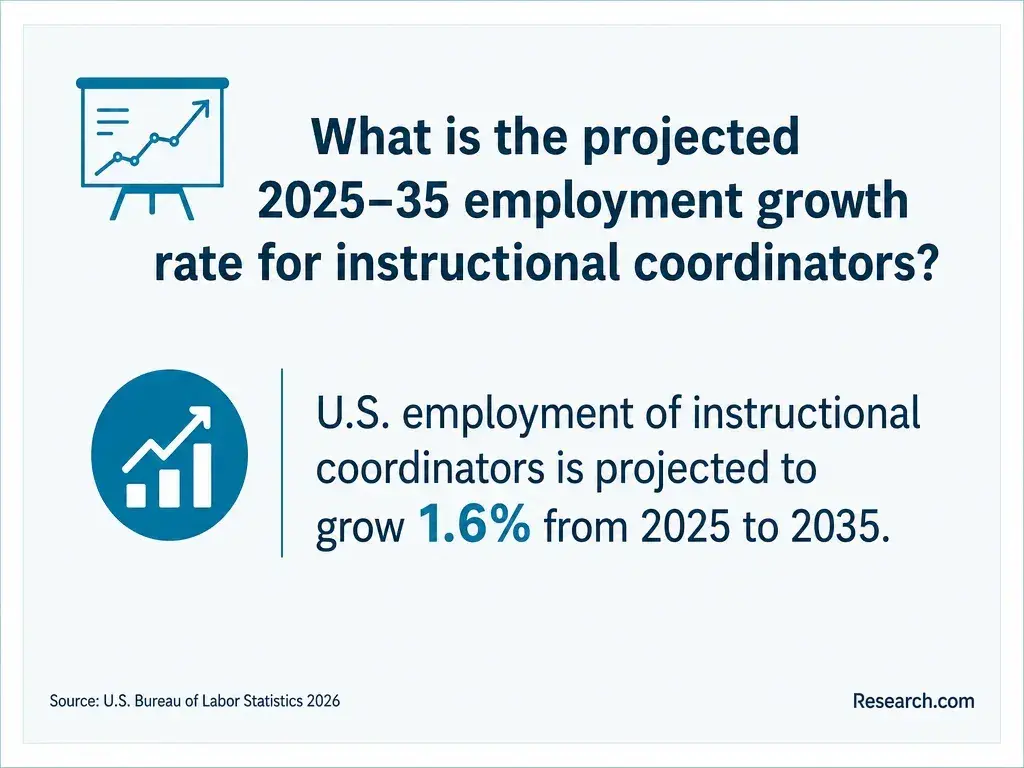
The U.S. Bureau of Labor Statistics reports a 2025 median annual salary of $104,590 for postsecondary education administrators and projects 1.8% employment growth for that occupation from 2025 to 2035. The category is a useful higher education benchmark, but it spans different administrative jobs, institutions, and experience levels. It is not an alumni director salary estimate or an Ed.D. earnings forecast.
For a personal decision, compare posted pay ranges for the specific roles you want with your current compensation and likely study costs. Also weigh whether your institution's promotion structure offers a realistic path to those roles. A doctorate may strengthen your preparation without changing the number of available openings.
How Can You Choose an Accredited Online Ed.D. Program?
First, verify the institution's accreditation through the institution and its recognized accreditor. Then confirm the exact degree awarded and whether its curriculum serves organizational leadership, higher education, or another field. Institutional accreditation does not, by itself, establish professional certification or school-administrator licensure eligibility.
Shortlist programs against your alumni relations goal: relevant required courses, faculty guidance for applied inquiry, the final-project model, online attendance rules, campus visits, and total cost. Ask where graduates with comparable backgrounds have moved, while recognizing that anecdotes are not placement guarantees. You can use comparisons of Ed.D. program costs for prospective doctoral students to identify options, then verify each school's current charges directly.
Before accepting an offer, get written answers on project-site approval, data access expectations, completion requirements, and the full schedule. The best-fit program is one whose obligations you can meet and whose learning addresses a leadership responsibility you intend to take on.
Other Things You Should Know About EdD Leadership
Possibly, but hiring depends on the subject, institution, role, and relevant expertise. An Ed.D. alone does not guarantee a faculty appointment.
It is a doctoral degree, but institutions decide how particular degrees satisfy requirements for individual academic or administrative positions. Check the job description rather than relying on the label.
Ed.D. graduates may use the doctoral title. In settings where credentials could be misunderstood, identify the degree or professional role clearly.
Not automatically. Confirm university permissions, program publication rules, and restrictions on alumni information before naming the institution or sharing findings.
- Program Eligibility, Written Arrangements, and Distance Education | 2024-2025 Federal Student Aid Handbook https://fsapartners.ed.gov/knowledge-center/fsa-handbook/2024-2025/vol2/ch2-program-eligibility-written-arrangements-and-distance-education
- Partnering with Students to Develop a Capstone for a... - PMC https://pmc.ncbi.nlm.nih.gov/articles/PMC11732519/
- Assistant Director, Alumni Clubs & Engagement | columbia.edu https://opportunities.columbia.edu/jobs/assistant-director-alumni-clubs-engagement-manhattanville-new-york-united-states-9133f09d-a8b9-4786-8e4a-0828e9311f15
- Full article: Leadership in the Implementation of Change | tandfonline.com https://www.tandfonline.com/doi/full/10.1080/14697017.2021.1861697
- EdD vs. PhD in Education: Choosing the Right Program | Goodwin College of Professional Studies https://drexel.edu/soe/resources/career-path/edd-vs-phd/
- Walden University's Guide to Doctoral Capstone Projects https://www.waldenu.edu/online-doctoral-programs/resource/guide-to-doctoral-capstone-projects
- Leadership and Learning in Organizations Online Ed.D. | Peabody College of Education and Human Development https://peabody.vanderbilt.edu/academics/edd-programs/online-leadership-learning-organizations/
- PhD vs. EdD in Education: Nine expert tips to help you choose [with infographic] | USC Rossier https://rossier.usc.edu/news/phd-vs-edd-in-education-nine-expert-tips-to-help-you-choose-with-infographic/