2027 Choosing an Online Ed.D. in Leadership and Learning in Organizations Around an Overseas Assignment
Audited and Verified:
Our Editorial and Data Verification Process
Research.com uses government datasets, official education statistics and primary institutional information to support its career and degree guides. Our review process checks factual accuracy, occupational definitions, source dates and the requirements associated with the credentials discussed.
How This Article Was Fact-Checked
Our editorial team verifies salary estimates, employment projections, education requirements and program information against original data providers and official organizations. Salary figures are checked against the relevant occupational definitions and reporting periods. Information about licensure, accreditation and required in-person training is reviewed separately.
Fact-checked and verified on:

Co-Founder and Chief Data Scientist
An overseas assignment can make an online doctorate possible - or turn a manageable course schedule into recurring midnight classes and difficult campus trips. This guide is for US-based professionals temporarily working abroad, as well as applicants living overseas, who are considering an Ed.D. in leadership and learning in organizations.
It explains which requirements travel with you, which may depend on your physical location, and how to compare programs before committing. The goal is to find a degree you can complete without assuming that "online" means self-paced or entirely remote.
Key Things You Should Know
- Confirm that the program permits enrollment from every country where you expect to live; online delivery alone does not establish overseas eligibility.
- Convert required live classes, group meetings, and campus visits into your local time and travel budget before applying.
- Choose a program whose applied-project rules still work if your employer, assignment, or access to organizational data changes.
What is an online Ed.D. in Leadership and Learning in Organizations?
An Ed.D. is a professional doctorate that generally emphasizes using research and evidence to improve practice. In a leadership and learning program, that practice might involve developing managers, improving workplace learning, evaluating a training initiative, or leading organizational change. The exact degree title and required work vary by university; "leadership and learning" does not, by itself, identify a standardized curriculum or credential.
For someone on assignment abroad, the attraction is the chance to study organizational problems while remaining employed. The limitation is that an online Ed.D. can still require scheduled classes, collaborative work, and an approved capstone or dissertation in practice. It is not automatically a school-administrator licensure program. If your goal is a narrower expertise rather than a broad organizational doctorate, compare Ed.D. specialization choices for professional goals against the actual courses and credential awarded.
How does an online Ed.D. compare with a campus-based doctoral program?
The useful comparison is not screen versus classroom. It is whether the program's required participation remains feasible throughout the assignment. These delivery models commonly create different scheduling and travel risks, but individual programs can depart from either pattern.
| Decision factor | Online Ed.D. | Campus-based doctorate |
| Class attendance | May include required live meetings at fixed times | Usually requires regular in-person attendance |
| Physical travel | May require occasional campus convenings | Generally requires living near campus or frequent travel |
| Peer and faculty work | Often coordinated across time zones | More opportunities for in-person meetings |
| Applied research | May be possible at an approved remote site | Site and supervision rules still depend on the program |
An online program is usually the more practical starting point if you must remain overseas. A campus-based program may be preferable if you can relocate and need sustained in-person access to faculty or research resources. Neither format establishes academic quality on its own; compare supervision, project requirements, and completion support.
Can you complete this Ed.D. while living overseas?
Possibly, but obtain confirmation for your physical location, not just your permanent US address. A university may have country-specific limits on enrollment, technology access, payments, required activities, or student support. Permission to study from one country should not be assumed to cover a later reassignment.
Test the schedule using the time zone where you will actually live. A weekly US evening seminar may occur during your workday or after midnight abroad; daylight saving changes can shift that conflict during the term. Include group-project meetings, advisor appointments, exams, and any required campus convenings. Ask whether attendance is mandatory, whether recordings count, and what happens when work travel or connectivity prevents participation. Get consequential answers in writing.
Applied work creates another location-dependent issue. If you hope to study your overseas employer or its staff, first confirm that the program accepts that project site. Employer permission, lawful access to data, confidentiality safeguards, and any required university research review are separate decisions. An online US degree also does not, by itself, provide a US visa, employment authorization, or permission to work in the country hosting your assignment.
Relevant curricula commonly address leadership theory, adult learning, organizational change, research methods, and evaluation. A course title is less informative than its assignments: determine whether you will diagnose an organizational problem, assess evidence, design an intervention, and evaluate its limitations.
Match the curriculum to your assignment. A professional responsible for multinational workforce training may benefit from adult learning, learning transfer, and program evaluation. Someone leading a cross-border reorganization may need stronger preparation in systems thinking, stakeholder engagement, and implementation.
Check whether those subjects are required, available only as electives, or absent. Also verify whether research-methods courses prepare you for the program's actual capstone or dissertation requirements; exposure to a method is not the same as independent research competence.
Requirements vary. Programs may assess a completed graduate degree, academic record, professional experience, recommendations, a statement of purpose, and evidence that an applicant can pursue applied inquiry. Do not assume that every program requires an education master's, a particular leadership title, or an entrance test.
An overseas applicant should ask how the institution evaluates prior degrees, whether international transcripts require a credential evaluation, and whether an English-language proficiency requirement applies. Applicants returning to doctoral study should distinguish graduate coursework that supports admission from credit formally accepted toward the new Ed.D.; the latter requires a program-specific decision. If you have unfinished doctoral work, comparing education doctorate ABD completion routes may be more relevant than starting a conventional cohort, but prior work should not be assumed transferable.
In your application, describe responsibilities you actually held and an organizational learning problem you want to investigate. If the proposed project involves your employer abroad, present access as a possibility requiring approval - not as an agreement already secured.
Completion time depends on the published course sequence, enrollment pace, project approvals, and time allowed for the final research or applied project. A short advertised schedule may assume uninterrupted enrollment and timely access to a project site. When evaluating fast-track doctoral study in education, check whether its pace remains realistic across time zones and assignment changes.
Request an itemized estimate for your entry term rather than relying on a headline tuition figure. The comparison should include tuition and required fees, technology charges, books, any mandatory campus trips, airfare and lodging from your overseas location, and the cost of extending enrollment if a project is delayed. Ask whether tuition is charged per credit, term, or program and whether rates can change.
Employer assistance can alter the decision, but verify its limits: eligible courses, annual caps, grade conditions, reimbursement timing, and repayment obligations if you leave. Do not count unapproved reimbursement as funding. If the degree would require unpaid leave or frequent long-haul travel, compare that total commitment with a targeted certificate or employer leadership program.
Start with the university's exact legal name and confirm its institutional accreditation through the accreditor's directory or the US Department of Education's accreditation database. Match the listed institution and status to the school awarding the degree, then check the program's official catalog for the exact Ed.D. designation and current delivery requirements.
Institutional accreditation does not mean every leadership program has specialized accreditation, qualifies graduates for educator licensure, or will be recognized for a particular job abroad. If a US school-administration credential is your goal, ask the program and the relevant state licensing authority whether this specific pathway meets the applicable requirements. If you intend to use the degree in another country, check that country's recognition process and your employer's credential rules separately.
The degree may support advancement in learning and development, organizational development, talent management, consulting, nonprofit leadership, or education administration. Your existing work matters more than the title alone. An experienced training manager might use doctoral study to strengthen evaluation and change leadership; an applicant without responsibility for organizational projects may first need hands-on experience.
For university-facing roles, compare the doctorate with the hiring criteria for the positions you actually want. Some administrative jobs prioritize higher-education operations, budgets, and supervision; faculty roles may prioritize disciplinary research. Resources on organizational leadership doctorates for university leadership work can help frame that narrower comparison. An organizational Ed.D. does not automatically qualify you for a regulated school leadership role or an executive appointment.
There is no single salary or employment forecast for Ed.D. graduates. US Bureau of Labor Statistics occupational data describe jobs held by people with varied credentials and experience, not outcomes attributable to this degree.
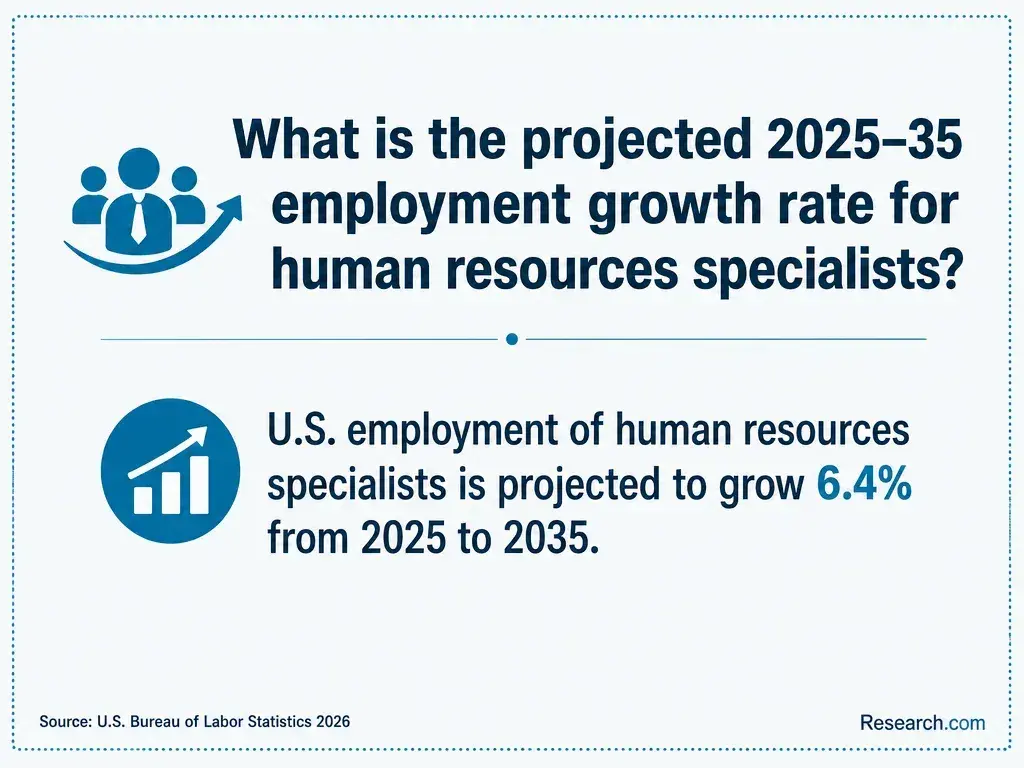
For example, the BLS reports a May 2025 median annual salary of $133,000 for training and development managers, with 6.4% projected employment growth from 2025 to 2035. That makes the occupation worth investigating if you already have substantial learning-and-development experience; it does not mean an Ed.D. graduate will enter a management role or earn that median. Evaluate likely openings, employer requirements, and compensation in the US market where you expect to work after your assignment.
Which online Ed.D. program best fits an overseas assignment?
The best fit is the program that confirms overseas enrollment and gives you a workable path through all required activities - not simply the one advertising the most flexible classes. Before paying a deposit, seek written answers from admissions, the program director, and the offices responsible for international enrollment and applied research.
Use the following sequence to test a shortlist. It puts disqualifying issues first so you do not spend time comparing tuition for a program you cannot attend.
- Provide your expected countries of residence and assignment dates; ask whether enrollment and required academic activities are permitted from each location.
- Request the live-class schedule, attendance policy, group-work expectations, and dates and locations of every required in-person convening.
- Ask who approves project sites, whether an overseas organization is eligible, and what alternatives exist if you change employers or lose data access.
- Obtain an entry-term cost estimate that includes required travel; confirm employer funding and the consequences of delayed completion.
- Compare the curriculum, faculty guidance, and awarded credential with the responsibilities you want after the assignment.
If two programs pass those tests, compare total commitment rather than tuition alone. A program with fewer required flights may be more affordable from abroad even if its listed tuition is higher. Use guides to affordable doctoral education in organizational leadership as a starting shortlist, then verify each school's current charges and requirements yourself. If neither program survives the location, schedule, and project tests, postponing the doctorate - or pursuing focused professional development during the assignment - is a sound decision.
Other Things You Should Know About EdD Leadership
Commencement attendance is usually a separate question from meeting graduation requirements. Ask the university whether the ceremony is optional and whether any final academic presentation must be attended in person.
Check both the university's academic policies and your employer's confidentiality and intellectual-property rules. Remove restricted information before sharing work, and obtain permission before presenting an organizational project as a public portfolio sample.
Do not assume a VPN resolves location restrictions or technology problems. Ask the university's technology and enrollment teams which services are supported where you will live and what its policies permit.
Review the program's technical-failure and make-up policies before the term starts. Keep the required contact details available offline, document the disruption promptly, and do not assume an extension or alternative assessment will be automatic.
- 9 FAM 402.5 (U) STUDENTS AND EXCHANGE VISITORS | state.gov https://fam.state.gov/fam/09FAM/09FAM040205.html
- Ethical Guidelines for Research Using Pervasive Data | Federal Register https://www.federalregister.gov/documents/2024/12/11/2024-29064/ethical-guidelines-for-research-using-pervasive-data
- Recognition of Foreign Qualifications | ed.gov http://www.ed.gov/about/initiatives/international-affairs/recognition-of-foreign-qualifications
- The Types of Courses We Offer - Harvard Extension School https://extension.harvard.edu/student-experience/course-formats/
- Doctor of Education in Organizational Leadership, Culture and Change | Thomas Edison State University https://www.tesu.edu/degrees-programs/doctoral/edd.php
- View and Understand the Class Schedule | buffalo.edu https://www.buffalo.edu/registrar/classes-and-grades/class-schedules/view-and-understand-the-class-schedule.html
- Strategies for Teaching Students in Different Time Zones | Carnegie Mellon University https://www.cmu.edu/teaching/online/designteach/strategies/timezones.html
- Considerations for Conducting International Research | pitt.edu https://www.globaloperations.pitt.edu/research/planning-considerations/