2027 Online Ed.D. in Leadership and Learning in Organizations: Degree Fit for Leaders Tackling Learning Data Collected Without Clear Governance
Audited and Verified:
Our Editorial and Data Verification Process
Research.com uses government datasets, official education statistics and primary institutional information to support its career and degree guides. Our review process checks factual accuracy, occupational definitions, source dates and the requirements associated with the credentials discussed.
How This Article Was Fact-Checked
Our editorial team verifies salary estimates, employment projections, education requirements and program information against original data providers and official organizations. Salary figures are checked against the relevant occupational definitions and reporting periods. Information about licensure, accreditation and required in-person training is reviewed separately.
Fact-checked and verified on:

Co-Founder and Chief Data Scientist
Your organization has learning-platform records, assessment results, and training reports, but no shared rules for who may use them or how long they should be kept. For a leader responsible for learning and development, that is a governance problem - not merely an analytics opportunity.
This article explains when an online Ed.D. in Leadership and Learning in Organizations could help you lead a responsible response, what a useful program should teach, and when legal, privacy, or technical support would be a better first investment.
Key Things You Should Know
- An Ed.D. fits best when you must lead a sustained, cross-functional change in how learning data is collected, interpreted, and used - not when you only need a privacy policy or software configuration.
- Before analyzing existing records, establish who owns each dataset, who may access it, what uses are permitted, and what review or consent may be required.
- The U.S. Bureau of Labor Statistics reports a $133,000 median annual salary for training and development managers in 2025; that occupational figure is not an expected salary or return on investment for Ed.D. graduates.
What is an online Ed.D. in Leadership and Learning in Organizations?
An Ed.D. in Leadership and Learning in Organizations is a practice-oriented doctorate concerned with how people learn, how organizations change, and how leaders use evidence to improve practice. An online program delivers some or all instruction remotely; its exact degree name, courses, research requirement, and attendance rules depend on the institution.
For someone overseeing poorly governed learning data, the degree's potential value is broader than learning to read a dashboard. It may develop the leadership, adult-learning, evaluation, and organizational-change skills needed to bring learning staff, employees, privacy officers, IT, and executives into a workable decision process. Compare Ed.D. study tracks and career fit against that responsibility rather than assuming every leadership doctorate emphasizes data governance.
The fit is weaker if your immediate task is to interpret a privacy law, secure a database, or negotiate a vendor contract. Those tasks may require qualified legal, security, procurement, or data-management professionals. An Ed.D. can help you lead across those functions; it does not replace their expertise.
How can this Ed.D. help leaders govern learning data responsibly?
Learning data may include course participation, assessment scores, survey responses, coaching notes, and records from a learning management system. Data governance means assigning decision rights and rules for collecting, accessing, using, sharing, retaining, and deleting those records. When the rules are unclear, even a useful evaluation can expose employees or learners to unexpected scrutiny.
A leadership and learning Ed.D. is most relevant when the underlying problem is organizational: teams collect data for different purposes, managers interpret it inconsistently, or no one has authority to settle disputed uses. Training everyone to use a dashboard will not resolve those gaps. A doctoral learner could instead study how decisions are made, assess whether measures reflect actual learning or performance, and evaluate a proposed governance change - provided the program offers suitable faculty guidance and project requirements.
Before proposing an analysis or an applied doctoral project, a leader can use the following sequence to separate urgent safeguards from longer-term improvement:
- Identify the records and purposes. Record what each system collects, why it was collected, where it goes, and whether a proposed use differs from the original purpose.
- Assign authority. Confirm the data owner, authorized users, approval route for new uses, vendor responsibilities, and escalation path for disputed requests.
- Set proportionate safeguards. Limit access and retention, check whether reports could identify individuals, and involve privacy, legal, security, labor, or records staff where appropriate.
- Choose a defensible evaluation. Define the decision the data will inform, check whether the measures are valid, and avoid treating participation or satisfaction as proof that training improved job performance.
- Review and revise. Document decisions and limitations, seek stakeholder feedback, and reassess rules when systems, contracts, or uses change.
For example, a hypothetical employer might want to combine course-completion records with performance reviews. That proposal calls for more than a statistical method: leaders would need to establish whether the combination is authorized, whether employees were told about the use, who could see individual-level results, and whether performance ratings are a fair measure of learning transfer. In an educational setting, student records may also trigger FERPA obligations; employment records raise different legal and policy questions. Employer permission to access data is distinct from academic approval. A faculty advisor or institutional review process must determine what oversight a doctoral project needs; not every internal evaluation is automatically human-subjects research, and not every project is automatically exempt.
Degree-fit test: An Ed.D. is worth considering if you have continuing responsibility for organizational learning decisions and need to design, implement, and evaluate governance across stakeholders. If the organization first needs to stop an unauthorized data flow or remedy a security weakness, address that with the appropriate specialists before making it a doctoral research topic.
What careers can you pursue with an Ed.D. in Leadership and Learning?
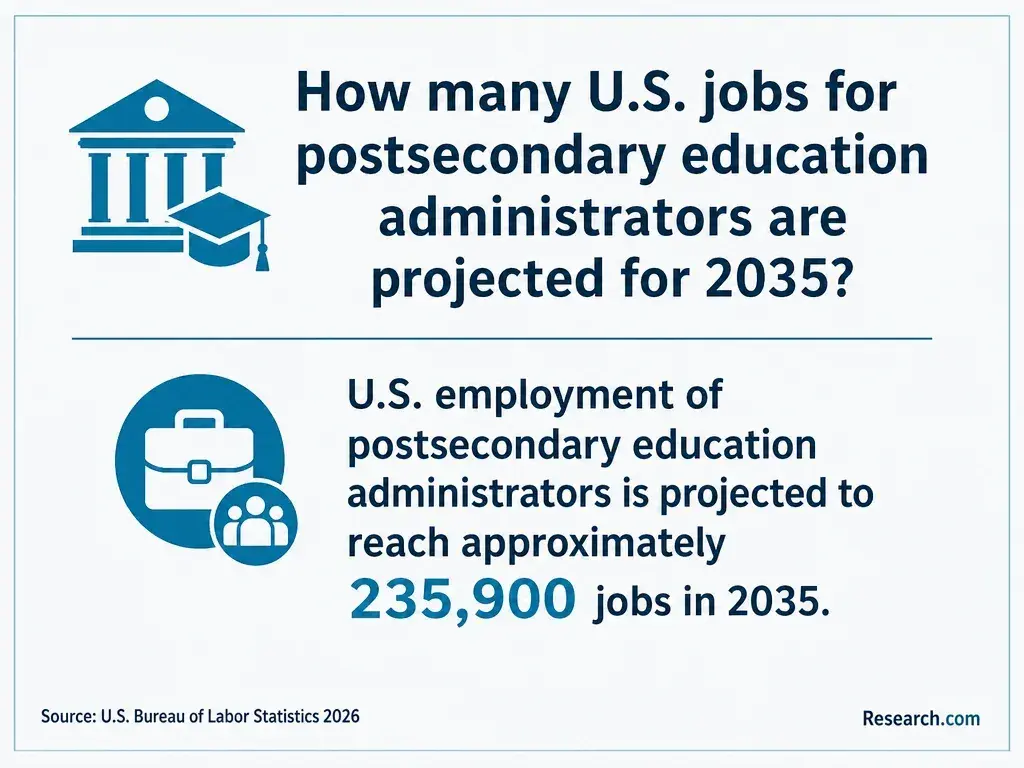
Relevant roles include learning and development leadership, organizational development, workforce training, program evaluation, and organizational consulting. The work differs: a training manager may set learning strategy and budgets; an organizational development consultant may diagnose decision processes and support change; an evaluator may examine whether a program is working. Data governance can matter in each role, but employers may expect different technical, sector, and management experience.
For an established learning professional, the strongest career case is often advancement into broader responsibility for evidence use and cross-functional decisions. A workplace project showing that you can define permitted data uses, negotiate stakeholder concerns, and communicate evaluation limits may be more persuasive than the credential alone. If your goal is university administration, assess organizational leadership doctorates for university leadership work against the specific institution's hiring requirements.
For a substantial career switch into privacy engineering, cybersecurity, or legal compliance, an Ed.D. is usually an indirect route. Targeted technical preparation, supervised experience, or another qualification may address the missing skills more directly.
Delivery format changes how doctoral work fits around employment, but it does not determine whether a program teaches responsible data use. The comparison below highlights obligations to verify before treating "online" as "flexible."
| Feature | Online program | Campus-based program |
| Class participation | May combine live meetings, independent work, and group sessions | Typically centers on scheduled in-person meetings |
| Travel | May still require campus convenings or project-site visits | Requires regular access to campus |
| Applied project access | May support inquiry at a workplace or approved partner site | May offer local partnerships; site and data approval still matter |
| Collaboration | Requires deliberate coordination across schedules and locations | Offers in-person contact but still requires time outside class |
Ask for the actual live-session schedule, attendance policy, travel requirements, and research-project rules. If you have prior unfinished doctoral study, review doctoral completion options for ABD education students separately; an ABD pathway is not a standard feature of an online Ed.D., and prior work does not automatically transfer.
Courses vary by school, but leadership theory, adult learning, organizational change, research methods, and evaluation are common areas to examine. For this particular challenge, course titles are less useful than evidence that students practice making decisions with imperfect, sensitive organizational data.
Read syllabi or ask faculty whether students learn to assess measurement validity, distinguish descriptive reporting from causal claims, plan qualitative interviews or surveys ethically, and communicate uncertainty to decision-makers. Look for opportunities to study governance and implementation alongside analytics. A course in learning technology alone does not establish expertise in privacy law, information security, or responsible AI.
Check the required sequence and the actual applied-research deliverable. A dissertation in practice, team capstone, and conventional dissertation can offer different levels of freedom to investigate a workplace data problem. Confirm whether an employer-based project is permitted and what happens if access to the records ends.
Requirements are institution-specific. Programs may review prior degrees and transcripts, professional experience, recommendations, a statement of purpose, and evidence of readiness for doctoral research. Some specify a master's degree or graduate coursework; others set different eligibility rules. Do not assume that working in learning and development, holding a management title, or proposing a workplace project establishes admission eligibility.
For this topic, an application can describe a genuine governance challenge without claiming access or results you do not have. Explain what decisions you currently influence, which stakeholders would need to participate, and what you still need permission to investigate. Ask admissions staff to distinguish formal requirements from recommended preparation and ask the program office how project-site approval works.
If higher education is your intended sector, investigate funding while evaluating admission rather than assuming a professional doctorate is funded like a PhD. Higher education leadership doctoral grants and aid can be a starting point for questions, but the institution must confirm current eligibility and award terms.
Completion time depends on the required credits, enrollment pace, course availability, and how long the dissertation or capstone takes. An online format does not eliminate time spent coordinating with colleagues, obtaining data permissions, or revising an applied project.
No single tuition figure represents online leadership and learning Ed.D. programs. Compare each school's published tuition and required fees with its credit and enrollment requirements, then account for travel, lodging, materials, and any reduction in paid work. Employer reimbursement can lower your personal cost, but verify annual limits, grade rules, continued-employment conditions, and whether you must pay tuition before reimbursement. Review inexpensive Ed.D. pathways to consider, then confirm the current charges directly with each institution.
For a governance-focused applicant, opportunity cost matters as much as the tuition quote. If a shorter course and an employer-supported governance initiative would solve the immediate problem, compare that route with the doctorate before committing to years of study.
Verify that the institution holds recognized institutional accreditation and that the specific Ed.D. is an officially awarded degree at that institution. Confirm the program's exact title, academic home, delivery requirements, and any claims about specialized accreditation with the institution and the relevant accreditor. Institutional accreditation does not establish that a program prepares graduates for a particular license or teaches advanced data governance.
For this decision, accreditation is a baseline check, not a substitute for examining methods courses, faculty supervision, project rules, and access to privacy or research-ethics guidance.
Many organizational learning and development roles have no universal professional license. An Ed.D. is not itself a privacy certification or authorization to act as legal counsel. Employers may nevertheless seek demonstrated experience with data stewardship, evaluation, compliance, or particular systems.
Regulated education roles are different. Teacher, principal, superintendent, and some other positions have state-specific eligibility rules; a general leadership and learning Ed.D. should not be assumed to satisfy them. Check the program's licensure disclosure and the relevant state authority before enrolling for that purpose. If your goal is narrowly focused on data privacy or security, compare role-specific training and certifications with the doctorate's broader leadership preparation.
What salaries and job outlook can Ed.D. graduates expect?
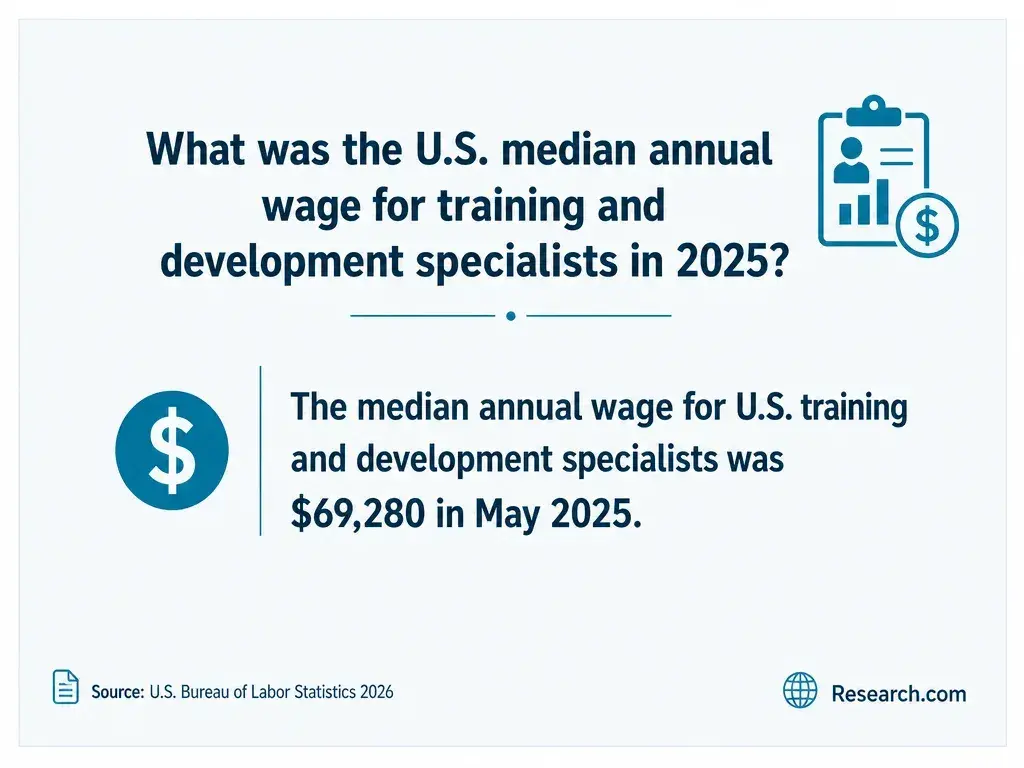
There is no single salary or job-growth forecast for graduates of this degree. The U.S. Bureau of Labor Statistics reports that training and development managers had a median annual salary of $133,000 in 2025, with employment projected to grow 6.4% from 2025 to 2035. Those figures describe an occupation across workers with varied education and experience; they do not measure the effect of earning an Ed.D.
Assess likely returns against the role you can realistically pursue. A current manager with budget authority and evidence of leading organizational change has a different advancement case from someone seeking their first learning and development position. Before assigning financial value to the degree, examine relevant job postings, internal promotion rules, employer education support, and the responsibilities you would gain - not just an occupational median.
Other Things You Should Know About EdD Leadership
Notify the organization's designated privacy, security, and procurement contacts. They can review the contract, permitted uses, access, retention, and whether any incident-response procedure applies. Do not copy the export into a doctoral project while its status is unresolved.
No. Small groups or combinations of filters can make individuals identifiable. Have the responsible data owner review audience, group size, and reporting rules before distribution.
Participation rules depend on the project and its oversight. A supervisor's authority can create pressure, so discuss recruitment, consent, and alternatives with the faculty advisor and the organization before inviting employees.
Usually only at an approved level of detail. Describe your responsibilities, decision process, and transferable skills without disclosing restricted records, identifiable findings, or information the organization has not authorized you to share.
- Accreditation in the U.S. | ed.gov http://www.ed.gov/laws-and-policy/higher-education-laws-and-policy/college-accreditation/accreditation-in-the-us
- General Schedule Qualification Policies | U.S. Office of Personnel Management https://www.opm.gov/policy-data-oversight/classification-qualifications/general-schedule-qualification-policies/
- Impact of Accreditation on the Quality of Healthcare Services | nih.gov https://pmc.ncbi.nlm.nih.gov/articles/PMC3156520/
- Cost of Attendance (Budget) | 2025-2026 Federal Student Aid Handbook https://fsapartners.ed.gov/knowledge-center/fsa-handbook/2025-2026/vol3/ch2-cost-attendance-budget
- Data Governance - Nebraska Department of Education https://www.education.ne.gov/educational-technology/data-governance-data-security-and-privacy/
- Data Governance and Management Policy | gatech.edu https://policylibrary.gatech.edu/information-technology/data-governance-and-management-policy
- 2026 UNC Online EdD in Organizational Learning & Leadership https://online.unc.edu/online-doctoral-programs/online-edd-organizational-learning-and-leadership/
- Academics: Section 4: Academic Calendar, Admission, and Enrollment: Admission Requirements https://academics.waldenu.edu/handbook/registration-admission-enrollment/admission-requirements
- Cost of Attendance - USC Financial Aid https://financialaid.usc.edu/undergraduate-financial-aid/cost-of-attendance/
- Data Governance Tools: Benefits and Best Practices | Tseng College (CSUN) https://tsengcollege.csun.edu/blog/data-governance-tools-best-practices