2027 Is an Online Ed.D. in Leadership and Learning in Organizations a Good Fit for School Leadership Pipeline Managers?
Audited and Verified:
Our Editorial and Data Verification Process
Research.com uses government datasets, official education statistics and primary institutional information to support its career and degree guides. Our review process checks factual accuracy, occupational definitions, source dates and the requirements associated with the credentials discussed.
How This Article Was Fact-Checked
Our editorial team verifies salary estimates, employment projections, education requirements and program information against original data providers and official organizations. Salary figures are checked against the relevant occupational definitions and reporting periods. Information about licensure, accreditation and required in-person training is reviewed separately.
Fact-checked and verified on:

Co-Founder and Chief Data Scientist
School leadership pipeline managers do more than recruit future principals: they identify potential leaders, coordinate development, and assess whether those efforts improve readiness. An online Ed.D. in Leadership and Learning in Organizations may strengthen that work, but it may not be the most direct route to a new position or credential.
For district and education-sector professionals weighing doctoral study alongside full-time work, this guide explains where the degree adds value, where it falls short, and what to verify before enrolling.
Key Things You Should Know
- An online leadership-and-learning Ed.D. is a stronger fit for managers who design, evaluate, and improve leadership pipelines than for those who primarily need principal or superintendent licensure.
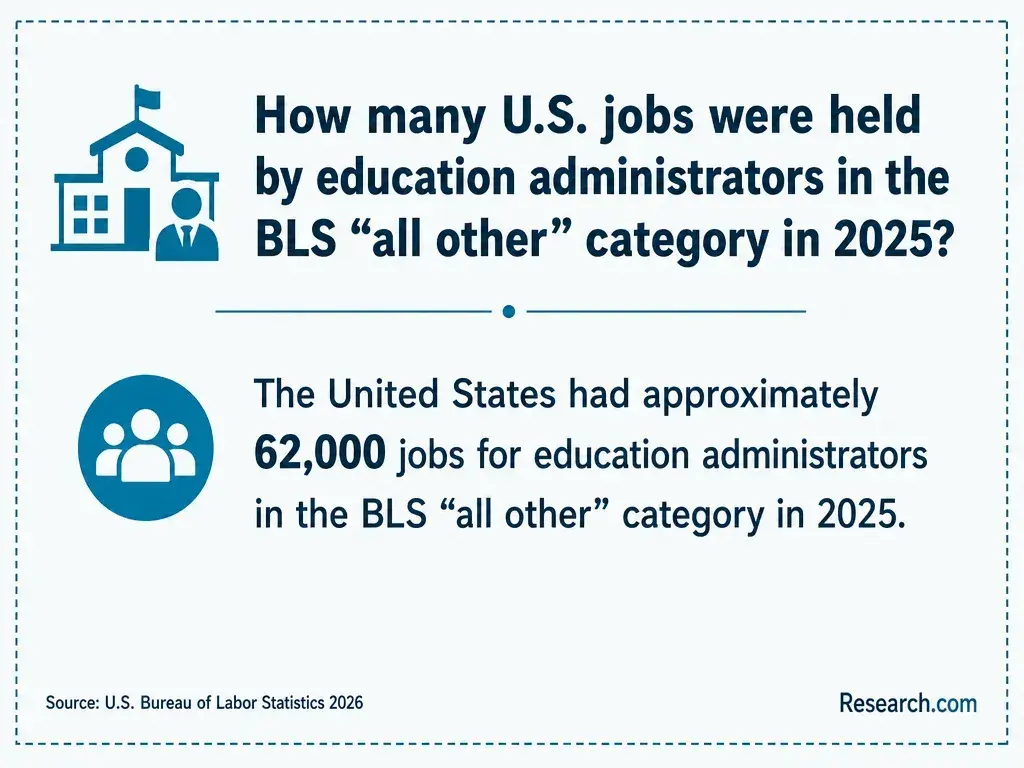
- The Bureau of Labor Statistics reports a $95,200 median annual salary for education administrators, all other, in May 2025; that broad occupation is not a salary forecast for pipeline managers or Ed.D. graduates.
- Before applying, confirm the program's applied-project requirements, access to usable district data, live-session schedule, total cost, and any state-specific licensure implications.
Is an online Ed.D. in Leadership and Learning in Organizations right for school leadership pipeline managers?
It can be a good fit if your job involves improving how a district identifies, prepares, places, and supports school leaders—and you have authority to act on what you learn. A school leadership pipeline is the connected set of recruitment, selection, development, succession, and retention practices for roles such as assistant principal and principal. A leadership-and-learning Ed.D. can help a manager examine that system rather than treating each workshop as a separate solution.
The best choice depends on the responsibility you want next. This comparison separates a doctoral learning goal from a credential or experience gap:
| Primary goal | Likely better-fitting route | Decision test |
| Evaluate and redesign a districtwide leadership pipeline | Practice-oriented Ed.D. with organizational learning and applied evaluation | Can you influence implementation and obtain appropriate project access? |
| Become eligible for a licensed school-administrator role | State-approved preparation route, if required | Does the program meet the relevant state's requirements? |
| Improve coaching or selection practices in your current role | Employer development, mentorship, or targeted coursework | Would a smaller investment address the specific skill gap? |
The doctorate is less compelling if the district cannot support applied inquiry, the promotion you want depends chiefly on supervised school leadership experience, or you need a faster solution to a narrow operational problem. It is more compelling when you can connect adult learning, organizational change, and credible evaluation to decisions made across schools.
What careers can an online Ed.D. in Leadership and Learning in Organizations prepare you for?
For an experienced pipeline manager, the most plausible benefit is greater scope within an existing career: directing leadership development, overseeing talent or succession initiatives, evaluating district improvement efforts, or advising education organizations. These jobs require budget judgment, stakeholder relationships, implementation experience, and evidence of results—not just doctoral coursework.
Related paths include education administration, professional learning leadership, organizational development, and consulting. Moving from a district into university administration is a separate transition: university governance, faculty relationships, and student services may require experience the district role does not provide. Readers considering that move can examine Ed.D. preparation for organizational change in universities without assuming school-system expertise transfers automatically.
A useful career test is to review actual postings for the next role you want. Separate required credentials from preferred doctorates, then identify the leadership decisions and outcomes you could document now. An Ed.D. may deepen those capabilities; it does not substitute for them.
How does an online Ed.D. compare with campus-based doctoral programs?
Online study can preserve access to your district and let you investigate a live pipeline challenge while employed. Campus-based study may make in-person research collaboration and faculty contact easier, but it can impose commuting or relocation costs. Neither format determines academic rigor: compare faculty guidance, method preparation, feedback, and the required doctoral deliverable.
Ask specifically about synchronous meetings, group assignments, campus convenings, attendance rules, and the weeks when project work intensifies. A cohort that meets online at fixed times is not self-paced. Some programs require a dissertation in practice, while others use a different approved project; applicants exploring Ed.D. study without a conventional research dissertation should still verify the extent of research and writing required.
Start by confirming that the degree-granting institution holds recognized institutional accreditation and that the online doctorate falls within its authorized offerings. Check the institution and accreditor directly rather than relying on an advertisement. Then distinguish accreditation from a program's approval to prepare candidates for a particular state license: one does not establish the other.
For a pipeline manager, also check the exact awarded degree and curriculum. "Organizational leadership" in a program description does not necessarily mean a formal concentration in school leadership, nor does an accredited Ed.D. automatically satisfy principal or superintendent requirements. Request written clarification from the university and, for a regulated role, the relevant state licensing authority.
A relevant study may combine adult learning, leadership development, organizational change, research methods, and program evaluation. For pipeline work, the value lies in connecting them: for example, determining whether a principal preparation activity addresses a demonstrated readiness gap, whether participants can apply what they learn, and which district conditions help or hinder that transfer.
An applied project might examine a selection process or assess a coaching initiative, but a proposed topic is not an approved capstone. Ask whether the program permits district-based work, what faculty supervision it provides, and how it handles employer permission, confidential personnel information, and potentially protected student records. Compare published courses and project requirements—not just a program title—when considering Ed.D. concentration planning for doctoral applicants.
Requirements vary by institution. Programs may assess prior graduate education, academic records, professional experience, recommendations, a statement of purpose, and readiness for applied research. A manager can make a stronger case by describing decisions they have owned—such as coordinating candidate development or revising a selection process—rather than relying on a leadership title alone.
Before applying, ask which degrees and graduate credits establish eligibility, whether entrance tests or prerequisites apply, and what documentation is needed for prior study. Credits that support admission do not necessarily transfer into the doctorate. An applicant with an education specialist degree can investigate an Ed.S. progression into an online Ed.D., but should obtain a written, program-specific credit evaluation before expecting a shorter path.
There is no reliable single timeline or price for this degree category. Required credits, enrollment pace, cohort sequencing, project approval, and leave policies affect completion; published tuition may omit fees, travel for convenings, and continuing-enrollment charges. Obtain a term-by-term estimate for your intended pace, not merely a quoted per-credit rate.
For a district employee, the financial comparison also depends on reimbursement limits, continued-employment conditions, and time away from work. Request the employer policy in writing and compare the full expected cost with the particular responsibilities or opportunities the degree could support. Do not assume a future raise will recover the expense.
The pipeline-management job itself does not have one universal US license. A district may nevertheless require an educator or administrator credential for a particular position, especially when its duties include serving as a principal or supervising schools. Eligibility depends on the state and the job description, not the doctorate's broad leadership focus.
If your goal is principal or superintendent service, compare the state's preparation, experience, assessment, and application rules with the university's written licensure disclosures before enrolling. If your goal is district talent development rather than a licensed post, relevant experience and employer expectations may matter more than another credential.
No national salary series isolates school leadership pipeline managers or measures the earnings effect of this Ed.D. The Bureau of Labor Statistics reports a May 2025 median annual salary of $95,200 for "education administrators, all other," with projected employment growth of 1.6% from 2025 to 2035. That category offers context for some education-administration work, but its median is neither a typical pipeline-manager salary nor a return-on-investment estimate.
District pay scales, location, responsibilities, and prior experience are more useful for an individual decision. Compare local postings and your employer's classification rules; confirm whether a doctorate changes eligibility, salary placement, both, or neither.
How can you choose a reputable online Ed.D. program?
Begin with the role and organizational problem you want the degree to support. Then use the following checks to distinguish a workable doctoral program from one that is merely convenient to advertise:
- Verify institutional accreditation, the exact degree awarded, and any relevant licensure disclosures with the responsible institution or authority.
- Compare required courses and the doctoral project against your pipeline responsibilities, including the quality of faculty guidance and methods training.
- Confirm live-session times, convenings, cohort commitments, leave rules, and the full cost at your expected enrollment pace.
- Ask whether district-based work is permitted and what approvals, data protections, and alternative project arrangements would apply.
- Request outcome information with cohort definitions and time periods; do not treat selected alumni stories as typical results.
Someone who has already completed substantial doctoral study faces a different calculation: doctoral completion options for ABD education students may be worth comparing before starting a new Ed.D. In either case, get consequential admissions, credit, project, and cost answers in writing.
Other Things You Should Know About EdD Leadership
Not automatically. Obtain the district's authorization and follow university review procedures before accessing or reporting records. Personnel confidentiality and, where applicable, student-record protections may restrict what you can use.
Contact your advisor promptly. A new site or revised question may need academic approval and fresh organizational permissions; your original employer's agreement may not carry over.
Possibly, but first confirm ownership and sharing rules. Use an approved, appropriately redacted summary rather than publishing identifiable candidate information or internal district findings without permission.
It may support applications for some teaching roles, but hiring depends on the subject, institution, scholarly or professional record, and position requirements. It does not guarantee a faculty appointment.
- Paying For College | The Ohio Department of Higher Education https://highered.ohio.gov/wps/portal/gov/odhe/students/pay-for-college
- Estimate your college cost | usa.gov https://www.usa.gov/estimate-college-cost
- Pathways to an Administrator License | wi.gov https://dpi.wi.gov/licensing/general/administrator-paths
- 8VAC20-23-620. Administration and supervision preK-12. | virginia.gov https://law.lis.virginia.gov/admincode/title8/agency20/chapter23/section620/
- Your financial path to graduation | consumerfinance.gov https://www.consumerfinance.gov/paying-for-college/your-financial-path-to-graduation/
- Indiana Department of Education: Administrative Licenses | in.gov https://www.in.gov/doe/educators/educator-licensing/administrative-licenses/
- FERPA | Protecting Student Privacy - Department of Education https://studentprivacy.ed.gov/ferpa
- Educational Admin/Superintendent Endorsement Certificate | Illinois State University https://illinoisstate.edu/academics/educational-administration-superintendent-endorsement-certificate/
- UNC EdD Online: Organizational Learning and Leadership https://online.unc.edu/online-doctoral-programs/online-edd-organizational-learning-and-leadership/
- What Topics Do EdD Students Research in the EdD Program? | Fairfield University https://www.fairfield.edu/news/insights/education-human-development/what-topics-do-edd-students-research.html