2027 Online Ed.D. in Leadership and Learning in Organizations: Degree Fit for Leaders Tackling An Insurance Organization Reskilling Experienced Staff
Audited and Verified:
Our Editorial and Data Verification Process
Research.com uses government datasets, official education statistics and primary institutional information to support its career and degree guides. Our review process checks factual accuracy, occupational definitions, source dates and the requirements associated with the credentials discussed.
How This Article Was Fact-Checked
Our editorial team verifies salary estimates, employment projections, education requirements and program information against original data providers and official organizations. Salary figures are checked against the relevant occupational definitions and reporting periods. Information about licensure, accreditation and required in-person training is reviewed separately.
Fact-checked and verified on:

Co-Founder and Chief Data Scientist
Reskilling experienced insurance staff is not simply a matter of assigning new courses. A carrier may need underwriters, claims professionals, or service teams to use changing tools and procedures without losing the judgment they have built over years.
This article is for leaders deciding whether an online Ed.D. in leadership and learning in organizations would help them diagnose that challenge, lead change, and evaluate results. It also explains when a shorter credential or an operational fix would be the better investment.
Key Things You Should Know
- An Ed.D. is a strong fit when you have authority to improve a recurring workforce-learning problem and want to study implementation and evaluation - not merely purchase training.
- First check whether errors or slow adoption stem from skill gaps, unclear processes, incentives, or technology; a doctorate cannot repair a defective workflow by itself.
- US training and development managers had a 2025 median salary of $133,000, but that occupational figure is not an Ed.D. graduate salary or evidence that the degree will pay for itself.
What Is an Online Ed.D. in Leadership and Learning in Organizations?
An Ed.D. is a practice-oriented Doctor of Education. Programs focused on leadership and learning in organizations typically examine how adults develop skills, how leaders implement change, and how to use evidence to improve organizational practice. "Online" describes where much of the instruction occurs; it does not establish that the program is self-paced or entirely remote. Exact degree names and requirements vary by university.
For an insurance leader, the relevant outcome is not insurance technical expertise. It is the ability to investigate a problem such as uneven adoption of a new claims workflow, distinguish a learning need from a process defect, and guide a defensible response. The academic project might be a dissertation in practice, capstone, or another approved deliverable. Confirm what a prospective program actually requires before assuming an employer initiative can serve as that project.
Is an Online Ed.D. a Good Fit for Insurance Reskilling Leaders?
It can be, if your role includes diagnosing and leading sustained organizational change. Experienced employees may know insurance products and customers well yet need support with a revised underwriting process, claims platform, or compliance procedure. Their slower adoption does not, by itself, prove resistance or a training deficit. The software, job aids, approval rules, workload, and measures of success may also need attention.
Before choosing a degree, identify the business decision and the evidence available to inform it. The following comparison separates problems an Ed.D. could help a leader investigate from problems that call for a more direct response.
| What the initial evidence suggests | More direct first response | Possible Ed.D. contribution |
| Staff cannot perform a clearly defined new task | Task-specific instruction, practice, and job aids | Design and evaluate learning transfer across teams |
| Staff know the task but the workflow creates rework | Process and technology redesign with operations partners | Study implementation and coordinate cross-functional change |
| Adoption differs across offices despite similar resources | Investigate supervision, incentives, and local conditions | Use organizational inquiry to test plausible explanations |
A good doctoral problem would be consequential, within your sphere of influence, and open to ethical investigation - not a predetermined claim that training will improve productivity. For example, a leader could examine whether redesigned practice opportunities and supervisor support help staff apply a new workflow. Appropriate indicators might include observed task proficiency and rework rates, interpreted alongside workload and system changes. Employee records, customer information, and performance ratings require employer authorization and privacy safeguards; the university determines any academic research-review requirements.
If the immediate need is to teach one platform or correct a faulty process, targeted training or technical support is likely faster and less costly. If you want doctoral study but must respond to an urgent rollout, do not assume even fast-track online education doctorate programs will finish before that business decision is due.
How Does an Online Ed.D. Compare With Campus-Based Programs?
The degree-fit question is largely the same in either format: Can you study leadership and adult learning while conducting credible applied work? Online delivery may let an insurance leader remain employed and investigate a workplace problem locally. Campus-based study may offer more in-person interaction, but neither format guarantees access to employer data, a suitable advisor, or a flexible schedule.
Compare actual obligations rather than labels. Ask each program when live classes and group meetings occur, whether campus convenings are mandatory, how faculty supervise applied projects, and what happens if you change employers. A remote program with fixed evening meetings and required travel may be less workable than a nearby campus program. When comparing affordable organizational leadership doctorates, include travel and time away from work, not tuition alone.
Course titles and depth differ, but the most useful curriculum for this problem connects adult learning, organizational change, and applied inquiry. Adult-learning or instructional-design work can help a leader build practice around experienced employees' existing knowledge. Change-leadership coursework can address supervisor behavior, communication, and implementation across business units. Research methods and evaluation should help the leader select credible measures and explain limitations - not just produce a satisfaction survey.
Inspect the required sequence, not an attractive elective list. Ask whether you can study learning transfer in a regulated workplace, receive guidance on mixed-methods evaluation, and address privacy when working with personnel data. An Ed.D. with little organizational-learning or methods preparation may be a weak fit even if its title includes "leadership." Conversely, coursework alone does not confer expertise in insurance regulation, data engineering, or a particular software platform.
Requirements are program-specific. Schools may request a completed graduate degree, transcripts, recommendations, a statement of purpose, a résumé, or evidence of professional experience; test, grade, and interview policies vary. An insurance operations or learning leader should document decisions made, people and processes influenced, and a problem they are prepared to investigate. A senior title alone says less than a clear account of responsibility.
Describe a potential reskilling question honestly: what is observed, what remains uncertain, why it matters, and what access might be possible. Do not claim employer sponsorship or permission to use employee data before it has been granted. Ask admissions staff separately whether prior graduate work meets entry requirements and whether any credits could apply to the doctorate; those are different decisions.
Time to completion depends on required credits, course sequencing, enrollment pace, and the time needed for the approved doctoral project. A cohort calendar may limit how quickly a student can proceed, while a workplace project can slow down if approvals or access change. Request the program's published completion requirements and ask about typical progression and leave policies rather than treating an advertised minimum as your likely finish date.
For a financial decision, obtain a written estimate covering tuition, mandatory fees, books or technology, required travel, and continued enrollment during project work. Compare it with employer reimbursement rules, including grade, employment-continuation, and repayment conditions. A review of Doctor of Education programs by affordability can help form a shortlist, but calculate the cost of each eligible program using its current charges and your expected pace. There is no sound return-on-investment calculation without a credible career plan and verified costs.
Confirm the university's current institutional accreditation through the accreditor or the US Department of Education's recognition resources, then verify that the Ed.D. you are considering is the degree the university awards. Accreditation helps establish institutional standing; it does not show that a particular curriculum prepares someone to lead insurance operations or qualifies a graduate for educator licensure.
For this reader, career relevance also depends on employer recognition, applied-project support, and whether the curriculum addresses organizational learning. If price is a constraint, screen affordable online doctorates in education for institutional standing and substantive fit before comparing price. Ask the university directly about any specialized recognition it claims, and do not infer certification or licensure eligibility from the word "education."
An established insurance leader might use doctoral study to strengthen a path toward learning and development leadership, talent development, organizational development, workforce transformation, or internal consulting. Those roles differ: a training manager oversees programs and teams, while an organizational development leader may work across incentives, structure, and change. Advancement still depends on relevant results, budget and people leadership, and employer hiring requirements.
Build evidence alongside the degree: a responsibly documented needs assessment, an implementation plan, and an evaluation that states what the findings can and cannot show. Share only work your employer permits you to disclose. A move from insurance into university administration would require a separate assessment of sector experience and hiring expectations; doctoral study in organizational leadership for higher education careers addresses that different destination.
There is no single salary or job-growth figure for Ed.D. graduates. The US Bureau of Labor Statistics reports a 2025 median annual salary of $133,000 for training and development managers and projects 6.4% employment growth for that occupation from 2025 to 2035. That is useful context if your target is management of a substantial learning function, but it includes workers with different degrees and experience levels.
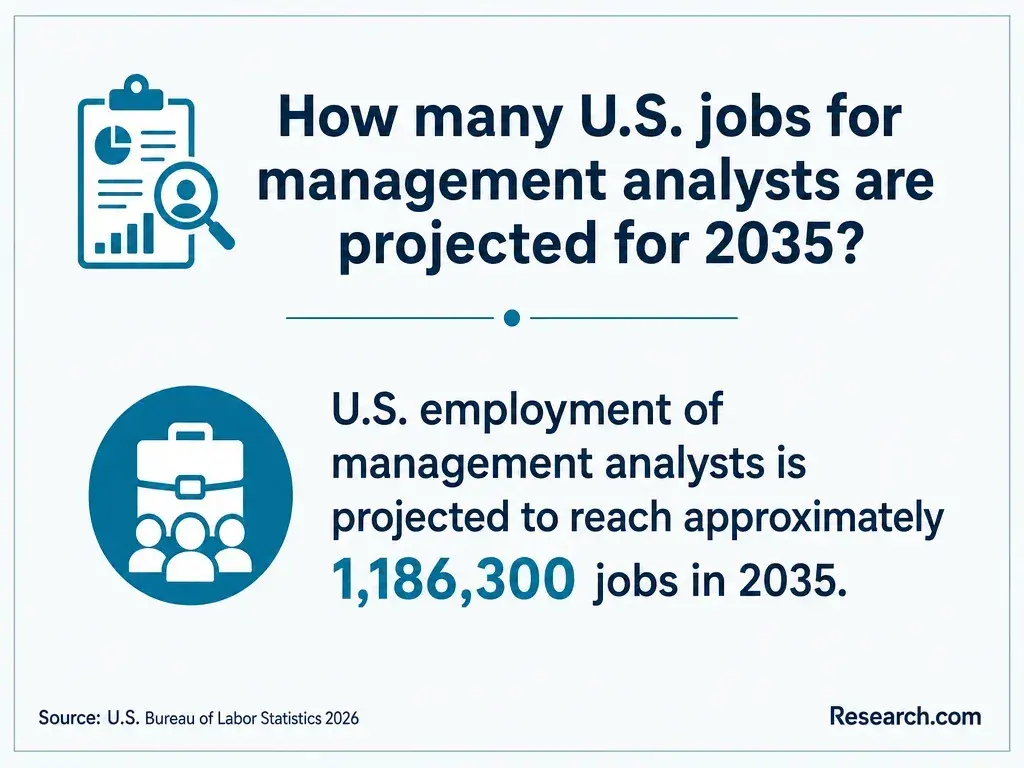
For a more consulting-oriented path, the BLS projects 10.1% growth for management analysts over the same period. Neither projection predicts openings at a particular insurer or a promotion for someone who earns an Ed.D. Compare the degree against the qualifications in actual target-role postings and your employer's advancement practices.
Which Certifications or Professional Standards Apply to Ed.D. Graduates?
No general professional certification is automatically awarded with a leadership and learning Ed.D. Depending on the assignment, an insurance leader may value a role-specific insurance designation, a learning and development credential, or training in project management or change methods. Check the issuing organization's eligibility and renewal rules before paying for any credential.
Use professional standards as a gap check rather than a collection goal. If the immediate responsibility is explaining a new policy correctly, insurance-domain and compliance competence may matter more than doctoral theory. If the responsibility is leading and evaluating a multi-unit reskilling strategy, an Ed.D. may provide deeper preparation while technical specialists remain essential partners.
Other Things You Should Know About EdD Leadership
Not automatically. Assess what they already do well and where the new task differs, then offer focused practice and support without making tenure a proxy for proficiency.
It may help people practice or locate guidance, but qualified experts should check insurance-specific accuracy, approved content, privacy, and escalation routes before deployment.
That depends on the affected workflow and contractual relationship. Confirm who controls their training, systems access, communications, and performance expectations before including them.
Assign an operational owner and agree on who will maintain materials, monitor performance, and approve future changes. An academic deliverable is not a substitute for ongoing business governance.
- Types of Financial Aid: Grants, Work-Study, and Loans | studentaid.gov https://studentaid.gov/understand-aid/types
- AI revolution in insurance: bridging research and reality - PMC https://pmc.ncbi.nlm.nih.gov/articles/PMC12014612/
- Cost of Attendance (Budget) | 2025-2026 Federal Student Aid Handbook https://fsapartners.ed.gov/knowledge-center/fsa-handbook/2025-2026/vol3/ch2-cost-attendance-budget
- EdD vs. PhD in Education: What's the Difference? | Saint Leo University https://onlinedegrees.saintleo.edu/blog/edd-vs-phd
- 2026 UNC Online EdD in Organizational Learning & Leadership https://online.unc.edu/online-doctoral-programs/online-edd-organizational-learning-and-leadership/
- Full Guide to the Doctorate in Organizational Leadership (2025) | Pepperdine University https://gsep.pepperdine.edu/blog/posts/online-edd-in-organizational-leadership-overview.htm
- Doctoral dissertation or capstone: how to choose the right program | PhD/Doctorate | Capella University Blog https://www.capella.edu/blog/phd-doctorate/the-difference-between-a-dissertation-and-doctoral-capstone/
- How to use a skills gap analysis in the workplace | University of Phoenix https://www.phoenix.edu/workforce-solutions/workforce-resources/posts/skills-development/how-to-use-a-skills-gap-analysis-in-the-workplace.html
- Walden University's Guide to Doctoral Capstone Projects https://www.waldenu.edu/online-doctoral-programs/resource/guide-to-doctoral-capstone-projects
- Key Trends Shaping the Future Insurance Workforce | scicollege.edu.sg https://www.scicollege.edu.sg/knowledge-base/key-trends-shaping-the-future-insurance-workforce-technology-skills-and-innovation-driving-the-next-generation