2027 Online Ed.D. in Leadership and Learning in Organizations: Evaluating Research Preparation for Presenting Findings Without Identifying Individuals
Audited and Verified:
Our Editorial and Data Verification Process
Research.com uses government datasets, official education statistics and primary institutional information to support its career and degree guides. Our review process checks factual accuracy, occupational definitions, source dates and the requirements associated with the credentials discussed.
How This Article Was Fact-Checked
Our editorial team verifies salary estimates, employment projections, education requirements and program information against original data providers and official organizations. Salary figures are checked against the relevant occupational definitions and reporting periods. Information about licensure, accreditation and required in-person training is reviewed separately.
Fact-checked and verified on:

Co-Founder and Chief Data Scientist
Presenting useful findings from employee interviews or learner records can expose the very people a study is meant to help. For prospective online Ed.D. students, that makes research preparation more than a question of learning statistics or writing a dissertation.
This article explains how to assess a leadership and learning program's training in research design, confidentiality, ethical review, and responsible reporting. It also offers a practical test: whether the program can help you communicate credible findings to decision-makers without promising anonymity it cannot deliver.
Key Things You Should Know
- Strong preparation covers research design, privacy and disclosure risk, organizational permissions, ethical review, and reporting - not simply removing names from a presentation.
- Small groups, distinctive job titles, quotations, and combinations of otherwise harmless details can identify people; no single minimum group size makes every result safe to publish.
- Ask to see the program's research-methods sequence, project oversight rules, and examples of permitted final outputs before assuming an online Ed.D. will support your intended workplace study.
What is an online Ed.D. in Leadership and Learning in Organizations?
An Ed.D. in leadership and learning in organizations is a practice-oriented doctorate concerned with how people learn, how organizations change, and how leaders use evidence to improve practice. "Online" describes where much of the instruction occurs; it does not establish that classes are self-paced, that campus visits are unnecessary, or that a workplace project can proceed without approval. The precise degree title and requirements vary by university.
For this article's purpose, the degree is a good fit when you need to investigate an organizational learning problem and communicate defensible findings to people who can act on them. It may be a poor fit if your immediate need is only to learn safe data presentation: a targeted course in evaluation, research ethics, or privacy-preserving reporting may address that need with less expense and time. If you are still comparing academic focuses within Ed.D. programs, distinguish organizational learning from programs primarily designed for school administration or academic research.
How does an online Ed.D. prepare students for education research?
Relevant preparation connects a question about learning or organizational improvement to appropriate evidence, analysis, and reporting. A student evaluating a staff-development initiative, for example, might examine participation records, interviews, and performance indicators. Those sources answer different questions and carry different identification risks. A credible program teaches students to decide what evidence is necessary before collecting sensitive information.
The table distinguishes research capabilities that are easy to conflate. It also shows why a methods course alone is not evidence of preparation to present sensitive workplace findings.
| Area of preparation | What it contributes | Limit to recognize |
| Research design and measurement | Defines the question, participants or units, outcomes, and feasible comparisons. | A pre/post difference does not, by itself, establish that an intervention caused it. |
| Qualitative and quantitative methods | Supports sound interviewing, sampling, analysis, and interpretation. | Accurate analysis does not automatically make its output safe to share. |
| Research ethics and data governance | Addresses consent, access, storage, oversight, and disclosure risk. | Employer permission does not replace an institutional review determination when one is required. |
| Applied project supervision | Provides feedback on a feasible question and an appropriate final deliverable. | A project may have restrictions on what can appear in a public presentation or repository. |
Programs differ in whether the culminating work is a capstone, dissertation in practice, or another approved project. Compare the actual supervision and reporting requirements rather than assuming online Ed.D. programs without a traditional dissertation require less methodological or ethical care.
How can researchers present findings without identifying individuals?
Start by distinguishing anonymous data, which cannot reasonably be connected to a person by the researcher, from deidentified data, from which identifiers have been removed but reidentification may still be possible. Pseudonyms protect names, not identities. In a small workplace, a job title, unusual experience, exact date, or quoted phrase may be enough for colleagues to recognize someone.
Consider a hypothetical evaluation of a leadership workshop involving staff from several departments. Even if the slides omit names, reporting a distinctive department alongside a role and a verbatim comment could reveal the speaker. The following sequence helps preserve useful evidence while reducing that risk:
- Define the decision the audience must make and report only the detail needed for it; separate analysis files from presentation materials.
- Check whether tables, subgroup breakdowns, dates, visuals, or combined categories reveal small or recognizable groups. Consider combining categories or withholding a result, and check whether other published figures allow it to be calculated indirectly.
- Review quotations and case descriptions for recognizable wording or circumstances. Paraphrase accurately where permitted, label paraphrases as such, and never fabricate a quotation to conceal identity.
- Have an authorized supervisor or organizational privacy contact review the proposed output against consent terms, data-use conditions, and publication permissions before sharing it.
Do not apply a supposed universal "safe" group-size cutoff: risk depends on what the audience already knows and what other information it can access. Suppression also has a cost. Hiding every subgroup could conceal an important disparity, so discuss whether a restricted briefing, broader categories, or a carefully qualified narrative would better serve the decision. Report missing data, uncertainty, and design limitations rather than making findings appear stronger to compensate for reduced detail.
Determine early whether the work requires an institutional review board determination, employer authorization, participant consent, or a data-use agreement. A workplace evaluation is not automatically human-subjects research, but neither is it automatically exempt from institutional review. Student records may implicate FERPA; employment or health information may carry other applicable restrictions. Confirm the rules with the university and data owner before accessing records or promising participants confidentiality.
Confirm that the university holds recognized institutional accreditation and that it applies to the institution awarding the degree. Use the university's accreditation disclosures and the accreditor's directory to verify its status, rather than relying on advertising language. Then check the exact Ed.D. degree name in the catalog.
Accreditation supports confidence in institutional oversight; it does not certify that a particular research course teaches disclosure control or that an organizational leadership doctorate qualifies someone for educator licensure. If your intended role requires a state credential, verify the program's licensure disclosures with the relevant state authority separately. For this topic, evidence of faculty methods expertise, research oversight, and usable privacy guidance matters alongside accreditation.
Course titles vary, but the most relevant sequence begins with organizational learning and problem definition, moves through qualitative and quantitative inquiry, and ends with supervised application. Adult learning and organizational change courses can help students identify what should be evaluated. Methods and program-evaluation courses should help them choose measures, interpret evidence, and explain limitations. Research ethics or data-governance instruction should address who may see identifiable records and what may leave the organization.
Read syllabi or detailed course descriptions for explicit treatment of confidentiality in interviews, small-group reporting, data visualization, and final presentations. Ask whether students practice revising an analysis for both a restricted internal audience and a public academic audience. An elective labeled "analytics" is not a substitute for training in consent, access controls, and disclosure risk, and course exposure alone does not establish independent research competence.
Requirements depend on the institution. Programs may assess prior graduate study, professional experience, recommendations, a statement of purpose, and evidence that the applicant can undertake doctoral work; no particular master's field, test, publication, or leadership title should be assumed universally necessary. For a research-focused applicant, a stronger statement identifies an organizational learning problem, explains what evidence might answer it, and acknowledges permissions or access still to be obtained.
If you previously started a doctorate, ask separately whether your coursework supports admission, transfers into the new degree, or changes the culminating-project requirements. Those are distinct decisions. Guidance on planning an online Ed.D. return after ABD status can help frame questions, but only the receiving university can evaluate your transcripts and progression.
Time to completion depends on the required credits, course sequence, enrollment pace, and whether a project needs organizational access or review. A privacy-sensitive study can take longer if permissions, recruitment, or reporting approvals change. Ask for the program's published completion requirements and whether its advertised timeline includes project revision and approval.
For cost, calculate required tuition and fees from the current catalog, then add any required travel, technology, and project-related expenses. Consider reduced work hours and the conditions of employer reimbursement; online study does not erase either cost. When comparing organizational leadership doctoral fees and total costs, use the same enrollment and travel assumptions for every school. If privacy-preserving presentation is your only learning objective, compare that total with a focused methods or evaluation course before committing to a doctorate.
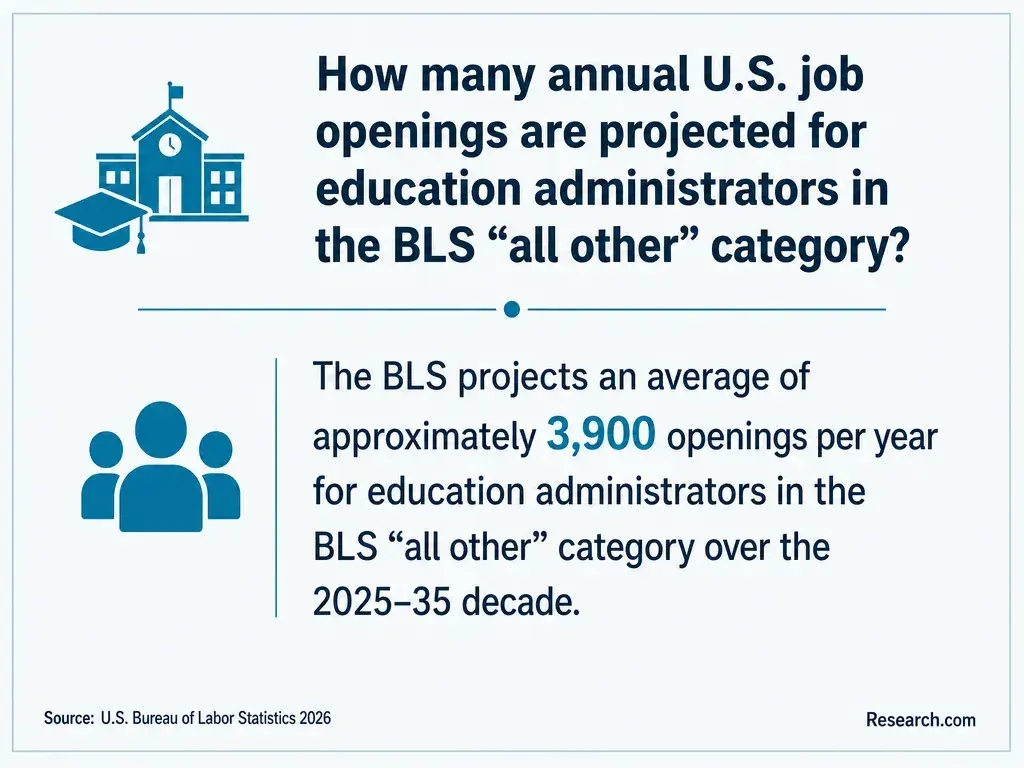
Graduates may apply relevant skills in learning and development, organizational development, program evaluation, consulting, nonprofit leadership, or higher-education administration. The fit depends on prior experience: a training manager may use doctoral research to evaluate learning transfer, while a higher-education administrator may need to report improvement findings without exposing students or staff. Readers considering Ed.D. options for organizational improvement in colleges should check whether a program supports their institution's data-governance and stakeholder needs.
A degree does not replace experience managing projects, securing data access, or communicating with decision-makers. Build a portfolio of authorized, appropriately redacted work; never assume that an employer-approved internal report can be posted publicly or shown in a job interview.
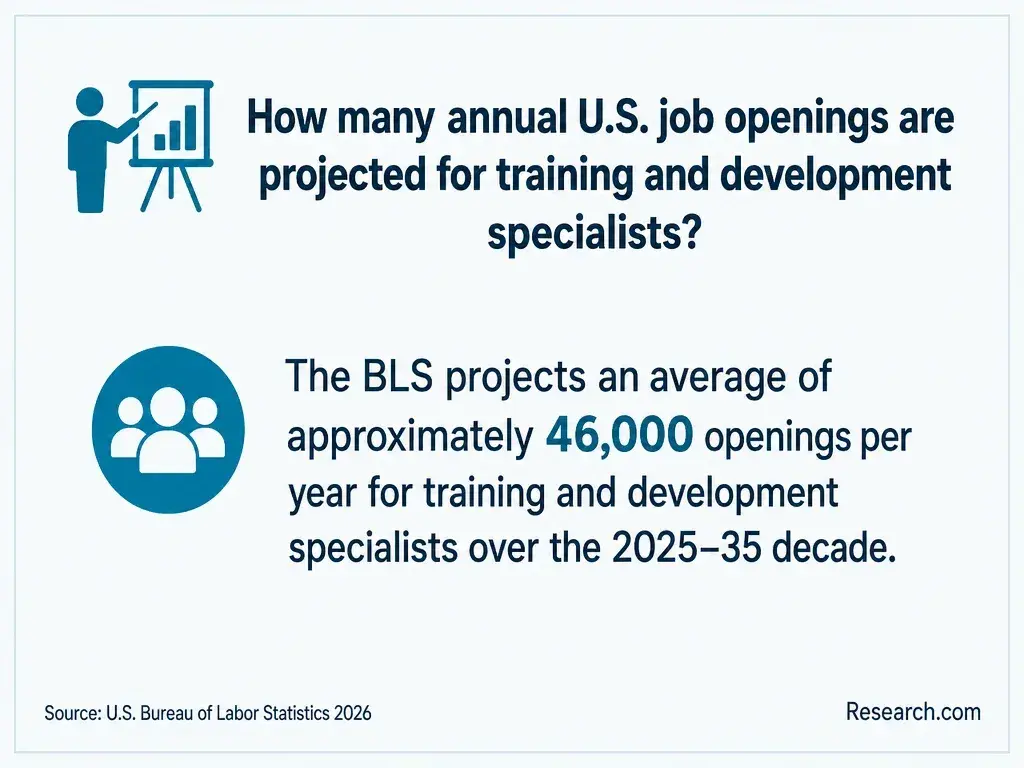
The U.S. Bureau of Labor Statistics reports a May 2025 median annual salary of $133,000 for training and development managers. That occupational median describes workers in the role, not Ed.D. graduates or a salary available upon graduation. Employers also weigh management experience, sector knowledge, and demonstrated results.
Use occupational data to judge whether a target role is plausible, then examine local openings and their actual requirements. For a public-sector or education role, pay structures and hiring rules may matter more than a national median. A financial case for the degree should rest on attainable opportunities and verified costs, not an assumed doctoral salary premium.
How can you choose a reputable online Ed.D. program?
Compare programs on the research you would actually be allowed and prepared to conduct. Ask an admissions representative or program director for the catalog requirements, methods-course descriptions, final-project guidelines, and rules on public presentation. Then ask who determines whether a proposed workplace evaluation needs institutional review and who helps students resolve conflicts between academic reporting requirements and employer confidentiality.
Before enrolling, request a concrete explanation of how faculty would advise a student studying a small, recognizable population: what can be reported, what may need to remain restricted, and whether an alternative project site or question is possible. Confirm live-class and residency obligations, faculty access, total charges, and any limits on changing project sites. Prefer documented answers for your entry term over assurances that removing names will solve every disclosure problem.
Other Things You Should Know About EdD Leadership
It depends on the consent terms and whether their information can still be located in the underlying data. Explain withdrawal limits during recruitment; do not promise removal from an already released aggregate report without confirming it is possible.
Sometimes, but naming a small organization can make roles and accounts recognizable. Obtain publication permission and assess identification risk in the complete presentation, not just in individual slides.
Not without checking the university's rules, participant disclosures, organizational agreements, and the tool's data-handling terms. Removing names may not remove identifying context.
Discuss a restricted report or a less detailed public account with your advisor and the data owner. Do not silently omit the disparity or release revealing subgroup results without authorization.
- Data Quality Component 5: Subgroup Analysis and Reporting | U.S. Department of Education http://www.ed.gov/teaching-and-administration/lead-and-manage-my-school/state-support-network/ssn-resources/data-quality-component-5-subgroup-analysis-and-reporting
- Informed Consent FAQs | hhs.gov https://www.hhs.gov/ohrp/regulations-and-policy/guidance/faq/informed-consent/index.html
- Guiding Principles for Ethical Research | nih.gov https://www.nih.gov/health-information/nih-clinical-research-trials-you/guiding-principles-ethical-research
- Ethical Guidelines and the Institutional Review Board - PMC https://pmc.ncbi.nlm.nih.gov/articles/PMC10885741/
- Institutional Review Boards Frequently Asked Questions | fda.gov https://www.fda.gov/regulatory-information/search-fda-guidance-documents/institutional-review-boards-frequently-asked-questions
- Principles and Best Practices for Protecting Participant Privacy | Grants & Funding https://grants.nih.gov/policy-and-compliance/policy-topics/sharing-policies/dms/privacy/best-practices
- De-identification and Confidentiality of Research Data | ucsf.edu https://irb.ucsf.edu/content/de-identification-and-confidentiality-of-research-data
- Privacy, Confidentiality, and Anonymity in Human Subjects Research | usc.edu https://hrpp.usc.edu/irb/privacy-confidentiality-and-anonymity-in-human-subjects-research/
- Best Practices for Focus Groups | 2021 | IRB Blog | Columbia University https://www.tc.columbia.edu/institutional-review-board/irb-blog/2021/best-practices-for-focus-groups-/
- Focus group methodology: some ethical challenges | springer.com https://link.springer.com/article/10.1007/s11135-019-00914-5