2027 Online Ed.D. in Leadership and Learning in Organizations: Moving from Change Implementation to Change Strategy
Audited and Verified:
Our Editorial and Data Verification Process
Research.com uses government datasets, official education statistics and primary institutional information to support its career and degree guides. Our review process checks factual accuracy, occupational definitions, source dates and the requirements associated with the credentials discussed.
How This Article Was Fact-Checked
Our editorial team verifies salary estimates, employment projections, education requirements and program information against original data providers and official organizations. Salary figures are checked against the relevant occupational definitions and reporting periods. Information about licensure, accreditation and required in-person training is reviewed separately.
Fact-checked and verified on:

Co-Founder and Chief Data Scientist
Leading a rollout is different from deciding which organizational problem deserves attention, whose support it needs, and how success should be judged. For learning and development professionals and emerging organizational leaders, that shift can make doctoral study appealing, but an Ed.D. is a substantial commitment, not a prerequisite for strategic influence.
This guide explains what an online Ed.D. in Leadership and Learning in Organizations can contribute, how to evaluate programs and career value, and when experience, mentorship, or focused training may be the better next step.
Key Things You Should Know
- An Ed.D. is most useful for the move into change strategy when it strengthens organizational diagnosis, stakeholder decision-making, and evaluation, not just change-management techniques.
- Choose a program by examining its actual applied research requirements, faculty guidance, schedule, and access to a feasible organizational project; an "online" label does not settle those questions.
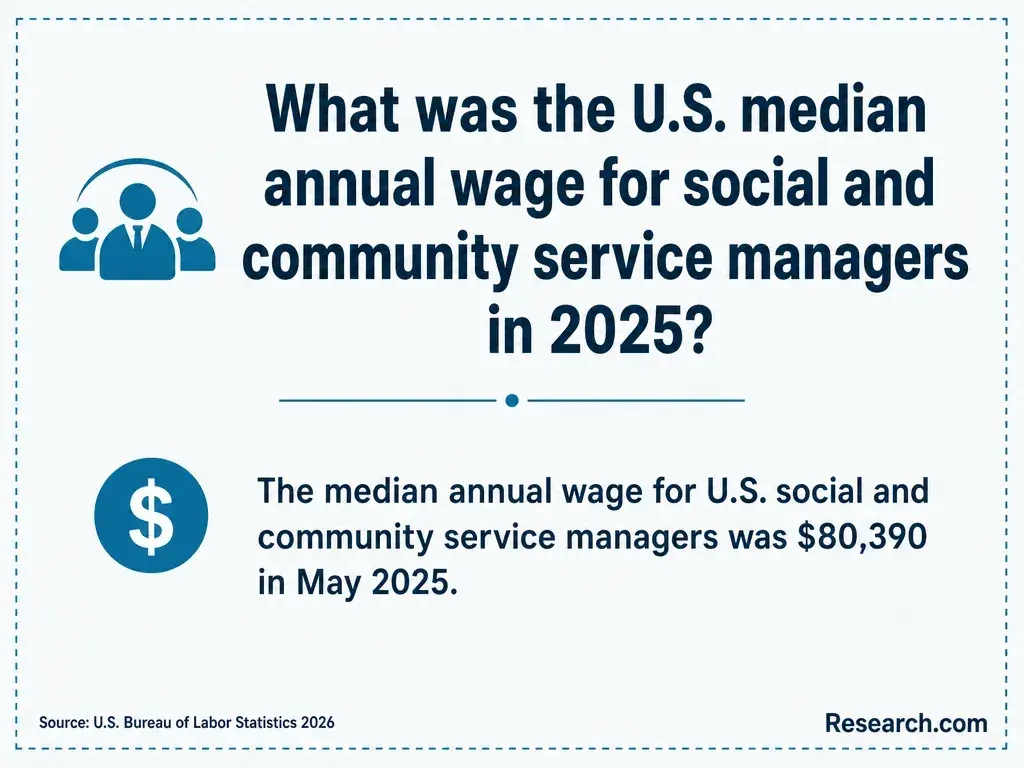
- The U.S. Bureau of Labor Statistics reports a $133,000 median annual salary for training and development managers in May 2025, but that occupation-wide figure is not an expected salary or return on an Ed.D.
What is an online Ed.D. in Leadership and Learning in Organizations?
It is a practice-oriented education doctorate focused on how people learn and how organizations lead, adapt, and improve. The exact degree name and curriculum vary by institution.
Online delivery describes where much of the instruction occurs; it does not establish whether classes are self-paced, whether campus visits are required, or what kind of doctoral project students complete.
For an experienced change practitioner, the distinction is between implementing a selected intervention and helping determine what intervention, if any, the organization needs. The table shows why that distinction matters when judging a program's fit:
| Dimension | Change implementation | Change strategy |
| Starting point | A solution or initiative has already been chosen. | The problem, possible causes, and available choices still need examination. |
| Primary responsibility | Coordinate adoption, communication, training, and delivery. | Align stakeholders on priorities, decision rights, resources, and evidence. |
| Evidence of progress | Participation, milestones, and use of the new process. | Whether the change addresses the underlying problem and is worth sustaining or revising. |
Consider a hypothetical organization with low participation in manager training. An implementation response might improve reminders and course delivery. A strategic inquiry would first examine whether managers lack time, incentives, relevant support, or authority to use what they learn.
Training could be part of the answer, but the stated symptom does not establish the cause. An Ed.D. fits when the learner wants to develop the judgment and inquiry skills to make such distinctions repeatedly.
What careers can an online Ed.D. in Leadership and Learning prepare you for?
The strongest fit is usually an experienced professional seeking broader responsibility in learning and development, organizational development, talent management, workforce development, consulting, or institutional improvement.
Strategic work may involve diagnosing performance barriers, advising leaders, allocating development resources, and evaluating whether a change should continue. Advancement depends on demonstrated responsibility and employer needs, not the doctorate alone.
A training and development specialist might use doctoral work to build evidence of cross-functional program leadership before seeking a manager role.
A consultant may benefit from stronger evaluation methods but still needs client-development and sector expertise. Higher education professionals considering doctoral leadership study for higher education organizations should also examine governance, budgeting, and the qualifications of their target positions.
If your immediate goal is to become more effective at delivering an existing change plan, a supervised stretch assignment, mentorship, or focused change-management training may be faster and less costly. The Ed.D. becomes more compelling when your role requires you to question the plan itself and defend recommendations with organizational evidence:
How do you choose an accredited online Ed.D. program?
First, confirm the institution's accreditation with its recognized accreditor and verify the exact Ed.D. award and program description with the university. Institutional accreditation is important, but it does not establish a particular curriculum, professional certification, or school-administrator licensure eligibility.
Next, compare programs against the strategic work you want to do. These questions separate a relevant doctorate from one that merely uses similar language:
- Where do students practice organizational diagnosis, strategy formation, and evaluation rather than only implementation?
- What is the required dissertation, dissertation in practice, or capstone, and who approves its scope and organizational setting?
- How are faculty guidance, live sessions, group work, and campus convenings structured?
- What evidence does the program publish about completion and career outcomes, and how were those outcomes measured?
Request the curriculum and project handbook for your intended entry term. Compare the full commitment alongside cost-conscious routes to a leadership doctorate; a lower advertised tuition rate has limited value if the project format, attendance rules, or additional costs do not fit your circumstances.
A relevant curriculum connects adult learning with systems thinking, organizational culture, leadership judgment, and applied research. For the shift into strategy, the crucial capability is not simply designing better training. It is determining whether a learning gap exists, what else may affect performance, and which decisions leaders can realistically change.
Look for practice in needs assessment, stakeholder inquiry, qualitative and quantitative methods, and program evaluation. A useful project might examine a proposed leadership-development initiative against baseline performance evidence, participant experience, and operational constraints.
That would support a more defensible recommendation than course-satisfaction results alone. It would not, by itself, prove that the initiative caused an organizational outcome.
Programs differ in how students demonstrate these skills. If an applied project is central to your decision, compare the school's actual requirements with other applied-project routes through an education doctorate. Do not assume that "without a dissertation" means without substantial research, faculty review, or organizational approvals.
Requirements vary. Programs may ask for a completed master's degree, transcripts, recommendations, a statement of purpose, a résumé, and evidence of relevant professional experience; some also use interviews or other assessments.
Check the institution's published rules for your entry term rather than assuming a particular graduate major, test score, or number of leadership years is universal.
For this goal, an application is stronger when it shows decisions you have influenced, not just changes you have delivered. Describe an organizational problem you encountered, the evidence available, the limits of your authority, and why doctoral inquiry would improve your future decisions.
Be candid about what you do not yet know. If a program requires an organizational project, ask whether your employer or another site could support it; admission and project-site approval are separate decisions.
Completion time depends on the program's credit requirements, course sequence, enrollment pace, and project milestones. An online format may remove a commute while retaining fixed live classes, cohort deadlines, group meetings, and periods of intensive research or writing. Ask for the published course sequence and time-to-completion policy rather than relying on an advertised fastest path.
Strategic inquiry may take longer than a familiar workplace rollout: defining a problem, gaining access to suitable evidence, obtaining required approvals, and revising an analysis all take time.
Before enrolling, identify when your job allows sustained work and what happens if you change employers or lose access to a proposed project site. Prior graduate study does not necessarily shorten the doctorate; the university must separately evaluate any transfer credit.
There is no reliable single price for this degree category. Schools may charge by credit, term, or program, and published tuition may exclude fees, books, technology, required travel, and lodging.
The online doctoral education program cost guide can provide comparison context, but your decision should rest on an itemized estimate from each institution for the pace you expect to maintain.
Include the cost of extra enrollment if an applied project extends beyond coursework, as well as any reduction in work hours. Ask your employer whether education assistance is paid upfront or reimbursed, what grades and continued employment it requires, and whether doctoral project time is supported.
Compare that full commitment with the cost of a smaller development opportunity that might meet your immediate strategic-skill gap.
The academic value depends more on curriculum, supervision, peers, and project access than on location alone. Online study can preserve employment and broaden the choice of institutions, but live participation and collaborative research may still require protected time. Campus-based study may make in-person faculty contact and local partnerships easier while increasing travel or relocation demands.
Compare like with like: the same kind of degree, applied-project expectations, attendance requirements, and total cost. If employer support affects your choice, scholarship planning for higher education leadership doctoral study offers related funding questions to consider; confirm every award or reimbursement term with its provider.
Neither format automatically makes someone a strategist. Choose the setting in which you can obtain rigorous feedback, engage with perspectives beyond your own organization, and complete a credible inquiry while meeting your work obligations.
There is no dependable salary figure for all graduates of this broad degree. Pay follows the occupation, sector, location, responsibilities, and prior experience - not possession of an Ed.D. by itself.
For context, the U.S. Bureau of Labor Statistics projects 10.8% employment growth for training and development specialists from 2025 to 2035. That points to demand for the occupation, not to a doctoral wage premium or a guaranteed path into management.
Evaluate financial value against a specific target role. Review its actual postings and internal pay rules, determine whether a doctorate is required or preferred, and identify the strategic experience you would still need.
A public-sector pay schedule, for example, may leave less room for an immediate raise than a negotiated private-sector role. Treat any projected promotion or salary increase as uncertain until an employer confirms it.
Does an Ed.D. require licensure or professional certification?
A broadly focused organizational leadership Ed.D. does not generally require a leadership license to be valuable in learning, talent, or organizational development. Nor does earning the degree automatically grant a professional certification or qualify a graduate for a regulated education position.
If your strategic goal is a principalship, superintendency, or another licensed role, check the specific program's licensure disclosures and the relevant state authority's requirements before applying.
If your goal is organizational change, weigh optional certifications against the work you need to perform: a focused credential may address an immediate method gap, while the Ed.D. offers a broader opportunity for sustained inquiry and leadership development.
Other Things You Should Know About EdD Leadership
Yes. Strategy also involves framing problems, convening stakeholders, and informing decisions. You still need an opportunity to influence real choices; a doctorate cannot supply authority your organization will not delegate.
Clarify which decisions remain open, such as scope, sequencing, support, or evaluation. If the diagnosis and solution cannot be questioned, the assignment may develop implementation skills more than strategic judgment.
Only within your employer's rules and any project agreements. Seek permission before sharing material, remove restricted details, and describe your reasoning and role without claiming results you cannot disclose or verify.
Look for evidence that you can compare plausible explanations, make trade-offs explicit, recommend a course of action, and specify what findings would cause leaders to revise it - not merely report that an initiative launched successfully.
- Maximizing the Impact and ROI of Leadership Development | nih.gov https://pmc.ncbi.nlm.nih.gov/articles/PMC11505461/
- How Do Online Classes Work? What to Expect as an Online Student - Online Degrees & Programs | Kent State University https://onlinedegrees.kent.edu/blog/how-do-online-classes-work-what-to-expect-as-an-online-student
- PhD/EdD Leadership: Organizational Leadership Online | Concordia University Chicago https://career.cuchicago.edu/phd-edd-leadership-organizational-leadership-specialization/
- Walden University's Guide to Doctoral Capstone Projects https://www.waldenu.edu/online-doctoral-programs/resource/guide-to-doctoral-capstone-projects
- Doctor of Professional Studies in Organizational Leadership | UAGC https://www.uagc.edu/online-degrees/doctoral/organizational-leadership
- 5 Critical Steps in the Change Management Process | Harvard Business School https://online.hbs.edu/blog/post/change-management-process
- Minimum Standards and Expectations for Online Instruction | buffalo.edu https://socialwork.buffalo.edu/information-faculty-staff/part-time-faculty-resources/minimum-standards-and-expectations-for-online-instruction.html
- EdD in Organizational Change and Leadership | USC Rossier https://rossier.usc.edu/programs/doctoral/organizational-leadership/
- Doctoral dissertation or capstone: how to choose the right program | PhD/Doctorate | Capella University Blog https://www.capella.edu/blog/phd-doctorate/the-difference-between-a-dissertation-and-doctoral-capstone/
- What Will You Learn in a Doctor of Leadership Program? | spalding.edu https://online.spalding.edu/blog/what-will-you-learn-doctor-leadership-program