2027 Online Ed.D. in Leadership and Learning in Organizations vs. a Master of Public Administration: Which Fits Your Goals?
Audited and Verified:
Our Editorial and Data Verification Process
Research.com uses government datasets, official education statistics and primary institutional information to support its career and degree guides. Our review process checks factual accuracy, occupational definitions, source dates and the requirements associated with the credentials discussed.
How This Article Was Fact-Checked
Our editorial team verifies salary estimates, employment projections, education requirements and program information against original data providers and official organizations. Salary figures are checked against the relevant occupational definitions and reporting periods. Information about licensure, accreditation and required in-person training is reviewed separately.
Fact-checked and verified on:

Co-Founder and Chief Data Scientist
An Ed.D. in leadership and learning and a Master of Public Administration (MPA) can both support public-service careers, but they prepare you to solve different problems. If you work in government, education, or a nonprofit, the distinction matters: improving how people learn and organizations change is not the same as managing budgets, policy, and public programs.
This comparison explains where the degrees overlap, where they diverge, and what to verify before committing your time and money.
Key Things You Should Know
- Choose an Ed.D. when your goal is to lead organizational learning or change and conduct substantial practice-focused inquiry; choose an MPA when you need broader preparation in public management, policy, budgeting, and governance.
- An online Ed.D. is not automatically self-paced or a route to school-administrator licensure. Check live attendance, campus visits, project requirements, and state rules before applying.
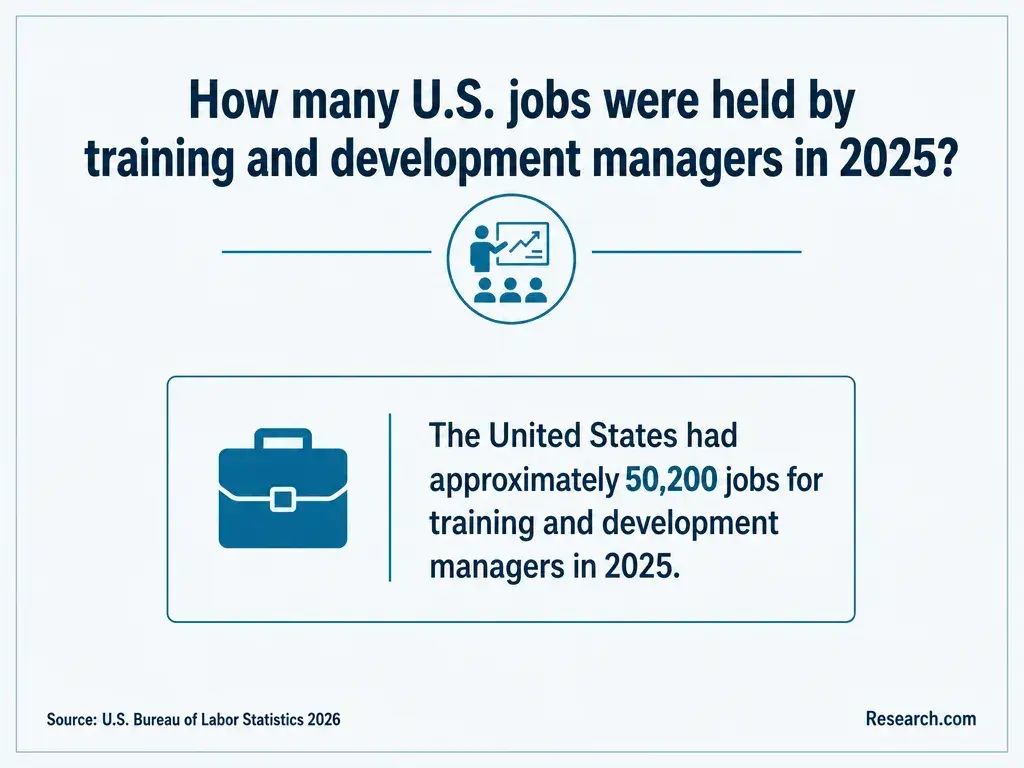
- The U.S. Bureau of Labor Statistics reports a $133,000 median annual salary for training and development managers in May 2025; that occupational figure is not an expected salary or a doctorate premium for graduates.
What Is an Online Ed.D. in Leadership and Learning in Organizations?
An Ed.D. is a doctoral degree commonly oriented toward improving professional practice. A program focused on leadership and learning in organizations may examine how adults develop skills, how leaders implement change, and how organizations evaluate whether an initiative works. The word "online" describes where much of the instruction occurs, not necessarily when students must attend or whether they must travel.
These degrees can serve leaders in government agencies, nonprofits, businesses, healthcare, and educational institutions. Their precise curricula and final requirements vary: one program may require a dissertation in practice, while another uses a differently structured applied project. Confirm the awarded degree, required courses, research supervision, and final deliverable rather than inferring them from the program name. A general organizational leadership Ed.D. is not, by itself, a school-leadership license.
How Does an Ed.D. in Leadership and Learning Compare With an MPA?
The clearest distinction is the work you want to become better equipped to do. Both degrees can be useful in public-service organizations, but they emphasize different decisions and forms of evidence.
| Decision factor | Leadership and learning Ed.D. | MPA |
| Primary focus | Leading learning, development, and organizational improvement | Managing public programs, resources, policy implementation, and governance |
| Typical academic level | Doctorate with advanced inquiry and a substantial culminating requirement | Master's degree with graduate coursework and, depending on the program, an internship or capstone |
| Especially relevant work | Workforce development, leadership development, change initiatives, and evaluation of learning | Public budgeting, administration, service delivery, policy analysis, and nonprofit management |
| Potential gap | May offer limited preparation in public finance or administrative law | May offer limited depth in adult learning or doctoral-level applied research |
Neither degree replaces sector experience. A public agency may value an Ed.D. for a workforce-learning leader but favor an MPA for a budget or operations manager. Read actual course requirements and job postings rather than assuming the word "leadership" makes the credentials interchangeable.
Which Degree Fits Your Career Goals: Ed.D. or MPA?
Start with the responsibility you want next, not the more advanced-sounding credential. For a public-sector employee charged with improving staff development across departments, an Ed.D. may provide a stronger fit if the program teaches organizational learning, change, and applied evaluation. For someone moving into agency management, municipal administration, or policy implementation, an MPA may address more immediate knowledge gaps.
For nonprofit professionals, the choice often turns on the job itself. Managing grants, budgets, and public accountability points toward an MPA; designing and evaluating staff, volunteer, or community learning may favor an Ed.D. If you already have substantial doctoral coursework but unfinished research, investigate continuing an education doctorate after unfinished research before starting a new degree. Such pathways have program-specific eligibility rules and do not promise that previous work will count.
If your next role requires neither credential, a supervised cross-functional project, a public-finance course, or targeted evaluation training may be a more direct step. Compare job requirements with skills you can already demonstrate before deciding to enroll.
Leadership and learning Ed.D. coursework commonly connects leadership theory with adult learning, organizational change, research methods, and evaluation. An applied inquiry requirement may ask students to define an organizational problem, gather appropriate evidence, and develop defensible recommendations under faculty supervision. Verify whether a program actually includes the methods and project opportunities you need; a course title alone does not establish research expertise.
MPA curricula generally emphasize public administration, policy, budgeting and finance, ethics, program management, and analysis. Some offer nonprofit management or human-resources electives, but their availability and depth differ. If both degrees appear relevant, compare required courses - not just electives - against your weakest job-critical skill. Guidance on selecting a professional focus for an Ed.D. can help you distinguish a formally awarded concentration from a few related courses.
Online study can reduce commuting and widen your choice of programs, but a cohort-based Ed.D. may still require live evening sessions, group meetings, campus convenings, and sustained work on an applied project. An online MPA may also include synchronous classes or an internship. Campus-based study may make in-person collaboration easier, while imposing a less workable commute for employed students.
Before comparing online doctorates in education with affordable study routes, obtain each program's attendance calendar. Ask which sessions are mandatory, whether travel is required, how team work is scheduled, and what happens if your employer or project site changes. Location flexibility is useful only if the actual timetable fits your work and other commitments.
Ed.D. programs commonly assess graduate-level preparation, relevant professional experience, a statement of purpose, recommendations, and readiness for advanced inquiry. An MPA generally requires an undergraduate degree and an application demonstrating readiness for graduate study; relevant experience may strengthen an application but is not universally required. Tests, minimum grades, interviews, and prerequisite courses vary by institution and entry term.
Applicants with an education specialist degree or other prior graduate study should separate admission eligibility from transfer credit. Coursework accepted as evidence of preparation may not shorten the doctorate. If you are considering doctoral progression after an education specialist degree, request a written evaluation of applicable credits and remaining requirements from the receiving institution. Applicants from public administration or another non-education field should likewise ask whether the program requires specific methods or learning-theory preparation; an unrelated major is not an automatic disqualification.
An MPA usually represents a smaller academic commitment than an Ed.D., but the actual timeline depends on required credits, enrollment pace, course availability, and any internship or culminating project. Doctoral completion also depends on progress through the final inquiry requirement. Do not assume that an advertised program length accommodates part-time enrollment, a project-site change, or a leave of absence.
Without a specific school's published charges, a reliable price comparison is not possible. When comparing tuition across online Ed.D. programs, calculate the full expected cost using required credits, tuition and fees, annual price changes where disclosed, travel, and project expenses. Apply the same method to each MPA. Then check employer reimbursement limits, continued-employment conditions, and the value of time you would give up. A doctorate's higher academic level does not establish a financial return.
An Ed.D. may support advancement for experienced professionals who lead workforce learning, talent development, organizational improvement, or evaluation. An MPA may align more directly with public program management, local-government administration, nonprofit operations, and policy implementation. In either pathway, employers assess prior responsibility, sector knowledge, and evidence that you can perform the role.
For example, an agency training specialist seeking to lead a department-wide development strategy could pair Ed.D. study with documented work designing, implementing, and evaluating programs. A specialist seeking an agency operations role may instead need budget and procurement experience that an MPA could help develop. Neither degree alone qualifies someone for an executive appointment, faculty position, or regulated education role.
There is no single Ed.D.-versus-MPA salary figure: graduates enter different occupations at different career stages. U.S. Bureau of Labor Statistics occupation data provide useful context, but they do not isolate the effect of either degree. The following examples show why the target job matters more than a degree-wide earnings claim.
| Occupation | Median annual salary, May 2025 | Projected employment change, 2025-2035 |
| Training and development managers | $133,000 | +6.4% |
| Management analysts, including organizational consultants | $101,860 | +10.1% |
| Postsecondary education administrators | $104,590 | +1.8% |
These are occupational medians, not starting offers, graduate outcomes, or evidence of a salary premium from an Ed.D. or MPA. Public-sector pay scales, location, management experience, and the duties of a particular vacancy can matter more. Use the occupation that matches your intended work, then examine actual postings and employer pay schedules.
How Can You Verify Accreditation, Licensing, and Professional Standards?
Check the institution's current accreditation status with its recognized institutional accreditor, then confirm the exact degree and program requirements with the school. For an MPA, ask whether the particular program holds any public-affairs programmatic accreditation you value; do not infer programmatic recognition from institutional accreditation alone. For an Ed.D., determine whether its focus is general organizational leadership or preparation for a specific regulated education role.
If you need teacher, principal, superintendent, or another professional license, obtain the program's licensure disclosure and confirm eligibility with the relevant state authority before enrolling. Ask employers which credentials or professional standards they actually require. Finally, request written confirmation of delivery format, final-project expectations, total required credits, and policies applicable to your intended entry term.
Other Things You Should Know About EdD Leadership
Possibly. Ask the program whether the site and proposed work meet its academic rules, then obtain any necessary employer permission, data-access approval, and research or ethics review. Employment at the organization does not automatically authorize a project.
Yes. Its management and accountability training can apply to nonprofits and other organizations that work with public programs. Check whether the curriculum and employer connections match your intended sector.
A research-oriented PhD may fit a goal centered on producing scholarly research. Compare faculty supervision, methods training, research expectations, and career outcomes rather than relying on degree labels alone.
Many programs accommodate employed students, but feasibility depends on scheduled classes, course load, travel, and project deadlines. Ask for a typical term calendar and speak with current students before committing.
- Cost of Attendance (Budget) | 2025-2026 Federal Student Aid Handbook https://fsapartners.ed.gov/knowledge-center/fsa-handbook/2025-2026/vol3/ch2-cost-attendance-budget
- Leading Organizational Learning - PMC - NIH https://pmc.ncbi.nlm.nih.gov/articles/PMC10324730/
- Master of Public Administration (MPA) Degree | NU https://www.nu.edu/degrees/professional-studies/programs/master-public-administration/
- What Is an MPA Degree? | UIC Online MPA https://onlinempa.uic.edu/news-stories/what-is-an-mpa-degree/
- Leadership in Public Service: What the MPA Prepares You For | Kent State Online https://onlinedegrees.kent.edu/blog/leadership-in-public-service-what-the-mpa-prepares-you-for
- An Educational Guide for Future Leaders in Public Affairs | cornell.edu https://mpa.publicpolicy.cornell.edu/an-educational-guide-for-future-leaders-in-public-affairs