2027 Online Ed.D. in Leadership and Learning in Organizations vs. a Graduate Certificate in Change Management: Which Fits Your Goals?
Audited and Verified:
Our Editorial and Data Verification Process
Research.com uses government datasets, official education statistics and primary institutional information to support its career and degree guides. Our review process checks factual accuracy, occupational definitions, source dates and the requirements associated with the credentials discussed.
How This Article Was Fact-Checked
Our editorial team verifies salary estimates, employment projections, education requirements and program information against original data providers and official organizations. Salary figures are checked against the relevant occupational definitions and reporting periods. Information about licensure, accreditation and required in-person training is reviewed separately.
Fact-checked and verified on:

Co-Founder and Chief Data Scientist
If you lead training, organizational development, or workplace change, the choice between a doctorate and a graduate certificate is a choice about the work you want to do - not just the credential you want to hold. An online Ed.D. in leadership and learning can develop broad leadership and applied-research capabilities; a change management certificate offers a narrower route to improving implementation skills. This comparison is for working professionals deciding whether deeper study justifies its time and cost. It explains what each path teaches, what employers may value, and which program details to check before enrolling.
Key Things You Should Know
- Choose the Ed.D. if your goal requires sustained study of organizational learning, leadership, and applied inquiry; choose the certificate if you chiefly need tools for a defined change initiative.
- Neither credential substitutes for experience leading people and projects, and neither automatically grants a professional certification, school-administrator license, or promotion.
- Compare total tuition and required credits - not the advertised program length alone - and verify live classes, campus visits, and project requirements before committing.
What is the difference between an online Ed.D. and a change management graduate certificate?
An Ed.D. is a doctoral degree. A leadership and learning program typically examines how organizations develop people, make decisions, implement change, and evaluate improvement. A change management graduate certificate is a shorter academic credential focused on planning and carrying out organizational transitions. It does not confer a doctorate, and it is not necessarily the same as an industry-issued change management certification.
The comparison below focuses on the work each credential prepares you to undertake. Individual institutions determine the actual courses and completion requirements.
| Decision factor | Online Ed.D. in leadership and learning | Change management graduate certificate |
| Primary purpose | Develop broad leadership, organizational learning, and applied-inquiry capabilities | Develop focused change-planning and implementation capabilities |
| Typical academic work | Advanced coursework plus a program-specific dissertation, dissertation in practice, capstone, or other doctoral project | Graduate courses and sometimes an applied assignment or project |
| Best fit | Experienced professionals addressing recurring, complex leadership and learning problems | Professionals who need change-management skills for a current or near-term role |
| Main trade-off | Greater depth and a doctoral credential, with a substantially larger commitment | Faster, more focused study without doctoral-level research preparation |
A doctorate is not automatically the stronger purchase. If you need one implementation skill, compare the full Ed.D. commitment against the smaller investment of a certificate; organizational leadership doctoral tuition planning can help frame the costs that extend beyond a per-credit price.
Which program better fits your leadership and career goals?
Start with the responsibilities you already hold and the ones you want next. For a learning and development specialist asked to support a new system rollout, a certificate may supply immediately usable approaches to stakeholder engagement, communication, and adoption. For a training manager who must diagnose persistent learning-transfer problems across departments, an Ed.D. may offer more relevant preparation in organizational systems and evaluation.
The Ed.D. makes more sense when you want to investigate complex problems over time, lead learning strategy, or strengthen evidence-based decisions - and can apply that work in an organization. The certificate makes more sense when you have a defined change initiative, need focused development, and do not need a doctorate for your goal. If your main gap is experience supervising staff or managing budgets, seek that responsibility rather than assuming either credential will replace it.
Sector matters. A public institution or nonprofit may value doctoral inquiry but have limited promotion openings or tuition support. Higher-education professionals weighing the longer route can investigate financial aid for higher education leadership doctoral students alongside their employer's advancement rules. Choose based on the position's actual requirements, not the perceived prestige of the award.
How do accreditation requirements differ between Ed.D. programs and graduate certificates?
For either option, verify that the institution holds recognized institutional accreditation and that the credential is awarded by that institution. Accreditation applies to the institution within its stated scope; it does not by itself establish that every program prepares students for a particular license or certification.
An Ed.D. applicant should confirm the exact doctoral degree, institution, and any program-specific approval relevant to a regulated career goal. A certificate applicant should confirm that the offering is a graduate academic certificate, rather than a noncredit continuing-education course, and ask whether its credits appear on an official transcript. If you intend to use either credential for advancement, obtain the employer's acceptance criteria in writing. Verify accreditation through the accreditor and the institution rather than relying on a program advertisement.
Relevant study may include adult learning, leadership theory, organizational culture, change implementation, research methods, and program evaluation. The distinction from a short change-focused credential is sustained inquiry: students may learn to define a problem, examine evidence, test an improvement approach, and explain what the results can - and cannot - show. Course titles alone do not establish how deeply a program teaches these skills.
Check the required doctoral deliverable before applying. A dissertation, dissertation in practice, and team-based capstone can involve different expectations for faculty oversight, workplace access, and independent work. If a traditional dissertation is a poor fit, examine online Ed.D. capstone alternatives to compare, then verify what each institution actually requires. A proposed workplace study may also need employer permission, secure data access, and institutional ethics review; enrollment does not grant those approvals.
A graduate certificate typically concentrates on diagnosing change readiness, mapping stakeholders, planning communication, addressing resistance, and monitoring implementation. Depending on the program, students may apply these ideas to a case or proposed workplace initiative. Ask whether the curriculum also addresses the harder distinction between a training problem and a problem caused by incentives, workflows, or governance.
Look beyond course names. A useful certificate should give you practice explaining a change, gathering stakeholder feedback, and choosing measures of adoption that match your actual authority and data access. If your job primarily requires instructional design, technical project management, or deeper research skills, a change management certificate may be too narrow.
Ed.D. programs commonly expect prior graduate education and evidence that an applicant is ready for advanced professional study. They may request transcripts, recommendations, a statement of purpose, a résumé, or an interview. Specific degree, grade, experience, and testing rules vary; a master's in education or a particular leadership title is not a universal requirement.
Graduate certificates may admit applicants with a bachelor's degree, while others require graduate standing, professional experience, or enrollment in a related degree. Ask admissions staff to distinguish the minimum eligibility rule from what makes an application competitive. If you have previous doctoral study, unfinished education doctorate study and completion choices may be relevant, but do not assume old credits will transfer: credits considered for admission are different from credits applied to a new degree.
A certificate normally involves fewer courses and a shorter commitment than an Ed.D., which includes substantially more coursework and a doctoral completion requirement. Neither label establishes a reliable completion date or total price. An online program may still require scheduled classes, group meetings, campus convenings, or extended project work.
Request a written estimate covering required credits, tuition basis, mandatory fees, expected terms of enrollment, and any travel. Add the costs of time away from work and the possibility that a project takes longer than coursework. When comparing affordable online doctorates in education, confirm that quoted prices apply to your entry term and include the requirements you will actually complete.
For a certificate, ask whether employer reimbursement covers graduate certificates as well as degrees. For either option, check grade, continued-employment, and repayment conditions before counting that support in your budget. A lower tuition rate is not necessarily a lower total cost if credits, fees, or travel differ.
Both options can support work in learning and development, organizational development, talent management, change initiatives, or consulting. The certificate is particularly relevant when an existing role requires you to help implement change. The Ed.D. may better support experienced professionals seeking broader responsibility for learning strategy, organizational improvement, or applied evaluation.
Neither award creates an automatic route into management. A training and development manager typically needs a record of leading programs, people, and resources; a management analyst needs credible evidence of diagnosing and improving organizational operations. Career changers should pair coursework with supervised projects, mentoring, and examples of work they can discuss without revealing confidential information. Compare job postings in your target sector to see whether the missing qualification is education, functional experience, or both.
Occupational figures provide market context, not expected earnings for holders of either credential. The following U.S. Bureau of Labor Statistics medians and projections describe entire occupations, including workers with different educational backgrounds and experience levels.
| Occupation | Median annual pay, May 2025 | Projected employment growth, 2025-2035 |
| Training and development managers | $133,000 | 6.4% |
| Management analysts | $101,860 | 10.1% |
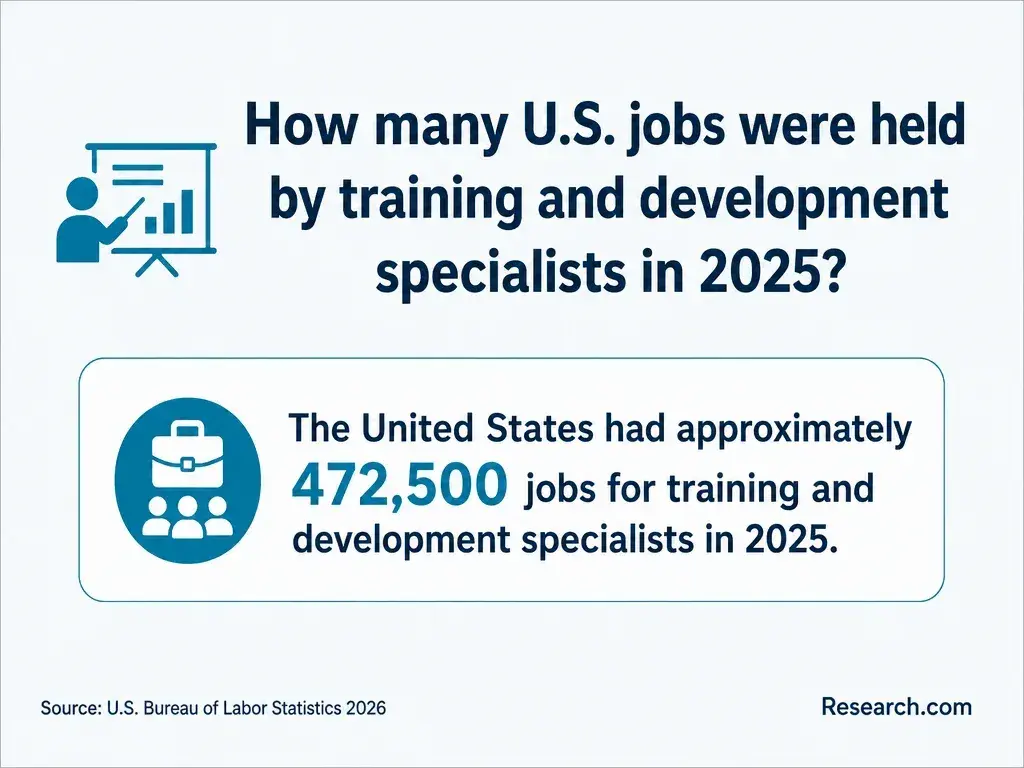
| Training and development specialists | $69,280 | 10.8% |
The difference between specialist and manager pay illustrates why current responsibility and a credible path to advancement matter more to a financial decision than the degree label alone. Growth projections describe demand across an occupation; they do not predict openings at your employer or a salary increase after graduation. For a realistic comparison, assess positions you could qualify for with your existing experience plus each credential.
Do either credential require professional certification or state licensure?
Organizational learning and change management roles generally do not require a state license simply because someone holds an Ed.D. or graduate certificate. Employers may prefer particular professional certifications or experience, but completing an academic program does not automatically award an industry certification.
Regulated education roles are different. If your goal is to become a school principal or another licensed educator, verify that the specific program is approved for the credential you seek and confirm eligibility with the relevant state authority. A broadly focused leadership and learning Ed.D. should not be treated as a school-administrator licensure program unless its official disclosures establish that pathway.
Other Things You Should Know About EdD Leadership
Possibly, but only if the receiving doctoral program approves them under its transfer, recency, grade, and degree-residency rules. Ask for a written credit evaluation before choosing a certificate on that basis.
Some programs permit external partners. Confirm the academic requirements first, then secure the organization's agreement and any necessary data permissions. A willing partner does not replace faculty approval.
Not necessarily. Compare faculty job requirements and the program's research training with a research-focused PhD. An Ed.D. can include rigorous inquiry, but programs and academic hiring expectations differ.
Look for opportunities to diagnose a realistic change problem, justify an implementation plan, and receive substantive feedback. Check whether you can complete assignments without disclosing restricted workplace information.
- Understanding College Costs | studentaid.gov https://studentaid.gov/resources/prepare-for-college/students/choosing-schools/consider-costs
- Cost of Attendance (Budget) | 2025-2026 Federal Student Aid Handbook https://fsapartners.ed.gov/knowledge-center/fsa-handbook/2025-2026/vol3/ch2-cost-attendance-budget
- Maximizing the Impact and ROI of Leadership Development | nih.gov https://pmc.ncbi.nlm.nih.gov/articles/PMC11505461/
- An Overview of Accreditation of Higher Education in the United States | Congress.gov | Library of Congress https://www.congress.gov/crs-product/R43826
- Accreditation in the U.S. | ed.gov http://www.ed.gov/laws-and-policy/higher-education-laws-and-policy/college-accreditation/accreditation-in-the-us
- What Is a Capstone Project? - Boston University Questrom https://www.bu.edu/questrom/blog/what-is-a-capstone-project/
- How Do Transfer Credits Work When You Go Back to School? | Whitworth Online https://online.whitworth.edu/news-articles/how-do-transfer-credits-work-when-you-go-back-to-school/
- Advance Your Leadership Career with an Online Ed.D. | UMass Global https://www.umassglobal.edu/blog-news/advance-your-leadership-career-online-edd
- General Principles of Transfer Credit | Trenholm State Community College https://catalog.trenholmstate.edu/general-principles-of-transfer-credit
- Doctor of Education in Educational Leadership and Change | Empire State University https://student-accounts.sunyempire.edu/web-archive/oleg-archives/graduate-studies/edd-educational-leadership/