2027 Online Ed.D. in Leadership and Learning in Organizations: How to Evaluate a Team Capstone Versus an Individual Final Project
Audited and Verified:
Our Editorial and Data Verification Process
Research.com uses government datasets, official education statistics and primary institutional information to support its career and degree guides. Our review process checks factual accuracy, occupational definitions, source dates and the requirements associated with the credentials discussed.
How This Article Was Fact-Checked
Our editorial team verifies salary estimates, employment projections, education requirements and program information against original data providers and official organizations. Salary figures are checked against the relevant occupational definitions and reporting periods. Information about licensure, accreditation and required in-person training is reviewed separately.
Fact-checked and verified on:

Co-Founder and Chief Data Scientist
A team capstone can resemble the cross-functional change work you hope to lead. An individual final project may give you more control over the question, schedule, and finished work. For working leaders and learning-and-development professionals comparing online Ed.D. programs, that difference can shape both doctoral completion and the value of the experience afterward.
This guide explains what to verify about each format, how organizational permissions and academic assessment affect your choice, and when neither project justifies a doctorate.
Key Things You Should Know
- Choose a team capstone for substantial collaborative practice only if roles, individual assessment, meeting expectations, and a backup plan are clear.
- Choose an individual final project when ownership and scheduling control matter most, but verify that you can secure appropriate supervision and organizational access yourself.
- A project's usefulness depends on approved scope, ethical data access, and a credible deliverable - not its team size. The $133,000 median salary for training and development managers is an occupational benchmark, not an Ed.D. outcome.
What is an online Ed.D. in Leadership and Learning in Organizations?
An online Doctor of Education in leadership and learning in organizations is a practice-oriented doctorate focused on how people learn, how organizations change, and how leaders use evidence to improve practice. Depending on the institution, that wording may be an exact program name, a concentration, or a description of a broader Ed.D.; confirm the designation on the degree and transcript.
Unlike a research-focused PhD, an Ed.D. generally emphasizes applying inquiry to professional problems. That distinction does not dictate its final requirement: schools may require a team capstone, an individual dissertation in practice, or another approved project. An online label also says little about whether the work is self-paced. Applicants returning to doctoral study should separately check prior doctoral credit considerations in Ed.D. completion programs; earlier coursework does not automatically replace a new program's project requirement.
How Do Team Capstones Compare With Individual Final Projects?
A team capstone is an academically supervised applied project completed with other doctoral students. An individual final project assigns one student primary responsibility for an approved inquiry and deliverable. Neither format is automatically more rigorous: the research question, evidence, faculty oversight, and assessment standards matter more than the number of authors.
The comparison below identifies where the formats most often create different risks. It describes questions to investigate, not requirements shared by every Ed.D. program.
| Decision factor | Team capstone | Individual final project |
| Leadership practice | Can develop negotiation, shared decision-making, and cross-functional implementation skills. | Can deepen independent problem framing, analysis, and communication. |
| Schedule | Requires coordination beyond classes and faculty meetings; another member's delay can affect progress. | Offers more control over work sessions, though advisor and partner deadlines still apply. |
| Assessment | Requires clarity about individual contributions and what happens if participation is unequal. | Makes authorship clearer but concentrates the workload and accountability. |
| Organizational access | May draw on a shared partner, subject to approval and permissions. | May let you pursue your own workplace problem, if the site and scope are approved. |
| Career evidence | Can demonstrate collaboration if your specific role is documented. | Can provide a clearer account of your own decisions and methods. |
For a learning-and-development leader whose next role involves aligning managers, subject experts, and operations staff, a well-run team project may be especially relevant. For a consultant building expertise in a particular sector - or a working parent who cannot reliably attend additional team meetings - an individual project may fit better. Neither choice removes the need for a feasible partner and faculty-approved scope.
Before choosing, request the project handbook and ask the program coordinator or faculty advisor these questions:
- Are teams assigned or self-selected, and can students choose an individual option?
- What is graded collectively, what is graded individually, and how are disputes or departures handled?
- Who secures the partner, approves the research question, and decides whether a changed project still satisfies graduation requirements?
- What are the expected meeting times, milestones, final deliverables, and rules for using work in a portfolio?
Treat a potential employer or community partner's interest as a starting point, not approval. Academic authorization, site permission, data-use rights, applicable research or ethics review, and permission to share results are separate decisions. A small, answerable question with accessible baseline evidence is usually safer than a broad promise to "transform culture."
How Can You Evaluate an Online Ed.D. Program's Accreditation?
Confirm the university's institutional accreditation through the accreditor and the U.S. Department of Education's accreditation information, then verify that the Ed.D. is awarded by that institution. Ask whether any programmatic accreditation applies to the specific program; do not infer it from a university's other education degrees.
Accreditation does not establish that a team project meets your professional goals, that an employer will accept it, or that the degree qualifies you for a licensed school role. For this decision, request the current catalog and capstone handbook alongside accreditation information. Published requirements may differ by entry term, and an advisor - not an admissions slogan - should clarify how a proposed project would be reviewed.
Relevant coursework may cover adult learning, organizational change, leadership, needs assessment, qualitative and quantitative methods, and program evaluation. The important question is whether the required sequence prepares you for the actual final project. A team evaluating a workforce-development initiative, for example, needs a defensible question, suitable measures, stakeholder coordination, and a plan for interpreting limited evidence.
Compare required methods courses with the capstone handbook and sample approved project descriptions, if available. Ask how faculty teach data access, privacy, and reporting limitations. Exposure to a research method is not the same as sufficient preparation to analyze restricted employee records or make causal claims from a simple before-and-after comparison.
Requirements vary by institution. Schools may request a prior degree, transcripts, professional experience, recommendations, a statement of purpose, and evidence that the applicant can undertake doctoral-level work. A leadership title or education master's is not a universal prerequisite. Describe the decisions you have made, the learning problem you want to investigate, and the limits of your authority rather than claiming access or results you do not have.
If you hold an education specialist credential, examine schools offering online Ed.S.-to-Ed.D. routes, then obtain a written evaluation of eligibility and applicable credits. Credits considered for admission are not necessarily credits applied to the doctorate, and neither an Ed.S. nor prior project work guarantees an exemption from a capstone.
Completion time depends on required credits, course sequencing, enrollment pace, and project approvals. A team may divide tasks, but coordination and partner delays can offset that advantage. An individual project can move on your schedule only when its advisor, site, and data are available.
Compare a school's published tuition and fees against the credits you would actually need, then account for any travel, technology, reduced work hours, and project-related expenses. For a household or employer-support discussion, planning a budget for doctoral study in education is more useful than comparing tuition rates alone. Confirm reimbursement conditions and the cost of additional enrollment if a project extends beyond the planned term; no capstone format guarantees a lower total cost.
Online study changes where you participate, not necessarily when. Live seminars, cohort work, team meetings, and required campus convenings can make an online team capstone less flexible than its label suggests. Campus-based study may make informal collaboration easier but adds commuting or relocation constraints. Individual projects in either format still require advisor contact and, often, organizational coordination.
Ask for a typical term calendar and the capstone-stage schedule before enrolling, especially if you work shifts or provide care at home. If format and travel costs are deciding factors, use choosing a lower-cost online Ed.D. as an initial comparison, then verify each program's live attendance, residency, and final-project rules directly.
Graduates may apply their training in learning and development, organizational development, workforce programs, consulting, or education administration. The project format affects the evidence they can show: a team capstone can illustrate collaboration and implementation, while an individual project may better demonstrate independent inquiry. In either case, employers will want to know what you personally did and whether you can discuss the work without disclosing protected information.
For an established leader, a doctorate may strengthen an existing practice. For someone seeking a first leadership appointment, supervised projects, management experience, mentoring, or a focused certificate may be a more direct next step. Compare that goal with the investment before reviewing tuition-focused choices for a leadership doctorate. An Ed.D. does not substitute for the experience a particular employer requires.
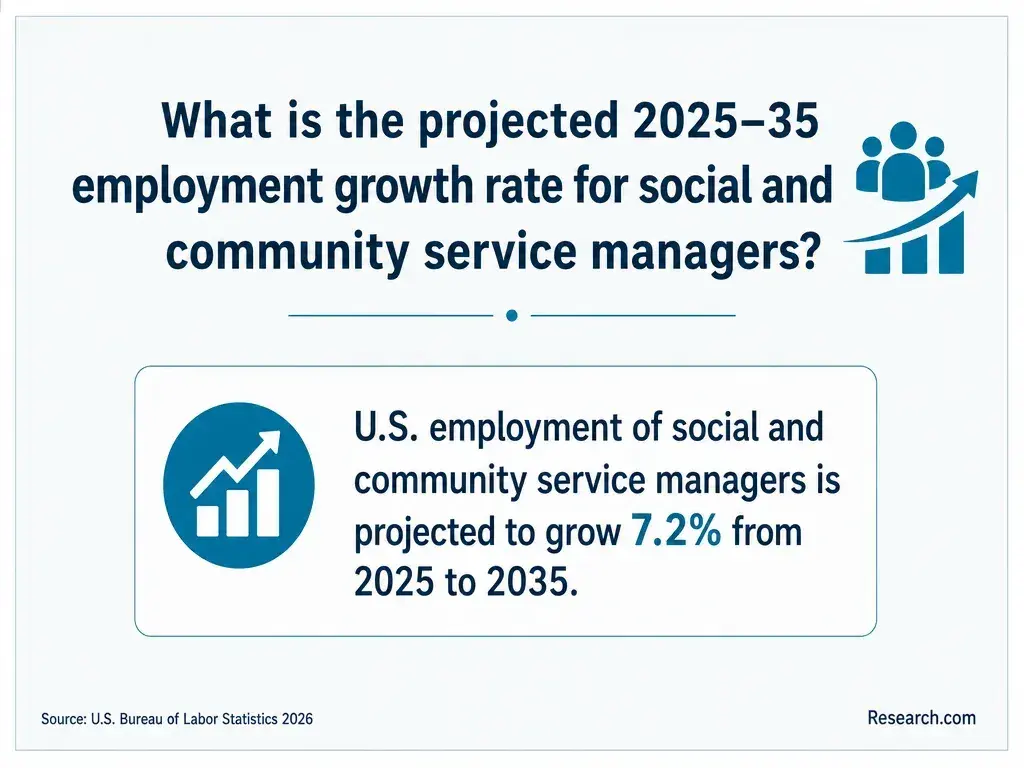
The U.S. Bureau of Labor Statistics reports a May 2025 median annual salary of $133,000 for training and development managers and projects 6.4% employment growth for that occupation from 2025 to 2035. Those figures describe an occupation, not salaries or placements for Ed.D. graduates. Management scope, sector, location, and prior experience remain important.
Use occupational data to assess a target role, then ask a program for clearly defined graduate outcomes if it publishes them. Do not treat a team capstone, an individual project, or the doctorate itself as evidence of an expected raise.
Do Ed.D. Graduates Need Licensure or Professional Certification?
Many organizational learning and consulting roles do not require a license tied to the Ed.D. Specific school leadership or other regulated positions can have separate state requirements. A broadly focused organizational leadership doctorate should not be presumed to meet teacher, principal, or superintendent licensure rules.
If a licensed role is your goal, check the program's licensure disclosure and the relevant state authority before enrolling. Professional certifications may be useful for a particular learning or change-management role, but they are separate credentials; neither capstone format awards one automatically.
Other Things You Should Know About EdD Leadership
Usually, you can describe your own role, methods, and decisions, but confirm how the program records individual work and what the partner permits you to disclose.
A well-supported negative or inconclusive finding can still be valuable. Report the measures, limitations, and implications honestly rather than recasting the result as success.
Follow the program's academic-integrity rules and the organization's data-security rules. Do not enter restricted records into an unapproved tool, and verify any analysis or citations yourself.
Ownership and sharing rights depend on institutional policy, team agreements, and any partner or employer agreement. Clarify them before collecting data or promising a public deliverable.
- MPH Capstone experiences: promising practices and lessons learned | nih.gov https://pmc.ncbi.nlm.nih.gov/articles/PMC10213715/
- Leadership Ed.D. - School of Education | Virginia Commonwealth University https://soe.vcu.edu/academics/leadership/leadership-edd/
- Develop Program Learning Outcome Rubrics | University of Illinois Chicago https://apra.uic.edu/degree-program-assessment/how-to/develop-program-learning-outcome-rubrics/
- Faculty Mentors - Program on the Environment https://envstudies.uw.edu/capstone-experience/faculty-mentors/
- How can I assess group work? - Eberly Center | Carnegie Mellon University https://www.cmu.edu/teaching/designteach/design/instructionalstrategies/groupprojects/assess.html
- Using Roles in Group Work - Center for Teaching and Learning https://ctl.wustl.edu/resources/using-roles-in-group-work/
- Capstone Advisors | Masters of the Environment | Student Support & Advising Services https://www.colorado.edu/menv/current-students/menv-student-handbook/2020-menv-capstone-project/capstone-advisors
- Time Management for Online Students: How to Balance Work, Family and an Online Degree - The City University of New York https://www.cuny.edu/blog/time-management-for-online-students-how-to-balance-work-family-and-an-online-degree/
- 12 Steps to Develop a Project Management Plan | Northeastern University Graduate Programs https://graduate.northeastern.edu/knowledge-hub/developing-project-management-plan/
- Clarifying Roles and Responsibilities | umn.edu https://hr.umn.edu/supervising/resources/Clarifying-Roles-and-Responsibilities