2027 Is an Online Ed.D. in Leadership and Learning in Organizations a Good Fit for University Teaching Center Directors?
Audited and Verified:
Our Editorial and Data Verification Process
Research.com uses government datasets, official education statistics and primary institutional information to support its career and degree guides. Our review process checks factual accuracy, occupational definitions, source dates and the requirements associated with the credentials discussed.
How This Article Was Fact-Checked
Our editorial team verifies salary estimates, employment projections, education requirements and program information against original data providers and official organizations. Salary figures are checked against the relevant occupational definitions and reporting periods. Information about licensure, accreditation and required in-person training is reviewed separately.
Fact-checked and verified on:

Co-Founder and Chief Data Scientist
University teaching center directors are increasingly asked to do more than organize workshops: they must help faculty improve teaching, evaluate initiatives, and navigate institutional change. An online Ed.D. in leadership and learning may strengthen that work, but its value depends on your responsibilities, career goals, and access to an appropriate applied project.
This guide examines the degree's fit for teaching center leadership, compares doctoral and nondegree routes, and identifies the program details and financial commitments to check before you enroll.
Key Things You Should Know
- An online Ed.D. is most useful when you lead institution-wide faculty development or learning initiatives and need advanced skills in change leadership and applied evaluation - not simply a higher credential.
- The Bureau of Labor Statistics reports a $104,590 median annual salary for postsecondary education administrators in May 2025; this broad occupation is not a salary forecast for teaching center directors or Ed.D. graduates.
- Before enrolling, confirm that the curriculum addresses higher education, the required doctoral project can be completed with authorized data access, and the full cost fits your institution's support policy.
Is an online Ed.D. in leadership and learning a good fit for teaching center directors?
It can be a good fit if your work extends from faculty workshops to institutional leadership. A teaching center director may advise instructors, lead professional learning, support inclusive course design, and assess whether faculty-development initiatives are meeting their goals. A practice-oriented Ed.D. connects adult learning, organizational change, and applied inquiry to those responsibilities.
The decisive issue is what authority and opportunity you have to use those skills. If you can coordinate across departments, work with academic leaders, and investigate a genuine teaching-and-learning problem, doctoral study may deepen your practice. If your immediate goal is to improve workshop facilitation or learn a particular instructional technology, focused training and mentored projects may be more direct.
The comparison below distinguishes three common goals. It is a guide to fit, not a claim that any credential alone qualifies someone for a position.
| Primary goal | Potentially stronger route | Why |
| Lead faculty-development strategy and evaluate institutional change | Practice-oriented Ed.D. with higher-education-relevant coursework | Combines leadership, learning, and applied inquiry |
| Conduct original scholarship and pursue research-intensive faculty work | Research-oriented PhD | Places greater emphasis on producing disciplinary research |
| Improve a defined skill or initiative in the current role | Targeted coursework, coaching, or an employer-supported project | May address the need with less time and financial commitment |
A broad leadership doctorate is not automatically tailored to universities. Compare its course examples, faculty expertise, and doctoral project rules with organizational leadership Ed.D. study for institutional leadership goals before assuming the program fits teaching center work.
What careers can an online Ed.D. in leadership and learning prepare you for?
For an established teaching center director, the most plausible benefit is greater readiness for broader responsibilities: directing a larger center, overseeing faculty development across campuses, leading an academic innovation initiative, or moving into a higher education leadership role. These jobs require evidence of collaboration, budgeting, implementation, and results - not just doctoral coursework.
Some graduates may pursue educational development consulting or organizational learning roles outside universities. That transition is more credible when they can show transferable work, such as a needs assessment, a responsibly evaluated development program, or a cross-functional change initiative. Corporate learning and development management also involves workforce and business responsibilities that a higher education background may not cover.
An Ed.D. is not a substitute for a research record when a faculty appointment calls for disciplinary scholarship. Review actual vacancies in your target institution type and compare their required experience, degree preferences, supervisory scope, and research expectations with your current record.
What accreditation should an online Ed.D. program have?
Start by confirming that the university holds institutional accreditation recognized by the U.S. Department of Education or the Council for Higher Education Accreditation. Check the accreditor's directory and the university's own disclosures, including whether the accreditation covers the institution awarding the Ed.D. Do not infer that a particular concentration has separate accreditation because the university is accredited.
Programmatic recognition, where applicable, should be assessed for its actual scope rather than treated as a universal requirement for leadership and learning doctorates. Accreditation also does not establish that an online program meets a state's educator-licensure rules or an employer's hiring standards. Ask the program which credential appears on the transcript and whether it makes any specific professional-eligibility claims.
Online study removes a regular commute, but it does not necessarily offer control over your schedule. Live seminars, cohort meetings, group projects, and required campus convenings can collide with the academic calendar - particularly when teaching center demand rises at the start of a term. A campus-based program may make informal faculty contact easier but require more time away from your job.
Compare actual attendance rules and faculty access, not delivery labels. Ask for a sample course schedule, convening dates and travel expectations, and an explanation of how online doctoral students receive methods support and project supervision. If your institution cannot accommodate recurring class meetings or travel, a locally available program or a slower, explicitly permitted enrollment pattern may be more workable.
Course titles vary, but relevant study may cover adult learning, organizational leadership, change implementation, qualitative and quantitative methods, and program evaluation. For teaching center directors, the key question is whether those courses help you diagnose faculty-development needs, work across academic units, and assess an initiative without overstating its effects.
Look beyond a course called "leadership." Examine assignments and electives for higher education governance, faculty development, instructional design, learning analytics, and ethical use of student or faculty information. A single elective does not amount to a formal concentration, and methods coursework alone does not confer advanced research expertise. Comparing types of Ed.D. programs and concentrations can help you distinguish an officially awarded specialization from a collection of useful electives.
Requirements are program-specific. Schools may request a completed graduate degree, transcripts, recommendations, a statement of purpose, a résumé, an interview, or evidence of professional leadership. Do not assume that every Ed.D. requires an education master's, a fixed number of management years, an entrance test, or prior publications.
A teaching center applicant can present concrete evidence of responsibility: initiatives designed, stakeholders coordinated, decisions influenced, and questions that merit applied study. Distinguish work you led from outcomes you have not established. If you hold an education specialist degree, planning the transition from Ed.S. to Ed.D. also requires a written assessment of admission eligibility and any credits that would actually apply to the doctorate; those are separate decisions.
Both depend on required credits, enrollment pace, project completion rules, and how tuition is charged. Request a program-specific estimate that separates tuition and mandatory fees from books, technology, and any convening travel. Ask whether continued enrollment or additional project terms create further charges. An advertised per-credit rate alone cannot establish the total cost.
For a teaching center director, the financial decision also involves available work time. Check whether your university offers tuition assistance, release time, or professional-development funding, and obtain the eligibility and repayment conditions in writing. Compare those terms with budget planning for higher education leadership doctoral study. Do not count reimbursement as guaranteed until your employer approves it.
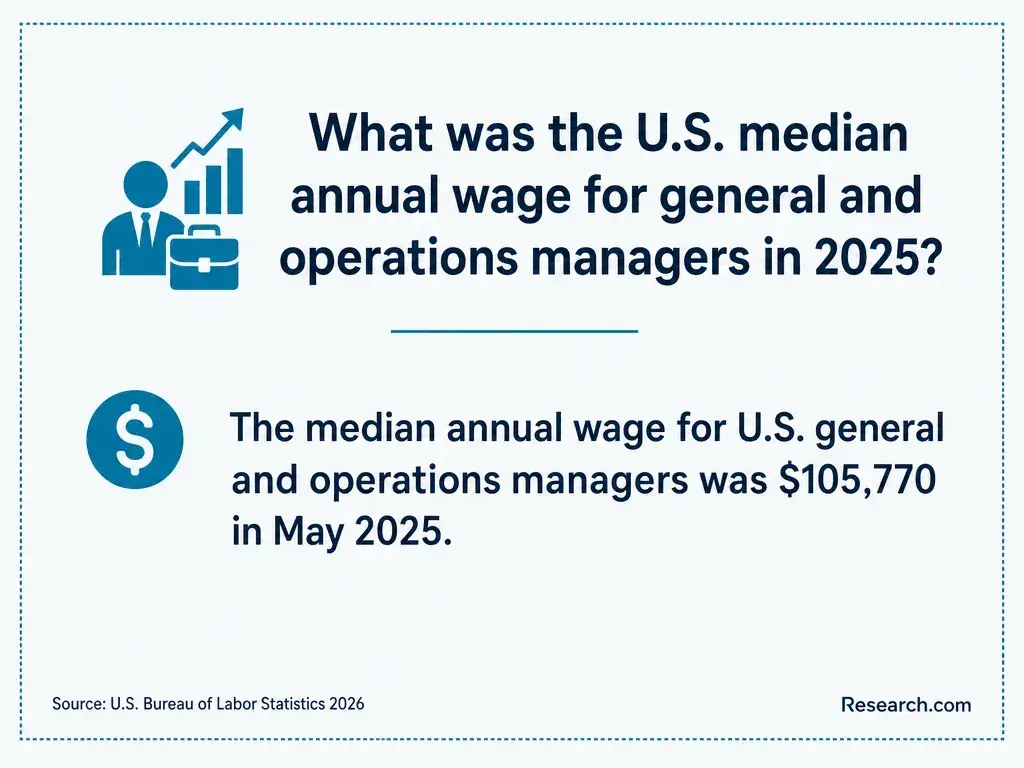
There is no reliable single salary figure for teaching center directors with an Ed.D. Titles, reporting lines, supervisory duties, institution type, and local pay structures vary. The U.S. Bureau of Labor Statistics reports a May 2025 median annual salary of $104,590 for postsecondary education administrators. That category provides broad labor-market context; it does not isolate teaching center directors or show what an Ed.D. adds to pay.
For a useful comparison, examine posted salary ranges for roles you could realistically pursue and your institution's rules for promotion or reclassification. If the doctorate is unlikely to change your position or eligibility for a desired role, weigh its learning value against its cost rather than assuming a salary return.
There is no general professional license required specifically to direct a university teaching center. Employers set their own education and experience criteria, which may favor a doctorate for some senior roles without requiring an Ed.D. in particular. Experience supporting faculty, building institutional partnerships, and evaluating programs can be more relevant than the degree title alone.
A leadership and learning Ed.D. also does not automatically provide teacher, principal, superintendent, or counseling licensure. If a future position is regulated, check that position's state requirements and the program's licensure disclosures separately. For teaching center leadership, read actual job descriptions before deciding that another credential is necessary.
How can you choose the best online Ed.D. program for higher education leadership?
The best program is the one whose requirements match the work you want to do and that you can complete responsibly while employed. Before applying, use the same questions with every shortlisted school so that an appealing program description does not conceal a poor project or schedule fit:
- Ask which required courses and faculty projects address universities, faculty learning, and institution-wide change.
- Request the doctoral project requirements, supervision model, completion rules, and examples of permissible project settings.
- Confirm live-session attendance, campus convenings, group-work expectations, and support for working students.
- Check accreditation, the exact awarded degree and concentration, total estimated charges, and available employer support.
- Ask your institution whether it can authorize the time, project partnership, and data access your proposed work might require.
If several programs meet your academic needs, compare their documented costs rather than choosing by advertised tuition alone. A review of budget-conscious organizational leadership doctoral programs can help frame that comparison, but confirm each school's charges and requirements directly before committing.
Other Things You Should Know About EdD Leadership
Possibly. The Ed.D. program must allow the setting, and the host institution must agree to the work and any necessary data access. Neither approval should be assumed.
Use measures aligned with the initiative, such as participation, changes to teaching practices, or faculty feedback. State what the evidence can and cannot show; participation or satisfaction alone does not establish an effect on student outcomes.
Yes, if coursework or project work could conflict with your duties. Discuss specific scheduling needs and obtain any approved arrangement in writing rather than relying on informal support.
Begin by learning what concerns faculty have and which decisions are theirs to make. An Ed.D. can help you study change processes, but a doctoral project should not treat faculty participation as automatic.
- DAPIP | Homepage - Office of Postsecondary Education (OPE) https://ope.ed.gov/dapip/
- Frequently asked questions about educational assistance programs | Internal Revenue Service https://www.irs.gov/newsroom/frequently-asked-questions-about-educational-assistance-programs
- and Ask For - Employer Tuition Reimbursement Benefits | Harvard Extension School https://extension.harvard.edu/blog/how-to-use-and-ask-for-employer-tuition-reimbursement-benefits/
- Instructional Designers as Institutional Change Agents | educause.edu https://er.educause.edu/articles/2023/10/instructional-designers-as-institutional-change-agents
- Employer Tuition Assistance Plans May Help Pay for College | Campus https://campus.edu/blog/financial-aid/employer-tuition-assistance-programs-can-help-pay-for-college
- Activating Faculty Learning for Diversity, Equity, and Inclusion | springer.com https://link.springer.com/rwe/10.1007/978-3-031-06696-2_11
- Admissions Overview, Process, and Requirements | Georgia Tech Catalog https://catalog.gatech.edu/admissions/grad/process-requirements/
- What Topics Do EdD Students Research in the EdD Program? | Fairfield University https://www.fairfield.edu/news/insights/education-human-development/what-topics-do-edd-students-research.html
- Careers Leaders Can Pursue with an Ed.D. | Peabody Online | VU-EDU https://peabodyonline.vanderbilt.edu/edd-in-organizational-learning/edd-careers/
- Walden University's Guide to Doctoral Capstone Projects https://www.waldenu.edu/online-doctoral-programs/resource/guide-to-doctoral-capstone-projects