2027 Online Ed.D. in Leadership and Learning in Organizations: Evaluating Research Preparation for Considering Alternative Explanations for Improvement
Audited and Verified:
Our Editorial and Data Verification Process
Research.com uses government datasets, official education statistics and primary institutional information to support its career and degree guides. Our review process checks factual accuracy, occupational definitions, source dates and the requirements associated with the credentials discussed.
How This Article Was Fact-Checked
Our editorial team verifies salary estimates, employment projections, education requirements and program information against original data providers and official organizations. Salary figures are checked against the relevant occupational definitions and reporting periods. Information about licensure, accreditation and required in-person training is reviewed separately.
Fact-checked and verified on:

Co-Founder and Chief Data Scientist
An improvement project can look successful even when the intervention did not cause the change. Staff turnover, a new policy, different participants, or an unreliable measure may explain the result. For leaders and learning professionals considering an online Ed.D., research preparation matters because workplace decisions can affect people, budgets, and trust. This guide explains how to assess whether a program teaches students to investigate rival explanations, what a credible evaluation looks like, and when a doctorate offers more than targeted methods training.
Key Things You Should Know
- A strong Ed.D. research sequence teaches students to identify plausible rival explanations before collecting data, not merely report improvement afterward.
- Look for instruction in measurement, comparison groups or other credible comparisons, qualitative inquiry, missing data, and ethical access to organizational records; a methods course title alone proves little.
- Choose the doctorate if you need sustained, supervised practice leading organizational inquiry. If you need to evaluate one initiative, a focused evaluation course or experienced research partner may be more proportionate.
What Is an Online Ed.D. in Leadership and Learning in Organizations?
An online Doctor of Education in leadership and learning is a practice-oriented doctorate that may combine organizational leadership, adult learning, change, and applied inquiry. Its purpose is typically to help experienced professionals investigate and improve practice, rather than assume that an appealing intervention worked. Program names and degree requirements differ, so "leadership and learning" does not identify a uniform curriculum or a school-administrator credential.
For this decision, the central distinction is between leading an improvement effort and evaluating what caused an observed change. A program can teach both, but leadership coursework alone does not establish rigorous research preparation. If your primary goal is a different leadership function, compare Ed.D. study tracks and career fit before committing to a research-heavy route.
How Does an Online Ed.D. Prepare Students for Organizational Improvement Research?
The most useful preparation teaches students to frame an improvement claim as a testable question: What changed, for whom, compared with what, over what period - and what else could explain it? Applied research may assess an initiative without proving that it alone caused the outcome. Good faculty guidance helps students match the strength of their conclusion to the strength of their design.
Consider an illustrative workplace example: completion of a training program rises after a manager introduces coaching. Coaching is one possible explanation, but a simpler enrollment process, a new deadline, or changes in who was counted could also account for the increase. The table shows how distinct explanations call for different checks; it does not report findings from a real organization.
| Possible explanation | Evidence worth examining | Interpretive limit |
| Coaching improved follow-through | Coaching participation, timing, and completion patterns | Motivated employees may be more likely to seek coaching |
| An enrollment change reduced friction | Process records and dates of the enrollment change | Changes occurring together can be difficult to separate |
| The participant mix changed | Consistent eligibility rules and comparable cohorts | Employee characteristics may be unavailable or restricted |
| The measure changed | Definitions, data sources, and missing-record patterns | Apparently comparable rates may measure different things |
A capable student should be able to select a feasible design - perhaps a carefully documented before-and-after analysis, a suitable comparison group, interviews about implementation, or a mixed-methods evaluation - and explain what it cannot establish. A pre/post increase by itself cannot rule out unrelated changes. Interviews can reveal overlooked mechanisms, but favorable comments do not independently establish causal impact.
Ask a program for methods syllabi and anonymized descriptions of approved doctoral projects. Look for explicit attention to comparison selection, measurement validity, sampling, uncertainty, contradictory evidence, and revision of an initial theory of change. Also confirm whether students practice these skills in supervised projects, rather than encountering them only in lectures. If the required final project is decisive for you, examine guidance on reviewing nontraditional Ed.D. completion requirements; a capstone, dissertation in practice, and research dissertation should not be treated as interchangeable.
Organizational access is a separate hurdle. Employer permission to run an initiative is not necessarily permission to analyze identifiable employee or learner records. Students must check institutional review procedures, consent and confidentiality expectations, applicable employment-data or FERPA obligations, and any data-use agreement before collecting or sharing information. Not every internal evaluation is human-subjects research, but the student should not make that determination without following institutional procedures.
What Careers Can You Pursue With an Ed.D. in Leadership and Learning?
Relevant work can include learning and development management, organizational development, talent development, program evaluation, consulting, and education or nonprofit administration. The degree is most useful when these roles require a leader to diagnose performance problems, assess implementation, and communicate uncertain findings - not simply deliver training.
For an established learning professional, a supervised evaluation can demonstrate a step beyond course design: defining a decision, testing competing explanations, and recommending a defensible next step. Employers will still assess management experience, sector knowledge, and actual results. An Ed.D. does not substitute for experience required to lead a department or enter a regulated education role.
Curricula vary, but the relevant sequence starts with organizational diagnosis and research questions, moves through qualitative and quantitative methods, and culminates in interpreting evidence for a practical decision. Adult learning and change coursework supplies theories about why an initiative might work; evaluation coursework tests whether observed patterns support those theories.
To judge depth rather than course labels, inspect assignments. Does a student have to define an outcome before seeing results, defend a comparison, audit missing records, consider a disconfirming case, and state limitations in an executive briefing? Ask which courses are required, whether advanced methods are electives that will actually be offered, and how faculty review the design before data collection. Exposure to statistical software or interview techniques alone is not proof of evaluation competence.
Delivery mode affects access to collaborators and supervision, not the basic standards of evidence. Online study may let a working leader investigate an accessible workplace problem, while campus-based study may offer more routine in-person contact. Neither format inherently provides stronger methods training.
Compare scheduled faculty feedback on proposals, live methods sessions, access to research support, peer critique, and requirements for group projects or campus convenings. An online cohort can offer substantive discussion but may require fixed evening meetings and coordinated project work. If an employer or project site changes, ask how either program supports a revised research setting without assuming the original project can continue.
Requirements are institution-specific. Programs may request prior graduate study, professional experience, transcripts, recommendations, a statement of purpose, and evidence that an applicant can undertake doctoral work. A publication, master's thesis, particular statistics course, or GRE score is not universally required.
For a research-focused application, describe a genuine organizational problem and distinguish what you know from what you suspect. Explain which alternative causes you would want to examine, what data might be available, and whose permission you would need. Applicants with an Education Specialist degree should separately verify admission eligibility and any credit evaluation; guides to education specialist to education doctorate programs are a starting point, not a transfer-credit decision.
Length and price depend on required credits, enrollment pace, tuition structure, fees, and the time needed for an approved final project. Research delays can matter as much as coursework: access agreements, review procedures, recruitment, and changes at a project site may affect completion. Request the program's published requirements and a personalized cost estimate rather than assuming an advertised minimum timeline will apply.
Budget for tuition and fees alongside any convening travel, software or research expenses, and time away from paid work. Compare that commitment with budget-friendly online education doctorates, but verify that a lower-priced option still provides the methods supervision your proposed work requires. If you need only one evaluation skill, a shorter course may be a better use of money and time.
A broadly focused leadership and learning Ed.D. does not, by itself, establish eligibility for teacher, principal, superintendent, counseling, or another regulated license. Nor does completing evaluation coursework confer a professional certification. If a licensed role is your goal, obtain the program's licensure disclosure and confirm requirements with the relevant state authority before enrolling.
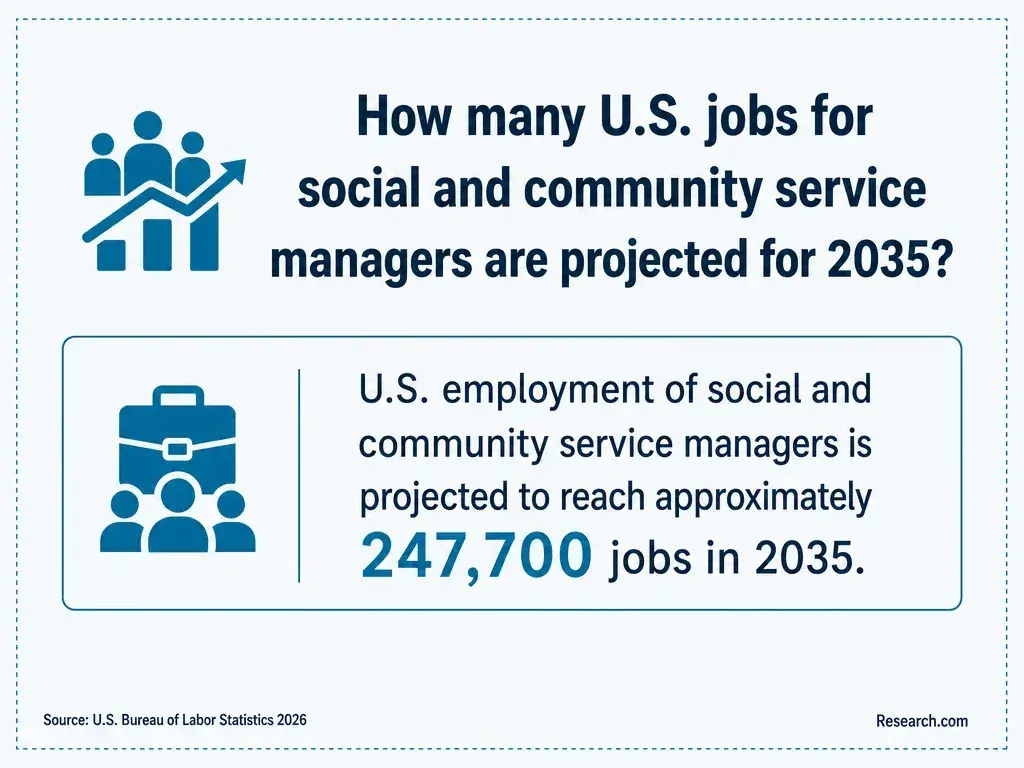
Occupational data describes jobs, not the earnings of Ed.D. graduates. The U.S. Bureau of Labor Statistics reports a May 2025 median annual salary of $133,000 for training and development managers, with projected employment growth of 6.4% from 2025 to 2035. Those figures can help an experienced learning professional assess a target occupation, but they do not establish that the doctorate will produce a promotion or pay increase.
Management analysts, a category that includes some organizational consultants, have a May 2025 median of $101,860 and projected growth of 10.1% over the same period. Consulting readiness depends on client-facing skills, relevant experience, and a credible record of work; the occupational outlook is not a forecast for individual degree holders.
How Can You Choose an Accredited Online Ed.D. Program?
Verify the institution's accreditation and the exact degree it awards, then evaluate the research training you would actually receive. Institution-level accreditation does not demonstrate that a program teaches causal reasoning well, guarantees project-site access, or leads to licensure.
Before applying, request a methods course sequence, assessment examples, final-project rules, research-review procedures, and details of advisor access. Ask a faculty member to explain how students are taught to challenge their preferred explanation when an improvement metric rises. A specific answer about design choices, conflicting evidence, and limitations is more informative than a promise to teach "evidence-based leadership."
Finally, compare the documented cost with employer support and your likely use of the training. If your work is in higher education, low-cost higher education leadership doctoral funding options may help frame that comparison; confirm any aid or reimbursement directly before counting on it. Enroll when the program offers sustained, feasible supervision for the kind of inquiry you intend to lead - not merely an online credential with a relevant title.
Other Things You Should Know About EdD Leadership
Possibly, if the organization authorizes access and the program approves its use. Document how each metric is defined, who is excluded, and whether reporting rules changed; a dashboard alone rarely establishes why a result changed.
Discuss feasible alternatives with your advisor, such as examining trends, implementation records, or carefully sampled interviews. State clearly which rival explanations the resulting design cannot rule out.
No. A well-supported revision is valuable applied research. Preserve the contradictory evidence and explain how it changes the organization's next decision rather than treating a favorable finding as the goal.
Only within your institution's and project site's rules. Seek approval for any public version and remove confidential information; a methods-focused, appropriately redacted account can show your reasoning without exposing protected records.
- Formulation of Research Question - Stepwise Approach - PMC https://pmc.ncbi.nlm.nih.gov/articles/PMC6322175/
- Quasi-Experimental Designs - Institute of Education Sciences https://ies.ed.gov/rel-southeast/2025/01/infographic-30
- Step 4 - Gather Credible Evidence | Program Evaluation https://www.cdc.gov/evaluation/php/evaluation-framework-action-guide/step-4-gather-credible-evidence.html
- Quasi-experimental study: comparative studies | GOV. UK https://www.gov.uk/guidance/quasi-experimental-study-comparative-studies
- Faculty Research Needs (In Their Own Words) | educause.edu https://www.educause.edu/ecar/research-publications/supporting-faculty-research-with-information-technology/faculty-research-needs-in-their-own-words
- Undergraduate students' involvement in research: Values, benefits, barriers and recommendations - ScienceDirect https://www.sciencedirect.com/science/article/pii/S204908012201144X
- Program Evaluation and Improvement Research | umich.edu https://marsal.umich.edu/academics-admissions/degrees/masters/program-evaluation-and-improvement-research
- Qualitative Methods in Evaluation | NYU SPS https://www.sps.nyu.edu/courses/GLOB1-CE9024-qualitative-methods-in-evaluation.html
- Full article: Implications for educational practice of the science of learning and development | tandfonline.com https://www.tandfonline.com/doi/full/10.1080/10888691.2018.1537791
- Certificate in Analytic Evaluation Methods - TEI | The Evaluators' Institute https://tei.cgu.edu/certificates/certificate-in-analytic-evaluation-methods-caem/