2027 Online Ed.D. in Leadership and Learning in Organizations: Degree Fit for Leaders Tackling Managers Unable to Make Time for Staff Development
Audited and Verified:
Our Editorial and Data Verification Process
Research.com uses government datasets, official education statistics and primary institutional information to support its career and degree guides. Our review process checks factual accuracy, occupational definitions, source dates and the requirements associated with the credentials discussed.
How This Article Was Fact-Checked
Our editorial team verifies salary estimates, employment projections, education requirements and program information against original data providers and official organizations. Salary figures are checked against the relevant occupational definitions and reporting periods. Information about licensure, accreditation and required in-person training is reviewed separately.
Fact-checked and verified on:

Co-Founder and Chief Data Scientist
Managers may support staff development in principle yet have no protected time to coach, give feedback, or plan learning. For leaders responsible for changing that pattern, the decision is whether doctoral study would improve their ability to diagnose and redesign the system, or whether a simpler intervention would work.
This guide explains what an online Ed.D. in leadership and learning in organizations can contribute, where its limits lie, and how to compare it with faster, less costly options. It is intended for working leaders who can influence development practices, not merely enroll in training.
Key Things You Should Know
- An Ed.D. is most useful when the leader can investigate why development loses priority, influence organizational decisions, and evaluate changes, not when managers simply need a scheduling fix.
- Protecting development time may require changes to workload, coverage, incentives, and senior-leader expectations; another coaching workshop alone may not address those constraints.
- The US Bureau of Labor Statistics reports a $133,000 median annual salary for training and development managers in May 2025, but that occupational figure is not a predicted salary or return on an Ed.D.
What Is an Online Ed.D. in Leadership and Learning in Organizations?
An online Doctor of Education in leadership and learning in organizations is a practice-oriented doctorate concerned with how people learn, how organizations change, and how leaders use evidence to improve practice.
The exact degree name and curriculum vary by institution. Online describes where much of the instruction occurs; it does not establish that classes are self-paced or that campus visits are unnecessary.
For this problem, the relevant subject is learning transfer: whether staff can apply development to their work, with managerial support and an opportunity to practice. A leader might study why coaching conversations disappear during busy periods, then examine whether changes to staffing, workflows, or accountability make those conversations feasible.
A general organizational learning Ed.D. differs from a school-administration doctorate designed around educator licensure. Leaders weighing those purposes can use a guide to comparing Ed.D. tracks before applying, then verify the actual curriculum and credential awarded by each institution.
Is an Online Ed.D. in Leadership and Learning Worth It for Working Leaders?
It may be worth it when the leader's job calls for sustained organizational diagnosis, change implementation, and applied evaluation. If managers cannot make time for staff development, doctoral study could help a leader distinguish an individual skill gap from a system that rewards immediate output while leaving coaching uncovered. The degree does not itself give the student authority to change staffing or performance expectations.
Start with evidence available through normal management processes: which development activities are expected, when they are scheduled, what work displaces them, and who can authorize coverage. Ask managers and staff about barriers without assuming their explanations prove a cause.
A feasible response might combine protected coaching time, adjusted workloads, and a simpler development routine. Assess whether the routine occurs and whether staff can use what they learn; attendance alone is a weak measure of improvement.
If the obstacle is a single team's calendar or an unclear coaching template, a pilot supported by the manager's supervisor may be faster and cheaper than a doctorate. If competing priorities recur across departments and the leader is positioned to redesign and evaluate the system, an Ed.D. becomes more relevant.
Even accelerated education doctorate completion planning should be weighed against the time the workplace problem needs now; a shorter degree timeline is not an immediate operational remedy.
What Careers Can You Pursue With This Online Ed.D.?
The strongest fit is often advancement from responsibilities a working leader already holds. A learning and development leader might set development strategy and evaluate its use; an organizational development practitioner might work with executives to change workflows and management routines. A consultant might diagnose similar problems for clients, while a higher-education or nonprofit leader might adapt the approach to staff and budget constraints.
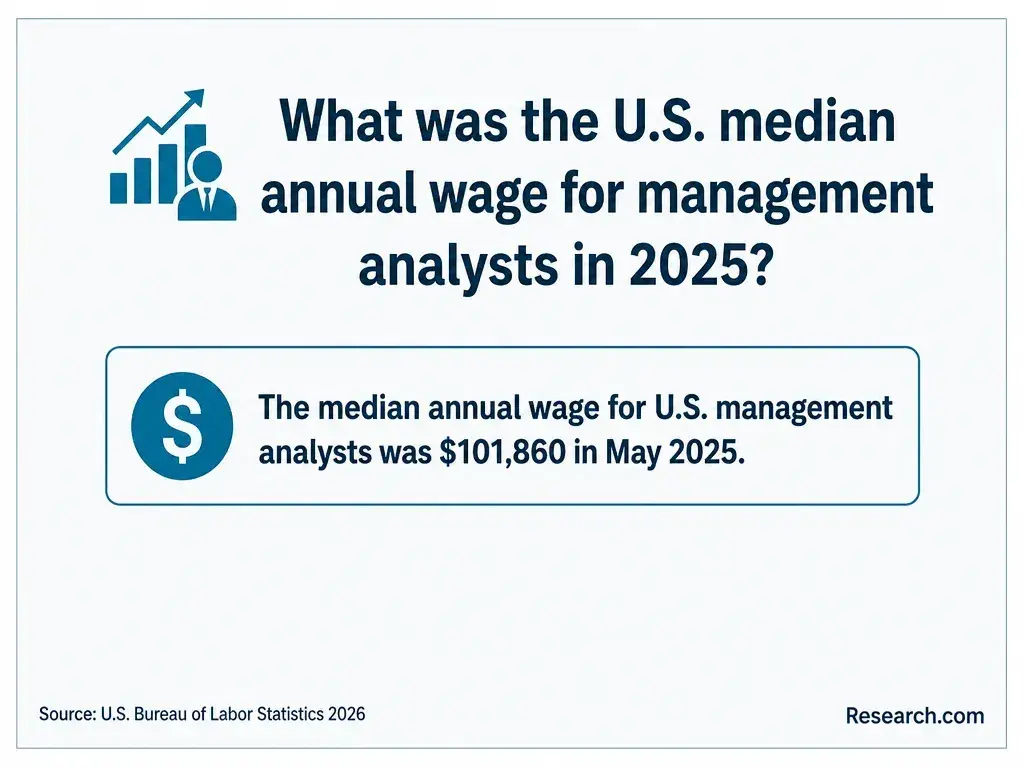
These roles are not interchangeable. Training and development managers oversee programs and people; management analysts advise on organizational improvements; postsecondary administrators work within institutional governance.
Employers assess relevant experience, demonstrated results, and sector knowledge alongside education. A doctorate alone does not establish readiness for an executive appointment or qualify its holder for school-administrator licensure.
Leaders considering institutional roles can explore comparing Ed.D. organizational leadership study for higher education, while checking each position's actual management and institutional-experience requirements.
Relevant study can connect adult learning and leadership theory with organizational diagnosis, change implementation, and evaluation. Applied to managers' time constraints, those subjects serve different purposes: learning theory informs useful coaching; systems thinking examines why coaching is displaced; and research methods help test whether a revised practice is workable.
Look for coursework that teaches students to define a performance problem before prescribing training. Useful applied work might involve a needs assessment, interviews about workflow barriers, an implementation plan, and measures of development opportunities over time. A before-and-after count could show whether activity changed, but it would not, by itself, prove that one intervention caused the change or improved staff performance.
Programs differ in methods depth and final requirements. Ask whether students complete an individual dissertation, dissertation in practice, team capstone, or another project and whether an employer-based question is permitted. Workplace information requires appropriate organizational permission and confidentiality safeguards; faculty or institutional review requirements must also be checked before collecting data.
Delivery format matters because a leader trying to protect managers' development time must also protect time for doctoral work. The comparison below identifies scheduling questions rather than assuming one format is easier.
| Consideration | Online program | Campus-based program |
| Class participation | May combine recorded work with required live meetings | Usually requires travel to scheduled classes |
| Collaboration | Remote group meetings may occur outside class hours | In-person work may be easier to coordinate on campus |
| Travel | Check for required residencies or convenings | Account for recurring travel or relocation |
| Workplace project | Remote faculty guidance may support local inquiry | Faculty guidance may be in person; project-site rules still vary |
Before enrolling, request a typical term schedule, attendance policy, convening calendar, and expectations for team work and the final project. Compare those commitments with peak periods at work. If travel is a deciding factor, cost-conscious online Ed.D. study options are a starting point, but verify each program's current format and full expenses directly.
Requirements are program-specific. Schools may ask for a graduate degree, transcripts, evidence of professional leadership, recommendations, a statement of purpose, and an interview. Some assess research preparation or require particular graduate coursework. Do not assume that a managerial title, an education master's degree, or employer sponsorship is universally required.
For this topic, a useful application describes decisions the applicant actually influences: how development time is allocated, what trade-offs managers face, and what the applicant hopes to investigate. It should distinguish a suspected cause from an established finding.
Ask admissions staff how the program defines qualifying experience and whether access to an organizational project site is expected at entry. Prior graduate credits considered for admission are not necessarily credits that transfer into the doctorate.
Completion time depends on required credits, course sequencing, enrollment pace, and the final project. A published accelerated path may depend on continuous enrollment and timely project approvals; a slower path can increase both living-schedule pressure and total charges. Request a program-specific completion plan rather than assuming that online study can be paused freely.
Compare written estimates of tuition and mandatory fees with likely travel, materials, and project-related expenses. Also count time away from work and any employer reimbursement conditions.
A practical financial test is whether the degree develops capabilities the leader expects to use beyond this one management problem, not whether an occupational salary median exceeds tuition.
For an initial comparison, review organizational leadership doctoral fees and total costs. Confirm current charges, required credits, aid eligibility, and reimbursement terms with the school and employer before committing.
Confirm the institution's accreditation and its scope through the accreditor and the institution, then verify the exact degree title and any claims of programmatic recognition. Institutional accreditation does not mean a general leadership doctorate meets state requirements for principal, superintendent, or other regulated licensure.
For this particular challenge, quality also means a workable path from workplace problem to supervised inquiry. Ask the program who advises applied projects, what research preparation is required, whether projects may examine an employer's management practices, and what happens if organizational access changes.
Request written descriptions of live attendance, campus requirements, final-project approval, and student support. Published completion or career outcomes are most useful when the school explains who was counted and over what period.
There is no reliable salary figure that applies to every graduate of a leadership and learning Ed.D. Pay depends on the role, sector, location, and prior responsibility. The US Bureau of Labor Statistics reports a $133,000 median annual salary for training and development managers in May 2025. That is the midpoint for people working in the occupation, not an entry salary, an Ed.D.-holder average, or a promised raise.
For a personal estimate, compare positions matching your present experience and intended responsibilities. Then ask whether the degree is requested, preferred, or absent from those postings. A leader who needs greater authority to allocate development time may gain more immediately from a broader internal role than from a new credential alone.
What Is the Job Outlook for Leadership and Learning Professionals?
The US Bureau of Labor Statistics projects 6.4% employment growth for training and development managers from 2025 to 2035. This indicates projected growth in that occupation, not the number of openings available to Ed.D. graduates or demand for a particular concentration.
Employers still need people who can make development practical within operational limits. Leaders can demonstrate that capability by documenting an authorized improvement effort: the problem identified, stakeholders involved, changes implemented, measures used, and limitations of the findings. Such evidence is more persuasive than claiming that a training program worked because participants attended it.
Other Things You Should Know About EdD Leadership Programs
Possibly, but the program must accept the site and project. Obtain the partner's agreement, clarify supervision and data access, and ask what happens if the partnership ends.
No single rule covers every project. The institution determines its review process; employer permission is a separate requirement. Ask before collecting employee information, rather than assuming an internal evaluation is automatically exempt.
Check employer, partner, and program rules first. Use approved, appropriately redacted material and avoid revealing identifiable employee responses or confidential business information.
It may be if the leader has authority to protect time and mainly needs coaching-design or facilitation skills. A doctorate is more defensible when the work also requires sustained, evidence-based organizational change.
- How Do You Manage Change in Organizations? Training, Development, Innovation, and Their Relationships - PMC https://pmc.ncbi.nlm.nih.gov/articles/PMC5890109/
- Independent Study Frequently Asked Questions | ca.gov https://www.cde.ca.gov/sp/eo/is/faq.asp
- Employer-offered educational assistance programs can help pay for college | Internal Revenue Service https://www.irs.gov/newsroom/employer-offered-educational-assistance-programs-can-help-pay-for-college
- Types of Financial Aid: Grants, Work-Study, and Loans | studentaid.gov https://studentaid.gov/understand-aid/types
- What Is an Applied Doctoral Project? ADP vs Dissertation | UAGC https://www.uagc.edu/blog/what-applied-doctoral-project-adp-vs-dissertation
- EdD vs. PhD in Education: Choosing the Right Program | Goodwin College of Professional Studies https://drexel.edu/soe/resources/career-path/edd-vs-phd/
- Employer Tuition Assistance Plans May Help Pay for College | Campus https://campus.edu/blog/financial-aid/employer-tuition-assistance-programs-can-help-pay-for-college
- Full article: How to maximize the impact of workplace training | tandfonline.com https://www.tandfonline.com/doi/full/10.1080/1359432X.2024.2319082
- Online Doctor of Education in Leadership and Innovation | Purdue Global https://www.purdueglobal.edu/degree-programs/education/doctor-education-leadership-innovation/