2027 Choosing an Online Ed.D. in Leadership and Learning in Organizations Around Seasonal Retail Leadership Demands
Audited and Verified:
Our Editorial and Data Verification Process
Research.com uses government datasets, official education statistics and primary institutional information to support its career and degree guides. Our review process checks factual accuracy, occupational definitions, source dates and the requirements associated with the credentials discussed.
How This Article Was Fact-Checked
Our editorial team verifies salary estimates, employment projections, education requirements and program information against original data providers and official organizations. Salary figures are checked against the relevant occupational definitions and reporting periods. Information about licensure, accreditation and required in-person training is reviewed separately.
Fact-checked and verified on:

Co-Founder and Chief Data Scientist
Seasonal retail leaders must prepare new hires, coordinate changing teams, and maintain performance when demand peaks. An online Ed.D. in Leadership and Learning in Organizations could help an experienced leader study those challenges systematically - but doctoral deadlines may also collide with the busiest weeks of the year.
This guide is for retail managers, training leaders, and organizational development professionals deciding whether the degree fits their work. It explains what to look for in a program, how to assess a feasible workplace project, and when a shorter development route may be the better investment.
Key Things You Should Know
- Choose an Ed.D. for sustained responsibility for learning and organizational change, not simply to become a stronger seasonal shift supervisor.
- Verify live classes, group meetings, campus visits, and project deadlines against your peak-season calendar; "online" does not mean self-paced.
- For salary context, the US median for training and development managers was $133,000 in May 2025, but that occupational figure is not a forecast for Ed.D. graduates.
What is an online Ed.D. in Leadership and Learning in Organizations?
An Ed.D. in leadership and organizational learning is a practice-oriented doctorate concerned with how people learn, how organizations change, and how leaders use evidence to improve practice. Programs with similar names differ: one may emphasize corporate workforce development, while another focuses on education systems. Check the awarded degree and curriculum rather than assuming the title describes a standardized credential.
For a retail leader, the distinction matters. Learning to design onboarding or evaluate supervisor development is different from studying merchandising, inventory optimization, or store finance in depth. Compare Ed.D. study tracks and career fit against the responsibilities you want to hold after graduation.
A practice-oriented Ed.D. generally makes more sense for leading and evaluating workplace improvement than for pursuing a primarily research-focused academic career. An MBA or targeted operations training may be more direct if the goal is broader commercial management rather than organizational learning.
How can an online Ed.D. support seasonal retail leadership careers?
Seasonal retail creates a distinctive learning problem: organizations must bring temporary or reassigned employees up to speed quickly, often while experienced supervisors have less time to coach them. An Ed.D. can help a leader distinguish a training gap from a staffing, scheduling, incentive, or process problem. That distinction prevents an expensive course from becoming the default answer to an operational issue.
A feasible applied inquiry might examine how store supervisors support learning during a holiday ramp-up. The leader could compare onboarding processes, observe whether employees can perform defined tasks, and examine appropriate aggregate operational measures. Prior-year and current-season results need careful interpretation: differences in staffing, traffic, promotions, and systems can affect outcomes. A before-and-after comparison alone does not establish that training caused a change.
Degree fit depends on authority and scope. A district training leader who can coordinate multiple sites and act on findings may gain substantial value from doctoral methods and change leadership. A store supervisor seeking immediate improvements might get faster results from mentoring, an employer leadership program, or a focused course. In either case, access to employee or customer information requires organizational permission and appropriate privacy and academic review.
What careers can you pursue with an Ed.D. in Leadership and Learning?
The degree can complement retail experience in learning and development, talent development, organizational development, and consulting. It does not replace a record of managing people, budgets, projects, or change. The table separates related roles by the work an applicant would need to demonstrate, not by a presumed degree requirement.
| Career direction | Relevant responsibilities | Retail experience to demonstrate |
| Training and development manager | Set learning priorities, manage programs and staff, evaluate results | Multi-site onboarding, supervisor development, program ownership |
| Organizational consultant or management analyst | Diagnose performance problems and recommend changes | Cross-store analysis, implementation work, stakeholder communication |
| Talent or organizational development leader | Develop leaders, succession practices, and change initiatives | Manager coaching, workforce planning, cross-functional projects |
A move from store management into a specialized learning role may require a portfolio showing needs assessment, learning design, facilitation, and evaluation - not just a doctorate. Seek stretch assignments or mentorship in the target function before committing to a degree. Advancement into a director or executive position remains dependent on organizational scale, openings, and demonstrated leadership responsibility.
Start by confirming that the institution holds recognized institutional accreditation and that the exact degree, curriculum, and delivery format suit organizational learning rather than a different form of educational administration. Accreditation establishes an institutional quality-assurance baseline; it does not, by itself, establish eligibility for a particular license or job.
For a seasonal retail leader, the decisive comparison is often operational. Request the proposed entry term's course sequence, live-session times, attendance rules, group-work expectations, campus-convening dates, and policy for missed or delayed coursework. Ask when major project milestones typically fall and whether faculty will support an applied question whose data collection must follow a retail season. Do not assume that a project at your employer will be approved.
Also verify the required final deliverable. Programs may require a dissertation, dissertation in practice, or another approved project with different supervision and review rules. Dissertation-free Ed.D. study options to evaluate can help identify a question to ask, but confirm each program's actual completion requirements directly before applying.
A relevant curriculum connects adult learning and learning transfer with organizational diagnosis, change implementation, and applied research. For seasonal retail, that means learning how to assess whether new hires can use training on the floor, whether supervisors have the capacity to reinforce it, and whether a proposed change fits store operations.
Look beyond course titles for the methods you need. Qualitative work may help explain differences in supervisor practice; quantitative and evaluation courses may help you define measures, examine variation, and recognize weak causal claims. Ask whether students actually practice these methods with faculty feedback and whether the program teaches data governance. Exposure to a research method is not the same as independent expertise.
Retail-specific operational knowledge will usually come from your work, not the doctorate. If your main gap is point-of-sale instruction, scheduling software, or instructional design, targeted training may be more efficient than a broad leadership curriculum.
Requirements vary by institution and entry term. Programs may evaluate prior graduate education, academic performance, professional experience, recommendations, a purpose statement, and evidence of readiness for doctoral inquiry. A retail title alone does not show the scope of your leadership; describe decisions you owned, teams or initiatives you led, and the organizational problem you hope to study without claiming results you cannot document.
Ask admissions staff whether your particular degree and graduate coursework meet eligibility rules. If you hold an education specialist credential, education specialist to education doctorate programs offer a comparison point, but an Ed.S. does not automatically confer admission or transferable doctoral credit. Credits considered when evaluating an application are not necessarily credits applied to the Ed.D.
Before applying, discuss project-site expectations with the program. You need not presume that your employer will release data, approve employee participation, or accommodate coursework during peak season. Knowing those limits early will make your application and enrollment decision more realistic.
Completion time and price depend on the program's required credits, pacing, tuition structure, fees, convenings, and final-project process. Published tuition alone is an incomplete estimate for a working retail leader: travel, lodging, books, technology, and any unpaid time away from work can matter. A peak-season course reduction or leave may extend enrollment and change the total bill.
Build an estimate from the school's current charges and a course-by-course plan. Then compare it with planning the cost of an organizational leadership doctorate, while checking that any programs compared have suitable curricula and schedules - not merely lower advertised prices.
Get employer assistance terms in writing. Confirm whether reimbursement covers doctoral study, requires specific grades or continued employment, and applies to fees or travel. If funding is uncertain and your desired promotion does not call for doctoral preparation, a smaller employer-supported development project may present less financial risk.
Online delivery can reduce routine commuting, but it does not remove scheduled participation. The comparison below highlights constraints that matter when retail work intensifies; neither format is inherently more flexible without examining its rules.
| Consideration | Online Ed.D. | Campus-based doctorate |
| Attendance | May include fixed live classes and required campus convenings | May require recurring in-person classes and campus presence |
| Collaboration | Remote group meetings require coordination across work schedules | In-person collaboration requires travel or local availability |
| Workplace inquiry | May allow study near a retail site, subject to program approval | May offer local faculty or partner access, subject to program approval |
Compare actual calendars, faculty access, project supervision, and aid offers - not the format labels. If you are also considering a doctorate focused on college administration, financial aid for higher education leadership doctoral students suggests funding avenues to investigate; that different focus is worthwhile only if it fits your career goal. Ask both online and campus programs what happens when a required meeting coincides with a retail blackout period.
There is no single salary or employment outlook for Ed.D. graduates. The closest occupation depends on the work you obtain, and US Bureau of Labor Statistics figures describe occupations across education levels - not outcomes attributable to this degree.
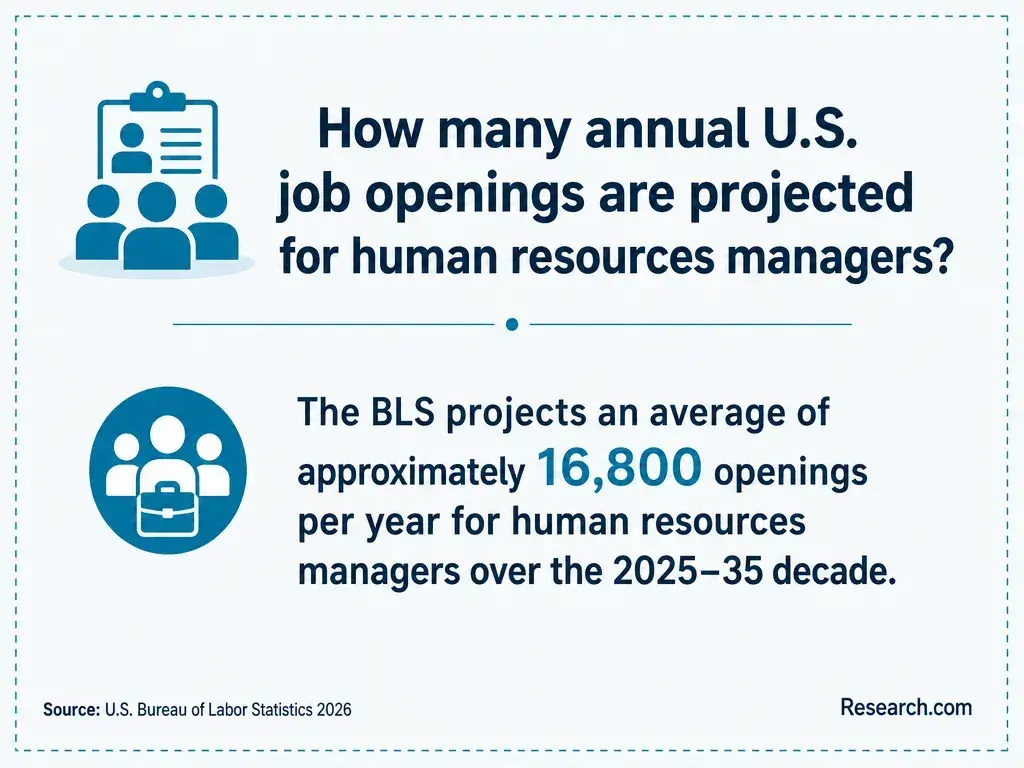
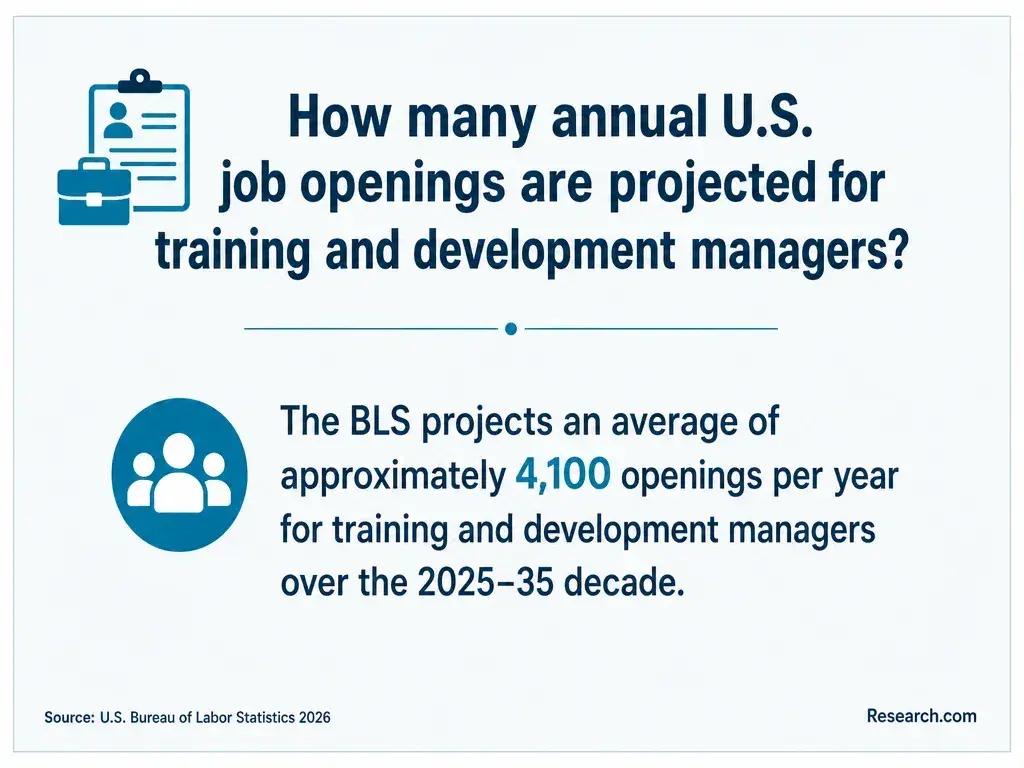
For context, BLS reports a May 2025 median annual salary of $133,000 for training and development managers and projects 6.4% employment growth from 2025 to 2035. That makes management of workplace learning a relevant career direction, but the median includes experienced managers who may not hold an Ed.D.
Training and development specialists had a $69,280 median and projected 10.8% growth over the same period; specialist work can be a route into the function, not an automatic step toward management.
Assess the degree against real openings and your current experience. Compare job descriptions, internal advancement rules, and likely responsibilities before treating a broad occupational median as evidence that tuition will pay off.
Do Ed.D. graduates need licenses or professional certifications?
Retail training, talent development, and organizational consulting roles generally depend on employer qualifications rather than a license conferred by an Ed.D. A voluntary certification may help demonstrate a particular skill, but it is separate from the doctoral degree and should be judged against the roles you want.
Requirements change if you move toward a regulated education position. A general leadership and learning Ed.D. should not be assumed to qualify you for teacher, principal, or superintendent licensure. Check the exact program's licensure disclosures and the relevant state authority before enrolling for that purpose.
Other Things You Should Know About EdD Leadership
Possibly, but permission from a franchise operator is not automatically permission to use brand systems or restricted data. Confirm site eligibility with the program and access rights with the appropriate organization.
Only if the organization authorizes access and the program approves the proposed use. Check retention, privacy, and review requirements before assuming historical records are available.
Tell your advisor promptly. Ask whether an approved new site, a revised question, or another permitted arrangement is possible; approval and timing depend on program rules.
Some programs have leave or pacing policies, but do not assume a pause is available without consequences. Ask about reentry, course sequencing, financial aid, and any employer reimbursement obligations before relying on one.
- Qualified Ed expenses | Internal Revenue Service https://www.irs.gov/credits-deductions/individuals/qualified-ed-expenses
- Academic Years, Academic Calendars, Payment Periods, and Disbursements | 2025-2026 Federal Student Aid Handbook https://fsapartners.ed.gov/knowledge-center/fsa-handbook/2025-2026/vol3/ch1-academic-years-academic-calendars-payment-periods-and-disbursements
- Designing effective capstone experiences and projects... - PMC https://pmc.ncbi.nlm.nih.gov/articles/PMC7861568/
- Doctoral dissertation or capstone: how to choose the right program | PhD/Doctorate | Capella University Blog https://www.capella.edu/blog/phd-doctorate/the-difference-between-a-dissertation-and-doctoral-capstone/
- PhD vs. EdD in Education: Nine expert tips to help you choose | USC Rossier https://rossier.usc.edu/news/phd-vs-edd-in-education-nine-expert-tips-to-help-you-choose/
- Adult Learning, Training and Organizational Development | temple.edu https://education.temple.edu/altod
- What Is a Capstone Project? Types, Examples, and Tips | SCU https://www.scu.edu/business/blog/business-concepts/what-is-a-capstone-project/
- Online EdD in Education Policy and Leadership | American University https://www.american.edu/baker/graduate/edd/
- EdD vs. PhD in Education: Choosing the Right Program | Goodwin College of Professional Studies https://drexel.edu/soe/resources/career-path/edd-vs-phd/
- Online Doctor of Education in Leadership (EdD) | spalding.edu https://online.spalding.edu/programs/online-doctor-education-leadership