2027 Online Ed.D. in Leadership and Learning in Organizations Admissions: Explaining a Career Break Before Doctoral Study
Audited and Verified:
Our Editorial and Data Verification Process
Research.com uses government datasets, official education statistics and primary institutional information to support its career and degree guides. Our review process checks factual accuracy, occupational definitions, source dates and the requirements associated with the credentials discussed.
How This Article Was Fact-Checked
Our editorial team verifies salary estimates, employment projections, education requirements and program information against original data providers and official organizations. Salary figures are checked against the relevant occupational definitions and reporting periods. Information about licensure, accreditation and required in-person training is reviewed separately.
Fact-checked and verified on:

Co-Founder and Chief Data Scientist
A career break can make an Ed.D. application feel harder to explain, especially when a program asks for substantial professional experience and a current organizational problem to study. Whether you stepped away for caregiving, health, a layoff, military transition, or another reason, the strongest application gives the break appropriate context without letting it define your qualifications.
This guide shows you how to describe the gap, demonstrate readiness for applied doctoral work, and check whether an online leadership and learning program fits your circumstances.
Key Things You Should Know
- Explain the break briefly and truthfully, then connect your earlier leadership experience and recent preparation to the work you want to do in the Ed.D.
- A career gap is not a universal admissions disqualifier; programs assess applicants under their own degree, experience, recommendation, and academic-readiness rules.
- Do not assume online study is self-paced or that the doctorate will lead to promotion: verify attendance, project access, total cost, and career fit before applying.
What Is an Online Ed.D. in Leadership and Learning in Organizations?
An Ed.D. in leadership and learning in organizations is a practice-oriented doctorate concerned with how people learn, lead change, and improve performance in workplaces and other institutions. Its focus may suit an experienced manager, educator, training professional, or nonprofit leader who wants to investigate a real organizational problem rather than pursue research as a primary career.
Program names do not guarantee identical curricula. One school may emphasize adult learning and organizational change; another may focus on education administration. Review the awarded degree, required courses, and project expectations rather than inferring a specialization from the title. A guide to reviewing Ed.D. specializations and degree fit can help frame that comparison.
How Can You Explain a Career Break in Your Doctoral Application?
Give admissions readers enough context to understand your timeline, then spend more space on evidence that you can contribute to a professional doctoral cohort and complete demanding work. You need not turn a statement of purpose into a personal history or disclose private medical or family details.
Use the application's requested documents for distinct purposes:
- Account for the timeline: On your résumé, identify a substantial break accurately when it would otherwise create confusion. In an optional explanation, name the broad reason - such as caregiving, a layoff, recovery, or a planned transition - and indicate when you returned or expect to return to professional activity.
- Establish your record: In the statement of purpose, describe a specific leadership or learning responsibility you held before the break, the decisions you made, and any outcomes you can substantiate. Do not present informal activity as paid employment or claim results you cannot verify.
- Show present readiness: Explain recent steps that matter to doctoral study, such as refreshing research skills, consulting on an authorized project, or arranging a feasible study schedule. Connect these steps to the organizational question you hope to investigate.
For example, an applicant could write: "I stepped away from full-time work for family caregiving. Previously, I led staff-development planning across multiple teams. That experience shaped my interest in how organizations assess whether training changes practice; I am now updating my evaluation skills before doctoral study." The wording is illustrative: replace it with your actual responsibilities and preparation.
If the break followed burnout or a difficult workplace, avoid blaming former colleagues in the application. Describe what you learned and why the program fits your next step. If your intended project depends on access to a former employer, do not imply you still have that access; ask the program whether another approved setting is possible.
What Are the Admission Requirements for an Online Ed.D. Program?
Requirements vary by institution and entry term. Programs may request a completed graduate degree, transcripts, a résumé, recommendations, a statement of purpose, and an interview; some specify professional-experience or grade thresholds. Others differ on entrance tests or prior methods coursework. A career break does not replace any formal requirement, but neither does it automatically negate experience earned before the break.
Separate eligibility from competitive evidence. An admissions office can confirm whether your degree and experience meet its published rules. Your application must then show why your leadership responsibilities, proposed problem of practice, writing, and current circumstances support success. If you completed an Ed.S., prior study may help establish preparation without necessarily reducing doctoral credits; investigate online education doctorate routes for Ed.S. graduates and request a written, program-specific credit evaluation.
Before investing in an application, ask admissions whether experience before a break counts toward any stated minimum, whether the school offers an optional gap explanation, and which office evaluates unusual academic or employment histories. Follow the program's actual instructions rather than sending an unsolicited lengthy account.
Jobs (thousands)
Online delivery changes where you participate, not necessarily when you must participate. Compare these features against your present work, caregiving, or re-entry plans - not the schedule you had before your career break.
| Feature | Online Ed.D. | Campus-based Ed.D. |
| Class participation | May include required live sessions as well as asynchronous work | Usually requires travel to scheduled in-person classes |
| Collaboration | Group meetings and faculty contact may occur remotely | In-person meetings may be easier to arrange locally |
| Additional travel | Some programs require campus convenings despite online coursework | Regular commuting or relocation may be necessary |
A current break from employment might offer study time, but it can complicate access to an applied project site. Ask whether projects can use an external partner and what happens if your employment changes after enrollment.
Relevant coursework may address adult learning, organizational change, leadership, research methods, and evaluation. For an applicant returning after a break, the useful question is whether the sequence builds from your existing strengths toward your proposed work. Someone experienced in training delivery, for example, may particularly need stronger skills in needs assessment and measuring whether learning transfers into practice.
Many programs require a substantial applied project, but its form, supervision, and approvals differ. Compare published education doctorate capstone and project pathways without assuming "no dissertation" means no rigorous research or written doctoral deliverable. If your proposed inquiry involves employees or learners, check organizational permission, data access, confidentiality, and institutional review procedures before treating it as feasible.
Completion time depends on required credits, course sequencing, enrollment pace, and the project or dissertation. A return to employment, a change in caregiving responsibilities, or difficulty securing a project site can also affect progress. Request the program's published schedule and leave policies rather than relying on an advertised minimum time to completion.
For a meaningful cost comparison, obtain written estimates covering tuition, mandatory fees, books or technology, any required travel, and likely enrollment beyond the standard schedule. Check whether employer reimbursement depends on continued employment or course grades. Explore lower-tuition pathways to an education doctorate, but compare total obligations and academic fit - not tuition alone. A shorter leadership course may be the better financial choice if you need a targeted skill rather than a doctorate.
Check that the institution holds recognized institutional accreditation and that the credential awarded is the Ed.D. you intend to earn. Accreditation supports a basic quality check, but it does not establish that a particular leadership program meets requirements for teacher, principal, superintendent, counseling, or other regulated licensure.
If your goal is a licensed education role, request the institution's program-specific licensure disclosure and confirm eligibility with the relevant state authority. For organizational learning or development roles, employers typically assess experience and skills as well as education; an Ed.D. is not itself a professional license.
Depending on prior experience, graduates may pursue or advance in learning and development management, organizational development, workforce training, consulting, or education administration. The responsibilities differ: a training manager may direct staff and budgets, while an organizational consultant diagnoses problems and recommends changes. Neither role follows automatically from earning the degree.
After a career break, distinguish an adjacent return from a major career change. If you previously led training teams, a documented improvement project may strengthen your case for a similar or more complex role. If you have never worked in learning and development, relevant projects, mentoring, and functional experience may matter more initially than another credential. A PhD may fit a primarily research-focused goal better; targeted professional development may fit a narrower skills gap.
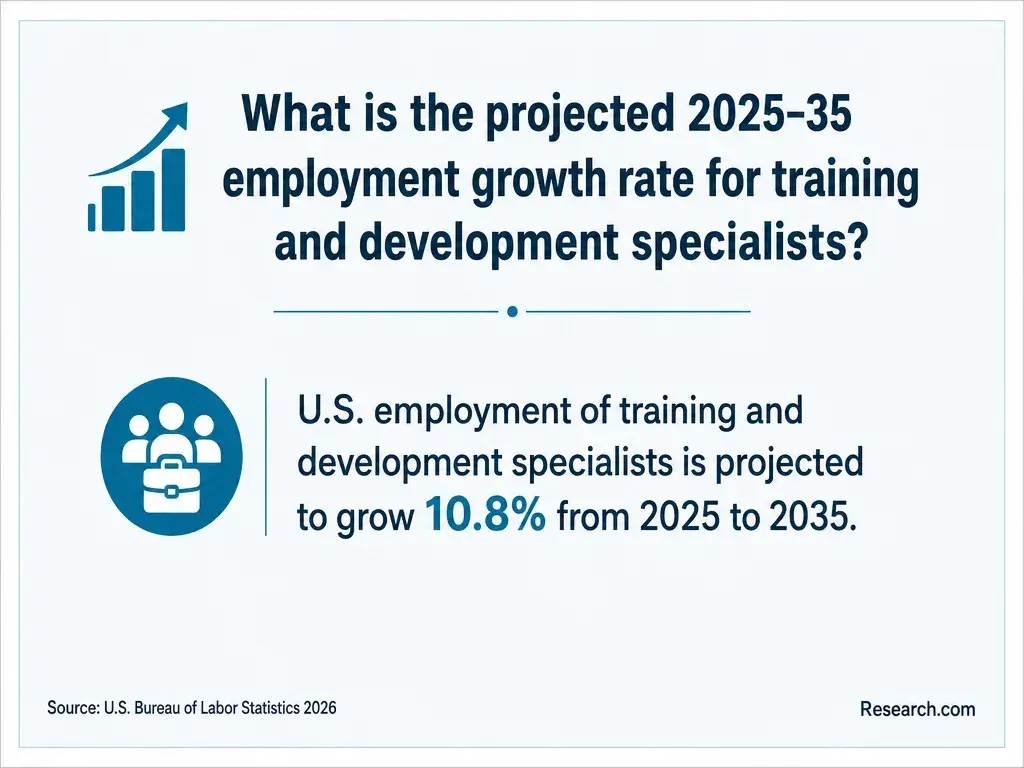
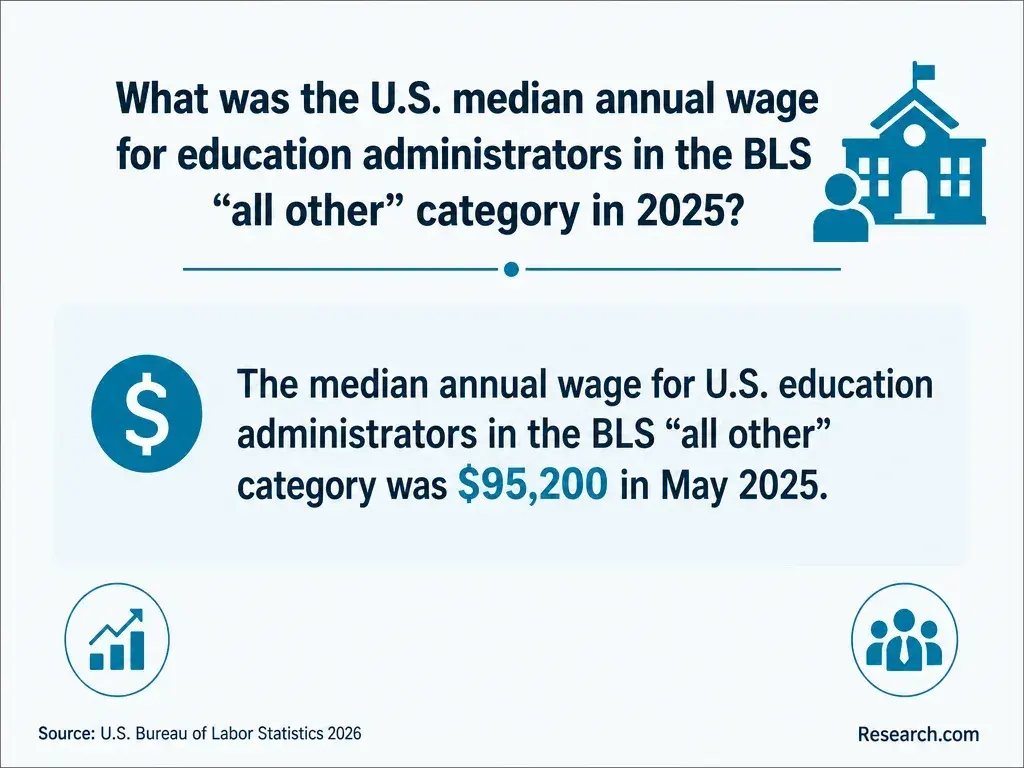
Occupational figures describe jobs, not the earnings of Ed.D. graduates. The US Bureau of Labor Statistics reports a 2025 median annual salary of $133,000 for training and development managers. That figure includes workers with different degrees and experience levels; it is not an appropriate starting-salary forecast for someone returning from a break or entering management for the first time.
Evaluate prospects using the occupation and location you actually seek, your recent experience, and employer requirements. Before borrowing for a doctorate, compare likely job opportunities with the cost of a less expensive route back into your field.
How Can You Choose a Reputable Online Ed.D. Program?
Shortlist programs that explicitly welcome your professional background and offer a workable path from admission through the final project. Then compare the same facts for each school: accreditation, current admission rules, live attendance, campus visits, faculty guidance, project-site requirements, completion policies, and itemized cost.
When comparing online leadership doctorate program prices, request each institution's current charges and ask what additional terms would cost if your project takes longer. Give particular weight to a program's answer to this question: "If I am returning after a career break and do not yet have an employer project site, what approved options and deadlines apply?" A clear, documented answer is more useful than a broad promise of flexibility.
Other Things You Should Know About EdD Leadership
It may demonstrate relevant responsibility, but only the program can decide whether it satisfies a formal experience requirement. Describe your decisions, scope, and results accurately.
Ask the program which recommenders it accepts. A former collaborator, recent project supervisor, or graduate instructor may provide stronger specific evidence than someone with an impressive title who barely knows your work.
Potentially. Check eligibility rules and be prepared to explain how you will manage coursework and obtain any required applied-project access.
Use an accurate, readable chronology and follow the application's instructions. If a short gap needs no explanation, do not draw attention to it solely because it exists.
- Reducing discrimination against job seekers with and without employment gaps - PMC https://pmc.ncbi.nlm.nih.gov/articles/PMC7614241/
- School-Determined Requirements | 2024-2025 Federal Student Aid Handbook https://fsapartners.ed.gov/knowledge-center/fsa-handbook/2024-2025/vol1/ch1-school-determined-requirements
- Explain a gap in employment | Get careers information and advice | National Careers Service https://nationalcareers.service.gov.uk/careers-advice/explain-gaps-in-work-history
- EdD Program Admission Requirements - Chicago https://www.depaul.edu/academics/programs/educational-leadership-edd/admission-requirements
- References and Letters of Recommendation | Career Development Center https://career.oregonstate.edu/resumes-cvs-cover-letters/references-and-letters-recommendation
- Admissions and Application Requirements - UNC Online https://online.unc.edu/online-doctoral-programs/online-edd-organizational-learning-and-leadership/admissions/
- Leadership Ed.D. - School of Education | Virginia Commonwealth University https://soe.vcu.edu/academics/leadership/leadership-edd/
- How to apply | Educational Leadership | EdD https://online.missouri.edu/degrees-programs/mu/education/educational-leadership/edd/admissions
- Advance Your Leadership Career with an Online Ed.D. | UMass Global https://www.umassglobal.edu/blog-news/advance-your-leadership-career-online-edd
- Online Doctor of Education in Leadership and Innovation | Purdue Global https://www.purdueglobal.edu/degree-programs/education/doctor-education-leadership-innovation/