2027 AI Master's Degrees With Entrepreneurship Focus

Co-Founder and Chief Data Scientist
Choosing an AI master's program with an entrepreneurship focus is not just a technical decision. It is a career strategy decision: Do you need advanced machine learning skills, startup training, investor-ready product experience, or a flexible format that lets you keep working while you pivot into AI? For professionals without a traditional computer science background, the right program can help close technical gaps while building the business judgment needed to launch AI products, lead innovation teams, or move into AI-focused consulting and product roles.
This guide explains how 2027 AI master's degrees with entrepreneurship components differ from traditional AI programs, what admissions committees usually expect, how online and campus formats compare, what coursework to look for, and how to evaluate cost, time to completion, career outcomes, and complementary credentials. It is designed for career changers, working professionals, founders, product leaders, and technically capable students who want to use AI in a business-building context rather than study it only as a research discipline.
Key Things You Should Know
- In 2027, over 40% of AI master's programs in the U.S. incorporate entrepreneurship courses, preparing students for tech startups and innovation-driven careers.
- Graduates with AI and entrepreneurship skills report 25% higher job placement rates within tech sectors focused on product development and venture creation.
- Recent curricula emphasize practical skills like funding strategies and market analysis alongside advanced AI, responding to increasing industry demand for combined expertise.
What are AI Master's degrees with entrepreneurship focus, and how do they differ from traditional AI programs?
AI master's degrees with an entrepreneurship focus combine graduate-level artificial intelligence training with coursework and applied experiences in venture creation, product strategy, startup finance, market validation, and innovation management. The goal is to prepare students not only to understand AI systems, but also to turn AI capabilities into usable products, services, and companies.
A traditional AI master's program usually emphasizes technical depth: machine learning, algorithms, neural networks, natural language processing, computer vision, robotics, data systems, or AI research methods. These programs can be excellent for students targeting research labs, doctoral study, engineering roles, or specialized technical positions. However, they may offer limited preparation in customer discovery, business models, fundraising, intellectual property, regulatory risk, pricing, or go-to-market strategy.
By contrast, an AI entrepreneurship track is built around translation: moving from model or prototype to market-ready solution. Students may work on capstone projects that require a viable AI product concept, evaluate market demand, build investor presentations, or collaborate with startup accelerators and business school faculty. This structure is especially useful for students who want to become AI founders, product managers, venture studio operators, innovation leads, or technical executives.
Key differences often include:
- Outcome focus: Traditional AI programs often prepare students for technical execution or research. AI entrepreneurship programs prepare students to build, commercialize, and scale AI-enabled solutions.
- Course mix: Entrepreneurship-focused degrees add startup management, venture financing, product development, intellectual property, and market analysis to the AI core.
- Applied learning: Students are more likely to complete founder-oriented capstones, pitch competitions, incubator projects, or internships with AI startups.
- Network value: Access to mentors, investors, founders, and accelerator ecosystems can be as important as the technical curriculum.
- Career positioning: Graduates may pursue hybrid roles that require both AI literacy and business leadership rather than purely technical roles.
Studies show nearly 40% of AI graduates entering the workforce between 2020 and 2025 engaged in entrepreneurial activities or innovation roles within two years. That figure highlights why many students now look for programs that connect AI skill-building with business execution. For a broader view of career paths in the field, see this guide to the artificial intelligence major.
Which U.S. universities offer accredited Master's degrees in AI with entrepreneurship specialization?
Several U.S. universities offer master's-level pathways that combine artificial intelligence study with entrepreneurship, innovation, or venture-building experiences. Because program names, concentrations, and electives can change, prospective students should verify current catalog details, delivery format, accreditation status, and whether entrepreneurship is a formal specialization, a certificate, an elective pathway, or an extracurricular accelerator experience.
Examples of universities cited for combining AI education with entrepreneurship-oriented opportunities include Carnegie Mellon University, Stanford University, the Massachusetts Institute of Technology, the University of California, Berkeley, and New York University. These institutions are often associated with strong computing programs, active startup ecosystems, research commercialization, and access to entrepreneurship centers or innovation labs.
Carnegie Mellon University's Master of Science in Artificial Intelligence and Innovation merges core AI technology education with startup management and venture creation courses, emphasizing practical entrepreneurship alongside advanced AI research. Stanford University provides a Master of Science in Computer Science with a specialization in Artificial Intelligence and Entrepreneurship, with students benefiting from hands-on projects through the Stanford Venture Studio. The Massachusetts Institute of Technology features a one-year interdisciplinary master's program in AI complemented by the Martin Trust Center for MIT Entrepreneurship.
The University of California, Berkeley, offers a Master of Engineering in Artificial Intelligence with electives in business strategy and entrepreneurship, and collaboration with Berkeley SkyDeck can support students interested in launching startups from AI innovations. New York University's Master of Science in Artificial Intelligence includes an entrepreneurship pathway focused on business modeling, funding, and AI product development, supported by the NYU Entrepreneurial Institute.
When comparing universities, do not rely only on the phrase “AI and entrepreneurship.” Look for evidence that the program includes:
- graduate-level AI coursework beyond introductory data analytics;
- entrepreneurship courses that count toward the degree rather than optional workshops only;
- capstone or practicum projects tied to AI product development;
- faculty or mentors with startup, patent, venture, or commercialization experience;
- access to incubators, accelerators, pitch competitions, or industry partners;
- clear accreditation information at the institutional level and, where applicable, the program level.
Students seeking adjacent and potentially lower-cost pathways may also compare data science programs, including affordable options for a data scientist degree, especially if their primary goal is applied machine learning, analytics, or AI product work rather than a named AI entrepreneurship specialization.
What are the typical admission requirements and prerequisites for AI Master's programs with entrepreneurship tracks?
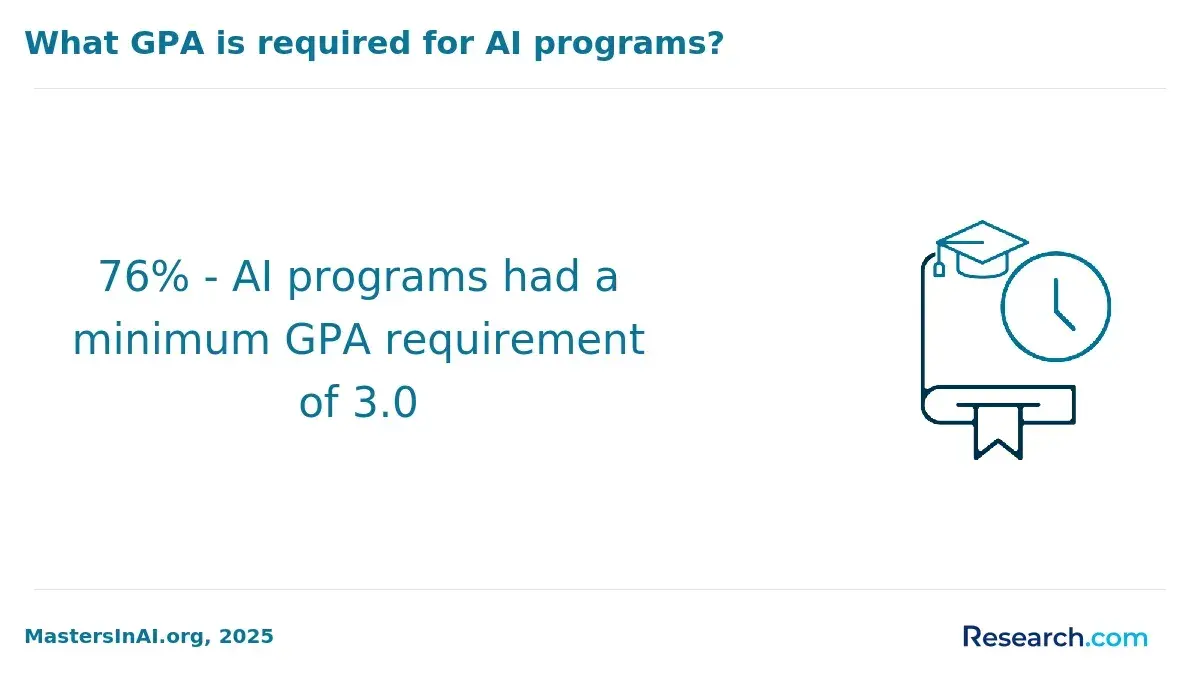
AI master's programs with entrepreneurship tracks usually look for applicants who can handle rigorous quantitative and computing coursework while also showing interest in innovation, product development, or business leadership. A bachelor's degree in computer science, engineering, mathematics, statistics, data science, or another STEM field is common, but some programs may consider applicants from business or other disciplines if they can demonstrate sufficient technical preparation.
Typical technical prerequisites include prior coursework or demonstrable experience in:
- programming, often in Python or another commonly used language;
- data structures and algorithms;
- linear algebra;
- statistics and probability;
- calculus or advanced quantitative methods;
- basic machine learning, data mining, or AI concepts, depending on the program.
Entrepreneurship-focused programs may also value evidence that an applicant can identify business problems, work with teams, communicate with nontechnical stakeholders, and think commercially. Relevant experience can include startup work, product management, consulting, research and development, hackathons, innovation labs, patent activity, business plan competitions, or coursework in entrepreneurship, management, finance, or technology commercialization.
Application materials commonly include transcripts, a resume, letters of recommendation, a statement of purpose, and sometimes GRE scores. GRE scores are often optional, though more competitive programs may still require or recommend them. International applicants typically need to submit English-language proficiency scores such as TOEFL or IELTS. Some programs may request a portfolio, project samples, GitHub repositories, or examples of AI-related work with commercial potential.
Applicants should use the statement of purpose strategically. A strong essay does more than say the applicant is interested in AI. It explains the problem area they want to work on, why graduate AI training is necessary, how entrepreneurship fits their goals, and what evidence shows they can succeed in a technical program. For career changers, the essay should also address readiness gaps directly and explain how they have prepared through coursework, work experience, certificates, or independent projects.
Work experience can be especially helpful in programs designed for working professionals. Carnegie Mellon University's AI master's with entrepreneurship components seeks applicants with leadership skills and prior project involvement in tech startups or research and development. Northeastern University and the University of Southern California also prioritize candidates with a strong balance of technical and business innovation backgrounds.
Because the National Center for Education Statistics notes a limited number of programs explicitly combining AI and entrepreneurship, applicants should review prerequisites early. If you lack technical coursework, completing bridge courses before applying may improve admission chances and reduce the risk of struggling after enrollment. Students building a foundation in a related technical field may also explore affordable engineering degrees as part of a longer-term AI and entrepreneurship pathway.
How do online, hybrid, and campus-based AI Master's programs with entrepreneurship focus compare?
Online, hybrid, and campus-based AI master's programs can all support entrepreneurship goals, but they create different learning and networking experiences. The best format depends on how much flexibility you need, how important in-person startup resources are to your goals, and whether you can relocate or pause full-time work.
Online programs
Online AI master's programs with an entrepreneurship focus are usually the best fit for working professionals, career changers with family obligations, and students who cannot move to a tech hub. They may offer asynchronous lectures, part-time pacing, and access to students from multiple regions. This format can be practical for someone who wants to apply AI coursework immediately in a current job or build a startup while studying.
The trade-off is that online students may have less spontaneous access to campus incubators, investor events, research labs, and face-to-face mentorship. Strong online programs try to close that gap through virtual pitch events, remote mentor networks, team-based capstones, and optional residencies, but students should confirm these resources before enrolling.
Hybrid programs
Hybrid programs combine online coursework with in-person residencies, weekend intensives, labs, or entrepreneurship workshops. This format can work well for students who need flexibility but still want structured networking. Short campus sessions can be valuable for pitch practice, founder-team formation, product demos, and meetings with faculty or industry mentors.
Campus-based programs
Campus-based programs usually provide the most immersive entrepreneurship environment. Students may have easier access to innovation labs, venture capital networks, startup competitions, faculty office hours, and peer collaboration. The main drawbacks are cost, relocation, commuting, and reduced flexibility for students who need to maintain full-time employment.
The landscape is expanding. NCES IPEDS data shows a 34% increase in U.S. universities offering AI master's degrees with business or entrepreneurship tracks between 2022 and 2024. As more formats become available, students should compare not only delivery mode but also the quality of startup support in each format.
Before choosing a format, ask these questions:
- Can online students participate in the same incubators, accelerators, or pitch competitions as campus students?
- Are entrepreneurship mentors assigned, optional, or unavailable?
- Does the capstone require an AI prototype, a business plan, customer discovery, or all three?
- How are teams formed in online or hybrid programs?
- Are networking events accessible remotely?
- Does the schedule support full-time work, and how long will part-time completion take?
Students comparing flexible AI-related pathways may also review online master data science options, especially if they want a broader analytics credential with machine learning coursework.
What core coursework and specializations are covered in AI Master's programs emphasizing entrepreneurship?
AI master's programs emphasizing entrepreneurship typically combine a technical AI core with business-building coursework. A strong curriculum should help students understand how AI models work, how to evaluate their performance, how to deploy them responsibly, and how to determine whether an AI product solves a real market problem.
Technical core courses commonly include:
- machine learning;
- deep learning or neural networks;
- natural language processing;
- computer vision;
- data analytics;
- AI systems design;
- model evaluation and optimization;
- data engineering or cloud-based AI deployment, depending on the program.
Entrepreneurship and business courses often cover:
- innovation management;
- startup financing;
- AI product development;
- business model design;
- market analysis and customer discovery;
- venture capital dynamics;
- go-to-market strategy;
- intellectual property law;
- technology commercialization;
- entrepreneurial leadership in technology.
Specializations may focus on AI-driven business strategy, AI product design, entrepreneurial leadership, responsible AI ventures, or sector-specific applications such as healthcare, finance, education technology, cybersecurity, or automation. The strongest programs do not treat business courses as add-ons. They require students to connect technical design decisions with customer needs, legal risk, data availability, model reliability, and commercial feasibility.
Applied work is especially important. Look for capstones, practicums, case studies, incubator projects, or industry-sponsored projects where students build prototypes, test assumptions, analyze users, and present product plans. For entrepreneurship-focused students, a portfolio that shows both model-building ability and product thinking can be more useful than coursework alone.
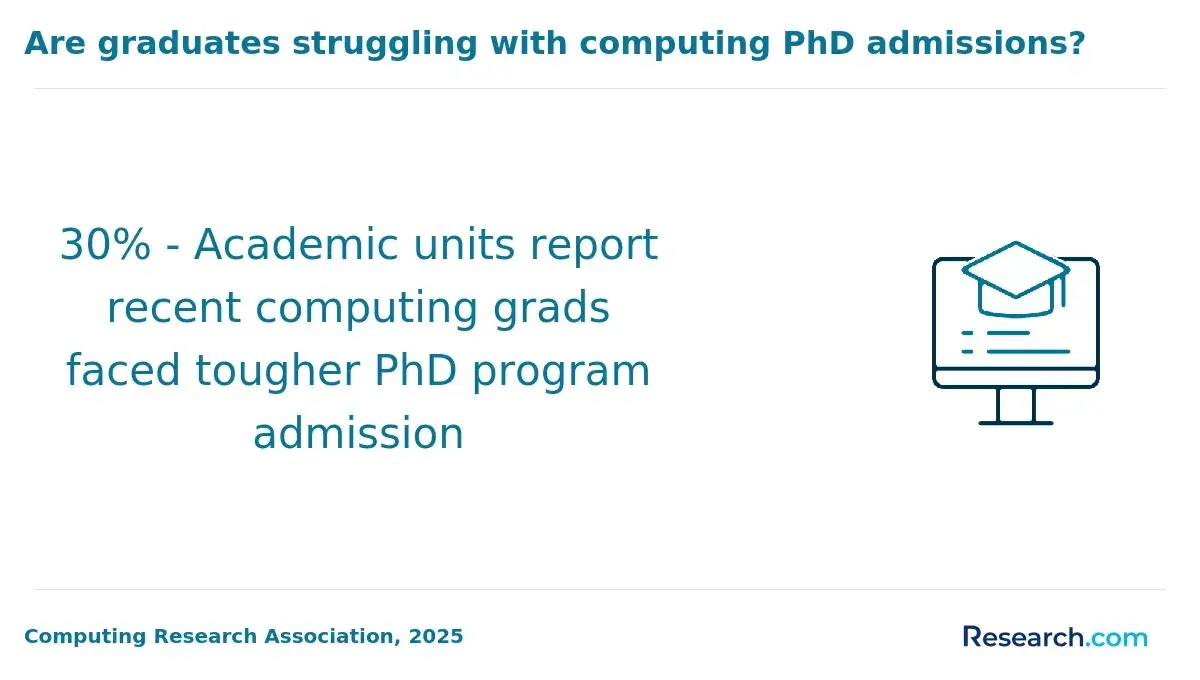
Admissions preparation still matters because these programs are technically demanding. A bachelor's degree in computer science, engineering, mathematics, or a related STEM field is commonly expected, along with strong programming and statistics skills. Foundational knowledge in linear algebra, calculus, and probability is often expected. GRE quantitative scores near the 75th percentile may be recommended, while professional experience or prior entrepreneurial endeavors can strengthen applications for executive or part-time tracks.
A survey by the Graduate Management Admission Council indicates that 68% of AI entrepreneurship master's programs require prior coding proficiency and relevant technical coursework. Prospective students should read syllabi carefully and distinguish between programs that teach AI at an advanced level and programs that provide only a high-level business overview of AI.
How long does it take to complete an AI Master's degree with entrepreneurship focus, and what are typical program costs?
An AI master's degree with an entrepreneurship focus typically takes one to two years of full-time study. Part-time students often need three or four years, depending on course load, prerequisite requirements, and whether the program includes a capstone, internship, residency, or venture project. Accelerated tracks may take 12 to 18 months, usually by requiring heavier course loads, summer study, or a more compressed schedule.
Program length depends on several factors:
- Full-time versus part-time enrollment: Full-time study is faster but may be difficult for working professionals.
- Prerequisites: Students who need bridge courses in programming, statistics, or linear algebra may need extra time.
- Capstone structure: Venture-oriented capstones can require time for prototyping, market validation, and presentation preparation.
- Internships or residencies: These can strengthen outcomes but may extend the calendar timeline.
- Course sequencing: Some AI courses must be taken in order, which can slow progress if a required course is offered only once per year.
Costs vary significantly by institution type, format, and residency status. Public universities usually charge between $20,000 and $40,000 for the entire degree, while private schools may range from $50,000 to over $80,000. More affordable online or hybrid formats sometimes start around $15,000. Students should also budget for course materials, software or cloud computing costs, project expenses, travel for residencies, networking events, and fees connected to entrepreneurship programming.
When comparing tuition, look beyond the headline number. Ask whether the published cost includes all required credits, student fees, technology fees, residency costs, and capstone expenses. For online programs, confirm whether tuition differs for in-state and out-of-state students. For campus programs, include housing, relocation, transportation, and lost income if you must reduce work hours.
Financial aid may include federal student aid for eligible students, institutional scholarships, graduate assistantships, employer tuition reimbursement, military benefits, or private loans. Employer reimbursement can be especially relevant for professionals using AI training to move into product, automation, data, or innovation roles within their current organization.
Since 58% of AI master's programs accept applicants without prior coding experience but require quantitative reasoning skills, students with strong math backgrounds may be able to enroll without lengthy prerequisite sequences. Even so, applicants without coding experience should review required technical courses carefully and consider whether the program offers structured support before advanced AI coursework begins.
What career roles and job titles do graduates of AI entrepreneurship Master's programs typically pursue?
Graduates of AI entrepreneurship master's programs often pursue hybrid roles that sit between technical teams, executives, customers, and investors. These jobs require enough AI knowledge to make credible technical decisions and enough business judgment to evaluate product-market fit, pricing, implementation risk, and growth strategy.
Common job titles include:
- AI product manager: Defines AI product requirements, works with engineering and data science teams, evaluates customer needs, and manages launch strategy.
- AI strategy consultant: Advises organizations on where AI can create value, how to prioritize use cases, and how to manage implementation risks.
- MLOps lead: Oversees the operational side of machine learning systems, including deployment, monitoring, reliability, and collaboration between model developers and production teams.
- Startup founder: Builds an AI-enabled product or service, validates the market, raises capital, hires technical teams, and manages growth.
- Chief technology officer: Leads technical strategy for a startup or growth-stage company, often balancing product architecture, hiring, security, and investor communication.
- Innovation manager: Identifies and develops AI initiatives inside established companies, often coordinating pilots, budgets, vendors, and internal stakeholders.
- Business development director: Builds partnerships and revenue channels for AI products, especially in startup or enterprise software settings.
- AI consultant: Helps organizations apply AI to operations, customer experience, analytics, automation, or new product development.
Startup alumni may move into founder, CTO, or business development roles, while graduates who prefer established companies may lead AI transformation projects, product teams, or internal venture initiatives. Some also work in accelerators, venture studios, or investment environments where technical evaluation of AI startups is important.
A 2025 report by the International Association for AI Education reveals that 68% of AI entrepreneurship master's alumni secure hybrid roles that require both AI proficiency and entrepreneurial management within a year of graduating. Online, hybrid, and campus-based programs show similar job placement rates. However, the type of opportunity can differ by format: online programs may suit working professionals seeking internal mobility, hybrid programs may support flexible networking, and campus programs may provide stronger direct access to startup ecosystems and investors.
What is the job outlook and salary potential for AI Master's graduates with entrepreneurship skills?
AI master's graduates with entrepreneurship skills can be competitive for roles that require both technical fluency and business execution. Employers increasingly need professionals who can identify valuable AI use cases, evaluate feasibility, manage cross-functional teams, and turn prototypes into measurable business outcomes. This combination can be useful in startups, venture-backed firms, consulting, product management, healthcare innovation, financial services, enterprise software, and corporate AI transformation.
The U.S. Bureau of Labor Statistics forecasts a 15% increase in jobs for AI specialists from 2024 to 2034, well above the average growth rate. Demand is driven by organizations adopting machine learning, automation, generative AI, predictive analytics, and AI-enabled decision systems. Entrepreneurship skills can strengthen a graduate's position because many AI projects fail not from weak models alone, but from unclear use cases, poor adoption, weak data strategy, regulatory concerns, or lack of business ownership.
Entry-level salaries for AI master's graduates typically range from $90,000 to $110,000 annually, according to the National Association of Colleges and Employers (NACE). Those with entrepreneurship background-like skills in business model development and product management-often start above $115,000. Mid-career professionals working in AI-driven startups or venture-backed firms can earn $150,000 or more, often supplemented by equity or bonuses.
Salary outcomes depend on role, location, industry, prior experience, technical depth, and company stage. Startup compensation may include equity but can involve more risk and less predictable cash pay. Large technology companies and enterprise firms may offer higher base salaries and structured career ladders, while consulting roles may reward communication, client management, and strategic implementation skills.
The Online Learning Consortium reports a 41% rise in enrollments for online AI master's programs, reflecting growing interest from professionals seeking flexible education paths. For students focused on return on investment, the strongest programs are those that help build demonstrable work: deployed models, AI product plans, capstone prototypes, case studies, customer validation evidence, or startup traction.
High-value roles to consider include AI product manager, chief technology officer, AI strategy consultant, startup founder, and innovation manager. Additional credentials in entrepreneurship, agile project management, business analytics, or cloud AI platforms may further improve employability when they align with a specific career goal.
Are there professional certifications or credentials that complement an AI Master's degree with entrepreneurship focus?
Professional certifications can complement an AI master's degree by validating specific technical, product, project management, or entrepreneurship skills. They are not a substitute for a rigorous graduate program, but they can make a candidate's skill set easier for employers, investors, and clients to understand.
Technical credentials may be useful for students targeting applied AI, data science, machine learning engineering, or AI product roles. Certifications like the Certified Artificial Intelligence Practitioner (CAIP) and the Stanford Graduate Certificate in AI demonstrate advanced machine learning, data science, and AI application expertise. These can be especially helpful for career changers who need additional evidence of hands-on AI readiness.
Entrepreneurship and management credentials can also support AI venture goals. Credentials such as the Certified Business Entrepreneur (CBE) or the PMI Agile Certified Practitioner (PMI-ACP) provide formal knowledge in startup methodologies, project management, agile workflows, and team execution. For students planning to lead AI product development, agile and product-oriented credentials may be more practical than general business certificates.
According to the National Center for Education Statistics, about 68% of AI master's programs with entrepreneurship concentrations integrate interdisciplinary content to prepare students for leadership roles in startups or corporate innovation. Certifications can reinforce that training when they are chosen strategically.
Useful credential combinations may include:
- AI product leadership: AI certification plus agile or product management credential.
- Startup founder path: AI credential plus entrepreneurship, lean startup, or venture finance training.
- Consulting path: AI or analytics certification plus project management or business analytics credential.
- Technical leadership path: AI certification plus cloud, MLOps, or data engineering credential.
Pairing a CAIP with a lean startup certification from the Kauffman Foundation signals readiness to connect AI product development with market validation and fundraising. Prospective students should prioritize credentials that produce portfolio evidence, practical projects, or recognized validation in their target industry rather than collecting certificates without a clear career purpose.
How should prospective students evaluate and choose between different AI Master's programs with entrepreneurship options?
Prospective students should choose an AI master's program with entrepreneurship options by matching the curriculum, format, cost, network, and outcomes to a specific career goal. A founder needs different support than a product manager, and a career changer needs different preparation than an experienced software engineer moving into AI leadership.
Start with curriculum quality. Look for advanced AI coursework, not only broad digital transformation classes. The program should include machine learning, data analytics, AI systems, and applied technical work, along with entrepreneurship content such as product development, startup finance, customer discovery, intellectual property, and go-to-market strategy. Many programs now include AI ethics and responsible innovation-covered in 67% of programs, up from 31% just two years ago-essential for understanding regulatory and societal impacts on new ventures.
Next, evaluate applied learning. Strong programs give students opportunities to build, test, and present AI products. Look for incubators, startup studios, venture competitions, industry-sponsored capstones, prototype requirements, and access to mentors who understand both AI and commercialization.
Faculty and mentor quality matter. Instructors with AI research backgrounds can support technical depth, while startup founders, patent holders, investors, product leaders, or commercialization experts can help students understand how AI ideas become viable businesses. The best programs connect both worlds rather than separating technical and business instruction.
Compare outcomes carefully. Traditional placement statistics may not capture entrepreneurship value. Ask for data on startups launched, funding raised, patents obtained, venture competition results, alumni job titles, employer partnerships, and capstone examples. If the school cannot provide clear outcome evidence, ask to speak with current students or alumni.
Use this checklist before applying:
- Is the institution properly accredited?
- Is entrepreneurship a formal specialization, certificate, elective cluster, or extracurricular option?
- Does the program require enough technical AI coursework for your career goal?
- Are prerequisites realistic for your background?
- Can you complete the program while working, if needed?
- What is the total cost, including fees, travel, software, and lost income?
- Are online students eligible for the same resources as campus students?
- Does the capstone produce a portfolio-ready AI product or venture plan?
- Are mentors, investors, or accelerators meaningfully involved?
- Do alumni outcomes align with the roles you want?
Location can also matter. Programs in tech hubs or near accelerators may offer stronger access to founders, investors, and employers. However, a well-designed online or hybrid program with strong remote mentorship may be a better choice for students who need flexibility or already have access to a local startup ecosystem.
The best program is not always the most famous or the most expensive. It is the one that gives you the right balance of AI rigor, entrepreneurial practice, network access, affordability, and completion flexibility for the role you want after graduation.
Other Things You Should Know About Artificial Intelligence
To gain admission to AI master's programs with an entrepreneurship focus in 2027, candidates typically need a bachelor's degree in a related field, such as computer science, relevant work experience, and strong recommendations. Additionally, a background in programming and statistical analysis may be required.
Typical courses in a 2027 AI master's degree with an entrepreneurship focus include machine learning, data analysis, startup management, and business development. These programs often integrate AI technology applications with strategic business planning, emphasizing entrepreneurial innovation and leadership in tech-driven markets.
Yes. Many programs require a capstone, thesis, or venture project worth 6 to 12 credits, often completed in the final semester. The project usually asks students to build an AI business plan, prototype, or market analysis and present it to faculty or industry reviewers.
References
- Navigating the AI Frontier: How Prospective Students Can Identify Truly AI-Ready Business Schools https://mastergradschools.com/master-industry-trends/ai-ready-business-schools-prospective-master-students
- Emeritus Programs - Asian Institute of Management https://aim.edu/emeritus-programs/
- The Future of MBAs: From the Switch of Employer’s Perception to AI Redefinition and the Emergence of Hybrid Programs https://www.europeanbusinessreview.com/the-future-of-mbas-from-the-switch-of-employers-perception-to-ai-redefinition-and-the-emergence-of-hybrid-programs/
- Careers in AI: Opportunities and Pathways - ACS https://www.acs-college.com/careers-in-ai-opportunities-and-pathways
- “The use of AI in Entrepreneurship Education has enormous Potential” https://www.unibzmagazine.it/en/magazine/article/the-use-of-ai-in-entrepreneurship-education-has-enormous-potential
- MASTER IN AI FOR BUSINESS - ENEB https://eneb.com/training-programs/master/master-in-ai-for-business/
- Careers for MBA Graduates Specializing in AI https://www.ndnu.edu/articles/business-management/careers-for-mba-graduates-specializing-in-ai.html
- How Long Does it Take to Get a Master’s Degree? https://www.aiuniv.edu/degrees/business/articles/how-long-does-it-take-to-get-a-masters-degree
- How Long to Complete An AI Course if You’re Working Full Time? https://emeritus.org/in/learn/how-long-to-complete-an-ai-course/
- 25 Best Master's in AI Programs - MastersInAI.org https://www.mastersinai.org/degrees/best-masters-in-artificial-intelligence/