2027 Best States for AI Students Based on Cost and Career Outlook

Co-Founder and Chief Data Scientist
Many prospective students face the challenge of selecting a state that balances affordable education with strong career prospects in artificial intelligence. High tuition and living costs combined with limited job opportunities can hinder successful transitions into this fast-growing field. Choosing the right location is crucial for those aiming to minimize debt while maximizing employment potential after graduation. This article examines key U. S. states to identify where cost efficiency and robust career outlook converge. It aims to guide future AI students through informed decisions that support both academic and professional success in the evolving marketplace.
Key Things You Should Know
- States like California, Texas, and Massachusetts offer top AI educational programs combined with strong industry demand, ensuring graduates face robust career opportunities and higher starting salaries.
- Cost of attendance varies; Midwestern states such as Ohio and Michigan provide more affordable tuition rates for AI studies while maintaining competitive job markets.
- The national AI job growth rate is projected at 27% from 2024 to 2034, with median salaries exceeding $120,000 annually, influencing students' choice toward states with balanced cost and career outlooks.
Which states currently offer the best combination of AI education quality, cost, and career outlook?
The best states for AI education, cost, and job opportunities combine quality programs, affordable living, and strong career outlooks. Texas and Florida lead this group by offering balanced environments that maximize return on investment for students pursuing AI careers.
Texas cities such as Austin and Houston stand out with rapidly expanding AI industries and relatively low living costs. According to Youngstown State University's 2025 AI job market analysis, cost-adjusted AI salaries reach $252,000 in Austin and $242,000 in Houston, surpassing many coastal tech hubs. Austin features top universities with specialized AI curricula, while Houston provides growing opportunities in the healthcare and energy sectors that leverage AI technology.
Florida's Jacksonville also ranks high, with an average cost-adjusted salary of $249,000. It offers lower tuition and living costs combined with rising demand for AI skills in finance, logistics, and emerging tech startups. Prospective students should explore institutions prioritizing applied research and robust industry collaborations to boost career readiness. For those interested in specialized education, examining an applied artificial intelligence degree can be particularly beneficial.
To fully benefit from these opportunities, students should:
- Evaluate local universities' AI program curriculum and faculty expertise.
- Factor in housing and living costs alongside nominal salaries.
- Research regional AI job markets and growth projections.
- Seek schools with established industry partnerships offering internships and job placement.
While states like California or New York offer high nominal salaries, their extreme living costs may reduce net returns. Thus, top US states for AI career growth and affordable education, like Texas and Florida, provide more balanced prospects for students and professionals alike.
How do tuition, fees, and total cost of attendance for AI degrees compare across states?
Tuition and fees comparison for AI degrees in US states shows public universities in California and Washington generally offer competitive in-state tuition between $10,000 and $15,000 annually, while out-of-state students may face costs exceeding $30,000. Midwest states often have lower tuition, ranging from $8,000 to $12,000, but those savings come with generally lower salary prospects in AI fields after graduation.
Private institutions typically charge over $40,000 per year for tuition and fees regardless of location. However, these higher costs can be balanced by better industry connections and scholarships available in STEM disciplines, including AI. When assessing the total cost of attendance for AI programs by state, students should also factor in housing, technology fees, and living expenses, which tend to be significantly higher in urban tech hubs like San Francisco and Seattle.
A 2024 StoryChief.io analysis highlights that states with the highest AI salary potential-California at $150,110 and Washington at $143,570-far exceed the national average of $101,816. This suggests that higher tuition and living expenses in these states may lead to improved long-term earnings. Prospective students need to weigh tuition savings from lower-cost states against the possibility of reduced salary outcomes, especially if they intend to work locally after graduating.
For those researching cost-effectiveness and career prospects, selecting in-state public universities in California or Washington offers balance. Others may find lower tuition appealing if planning to relocate for AI jobs post-graduation. Detailed, transparent comparison of all costs alongside regional employment data is essential. For insight into related costs, such as mechanical engineering degrees, visit mechanical engineering degree online cost.
Which states have the strongest AI job markets, salary potential, and long-term employment outlook?
Louisiana currently leads among states with the strongest AI job markets and salary potential, boasting over 1,600 AI openings according to Resume.ai's review of LinkedIn postings. This makes Louisiana an emerging AI hub offering appealing employment prospects alongside a lower cost of living compared to established tech centers like California and New York.
California remains a dominant market, especially in Silicon Valley, where AI salaries average above $130,000 annually. Washington and Massachusetts also provide strong outlooks due to major tech companies and research institutions located there. Texas and North Carolina offer competitive salaries around $100,000 and growing AI industry investments.
For those balancing education and career prospects, Louisiana's combination of affordable living and increasing AI job availability supports a favorable long-term employment outlook for AI professionals by state. Key factors when selecting a state include:
- Volume of AI job openings to ensure abundant hiring opportunities.
- Average salary levels for entry-level and experienced AI positions.
- Cost of living to maximize disposable income and quality of life.
- Presence of universities with strong AI programs creating a talent pipeline and innovation ecosystem.
Students interested in furthering their expertise might consider pursuing a master of data science online to enhance their competitiveness in these growing markets.
What types of AI degrees and specializations do U.S. colleges and universities commonly offer?
U.S. colleges offering artificial intelligence programs and career paths commonly include bachelor's and master's degrees in AI, computer science with AI focus, and data science emphasizing machine learning. These programs often explore topics like neural networks, natural language processing, robotics, and computer vision to suit diverse student interests.
Specialized curricula target emerging roles such as AI ethics and responsible AI design, addressing bias mitigation, privacy, and algorithmic fairness. This prepares graduates for in-demand positions like AI ethicists, a growing field in the tech workforce. Professional certificates and interdisciplinary degrees pairing AI with cognitive science, business analytics, or cybersecurity are also prevalent, allowing application of AI in areas such as healthcare or finance.
Students focused on operational roles can pursue ML operations (MLOps), which emphasize deploying and maintaining machine learning models, or data engineering specializations that build scalable AI data pipelines. Many of the best states for AI degrees and specializations in the U.S. include Texas and North Carolina, where technology hiring growth is forecasted at 20-30% annually through 2026.
Educational institutions there are expanding programs aligned with roles like data engineers, ML ops specialists, and AI ethicists. Those interested in cybersecurity can find dedicated programs, including highly accessible options such as a cybersecurity degree online for veterans.
How do online AI programs compare to campus-based options in flexibility, outcomes, and credibility?
Online AI programs offer greater flexibility than campus-based options, enabling students to balance studies with work or personal life through asynchronous coursework and remote access. This flexibility is ideal for working professionals seeking career growth without relocating or quitting their jobs. On the other hand, campus programs provide structured environments with face-to-face networking, lab access, and onsite career services that often foster stronger industry connections.
Both delivery methods cover similar educational content, but campus programs typically report higher graduate employment rates due to immediate access to local tech hubs and internships. Online degrees have gained credibility, especially when offered by accredited institutions with recognized faculty, and employers increasingly respect reputable online offerings that include practical projects, mentorship, or hybrid formats.
Program reputation and accreditation outweigh the mode of delivery. States with the highest AI ROI-like Texas, Washington, and Colorado, as noted in TripleTen's 2025 tech job market report-feature universities with tailored industry pipelines that boost job placement. Prospective students should focus on programs connected to these markets, whether online or on campus.
Cost differences also matter: online options reduce expenses related to housing and commuting, which is important in states combining strong tech salaries with affordable living. Align your choice with your learning style, career objectives, and geographic flexibility within the AI workforce landscape.
What accreditation standards should AI students look for when comparing programs and schools?
Accreditation is a crucial factor when selecting artificial intelligence programs, ensuring both academic rigor and industry relevance. Regional accreditation from bodies like the Higher Learning Commission (HLC) or Middle States Commission on Higher Education (MSCHE) not only confirms institutional quality but also enables access to federal financial aid. Additionally, program-specific accreditation, such as ABET's recognition of computing and engineering curricula, guarantees alignment with current technological standards and workforce needs.
Hands-on learning experiences are vital for career readiness. Look for programs offering lab work, internships, and project collaboration. Affiliations with professional organizations like the Association for the Advancement of Artificial Intelligence (AAAI) further enhance program credibility and networking opportunities.
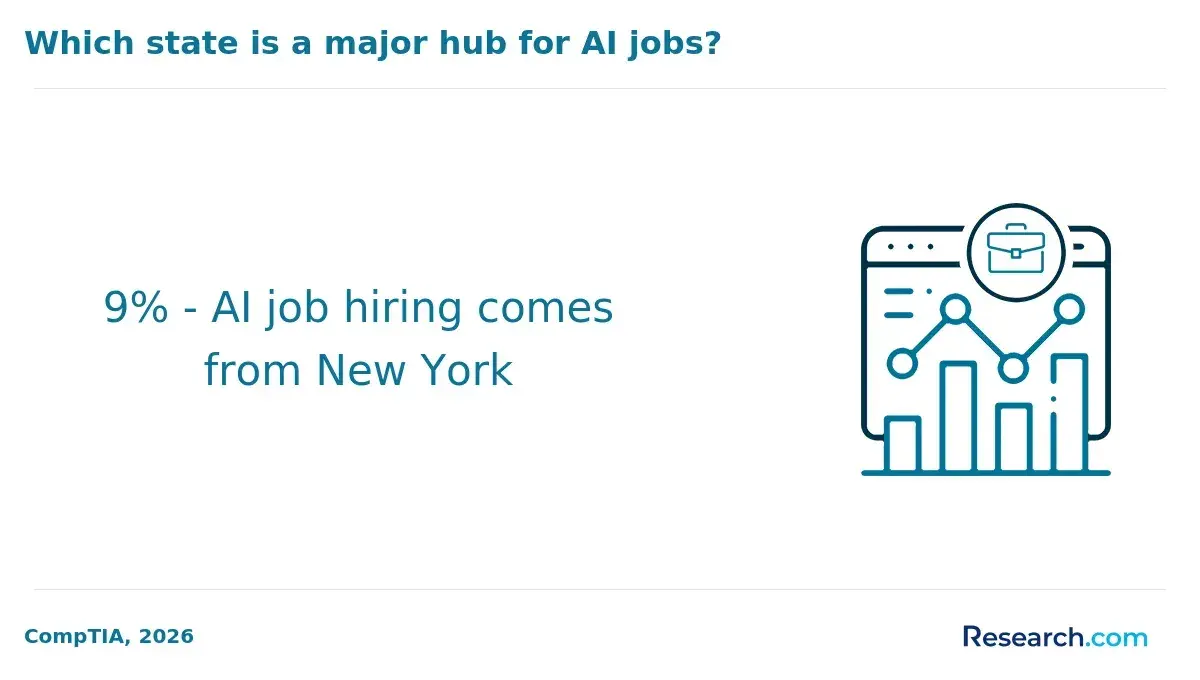
States with strong AI job markets include Washington, California, New York, Washington, D.C., Massachusetts, and Texas-regions identified by StoryChief.io's AI labor market study for their high job concentrations. Enrolling in accredited programs within these states increases chances for internships, networking, and employment.
Transfer credits and graduate school pathways are often contingent on accreditation status; non-regionally accredited schools may limit these options. Also, choose programs that provide transparent outcomes data such as graduation rates, job placements, and employer partnerships to assess real-world success.
What are typical admission requirements for undergraduate and graduate AI programs in the U.S.?
Admission to undergraduate AI programs in the U.S. typically requires a high school diploma or equivalent, strong skills in mathematics including calculus and statistics, and competitive SAT or ACT scores. Applicants often submit essays outlining their interest in AI or computer science. High school coursework in programming or science is frequently recommended, and letters of recommendation highlighting analytical abilities can enhance applications.
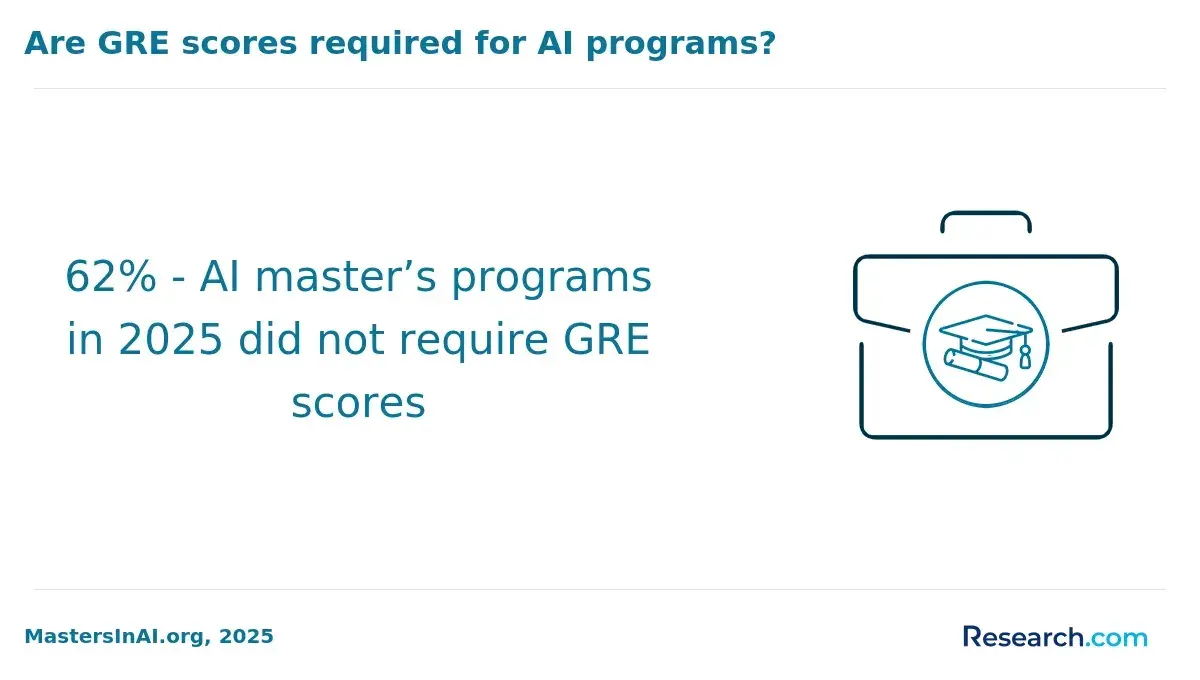
Graduate AI programs demand more focused qualifications. Candidates usually need a bachelor's degree in computer science, engineering, mathematics, or a related field. Essential coursework often includes data structures, algorithms, linear algebra, and probability. Some schools require GRE scores, though this is changing. A statement of purpose must clearly describe research interests and career goals in AI. Strong letters of recommendation from academic or professional supervisors are vital, and research experience or publications are commonly expected at the doctoral level.
States recognized for strong AI education ecosystems include Texas, Florida, and New York. These areas have expanded university AI programs and research, offering diverse opportunities and sometimes more flexible admissions due to increased capacity. Prospective students should explore programs in these hubs for access to emerging fields and competitive academic environments.
How long do AI programs usually take to complete, and what curriculum can students expect?
Programs in artificial intelligence generally take between one and four years, varying by degree level and format. Certificate and diploma courses last six months to a year, focusing on skill-building for quick entry into the workforce. Associate degrees typically require about two years and combine foundational programming with introductory AI topics. Bachelor's degrees, common for most technical careers, span three to four years and cover machine learning, data structures, and AI ethics. Master's programs offer one to two years of specialization such as natural language processing or computer vision. Doctoral programs extend from three to five years and emphasize advanced research and theories.
Core curriculum areas include:
- Programming languages like Python, Java, Rust, and Go
- Mathematics including linear algebra, calculus, and statistics
- Machine learning algorithms and neural networks
- Data mining and big data analytics
- AI ethics and societal impact studies
- Practical projects with AI model development and deployment
Learning Rust and Go is highly recommended. According to StoryChief.io's 2024 analysis, Rust skills can boost AI job salaries by an average of $29,480, while Go adds $21,080, marking these as top pay enhancers in U.S. AI roles. Gaining hands-on experience through internships, capstone projects, and industry collaborations is essential to connect theory with practice and improve career prospects.
What entry-level and advanced career paths can AI graduates pursue in different states?
AI graduates have diverse career paths ranging from entry-level roles like AI data analyst, machine learning engineer intern, and AI software developer to advanced positions such as AI research scientist, machine learning architect, and AI product manager. Entry-level jobs focus on data preparation, model training, and assisting with AI solution deployment, often available in tech-heavy states like California and Washington where about 65% of AI roles require on-site presence.
Advanced roles typically need considerable experience and advanced degrees. States with strong academic and corporate ecosystems, such as Massachusetts and New York, offer more hybrid positions that combine remote and on-site work, fostering collaboration on innovative projects. Meanwhile, emerging AI hubs like Texas and Georgia present more hybrid opportunities for remote work seekers, though fully remote advanced roles remain rare.
Practical advice for AI graduates includes prioritizing states with strong AI investments in education and industry, and gaining experience in hybrid or on-site environments to advance technical skills and access better-paying roles. Networking locally enhances career prospects in markets with predominant work modes that strongly influence hiring.
How should students choose the best state and school for AI based on their goals and finances?
Students selecting the best states and schools for artificial intelligence studies should balance financial constraints with career ambitions. Prioritize programs offering strong industry connections and high placement rates in AI roles aligned with your focus, whether research, development, or applied machine learning. Tuition and living costs vary significantly; Montana, for example, offers affordable living and high AI salary potential. Investopedia's data shows Montana's average AI salary exceeds $220,000 annually, surpassing many traditional tech hubs. Alaska, New York, and Massachusetts also offer competitive compensation, highlighting opportunities beyond well-known tech states.
Students with limited budgets might consider in-state public universities or community colleges with clear transfer pathways to top AI programs. Schools with internships and co-op options in local industries reduce financial burdens and enhance employment prospects. Those with flexible budgets can target states with strong tech ecosystems, trading higher tuition for wider employer networks and increased salary ceilings.
Key factors to evaluate include:
- Specialized AI research centers or labs aligned with your interests.Mentoring and alumni network access in AI sectors.Curriculum aligned with emerging AI fields such as NLP, computer vision, or ethics.State tech job growth and cost of living indices.
Careful consideration of these elements helps students identify optimal states and institutions that maximize returns on their artificial intelligence education investment.
Other Things You Should Know About Artificial Intelligence
In 2027, California, Massachusetts, and Texas offer substantial financial aid for AI students, with numerous scholarships available due to their robust tech industries and academic institutions. These states emphasize supporting AI talent through state-funded programs and partnerships with major tech companies, making them attractive destinations for aspiring students in the field.
While prior computer science experience is helpful, it is not always mandatory for entry into AI programs. Many undergraduate programs offer introductory courses to build foundational skills. However, a basic understanding of programming and computational concepts significantly improves students' ability to keep pace with advanced AI topics.
AI students should familiarize themselves with issues like data privacy, algorithmic bias, and the societal impacts of automation. Understanding these ethical concerns is critical to developing responsible AI systems that avoid harm. Many AI programs now include dedicated coursework on ethics and social implications.
Internships provide valuable hands-on experience with real-world AI applications and tools. They help students apply theoretical knowledge, develop teamwork and communication skills, and improve employability. Many AI employers look for candidates with practical experience alongside academic credentials.
References
- Future of AI in College Education | University of Phoenix https://www.phoenix.edu/articles/online-college/ai-in-online-college-education.html
- Quality Assurance with AI and Automation: The Prospects for Educational Assessment https://www.ieac.org.uk/40-Quality-Assurance-with-AI-and-Automation-The-Prospects-for-Educational-Assessment-blog.php
- AI Course Duration in 2026: How Long to Become AI-Ready? - Ucanly https://ucanly.com/ai-course-duration-in-2026-how-long-to-become-ai-ready/
- Which College Majors are Most and Least Vulnerable to AI? https://www.ivyscholars.com/which-college-majors-are-most-and-least-vulnerable-to-ai/
- Inside U.S. Universities' Programs in Artificial Intelligence, from Majors to Minors and In-Between https://www.deeplearning.ai/the-batch/ai-degrees-on-the-rise
- 5 of the best AI study tools for students | Genio https://genio.co/blog/5-of-the-best-ai-study-tools-for-students
- Guidance on the Responsible Use of Artificial Intelligence (AI) in Accredited Continuing Education (CE) - ACCME https://accme.org/resource/guidance-on-ai/
- 6 AI Tools To Prepare Students for College and Career https://www.onegoal.org/about/blog/6-ai-tools-that-can-help-students-prepare-for-college-and-career/
- University Degree vs AI Bootcamp: Which is Best Career Path? https://agilefever.com/university-degree-vs-ai-bootcamp-which-is-best/
- How AI is challenging the credibility of some online courses https://theconversation.com/how-ai-is-challenging-the-credibility-of-some-online-courses-264851