2027 AI Master's Degree Careers in Retail and E-Commerce

Co-Founder and Chief Data Scientist
Retailers and e-commerce companies increasingly struggle to analyze vast consumer data efficiently, leading to missed opportunities and declining customer engagement. Without expertise in artificial intelligence, professionals may find it challenging to implement solutions that enhance personalization, optimize supply chains, or automate customer service. This skills gap limits career growth and business innovation in a competitive digital marketplace.
Understanding how a master's degree in artificial intelligence can bridge this gap is crucial. This article explores 2027 AI-focused graduate programs tailored for retail and e-commerce careers, helping readers identify flexible, accredited paths to enter this transformative industry.
Key Things You Should Know
- AI master's graduates in retail and e-commerce drive data-driven personalization, boosting customer engagement by up to 35% according to 2025 industry reports.
- The U.S. Bureau of Labor Statistics projects 22% job growth through 2030 in AI-related retail roles, emphasizing demand for advanced analytics and automation skills.
- Master's programs increasingly integrate real-world projects with retailers, enhancing graduates' readiness to optimize supply chains and improve predictive inventory management.
What career opportunities are available for AI master's degree graduates in retail and e-commerce?
Graduates with a master's degree in artificial intelligence can pursue diverse career paths for AI master's graduates in retail, including roles such as AI data scientist, who analyzes consumer behavior and sales data to optimize inventory and marketing strategies. Machine learning engineers design algorithms for personalized recommendations, fraud detection, and dynamic pricing models. AI product managers integrate intelligent systems like chatbots and virtual shopping assistants into customer platforms, enhancing user experience.
The AI in retail market is expected to reach $31.2 billion by 2028, growing at a CAGR of 27.9%, driving strong job opportunities with AI master's degree in e-commerce. Companies increasingly seek AI specialists to automate supply chains, cut costs, and ensure timely deliveries, which boosts customer satisfaction and efficiency. Emerging roles include AI ethicists and compliance analysts focused on data privacy and algorithmic fairness in online shopping environments.
AI-driven marketing analysts use natural language processing and image recognition to tailor real-time brand promotions, making expertise in these technologies highly valuable. Additionally, professionals may contribute to research and development of augmented reality shopping experiences, combining AI with advanced retail technologies. Building domain-specific knowledge in consumer behavior, alongside programming skills like Python and TensorFlow, enhances employability.
Staying updated with AI advancements in retail analytics tools is essential. For those exploring career options, applied artificial intelligence jobs offer a range of opportunities balancing technical and strategic responsibilities, as detailed at applied artificial intelligence jobs.
What is the typical salary range for AI professionals working in retail and e-commerce roles?
The typical salary range for AI professionals in US retail and e-commerce varies significantly, with average compensation for artificial intelligence specialists in North American e-commerce around $156,000 annually for machine learning engineers. In major tech hubs such as San Francisco and New York City, top earners can exceed $200,000 per year. Entry-level specialists working on recommendation systems, demand forecasting, or customer segmentation usually start with salaries between $110,000 and $130,000.
Mid-level AI professionals with three to five years of experience earn from $140,000 to $170,000, leveraging their skills in deploying machine learning models that help optimize sales and inventory management. Senior roles or AI architects managing teams or designing scalable AI infrastructures in large retail companies can command salaries above $180,000. Compensation often includes bonuses or stock options, especially in publicly traded or startup businesses.
Geographical location heavily influences pay levels, with remote positions sometimes offering less than on-site roles in high-cost cities. Expertise in specialized areas like natural language processing for chatbots or computer vision for automated checkout also tends to increase earning potential. Graduates and professionals should focus on building strong portfolios showcasing data handling, deployment skills, and business impact, which are highly valued by employers in retail and e-commerce sectors.
For those considering further education, understanding the mechanical engineering degree cost can be part of planning a broader tech career path that supports growth in AI-related roles.
What are the core curriculum requirements and technical skills taught in AI master's programs?
Core curriculum requirements in ai master's programs focus heavily on technical skills for retail and e-commerce careers, covering machine learning algorithms, natural language processing, data mining, and computer vision. About 85% of programs include generative AI and large language model training, reflecting critical industry demands. These competencies allow graduates to enhance personalized customer experiences, streamline supply chain operations, and implement automated customer service tools like chatbots and recommendation systems. This emphasis aligns with key ai master's program core courses for retail analytics.
Students develop fluency in programming languages such as Python, R, and SQL, essential for handling data and building models. Courses often include cloud computing and distributed systems, preparing students to deploy scalable AI solutions in real-world settings. Advanced statistical methods and optimization techniques enable precise demand forecasting and pricing strategy improvements, vital for e-commerce applications. Ethics and ai governance modules also feature prominently, ensuring a responsible approach to AI deployment in retail decision-making processes.
Hands-on experience is gained through technical labs and capstone projects that utilize actual retail datasets and platforms like TensorFlow and PyTorch. Electives might explore reinforcement learning for dynamic pricing or computer vision applications in inventory management. Together, these courses equip students with the skills needed to integrate AI tools with existing commerce infrastructures while maintaining model fairness and transparency. Those interested in related fields might also explore a video game development degree as a complementary technical path.
What are the admission requirements and prerequisites for accredited AI master's degree programs?
Admission requirements for accredited artificial intelligence master's programs in retail and e-commerce generally include a bachelor's degree in a STEM field such as computer science, engineering, mathematics, or physics. Applicants without a STEM background often need to demonstrate equivalent professional experience in programming, data analysis, or related areas. Most programs request official transcripts, letters of recommendation, and a statement of purpose outlining academic and professional goals.
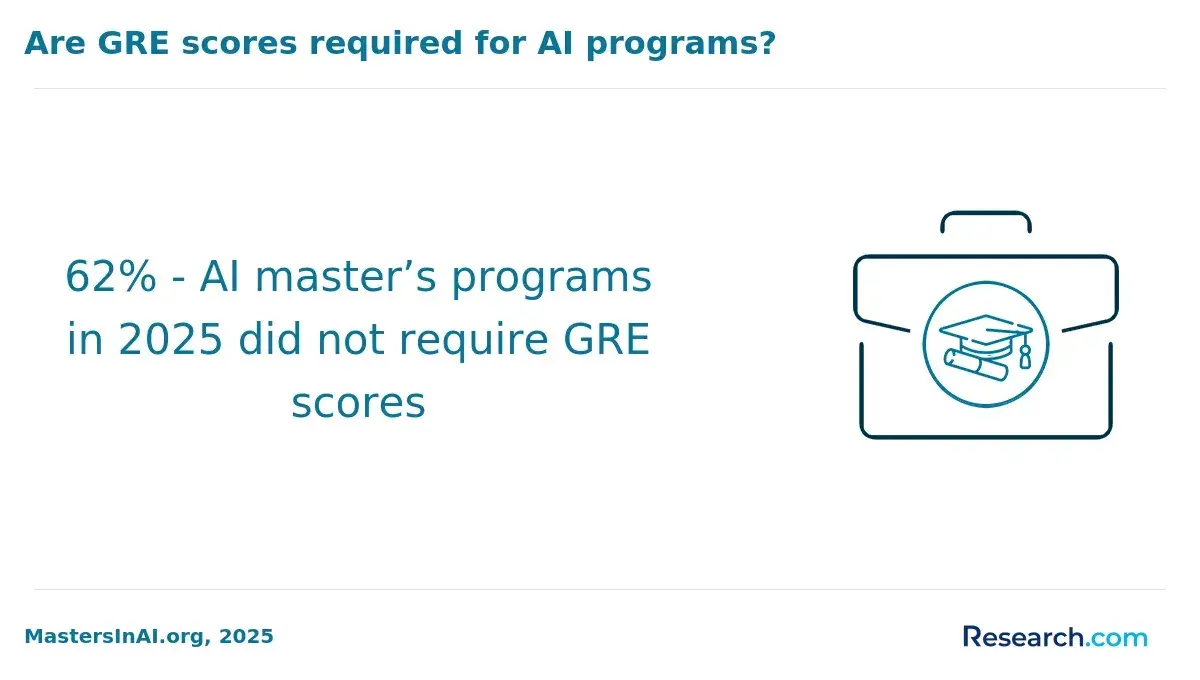
GRE scores remain important, with an average quantitative score of 165 out of 170 for admitted students highlighting the rigorous quantitative skills expected. Some programs waive the GRE for applicants with substantial work experience or certain advanced coursework. Prerequisites for enrolling in top AI master's degree programs in retail and e-commerce typically include calculus, linear algebra, probability, statistics, and programming languages like Python or Java. Candidates lacking these may be admitted conditionally or required to complete bridging courses.
Proficiency in machine learning basics, data structures, and algorithms is commonly assessed. Professional experience in AI projects, internships, or research can strengthen applications and offset minor academic gaps. International students usually must submit English language proficiency test scores, such as TOEFL or IELTS, unless they studied at English-speaking institutions. Interviews or technical screenings often evaluate problem-solving abilities and foundational knowledge.
For those exploring interdisciplinary options, pairing AI studies with a cybersecurity degree online may offer additional career flexibility and advantage.
How do online and campus-based AI master's programs differ in format, flexibility, and outcomes?
Online and campus-based AI master's programs mainly differ in format and flexibility, impacting how students balance learning with other commitments. Online programs use asynchronous classes, letting students study anywhere and often on their own time. This flexibility suits working professionals who need to juggle jobs and personal life. Campus programs require attendance at scheduled classes and labs, offering direct faculty interaction and networking opportunities. Those seeking immersive, hands-on experience often prefer the campus setting.
In terms of enrollment, online programs usually offer multiple start dates and more extended completion periods, while campus programs follow a traditional semester calendar, which may restrict timing options. Employment outcomes for graduates of both formats are broadly comparable. According to the National Association of Graduate Admissions Professionals, online AI master's graduates find jobs within six months at a 92% rate, closely matching the 94% rate of campus graduates. Salary differences are minimal, suggesting that employers view both credentials similarly.
Campus students may gain better access to local employers and on-campus recruiting, whereas online students need to actively pursue virtual networking and internships. For example, those aiming for AI roles in retail or e-commerce could benefit from part-time roles or virtual projects to enhance their resumes. Ultimately, individual learning preferences and career timelines should guide the choice between online and campus AI master's programs.
What is the job outlook and hiring demand for AI professionals in the retail sector?
The demand for AI professionals in retail and e-commerce is rapidly increasing. According to the LinkedIn Jobs Report (2025), U.S. job postings for AI and machine learning roles in these sectors grew by 89% year-over-year, significantly surpassing general tech hiring trends. This growth highlights retailers' focus on AI-driven solutions to enhance supply chain efficiency, personalize shopping experiences, and improve inventory control.
Employers seek candidates skilled in machine learning algorithms, data analytics, natural language processing, and computer vision. Key positions include AI product managers, data scientists, and AI engineers specializing in recommendation engines and fraud prevention. Companies ranging from major e-commerce platforms to brick-and-mortar stores adopting AI-powered kiosks are actively expanding their AI teams.
Entry-level professionals with a master's in AI can access roles in predictive analytics for sales forecasting or chatbot development to boost customer service. Meanwhile, mid-career experts with retail domain knowledge and AI experience can advance into leadership or specialized technical positions.
This surge responds to challenges like supply chain disruptions and shifting consumer demands, necessitating agile AI models. Candidates who combine hands-on experience with an understanding of retail-specific applications will stand out. Prospective learners should focus on developing practical skills and problem-solving abilities tailored to retail AI needs.
How long does it take to complete an AI master's degree, and what are the typical program costs?
The duration of an AI master's degree generally ranges from 1.5 to 2 years for full-time students, with some accelerated programs allowing completion in as little as 12 months. Part-time options are available for working professionals, often extending the timeline to 3 or more years. Completion time depends on factors such as curriculum intensity, research requirements, internships, and capstone projects.
Costs vary widely between public and private institutions. The Council of Graduate Schools reports average full-time tuition and fees of about $72,000 at public universities and $95,000 at private schools. These amounts usually exclude living expenses, textbooks, and additional costs like specialized software or certification exam fees. Financial aid, scholarships, and employer tuition reimbursement can help reduce these expenses.
Return on investment is a key consideration. Graduates often recover their education costs within approximately 2.3 years due to significant salary boosts in AI-related roles across retail and e-commerce sectors. Program flexibility is also crucial; those balancing work may benefit from part-time or online formats, while accelerated full-time tracks enable faster entry into high-demand careers but require a substantial time commitment.
What accreditation standards and regional certifications should you verify when choosing an AI program?
Accreditation plays a vital role in assessing the quality and recognition of AI master's degree programs, especially for careers in retail and e-commerce. One of the most important standards is ABET accreditation, which targets engineering and technology disciplines. According to the American Board for Engineering and Technology, only 34% of AI master's programs have ABET accreditation, making it a key indicator of a program's rigor and relevance to industry needs.
Prospective students should verify whether the program is accredited by ABET's Computing Accreditation Commission (CAC) or Engineering Accreditation Commission (EAC). These bodies evaluate curriculum quality, faculty qualifications, and continuous improvement efforts, ensuring alignment with employer expectations in areas like retail analytics, supply chain management, and personalized marketing.
Institutional accreditation by regional agencies such as the Middle States Commission on Higher Education (MSCHE) or the Higher Learning Commission (HLC) also matters. These accreditations confirm overall educational quality and influence credit transfers, financial aid opportunities, and diploma validity.
Additional certifications from reputable organizations like the Association for Computing Machinery (ACM) or IEEE offer valuable endorsements that demonstrate adherence to professional and ethical standards. To verify accreditation status, students should consult official accreditation databases to ensure credentials are current and legitimate.
What professional certifications complement an AI master's degree for retail and e-commerce careers?
Professional certifications that complement a master's degree in artificial intelligence are essential for careers in retail and e-commerce. Key certifications focus on cloud computing, data analytics, and machine learning applications. Notable credentials like AWS Certified Machine Learning - Specialty, Google Cloud Professional Data Engineer, and Microsoft Azure AI Fundamentals strengthen skills in deploying scalable AI systems tailored for retail challenges. These certifications equip professionals to handle large e-commerce datasets, improve customer personalization, and optimize inventory management.
Advanced credentials such as the TensorFlow Developer Certificate and Certified Analytics Professional (CAP) validate expertise in developing AI models and applying analytics crucial for demand forecasting and pricing strategies. Certifications in customer experience analytics and digital marketing analytics also provide valuable insights into consumer behavior and retail-specific digital tools.
Data from O'Reilly's AI Skills and Salary Report shows that AI professionals with both a master's degree and cloud certifications earn approximately 28% more than those without these qualifications. This highlights the competitive advantage of blending academic training with industry-recognized certifications.
Targeting certifications that demonstrate proficiency in scalable AI infrastructure, data engineering, and retail-focused analytics boosts employability. Aligning credentials with retail technologies such as recommendation systems, supply chain automation, and fraud detection prepares professionals for mid-to-senior roles in AI-driven retail and e-commerce teams.
How should you evaluate and compare AI master's programs based on faculty expertise, partnerships, and placement rates?
Faculty expertise is a critical factor when assessing AI master's programs. Leading programs employ professors with published research in AI applications relevant to retail and e-commerce, including recommendation systems, supply chain automation, and customer analytics. Faculty who engage in consulting or collaborate with top tech companies help ensure students gain practical and current knowledge.
Industry partnerships further enhance program quality by providing internships, live projects, and mentorship opportunities. Programs connected to major retailers or AI startups, such as Amazon or Shopify, can offer students direct access to data science roles in retail analytics. These collaborations provide exposure to real-world challenges, improving both skill relevance and employment prospects.
Placement rates are strong indicators of post-graduate success. According to the Graduate Management Admission Council, top-tier AI master's programs with active industry ties report a 96% placement within three months after graduation, compared to 71% for programs without such links. This demonstrates the importance of employer partnerships for effective career transition.
Prospective students should request detailed placement data by job role and sector. It is also important to evaluate alumni networks and career services support. Inquiries into hiring company diversity, average starting salaries, and geographic distribution of job offers reveal the program's practical reach and relevance to AI careers in retail and e-commerce.
Other Things You Should Know About Artificial Intelligence
In 2027, AI master's graduates can explore numerous career opportunities in retail and e-commerce, including positions as AI Solutions Architects, Data Analysts, Machine Learning Engineers, and Customer Insights Specialists. Their skills are crucial for developing personalized shopping experiences, optimizing supply chains, and improving overall operational efficiency.
Artificial intelligence enhances consumer experience by personalizing product recommendations, improving search accuracy, and enabling chatbots for instant customer service. AI-driven analytics also help retailers optimize pricing and inventory, which can lead to faster delivery times and better product availability for shoppers.
Artificial intelligence optimizes supply chain management by improving demand forecasting, inventory control, and logistics planning. This helps retailers minimize stockouts and reduce excess inventory costs. AI-based automation can also streamline warehouse operations and improve delivery route planning for greater efficiency.
Integrating artificial intelligence into retail systems often encounters challenges such as data quality issues, system compatibility, and the need for skilled personnel to manage AI tools. Legacy systems may require significant updates or replacements to support AI functionality, and companies must also address organizational change management to ensure smooth adoption.
References
- Artificial Intelligence (AI) https://ai-master.org/requirements
- AI/ML Engineer Salary in Poland - Itentio IT Recruitment Agency in Poland - itentio.com https://itentio.com/blog/ai-ml-engineer-salary-in-poland/
- Labor market impacts of AI: A new measure and early evidence https://www.anthropic.com/research/labor-market-impacts
- Choosing an AI Certification: A Quick Guide - IABAC https://iabac.org/blog/choosing-an-ai-certification
- Peterson Technology Partners https://www.ptechpartners.com/2025/03/06/top-ai-certifications-to-stand-out-to-employers/
- Choosing a master’s degree: data science or artificial intelligence | edX https://www.edx.org/resources/choosing-a-masters-degree-data-science-or-artificial-intelligence
- Artificial intelligence master’s programs https://mbzuai.ac.ae/study/msc-programs/
- Data Science & AI Careers After Master’s Degree | Job Scope & Growth https://www.mywestford.com/blog/top-career-opportunities-after-earning-a-masters-in-data-science-and-artificial-intelligence/
- How is AI impacting retail employment? https://finance.yahoo.com/news/ai-impacting-retail-employment-093007543.html
- AI Salaries Poland 2025 | ITMAGINATION https://www.itmagination.com/reports/ai-salaries-poland