2027 AI Associate Degrees for Students Interested in Smart Manufacturing

Co-Founder and Chief Data Scientist
Many prospective students face challenges switching to careers in smart manufacturing due to a lack of relevant technical education. Traditional degree programs often require extensive time and prior experience, leaving working professionals and those with unrelated backgrounds at a disadvantage. These obstacles limit access to emerging roles where artificial intelligence integration is transforming production processes and efficiency.
This article explores associate degree pathways designed to equip students with practical AI skills specifically tailored for smart manufacturing. It aims to guide readers through flexible, accredited options that enable a strategic career pivot into this dynamic and growing field.
Key Things You Should Know
- AI associate degrees for smart manufacturing focus on integrating automation, robotics, and data analytics to optimize production efficiency and reduce downtime.
- By 2026, 65% of manufacturing firms plan to increase AI-related workforce skills, driving demand for graduates with practical AI knowledge and technical expertise.
- Programs typically combine hands-on training with theoretical coursework, preparing students for roles in predictive maintenance, quality control, and process improvement.
What is an AI associate degree for smart manufacturing?
An AI associate degree for smart manufacturing is a two-year program designed to equip students with practical skills in machine learning, robotics, data analysis, and automation within manufacturing environments. This degree focuses on programming languages like Python and the use of tools for industrial AI applications, preparing learners to optimize production lines, improve quality control, and reduce downtime.
Core coursework in these associate degrees focusing on artificial intelligence in manufacturing often covers predictive maintenance, supply chain analytics, and human-machine interaction. Students also explore deploying generative AI models to support decision-making and enhance manufacturing processes.
Deloitte's 2025 Manufacturing Industry Outlook highlights that manufacturers are prioritizing generative AI to boost operations and workforce productivity, demonstrating strong demand for professionals trained in this field. This degree bridges the gap between AI innovation and manufacturing needs, preparing students for relevant career paths.
Common roles after graduation include automation technician, AI systems operator, and production analyst. Programs often incorporate hands-on training through internships or collaborations with manufacturing companies, giving invaluable real-world experience in integrating AI within existing systems.
Many students pursuing AI associate degree programs for smart manufacturing benefit from a solid foundation in math and technology. Those already in manufacturing sometimes undertake the degree part-time to update skills and remain competitive. For more insight on applied artificial intelligence career opportunities, explore applied artificial intelligence.
Which careers can an AI associate degree lead to in smart manufacturing?
An AI associate degree in smart manufacturing opens pathways to roles that combine automation, data analysis, and control systems in industrial environments. Graduates of associate degree jobs in smart manufacturing with AI often secure positions such as industrial data technician, automation and controls technician, and quality analytics technician. These roles involve applying machine learning models, improving production efficiency, and monitoring product quality using data-driven methods.
The World Economic Forum's Future of Jobs Report 2025 highlights AI and big data as rapidly growing skill areas through 2030. Employers in advanced manufacturing seek technicians capable of analyzing AI-generated data to maintain equipment, resolve technical issues, and implement automated solutions. Practical skills include programming languages like Python, AI software proficiency, and hardware interfacing.
Specific roles include:
- Industrial Data Technician: Gathers and interprets sensor data from machinery to predict failures and optimize output.
- Automation and Controls Technician: Develops and maintains robotic systems using AI algorithms to enhance manufacturing lines.
- Quality Analytics Technician: Applies AI tools to continuously monitor product quality and detect defects.
Students exploring AI careers in smart manufacturing may benefit from affordable options such as a mechanical engineering program online that integrates relevant AI and manufacturing technologies. This degree equips graduates for entry-level roles with potential advancement into positions like process engineer or systems analyst.
How much can smart manufacturing AI technicians earn with an associate degree?
Smart manufacturing AI technicians with an associate degree typically earn a median annual salary around $61,210, based on U.S. Bureau of Labor Statistics data for Industrial Engineering Technologists and Technicians. This median serves as a solid benchmark for graduates entering the field. However, salary ranges for smart manufacturing AI technician salary ranges depend on factors such as location, industry, and experience level.
For instance, technicians working in manufacturing hubs or large metro areas often earn higher wages due to demand and cost of living. Those employed in companies that incorporate AI and robotics technologies may receive greater compensation than traditional manufacturing roles. Entry-level technicians often start with salaries ranging between $45,000 and $55,000 but can quickly rise above the median as their skills improve.
- Additional certifications in AI subfields like machine learning, robotics, or data analytics can boost earnings beyond the baseline associate degree salary.
- Hands-on experience with smart factory systems and programming languages relevant to AI applications is highly valued by employers.
- Economic changes and automation trends may impact salary growth, emphasizing the need for ongoing education and skill upgrades.
Students interested in this career path should carefully assess their education options, including programs like game design online, which build foundational technical and creative skills applicable in advanced manufacturing roles.
Overall, associate degree earnings for smart manufacturing AI roles reflect varied opportunities, with continuous learning playing a crucial role in career advancement and compensation growth.
Which colleges offer accredited AI associate degrees focused on smart manufacturing?
Several accredited AI associate degrees in smart manufacturing colleges in the U.S. are offered primarily at community colleges and technical institutes. The National Center for Education Statistics (NCES) reports over 1,000 public two-year institutions provide Associate of Applied Science (AAS) or Associate of Science (AS) degrees aligned with advanced manufacturing fields (NCES, IPEDS 2024-2025).
Top examples include:
- Pennsylvania College of Technology offers an AAS in Industrial Automation integrating AI-driven robotics and manufacturing technologies.
- Community College of Allegheny County provides an AS specialization in Smart Manufacturing Technologies with AI-enabled process optimization.
- College of the Canyons features an AAS program in Mechatronics covering AI applications in manufacturing automation systems.
These programs focus on hands-on skills such as predictive maintenance, machine learning for quality control, and industrial data analytics. Students learn to develop AI models that boost production efficiency and reliability. Best colleges offering AI associate degrees for smart manufacturing design curricula to meet increasing demand for AI automation, robotics, and IoT integration in industry.
Prospective students should evaluate program accreditation, curriculum relevance, and industry partnerships for internships providing practical AI exposure. In-demand skills include AI programming languages, sensor technologies, and real-time decision-making algorithms. Given the many options, regional choices with specialized AI manufacturing pathways tailored to workforce needs are common.
For those exploring affordable cybersecurity programs alongside AI manufacturing education, reviewing cost-effective institutions and degree plans is recommended to balance quality and budget.
What accreditation should AI associate programs have for manufacturing careers?
AI associate degree programs focused on smart manufacturing careers should possess programmatic accreditation recognized by the U.S. Department of Education to ensure quality. ABET's Engineering Technology accreditation is especially relevant, as it evaluates curricula for manufacturing technician roles involving automation, robotics, data analytics, and machine learning applications. This accreditation confirms that programs meet industry standards critical for career readiness.
Students must verify that their chosen associate degree is accredited by agencies listed in the U.S. Department of Education's Database of Accredited Postsecondary Institutions and Programs (DAPIP). This ensures recognition by employers, eligibility for federal financial aid, and smoother credit transfers. Prospective students should also check that the institution holds regional accreditation to maintain overall educational quality and federal support eligibility.
Manufacturing employers increasingly seek graduates with credentials from rigorous, nationally recognized programs. For example, an ABET-accredited degree signals competency in industrial controls, machine vision, and AI-enabled process optimization-skills vital in smart manufacturing sectors. Alternative accreditations should be cross-checked against national standards to avoid programs lacking industry or academic recognition.
Verifying accreditation helps students make informed decisions that align educational investment with career goals in artificial intelligence and manufacturing technology fields.
What courses and labs are taught in smart manufacturing AI associate programs?
Smart manufacturing AI associate degree programs combine coursework and hands-on labs that build skills in automation, data analytics, and cybersecurity-key areas highlighted by the National Institute of Standards and Technology (NIST) as critical for manufacturers. Typical classes cover programming languages like Python or C++, industrial robotics, and control systems to support machine automation and troubleshooting.
Students learn data analytics techniques, including the use of SQL and machine learning libraries, to interpret manufacturing data effectively. Labs often feature programmable logic controllers (PLCs) and robotic arms, simulating real factory automation environments. Cybersecurity training focuses on protecting industrial control systems from cyber threats with network defense exercises and vulnerability assessments.
Other courses may address supply chain integration, digital twins, and Internet of Things (IoT) applications in manufacturing. Practical projects let students apply artificial intelligence concepts through quality control systems or predictive maintenance models. Case studies and problem-solving exercises further connect theory with real-world manufacturing challenges.
Prospective students should seek programs with accredited labs and industry partnerships to gain exposure to up-to-date technologies and standards. Such experiences are vital for building competencies aligned with industry demands and advancing careers in smart manufacturing and AI-driven production.
Can you earn a smart manufacturing AI associate degree online?
You can earn a smart manufacturing AI associate degree online through many community colleges and technical institutions offering specialized programs. These online degrees typically integrate AI fundamentals, robotics, industrial automation, and data analytics to prepare students for modern manufacturing environments.
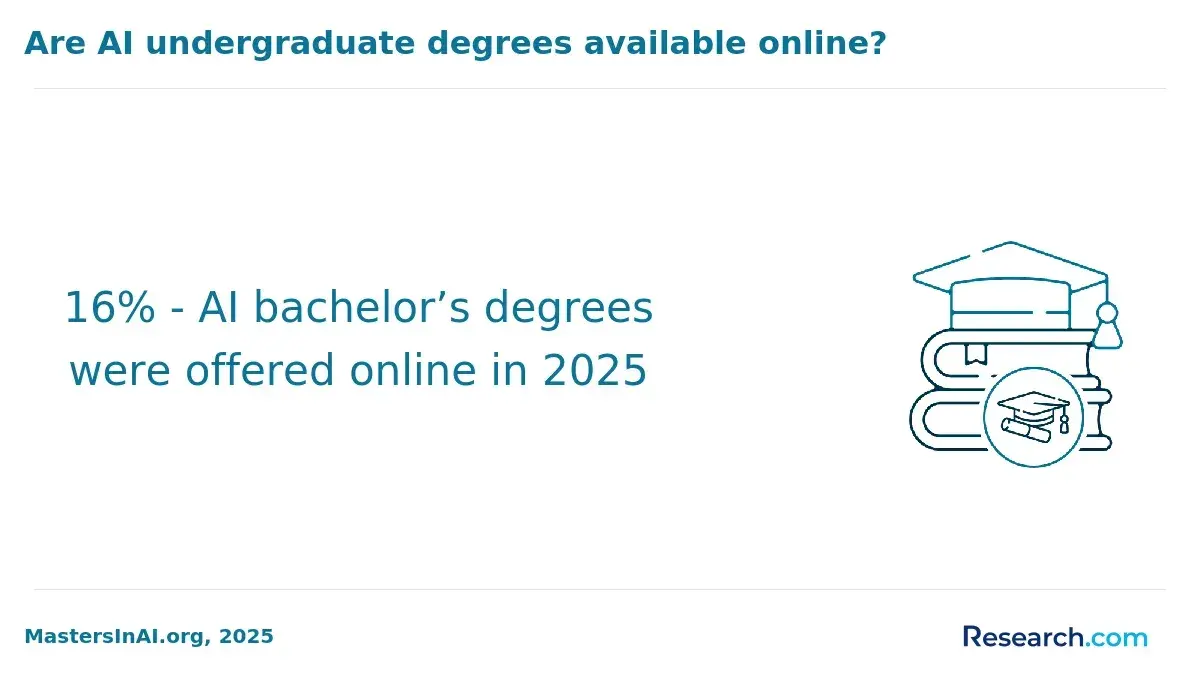
Most programs follow a hybrid model, combining asynchronous coursework with occasional hands-on labs or virtual simulations. This flexible format is ideal for working adults balancing employment and study. Since Fall 2024, a significant number of students at public two-year colleges have participated in distance education, making online or hybrid associate degrees widely accepted (NCES, IPEDS Distance Education data).
Programs often span two years and focus on AI programming, machine learning basics, smart sensors, and manufacturing processes. Common courses include:
- Introductory AI and machine learning concepts
- Industrial automation systems
- Data analysis for process optimization
- Cyber-physical systems in manufacturing
Accredited online programs ensure quality education and support transfer to four-year degrees or professional certifications. Students should verify that curricula align with standards from organizations like the National Institute of Standards and Technology (NIST) or the Manufacturing Extension Partnership (MEP). Online study offers geographic flexibility and suits those targeting careers in smart factory operations, quality control automation, or AI-driven supply chain management.
What are the admission requirements for AI associate programs in smart manufacturing?
Admission to AI associate programs in smart manufacturing often centers on strong math skills. Most schools require a high school diploma or equivalent, along with completion of foundational courses such as algebra, geometry, or basic programming. Because of the technical focus, math proficiency is essential; ACT's 2024-2025 data indicate many students struggle to meet college-readiness benchmarks in math, making placement tests a common requirement to assess skills before enrollment.
Additional criteria frequently include:
- Official high school transcripts showing completion of STEM-related core courses
- Standardized test scores like the SAT or ACT, though some institutions have adopted test-optional policies
- Proof of computer literacy or previous coursework in engineering or manufacturing
- An application essay or personal statement outlining interest in smart manufacturing and artificial intelligence
- Letters of recommendation from math or science instructors for competitive programs
Some colleges offer conditional admission, requiring remedial math coursework prior to full program acceptance. Non-traditional students and working adults may qualify by presenting industry certifications or relevant professional experience in lieu of traditional academic records. Early communication with admissions advisors is recommended to clarify institution-specific requirements and available preparatory resources.
How long do these programs take, and what do they cost?
Associate degrees in artificial intelligence for smart manufacturing generally require two years of full-time study, typically involving 60 to 70 credit hours. These programs blend general education with technical courses in machine learning, robotics, data analytics, and manufacturing automation. Part-time study extends completion time to three years or more, while accelerated options might reduce the duration to about 18 months by increasing course loads or using summer sessions.
Tuition costs vary widely based on institution and residency. Public two-year colleges often charge around $4,000 per year for in-district students, resulting in roughly $8,000 in tuition over two years. Out-of-district and out-of-state rates can be two to three times higher. Additional expenses include textbooks, supplies, and technology fees. Private or specialized technical schools may charge over $10,000 annually.
Financial aid, scholarships, and employer tuition reimbursement can significantly offset costs. Students should check directly with schools for total expenses and available support.
Planning for prerequisites like math and programming is crucial, as extra semesters may be needed before progressing to core artificial intelligence and manufacturing courses. Careful budgeting for time and costs prevents unexpected delays or financial challenges.
Which certifications pair best with an AI associate degree in smart manufacturing?
Certifications paired with an AI associate degree in smart manufacturing provide crucial skills that align with employer needs and boost job prospects. One essential credential is CompTIA Security+, reflecting strong demand for cybersecurity expertise amid the rise of connected Industrial Internet of Things (IIoT) systems in smart factories. This certification validates knowledge of security measures to protect manufacturing networks from cyber threats.
Other significant certifications include:
- Certified Manufacturing Engineer (CMfgE) - Emphasizes manufacturing processes, automation, and quality control to connect AI applications with operational excellence.
- Certified Automation Professional (CAP) - Focuses on control systems, robotics, and process automation vital to AI-driven manufacturing.
- Microsoft Certified: Azure AI Fundamentals - Confirms proficiency in cloud-based AI services used in smart manufacturing solutions.
- Certified Data Analyst (such as Microsoft or SAS) - Builds essential data analysis skills to interpret AI-generated manufacturing data.
Professionals should prioritize certifications addressing IIoT security and machine learning deployment challenges, including safeguarding manufacturing data integrity and enhancing automated workflows. Employers seek practical skills in cybersecurity, automation protocols, and cloud AI services alongside foundational AI knowledge.
Combining an AI associate degree with these certifications helps candidates tackle cybersecurity risks, data management, and system integration in advanced manufacturing environments, meeting rising standards for safety and efficiency.
Other Things You Should Know About Artificial Intelligence
While coding skills are highly beneficial in artificial intelligence, especially in smart manufacturing, not all roles require advanced programming. Many entry-level positions connected to AI associate degrees involve using pre-built AI tools and software, but learning languages like Python or R can greatly enhance job prospects and the ability to customize AI applications.
Common challenges include integrating AI systems with existing manufacturing equipment, ensuring data quality and security, and managing the high costs of implementation. Additionally, workforce training and adapting processes to work smoothly with AI technologies can be significant hurdles for manufacturers embracing smart AI solutions.
Artificial intelligence can automate repetitive and hazardous tasks, allowing workers to focus on more technical and decision-making roles. While some manual jobs may decline, overall workforce demand shifts toward operators skilled in AI systems, data analysis, and maintenance, leading to new employment opportunities rather than widespread job loss.
Python is the most widely used programming language in AI due to its extensive libraries and ease of learning. Other useful languages include R for statistical analysis, Java for large-scale applications, and C++ for high-performance AI tasks. Knowledge of these languages supports roles involving AI development, data processing, and system integration in manufacturing environments.
In 2027, AI associate degree programs in smart manufacturing equip students with skills in data analysis, machine learning algorithms, robotics integration, and IoT systems. These practical skills prepare graduates to optimize manufacturing processes through technology and improve production efficiency.
References
- Smart Manufacturing Technology https://www.ntc.edu/academics-training/programs/all/associate-degree/smart-manufacturing-technology
- qa.com | Top 10 Must Have AI Certifications in 2026 https://www.qa.com/browse/certifications/ai-certifications/
- Micro-Credential in Online Artificial Intelligence in Manufacturing Course | WOU Malaysia https://www.wou.edu.my/microcredentials/micro-credential-in-artificial-intelligence-in-manufacturing/
- 11 Best AI Certifications in 2025 to Deepen Your Technical Knowledge | DigitalOcean https://www.digitalocean.com/resources/articles/ai-certifications
- Top Career Paths Utilising AI: A Guide for Aspiring Professionals https://regent.ac.za/blog/top-career-paths-utilising-ai-a-guide-for-aspiring-professionals
- AI for Manufacturing Training in the US https://www.nobleprog.com/ai-for-manufacturing-training
- 16 Artificial Intelligence Career Paths https://www.calmu.edu/news/artificial-intelligence-career-paths
- Best AI Training for Manufacturing Teams (2026) https://iternal.ai/ai-training-for-manufacturing
- AI in Manufacturing https://schoolofai.amityonline.com/certifications/ai-in-manufacturing
- Essentials of Artificial Intelligence for Manufacturing - EIT Campus https://eit-campus.eu/course/manufacturing/essentials-of-artificial-intelligence-for-manufacturing