2027 NLP Courses in AI Degree Programs Explained

Co-Founder and Chief Data Scientist
Many professionals with non-technical backgrounds aim to enter the artificial intelligence field but find limited guidance on relevant NLP courses within AI degree programs. This gap creates uncertainty about which programs offer practical skills and recognized credentials for career pivots. Complex curricula and inconsistent course descriptions further complicate selection. Understanding how NLP is integrated into 2027 AI degrees is crucial for making informed choices that align with career goals.
This article examines current NLP course offerings in AI programs, helping readers identify flexible, accredited paths to transition effectively into the AI industry.
Key Things You Should Know
- In 2026, over 60% of U.S. AI degree programs include NLP courses, reflecting growing industry demand for skills in language processing and understanding.
- NLP coursework emphasizes machine learning, deep learning, and linguistics, crucial for developing conversational agents and text analytics tools.
- Graduates with NLP specialization see 15% higher job placement rates, driven by expanding applications in healthcare, finance, and customer service sectors.
What are NLP courses and how do they fit within AI degree programs?
NLP courses teach techniques that enable computers to understand, interpret, and generate human language by studying linguistics, machine learning, and computer science. Topics such as syntax parsing, sentiment analysis, language modeling, and speech recognition are central. These skills help students create applications like chatbots, virtual assistants, and automated translators. Offering extensive NLP course offerings in artificial intelligence degree programs allows students to gain these competencies.
Within ai degree curricula, natural language processing complements foundation courses like machine learning, data structures, and neural networks. This integration equips students to handle unstructured data, which comprises over 80% of all generated information. Graduates skilled in NLP can address critical challenges in industries such as healthcare, finance, and customer service, making NLP an essential part of AI academic curricula.
Market growth underscores NLP's significance, with projections from Grand View Research estimating a $136.1 billion market by 2030 and a 17.6% compound annual growth rate from 2023 to 2030. Universities increasingly embed comprehensive NLP courses to meet employer needs. Prospective students should seek programs covering transformer architectures, large language models, and ethical issues in NLP development. Practical experience with real datasets is essential, often culminating in capstone projects that mirror real-world scenarios.
Graduates are well-prepared for roles such as NLP engineers, data scientists, or research specialists. Those exploring the ai career path will find that hands-on NLP expertise significantly enhances job prospects across multiple sectors.
Which accredited universities offer NLP courses as part of their AI degree programs?
Several accredited universities in the United States offer natural language processing courses as part of their AI degree programs. Top accredited institutions providing AI degree programs with NLP specialization include Stanford University, Carnegie Mellon University, Massachusetts Institute of Technology (MIT), and the University of Washington. These programs emphasize practical applications such as machine translation, sentiment analysis, and conversational agents. Additionally, UC Berkeley and Georgia Tech offer NLP tracks or concentrations within their computer science or AI graduate studies.
The number of universities offering AI-focused degrees has grown significantly, with more than 60% of new programs featuring NLP as a core specialization. This surge reflects NLP's expanding role in sectors like healthcare, finance, and customer service automation. Prospective students should confirm program accreditation from recognized bodies like ABET or regional commissions to ensure rigorous and recognized curricula.
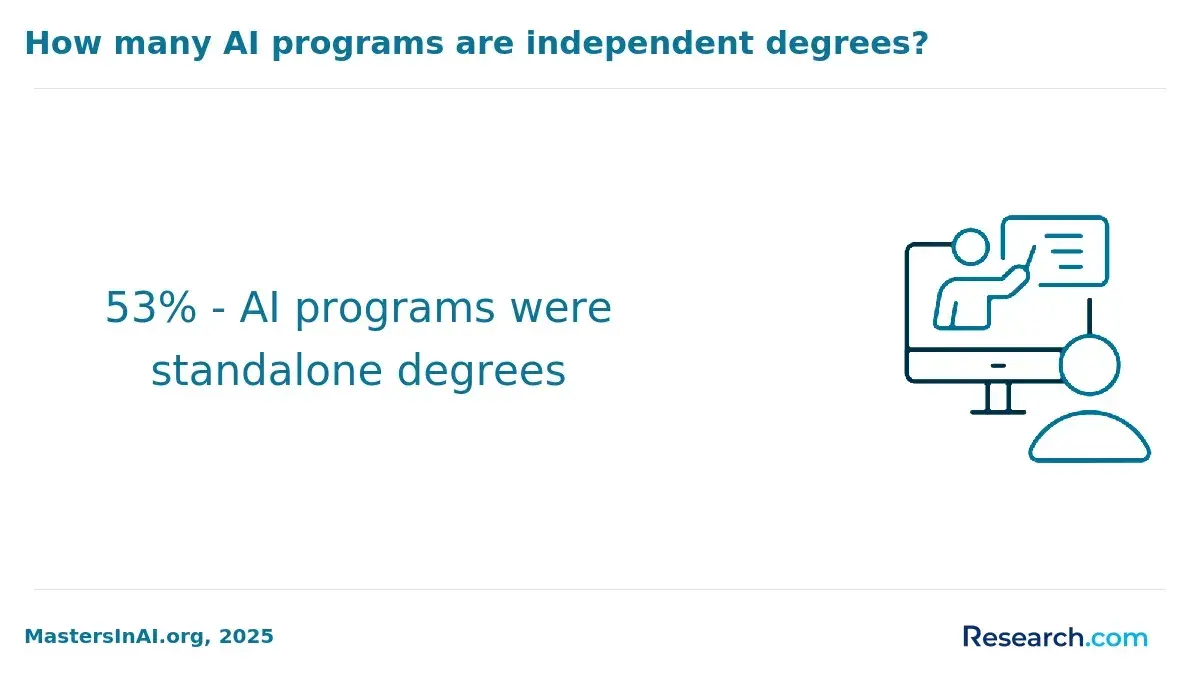
Program structures vary: some universities include standalone NLP courses within AI degrees, while others integrate NLP topics into machine learning or deep learning courses. Schools such as Northeastern University and the University of Southern California offer flexible, part-time, or online AI degrees with NLP components to accommodate working professionals.
Evaluating faculty expertise and research opportunities is important. Institutions connected with leading AI research labs provide exposure to cutting-edge developments and industry collaborations. Prospective students can also explore detailed course descriptions to confirm coverage of foundational NLP techniques and emerging trends like transformer models and ethical NLP.
For those considering affordable options, reviewing the cheapest data science masters in usa can provide helpful guidance.
What is the typical curriculum and core coursework for NLP courses in AI degrees?
The typical curriculum for NLP courses in AI degree programs blends theoretical foundations with hands-on skills in machine learning and deep learning. Core coursework included in NLP studies within AI degrees usually starts with linguistics, probability, and statistics tailored to text data. Students explore language models, syntax, semantics, and discourse analysis to grasp how machines interpret human language.
Programming classes commonly emphasize Python and frameworks like TensorFlow or PyTorch, offering practical experience in implementing NLP algorithms. Machine learning instruction covers supervised and unsupervised learning, a critical focus since 89% of NLP job postings require these skills, according to LinkedIn's Jobs on the Rise report. Deep learning segments introduce recurrent neural networks, transformers, and attention mechanisms, which underpin advanced NLP applications such as chatbots and translation tools.
Students pursuing an AI degree can also expect applied projects like sentiment analysis, named entity recognition, and speech recognition to gain real-world experience. Optional topics may include multilingual NLP, question answering systems, and ethics in language AI, addressing emerging challenges. These programs combine lectures, labs, and team projects to develop both theoretical knowledge and software engineering abilities, preparing graduates to deploy scalable NLP solutions and assess models using benchmark datasets.
For those interested in related fields, programs like game design online offer alternative tech pathways. Overall, a clear understanding of the typical curriculum for nlp courses in ai degree programs helps students match their education with evolving industry demands.
Are NLP courses available in online, hybrid, and campus-based AI degree formats?
Natural language processing (NLP) courses are increasingly embedded in online AI degree programs, reflecting strong interest in digital learning. For students exploring nlp courses in online ai degree programs, many fully online tracks offer flexible schedules with growing enrollment rates. About 38% of online AI programs now include NLP coursework, which often focuses on foundational techniques like text analysis and language modeling.
Hybrid and campus-based ai degree nlp courses provide a different experience. Campus programs typically integrate NLP within broader computer science or data science curricula, emphasizing hands-on labs and close faculty interaction. Hybrid models blend online theoretical learning with in-person practical work, ideal for professionals balancing work and study. These settings often offer more advanced topics such as deep learning for NLP and real-world application projects.
When choosing an AI program with NLP focus, students should consider how deeply they want to engage with the subject and their preferred learning style. Those seeking maximum flexibility may prefer online options, while learners aiming for research-driven, application-oriented experience might lean toward hybrid or campus formats. For prospective students exploring advanced degrees, consulting listings of affordable options like data science degrees can be useful resources.
All formats remain viable for acquiring NLP expertise, with ongoing growth in online instruction expanding access to this important AI specialization.
What are the admission requirements and prerequisites for NLP courses in AI programs?
Admission to natural language processing (NLP) courses within AI degree programs generally requires a bachelor's degree in computer science, engineering, mathematics, or a closely related discipline. Foundational coursework in programming, data structures, algorithms, and linear algebra is often mandatory. Python programming experience is frequently required or strongly recommended, as it is the primary language for most NLP frameworks and libraries. Research indicates that applicants familiar with Python are over three times more likely to succeed in NLP coursework, underscoring its importance.
Additional prerequisites may include introductory machine learning, probability and statistics, or discrete mathematics, which help students understand essential NLP models like word embeddings and language models. Graduate programs often demand demonstrated programming proficiency through portfolios, prior classes, or coding assessments.
Those without formal programming backgrounds might need to complete preparatory courses or bootcamps, many of which focus on Python and foundational AI skills. Strong analytical abilities and mathematical maturity are also critical, as NLP algorithms rely heavily on quantitative reasoning. While practical experience in linguistics, computational linguistics, or AI research can enhance applications, it is not always required.
Meeting these coursework, programming, and math prerequisites is essential for admission to quality NLP courses within AI programs.
How long does it take to complete an AI degree with NLP specialization, and what are the costs?
Completing a master's degree with a specialization in natural language processing (NLP) within artificial intelligence typically takes two years full-time. Part-time or online options offer more flexibility, extending the timeline to three or four years, which suits working professionals. Bachelor's degrees focused on AI with NLP concentrations usually require four years, though some combined bachelor's-master's accelerated programs can shorten total study time to five years.
Costs vary widely by institution, with the average total expense for a master's in AI with NLP ranging from $68,000 to $85,000. This estimate includes tuition, fees, and living expenses, based on the 2024 Graduate Outcomes Survey by the Council of Graduate Schools. Public universities often provide lower tuition for in-state students, while private schools tend toward higher costs. Online programs may lower housing expenses but usually maintain similar tuition fees.
Graduates from these AI programs report an average return on investment (ROI) of 156% within five years of completing their degree, driven by strong demand for AI and NLP expertise across technology, healthcare, finance, and government sectors. For those balancing work, employer tuition assistance and part-time study options can spread costs and time while keeping income steady. Assessing program length, delivery mode, and overall costs helps clarify the full financial and time commitment involved.
What career roles and job titles do graduates with NLP expertise typically pursue?
Graduates skilled in natural language processing (NLP) often pursue roles such as NLP specialist, machine learning engineer with an NLP focus, computational linguist, or data scientist specializing in language technologies. Many also become AI research scientists developing new language models, or software engineers integrating NLP into products. According to the U.S. Bureau of Labor Statistics Occupational Outlook Handbook update, job postings for NLP specialists increased by 67% from 2022 to 2024. Machine learning engineer roles requiring NLP expertise grew by 52%, signaling strong demand for combined skills in language and broader AI systems.
Common job titles include NLP engineer, conversational AI developer, text analytics specialist, and speech recognition engineer. These positions are found across industries such as technology, healthcare, finance, and customer service. NLP specialists may work on chatbots, automated document understanding, or enhancing search engine relevance, while machine learning engineers design scalable models that parse and generate human language for enterprise use.
Professionals entering these fields need proficiency in linguistics, deep learning, and software development. Familiarity with transformer architectures like BERT and GPT is critical. Challenges include improving model accuracy across dialects and optimizing real-time processing. This blend of linguistic insight and technical skill provides a pathway from junior NLP developer roles to senior AI strategists.
What is the job outlook and salary potential for professionals with NLP and AI credentials?
Professionals with natural language processing (NLP) and Artificial Intelligence (AI) expertise are in high demand across sectors like technology, healthcare, finance, and government. According to Glassdoor's 2024 AI Salary Report, NLP specialists earn an average of $142,000 annually, reflecting a 23% premium over general AI roles and a 34% premium compared to software engineers without AI skills. This highlights the scarcity and high market value of these professionals.
Common roles for NLP experts include machine learning engineer, data scientist, computational linguist, and AI research scientist. These positions require advanced knowledge in deep learning, natural language understanding, and algorithm development. Practical applications range from voice assistants and chatbots to sentiment analysis and automated translation.
Competitive hiring is strongest in tech hubs such as San Francisco, New York, and Seattle. Employers favor candidates combining NLP with software engineering and data analytics skills. Holding certifications or advanced degrees focused on AI with an NLP specialization can enhance salary prospects and career stability.
Job growth in NLP fields is projected to exceed 30% through 2030, outpacing many other areas in technology. Opportunities also extend to emerging AI sectors including AI ethics, healthcare interfaces, and autonomous systems where natural language interaction is essential.
Are there industry certifications or professional credentials that complement NLP coursework?
Industry certifications and professional credentials significantly enhance NLP coursework within AI degree programs by validating practical skills and boosting job market competitiveness. Enrollment in NLP-related certifications increased by 41%, highlighting their growing importance. According to the Coursera 2024 Skills Index, 76% of NLP graduates pursue AWS and Google Cloud certifications in machine learning within their first year after graduation. These credentials confirm proficiency with essential cloud platforms used to deploy NLP models effectively.
Notable certifications include the AWS Certified Machine Learning - Specialty and the Google Professional Machine Learning Engineer, which focus on scalable machine learning solutions aligned with NLP system requirements. Vendor-neutral options, such as the Certified Artificial Intelligence Practitioner (CAIP), cover broader concepts crucial for NLP applications. These certifications help bridge the gap between theoretical knowledge and real-world skills by providing hands-on experience with industry tools.
Employers often prefer candidates with up-to-date certifications, especially in fast-evolving fields like NLP. For students and working professionals aiming to advance their careers, combining certifications with academic coursework offers a competitive edge. These credentials fill educational gaps in cloud infrastructure management and production-level model optimization. Pursuing certifications soon after graduation maximizes employability and relevance in the AI job market.
How should prospective students evaluate and compare different AI programs offering NLP courses?
Prospective students should seek ai programs that emphasize natural language processing (NLP) with strong industry collaboration and hands-on learning. According to the 2024 Employer Survey on AI Talent by the National Association of Colleges and Employers, employers value NLP graduates from programs offering capstone projects and partnerships 3.1 times more than those without. Additionally, 82% of leading tech companies recruit exclusively from programs requiring real-world NLP project experience. Verify if the curriculum includes internships or cooperative education with established tech firms.
Compare program curricula to ensure a balance between theoretical foundations and practical applications, including natural language understanding, generation, and semantics. Coursework featuring tools like TensorFlow, PyTorch, and Transformer architectures prepares students for today's job market. Faculty expertise and research output in NLP also indicate academic rigor and innovation.
Consider program length, flexibility, and format, such as part-time or online options, which benefit working professionals. Interdisciplinary learning that blends linguistics, computer science, and data science enhances competence in NLP.
Review post-graduation outcomes focusing on job placement rates and employer connections with AI-driven companies. Programs transparent about graduate success in obtaining NLP roles are preferable. These factors ensure ai programs provide relevant skills, industry networks, and experiential learning crucial for thriving careers in natural language processing.
Other Things You Should Know About Artificial Intelligence
In 2027, Natural Language Processing (NLP) is a critical component of AI degree programs, focusing on techniques for processing and understanding human language. Degree programs integrate NLP courses to equip students with skills in text analysis, sentiment analysis, and language generation, essential for developing applications like virtual assistants and automated translators.
Ethics is a critical part of AI education, focusing on responsible development and deployment of AI systems. Students learn about data privacy, bias mitigation, and the societal impacts of AI technologies. This knowledge helps ensure that AI solutions are fair, transparent, and aligned with human values.
Yes, AI degree programs often intersect with fields such as cognitive science, linguistics, computer vision, and robotics. These interdisciplinary opportunities allow students to apply AI techniques to diverse problems and innovate across multiple domains. Collaboration between departments enriches the learning experience and broadens career prospects.
Students can engage in research projects involving machine learning, natural language processing, computer vision, and autonomous systems. Many programs collaborate with industry partners and research labs, providing access to cutting-edge technologies and real-world applications. Participating in research helps students develop critical thinking and deepen their expertise in AI.
References
- Artificial Intelligence / Faculty of Information and Communication Technology https://wit.pwr.edu.pl/en/candidates/2nd-cycle-studies/artificial-intelligence
- Natural Language Processing Specialization https://www.deeplearning.ai/courses/natural-language-processing-specialization/
- Working in AI: Professions, salaries, training, and tips for success https://liora.io/en/all-about-working-in-ai
- NLP Practitioner Certification | Erickson Coaching https://www.erickson.edu/en/nlp-practitioner-certification
- Top 5 Certifications for AI Natural Language Processing (NLP) Specialists - AIX | AI Expert Network https://aiexpert.network/top-5-certifications-for-ai-natural-language-processing-nlp-specialists/
- NLP-in-Evaluation - EvalCommunity Academy https://academy.evalcommunity.com/nlp-in-evaluation/
- AI Careers: Roles, Salaries, and Certifications to Get You Hired - ONLC https://www.onlc.com/blog/ai-careers-roles-salaries-certifications/
- Natural Language Processing in Oviedo, Spain | IA University https://ia.university/academic-programs/nlp-oviedo-spain-iau/
- Certified Text Mining and Natural Language Processing (NLP) https://charteredcertifications.com/learning/courses/textmining-nlp
- M.SC. IN Artificial Intelligence https://put.poznan.pl/msc-artificial-intelligence