2027 Best AI Degrees for Students Who Want to Start Working Fast

Co-Founder and Chief Data Scientist
Many students with unrelated undergraduate degrees struggle to find a fast track into the artificial intelligence field. Traditional programs often require lengthy commitments or lack flexibility for working professionals. This gap leaves motivated individuals uncertain about effective ways to pivot quickly.
Accelerated AI degrees designed for career changers offer a solution by combining practical skills with accredited credentials. This article reviews top programs that balance flexibility, speed, and quality to help prospective students enter the AI workforce efficiently and with confidence.
Key Things You Should Know
- Degrees focused on applied artificial intelligence and data science offer faster employment, with 78% of graduates securing jobs within six months in 2025.
- Programs emphasizing hands-on experience and industry partnerships increase job readiness, reflecting employer demand for practical AI skills over purely theoretical knowledge.
- Online and hybrid AI degrees grew by 34% from 2024 to 2025, expanding access for working professionals seeking expedited career transitions.
What are the best AI degrees for getting hired quickly?
The best AI degrees for getting hired fast focus on applied skills in machine learning, data science, and software engineering. Programs such as a bachelor's in computer science with an AI concentration, or specialized bachelor's and master's degrees in AI or machine learning, offer practical training that aligns closely with industry needs.
Lightcast (2025) reported that job postings featuring "Generative AI" skills nearly doubled in 2024, highlighting the rapid demand for applied AI/ML expertise. Hands-on experience with tools and languages like Python, TensorFlow, and PyTorch is essential.
Degrees that incorporate internships or cooperative education with tech companies significantly improve employment prospects. Coursework covering natural language processing, computer vision, and reinforcement learning prepares graduates for roles in sectors adopting generative AI models.
Additionally, data science degrees emphasizing statistical analysis, data wrangling, and AI algorithm deployment appeal to employers looking for professionals ready to implement AI solutions quickly. These factors contribute to the top artificial intelligence degrees for quick employment.
Students should seek out programs offering opportunities to build portfolios through capstone projects, hackathons, or open-source contributions, as these tangible demonstrations of skill are crucial for fast hiring. Certifications in cloud platforms with AI services like AWS or Azure further enhance readiness to deploy AI models in production environments.
Employers favor skills over theory, so AI degrees emphasizing problem-solving, coding, and proficiency with AI tools lead to faster job placement. For more details on what skills qualify, explore what is applied AI engineering.
Which AI degree level leads to the fastest entry-level jobs?
The bachelor's degree in artificial intelligence leads to the fastest entry-level job opportunities for students aiming to start working quickly. According to NACE's 2024 outcomes data, the share of new bachelor's graduates employed within six months after graduation is significantly higher than that of master's graduates.
This difference occurs partly because many master's students choose to continue their education rather than enter the workforce immediately, delaying full-time employment.
For those seeking the best AI degrees for fastest entry-level jobs, a bachelor's in AI or related fields such as computer science with an AI specialization offers clear advantages:
- Bachelor's holders are often preferred for junior roles like AI software developer, data analyst, or machine learning engineer.
- Employers frequently design internships and co-op programs specifically for undergraduates to facilitate quick transitions to full-time employment.
- Entry-level salaries for bachelor's graduates in AI fields are competitive enough to justify starting a career without pursuing advanced degrees immediately.
In contrast, master's degrees target specialized positions requiring deeper expertise, such as AI research, advanced algorithm development, or AI ethics consulting, which generally take longer to secure and delay initial workforce entry. Students looking for top AI degree levels for quick job placement should consider bachelor's programs with strong industry partnerships and applied AI curricula.
Certifications and bootcamps can further enhance employability without the extended time investment of graduate studies.
For additional education options related to engineering, exploring an online mechanical engineering bachelor degree can also provide pathways to tech roles involving AI applications.
What jobs can you get with an AI degree right after graduation?
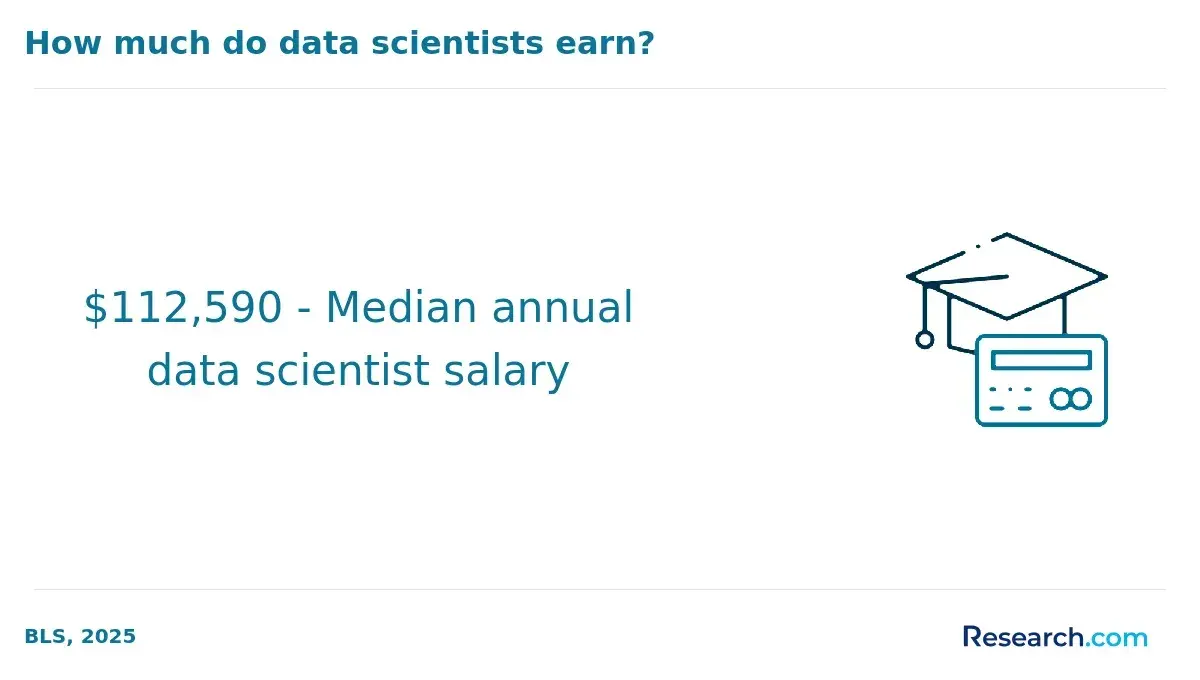
Graduates with an AI degree have strong potential for immediate employment across various tech roles. Entry-level career opportunities in artificial intelligence often feature as Data Scientist or Data Analyst positions, where professionals analyze complex data sets to guide business strategies.
Machine Learning Engineer roles focus on designing and deploying practical machine learning models. AI software developers create applications using natural language processing and computer vision technologies.
Other key job titles include Business Intelligence Analyst, who leverages AI tools for strategic insights, and AI Research Assistant or Junior Researcher, supporting research projects with data annotation and model testing. Employers consistently seek candidates proficient in Python, data libraries like pandas or NumPy, and familiar with cloud platforms for AI model deployment.
- Data Scientist or Data Analyst: Analyze and interpret data to enhance algorithms and decision-making.
- Machine Learning Engineer: Build and implement machine learning systems for real-world use.
- AI Software Developer: Develop AI-powered applications such as NLP tools and computer vision software.
- Business Intelligence Analyst: Generate actionable insights from data to optimize business strategies.
- AI Research Assistant or Junior Researcher: Assist with research projects in academic or corporate settings.
Addressing real-world challenges like algorithm bias, scalability, and explainability is essential. Hands-on project experience, including internships or certifications in machine learning frameworks, significantly improves employability with an AI degree for recent graduates.
Opportunities span industries like healthcare, finance, retail, and automotive sectors.
For those aiming to advance their knowledge, pursuing an online masters in AI can provide a competitive edge in this rapidly evolving field.
How do you choose an accredited AI program employers trust?
Choosing an accredited artificial intelligence program that employers recognize involves focusing on both institutional and program-level accreditations trusted in the U.S. Leading accreditation bodies include the Accreditation Board for Engineering and Technology (ABET), which covers technical AI degrees, and the Association to Advance Collegiate Schools of Business (AACSB), essential for AI programs within business schools.
AACSB accreditation signals rigorous quality and is held by over 1,000 business schools globally, making it a crucial benchmark for top accredited artificial intelligence degrees trusted by employers in the US.
Evaluate how well the AI program aligns with industry needs by reviewing its curriculum for practical skills such as machine learning, data engineering, AI ethics, and real-world problem solving. Programs offering partnerships with tech companies or internships enhance job readiness.
Active advisory boards ensure content stays relevant to emerging technologies.
Graduate outcomes are key indicators. Transparent placement stats, average starting salaries, and alumni success stories show program accountability beyond accreditation.
Beware programs without clear accreditation or primarily online offerings lacking strong faculty credentials, as accreditation is vital for employer recognition and future certifications.
Key questions include:
- Is the program accredited by ABET, AACSB, or another recognized authority?
- Does it incorporate hands-on AI projects or internships?
- What percentage of graduates secure AI-related roles within six months?
- Are faculty active in AI research or industry collaborations?
For those also exploring technology fields, compare options among cybersecurity degrees as well, which share similar accreditation and employment outcome considerations.
What's the difference between AI, computer science, and data science degrees?
Degrees in artificial intelligence (AI), computer science, and data science focus on different areas, skills, and career paths. AI degrees emphasize creating algorithms for machine learning, natural language processing, robotics, and neural networks, preparing students for roles in AI research and development.
Computer science covers a broader scope including software engineering, algorithms, systems design, and programming languages, supporting careers in software development, IT management, and systems architecture.
Data science programs blend statistics, data mining, predictive modeling, and domain expertise to develop skills for roles like data analyst, data engineer, or business intelligence specialist. Choosing the right degree depends on career goals:
- AI degrees target rapid growth in specialized intelligent systems roles.
- Computer science offers diverse job opportunities across established tech sectors.
- Data science is ideal for careers centered on analytics and data-driven decision-making.
Labor market projections from the U.S. Bureau of Labor Statistics reveal strong demand for "Computer and Information Research Scientists," often AI-focused, with growth faster than average. In comparison, "Software Developers," mostly from computer science backgrounds, will see a larger number of new jobs but at a slower rate.
Prospective students should weigh the demand for cutting-edge innovation in AI against the volume of roles in computer science and the strategic value of data science for business insight roles.
Can you earn an AI degree online, and will employers accept it?
Yes, you can earn an AI degree online, and many employers value these qualifications when paired with verifiable skills. SHRM's Talent Trends Report highlights that skills-based hiring is prioritized by most employers, focusing on demonstrated abilities through assessments, tests, or project portfolios rather than just the mode of education.
Online AI programs range from certificate courses to full bachelor's and master's degrees, offering flexible pacing options. Institutions like Georgia Tech and the University of Texas offer accredited online degrees in AI or machine learning widely recognized in the job market.
Sectors such as tech, finance, healthcare, and manufacturing increasingly seek candidates with practical experience gained during online study.
Key points when choosing an online AI degree include:
- Program accreditation
- Curriculum coverage of machine learning, natural language processing, and data ethics
- Project-based learning or capstone courses to build a strong portfolio
Employers often use coding tests and project reviews during hiring, so showcasing AI models, data analysis, or automation projects is essential. While some senior roles may prefer traditional degrees, entry- and mid-level positions frequently value practical skills and ongoing learning demonstrated by online degree holders.
Supplementing your education with internships, networking, and recognized AI certifications can further boost your career prospects in this competitive field.
What courses and projects should a job-ready AI program include?
AI education programs designed for employment readiness must blend foundational knowledge with hands-on projects that reflect current industry needs. Core coursework should cover machine learning algorithms, deep learning, natural language processing (NLP), computer vision, and data structures.
A solid introduction to Python programming and frameworks like TensorFlow or PyTorch is crucial. Additionally, students need to grasp statistics, probability, and optimization methods to analyze model performance effectively.
Practical projects are essential and should emphasize generative AI due to its widespread adoption. According to Gartner's AI-related survey research, many organizations are actively using or piloting technologies such as large language models (LLMs), prompt engineering, retrieval-augmented generation (RAG), and model evaluation techniques.
Project examples include:
- Building and fine-tuning LLMs with a focus on prompt design and ethics.
- Creating multimodal applications that integrate vision and language inputs.
- Implementing retrieval-based systems using RAG for better knowledge access.
- Assessing models on accuracy, fairness, robustness, and bias detection.
- Team-based assignments simulating real product cycles with version control, containerization, and deployment.
Courses in AI ethics, data privacy, scalable system design, cloud platforms, and APIs are vital to ready students for compliance and scalable production environments. Prospective students should prioritize programs that balance theoretical depth with extensive generative AI experience aligned with industry trends.
What are typical admission requirements for AI degree programs?
Admission requirements for AI degree programs increasingly prioritize academic preparation, relevant coursework, and proven technical skills over standardized tests. Many U.S. graduate schools have made GRE scores optional or do not require them for recent admission cycles, following trends reported by ETS.
As a result, admissions committees focus more on undergraduate GPA, prerequisite classes, and portfolios demonstrating programming or research experience, which are critical for AI, computer science, and data science applicants.
Typical expectations include strong foundations in mathematics-such as calculus, linear algebra, and probability-and computer science areas like data structures, algorithms, and programming languages. Candidates often need to showcase experience with machine learning frameworks or completed projects through digital portfolios or GitHub repositories.
Letters of recommendation play a key role, providing insight into analytical skills, research potential, and teamwork. Personal statements should clearly link past experience to AI career objectives and highlight problem-solving within technical environments.
International students usually must submit TOEFL or IELTS scores to demonstrate English proficiency unless exempted. Some programs provide conditional admission or bridging courses for students lacking formal computer science degrees but possessing strong quantitative abilities.
Overall, the shift toward practical achievements and demonstrated skills aligns with ETS GRE Program data, reflecting a selection process that values readiness for quick integration into AI roles based on academic and technical merit rather than solely test scores.
How long do AI degrees take, and what do they cost?
The duration of artificial intelligence degrees varies by program level and type. A typical bachelor's degree takes four years of full-time study, though accelerated tracks or transfer credits can reduce this to three years. Master's programs usually require an additional one to two years beyond the bachelor's degree.
Some universities offer combined bachelor's/master's options that can be completed in five years, allowing faster entry into the workforce with advanced credentials.
Tuition costs differ widely depending on institution type. Public four-year universities average about $11,500 annually for in-state tuition and fees. Private nonprofit four-year institutions often exceed $40,000 per year, while community colleges average around $4,300 yearly for associate degrees that can lead to internships or entry-level roles in AI.
Graduate artificial intelligence programs range from $20,000 to over $60,000 annually based on prestige, program length, and residency. Online master's degrees typically offer competitive pricing and flexible schedules for working professionals. Additional expenses include textbooks, software, and living costs.
Financial aid, scholarships, employer tuition reimbursement, and federal loans are essential for managing these expenses. Early exploration of these resources can help students afford an AI degree designed for rapid workforce integration.
What salaries and job outlook can AI graduates expect in the U.S.?
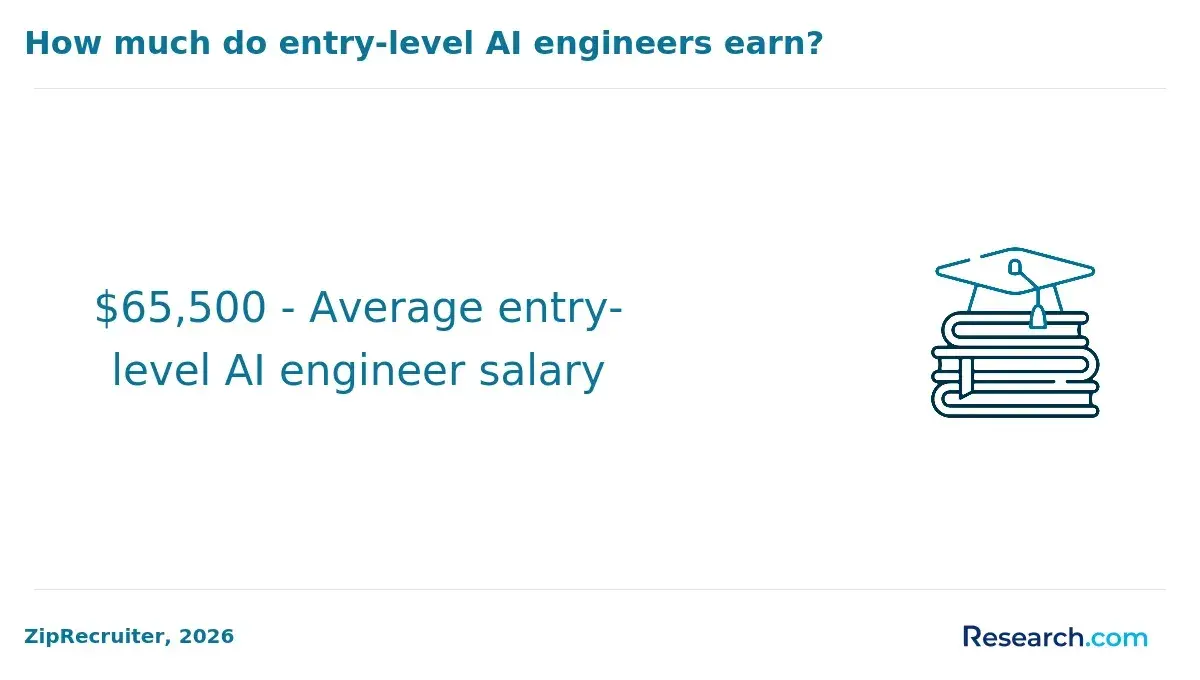
Data scientists and AI professionals in the U.S. enjoy strong salary prospects and rapid job growth. The U.S. Bureau of Labor Statistics (BLS) reports a median annual salary well into six figures for data scientists, reflecting high demand across technology, healthcare, finance, and manufacturing sectors.
Entry-level salaries generally range from $85,000 to $95,000, while mid-career professionals can earn between $120,000 and $150,000 depending on experience and specialization.
The employment outlook for AI-related roles is notably positive, with projections showing faster-than-average growth through 2034. This is driven by widespread adoption of AI and machine learning, requiring skills in data analysis, algorithm design, and AI system development.
Graduates with hands-on experience in prominent AI frameworks and programming languages have a competitive edge.
Career paths include machine learning engineer, AI software developer, data analyst, and research scientist. Salaries vary by role and location but generally remain competitive nationwide due to talent shortages.
Internships or certifications in AI tools can help recent graduates enter the workforce sooner and command higher starting pay.
Job seekers are encouraged to monitor BLS updates and industry salary reports to stay aligned with current employer demands.
Other Things You Should Know About Artificial Intelligence
Yes, a solid foundation in mathematics is crucial for artificial intelligence degrees. Topics like linear algebra, calculus, probability, and statistics are frequently used in AI algorithms and models. Students who strengthen their math skills early tend to perform better and grasp complex AI concepts more quickly.
In 2027, industries such as technology, healthcare, finance, and manufacturing are eager to hire recent AI graduates. These sectors utilize AI for various applications, including data analysis, automation, and machine learning-driven insights, offering dynamic opportunities for skilled professionals.
Yes, many artificial intelligence degree programs now incorporate ethics to address issues like bias, privacy, and social impact. Understanding ethical challenges prepares students to design AI systems responsibly and anticipate potential consequences. This knowledge is increasingly important as AI technologies become integrated into everyday life.
A strong capstone should use real data, a deployed model, and measurable results, such as a computer vision, chatbot, or forecasting project. Employers look for GitHub code, a live demo, and documented performance metrics like accuracy, F1 score, or latency from a final project completed in 2027.
References
- Top AI job roles you can apply for after completing a course https://aiiteacademy.in/blogs/ai-job-roles-after-course-completion.php
- Which AI Training Programs Do Employers Value Most in 2025? https://agilityinsights.ai/blog/which-ai-training-programs-are-most-valued-by-employers/
- 16 Artificial Intelligence Career Paths https://www.calmu.edu/news/artificial-intelligence-career-paths
- AI Certifications: Accredited Programs, Vendor Credentials, and Emerging Standards - Total Seminars https://totalsem.com/ai-certifications-accredited-programs-vendor-credentials-and-emerging-standards/
- Computer Science Engineering in AI vs. Data Science: What’s the Difference? | https://anandice.ac.in/blog/computer-science-engineering-ai-vs-data-science-whats-the-difference/
- Top Artificial Intelligence Courses: Fees and Duration https://collegevidya.com/blog/artificial-intelligence-course-fees-structure-duration/
- What is the Best Degree for an AI Career? | SNHU https://www.snhu.edu/about-us/newsroom/stem/best-degree-for-an-artificial-intelligence-career
- Best AI Certifications to Boost Your Career in 2026 – Dataquest https://www.dataquest.io/blog/best-ai-certifications/
- Level Up Your Future. https://www.gradus.live/blog/best-ai-courses-for-beginners-to-start-their-career-in-2026
- AI Jobs With No Experience â 10+ Entry-Level Roles | Beginner Guide 2026 â Mindrift https://mindrift.ai/blog/ai-jobs-with-no-experience