2027 AI Bachelor's Degrees for Students Switching From Business Majors

Co-Founder and Chief Data Scientist
Many students with business degrees face challenges when seeking to transition into the Artificial Intelligence industry. Their previous coursework often lacks the technical foundation required for AI roles, creating a barrier to entry. Limited programming experience and unfamiliarity with core concepts can discourage potential career changers from pursuing further education.
Flexible, accredited bachelor's degree programs in Artificial Intelligence designed for students switching from business majors can bridge this gap. This article explores available degree options, curriculum adaptations, and pathways that facilitate a smooth shift into AI careers, helping readers make informed decisions for successful academic and professional pivots.
Key Things You Should Know
- In 2026, over 40% of AI bachelor's degrees are targeted at students switching from business, reflecting demand for interdisciplinary AI skills in finance, marketing, and management sectors.
- Business majors transitioning to AI bachelor's programs typically complete foundational computer science prerequisites within their first year, accelerating their technical proficiency by 30% compared to traditional STEM entrants.
- AI graduates with business backgrounds report 15% higher starting salaries in 2025, driven by combined analytical and strategic expertise valued by employers across industries.
What is an AI bachelor's degree and how does it differ from computer science?
An AI bachelor's degree curriculum centers on the theory, development, and application of intelligent technologies. Unlike a traditional computer science degree, which covers broad foundational topics such as algorithms, software engineering, and systems design, AI degrees focus specifically on areas like machine learning, natural language processing, robotics, and data-driven decision-making.
Students transitioning from business or other fields will find AI programs emphasize building practical AI solutions rather than the general programming or software architecture principles typical of CS degrees. For instance, core courses often include neural networks, reinforcement learning, and cognitive computing compared to computer science's emphasis on operating systems and databases.
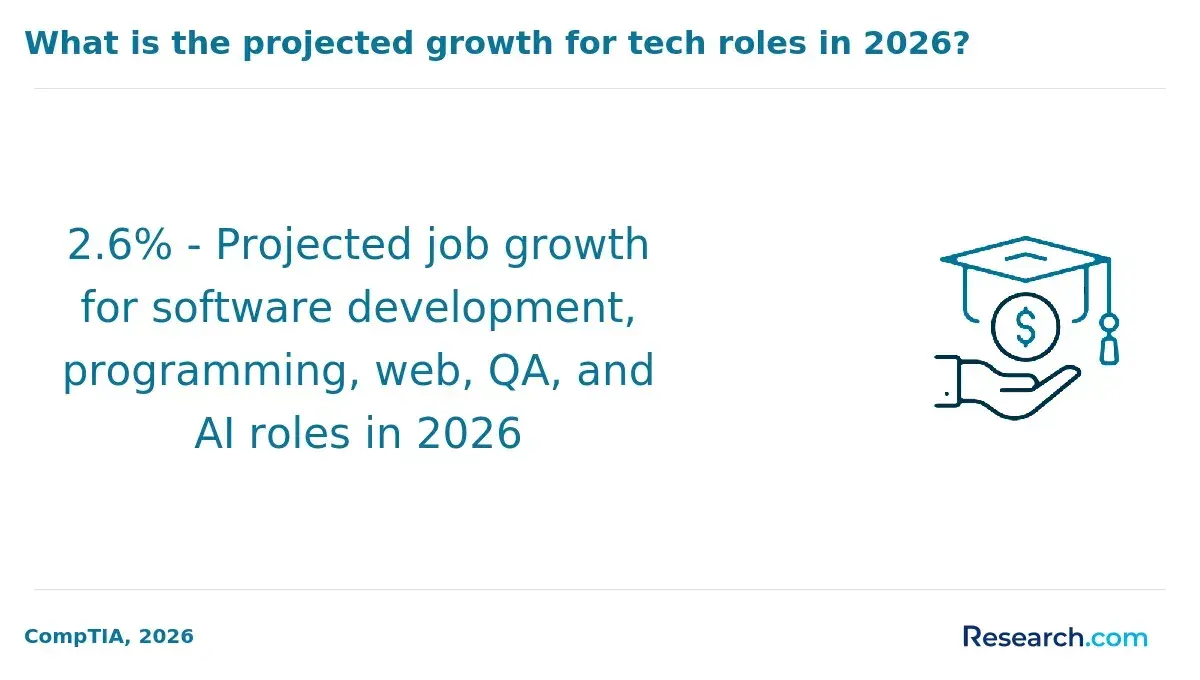
Labor market trends reinforce the value of specialized AI skills. AI/ML specialist jobs have experienced rapid growth, outpacing general software development roles worldwide. This expanding demand highlights the distinct career potential for AI graduates compared to those with a broader computer science background.
Additionally, AI degrees tend to incorporate interdisciplinary learning, combining statistics, ethics, and domain-specific expertise such as healthcare or finance. Prospective students should evaluate their career goals carefully to determine whether concentrating on AI methodologies or pursuing a broader CS foundation better suits their ambitions.
For more details on what graduates can pursue with such focused education, explore resources on AI degrees.
Can business majors switch into an AI bachelor's program without coding experience?
Business majors switching to AI bachelor programs without coding background can succeed by preparing for the program's technical requirements in advance. Many AI bachelor degrees welcome students from non-CS fields, recognizing that critical thinking and problem-solving skills from business studies are valuable. However, these students must build programming knowledge, often through preparatory coursework or coding bootcamps.
Programs designed for non-coders from business majors entering AI undergraduate degrees often include bridge courses in Python, R, and foundational math such as linear algebra and statistics. Universities sometimes offer targeted tutoring and peer mentoring to ease the transition and help students catch up.
Students switching from business to AI should:
- Begin with introductory programming classes before or during the first semester to develop coding fluency.
- Participate in hands-on projects that showcase practical AI skills valued by employers.
- Enhance quantitative abilities by taking supplementary math courses.
LinkedIn's Global Talent Trends report highlights that 55% of hiring managers favor candidates with relevant skills and experience over traditional degrees. This supports business majors who gain coding and AI project expertise, affirming their competitiveness in AI roles despite initial non-technical backgrounds.
For those considering advanced study, finding the cheapest master in data science can be a strategic next step.
Which accredited colleges offer reputable AI bachelor's degrees for career changers?
For career changers from business majors, finding reputable AI bachelor's degrees typically involves selecting ABET-accredited computer science or related computing programs with strong AI concentrations. While ABET does not currently accredit AI explicitly at the undergraduate level, it covers AI topics within broader computer science and software engineering degrees. This means students looking to switch careers should seek out programs offering substantial AI-related coursework and practical experience.
Some of the best accredited universities for ai bachelor's degrees for business majors switching careers include:
- Carnegie Mellon University, known for its intensive AI research and electives within its ABET-accredited computer science program.
- University of California, Berkeley, featuring computer science degrees with significant coverage of machine learning and AI.
- Georgia Institute of Technology, offering a Bachelor of Science in Computer Science specializing in Interactive Intelligence focused on AI.
- Rochester Institute of Technology, which provides an accredited software engineering degree integrating AI and data science modules.
Career changers should evaluate curricula based on AI content depth, flexibility to their backgrounds, and opportunities for internships and hands-on labs. Online programs from ABET-accredited institutions also provide valuable options for working professionals seeking flexible learning schedules. Such online AI degree programs can be an important avenue for career changers balancing current employment with studies.
Ultimately, top colleges with reputable AI online degree programs for career changers from business require careful assessment since standalone AI accreditation is unavailable. Students must focus on programs emphasizing AI within accredited computer science or software engineering paths to ensure strong workforce alignment and credible education.
What admissions requirements and prerequisites do AI bachelor's programs typically require?
Admissions criteria for AI bachelor's programs emphasize strong foundations in mathematics, computer science, and analytical abilities. Most programs expect a high school diploma with completed coursework in algebra, geometry, and often calculus. Proficiency in programming languages such as Python or Java is preferred, though some schools offer introductory courses for beginners. For those seeking ai bachelor's degree admissions criteria for business majors, bridging courses in math and programming can help fill knowledge gaps.
Transcripts showcasing sustained academic performance in STEM subjects remain essential. Test-optional policies have reduced the weight of exams like the SAT or ACT, so admissions committees focus more on math readiness demonstrated through coursework, GPA, and sometimes placement exams. Prerequisites for switching into ai bachelor's programs typically include:
- Completion of high school math up to precalculus or calculus
- Basic computer science knowledge from classes or certifications
- Strong analytical and problem-solving skills shown in essays or interviews
- Optional but recommended submission of coding portfolios or projects
Some universities may also require physics or statistics courses for specialized AI topics. International students or those with nontraditional backgrounds might need extra documentation such as proof of English proficiency. Prospective students can explore cyber security degrees to complement AI bachelor's programs or for advanced study.
Which AI degree formats work best: online, on-campus, or hybrid?
Online, on-campus, and hybrid formats each offer unique benefits for bachelor's degrees in artificial intelligence, catering to different student needs. Online and hybrid programs often work best for those transitioning from business, providing flexibility to juggle work or family commitments. In recent data, about 9.4 million U.S. undergraduates enrolled in at least one distance-education course, reflecting growing acceptance of remote learning.
Online degrees deliver asynchronous lectures, digital resources, and interactive platforms, which suit self-directed learners. However, the lack of in-person labs can limit practical experience crucial for mastering AI algorithms, data sets, and programming tools.
On-campus programs provide direct access to faculty, hands-on labs, and networking opportunities, accelerating skills development and career readiness. Business majors benefit from structured environments with immediate practitioner feedback to bridge knowledge gaps efficiently.
Hybrid formats blend online coursework with scheduled in-person sessions, balancing flexibility with experiential learning. This approach supports applying AI concepts through labs or projects while maintaining accessibility.
Students should weigh factors like schedule flexibility, access to computational resources, preferred learning styles, proximity to industry hubs, and cost differences when choosing a program.
- Flexible scheduling and time management
- Hands-on resources and faculty interaction
- Self-directed versus guided learning preferences
- Industry proximity for internships and jobs
- Cost implications of format choices
For career changers from business, hybrid AI programs that combine robust online instruction with periodic practical sessions provide an optimal balance, supporting skill development and networking without sacrificing flexibility.
What core courses and math requirements will you take in an AI bachelor's program?
Core courses in an AI bachelor's degree program generally cover programming, data structures, algorithms, and machine learning. Students study subjects like Introduction to Artificial Intelligence, Neural Networks, Natural Language Processing, and Computer Vision. Emphasis lies on hands-on projects and practical problem-solving to develop applicable skills rather than purely theoretical knowledge.
Mathematics forms the foundation for AI studies. Essential subjects include calculus (both differential and integral), linear algebra, and probability & statistics. Linear algebra helps explain data transformations in high-dimensional spaces, while statistics is vital for evaluating model accuracy and uncertainty. Calculus underpins optimization techniques that train AI models effectively.
Many programs also require discrete mathematics and mathematical logic to strengthen algorithmic reasoning and understand computational complexity. Some curricula add courses in numerical methods or optimization tailored specifically to AI challenges.
For business majors transitioning into AI, learning measurable skills is key. Research shows 65% of employers prioritize skills-based hiring, and 69% use skills data in recruitment decisions. This explains why AI degrees emphasize applied statistics, linear algebra, and machine learning expertise over course titles alone. Experience with tools like Python, TensorFlow, or PyTorch often complements coursework, preparing students for interdisciplinary application of AI methods.
An AI bachelor's blends quantitative foundations with programming proficiency, equipping graduates to apply AI across various professional domains.
How long does an AI bachelor's take and what does it cost?
Bachelor's degrees in artificial intelligence typically require four years of full-time study, consistent with standard undergraduate programs in the United States. Students transferring from business or related fields may qualify for accelerated tracks or credit transfers, potentially completing the degree in three years depending on completed coursework in math, statistics, or programming.
Tuition costs vary greatly by institution and residency. Public universities average about $11,610 annually for in-state students, leading to an estimated total tuition near $46,440 for four years, before factoring in additional expenses like housing and books. Private universities and out-of-state students face substantially higher tuition, often exceeding $35,000 per year.
- Standard duration is four years; relevant credit transfers may shorten this to three.
- Public in-state tuition averages $11,610 annually (College Board, 2024).
- Total tuition can surpass $40,000 at public schools and $100,000 at private institutions.
- Accelerated or online options may reduce costs and offer flexible scheduling.
- Additional expenses such as materials, housing, and fees should be considered beyond tuition.
Several programs incorporate AI studies within computer science or engineering departments, easing interdisciplinary transfer credits and lowering redundant coursework. Prospective students should research these options to optimize cost savings and time to degree completion.
What AI roles can business-to-AI graduates qualify for after earning the degree?
Graduates with a bachelor's degree in business-to-ai are well positioned for roles merging domain knowledge with technical skills. Top positions include data analyst, business intelligence analyst, and product analyst, all requiring a strong grasp of business operations alongside data processing and visualization skills. Data analyst roles, notably, rank among the most in-demand on LinkedIn, reflecting a growing market for hybrid professionals.
Opportunities also exist as junior machine learning (ML) engineers or ML operations specialists, where foundational programming and model knowledge support collaboration with data scientists to apply AI insights in business contexts. Additional paths include AI product managers who lead AI projects strategically and AI consultants who tailor implementation plans to business goals.
Key technical skills include proficiency in SQL, Python, Tableau, and Power BI. Understanding AI concepts such as natural language processing and recommendation systems is also increasingly important for those focused on analytics and customer insights.
Students and professionals should focus on blending data expertise with business acumen to unlock opportunities in sectors like finance, marketing, healthcare, and supply chain management. This combination enables driving AI-enhanced analytics and informed decision-making in diverse industries.
What salaries can you expect with an AI bachelor's degree in the United States?
Graduates with a bachelor's degree in artificial intelligence in the United States can expect strong salary prospects driven by high industry demand. Entry-level roles such as AI software developers or machine learning engineers typically start between $80,000 and $95,000 annually. With three to five years of experience, salaries frequently surpass $110,000.
Data scientist positions are among the most common for AI graduates. According to U.S. Bureau of Labor Statistics data from May 2024, the median annual wage for data scientists was $108,020, offering a useful benchmark for professionals working with data analysis, predictive modeling, and machine learning.
Salaries vary depending on location, industry, and job focus. For example:
- Tech centers like San Francisco and Seattle pay 10% to 30% above the national median.
- Finance, healthcare, and autonomous vehicle sectors offer higher wages due to specialized AI demands.
- Combining AI skills with business analytics or software development can result in salary premiums.
Business graduates transitioning into AI should leverage their expertise for hybrid roles in AI-driven business intelligence or product management, where salaries often exceed traditional AI bachelor median pay. Internships and certifications in programming and data science can further enhance earnings.
Which AI certifications can complement a bachelor's degree and boost employability?
Certifications in generative AI and machine learning offer a strong advantage for students transitioning from business majors to AI-related fields. Coursera's Global Skills Report highlights rapid growth in generative AI skills enrollment, reflecting high market demand for these competencies.
Key credentials complementing a bachelor's degree include platform-specific certifications such as Google's TensorFlow Developer Certificate and Microsoft Certified: Azure AI Engineer Associate. These validate practical skills in developing and deploying AI models on widely used platforms.
Specialized programs focusing on generative AI tools, including OpenAI's API training and courses on generative adversarial networks (GANs), equip learners to meet employer needs in content generation, automation, and advanced data analysis.
- IBM's Applied AI Professional Certificate and Udacity's AI Foundations Nanodegree combine foundational theory with hands-on projects.
- Certifications that emphasize ethical AI, data governance, and interpretability, such as those offered by the AI Ethics Institute, help distinguish candidates in a competitive job market.
Employers increasingly expect practical AI skills integrated with domain knowledge. Selecting certifications that balance theoretical understanding and tool proficiency enhances job readiness beyond a traditional business curriculum. This approach ensures graduates can effectively address real-world challenges in the evolving AI workforce.
Other Things You Should Know About Artificial Intelligence
While programming is a crucial skill for artificial intelligence studies, it is not the only one required. Students must also develop strong analytical thinking, problem-solving, and a solid understanding of mathematics, particularly linear algebra, calculus, and statistics. Additionally, knowledge of data structures, algorithms, and ethical considerations in AI is essential for success.
AI programs increasingly integrate ethics courses to address issues such as bias, privacy, and the societal consequences of automation. Students learn about responsible AI development, legal frameworks, and how to mitigate unintended harm. This preparation helps graduates create technology that aligns with ethical standards and public welfare.
Students typically engage in hands-on projects that involve building machine learning models, developing natural language processing applications, or designing computer vision systems. These projects emphasize practical skills, often using real-world datasets and programming languages like Python. Collaborative work and presentations are also common to simulate professional AI workflows.
Business majors transitioning to an AI bachelor's degree in 2027 may face challenges such as adapting to technical subjects like programming and algorithms. They might also need to bridge the gap in foundational mathematical concepts, while developing an understanding of machine learning principles and data analysis techniques.
References
- Ultimate Guide: How to Choose the Right AI Training Course to Boost Your Career - ONLC https://www.onlc.com/blog/how-to-choose-ai-training-courses/
- Cost to Study Artificial Intelligence in 2026 https://checkmateittech.com/cost-to-study-artificial-intelligence-usa/
- AI Careers - Top AI Jobs with Education Requirements and Pay https://aidegreeprograms.org/ai-careers/
- Artificial Intelligence (procedure for non-EU students) https://apply.unipv.eu/enter/295
- Top AI Certifications for 2026: A Guide to Advancing Your Tech Career | DataCamp https://www.datacamp.com/blog/top-ai-certifications
- Artificial intelligence VS computer science: What's the difference? https://www.immerse.education/beyond-syllabus/computer-science/artificial-intelligence-vs-computer-science/
- Some College Students Are Switching Majors Because of AI https://www.entrepreneur.com/business-news/college-students-are-switching-majors-as-ai-reshapes-career-plans
- Students struggle with college majors and rise of AI https://thehill.com/homenews/education/5826091-ai-college-majors-job-market/
- Top 15 paid AI certifications to boost your resume | Uxcel https://uxcel.com/blog/top-paid-ai-certifications