2027 Student Debt and AI Degree Programs

Co-Founder and Chief Data Scientist
Many prospective students face rising tuition costs combined with significant debt from prior degrees in unrelated fields. This financial burden often deters them from pursuing advanced studies in artificial intelligence, despite the sector's strong job prospects. Balancing work, life, and the costs of education creates a practical challenge for mid-career professionals seeking a pivot. Flexible, accredited degree programs may offer a solution by accommodating diverse schedules and budgets.
The article explores current student debt trends and reviews degree options designed to enable a cost-effective transition into artificial intelligence careers.
Key Things You Should Know
- Student debt for ai degree programs averaged $32,000 in 2025, higher than general STEM fields, reflecting rising tuition for specialized curricula and technology investments.
- Graduates with ai degrees saw a 20% higher starting salary in 2025 compared to overall computer science grads, aiding faster debt repayment despite larger loans.
- Federal and state loan forgiveness programs increasingly target ai graduates working in public sector or underserved areas, offering relief and encouraging socially impactful careers.
How is student debt shaping decisions to pursue artificial intelligence degrees today?
Student debt significantly impacts artificial intelligence degree choices, as Americans owe $1.87 trillion in student loans-a 3.3% increase from Q1 2025 according to LendingTree. Prospective students face financial challenges influencing decisions for artificial intelligence education, often considering shorter, cost-effective alternatives like bootcamps and certificate programs that reduce debt burden and accelerate workforce entry.
Many prioritize institutions offering scholarships, income share agreements, or partnerships with employers to lower upfront costs. Students targeting prestige-driven careers may pursue traditional degrees but focus on scholarships or loan forgiveness options designed for STEM graduates. Part-time or online programs also attract those balancing work and study to minimize borrowing.
Loan aversion leads applicants to evaluate AI career earnings critically. High starting salaries in AI roles are key for loan repayment planning, but students assess the return on investment by comparing program expenses and job market demand across AI specialties versus broader computer science fields.
Practical advice includes:
- Researching programs with transparent tuition and strong job placement records
- Exploring federal repayment plans that cap loans at affordable income percentages
- Prioritizing skills-based certificates when full degrees are financially unfeasible
- Leveraging employer tuition assistance when available
For those seeking cost-efficient options, reviewing the data science master program ranking can provide valuable guidance. Rising student debt calls for careful financial planning to balance ambitions with manageable loans, ensuring transparent cost and outcome information supports student choice in this growing field.
Are artificial intelligence degrees worth the cost when considering salaries and loan repayment?
Degrees in artificial intelligence continue to offer strong return on investment for artificial intelligence degree programs despite rising education costs. Graduates can expect median starting salaries between $85,000 and $110,000 annually, significantly higher than the average bachelor's degree starting salary of about $50,000. This salary potential and loan repayment advantage supports faster debt management and long-term earnings growth.
Student loan debt for tech degrees is increasing, with incoming freshmen projected to incur an average of $43,000 in student loan debt for a bachelor's degree. Monthly payments on this debt under a 10-year plan at 5% interest are roughly $456. For example:
- An entry-level AI engineer earning $90,000 annually can dedicate around 12% of pretax income to loan repayment, which is manageable compared to other fields.
- Salary growth exceeding 7% per year is common for those moving into software engineering, data science, or research roles, improving repayment capacity.
However, program prestige, location, and job market differences significantly impact outcomes. Students should consider employability rates, internships, scholarships, and employer tuition reimbursement to reduce upfront costs. Pursuing part-time work or co-op programs can also offset expenses. For those weighing options, exploring the cheapest engineering degree online might be a useful strategy.
Targeting competitive AI programs and carefully planning finances can make degrees worthwhile. Graduates in areas with fewer AI opportunities might benefit from certifications or graduate degrees to enhance salary potential and ease debt repayment.
What types of artificial intelligence degree programs exist, from certificates to graduate study?
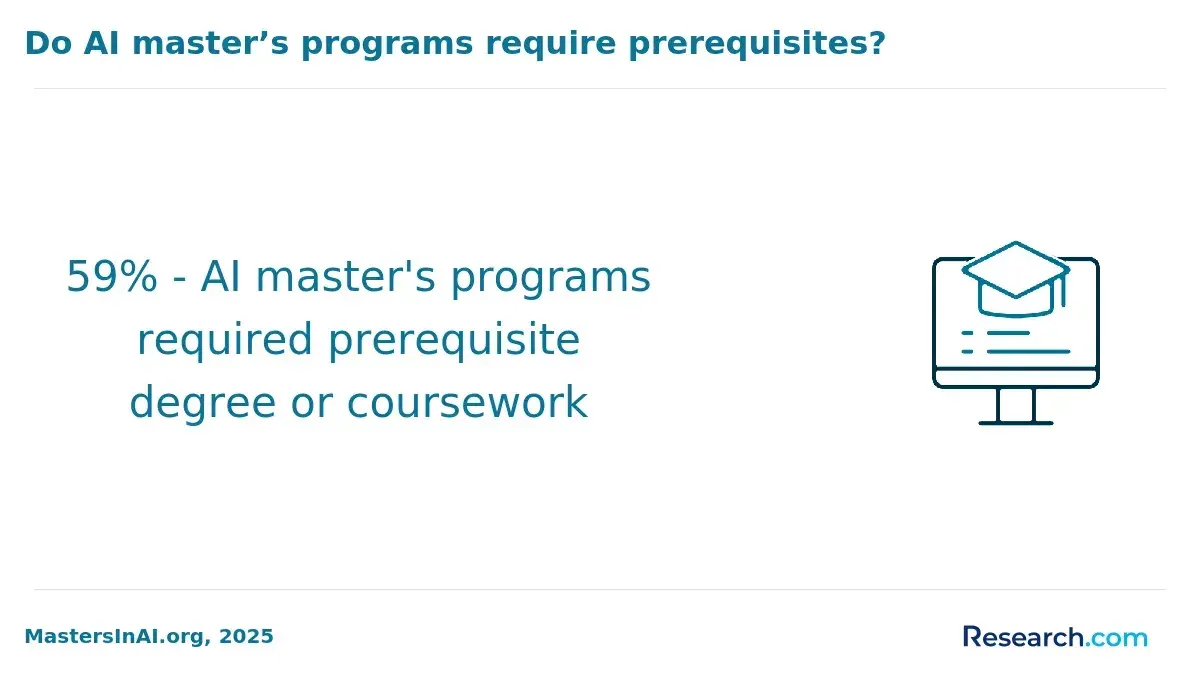
Artificial intelligence degree programs vary widely, ranging from short-term certifications to advanced graduate studies designed to suit different career goals. Online artificial intelligence certificate programs focus on fundamental skills such as machine learning, data analysis, and programming languages like Python. These certificates typically last from a few months up to a year and are ideal for working professionals aiming for rapid upskilling or career shifts.
Associate degrees in AI or related fields like data science provide a more comprehensive curriculum over two years, preparing students for entry-level roles or transfer to four-year institutions. Bachelor's degrees offer in-depth study in AI theory, robotics, natural language processing, and software engineering, combining coursework with practical labs to develop problem-solving expertise relevant to industry demands.
Graduate artificial intelligence degree options include master's and doctoral programs focusing on advanced research, algorithm development, and ethical AI issues. Master's degrees often allow specialization in areas like computer vision or autonomous systems and typically require one to two years of full-time study. PhD candidates engage in original research, contributing to AI innovations over three to six years.
Many pursuing AI credentials are mid-career professionals managing significant education financing. Millennials currently constitute approximately 14 million student loan borrowers, while Gen X holds nearly $600 billion of U.S. student loan debt, underscoring the importance of choosing programs that balance cost, duration, and career outcomes.
For those interested in related fields, exploring a game design and development degree can also open pathways in technology-driven creative industries.
How do online artificial intelligence degree programs compare to campus-based options?
Online artificial intelligence degree programs offer a flexible and often more affordable alternative to traditional campus-based options. They enable students to work full-time while studying, lowering dependence on student loans-an important consideration given that by the end of 2025, 7.7 million borrowers had defaulted on $181 billion in federal student loans, with 25% significantly behind on payments, according to U.S. Education Department data reported by The New York Times. Evaluating how online artificial intelligence degree programs perform versus campus-based programs is crucial for prospective students.
Campus-based degrees provide direct access to faculty, specialized research labs, and networking opportunities that can boost career prospects in AI fields. These programs often include immersive experiences essential for hands-on skills like robotics or computer vision requiring physical hardware. However, tuition and living expenses are usually higher, increasing financial risk for those relying on loans.
Quality varies widely among online degrees. Accredited institutions offering established AI curricula-such as master's degrees in machine learning or data science-can deliver outcomes comparable to campus programs but demand strong self-discipline and adequate technical resources.
Students should weigh factors like the program's reputation and accreditation, availability of internships and career support, cost relative to financial aid, and whether access to on-site labs is necessary. Flexibility around work or family commitments is another key consideration. For those interested, a fast cyber security degree may provide insights into accelerated online learning options.
- The reputation and accreditation status of the program
- Availability of career support and internships
- Cost versus financial aid options
- The need for physical access to labs or AI hardware
- Flexibility around work or family commitments
Making an informed choice based on individual circumstances helps mitigate financial risks highlighted by the high delinquency and default rates among federal student loan borrowers.
What accreditation should students look for in artificial intelligence degree programs?
Students interested in artificial intelligence degree programs should prioritize accreditation from organizations recognized by the U.S. Department of Education or the Council for Higher Education Accreditation (CHEA). Regional accreditations like the Middle States Commission on Higher Education (MSCHE) or the Western Association of Schools and Colleges (WASC) help ensure institutional credibility and academic quality.
Program-specific accreditation is crucial for assessing curricular rigor. Accreditation from ABET, especially through its Computing Accreditation Commission (CAC), indicates that programs meet high standards relevant to AI fields. Endorsements from the Association for Computing Machinery (ACM) further signal curricula covering key areas such as machine learning, data science, and ethical AI development.
Choosing accredited programs has financial implications. U.S. student loan debt reached $1.8 trillion with a 211% increase since 2007, according to First Trust's economic research commentary. Accreditation ties to labor market value and federal financial aid eligibility, directly impacting return on investment for students managing debt against career prospects.
Along with accreditation, prospective students should assess faculty expertise, industry connections, and graduate employment rates. Accreditation serves as a baseline filter against subpar programs or diploma mills that contribute to excessive debt without advancing AI careers.
What courses and skills are typically covered in artificial intelligence majors?
Majors in artificial intelligence provide a robust curriculum that builds essential technical skills and domain knowledge needed for AI development. Core courses often include machine learning, focusing on algorithms that improve systems through data; natural language processing, which enables machines to interpret human languages; and computer vision, teaching visual data analysis. Students also study foundational subjects like data structures, algorithms, and programming languages such as Python and R, which are vital for implementing AI models.
Mathematics plays a crucial role, with emphasis on linear algebra, calculus, probability, and statistics, all foundational for machine learning methods and data analytics. Increasingly, ethics in AI is included to address bias, privacy, and societal impacts associated with technology deployment. Electives might cover robotics, reinforcement learning, and AI hardware optimization, allowing students to specialize in areas like autonomous systems or AI accelerators.
Practical experience is key, often gained by using AI frameworks such as TensorFlow or PyTorch and engaging in internships, projects, or research. Students planning such degrees should also consider financing, as federal loans account for roughly 91.98% of U.S. student debt-about $1.67 trillion-while private loans represent 8.02%, or $144.86 billion, according to Wooclap's 2025/26 data. This highlights the reliance on federal aid in funding AI graduate education.
What are the admission requirements and program length for artificial intelligence degrees?
Admission to artificial intelligence degree programs typically requires a bachelor's degree in computer science, engineering, mathematics, or a related STEM field. Many programs expect a minimum GPA around 3.0 on a 4.0 scale and strong quantitative and programming skills demonstrated through coursework or experience. GRE scores, letters of recommendation, and a statement of purpose are often also required. Master's programs usually ask for completed coursework in linear algebra, calculus, statistics, and programming languages like Python or Java.
PhD programs demand more advanced preparation, usually requiring a master's degree or significant graduate-level coursework alongside research experience, such as publications or AI-related projects.
Degree lengths vary: bachelor's degrees generally take four years, master's programs range from one to two years depending on enrollment status, and PhD programs often require four to six years due to their intensive research focus.
Starting July 1, 2026, new federal student loan borrowers will face a lifetime cap of $257,500 across all loans, creating important financial considerations for prospective students pursuing these extended and research-intensive degrees, as reported by CNBC.
Planning ahead for admission and financing is crucial for those interested in careers in artificial intelligence.
What entry-level and advanced careers can artificial intelligence graduates pursue?
Graduates with expertise in artificial intelligence can access a variety of entry-level and advanced career opportunities across industries. Typical entry-level roles include AI technician, data analyst, machine learning engineer, and AI software developer. These positions often involve foundational responsibilities such as data preprocessing, model training, algorithm testing, and software debugging. For instance, a machine learning engineer might develop supervised learning models to enhance business operations, while a data analyst interprets AI-generated insights to support decision-making.
Advanced roles demand greater specialization and frequently entail leadership or research duties. Positions like AI research scientist, AI architect, deep learning specialist, and AI ethics officer exemplify these paths. Research scientists focus on creating novel algorithms and publishing research, often partnering with academic or corporate labs. AI architects manage the integration of complex AI solutions at scale, emphasizing robustness and efficiency. Ethics officers address societal impacts and fairness in AI, an increasing priority in the field.
Salary ranges differ based on position and experience, starting near $70,000 annually for entry-level engineers and exceeding $150,000 for senior or specialized experts. Strong programming skills in Python, frameworks like TensorFlow or PyTorch, and solid mathematical knowledge are essential.
- AI technician
- Data analyst
- Machine learning engineer
- AI research scientist
- AI architect
Significant gender disparities exist in financing AI education. Women hold 63.6% of all U.S. student loan debt, compared to 36.4% by men, according to Wooclap's 2025/26 statistics. This financial imbalance poses challenges to equitable access and career growth in artificial intelligence fields.
What is the salary outlook and job demand for artificial intelligence professionals?
The salary outlook for artificial intelligence professionals remains strong due to rapid technological progress and high industry demand. Entry-level positions start around $85,000 annually, while mid-career AI specialists typically earn between $120,000 and $160,000. Senior roles, such as machine learning engineers or AI research scientists, often command salaries above $200,000. Tech hubs and sectors like healthcare, finance, and autonomous systems frequently offer premium pay given the advanced expertise required.
Job demand continues to outpace supply, supporting competitive salaries. The U.S. Bureau of Labor Statistics projects employment growth of 15% or more from 2024 to 2034 in computing and data science fields relevant to AI. This growth includes roles like AI engineers, data scientists, robotics specialists, and natural language processing experts.
For students and graduates seeking strong career prospects, developing skills in programming languages such as Python and R, mastering AI frameworks like TensorFlow and PyTorch, and gaining real-world experience through projects or internships are essential. Certifications and advanced degrees can further enhance employability and salary potential. Flexibility in location and industry also improves opportunities.
Given rising student debt-$1.81 trillion in the U.S. and over £200 billion in the U.K., per Wooclap's 2025/26 global insights-aligning academic investments with realistic market demands is critical. Emerging fields like ethical AI and AI policy offer new job possibilities to consider when planning a career path.
How can students minimize student debt while earning an artificial intelligence degree?
Students pursuing an artificial intelligence degree can reduce debt by combining scholarships, affordable programs, and work opportunities. Merit-based scholarships from universities and private organizations, especially those aimed at AI and STEM students, significantly lower tuition expenses.
Choosing cost-effective options such as community colleges or online bachelor's degrees in computer science or data science with AI specializations can cut costs. Taking foundational courses at these institutions and then transferring to research-intensive schools for advanced AI classes further limits expenses.
Federal financial aid should be prioritized before private or Grad PLUS loans, as federal unsubsidized loans generally offer lower interest rates. LendingTree's data shows 44% of nearly $103 billion borrowed was federal unsubsidized, with 29% from Grad PLUS and Parent PLUS loans, underscoring the importance of choosing aid with favorable terms.
Working part-time or securing internships during study helps offset costs while boosting experience and employability. Many AI programs offer flexible schedules or part-time options suited for students maintaining jobs or research roles.
Accelerated or combined bachelor's and master's degree programs in AI can shorten study time and reduce tuition. Proactive financial planning paired with exploring various aid resources lessens reliance on loans and eases long-term debt burdens.
Other Things You Should Know About Artificial Intelligence
The most common programming languages taught in artificial intelligence degree programs include Python, Java, and R. Python is especially prevalent due to its extensive libraries for machine learning and data analysis, such as TensorFlow and scikit-learn. These languages enable students to develop algorithms, build models, and work with large datasets effectively.
Proficiency in mathematics, particularly linear algebra, calculus, probability, and statistics, is critical for success in artificial intelligence programs. These areas provide the foundation for understanding algorithm design, machine learning models, and data interpretation. Students with strong math skills are better equipped to grasp complex concepts and apply them effectively in real-world AI problems.
Yes, many institutions offer part-time and continuing education options for artificial intelligence degrees, enabling working professionals to advance their skills while maintaining their jobs. These formats often include evening or weekend classes and online coursework. Such flexible programs help students balance education with other responsibilities without sacrificing depth or quality.
As of 2027, many AI degree programs are indeed increasing their scholarship offerings to help alleviate student debt. These scholarships aim to support students financially, making AI education more accessible while fostering a diverse and skilled workforce equipped to address emerging challenges in the field.
References
- Here’s How an AI Degree Stacks Up Against Other Options https://www.aidegree.org/blog/comparison-table
- Key Skills Gained from a Bachelor of Science in Artificial Intelligence https://tetr.com/blog/key-skills-gained-from-a-bachelor-of-science-in-artificial-intelligence
- Artificial Intelligence https://www.th-deg.de/ain-b-en
- AI Job Boom: 12 Entry-Level Roles You Can Get Without a CS Degree https://www.tryapt.ai/blog/ai-job-boom-12-entry-level-roles-you-can-get-without-cs-degree
- How to choose a bachelor's in artificial intelligence | edX https://www.edx.org/resources/how-to-choose-a-bachelors-in-artificial-intelligence
- Earn a Degree with Existing Student Debt https://www.marian.edu/blog/2026/02/how-to-earn-a-degree-when-you-have-existing-student-loan-debt.php
- Best Online AI Courses and Certifications in 2025 https://www.upskillist.com/blog/online-ai-courses-certifications/
- Applying Artificial Intelligence to the Student Debt Crisis | Projects | Omdena https://www.omdena.com/projects/ai-student-debt-crisis
- Top AI Courses After 12th to Kickstart Your Tech Career https://www.msruas.ac.in/blog/lead-the-future-of-artificial-intelligence-with-top-ai-courses-after-12th
- It’s time for students to start committing to colleges. The age of AI is making it complicated | CNN Business https://www.cnn.com/2026/04/18/business/ai-college-debt-parents