2027 How to Become a Preschool Teacher Assistant in Ohio: Requirements & Certification

Co-Founder and Chief Data Scientist
Becoming a preschool teacher assistant in Ohio is a practical entry point into early childhood education, especially for people who want classroom experience before committing to a lead-teacher license or degree. The role is hands-on: you help young children learn routines, build early academic and social skills, stay safe, and participate in classroom activities under the direction of a lead teacher.
The challenge is that Ohio preschool settings can follow different staffing, training, and credential expectations depending on whether the employer is a licensed childcare center, public preschool, private school, Head Start program, or faith-based provider. This guide explains how to become a preschool teacher assistant in Ohio, what education and certifications may be expected, how long the process can take, what it may cost, and how to use the role as a stepping stone to other education careers.
Quick Answer: How Do You Become a Preschool Teacher Assistant in Ohio?
To become a preschool teacher assistant in Ohio, you generally need at least a high school diploma or equivalent, a background check, required childcare safety training, and employer-specific onboarding. Many employers prefer candidates with a Child Development Associate (CDA) credential or an associate degree in early childhood education. A CDA includes approximately 120 hours of training, while an associate degree commonly takes about two years. Requirements can vary by preschool type, so applicants should confirm expectations with the specific employer and licensing setting before enrolling in a program.
Key Things You Should Know About Becoming a Preschool Teacher Assistant
- A common route into preschool assistant roles in Ohio is earning a Child Development Associate (CDA) credential or completing an associate degree in early childhood education. The CDA involves approximately 120 hours of training, while an associate degree usually requires about two years of study.
- CDA preparation may cost between $300 and $1,000, depending on the provider, course format, and materials. An associate degree in early childhood education may range from $5,000 to $15,000, depending on the school and whether it is public or private.
- Preschool teaching assistants in Ohio typically must complete a background check through the Ohio Department of Job and Family Services (ODJFS). The background check commonly costs around $50 and is required to help protect children in care and education settings.
- After completing a CDA or an associate degree, candidates receive either the CDA credential or an associate degree diploma, which can strengthen eligibility for preschool assistant positions across Ohio.
- The timeline depends on the path. A CDA may be completed within a few months, while an associate degree usually requires a two-year commitment. Your best choice depends on whether you want quick entry-level employment or a longer-term pathway toward lead teaching and advancement.
- What preschool teacher assistants do in Ohio classrooms
- Education requirements for preschool teacher assistants in Ohio
- Certifications and checks commonly required in Ohio
- How to keep credentials current after you start working
- How long the process usually takes
- Benefits of working as a preschool teacher assistant in Ohio and timeline considerations
- Teaching roles you can move into after assistant experience
- Specialized education careers that build on preschool experience
- How interdisciplinary study can support an early childhood career
- Additional training options for advancement in Ohio education
- Moving from preschool assistant work into educational consulting
- How to move from preschool assistant to kindergarten teacher in Ohio
- Professional associations that can strengthen career prospects
- Moving from preschool assistant to special education teacher in Ohio
- How to find affordable certification and hands-on training
- Using preschool assistant experience to work in Ohio private schools
- Using online professional development to advance your career
- Expected cost of becoming a preschool teacher assistant in Ohio
- Career paths available after preschool assistant experience
- Job market outlook for preschool teacher assistants in Ohio
- Preschool teacher assistant pay in Ohio
What does a preschool teacher assistant do in Ohio?
A preschool teacher assistant supports the lead teacher and helps maintain a safe, organized, developmentally appropriate classroom for young children. The job combines childcare, classroom operations, behavior support, communication, and early learning assistance.
| Responsibility | What it looks like in practice | Why it matters |
| Classroom preparation | Setting up activity centers, preparing supplies, arranging learning materials, and helping clean up after lessons | Young children need predictable routines and accessible materials to participate successfully. |
| Instructional support | Helping children follow directions, participate in group activities, practice early literacy or numeracy skills, and complete hands-on tasks | Assistants give lead teachers more capacity to support different learning needs at the same time. |
| Child supervision | Watching children during play, meals, toileting routines, transitions, outdoor time, and classroom activities | Safety is central in preschool settings. Ohio has approximately 1,500 licensed preschool programs serving over 100,000 children annually. |
| Individual support | Working one-on-one or in small groups with children who need help with social interaction, routines, behavior, or early academic concepts | Some children need more guidance to participate, communicate, and develop confidence in the classroom. |
| Family communication | Sharing basic updates during drop-off or pick-up, relaying concerns to the lead teacher, and maintaining professional communication | Families depend on consistent information about their child’s adjustment, behavior, and progress. |
The role can be rewarding, but it is not always easy. Preschool assistants often manage busy rooms, children with different developmental needs, and limited classroom resources. The early childhood field also experiences high turnover, which can affect continuity for both staff and children. Candidates should be prepared for emotional labor, patience, repetition, and active supervision throughout the day.
Who is this role best for?
- People who enjoy working directly with young children and can stay calm in active, noisy environments
- Career changers who want to test whether early childhood education is the right field before earning a higher credential
- Students planning to become preschool, kindergarten, elementary, or special education teachers
- Applicants who want an education-related job that may be accessible with short-term training and background clearance
Who may want a different path?
- People seeking high starting pay may want to compare this role with other education, healthcare, or social service jobs before committing.
- Candidates who want full classroom authority should consider the path toward lead preschool teacher, kindergarten teacher, or elementary teacher licensure.
- Applicants who prefer independent work may find the constant supervision, teamwork, and child-centered interaction demanding.
What educational qualifications are needed to become a preschool teacher assistant in Ohio?
The minimum education for many preschool assistant positions is a high school diploma or equivalent. However, employers often prefer applicants who have taken early childhood coursework, completed required childcare training, earned a CDA, or started an associate degree in early childhood education.
| Education option | Typical time commitment | Best for | Decision notes |
| High school diploma or equivalent | Already completed or short-term completion if needed | Entry-level applicants seeking assistant or support staff roles | May meet the baseline for some employers, but additional childcare training and background checks are still commonly required. |
| Child Development Associate (CDA) | Approximately 120 hours of training | Applicants who want a recognized early childhood credential without committing to a full degree | Often useful for childcare centers and preschool roles because it focuses directly on working with young children. |
| Early childhood certificate program | Varies by provider | Students who want targeted coursework before or during employment | Can build classroom readiness, but applicants should confirm whether the program aligns with employer expectations. |
| Associate degree in early childhood education | Usually about two years | People planning to advance toward lead teacher or other education roles | Costs more and takes longer than a CDA, but it may provide broader preparation and transfer options. |
Early childhood education programs usually cover child development, safety, classroom management, curriculum activities, family engagement, and developmentally appropriate practice. Many Ohio community colleges and universities offer certificates or associate degrees in this area. If you plan to work while studying, ask whether the program offers evening, hybrid, or online coursework and whether field experience can be completed at your workplace.
Ohio has seen a 10% increase in preschool enrollment since 2021, which has kept attention on the early childhood workforce. That growth makes preparation more important. Employers may look for assistants who understand child development, can follow health and safety rules, and can support classrooms that include children with different needs, languages, and learning styles.
How to choose the right education path
- Choose the fastest route if your goal is to start working soon and you already meet the employer’s minimum qualifications.
- Choose the CDA if you want a focused credential that is widely recognized in early childhood settings.
- Choose an associate degree if you may later pursue a lead teacher position, bachelor’s degree, or licensure-based teaching role.
- Ask about transfer credits before enrolling if you think you may continue into a bachelor’s program.
- Confirm field placement rules because some programs require supervised experience in approved settings.
What certifications are required to be a preschool teacher assistant in Ohio?
Ohio does not have one single certification path that applies identically to every preschool assistant job. Requirements depend on the employer, program type, and licensing rules. Still, several credentials and checks are commonly expected or strongly preferred.
| Requirement or credential | Is it always required? | What it shows | What to verify |
| Child Development Associate (CDA) Credential | Not always mandatory, but often valued | Foundational training in child development, classroom practice, and working with young children | The CDA requires 120 hours of training and at least 480 hours of experience working with children. |
| ODJFS-required childcare training | Required in licensed childcare settings when applicable | Preparation in child abuse recognition, health and safety, and child development topics | Ask the employer which Ohio Department of Job and Family Services training must be completed before or after hire. |
| First Aid and CPR certification | Often preferred or required by employers | Ability to respond appropriately to basic emergencies involving children | Confirm whether the certification must be pediatric-specific and how often it must be renewed. |
| State and federal background checks | Required for prospective staff working with children | Screening intended to support child safety in care and education environments | Ask about fingerprinting steps, fees, and whether results must be completed before the start date. |
Before paying for a training program, contact employers in your area and ask what credentials they require for assistant teachers, floaters, aides, and substitutes. A licensed childcare center may have different onboarding steps from a public preschool, Head Start classroom, or private school.
Questions to ask before enrolling in a certification program
- Does this program prepare me for the CDA, or is it only a general training course?
- Will my employer accept this training provider?
- Are observation hours, portfolio requirements, or work experience included?
- Are First Aid, CPR, child abuse recognition, and health and safety training included or separate?
- What fees are not included in the advertised program price?
The chart below shows that a vast majority of preschool teachers in the United States are education majors.
How do you maintain your preschool teacher assistant certification in Ohio?
Maintaining eligibility to work in preschool settings usually means keeping required training, safety credentials, and employer documentation current. If you hold a CDA or work in a licensed childcare setting, you should track renewal dates carefully and save proof of completed professional development.
- Professional development: Preschool teacher assistants in Ohio are expected to complete at least 20 hours of professional development every two years. Training may include workshops, online courses, conferences, or employer-approved learning in early childhood education, child development, classroom management, and safety.
- Renewal documentation: When a credential or employer requirement must be renewed, you may need to submit proof of training hours, updated background documentation, or renewal forms through the appropriate state or credentialing process.
- Safety credentials: First Aid and CPR certifications expire, so assistants should monitor renewal dates and avoid gaps that could affect scheduling or employment eligibility.
- Technology-related training: As early childhood programs adopt more digital communication tools, child assessment platforms, and educational software, professional development may increasingly include digital literacy and responsible technology use.
- Policy awareness: Early childhood rules can change. Assistants should pay attention to employer updates, state guidance, and licensing expectations that affect supervision, reporting, training, and child safety procedures.
Simple system for staying compliant
- Create a folder for certificates, transcripts, background check documentation, and professional development records.
- Record expiration dates for CPR, First Aid, CDA, and employer-required training.
- Ask your supervisor which professional development courses count toward the 20-hour expectation.
- Complete training gradually instead of waiting until the renewal deadline.
- Keep copies of everything you submit.
How long does it take to become a preschool teacher assistant in Ohio?
The timeline can range from a few months to about two years or more, depending on whether you pursue basic employment eligibility, a CDA, or an associate degree. For many candidates, the fastest route is completing employer-required training and background checks. A longer route may be better if you plan to advance into lead teaching or licensure-based roles.
| Step | Estimated timing | What happens during this stage |
| Meet minimum education requirement | Varies | Most candidates start with a high school diploma or equivalent. |
| Complete childcare training or CDA coursework | A few months for CDA-focused preparation | The CDA includes approximately 120 hours of training and prepares candidates in child development and classroom practice. |
| Complete an associate degree, if chosen | Usually about two years | Students study early childhood education in more depth and may complete supervised field experiences. |
| Gain practical experience | Six months to a year may be involved in some programs | Internships, volunteer work, or paid classroom experience help candidates apply child development and teaching concepts. |
| Complete background checks and hiring paperwork | Several weeks may be needed | Candidates submit required documents, complete screenings, and finish onboarding before working with children. |
| Prepare for assessments, if applicable | A few months may be needed | Some candidates complete exams or evaluations tied to credentials or academic programs. |
If you are comparing state requirements more broadly, it can help to review how other states structure educator licensing. For example, this overview of teaching requirements Virginia uses a different state context, but it can help you understand why licensure rules vary so much by location and role.
What are the benefits of becoming a preschool teacher assistant in Ohio?
Preschool assistant work can be a strong first step for people who want to build classroom experience without immediately taking on the cost and time commitment of a full teacher preparation program. It also gives candidates a realistic view of early childhood education before they pursue higher credentials.
- Direct impact on children: Assistants help young learners develop routines, language, social skills, independence, and early academic confidence.
- Career testing ground: The role lets you find out whether early childhood education fits your strengths before committing to a longer degree path.
- Experience for advancement: Classroom hours and daily practice can support future applications for lead teacher, preschool teacher, kindergarten teacher, or special education roles.
- Shorter entry pathway: Some assistant positions may be accessible after basic education, background clearance, and required safety training.
- Mentorship opportunities: Working alongside experienced teachers can help you learn behavior guidance, activity planning, family communication, and classroom organization.
If your long-term goal is to lead your own preschool classroom, review the next-step requirements in this guide on how to become a preschool teacher in Ohio. Assistant experience can help you decide whether that progression is worth the additional training and responsibility.
Pros and cons of the preschool assistant path
| Advantages | Trade-offs |
| Provides early classroom experience and daily child development practice | Pay may be modest compared with licensed teaching roles or other fields |
| Can lead to preschool, elementary, kindergarten, or special education pathways | Requirements can be confusing because they differ by employer and setting |
| May be accessible without immediately earning a bachelor’s degree | The work can be physically active, emotionally demanding, and highly structured |
| Offers mentorship from lead teachers and administrators | Advancement usually requires more education, credentials, or licensure |
What other teaching roles can you pursue after being a preschool teacher assistant in Ohio?
Preschool assistant experience can support several education career paths. The right next move depends on the age group you want to teach, how much responsibility you want, and whether you are willing to complete additional education or licensure.
One common path is elementary teaching. If you enjoy child development but want to teach older students and manage a full classroom, review the Elementary school teacher requirements in Ohio. Comparing those requirements with preschool assistant work can help you decide whether to stay in early childhood education or move into broader elementary instruction.
Can I transition to specialized roles in Ohio?
Yes. Preschool assistants can move toward specialized roles, but most require additional education, supervised experience, and licensing or certification. Your classroom background can be valuable because you have already worked with communication development, behavior, routines, family interaction, and early intervention concerns.
For example, candidates interested in communication disorders may explore speech-language pathology. That career requires a much more specialized preparation path, so review the process for earning an SLP license in Ohio before deciding whether the transition fits your academic and career goals.
How Can Interdisciplinary Studies Enhance Your Preschool Teaching Career?
Early childhood educators do not work in isolation. They interact with families, administrators, community agencies, public programs, and regulations. Interdisciplinary study can strengthen your ability to understand policy, advocate for children, manage resources, and communicate across professional settings.
For example, a political science major can help future education professionals understand government systems, public policy, and advocacy. That knowledge may be useful for people who eventually want to work in education policy, nonprofit leadership, program administration, or community-based child development initiatives.
What additional certifications or training can further advance your education career in Ohio?
Additional training should match your intended career direction. If you want to remain in early childhood education, focus on child development, inclusion, classroom management, literacy development, family engagement, and safety. If you want to move into K–12 teaching, compare licensure requirements before taking unrelated courses.
Some preschool assistants eventually shift into subject-specific teaching. If math instruction interests you, reviewing how to become a middle school math teacher in Ohio can show how different the preparation becomes when moving from early childhood support into a licensed subject-area teaching role.
Can Preschool Teacher Assistants Transition to an Educational Consultant Role?
A preschool assistant can eventually move toward educational consulting, but it is usually not an immediate next step. Consultants are often expected to have deeper expertise in curriculum, assessment, program improvement, school operations, child development, or policy. Assistant experience can be a useful foundation, especially when combined with advanced education and leadership experience.
If this path interests you, focus on building communication, data interpretation, observation, documentation, and program evaluation skills. You can compare possible requirements in this guide to educational consultant career requirements.
How can I transition from a preschool teacher assistant to a kindergarten teacher in Ohio?
Moving from preschool assistant to kindergarten teacher generally means shifting from a support role to a licensed classroom teaching role. Your preschool experience can help because kindergarten teachers need strong skills in routines, early literacy, early math, social development, and family communication. However, you should expect additional academic and licensure requirements.
Start by reviewing your current education level, completed coursework, classroom experience, and timeline for earning the necessary credential. For a role-specific overview, see the requirements to become a kindergarten teacher in Ohio.
Which Professional Associations Can Enhance My Career Prospects in Ohio?
Professional associations can help preschool assistants stay informed, meet other educators, find professional development, and learn about changes in early childhood education. Membership can also connect you with workshops, mentoring, conferences, and resources that may support credential renewal or advancement.
Choose associations based on your goals. If you want to stay in early childhood education, prioritize organizations focused on young children, childcare, preschool, and family engagement. If you want to broaden your teaching skill set, you may explore other licensure areas. For example, learning how to become a music teacher in Ohio can help you understand what it takes to move from general early childhood support into a specialized K–12 teaching field.
How can I transition to a special education teacher role from a preschool teacher assistant position in Ohio?
Preschool assistants often gain early exposure to inclusive classrooms, behavior supports, developmental delays, and individualized help. That experience can be relevant to special education, but becoming a special education teacher requires dedicated preparation beyond general assistant work.
To move in this direction, look for coursework and field experiences focused on individualized instruction, disability categories, inclusive practices, behavior strategies, assessment, and collaboration with families and specialists. Then compare your plan with Ohio-specific expectations for special education teacher certification in Ohio.
How can I secure affordable certification and practical training opportunities in Ohio?
To reduce costs, compare community colleges, employer-sponsored training, workforce programs, scholarships, and childcare centers that help staff complete required credentials. The least expensive option is not always the best one if credits will not transfer or the training is not accepted by employers.
- Ask local preschool employers which training providers they recognize.
- Compare total costs, including books, application fees, background checks, exams, and transportation.
- Look for paid roles that allow you to gain required experience while completing training.
- Ask whether community college credits can transfer into a bachelor’s program later.
- Review low-cost pathways such as the cheapest way to become a teacher in Ohio if your long-term plan includes licensed teaching.
Can I leverage my preschool teacher assistant experience to work in private schools in Ohio?
Yes, preschool assistant experience can be useful when applying to private schools, especially if you can show strong classroom support skills, reliability, child supervision experience, and comfort working with families. However, private schools may use different hiring standards, curricula, and professional development expectations.
Before applying, review each school’s philosophy, teacher qualification expectations, and training requirements. If your goal is to move into a full private-school teaching role, use this guide on how to become a private school teacher in Ohio to compare the requirements with your current experience.
Can online professional development advance my preschool teaching career in Ohio?
Online professional development can help preschool assistants build skills without leaving their current jobs. Useful topics may include classroom routines, child development, trauma-informed practice, early literacy, behavior guidance, family engagement, inclusion, and educational technology.
Online training is most valuable when it is accepted by your employer or credentialing body. If you are interested in digital instruction more broadly, reviewing how to be an online teacher in Ohio can help you understand how online education careers differ from in-person preschool support roles.
What is the average cost of becoming a preschool teacher assistant in Ohio?
The cost depends on whether you pursue only minimum employment requirements, a CDA, a certificate, or an associate degree. Candidates should budget for tuition, materials, credentialing, background checks, and possible living costs if attending school away from home.
| Expense | Estimated cost stated | How to think about it |
| CDA credential preparation | $300 to $1,000 | A lower-cost option for candidates who want focused early childhood training without a full degree. |
| Associate degree in early childhood education | $5,000 to $15,000 | A longer and more expensive option that may support advancement and transfer into higher education. |
| Tuition for early childhood education programs | $3,000 to $10,000 per year | Costs vary by institution and residency status. |
| Room and board | $8,000 to $15,000 annually | Relevant for students who relocate, live on campus, or need separate housing while studying. |
| Textbooks and supplies | $500 to $1,000 each year | Students should ask whether digital materials, classroom supplies, or access codes are required. |
| Credentialing, background checks, and application fees | $100 to $300; background checks typically around $50 | These costs may be separate from tuition and should be included in your budget. |
Financial aid can reduce out-of-pocket costs, especially for students pursuing college credit or a degree. Aid may come from the federal government, schools, employers, scholarships, or workforce programs. If you are comparing degree-based options, this overview of early childhood education degree online requirements can help you understand how online study, program expectations, and financing may fit into a longer career plan.
Common cost mistakes to avoid
- Comparing only tuition while ignoring books, fees, childcare, transportation, and unpaid field experience.
- Choosing a program before confirming whether employers recognize it.
- Assuming every online course satisfies Ohio or employer training requirements.
- Paying for a degree without checking transfer policies if you may continue to a bachelor’s program.
- Ignoring renewal costs for CPR, First Aid, CDA, and ongoing professional development.
What career paths are available for preschool teacher assistants in Ohio?
Preschool assistant experience can lead to several roles within early childhood education and beyond. Advancement usually depends on education, credentials, classroom performance, and whether you pursue licensure.
| Career path | Typical next requirement | When it makes sense |
| Floater or support staff | High school diploma or equivalent, training, and background checks | Best for entry-level candidates who want to experience different classrooms. |
| Assistant teacher | Additional childcare training or pre-service licensing training may be expected | Good for candidates who want a consistent classroom role with more daily responsibility. |
| Lead preschool teacher | More education, credentials, and experience | Appropriate for assistants ready to plan lessons, guide classroom routines, and supervise support staff. |
| Specialized early childhood roles | Additional training in areas such as special education, bilingual education, or curriculum development | Useful for educators who want to support specific child needs or program models. |
| Administration | Experience, leadership ability, and knowledge of regulations | Fits professionals interested in operations, staff training, compliance, and program management. |
Some assistants later pursue graduate education to qualify for more advanced roles. If you are already thinking beyond entry-level classroom work, compare options such as the best online master's teaching programs with your current education level, licensure goals, and budget.
What is the job market for preschool teacher assistants in Ohio?
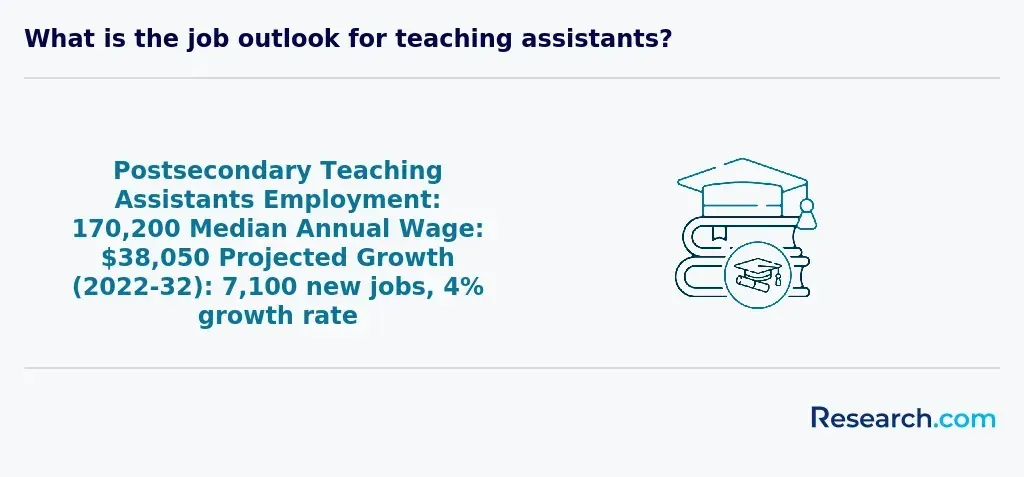
The job market for preschool teacher assistants in Ohio is shaped by preschool enrollment, childcare staffing needs, employer budgets, and credential expectations. Ohio has seen a 10% increase in preschool enrollment since 2021, and more enrolled children can increase the need for teachers and assistants.
- Demand context: More preschool participation can create additional need for classroom support staff, especially in licensed childcare centers and preschool programs.
- National outlook: The United States Bureau of Labor Statistics projects employment of preschool teachers to grow by 4% from 2023 to 2033, matching the national average.
- Qualified-worker gap: Ohio has a shortage of qualified preschool teachers and assistants, which may create openings for candidates who meet training, safety, and background requirements.
- Salary variation: One reported Ohio salary figure for preschool teacher assistants is approximately $37,834 per year, with a range between $33,790 and $42,720.
- Training expectations: As standards evolve, professional development and specialized preparation may become more important for candidates seeking better opportunities.
If you discover that direct classroom support is not the right fit, your education background may still be useful. This guide to non-teaching jobs with a teaching degree outlines education-related careers outside the traditional classroom.
Current trends affecting preschool assistant roles
- Greater attention to early learning: Preschool enrollment growth has kept focus on staffing, quality, and classroom support.
- More emphasis on professional development: Employers may prefer assistants who continue training in safety, child development, behavior support, and inclusion.
- Technology in early childhood settings: Digital communication tools, attendance systems, and learning platforms can require assistants to become comfortable with basic education technology.
- Specialized classroom needs: Programs serving children with developmental delays, language needs, or behavioral challenges may value assistants with additional training.
How much do preschool teacher assistants make in Ohio?
Salary estimates for preschool teacher assistants in Ohio vary by source, job title, employer type, location, experience, and credential level. One reported average is approximately $30,225 per year, or about $14.53 per hour, based on 467 reported salaries. Another Ohio estimate lists approximately $37,834 per year, with a range between $33,790 and $42,720.
Because salary sources use different job titles and employer samples, candidates should compare local job postings rather than relying on a single average. Public preschool programs, private centers, Head Start employers, and childcare providers may use different pay scales and benefit structures.
Highest-Paying Cities in Ohio:
- Dayton: $35,740
- Dublin: $35,360
- Westerville: $34,320
- Powell: $33,280
- Columbus: $33,280
- Cleveland: $32,240
What can affect your pay?
- Location: Wages can differ across Ohio cities and regions.
- Employer type: Licensed childcare centers, public preschool programs, Head Start programs, private schools, and nonprofit providers may pay differently.
- Credentials: A CDA, associate degree, CPR/First Aid certification, and specialized training may improve competitiveness.
- Experience: Assistants with strong classroom experience, reliability, and behavior support skills may qualify for better roles over time.
- Funding and staffing needs: Increased support for early childhood education may influence hiring and resources, though individual salary increases are not guaranteed. Broader education and information fields, including the library science job market, can also be affected by public investment priorities and community needs.
How to evaluate a job offer
| Question | Why it matters |
| Is the position full-time, part-time, seasonal, or school-year only? | Annual income and benefits can change significantly based on schedule. |
| Are benefits included? | Health insurance, paid leave, retirement, and tuition support may matter as much as hourly pay. |
| Will the employer pay for CDA, CPR, First Aid, or professional development? | Employer support can reduce your training costs. |
| What is the child-to-staff ratio and classroom age group? | Workload and stress levels can differ by setting and age group. |
| Is there a promotion path to lead teacher or coordinator? | A lower starting wage may be more acceptable if advancement is realistic and clearly defined. |
Here’s What Graduates Have to Say About Becoming a Preschool Teacher Assistant in Ohio
"Working as a preschool teacher assistant in Ohio gave me a clearer sense of what early learning really looks like. I expected to help with activities, but I did not expect how meaningful the small moments would be—helping a child use new words, follow a routine, or feel confident joining a group. The experience confirmed that I want to continue toward elementary teaching, and it gave me practical classroom skills I could not have learned from coursework alone." — Bradley
"My assistant role helped me understand why early childhood education matters so much. The training gave me a foundation, but working beside experienced teachers taught me how to respond to real classroom situations. I learned about behavior, development, patience, and communication with families. Those lessons will shape the way I approach my own classroom in the future." — Logan
"Being a preschool teacher assistant changed how I see teaching. Young children bring energy, curiosity, and challenges every day, and supporting them requires creativity and consistency. I have built strong relationships with students and gained confidence in my ability to guide learning. The role has made me more prepared for the next step in my education career." — Faith
Related Articles for Nearby States
- 2027 How to Become a Preschool Teacher Assistant in Indiana: Requirements & Certification
- 2027 How to Become a Preschool Teacher Assistant in Kentucky: Requirements & Certification
- 2027 How to Become a Preschool Teacher Assistant in West Virginia: Requirements & Certification
- 2027 How to Become a Preschool Teacher Assistant in Pennsylvania: Requirements & Certification
- 2027 How to Become a Preschool Teacher Assistant in Michigan: Requirements & Certification
- 2027 How to Become a Preschool Teacher Assistant in Illinois: Requirements & Certification
- 2027 How to Become a Preschool Teacher Assistant in Virginia: Requirements & Certification
- 2027 How to Become a Preschool Teacher Assistant in Tennessee: Requirements & Certification
- 2027 How to Become a Preschool Teacher Assistant in North Carolina: Requirements & Certification
- 2027 How to Become a Preschool Teacher Assistant in Missouri: Requirements & Certification
Common Mistakes to Avoid When Becoming a Preschool Teacher Assistant in Ohio
- Assuming every preschool has the same rules: Requirements can differ by licensed childcare center, public preschool, private school, and other program types.
- Skipping employer verification: Before paying for training, ask local employers what credentials they accept or prefer.
- Looking only at tuition: Include background checks, books, supplies, application fees, CPR/First Aid, transportation, and renewal costs.
- Choosing a dead-end program: If you may continue your education, confirm whether credits transfer to an associate or bachelor’s degree.
- Letting credentials expire: Track CPR, First Aid, CDA, and professional development renewal deadlines.
- Assuming assistant pay reflects long-term teaching pay: Assistant roles can be a stepping stone, but higher-paying teaching roles usually require more education and licensure.
- Ignoring workplace fit: Classroom size, leadership quality, schedule, child-to-staff ratios, and benefits can make a major difference in job satisfaction.
Key Insights
- Preschool teacher assistant roles in Ohio are accessible for many entry-level candidates, but requirements vary by employer and preschool setting.
- A high school diploma or equivalent may meet the baseline for some jobs, while a CDA or associate degree can improve competitiveness and support advancement.
- The CDA path is usually faster and includes approximately 120 hours of training; an associate degree usually takes about two years and may be better for long-term teaching goals.
- Background checks, safety training, and First Aid/CPR expectations are important parts of working with young children in Ohio.
- Costs can range from relatively low training expenses to multi-year college costs, so candidates should compare total cost, transfer value, and employer acceptance before enrolling.
- Salary estimates vary, with reported Ohio figures including approximately $30,225 per year and approximately $37,834 per year depending on the source and job sample.
- The role can lead to preschool teacher, kindergarten teacher, elementary teacher, special education teacher, private school teacher, administration, or consulting pathways, but most advancement options require additional preparation.
- The best first step is to identify the type of preschool where you want to work, ask what credentials that employer requires, and choose the shortest affordable path that still supports your long-term education goals.
References:
- BLS (2024, April 3). 25-9045 Teaching Assistants, Except Postsecondary. BLS
- BLS (2024, August 29). Teacher Assistants. BLS
- Salary.com (2024, August 27). Preschool Teaching Assistant Salary in Ohio. Salary.com
- Talent.com (2024). Preschool Assistant Teacher: Average Salary in Ohio in 2024. Talent.com
Other Things You Should Know About Becoming a Preschool Teacher Assistant in Ohio
The Ohio Department of Job and Family Services, or ODJFS, oversees licensing rules for child care programs where preschool teacher assistants work. Programs must follow state standards in the Ohio Administrative Code, and employers may add their own training or hiring requirements.
Ohio requires preschool teacher assistants to undergo a criminal background check, including both FBI and BCI checks, to ensure they have no disqualifying offenses. These checks are mandatory and must be completed prior to employment.