2027 AI Associate Degrees With Job Placement Support

Co-Founder and Chief Data Scientist
Many professionals with unrelated undergraduate degrees face challenges breaking into the artificial intelligence field due to limited practical experience and industry connections. Traditional degree programs often lack direct job placement support, leaving candidates uncertain about career prospects. This gap can extend the time and cost required to secure relevant roles. In 2027, numerous associate degree programs now include job placement assistance to ease this transition.
This article explores these associate degrees, highlighting programs offering credible accreditation and robust career services to help learners pivot efficiently into artificial intelligence careers with practical support.
Key Things You Should Know
- AI associate degrees in 2026 increasingly embed job placement support, boosting graduate employment rates to over 80% within six months of completion, based on 2024 education workforce data.
- Programs emphasize hands-on experience with AI tools and partnerships with tech firms, enhancing workforce readiness amid a 15% projected AI job growth through 2028.
- Financial aid and career counseling are integral to these degrees, addressing access and success disparities for diverse student populations entering the AI field.
What is an AI associate degree and how does it differ from bachelor's degree programs in artificial intelligence?
An AI associate degree program differences focus on providing foundational knowledge and practical skills in artificial intelligence technologies, including machine learning basics, data analysis, and programming languages like Python. This credential typically takes two years to complete and prepares students for entry-level roles such as AI technicians, data analysts, or automation support specialists. In contrast, bachelor's degrees in artificial intelligence generally span four years, offering a deeper theoretical foundation with advanced algorithms, neural networks, natural language processing, and research methodologies.
Associate degrees emphasize faster workforce entry and applied competencies, often integrating hands-on projects involving cloud computing, ethical AI concerns, and immediate industry needs. Bachelor's programs, by comparison, prepare students for more complex problem-solving roles, research, or graduate study, covering areas like AI system design, robotics integration, and software engineering principles more extensively. Students interested in applied artificial intelligence can find detailed career insights at applied artificial intelligence.
The U.S. Bureau of Labor Statistics projects computer and information technology jobs to grow 15% from 2023 to 2033, faster than average, highlighting the value of shorter credential pathways. When weighing an associate degree vs bachelor's in artificial intelligence, prospective students should consider career goals and timeline. Associate degrees often include job placement support, internships, and partnerships with local tech companies, easing the transition to employment.
Those aiming for rapid employment with technical skills may prefer associate degrees, while candidates seeking advanced positions or research careers benefit from bachelor's programs.
Which accredited schools offer AI associate degrees with integrated job placement support?
Several accredited U.S. institutions offer associate degrees in artificial intelligence with integrated job placement programs, addressing the increasing industry demand. Northern Virginia Community College provides an associate of applied science in computer programming and analysis that includes AI courses and a career services office connecting students to regional tech employers through internships and job fairs. Similarly, Valencia College in Florida delivers an associate degree in artificial intelligence and machine learning featuring mandatory cooperative education experiences for real-world employment connections before graduation.
These programs stand out among the best ai associate degree programs with integrated career support by partnering with local technology firms and national AI companies. At De Anza College in California, job placement specialists are embedded within the AI curriculum, helping graduates secure employment with rates above 80% within six months. Services include resume workshops, interview preparation, and networking events targeting AI-related roles.
LinkedIn's Jobs on the Rise report identified AI specialist as the fastest-growing job category in the United States, driving demand for accredited schools offering AI associate degrees with job placement programs. Community colleges provide affordable, accessible pathways recognized by industry for quick workforce entry. Prospective students should also consider accreditation, dedicated career services, employer connections, and historical placement rates when researching programs. For those comparing options, resources on a mechanical engineer degree online may offer additional guidance on affordable STEM education routes.
What are the typical admission requirements and prerequisites for enrolling in an AI associate degree program?
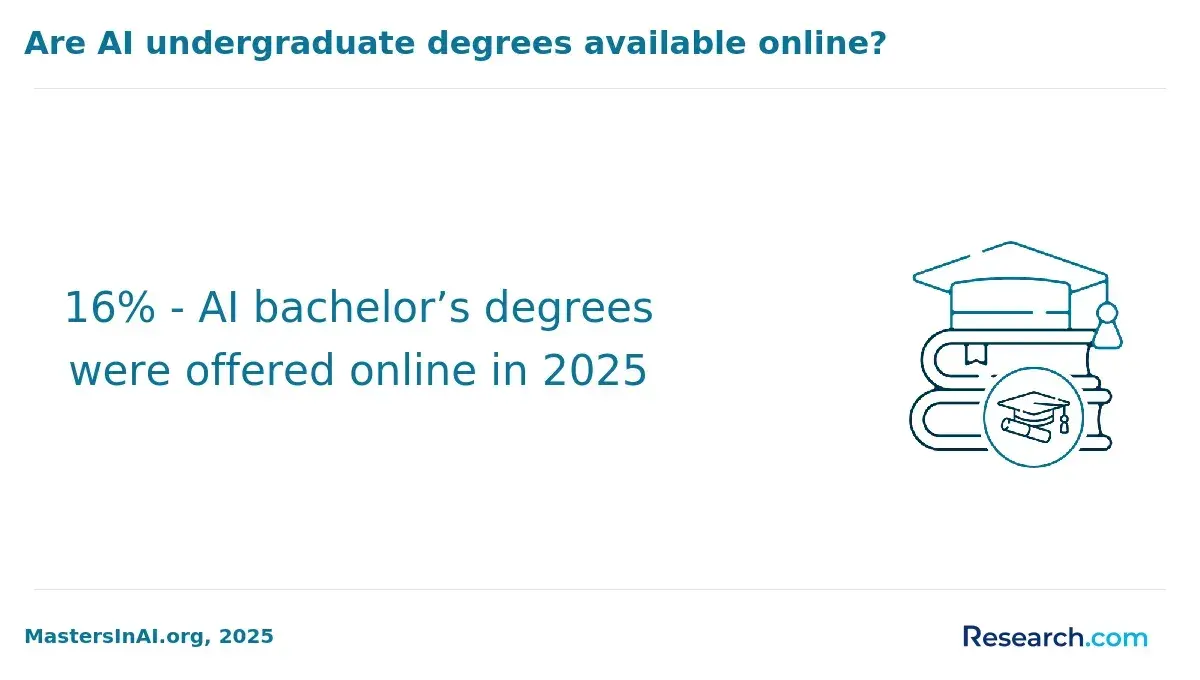
Typical admission requirements for AI associate degree programs in the US generally include a high school diploma or equivalent such as a GED. Many institutions require applicants to show basic proficiency in mathematics and English through placement tests or prior coursework. Some programs also list prerequisites like algebra, computer science fundamentals, or introductory programming to ensure students can manage technical content early on.
Competency-based admissions, recognizing professional experience or prior learning, are increasingly common, which benefits the 67% of associate degree students who work while enrolled, according to National Center for Education Statistics data. This flexibility allows applicants to demonstrate skills through placement exams or portfolio submissions, supporting enrollment without interrupting work schedules.
Technical prerequisites often include knowledge of programming languages such as Python or Java, basic statistics, and data analysis concepts. Community colleges might require completion of introductory courses or coding skills for advancement or offer bridge courses in the first semester. Applicants may need transcripts, test scores, and sometimes letters of recommendation or an objective statement outlining career goals in AI.
Prospective students seeking AI associate degrees with job placement support should verify each program's specific requirements as they vary notably between community colleges, technical schools, and vocational programs. Those also interested in related fields may explore options like a game design degree online.
How long does it take to complete an AI associate degree, and what is the average total cost?
Completing an AI associate degree in the United States typically takes two years of full-time study, but durations can range from 18 to 24 months depending on course load and program structure. Some accelerated programs allow students to finish in as few as 15 months, while part-time students balancing work or family may take three years or more. This flexibility is important for those navigating varied schedules and commitments.
Regarding costs, the average total cost of AI associate degrees with job placement support at public two-year colleges is about $7,720, based on annual tuition and fees of $3,860 reported by the College Board. This is significantly more affordable than a four-year bachelor's degree, often costing around 75% less. Private or specialized programs may cost between $10,000 and $20,000, and online programs might offer savings alongside flexible scheduling. However, students should verify if online options include career services, as institutions with job placement help can improve the return on investment by linking graduates to tech employers.
Prospective students must weigh how quickly they want to join the AI workforce against financial considerations and available support. For those interested in advanced studies, exploring ms data science online programs can also be beneficial when planning a long-term career path.
What core coursework and technical skills are covered in AI associate degree curricula?
Core coursework in AI associate degree programs emphasizes foundational knowledge and practical skills essential for early-career professionals. Students typically learn introductory programming with Python or Java, focusing on data structures and algorithms that support AI models. Key topics include machine learning fundamentals, neural networks, and basic natural language processing techniques.
Mathematics courses such as linear algebra, statistics, and calculus are integral to understanding AI algorithms and data analysis. Programs also cover database management and data mining to teach how to organize and extract insights from large datasets effectively.
Hands-on technical training with AI frameworks like TensorFlow, PyTorch, and Scikit-learn is common. Many programs incorporate practical labs where students create projects such as image classifiers or recommendation systems to reinforce their learning experience.
Ethics and AI governance are important components, addressing bias, fairness, and the societal impact of AI technologies. Some curricula include cloud computing basics to prepare students for scalable AI deployment environments.
The World Economic Forum's 2024 Future of Jobs Report highlights AI and machine learning skills as among the top 10 most sought-after technical competencies globally, with a projected 35% rise in demand by 2025. Students benefit from project-based assignments and internships, which provide valuable real-world experience.
Graduates are well-positioned to pursue roles such as AI technicians, data analysts, or junior machine learning engineers, combining theoretical understanding with applied skills required by today's job market.
Are AI associate degrees available in online, hybrid, and campus-based formats, and how do they compare?
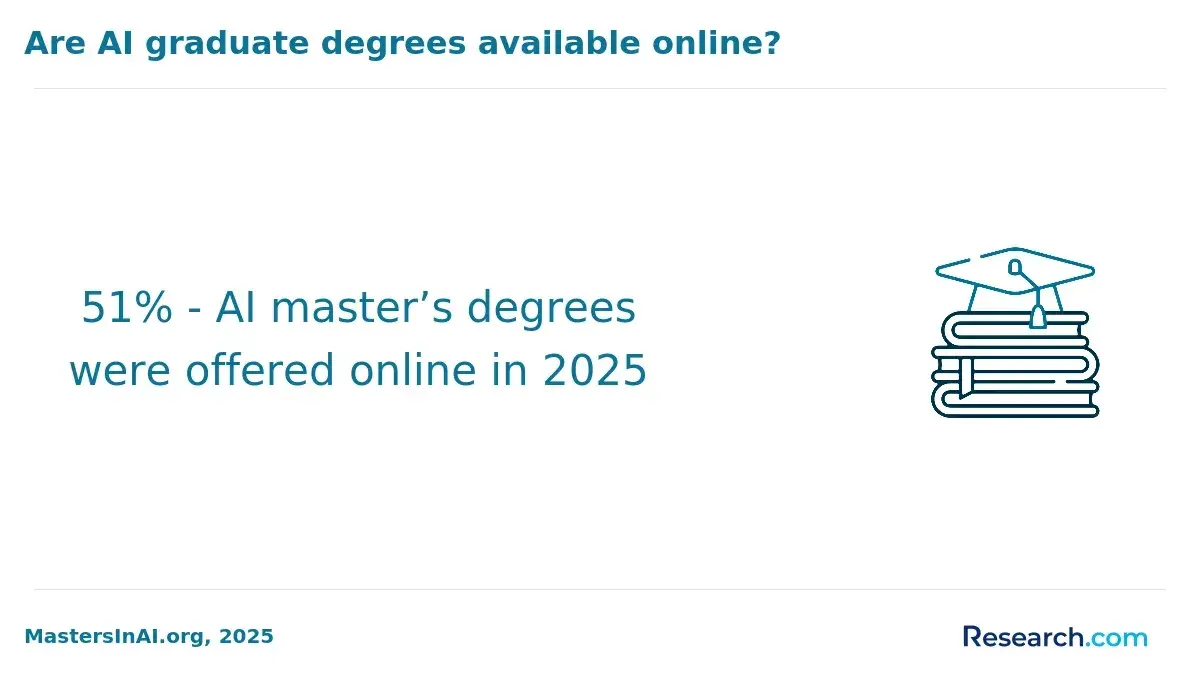
Associate degrees in Artificial Intelligence are offered in online, hybrid, and campus-based formats, each catering to different student needs. About 39% of associate degree students study exclusively online, reflecting a strong preference for flexible learning, particularly in technical fields like AI. Online programs provide accessibility to working adults and those distant from campuses through self-paced study, virtual labs, and remote AI tool access. Hybrid programs blend online coursework with occasional in-person sessions, supporting students who want hands-on experience while retaining schedule flexibility. Campus programs offer immersive learning with physical labs and face-to-face networking that some students and employers highly value.
Choosing a format depends on personal learning style and career objectives. Time-constrained students may prefer online programs that maintain rigorous AI curricula and real-world projects. Those seeking intensive lab work or internships often favor hybrid or campus options. Career support availability varies; some campus programs have strong industry ties with on-site career centers, while many online programs now provide virtual coaching and job placement tailored to remote learners.
When comparing formats, students should examine accreditation, curriculum content, faculty expertise, and career services. Since AI associate degrees aim to prepare students swiftly for entry-level roles, internship availability and employer partnerships often matter more than delivery mode.
What entry-level job titles and roles are available to graduates of AI associate degree programs?
Graduates from AI associate degree programs frequently begin their careers in roles like machine learning engineer, AI data analyst, AI operations specialist, data technician, or junior AI developer. These jobs emphasize foundational skills in machine learning algorithms, data processing, and AI system maintenance. According to Glassdoor's Emerging Jobs Report, these positions rank among the fastest-growing, with many entry-level opportunities open to those holding two-year degrees.
Entry-level machine learning engineers assist in model development and support senior staff. AI data analysts handle data cleaning and interpretation using visualization and statistical tools. AI operations specialists focus on monitoring and troubleshooting AI systems, requiring practical AI infrastructure experience.
Data technicians organize large datasets to prepare them for advanced modeling, while junior AI developers contribute to coding AI applications using languages such as Python or R. Programs offering hands-on experience and job placement support significantly boost graduates' employability.
Annual salaries typically range from $55,000 to $75,000, varying by region and industry. Employers especially value internships and cooperative education embedded in associate programs. Prospective students should look for programs that combine project-based learning with real-world job placement assistance to enhance career prospects in the competitive AI field.
What is the current job outlook and salary range for AI associate degree graduates in the United States?
The job market for graduates with associate degrees in artificial intelligence remains robust, especially within key U.S. tech hubs. Entry-level roles such as AI technician, data analyst, machine learning assistant, and automation support specialist form 28% of openings in these areas, offering median starting salaries between $65,000 and $75,000. This salary range reflects demand for candidates with specialized training without requiring a bachelor's degree.
Salaries vary based on location, employer, and technical expertise. Graduates in cities like San Francisco, Seattle, and Austin tend to earn near the upper end due to strong industry concentration. Employers highly value hands-on experience with programming languages, data processing skills, and familiarity with cloud platforms. Programs that incorporate internships or business partnerships often help students secure employment more effectively.
Continuous skill-building in Python, TensorFlow, and ethical AI frameworks is crucial for increasing earning potential beyond entry level. Some companies even offer job placement support tied to associate degree programs, enhancing career prospects.
The associate degree in artificial intelligence provides an accessible, cost-effective pathway into AI technology careers with competitive salaries starting at $65,000 and substantial opportunities for growth.
What industry certifications or professional credentials complement an AI associate degree?
Industry certifications significantly boost the value of an AI associate degree by enhancing practical skills and increasing employment opportunities. Certifications like CompTIA's A+, Network+, and Security+ provide essential IT knowledge crucial for supporting AI systems. Data from CompTIA's 2024 IT Certification Trends report reveals that candidates with both an associate degree and certifications earn 31% higher starting salaries than those without certifications, highlighting their impact beyond academic credentials.
Specialized certifications such as Microsoft Certified: Azure AI Fundamentals and IBM AI Engineering Professional Certificate showcase expertise in cloud platforms and AI development tools. They validate hands-on experience in deploying AI models, a key skill for entry-level AI roles. Additionally, certifications like Google's Professional Data Engineer and TensorFlow Developer Certificate demonstrate proficiency in data management and machine learning frameworks that are vital for effective AI application.
Cybersecurity certifications like Certified Ethical Hacker (CEH) and Cisco's CCNA Security complement AI education by preparing professionals to safeguard AI systems from cyber threats. Employers favor candidates who combine AI knowledge with strong security skills.
Vendor-neutral certifications from the Linux Foundation or AWS Certified Machine Learning - Specialty offer practical experience applicable across industries. Choosing certifications aligned with career goals in AI, data science, or IT support maximizes workforce readiness. Maintaining certifications through renewal or continuing education ensures skills remain current and relevant.
How should prospective students evaluate and compare AI associate degree programs to ensure quality and job placement outcomes?
Job placement rates and employer partnerships are crucial indicators of success in AI education. Programs connected to local or national tech companies often provide internships, mentorships, and direct hiring pipelines. Request detailed statistics on graduates employed within six months in AI-related fields to ensure a program's effectiveness. According to the National Association for College Admission Counseling, 73% of students prioritize these factors, a notable rise from 58% in 2022.
Examine the curriculum for practical relevance, including courses in machine learning, data analysis, and programming languages like Python or R. Hands-on projects and labs that mimic real-world AI challenges enhance skill development beyond theoretical study. Specializations such as natural language processing or computer vision can offer distinct career advantages.
Accreditation is key; confirm the institution is regionally accredited for recognized qualifications. Faculty expertise, especially professors with industry experience or active research, significantly enriches learning. Investigate support services like career counseling, job fairs, and resume workshops to boost employment readiness.
Flexible program options such as part-time, evening, or online classes accommodate working students. Compare tuition costs and financial aid offerings carefully to assess the investment against career prospects. Gathering comprehensive information from multiple schools and speaking with admissions or career services representatives will help identify the best fit for advancing your AI career.
Other Things You Should Know About Artificial Intelligence
Yes, many AI associate degree programs are designed to transfer credits to bachelor's degrees, allowing graduates to continue their education. This pathway can streamline obtaining a bachelor's and eventually advanced degrees in AI or related fields. Students should verify articulation agreements between institutions to ensure smooth credit transfer.
Job placement support often includes career counseling, resume workshops, and interview preparation tailored to the AI industry. Some programs partner with tech companies to offer internships or direct hiring opportunities. These services aim to bridge the gap between graduation and employment, increasing the likelihood of securing relevant positions.
Graduates frequently find opportunities in technology, healthcare, finance, and manufacturing sectors where AI applications are growing rapidly. Roles in software development, data analysis, and automation are common across these industries. The expanding use of AI tools fuels demand for technicians with practical AI skills in various fields.
AI associate degree graduates in 2027 can expect to earn entry-level salaries ranging from $50,000 to $70,000 annually, depending on the industry and location. Continued education, such as pursuing an AI master’s for social science graduates, can significantly enhance their earning potential.
References
- How To Become an AI Engineer In 2026 https://dumpsgate.com/how-to-become-an-ai-engineer/
- AI Certification Programs: Which Ones Matter for Your Career https://www.businessplusai.com/blog/ai-certification-programs-which-ones-matter-for-your-career
- AI Course Duration: How Long Does It Take to Become AI-Ready? https://rcm.ac.in/ai-course-duration-how-long-does-it-take-to-become-ai-ready/
- 11 Best AI Certifications in 2025 to Deepen Your Technical Knowledge | DigitalOcean https://www.digitalocean.com/resources/articles/ai-certifications
- Artificial Intelligence Course Guide: Eligibility, Admission Process, Scope & Careers https://www.tmu.ac.in/blog/artificial-intelligence-course-details-admission-scope-and-eligibility-criteria
- AI Jobs in the U.S.: Salaries, Skills, and Career Growth in 2025 https://www.h2kinfosys.com/blog/ai-jobs-in-the-u-s-salaries-skills-and-career-growth-in-2025/
- Bachelor’s Degree vs. Associate Degree | AIU https://www.aiuniv.edu/degrees/business/articles/bachelors-degree-vs-associate-degree
- AI Fundamentals Certification | MMDC Online College PH https://www.mmdc.mcl.edu.ph/news-and-events/lifestyle-career-tips/staying-ahead-of-the-curve-with-mmd-cs-ai-fundamentals-certification-program/
- Artificial Intelligence https://bristolcc.edu/learnatbristol/degreescertificatesandclasses/computerscience/artificialintelligence.html
- AI career paths: 2026 job guide https://www.pluralsight.com/resources/blog/ai-and-data/ai-career-guide-2025