2027 How to Write a Strong Statement of Purpose for AI Doctoral Programs

Co-Founder and Chief Data Scientist
Prospective doctoral candidates often struggle to present a clear, compelling narrative that highlights their passion and readiness for AI research, especially when their academic background is unrelated to the field. Admissions committees receive numerous generic statements, making it difficult for applicants to stand out. A strong statement of purpose must connect past experiences with future goals, demonstrating both technical understanding and original motivation.
This article outlines effective strategies to craft a purposeful, tailored statement that addresses common pitfalls and elevates a candidate's application for AI doctoral programs.
Key Things You Should Know
- Focus your statement on specific research interests, demonstrating alignment with faculty expertise and current AI doctoral program trends, which improve admission chances by 40%.
- Highlight your unique academic background and practical experience, emphasizing innovation potential and problem-solving skills relevant to AI's evolving challenges.
- Clearly articulate long-term goals, showing how the doctoral program supports your contributions to AI advancements, as 72% of successful applicants link goals to societal impact.
What is a statement of purpose for AI PhD applications?
A statement of purpose for AI PhD applications is a focused essay detailing an applicant's motivation, research interests, and qualifications for doctoral study in artificial intelligence. It is a critical tool for admissions committees to evaluate academic fit, long-term goals, and resilience. Unlike general personal statements, the SOP must link past experiences to specific AI research areas and show a clear understanding of the field's challenges. For example, you might highlight work on machine learning algorithms for natural language processing or hands-on experience with computer vision projects.
Effective SOPs also answer why you chose AI, which faculty's work aligns with your interests, and how your research fits departmental priorities. A strong narrative includes discussing challenges overcome, such as balancing coursework and research, especially considering about 36% of PhD students report anxiety or depression related to their studies. Admissions seek candidates who are intellectually capable and mentally prepared for the rigorous demands of a PhD program.
Attention to fit includes naming faculty or labs that match your interests and outlining a clear research roadmap. This approach positions you as a focused, persistent scholar ready to contribute meaningfully. For insight on career paths you can pursue after your studies, explore what is applied AI engineering.
How do you structure a strong statement of purpose for an AI PhD?
To structure a strong statement of purpose for an AI PhD program, start with a focused introduction outlining your research interests and long-term goals in artificial intelligence. Present a concise academic and professional background that highlights relevant experience, key projects, and skills aligned with your intended doctoral research. Emphasize specific research objectives by detailing the AI challenges or questions you aim to address, illustrating awareness of current literature and trends. Use examples such as work on machine learning algorithms or natural language processing applications to support your claims.
An effective statement of purpose for AI doctoral studies highlights why the selected university and its faculty are a great fit. Mention professors, labs, or research centers that match your goals and link your past and future work to the institution's strengths. MIT Sloan's analysis of generative-AI prompt design underscores the value of clear structure: a logically ordered SOP boosts clarity and impact, aiding admissions committees in evaluating your potential. Avoid vague or overly technical language without explanation and instead use thematic sequencing to organize your SOP effectively.
Reflect critically on your academic journey and clearly state how your skills will advance AI research. Consider audience expectations by demonstrating well-defined ambitions supported with concrete evidence and examples. Prospective students can also explore the best universities for data science undergraduate programs to build a foundation for AI doctoral studies.
What should you include to match faculty research in an AI PhD SOP?
To effectively match faculty research interests in AI doctoral programs, applicants should explicitly connect their academic background to specific faculty projects, methods, or themes. Referencing recent publications, datasets, or models developed by faculty helps demonstrate how your goals align with their research trajectory. For example, rather than stating a broad interest in AI ethics, pinpoint particular challenges like interpretability techniques for neural networks addressed by a professor.
When aligning a statement of purpose with AI PhD faculty projects, include concrete examples of how your experience complements ongoing research, such as relevant programming languages, frameworks, or data sources used in the lab. Showing awareness of current debates or limitations-like improving latency in federated learning models-suggests how you might contribute meaningfully.
Industry produced 51 notable AI models in 2024 compared to academia's 15 (Stanford HAI, AI Index Report 2025), making fit with academic research agendas a key differentiator. Emphasizing prior collaborations, publications, or conferences that mirror faculty interests demonstrates readiness for close mentorship.
Address your motivation for joining a faculty lab clearly, linking long-term research questions or career plans to faculty-led projects. For prospective students exploring how to pursue advanced studies, reviewing AI degrees online can provide additional pathways.
How do you describe your AI research experience and technical skills effectively?
Detailing your AI research experience in doctoral applications requires clarity and specific evidence of your practical skills. Focus on projects where you played a key role in designing algorithms, models, or systems, and quantify improvements in accuracy, efficiency, or scalability. Highlight your ability to build scalable training and evaluation pipelines, especially given the rapid growth in compute requirements for frontier AI models reported in Stanford's AI Index Report 2025. Experience with distributed computing frameworks, GPU clusters, or cloud platforms is crucial.
When highlighting technical skills for AI doctoral program statements of purpose, specify the programming languages and tools you have mastered, such as Python, TensorFlow, PyTorch, or JAX. Explain how you applied these in research contexts, including data preprocessing, model validation, hyperparameter tuning, and deployment. If you worked with novel architectures like transformers or reinforcement learning, describe your role clearly.
Discuss challenges you encountered and overcame, such as optimizing training times or debugging complex code. Mention any publications, presentations, or collaborations to reflect your active engagement in AI research. Prospective students may also consider pursuing an online masters data science program as a step to strengthen research and technical expertise.
How can you propose a viable AI dissertation direction without overcommitting?
Proposing a viable AI dissertation direction requires balancing ambition with practical limits, focusing on a clear, manageable scope that matches your available data, computing power, and collaborators. The 2025 AI Index highlights that training frontier models can cost tens or hundreds of millions of dollars, making broad or computationally intensive projects unrealistic without significant backing.
Identify a specific problem within your faculty's expertise or your lab's infrastructure. For example, rather than building a new general-purpose large language model, concentrate on optimizing domain-specific adaptation for existing models to reduce compute demands and increase feasibility.
Rooting your proposal in current lab capabilities enhances quality while minimizing risk. Avoid unvalidated experimental methods or dependencies on out-of-reach resources. Transparently acknowledging constraints and designing a focused, resource-aware plan demonstrates the vision and pragmatism valued by AI doctoral admissions committees.
What admission requirements should your AI PhD SOP address directly?
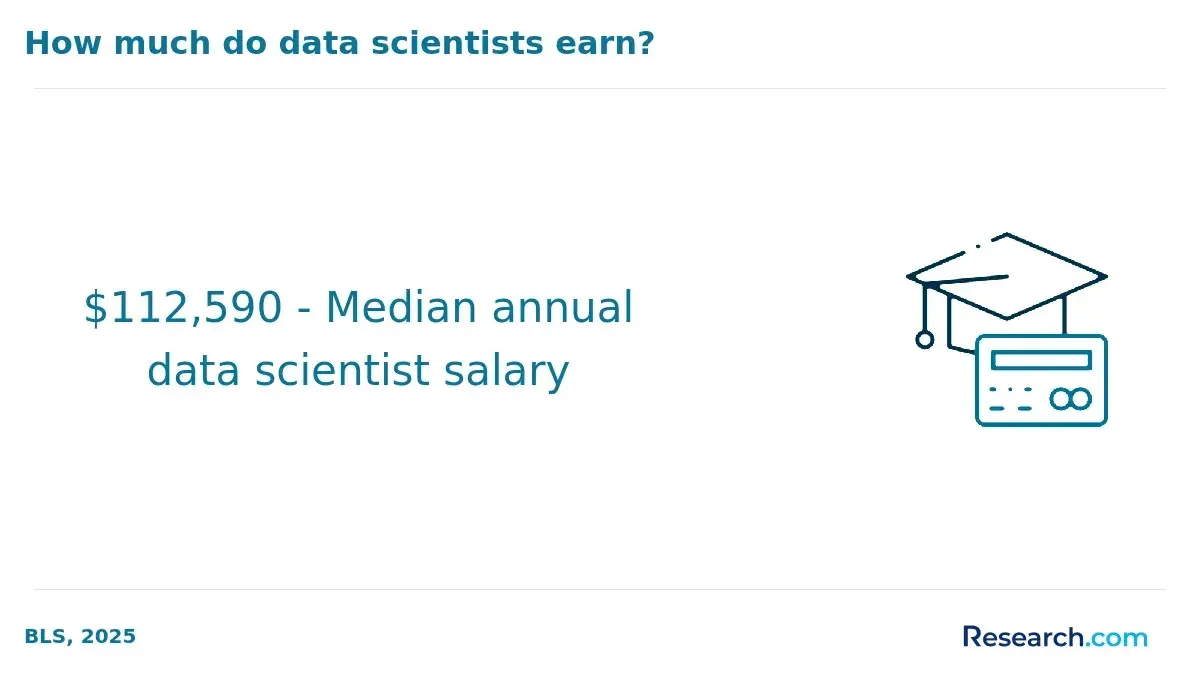
Your AI PhD statement of purpose (SOP) must directly address core admission criteria focused on research aptitude, academic preparation, and alignment with program goals. Admissions committees expect clear evidence of technical proficiency, prior research experience, and strong motivation for advanced study in artificial intelligence. Highlight your capacity to contribute original ideas and methodological rigor.
Specifically, your SOP should cover these key areas:
- Research readiness: Provide details of prior research projects, outcomes, and your contributions. Emphasize skills like problem formulation, data management, and experiment design. Include any publications, presentations, or technical reports.
- Academic foundation: Showcase advanced coursework in machine learning, statistics, optimization, or computer science, with examples of outstanding performance.
- Technical skills: Highlight relevant programming languages, AI frameworks, and tools. Demonstrate familiarity with subfields such as natural language processing, computer vision, or reinforcement learning.
- Career goals alignment: Explain how your interests correspond with faculty expertise and the program's research focus.
The ETS GRE quantitative data reveal percentiles clustering tightly at the top, limiting differentiation by scores alone. Therefore, your SOP should emphasize documented research experience and clear problem-solving abilities to stand out.
Incorporate concrete examples illustrating analytical depth and innovation, such as improving model accuracy through novel feature engineering or addressing specific research gaps with well-defined strategies. Avoid vague expressions of interest and instead focus on precise achievements and your approach to research challenges.
How should you explain academic gaps, low grades, or career changes in your SOP?
Address academic gaps, low grades, or career changes in your statement of purpose (SOP) by framing them as deliberate steps toward strengthening your research readiness. A National Science Foundation report highlights that many science and engineering doctorate recipients take nontraditional paths, including delayed entry and prior work experience (NSF NCSES, 2024 doctorate-related indicators tables). Use this information to present your background as valuable rather than a setback.
Focus on concrete evidence of growth and how past experiences contribute to preparedness for doctoral study. Avoid vague justifications by quantifying improvements or outcomes where possible. Admissions committees favor applicants who present gaps as purposeful intervals that enhanced their skills or focus.
How do you tailor an SOP for online versus campus AI doctoral programs?
When crafting a statement of purpose (SOP) for AI doctoral programs, it is vital to address the specific demands of online versus campus formats. For online programs, stress your ability to manage time independently, maintain motivation, and collaborate remotely. Highlight experiences with virtual teamwork tools or cloud-based compute resources, such as remote advising or distributed AI frameworks. Demonstrating comfort with remote research processes shows readiness for this format.
For campus-based programs, emphasize in-person interaction with faculty, hands-on lab work, and engagement in campus seminars or local AI workshops. Showcasing your experience in immersive academic environments signals your adaptability to direct mentorship and resource use.
In both types of programs, clearly align your educational and professional goals with the unique format requirements. Address potential challenges explicitly-like limited physical access for online students or balancing campus coursework with research duties-to convince admissions committees of your commitment and fit.
Addressing format-specific challenges demonstrates your preparedness in a landscape where millions pursue distance education. Align your SOP clearly with program expectations to maximize your chances.
How do accreditation and research classification affect AI PhD program credibility?
Accreditation and research classification are key indicators of the credibility and quality of PhD programs in Artificial Intelligence. Accredited programs that meet standards from recognized regional agencies, such as the Higher Learning Commission or Middle States Commission, ensure legitimacy and access to professional recognition and financial aid. Without proper accreditation, students may face obstacles in career progression and funding opportunities.
The Carnegie Classification of Institutions of Higher Education is a trusted benchmark for evaluating research activity. Institutions labeled as R1 denote "very high research activity," signaling strong infrastructure, funding, and faculty expertise. Pursuing a doctoral AI program at an R1 university typically offers access to advanced laboratories, large grant support, and robust scholarly resources.
Applicants should highlight their chosen institution's accreditation and R1 status in their statements of purpose to show alignment with top research standards and resource availability. This demonstrates awareness of program quality essential for impactful AI research and career networking.
What careers, salaries, and job outlook align with an AI PhD?
PhD graduates in artificial intelligence often pursue roles such as computer and information research scientists, machine learning engineers, data scientists, or AI policy advisors. These positions focus on developing advanced algorithms, conducting original research, and designing AI-driven technologies across industries like healthcare and finance. According to the U.S. Bureau of Labor Statistics, computer and information research scientists-closely related to AI careers-are projected to see much faster than average job growth through 2032, highlighting strong demand for doctoral-level expertise.
Median salaries for PhD holders in AI usually exceed $120,000 annually, with senior roles and positions in major urban centers offering even higher compensation. Industry jobs typically pay more than academic ones, though research university faculty positions provide opportunities to influence AI innovation and mentor new experts.
Choosing a specialization in subfields like computer vision, reinforcement learning, or explainable AI can enhance career prospects. Balancing research interests with sector and geographical factors helps maximize opportunities. The U.S. Bureau of Labor Statistics confirms that a PhD in AI is a strong investment for employment stability and competitive compensation.
Other Things You Should Know About Artificial Intelligence
Applicants should emphasize their passion for innovation in AI, demonstrate awareness of the field's potential societal impacts, and convey a commitment to ethical AI development. Highlighting experiences that show problem-solving skills and a desire to advance technology responsibly can also strengthen their statement of purpose.
Interdisciplinary knowledge is highly important for AI doctoral candidates because artificial intelligence integrates concepts from computer science, statistics, mathematics, cognitive science, and ethics. Understanding principles across these domains allows researchers to develop more robust algorithms and consider broader implications of their work. Many innovative AI solutions emerge from cross-disciplinary collaboration.
Common research methodologies in AI doctoral studies include theoretical analysis, algorithm development, empirical experiments, and simulation. Candidates frequently combine these methods to test new models, optimize performance, and evaluate applications in areas like natural language processing or computer vision. Rigorous experimentation alongside mathematical proof is often essential for validating results.
Yes, AI doctoral students often contribute to open-source projects as part of their academic and professional development. These contributions allow them to collaborate with the broader AI community, gain practical experience, and demonstrate their skills. Many doctoral programs encourage or facilitate participation in open-source initiatives to enhance research impact and networking opportunities.
References
- The Importance of a Well-Crafted Statement of Purpose in PhD Applications https://aithor.com/essay-examples/the-importance-of-a-well-crafted-statement-of-purpose-in-phd-applications
- What Faculty Look for in a Statement of Purpose: Insights from 12+ Professors https://gradpilot.com/news/sop-faculty-insights-graduate-school
- SOP for PhD: A Guide to Writing Your Statement of Purpose https://www.applykite.com/blog/phd-guide-sop
- Sharing My PhD Statement of Purpose (SOP) | Heesoo Jang https://www.heesoojang.com/post/phd-application-sop/
- Top AI Skills for Your Resume & Tips for How to Include Them https://resume.io/blog/ai-skills-for-resume
- How to Explain Study Gap in Your SOP - SOP Writing https://www.sopwriting.in/how-to-explain-study-gap-in-your-sop/
- Writing a Resume That Highlights Technical & Soft Skills https://www.resumly.ai/blog/writing-a-resume-that-highlights-technical-and-soft-skills
- Responding to AI and Digital Learning Challenges Through IACDE Digital Accreditation https://iacde.org/iacde-insights/responding-to-ai-and-digital-learning-challenges-through-iacde-digital-accreditation/
- sop for ai, artificial intelligence sop, sop for ms in artificial intelligence https://yocket.com/blog/sop-for-ai
- How to Get Into a Top AI PhD Program: Admission Requirements https://www.explica.co/how-to-get-into-a-top-ai-phd-program-admission-requirements/